Janín Nuz Garcín Paints Colorful Mexican Identity
Janín Nuz Garcín explores strong social themes and what it means to be a woman through her colorful Mexican art.
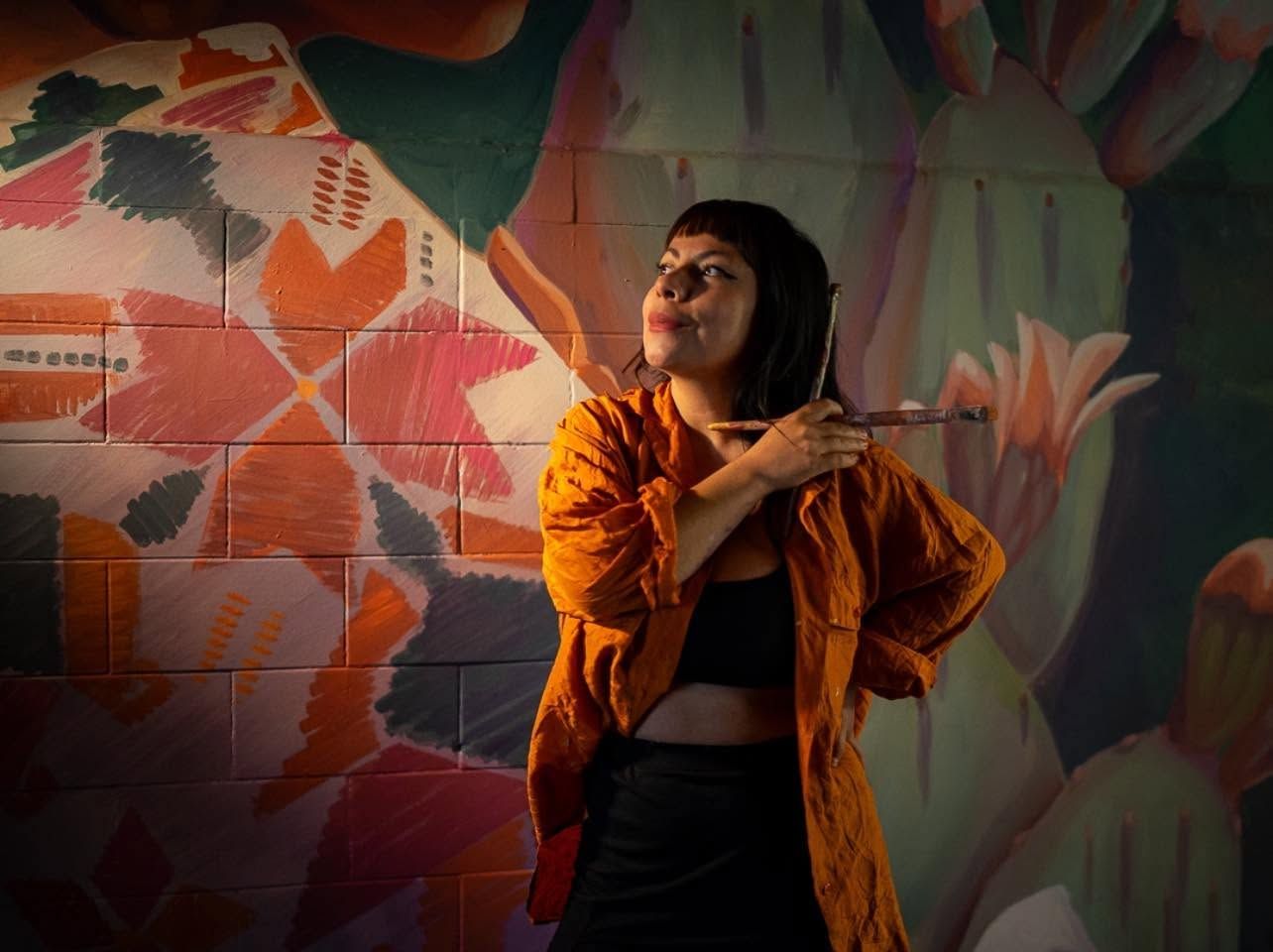
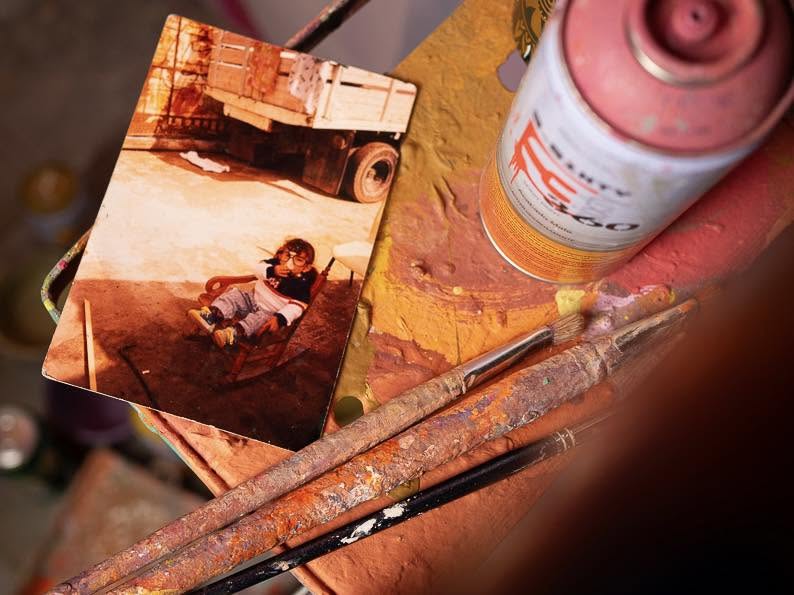
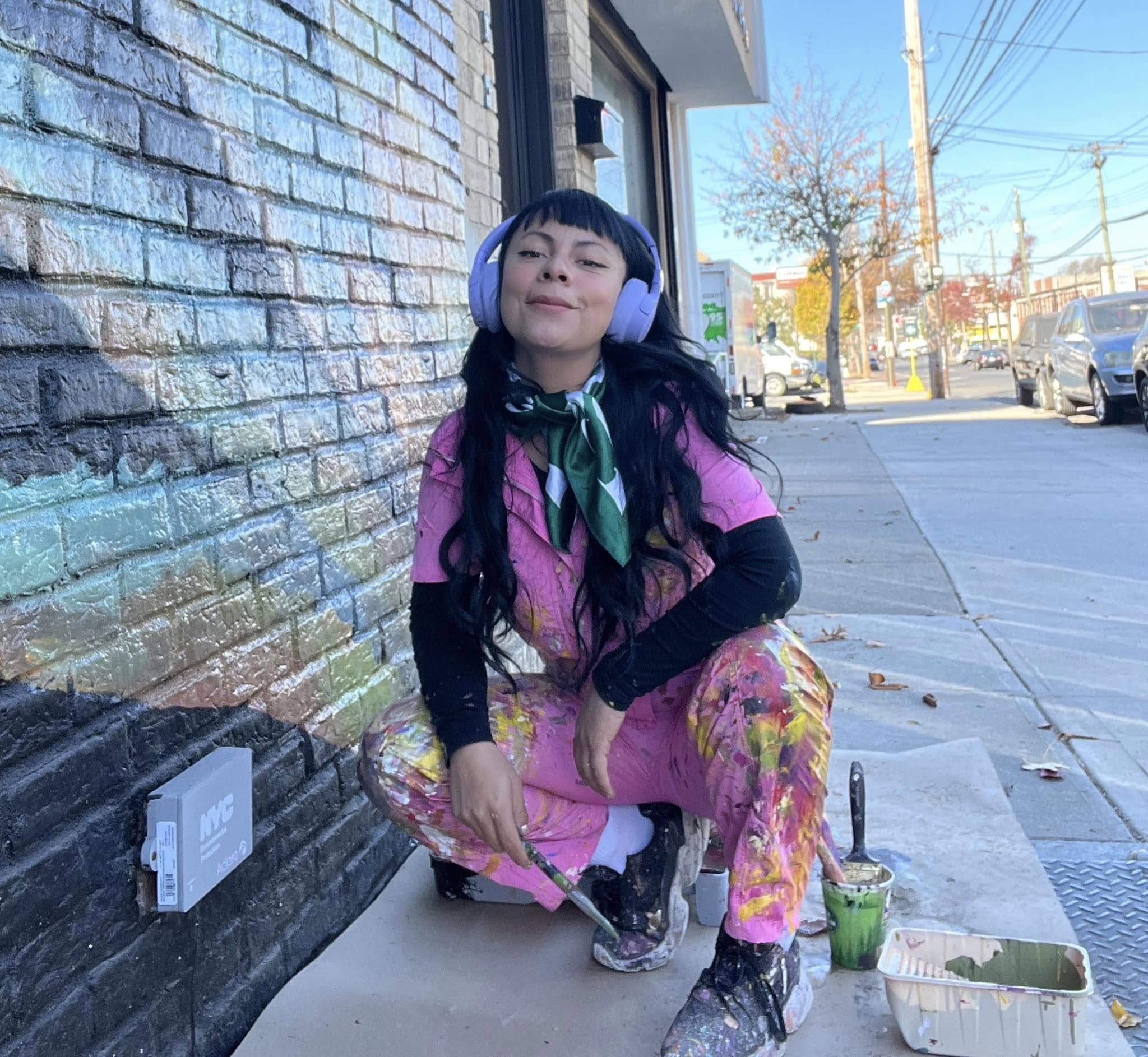
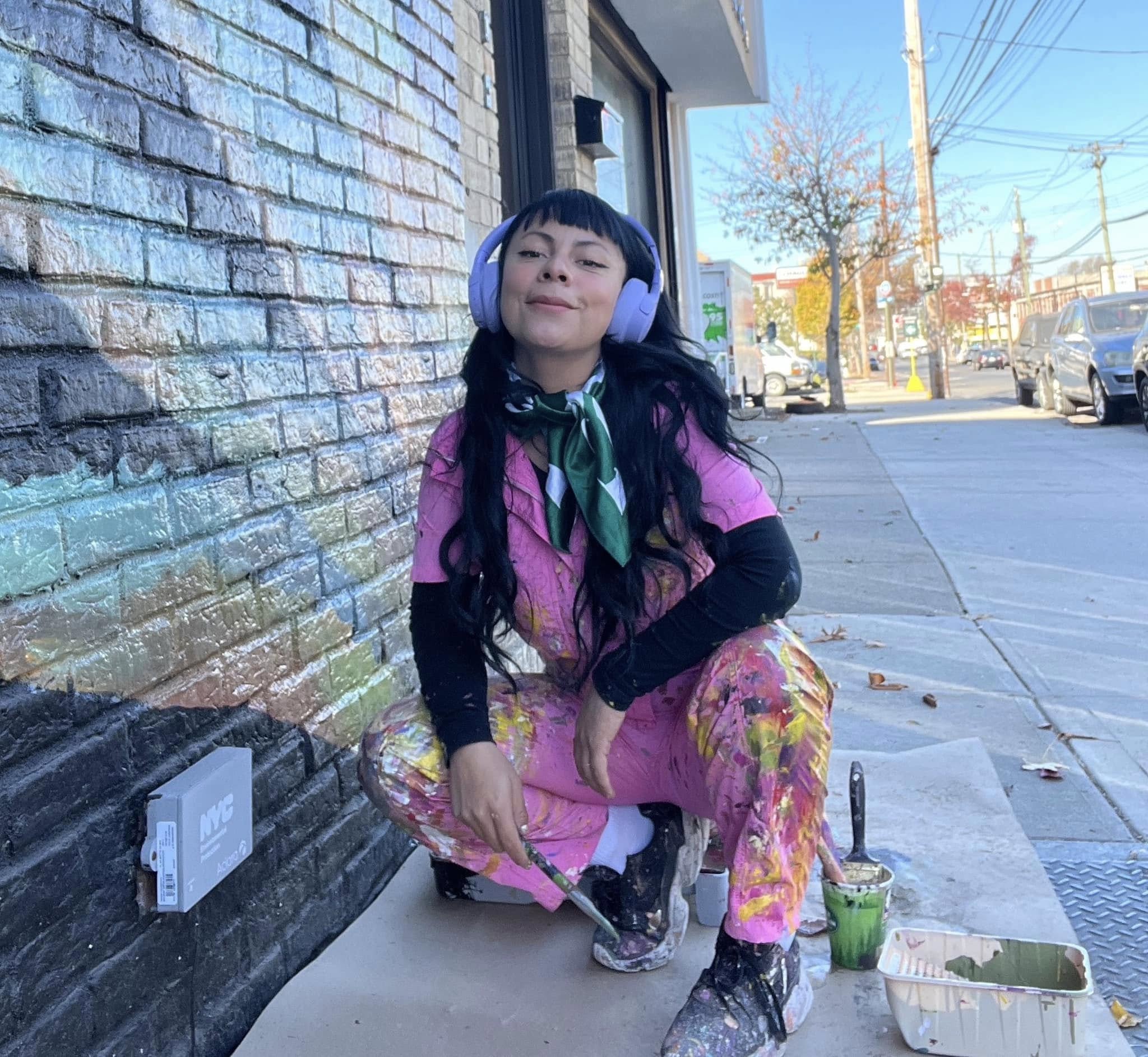
Janín Nuz Garcín’s first memory of her existence is of herself drawing. She was creating her doodles and understanding art as a form of self-expression without the need of words. She never left this passion and personal need behind. As she was growing up in the city of San Luis Potosí in Mexico, she began noticing the graffiti around her neighborhood.
Learning about this street art led her to fulfilling the need and desire to create her own drawings and later on, exploring a bigger format for her art. This world slowly captured her attention and her curiosity was afloat in experimenting with walls.
“I once saw a guy doing a big mural. It blew my mind and I wanted to learn,” Garcín said.
While she was pursuing her degree in Graphic Design at the Universidad Autónoma de San Luis Potosí, she also met some graffiti friends. That encounter was the beginning of her experimental adventure with big formats and spray cans.
The Mexican artist, illustrator, graphic designer, and muralist began merging her knowledge from school with her lessons from the streets. While she grasped more academic concepts, she was using the walls and streets as a great canvas and gallery for a deeper exploration. Through her learning process, she noticed graphic design was not necessarily what she was looking for.

Don't Forget to Subscribe to The Story of The Story
For only $16 a month, every Friday you'll have exclusive access to
The Story of The Story. Our founder, the Costa Rican award-winning multimedia journalist and artist Elizabeth Lang, guides you through her creative process to produce her stories.
Mostly because she wanted to do more artistic projects and she was also told repeatedly that graphic design was for marketing, selling products, and advertising. These statements were a bit frustrating for Garcín because she was more into artistic pursuits.
“When I started painting on the streets, I noticed that the walls were a huge communication potential. From there, not only did you give a message, but you also had a very direct connection with the context and what was happening,” Garcín said. “I started showing my teachers that you could also do participatory social design.”
Listen to Janín
0:00
/22.98475
That was when Garcín began understanding her art’s purpose, which was that of contributing to society with what she was designing. Once again, her knowledge from school and the streets was merging. The streets were teaching her about interacting and socializing with other people. Her pictorial process was adapted to whatever community, barrio, or colonia she was immersed in.
Through this understanding, Garcín also noticed that art, illustration, graphic design, and muralism come together in her artistic practice. She mentioned she’s a very anxious person and that leads her to be in constant movement from one side to the other. She loves doing illustration, but she also cherishes the moments when a mural comes through.
An illustration can transform into a mural and a mural can step out of its physical space into a digital one. She sees no limits between these different disciplines, but it’s also tied to what it means to be an artist in Latin America.
“It’s very complicated to dedicate yourself to only one thing in Latin America. Us, creative people, are always looking for ways and modes to survive. So, we have to do a little bit of everything to dedicate ourselves to live the dream of dedicating yourself to the arts,” Garcín said.
Listen to Janín
0:00
/19.1505
With that reality very present, Garcín has not been shy of exploring and experimenting a lot with all of these different formats. She’s plunged deep into each one of them. Not only from an artistic perspective, but also from a thematic point of view. Garcín likes her pieces to speak about whatever she’s going through and the social issues challenging Mexico, Latin America, and the world.
The Social Walls
She really loves for her visual graphic identity to contribute on a societal level. It’s become a tool to raise awareness and give a voice to these different challenges in a collective way. Her art has become a space to let all of her anxiety out from her mind and body, while involving the communities that she collaborates with when painting huge murals.
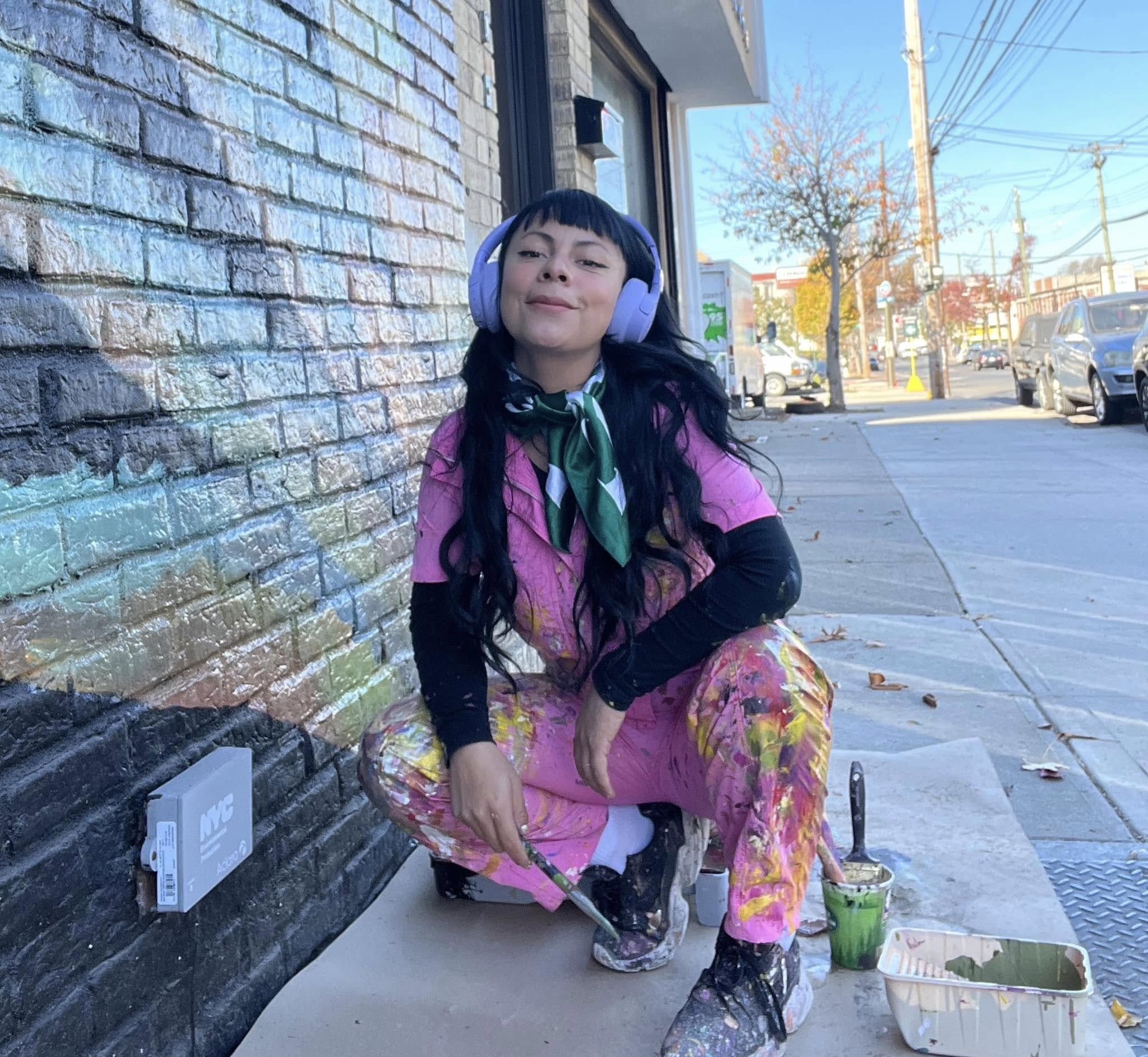
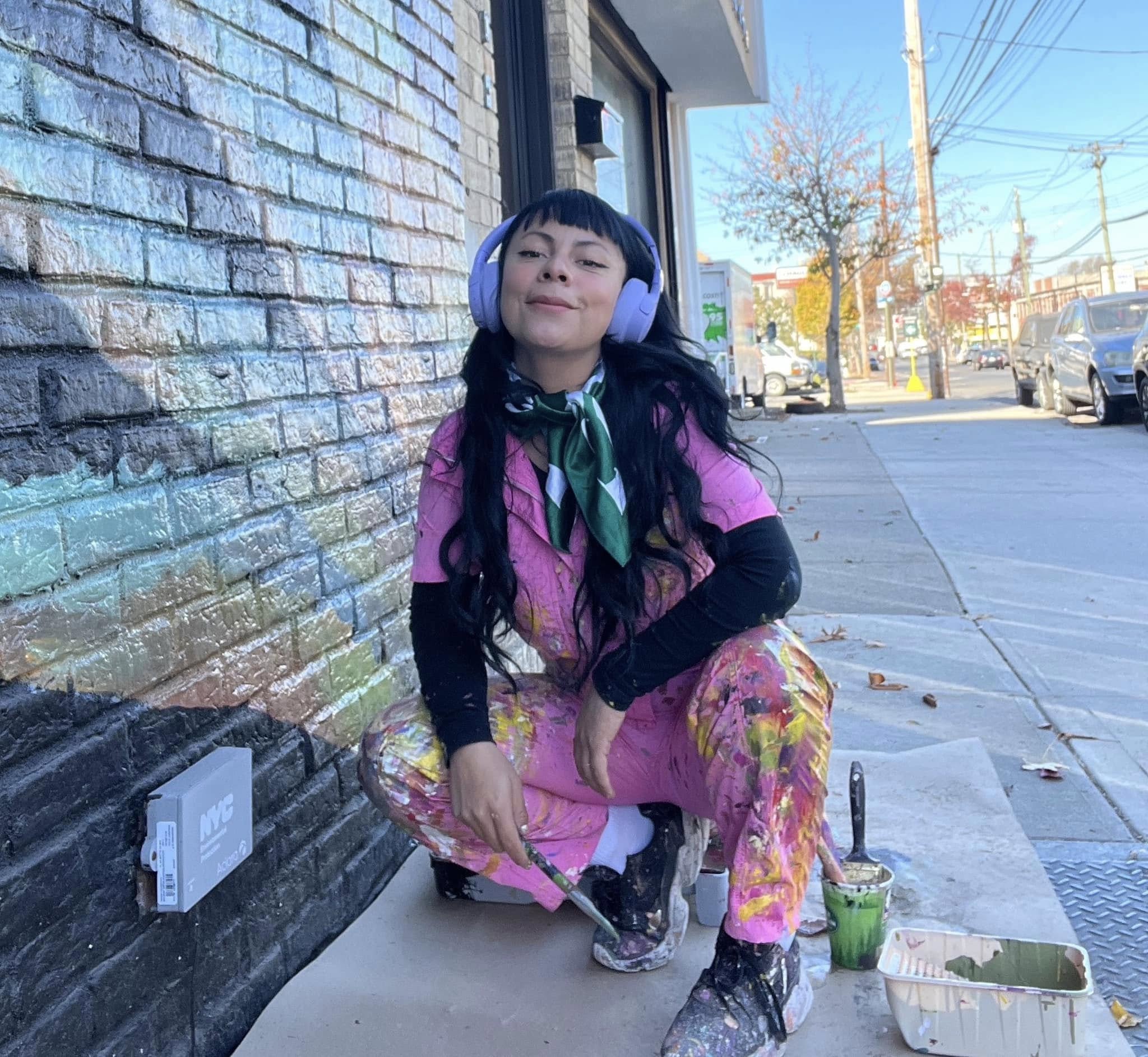
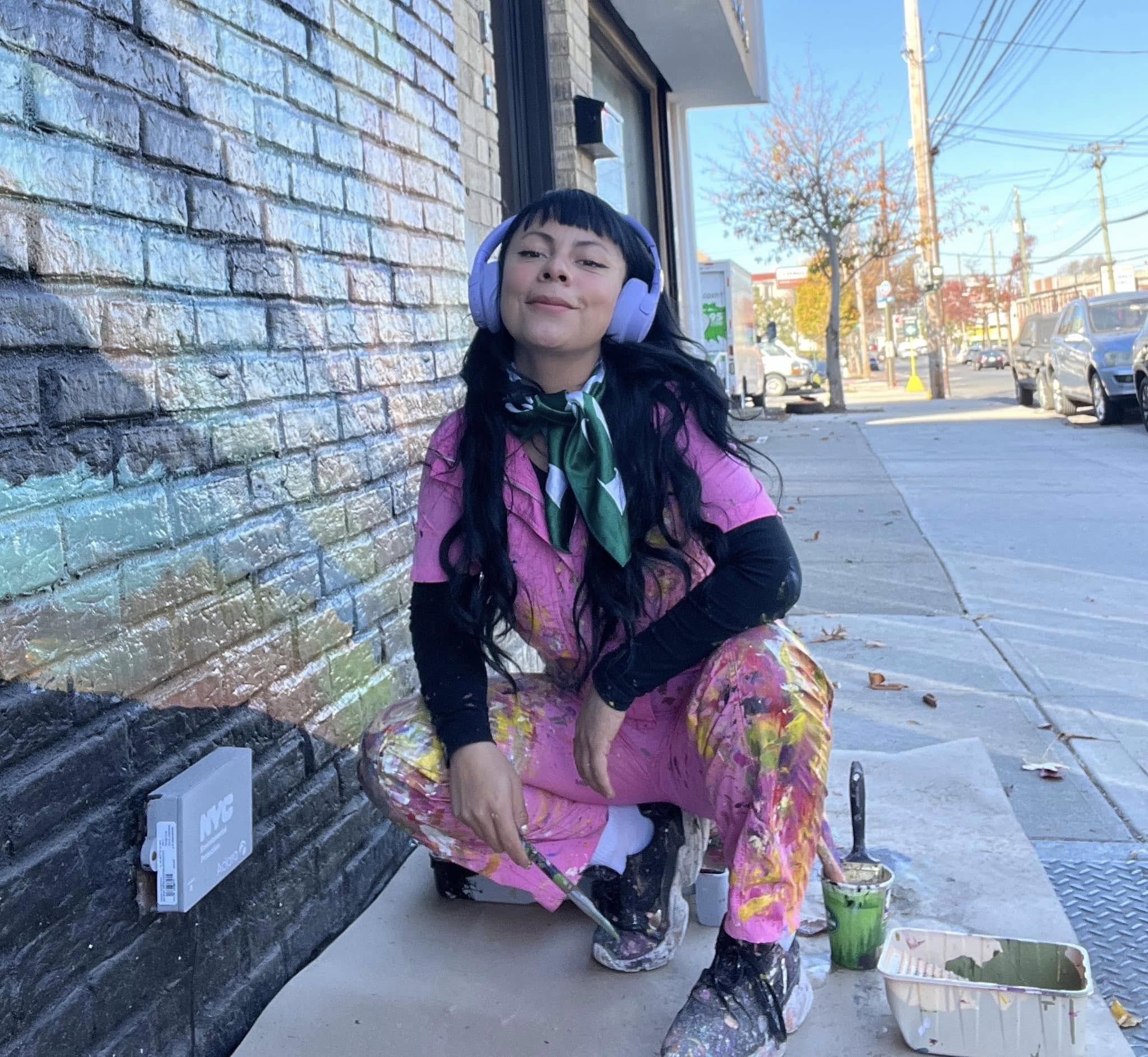
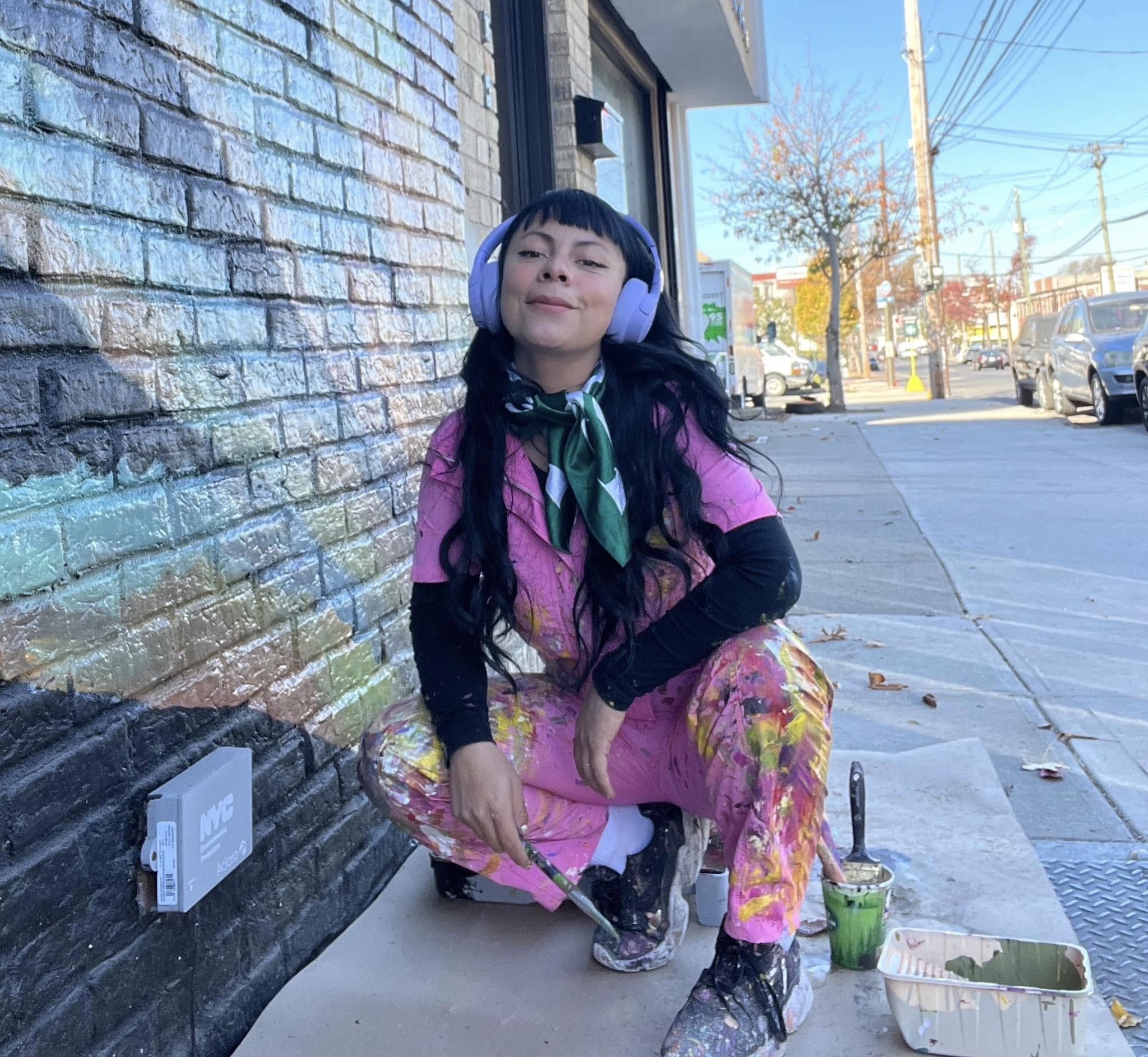
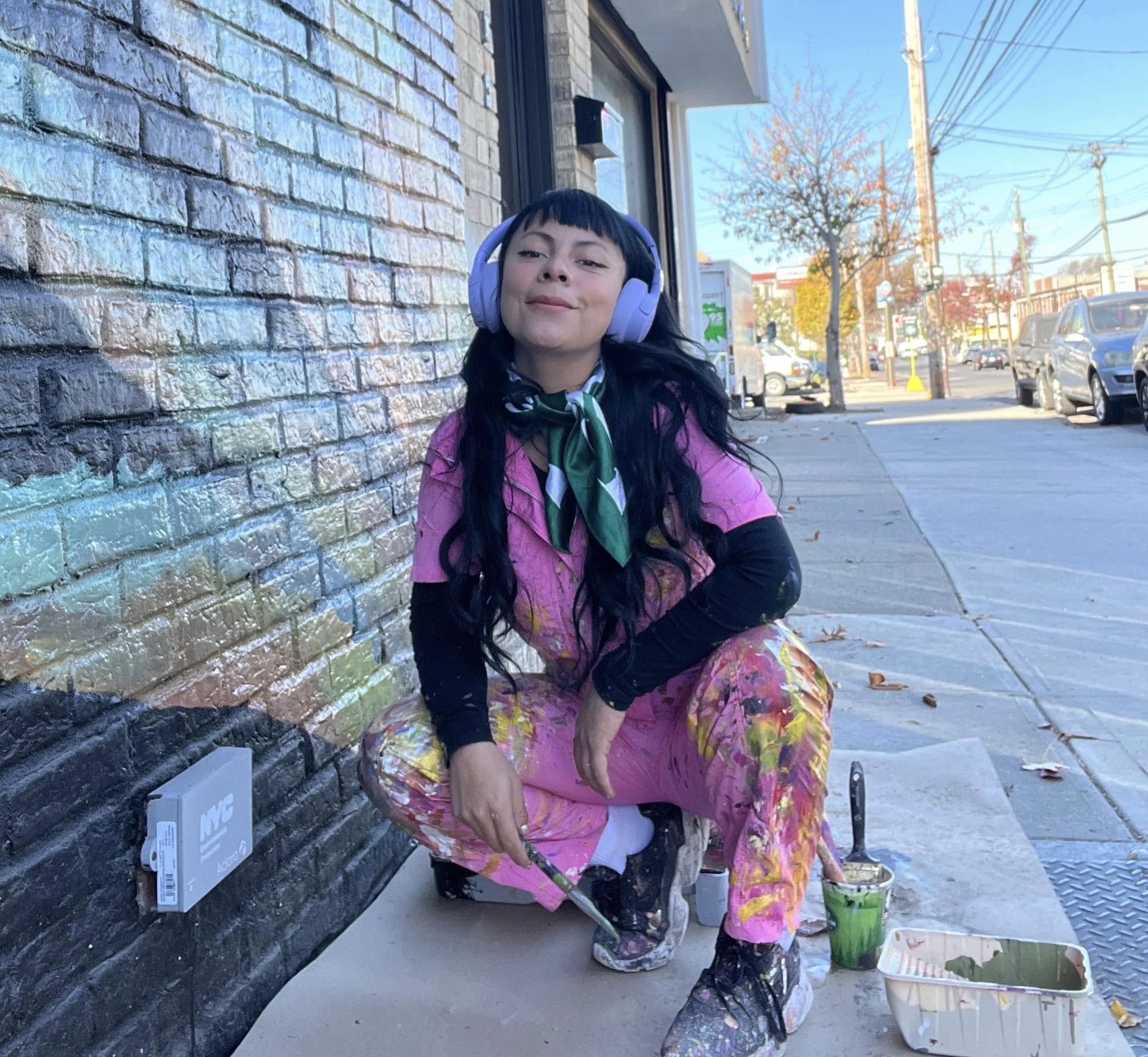
Whenever she’s out painting, Garcín applies certain methodologies she learned during her time in school, which she has further developed throughout her career. She understands the streets as a field of study where observation plays a key role. She carefully watches how people behave around these spaces and then takes her time to speak to them.
Garcín enjoys watching what happens around these places, which then lead her to several concepts that transform into the graphic identity and designs she paints on the walls. Throughout this process, she also loves to photograph the people who appear in her murals.
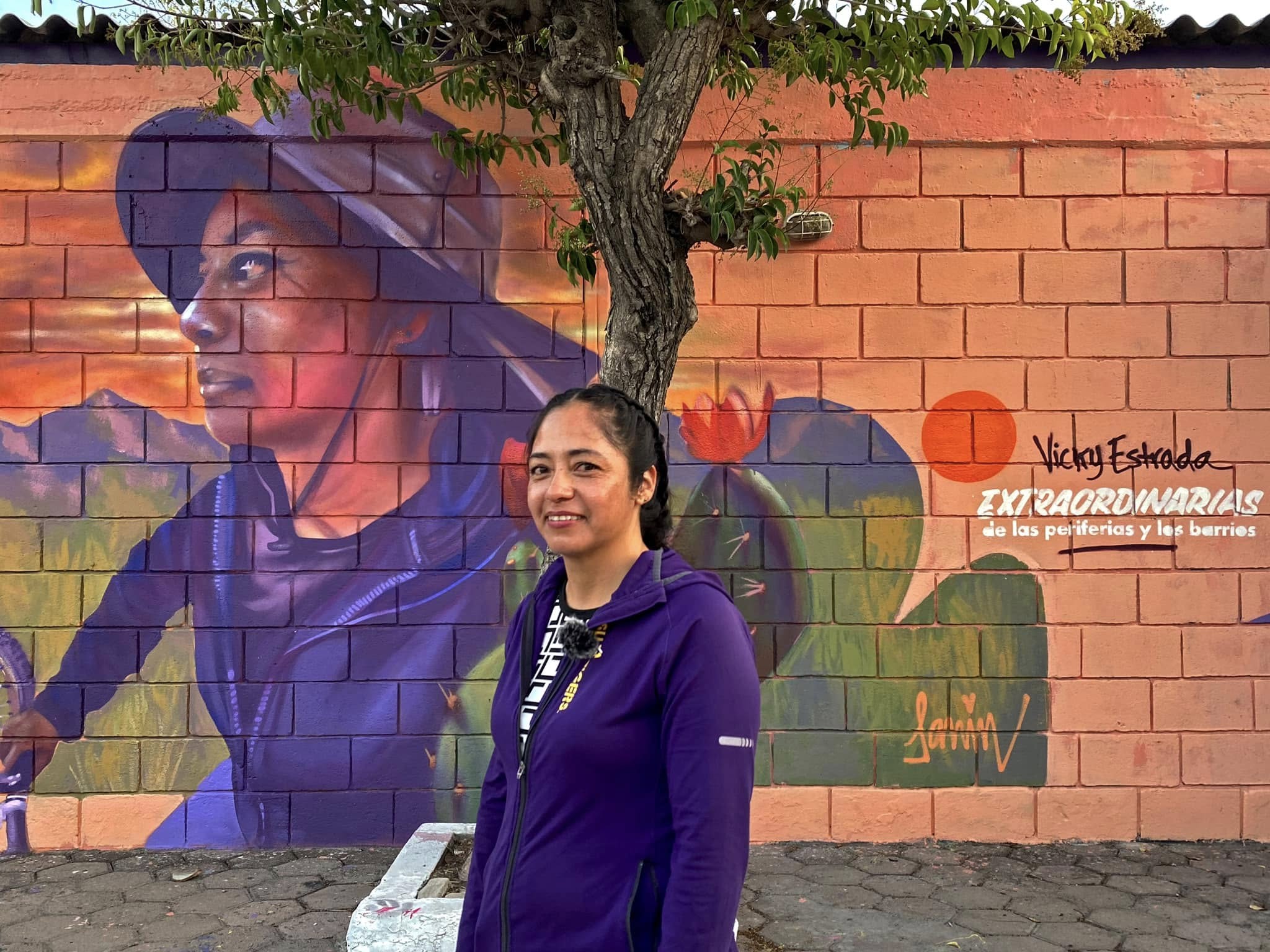
Through these keen observations and active listening, Garcín gets a better idea of what she wants to portray on her huge masterpieces. And depending of whom she’s collaborating with, the themes become more obvious.
“Most of the times, I work on illustration projects that have to do with non-governmental organizations, civil associations, projects that support causes. I have to research a lot or I listen from the lived experience of working women, gender, violence, and domestic workers,” Garcín said.
Listen to Janín
0:00
/37.461
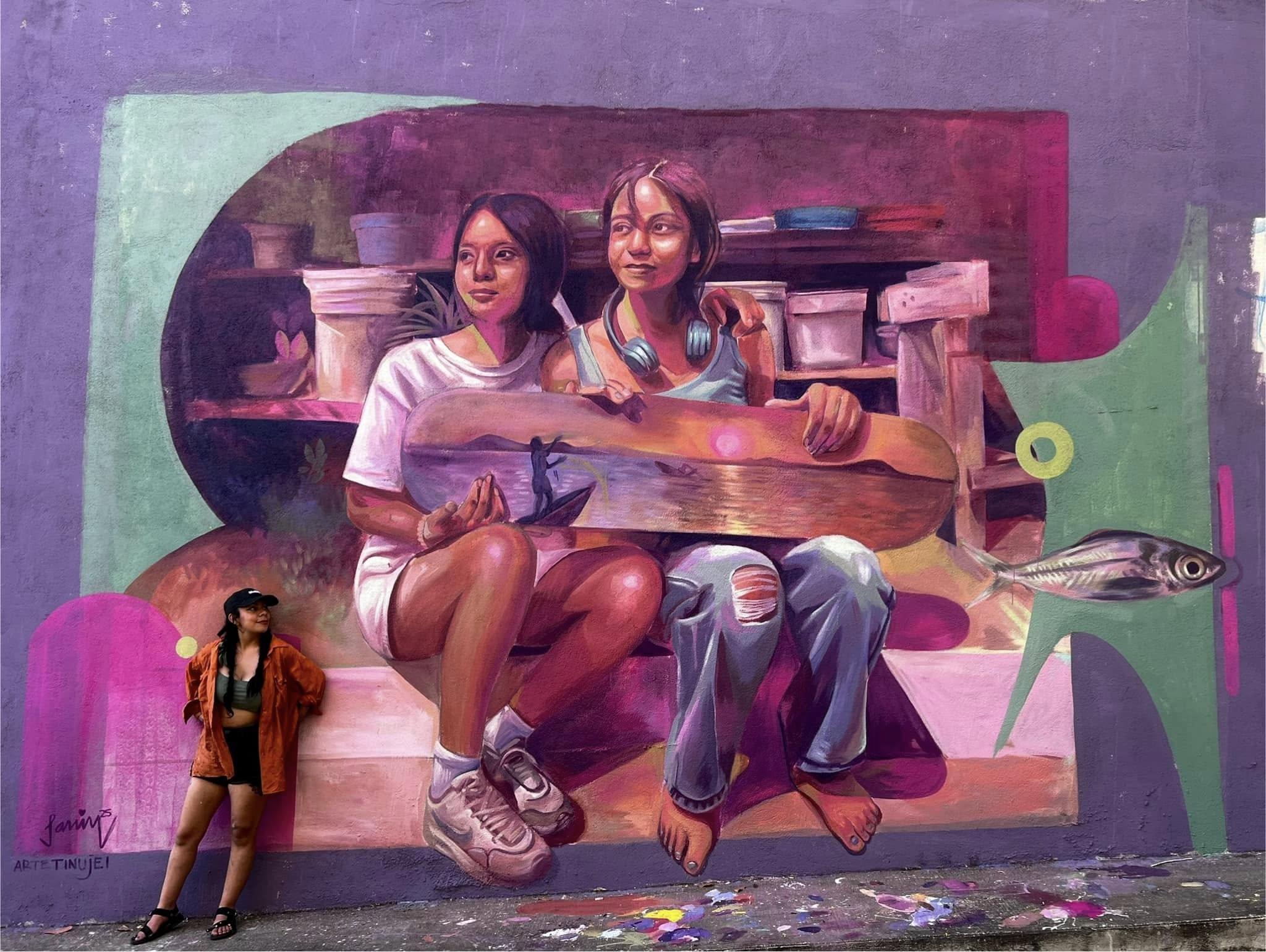
As you’ve noticed by this point, Garcín has a special sensibility for painting social issues. These themes tend to come from what she’s living on a personal level and other things that might come through during the artistic process related to the places she paints at. She’s deeply interested in painting women and observing the dynamics between women.
She also likes touching on the subject of childhoods, animal wellbeing, and raising awareness about the protection of nature. She believes that having this marvelous artistic ability must be taken advantage of to create a connection and help others around her.
Some of the subjects that ring close to her right now are the protests over the worsening of the water crisis in the city of Guadalajara and the searching mothers of Mexico.
“I think Mexico is going through difficult times. Well, it’s been doing so for a while, but right now, I think we’re living the consequences from all of these years of violence. So, accompanying these causes is very necessary from what we know to do,” Garcín said. “It’s about contributing our little grain of sand to make this world not so ugly.”
Listen to Janín
0:00
/24.680167
Garcín has a special sensibility and ability that allows her to transform painful and complex subjects into beautifully colorful masterpieces that speak to its spectators. Two years ago, she was working with some muralist friends and they were painting about the searching mothers of Mexico.
It’s a complex topic to talk about because these are mothers with shovels looking for their daughters and sons buried in the ground. Garcín and her muralist friends had certain difficulties working around this painful issue. They spent several days asking themselves what image to paint because the situation in of itself is already quite heavy.
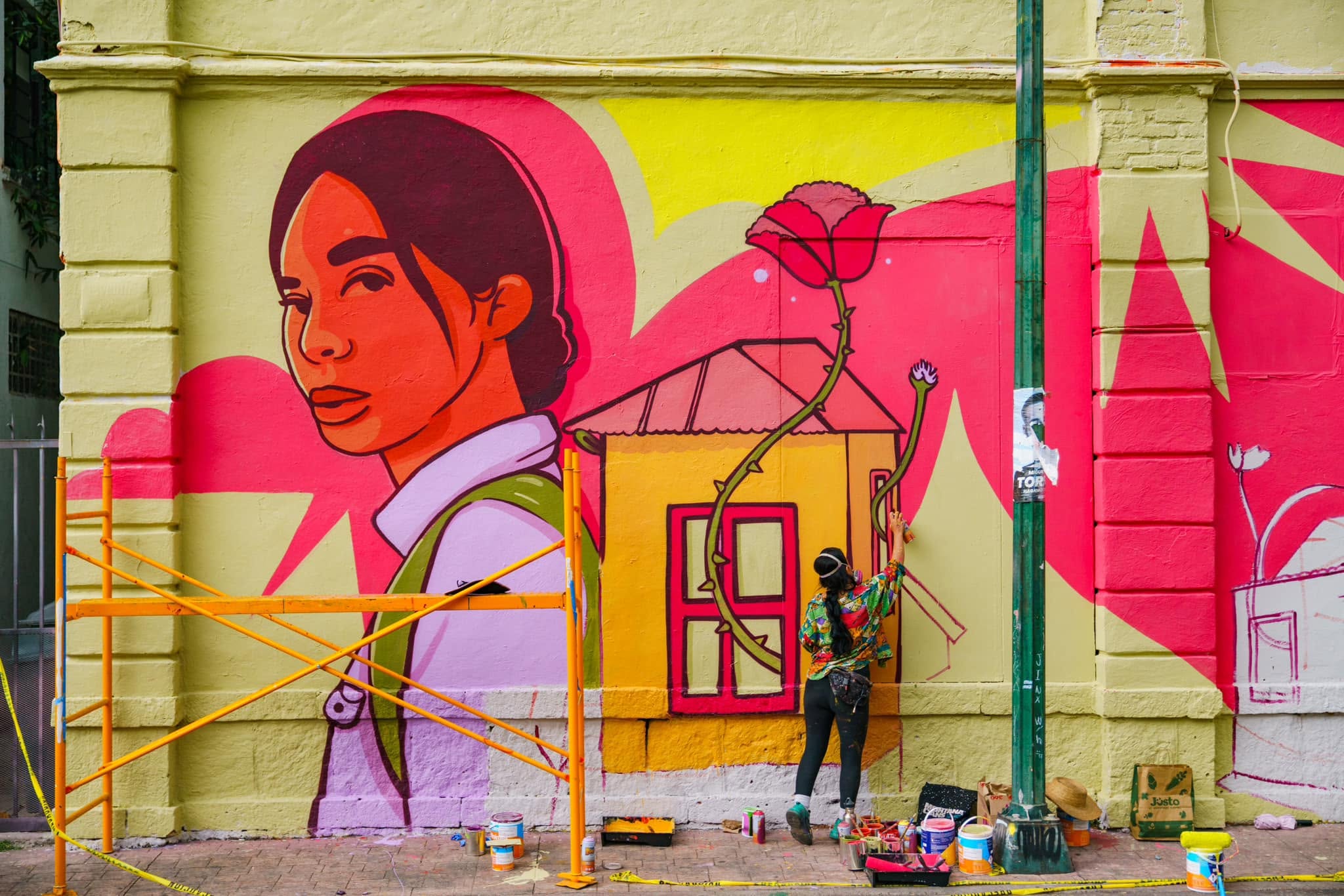
They did not want to create an image that was cruel. They wanted to create with the intention of accompanying these searching mothers who are in pain.
“Art can be that catalyst to communicate something without the need to be so aggressive. Really, really awful things already appear on the news. So, to continue doing or replicating these aggressive narratives in what we do, is not something we’re interested in,” Garcín said. “It comes from the sensibility to speak about something that can happen very poetically in a painting and in the end, people understand it and empathize with it.”
Listen to Janín
0:00
/34.617917
This approach to paint with so much love, care, and intention is what has allowed Garcín to continue speaking about the things that happen in the world, her country, or whatever place you might come from. She sees on a wall and the streets the opportunity to create a masterpiece that has the power to interact in a more natural manner with the people around it.
Messages can be transmitted and received in a more direct way. She becomes the intermediary between what’s being said, the wall, and who sees it. Once a lot of people observe her art, the mural stops being hers. It now becomes a part of those who inhabit the public space.
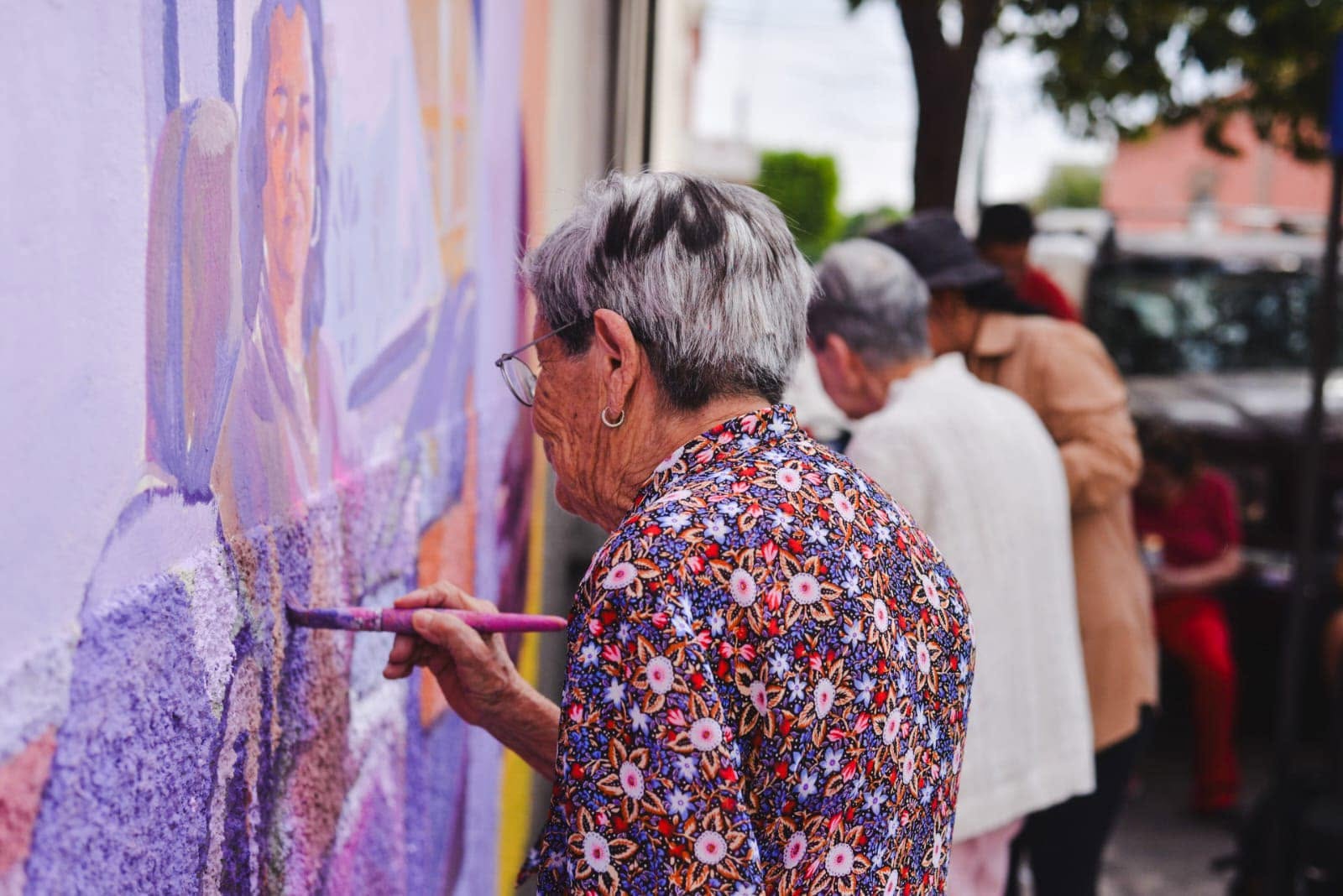
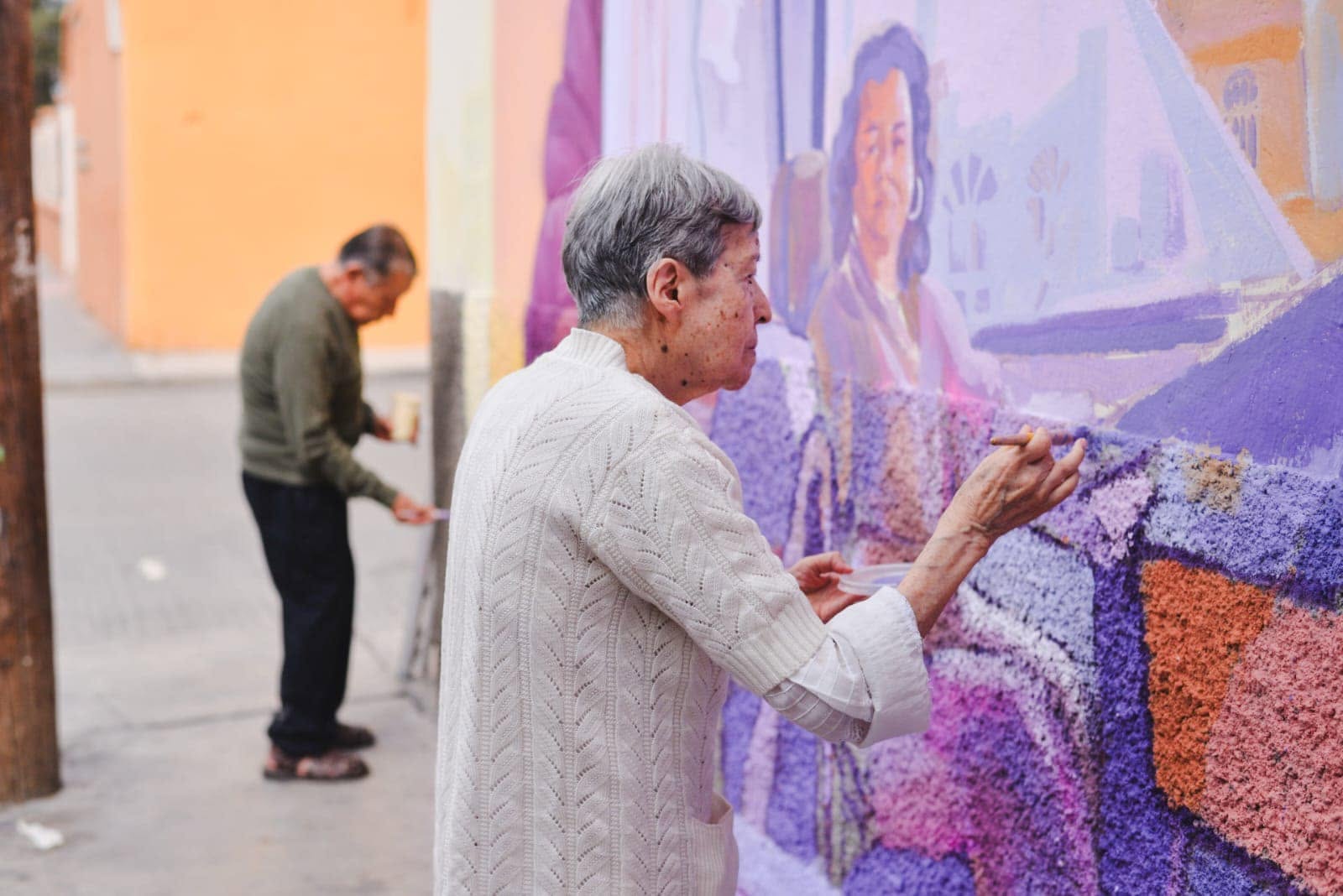
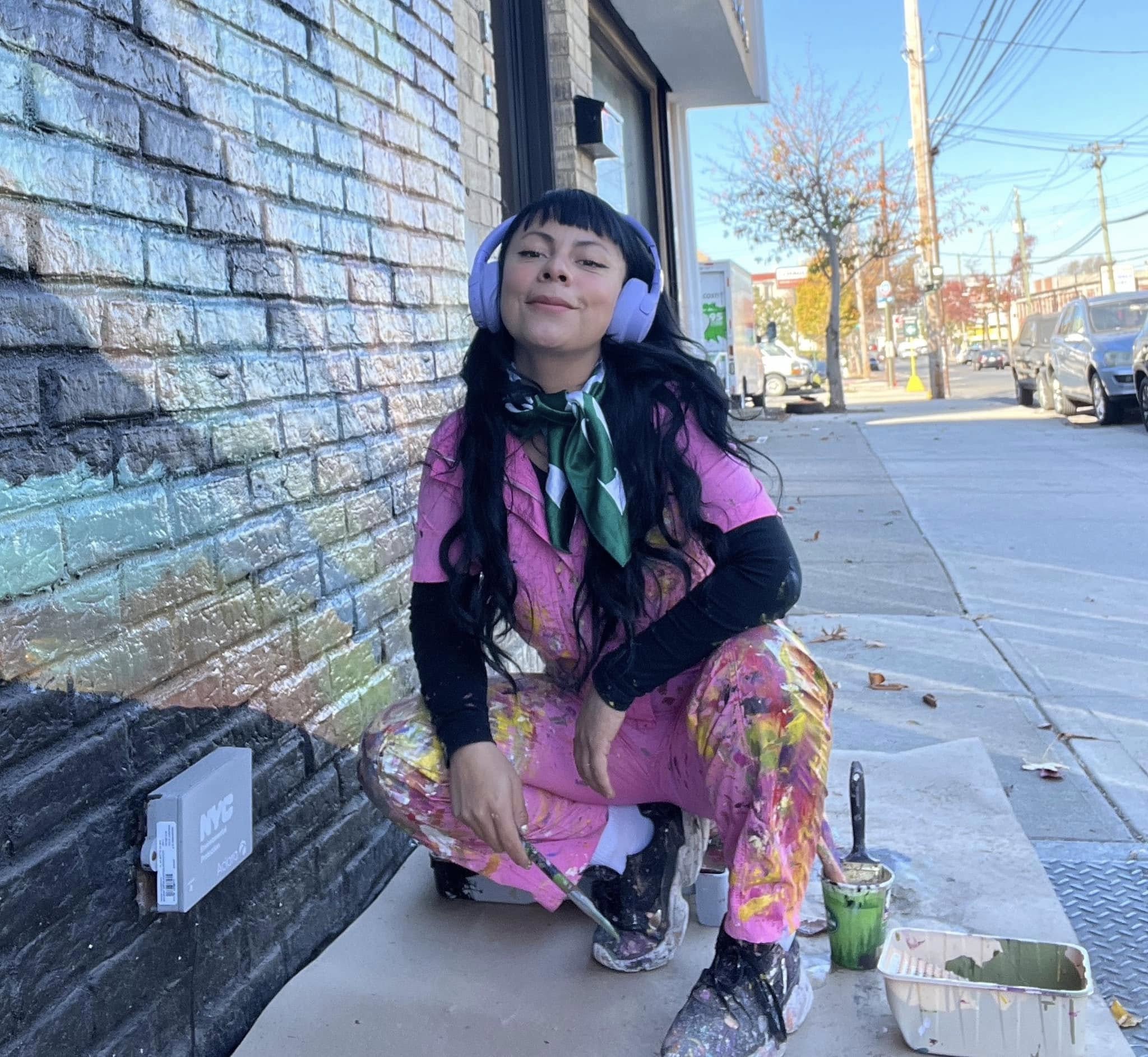
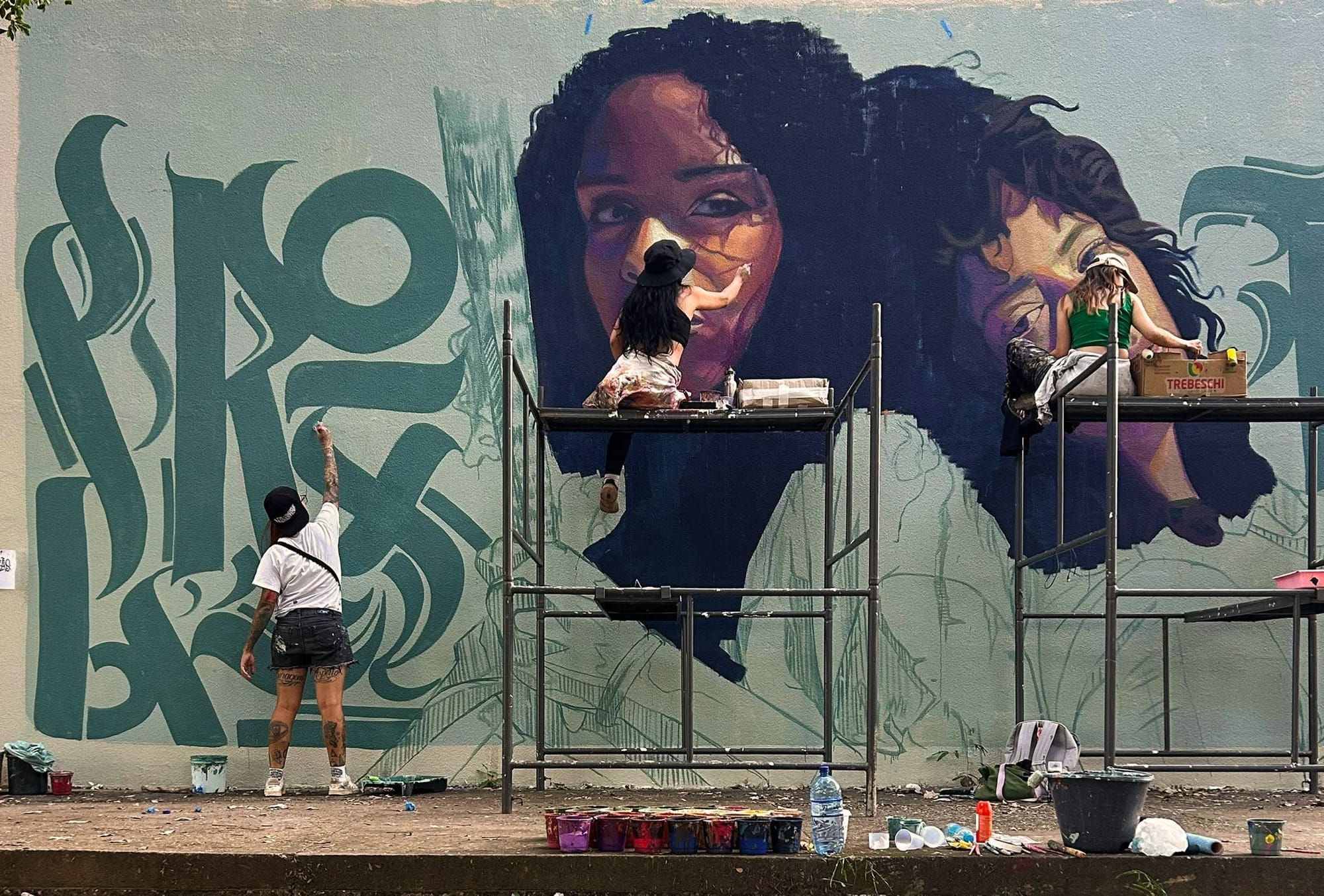
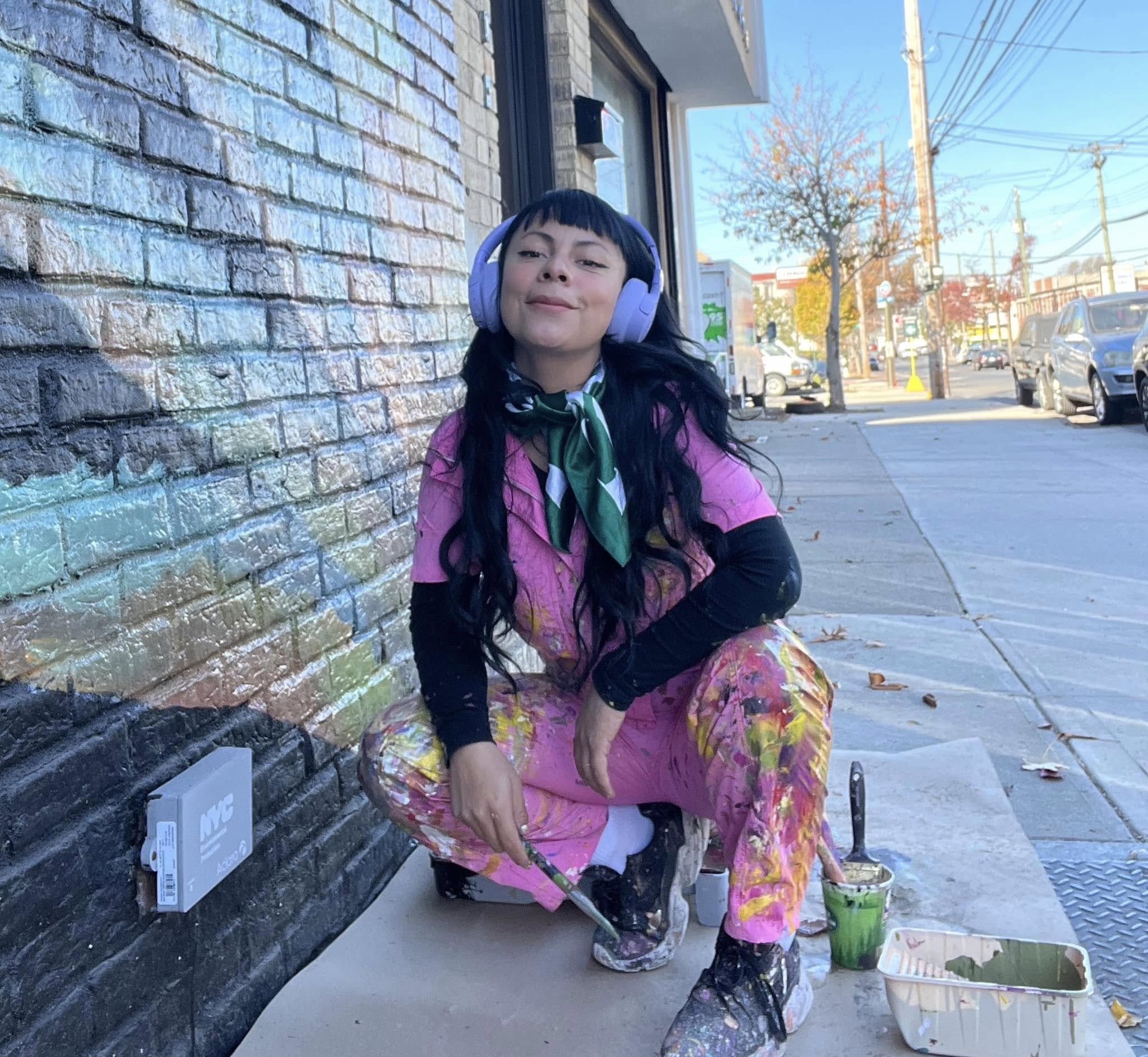
The people from the communities working on the murals. | Photos courtesy of Janín Nuz Garcín. | Impulsiva Stories
This genuine appropriation of the public space by those who transit it also merges with the digital reach her works have on social media. People start seeing her art displayed on these platforms and then get impressed when they see it live on the streets. These digital aspects in the evolution of muralism have gotten to a point in which Garcín said that even governments are participating in this type of art.
Governments have noticed that many messages can be communicated through a giant wall. The ability to paint these pieces creates empathy with its spectators, which leads to more photos and sharing.
The Community Process
Creating this sense of empathy has several elements behind that come together throughout the artistic process. When Garcín works with vulnerable communities, she loves the process more than the results.
“We’re not going to add make up to the place. It’s about the experiences lived throughout the process with the community. Getting there and speaking with them. Telling them that you can live off of art or that art is the expression you can use,” Garcín said. “It’s a tool you can use for this or that purpose.”
Listen to Janín
0:00
/24.184583
While she works with a community, she makes sure to teach several workshops to the people living there. This is for them to learn about pictorial techniques, the use of spray paint cans, or even how these can be tools to use on their day-to-day lives. It’s a practical approach combined with a genuine human interaction that benefits the community.
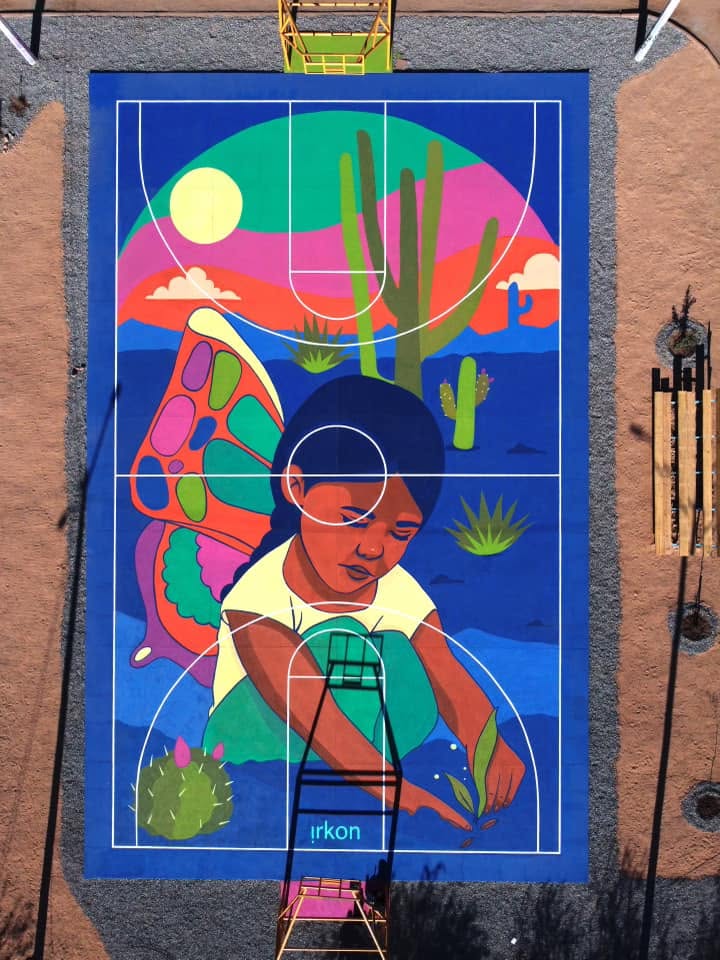
The pieces in which this usually happens are the giant murals and basketball courts. Depending of the mural’s purpose, she might require the help of one other person to create it. With the basketball courts, the story is different. To paint these ginormous courts, she needs multiple persons to help her out.
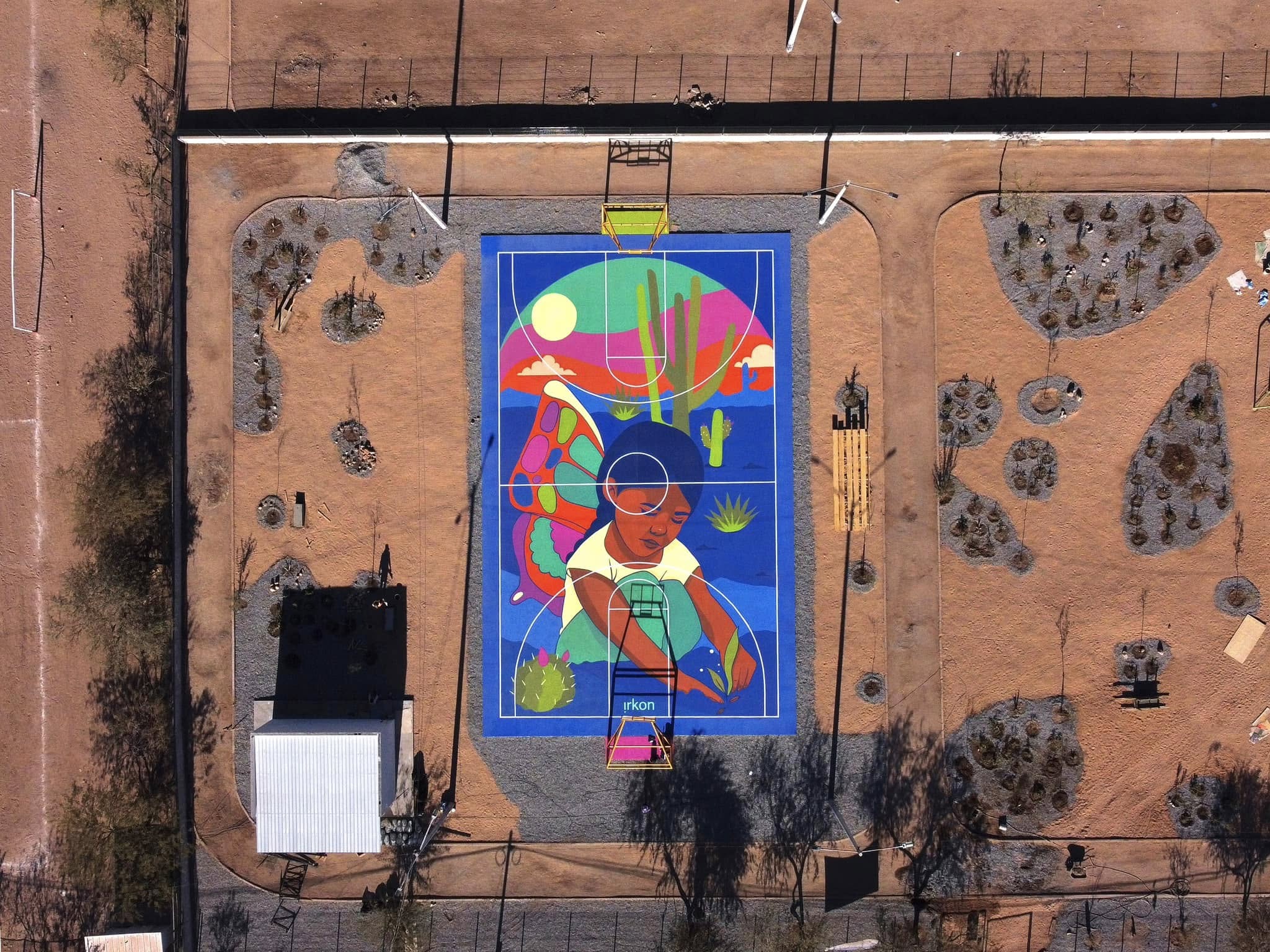
Whoever joins her, comes through with the paint roller and fills in the lines. The artistic practice becomes more collective, but it’s a bit more exhausting than other works of art because of certain particularities in the space. These include the type of paint she’s using, the time for drying, and if it’s rained or not.
The paints used are special for courts because they have to be durable since it’s a space where people are stepping on all the time. Along with this, another pair of “eyes” are added in to this particular pieces.
“These courts’ processes are accompanied with a drone. The drone starts flying on top, every so often to see how the process is going. As you’re advancing, you fly the drone twice a day. By the end of the day, you say: ah, we have to modify this here. Tomorrow we’ll modify this,” Garcín said. “That’s with the drone. It’s like your eyes.”
Once again, Garcín relies on technological and digital tools to get a better understanding of her artwork. This is to have an enhanced way to share her pieces on social media and for them to be appreciated with a bird’s eye view.
The Beautiful Vibrant Identity
The different perspectives of these huge masterpieces are not the only element that draws people into Garcín’s art. A very distinctive characteristic of her work is its color palette. She loves to experiment and play with extremely vibrant and brilliant colors. She’s not shy with them.
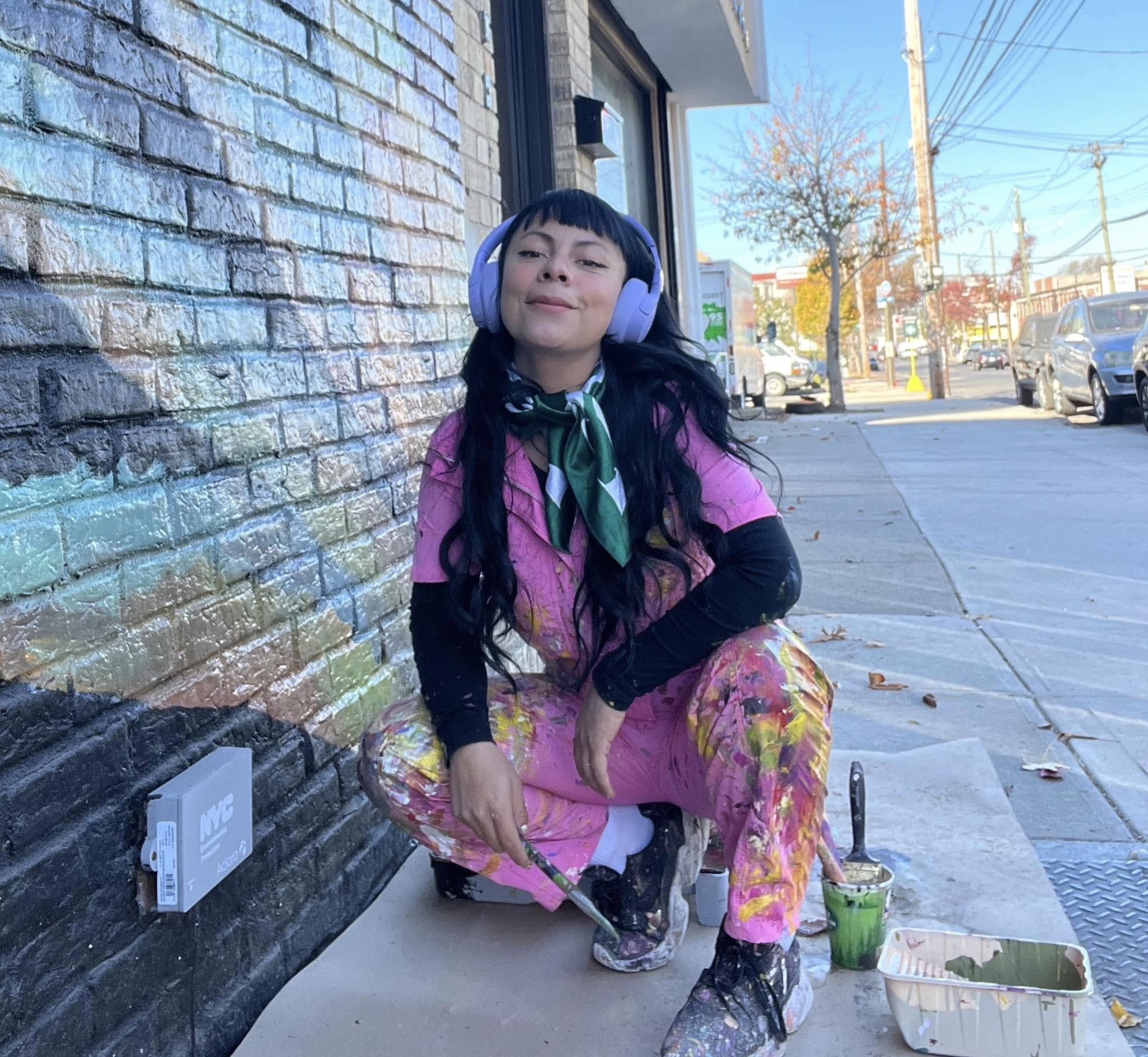
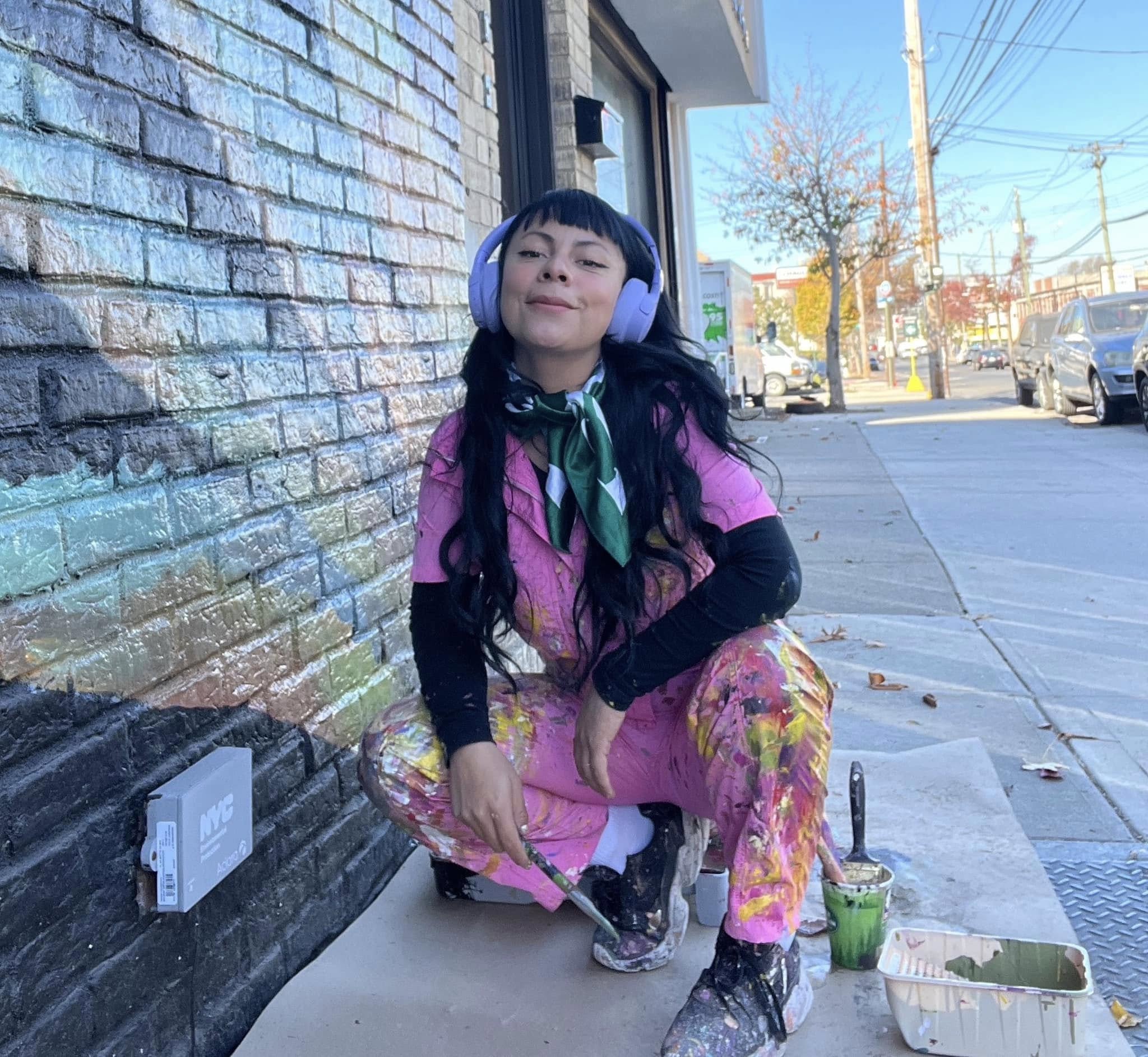
Right now, she’s obsessed with the rosa mexicano; a super vivid and saturated pink tone that defines Mexico. She loves to use it as the base of her paintings. And the same thing happens with orange. She doesn’t hesitate when experimenting with these vibrant colors.
“When I’ve had the chance to travel to Europe, you listen a lot to that. That Mexicans are not afraid of color. We have no difficulties with experimenting with a pink, a purple, and a green. I think it comes from there, from what we observe. Our markets and streets are always full of color,” Garcín said. “The Día de Muertos is coming and you perceive a visually intense thing.”
Listen to Janín
0:00
/34.539667
For Garcín, this use of colors is a reflection of the work done with their graphic identity. It’s part of what she grew up with in Mexico. It’s something that’s been very natural since her childhood. It’s in their markets, their streets, and even the supermarkets’ signs with phosphorescent typography.
Color is present in every aspect of her life, which ties directly with how Mexican and Latin American identity are present in her art. It’s naturally ingrained in her being, which translates to her masterpieces.
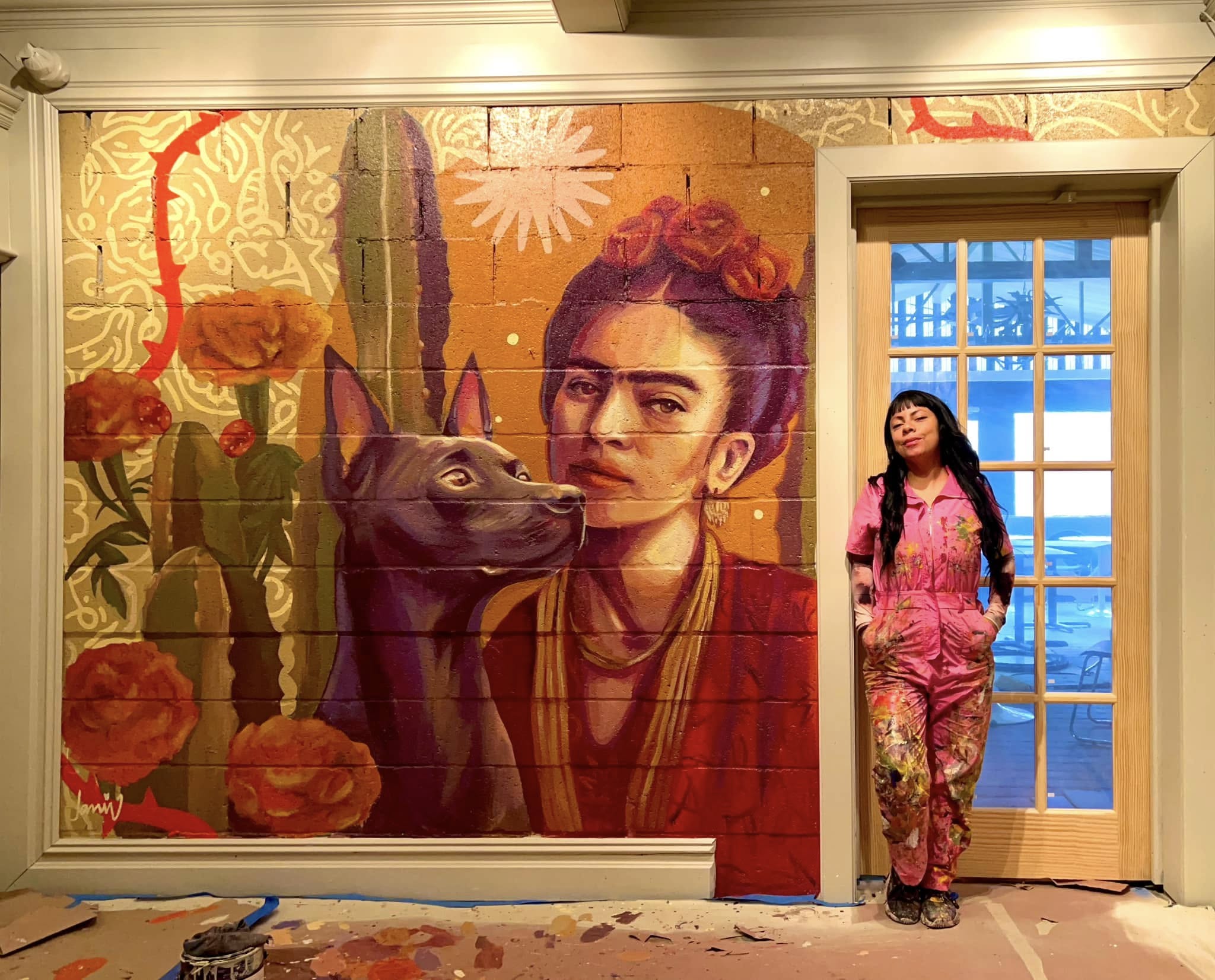
Garcín defines Mexico as color, festivities, and a very warm place that’s diverse with lots of movement going on. A lot of things happening at the same time and that leads her to an even deeper exploration and experimentation with her graphic identity.
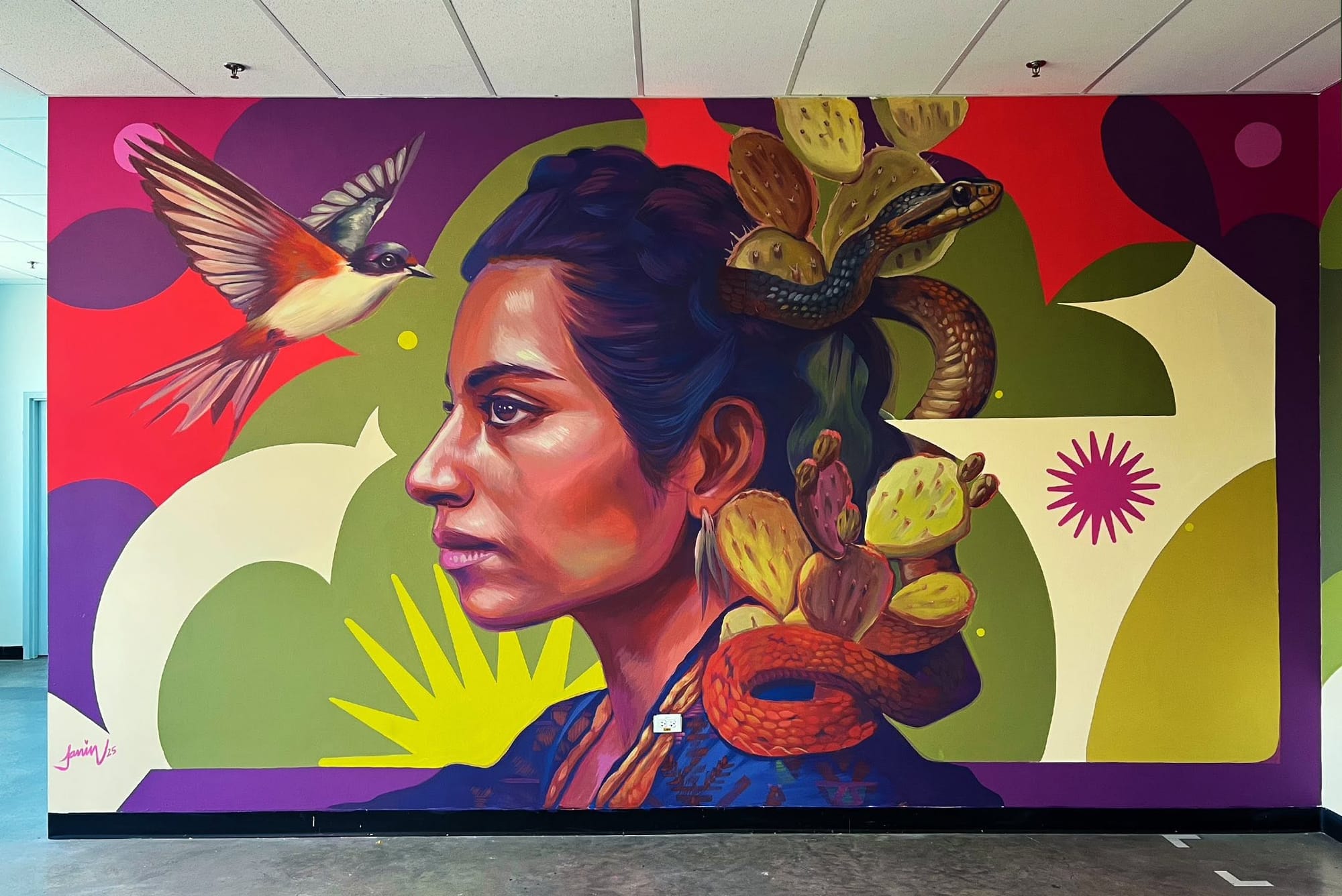
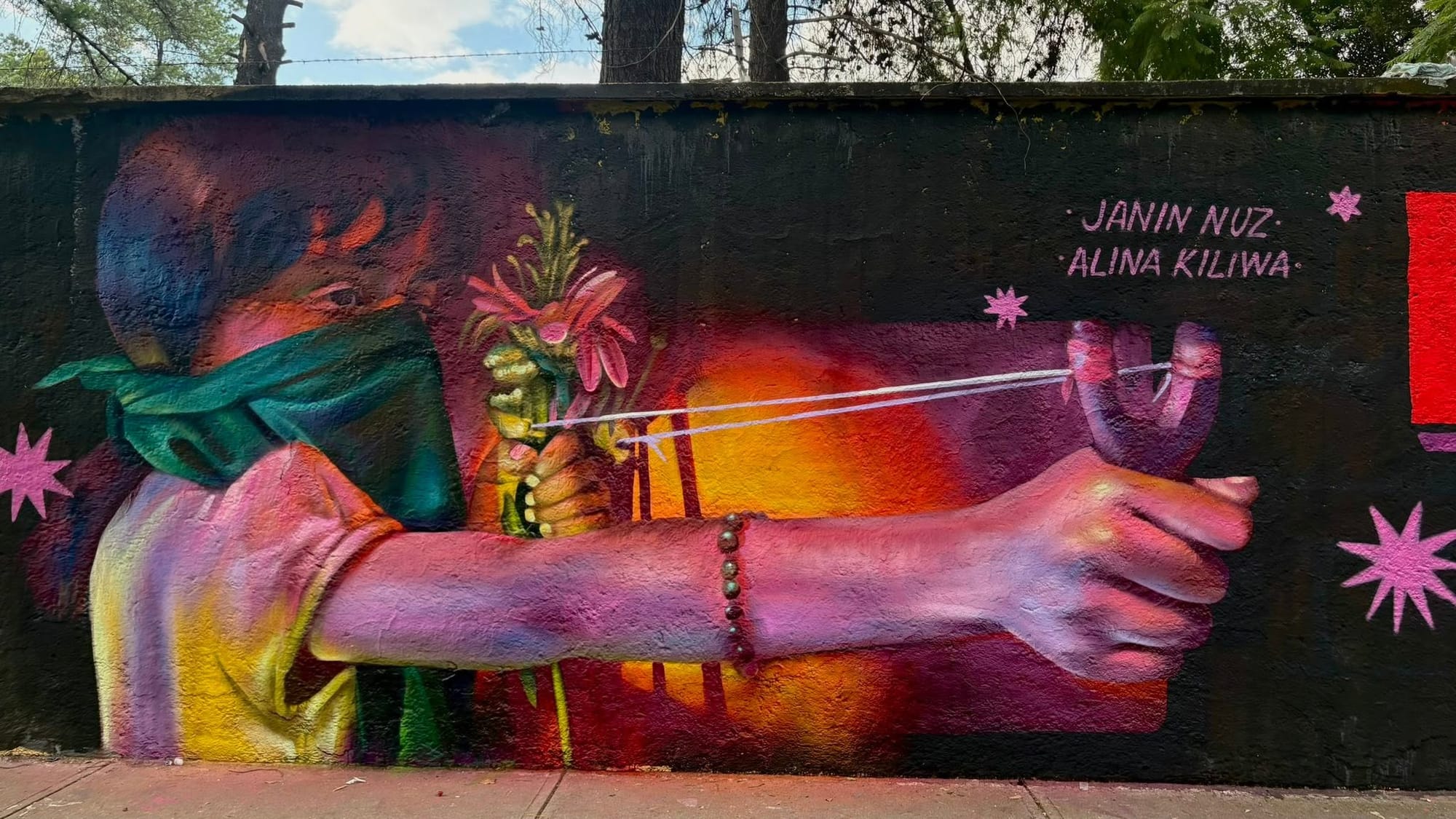
Certain elements like the nopales, cacti, jaguars, corn, Frida Kahlo, and cempasúchil flowers are always present in her artworks. The use of flora and fauna is a reflection of her city’s nature; a place where the desert and jungle coexist harmoniously.
The other elements play a different role in her art.
“I like speaking about what exists in Mexico and what it represents. Like the jaguar, which was an element that spoke about sacrifice in pre-Hispanic times. The corn as well because it’s still very important in our diet,” Garcín said.
This visual representation and symbolism are also portrayed in Garcín’s work showcasing the Día de los Muertos, which is a celebration she really loves. She’s always been very drawn to it because her birthday is in November and she finds it beautiful to honor death through festivities and color. Through the gathering of people who celebrate those who are not here anymore.
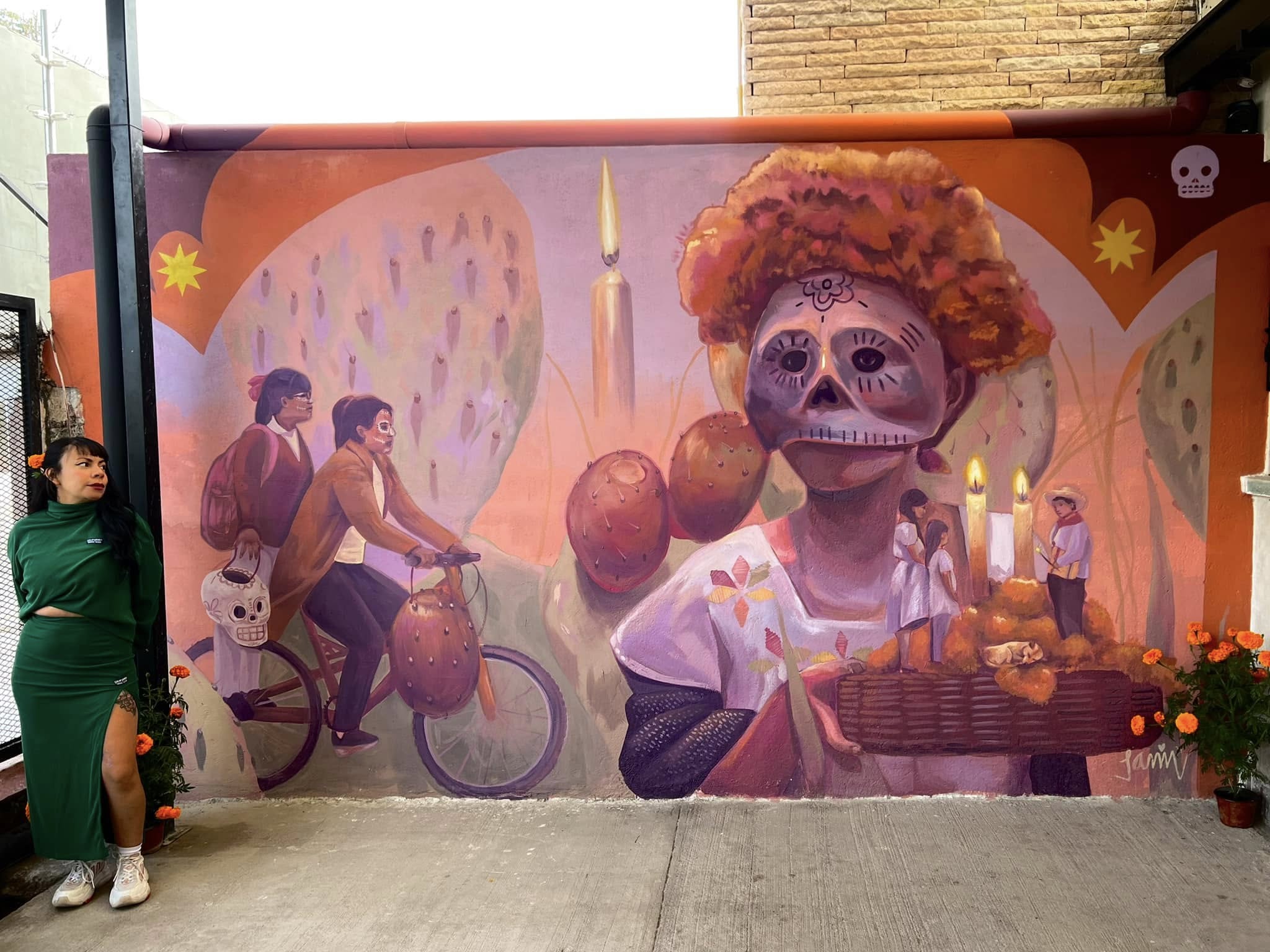
She loves a celebration that carries so much love, color, food, and music. These are particular festivities and colors that reflect a strong Mexican tradition and identity, but they’re also part of a greater Latin American experience for Garcín.
“Being from Latin America is like always bringing that fire and this way of saying things through color, music, dance, [and] in a lot of ways,” Garcín said.
Listen to Janín
0:00
/15.551
What It Means to be a Woman
It runs through the veins of Latin Americans to show up this way. It is also part of Garcín’s self-perception as a Mexican and Latin American woman that’s strongly represented in her murals. Womanhood, in all its shapes and forms, is always quite present in her colorful pieces.
Not only by speaking about the searching mothers, but also by complying with her intention of speaking about real women. She does this so that others can see on the streets that women exist outside of the imposed beauty standards.
Garcín stated that in Latin America there’s the strong idea that beauty has to be in a certain way. So, she wants to speak from a place demonstrating that women live in many shapes, forms, colors, and textures. She did not limit the diversity only to physical appearance because she also speaks about the different professions and things that women do.
“I love to keep speaking about women because in these times, after years of fighting back, we’re in a regression. They want to implement these ideas that women can’t vote or that women can’t have a voice and another person has to decide for us,” Garcín said vehemently. “It’s also about resisting by making ourselves visible in the public space.”
Listen to Janín
0:00
/29.55775
Providing visibility and creating representation for women in her giant murals is of utmost importance for Garcín. That’s why she paints real women who exist in real life and whose bodies are diverse.
She portrays bodies that have lonjas (rolls), curves, stretch marks, spots. Bodies that carry stories that define them as integral human beings.
“I think our body is like a map that houses scars. That houses spots. That houses lots of things that, in the end, make us unique because of what we’re carrying,” Garcín said.
Listen to Janín
0:00
/14.794583
That’s why Garcín thinks being a woman is a very beautiful experience. It’s a shared experience with the women that surround her, whether that’s friends who are lawyers, photographers, writers, or mothers. Through this diversity she finds people who accompany each other with whatever they’re facing in their lives.
It’s a beautiful experience, but also a complex one in Mexico.
“We’re living in times of a lot of violence in Mexico and because of that, it’s about finding ways to be alive with what happens outside or inside the homes. Also, being a Latin American woman, from this territory, is beautiful,” Garcín said. “Even though we’re from very diverse countries, we have the same fights, causes, and maybe, we accompany each other digitally.”
Listen to Janín
0:00
/55.588917
Then, those digital barriers are broken and Garcín gets to meet all these Latin American women who have many things in common with her. This is all part of how she paints colorful Mexican identity, whether that’s giant murals on the streets, ginormous basketball courts, or vibrant illustrations.
It’s all part her mesmerizing masterpieces with a super local Mexican identity and culture defined that have taken her around Latin America, the United States, and Europe. The fascinating artworks that turn a street into its own gallery while speaking about social issues that affect her and those around her.
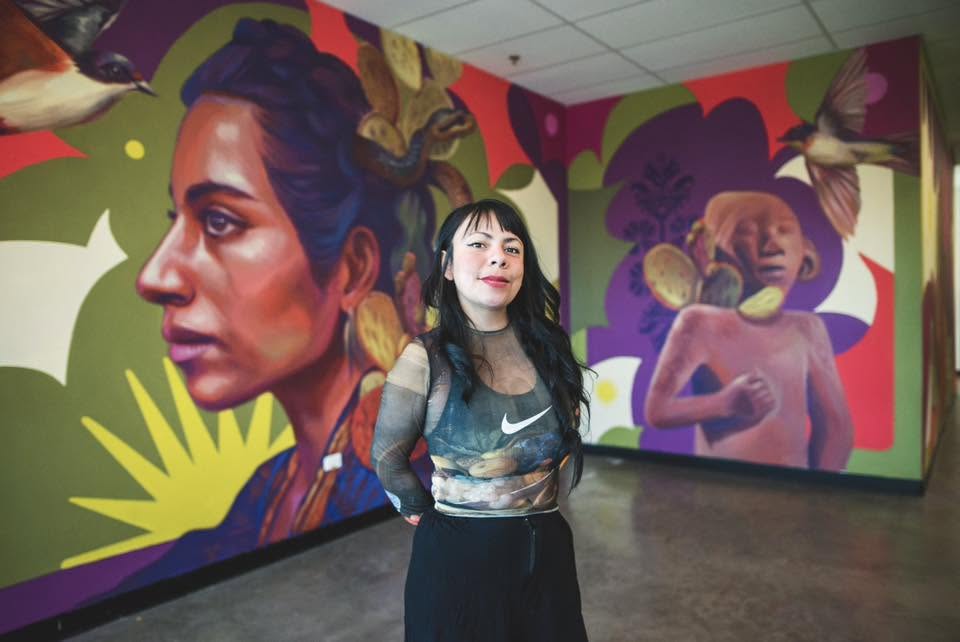
They’re impressively massive works of art that remind every girl and woman what they’re capable of through enticing vibrant tones of pink, purple, and orange.
“It’s very important for other people, and mostly, other people who are starting out. Mostly girls,” Garcín said. “For them to see that they can do things with the little drawings they started making when they were little.”
To learn more about how Janín Nuz Garcín paints colorful Mexican identity, you can follow her on Instagram at @janinnuz.
Written by

Subscribe to my newsletter
Subscribe to my newsletter to get the latest updates and news