Kacho López Mari PART I
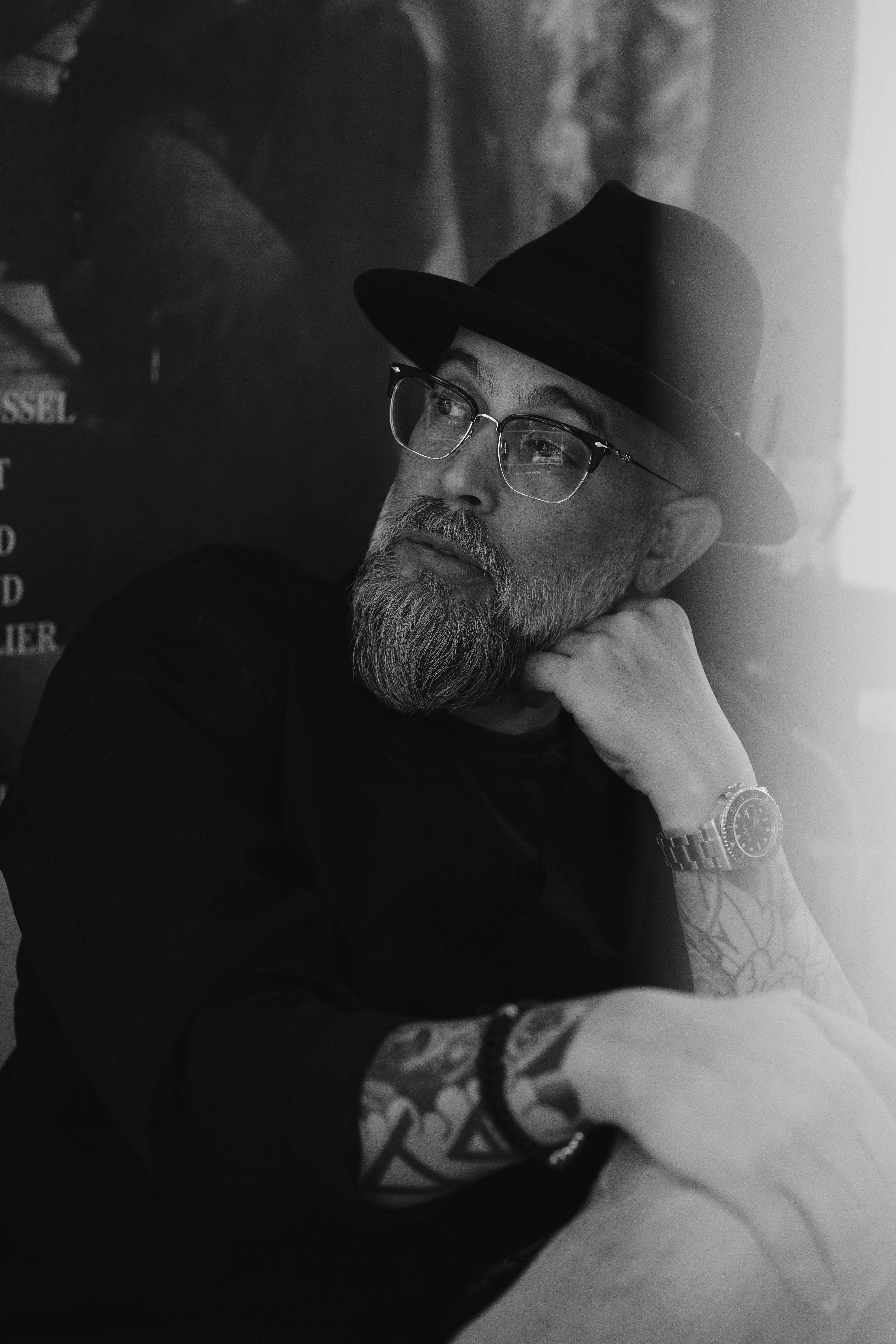
Kacho López Mari is a Puerto Rican film director and artist who created some of Bad Bunny's most timeless and iconic music videos.
PART I: Kacho López Mari’s Timelessly Iconic Music Videos for Bad Bunny
For Kacho López Mari, art is the human expression. It’s how humans think about their experience and then transform it into expression. It’s not a specific thing and most of the time its apreciation is in the eye of the beholder. For him, on a personal level – both art and filmmaking – are his way of surviving and living.
“Filmmaking is in all of my life’s spaces. I owe filmmaking everything that I am and all the possibilities I have as a person. It’s given me a great life. Filmmaking is also like art. It’s a sort of mystery,” López Mari said. “It’s difficult to explain. It’s many things.”
The renowned, seven-time Latin Grammy nominee and two-time Latin Grammy award-winning Puerto Rican film director and artist, believes filmmaking is action in movement printed in different mediums. These can go from analogue film to digital film. It has to do with the ability to combine action sequences to narrate and communicate a message.
Sometimes it’s also a craft in which many abilities and talents come together. Different elements such as design, the visual arts, and literary and narrative elements merge harmoniously. There’s a poetic stance for López Mari when creating different visual narratives that engage and impact the audience.
“It’s the youngest art and that’s one of the things I love about filmmaking. That, somehow, it’s a combination of that craft that you learn and practice. It’s a practice and the most mysterious dimension is the creative dimension,” López Mari said. “The dimension of the ideas. Of the vision of the concepts that you then turn into filmmaking and a craft.”
Then, that connection of ideas goes down on paper for López Mari. Afterwards, it’s time to pick a team where they can execute the idea in the form of a visual narrative portrayed on screen. And once it reaches the world, the audience is the one who decides what to do with it.
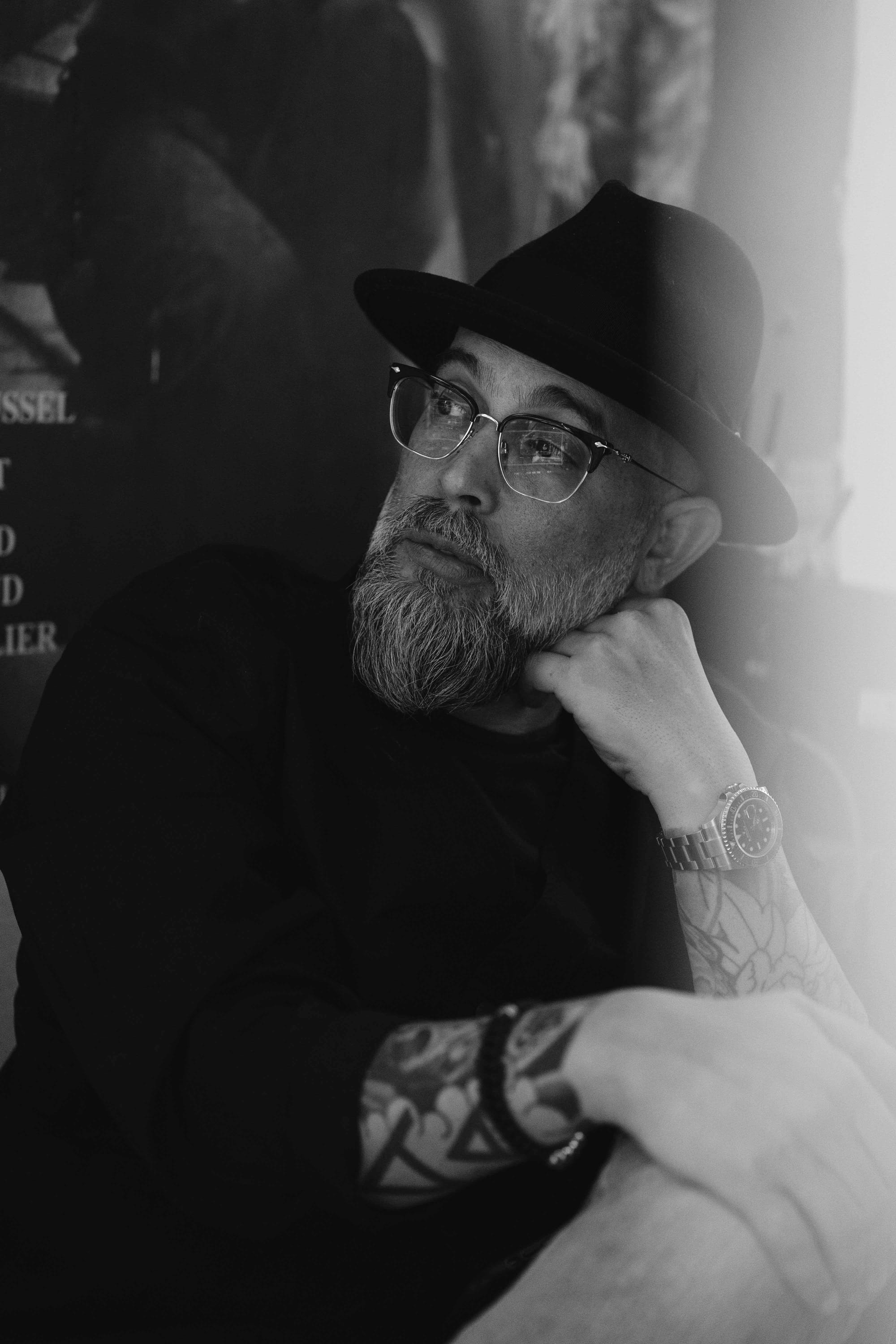
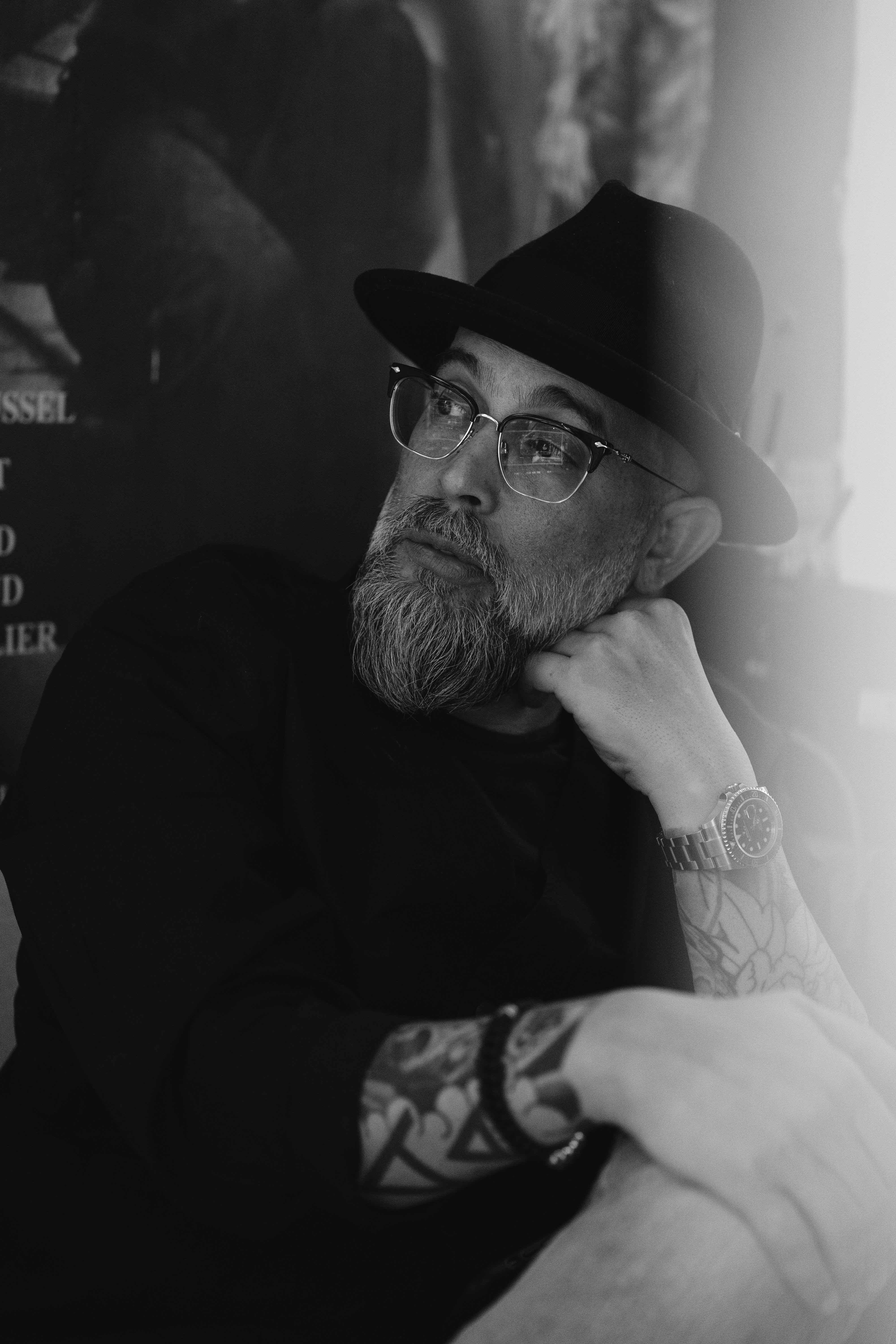
López Mari’s most direct connection with that process is the music video. It’s what has defined his impressive career for more than twenty years. He describes it as a river. A sort of giant energy that keeps him working, collaborating, and traveling all over the world until this day.
The music video has become a whole-hearted and spiritual art form where he can directly connect with the audience and contribute to society in a positive way. It’s also one of the art forms that speaks for him instead of defining himself because that definition might change tomorrow.
Don't Forget to Subscribe to
The Story of The Story
For only $16 a month, every Friday you'll have exclusive access to
The Story of The Story. Our founder, the Costa Rican award-winning multimedia journalist and artist Elizabeth Lang, guides you through her creative process to produce her stories.
But speaking from the artistic perspective, he sees himself as someone who understands art as a science. Someone who’s open to reality changing his way of thinking and someone who’s open to completely new ways of creating and new visions of the world.
“I’m always open to change my opinion on different aspects and trying not to close myself to encountering the discovery of something different. Of something better,” López Mari said.
Listen to Kacho López Mari
0:00
/41.309333
The Creative Process of Puerto Rican Masterpieces
Keeping his mind open to all the possibilities that the artistic process and life offer is a staple of López Mari when creating timelessly iconic music videos. Maybe, that’s one of the reasons why he’s been the film director behind some of Bad Bunny’s most iconic and important songs such as “Callaíta,” “El Apagón - Aquí Vive Gente,” and “BAILE INoLVIDABLE” – all of which have defined global and Latin American pop culture.
The process for each music video has been very different from each other. It’s also been a collaboration of continuous evolution between López Mari and Bad Bunny – who is currently the world’s number one artist – as artists and creatives.
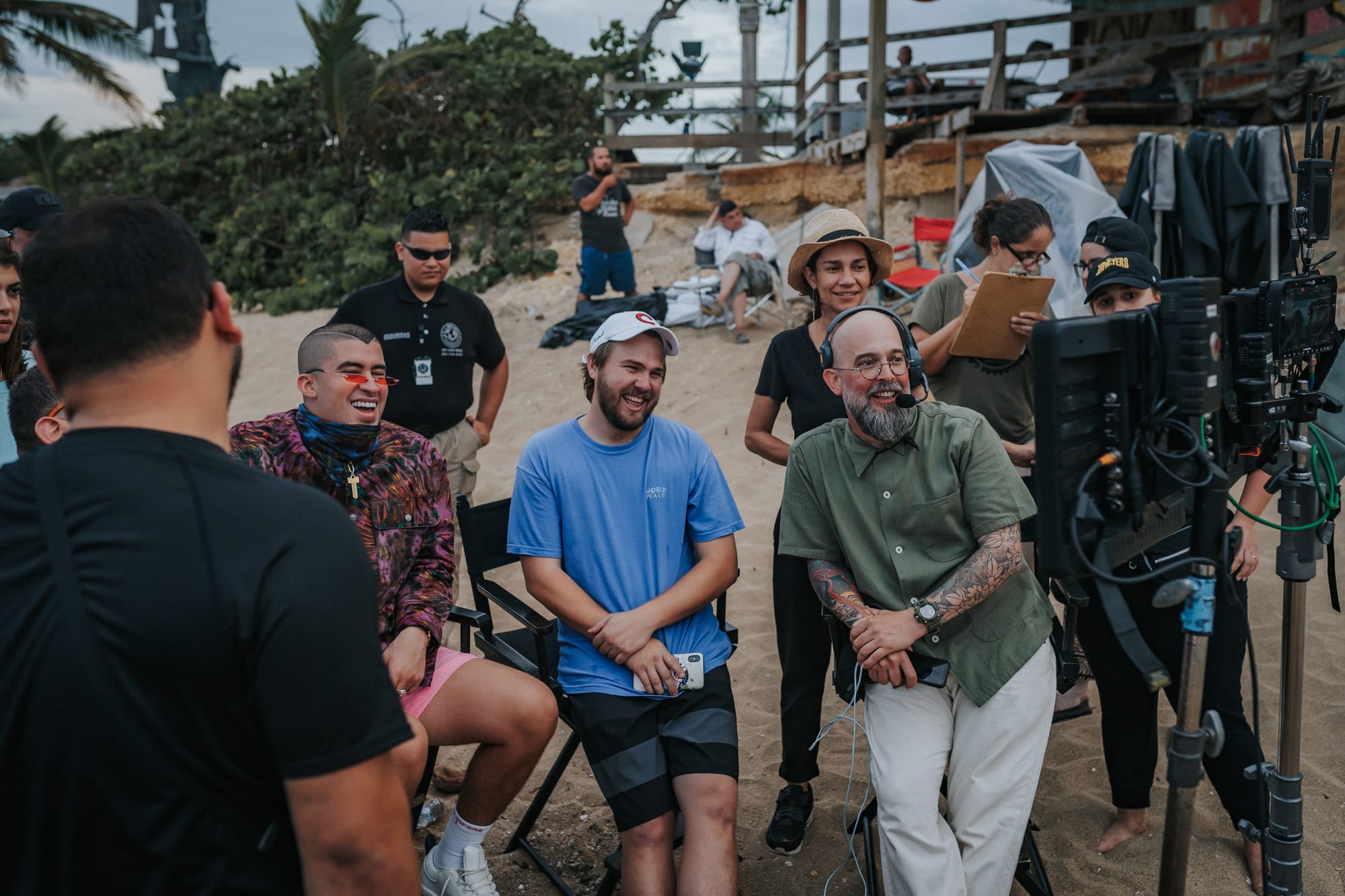
Creating a music video starts with the song, deciphering the imagery that could represent it better, and listening to the person who wrote the song. López Mari needs to understand the artist in the best way possible to represent him or her in a dignified manner.
And that then leads to asking himself a very important question.
“How do I create something that’s memorable? Something that’s interesting. In my case, I like the narrative aspect as the base for filmmaking,” López Mari said. “It’s a way to captivate the spectator by creating a sequence where you can’t stop watching because you want to know what will happen or what won’t happen.”
López Mari believes that the music video serves as a narrative lab where he can experiment and that’s exactly what happened during the creative process for Bad Bunny’s “Callaíta” music video.
It all started with Bad Bunny’s clear idea of creating a music video that transports young Boricuas to the perfect summer.
“He used the words: que los chamaquitos lo vean y quieran estar ahí. That’s where the idea comes from. The perfect summer is the Boricua summer at the beach,” López Mari said. “It’s in the coast. It’s in the water.”
Listen to Kacho López Mari
0:00
/25.493333
They went to a site near Vega Baja, which is the place where Bad Bunny was born, grew up, and studied. The music video was filmed in Arecibo. It had to be so iconic and timeless, that it should have a scene that's difficult to imitate. That’s when the idea of setting up a carousel in the middle of the beach came to life.
According to López Mari, it was a difficult task to achieve because it took them various days to set up the carousel on the beach without affecting the environment. The protection of the natural resources was of key importance for the team. They couldn’t bring in vehicles, so the carousel’s pieces were taken to the beach with a giant crane, which took them two days to completely build the ride.
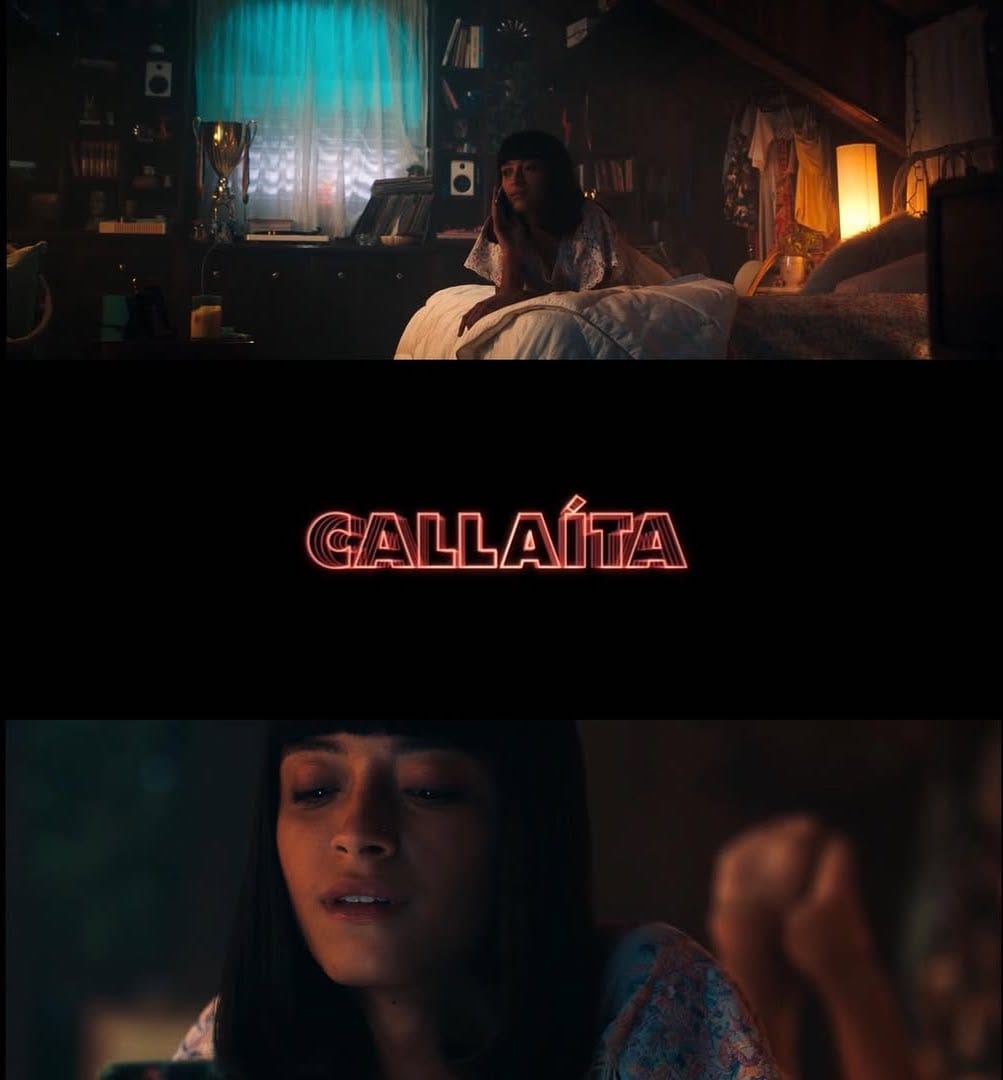
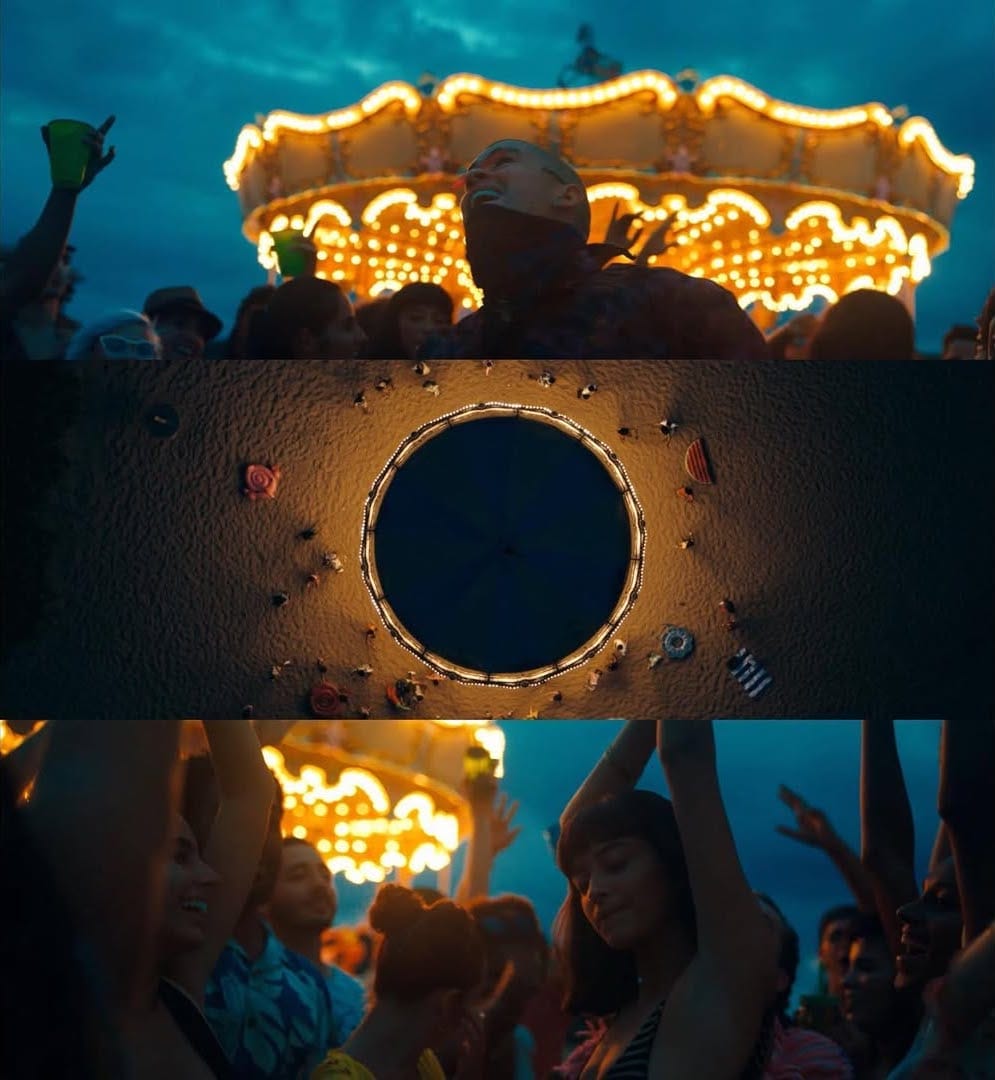
Stills from Bad Bunny's music video "Callaíta" directed by Kacho López Mari. | Photo via Kacho López Mari's Instagram | Impulsiva Stories
Besides that, López Mari was in charge of shaping the aesthetics and the narrative of the woman’s character. He needed to create that feeling of the perfect summer in Puerto Rico and it was achieved with his great use of the different contrasting tones of light blue and yellow.
This was the very beginning of the first chapter of López Mari and Bad Bunny’s impressive collaborative story depicting and showcasing Puerto Rico under a light of genuine love and pride for their Caribbean island. This very first chapter in the form of a marvelous music video was López Mari’s first-ever video to achieve one billion views on YouTube.
The music video was released in 2019, so Bad Bunny was not yet at the top of his global mega stardom and the process was a bit different between both artists.
“In Callaíta, before going to the set, I spoke with him for ten minutes. In those ten minutes, he told me: this is what I want to do. I want to do tal, tal, y tal,” López Mari recalled. “So, I left, wrote the music treatment, it was approved, and I did not speak with him [again] until I got to the set.”
“El Apagón” and its People
Then, the process for the music video-turned-documentary “El Apagón - Aquí Vive Gente” happened, which was quite different. López Mari recalled that Bad Bunny had a more structured and concrete concept of the idea he wanted to execute. He remembered Bad Bunny already knew he wanted to film the first part of the piece in Villa Palmeras. This is the place where the renowned Puerto Rican composer and salsa singer Ismael Rivera, better known as Maelo, was born.
“Maelo Rivera sings a song called Controversia and that song Controversia, is what Benito samples in El Apagón. The drums,” López Mari said. “When he sings at the beginning. That first part of the song – the rhythm of the song – comes from a sample of Controversia by Maelo Rivera.”
Listen to Kacho López Mari
0:00
/44.621333
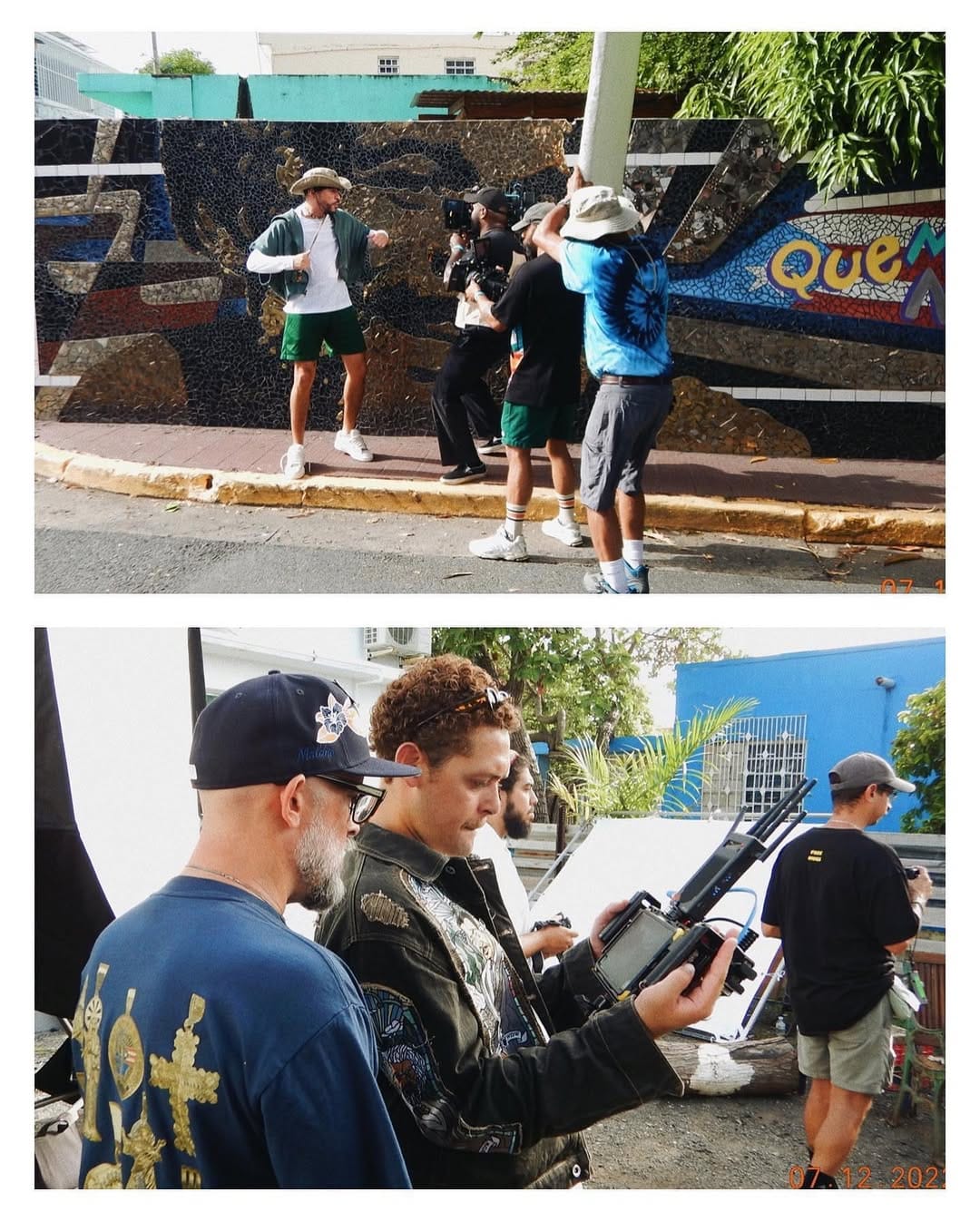
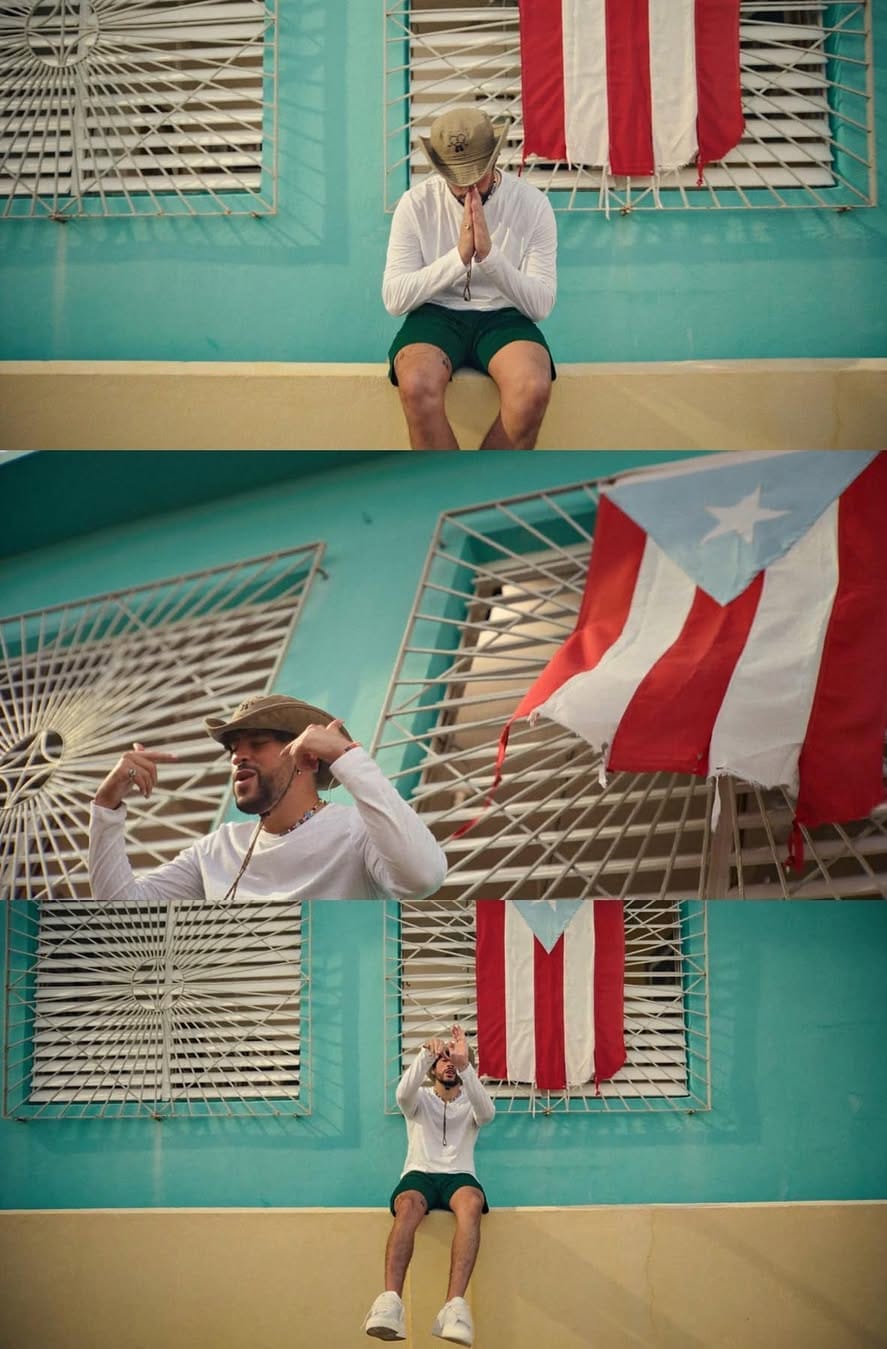
So, Bad Bunny asked López Mari and the team to go to Maelo Rivera’s neighborhood. That’s why Bad Bunny sings in front of a mosaic mural with Maelo Rivera’s giant face and in front of a blue wooden house with yellow bars. That particular building is Maelo Rivera’s house, which is now the Casa Museo Ismael Rivera.
Bad Bunny was very clear about filming the first part of “El Apagón - Aquí Vive Gente” there and the transition to the next scene obviously had to be iconic as well. López Mari initially thought of creating a scene in a party where an apagón (blackout) occurs and the people then turn on their cell phones’ lights to continue partying.
He imagined all of this happening inside a tunnel. He even thought about this before he was called to direct the music video-turned-documentary. Once they called him, the perfect location for that party came to life when he was sharing the idea with one of Bad Bunny’s producers.
“He said: ah mano, that looks like Guajataca. And I saw it like this: oh shit. That’s it. That’s the location. There’s nothing else to look for,” López Mari said. “Guajataca, where the video was filmed, is an emblematic place because lots of electronica parties happened there and it’s right next to the beach.”
Listen to Kacho López Mari
0:00
/46.397333
It’s right next to the beach because it connects the towns of Quebradilla and Isabela. It was also part of the railroad system that served as transportation of goods and passengers throughout all of Puerto Rico a long time ago. Its aesthetics worked perfectly for López Mari’s idea.
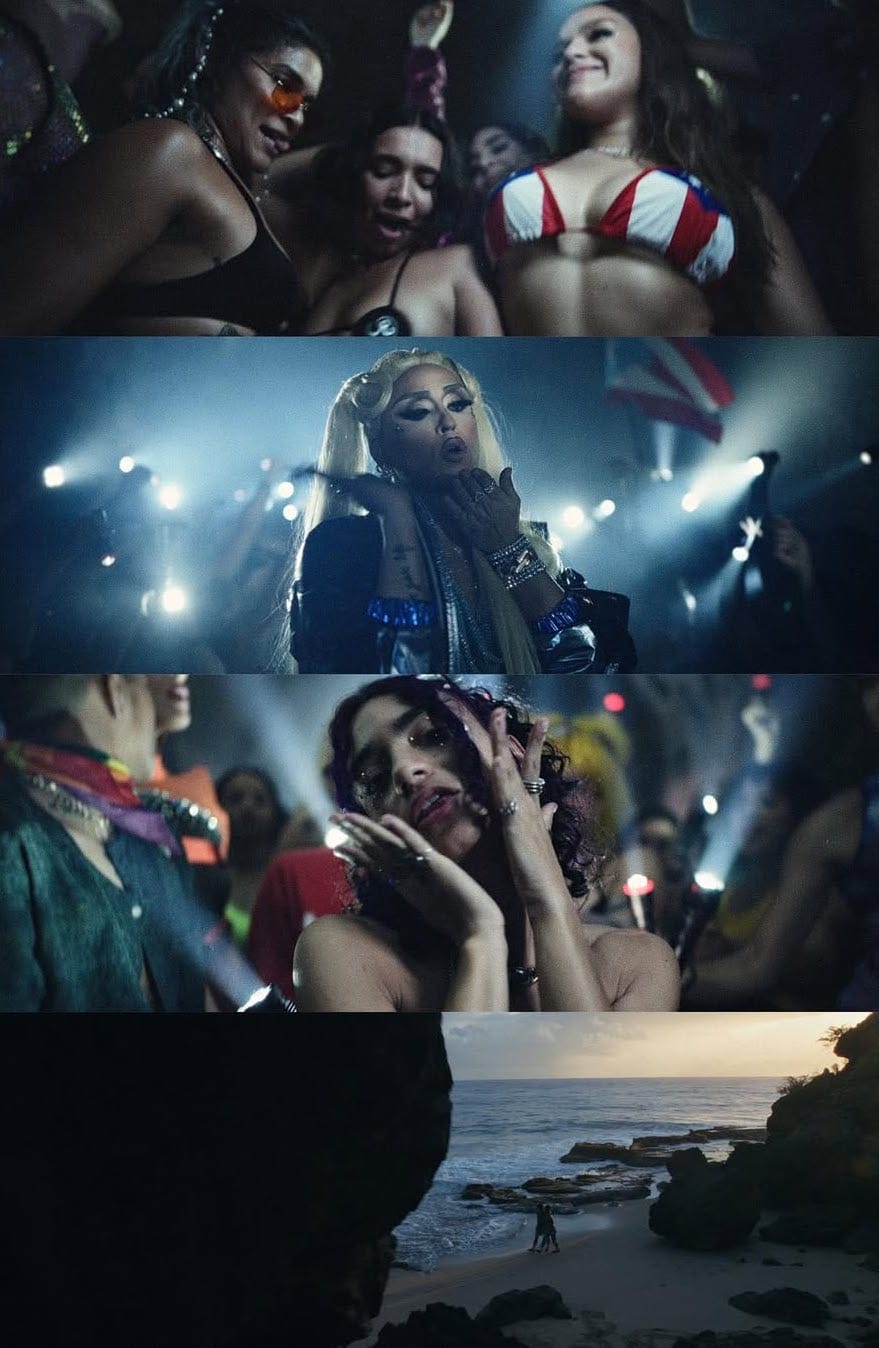
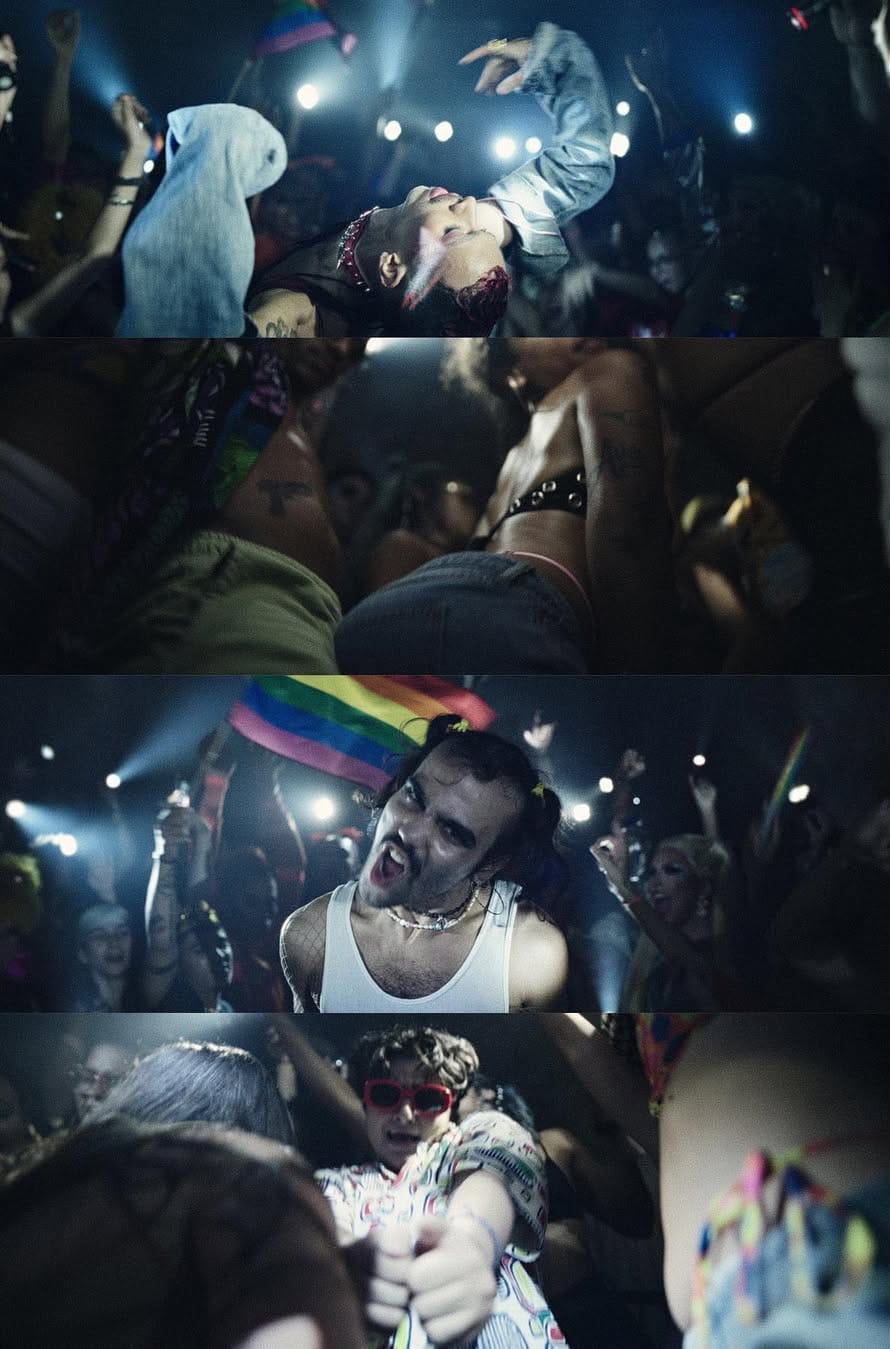
Stills from Bad Bunny's "El Apagón - Aquí Vive Gente" at the Guajataca Tunnel. | Photo via Kacho López Mari's Instagram | Impulsiva Stories
Along with using these different locations, in “El Apagón - Aquí Vive Gente,” diversity and inclusion play a key role in the story being told. It portrays a diverse Puerto Rico through music and its people while simultaneously showcasing the complex challenges and difficulties that Puerto Ricans go through.
It speaks about the ongoing apagones of the island, the privatization of the beaches, and the rampant gentrification that is displacing many locals of their land and communities.
“We then realized that these issues not only happen in Puerto Rico. They’re happening all over Latin America. Even in other communities around the United States and many countries in the world,” López Mari said. “How spaces created by communities are being gentrified. Their spaces become cultural centers and economic spaces that don’t respond to their interests.”
The piece dives deep into speaking about these issues. It spoke about Hurricane Maria’s devastating impact in 2017 in Puerto Rico. When the music video-turned-documentary was released in September of 2022, a few days later Hurricane Fiona hit Puerto Rico, which caused an island-wide power outage that clearly exemplified the piece’s topics.
Besides that, “El Apagón - Aquí Vive Gente” was shortlisted in the Cannes Lions Awards for Excellence in Music Video and Entertainment, the Shots Awards The Americas for Video of the Year, and nominated for the MTV Video Music Awards for Video For Good in 2023. It demonstrated, as López Mari said, that the genre of the music video keeps reinventing itself and it is not a monolith.
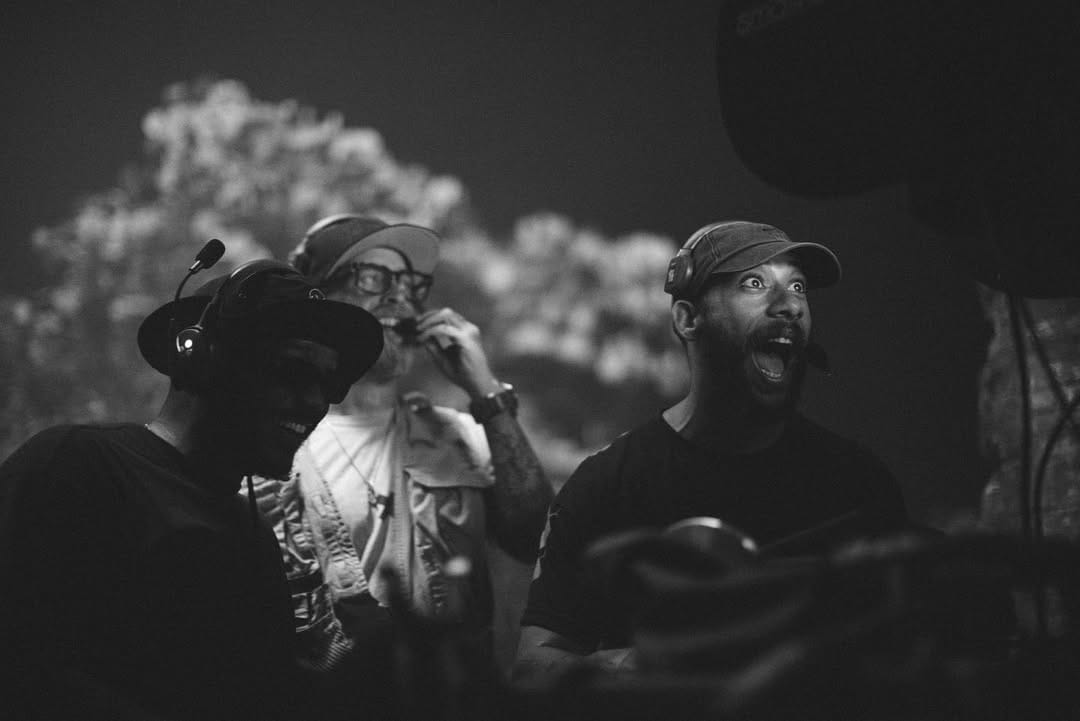
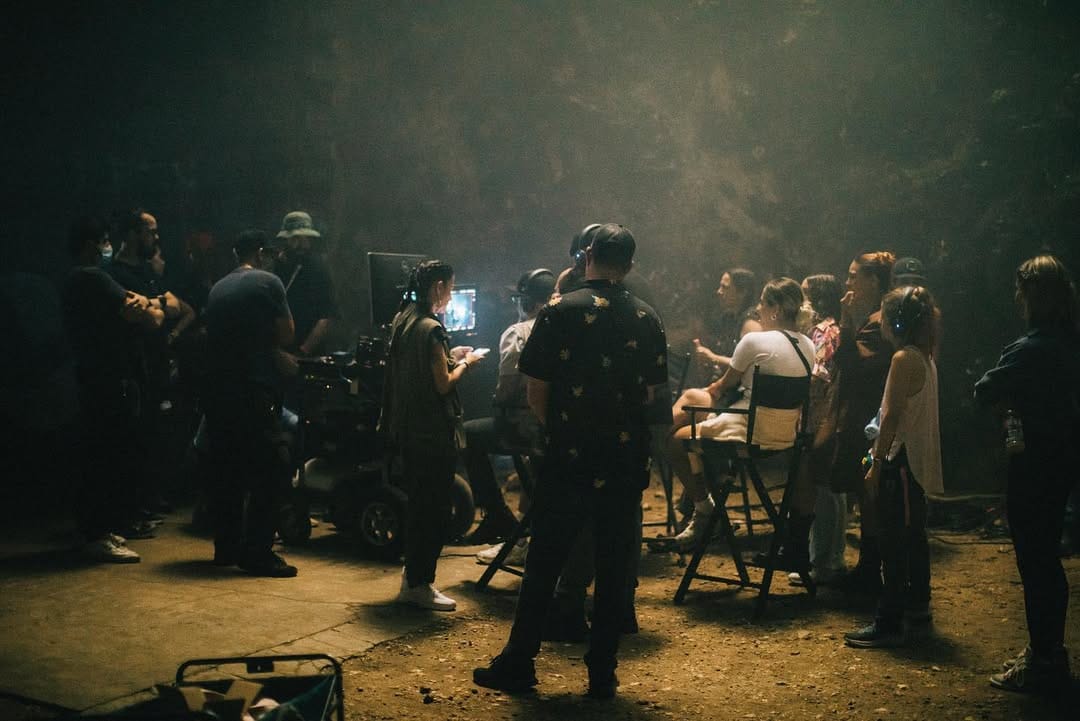
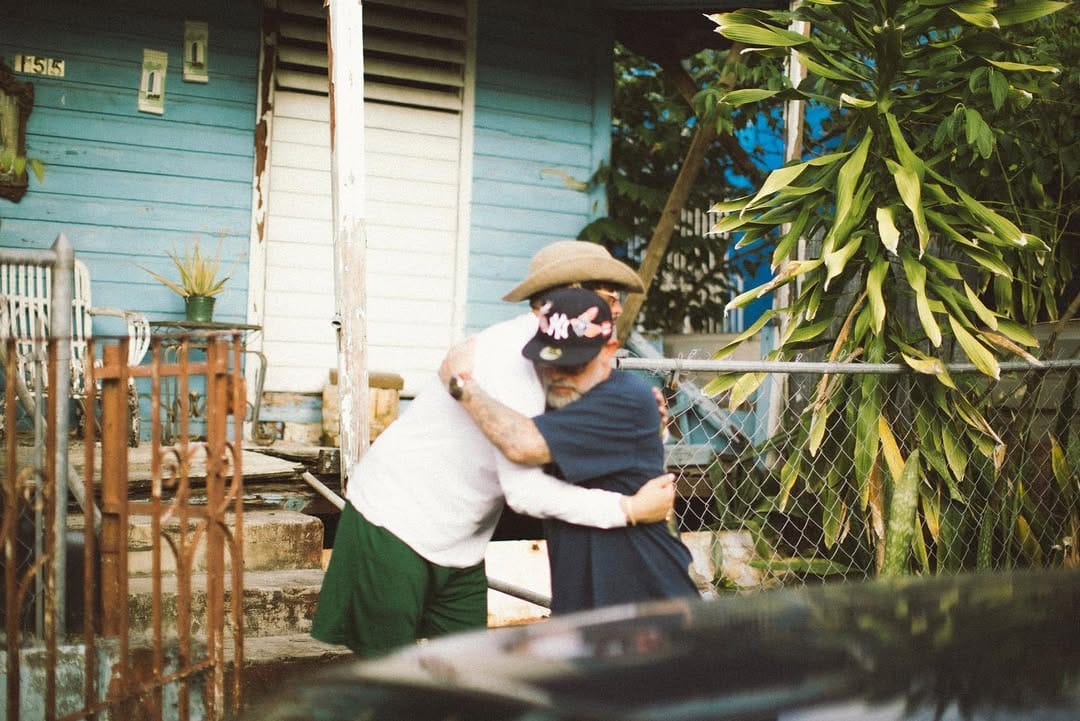
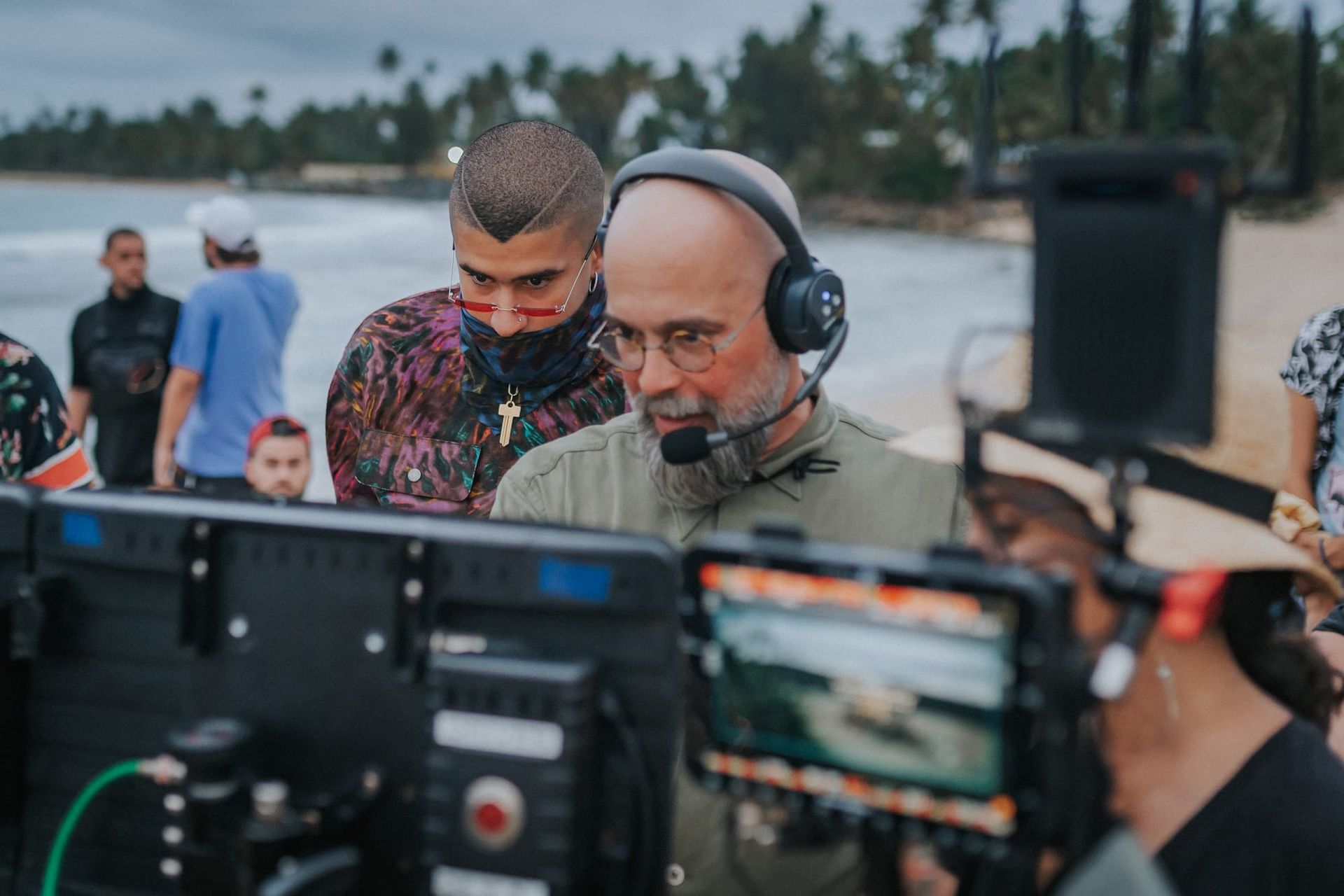
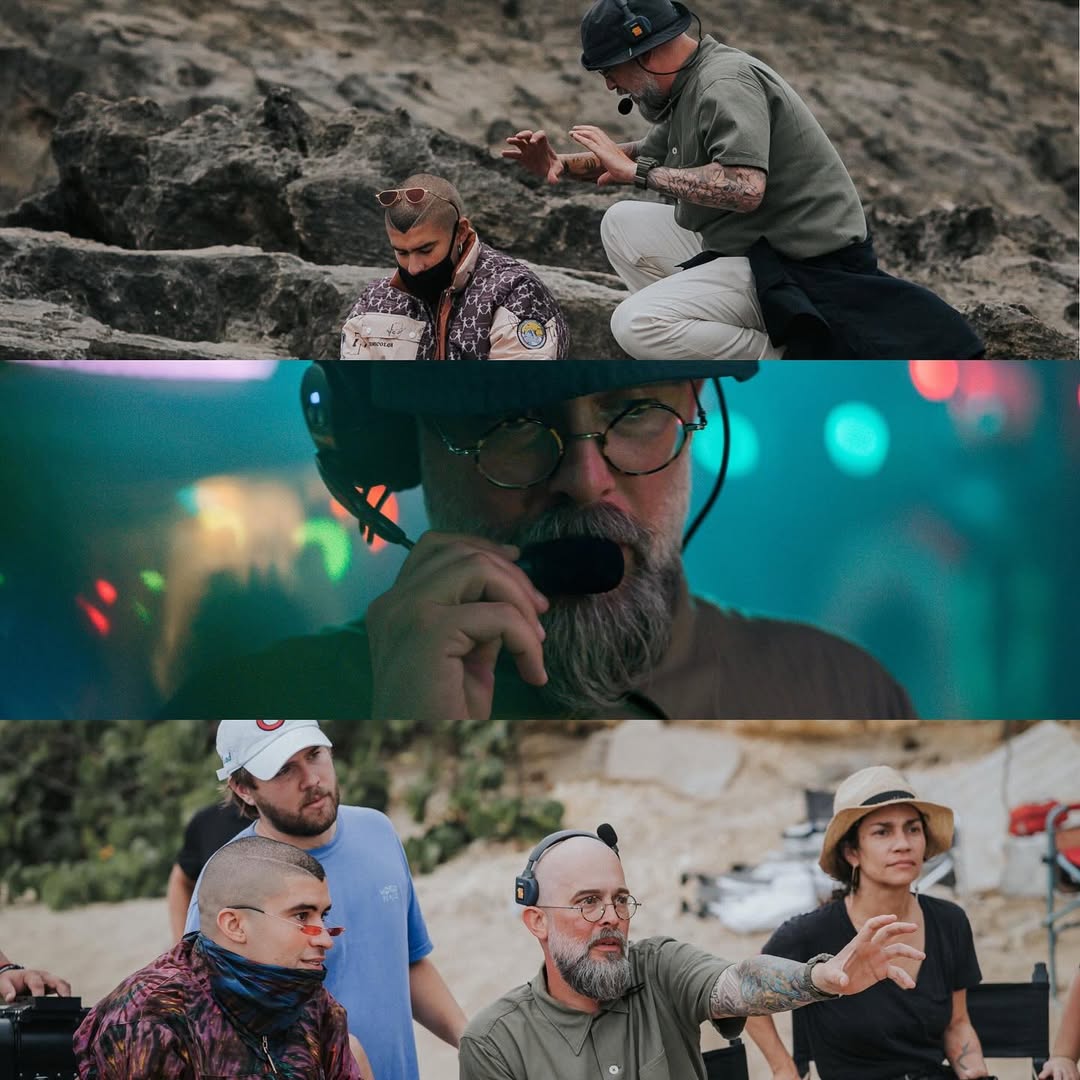
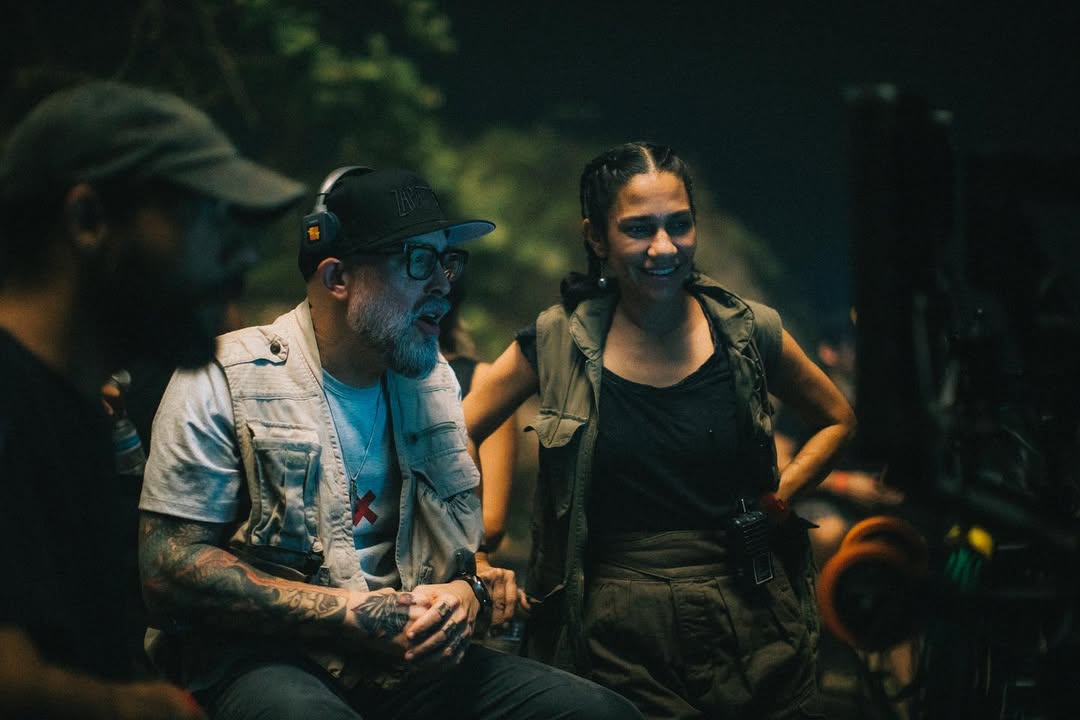
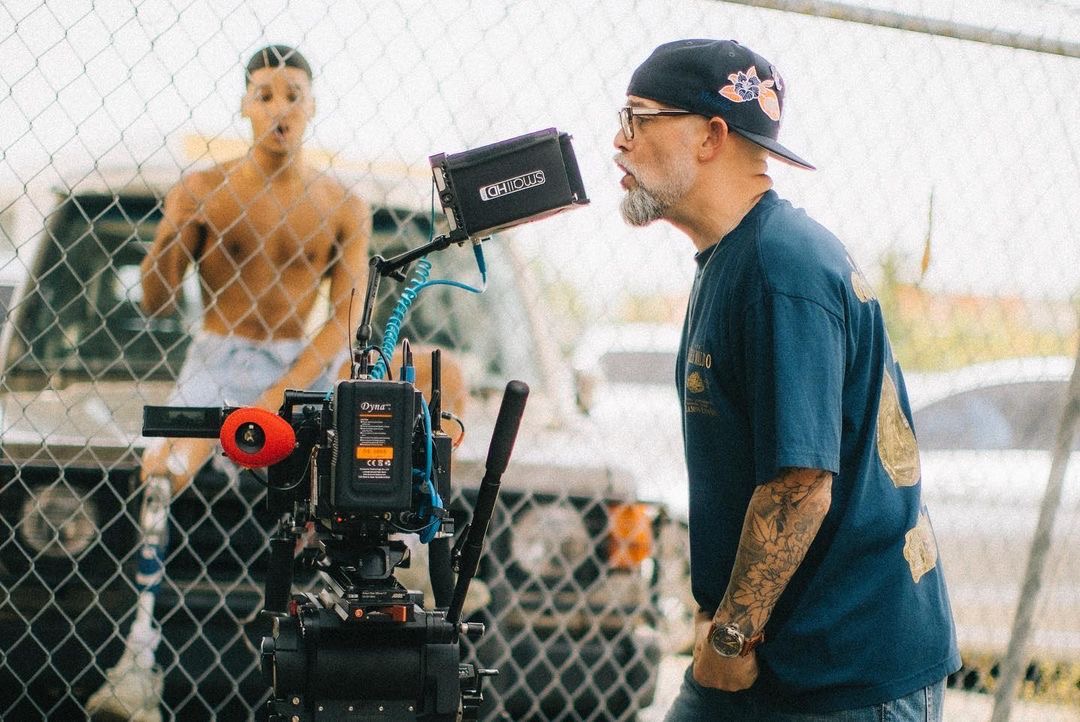
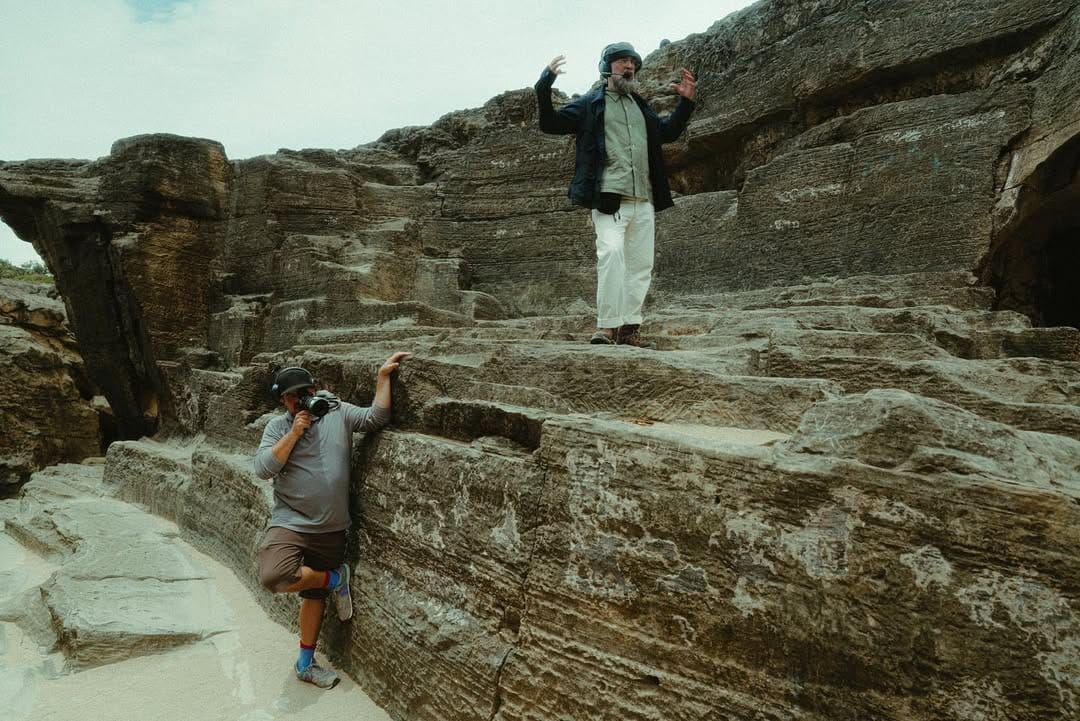
Photos from behind the scenes of the team working on Bad Bunny's "El Apagón - Aquí Vive Gente." | Photo via Kacho López Mari's Instagram | Impulsiva Stories
It also means that López Mari keeps reinventing himself as a film director and artist by not limiting himself in what he can create in collaboration with astounding artists like Bad Bunny.
Creating a “BAILE INoLVIDABLE”
“BAILE INoLVIDABLE” is the latest music video they created together. The song is part of Bad Bunny’s record-breaking album “DeBÍ TiRAR MáS FOToS,” which just won last weekend the Album of The Year Grammy award and made history as the first all-Spanish album to win in this category. It’s also a significant part of one Bad Bunny’s greatest achievements this upcoming weekend: performing at the Super Bowl's Halftime Show.
Not only “BAILE INoLVIDABLE” is part of a ground-breaking album for Puerto Rico, but it was also one of the best songs of 2025. It’s the first salsa track to hit number one on the U.S. Apple Music chart and Billboard's Hot Latin Songs.
And it’s also a song that represented a whole new process for López Mari to direct its music video.
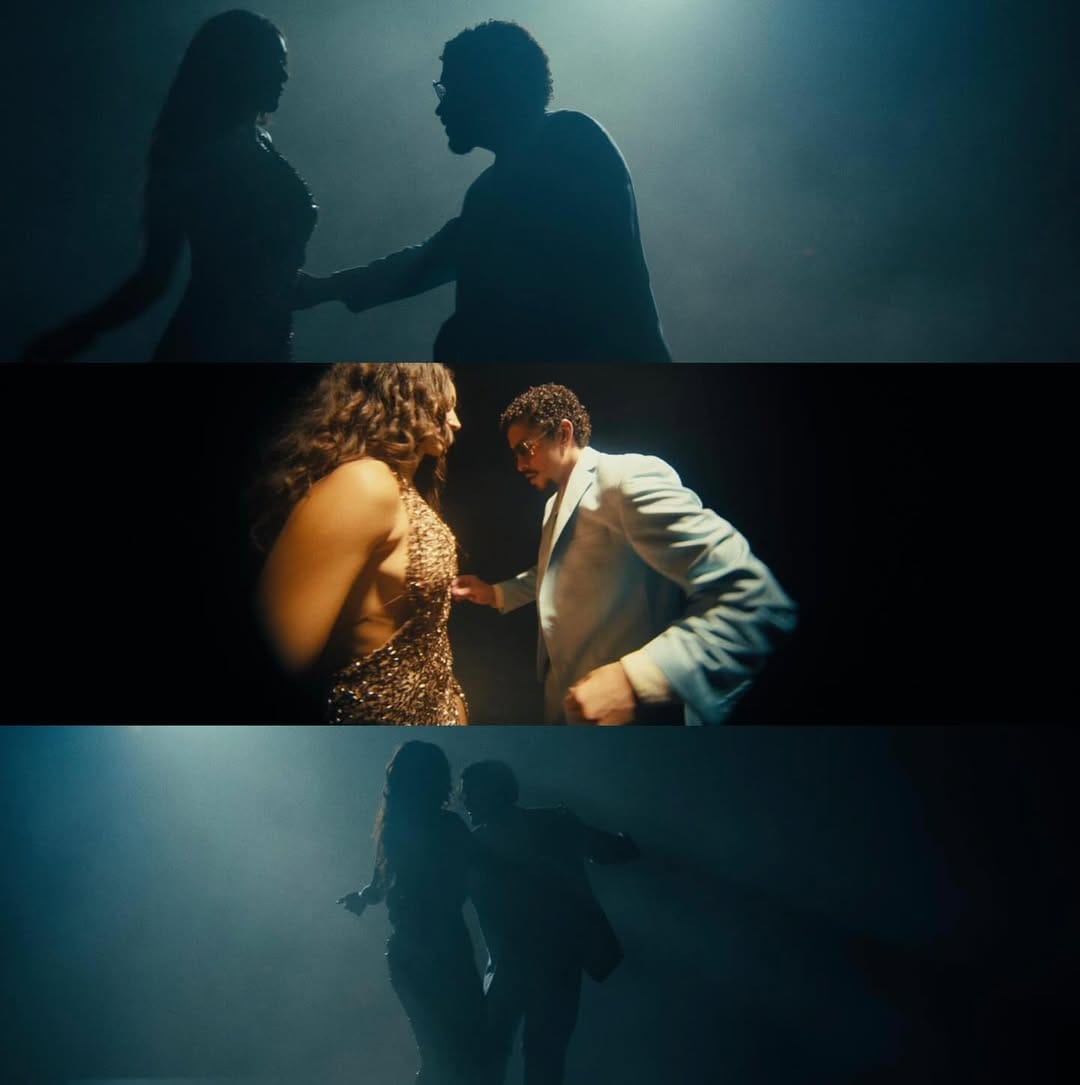
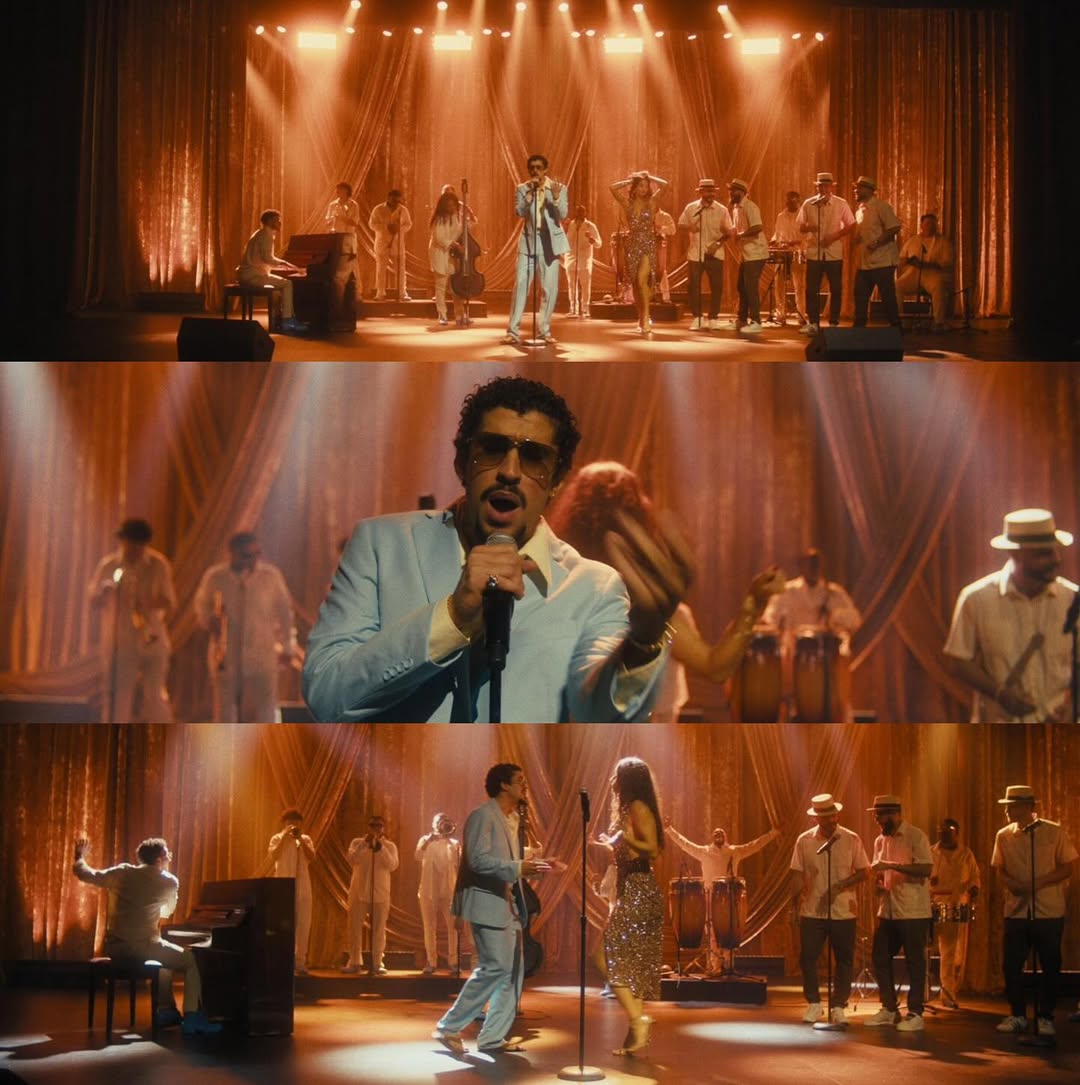
“He comes with clearer ideas. He wants to start with a salsa dance class. Then, he wants to dance with the protagonist and when the piano solo ends, the band’s performance begins,” López Mari said. “What do I bring in? The places where things will happen.”
He organized for the filming to occur at the Theater of the University of Puerto Rico (UPR), where the salsa dance classes took place, and who the characters are. He created some drawings that narrated the story showing when the renowned Puerto Rican actor Jacobo Morales enters a scene. When he says he’ll dance and when the dance lesson occurs.
“So, evidently Benito is the main character. Jacobo becomes Benito and then, a dynamic happens in which Benito has much more experience in filmmaking [as an actor],” López Mari said. “When I did Callaíta, he had never been in a movie before. Now, he’s already done a film with Brad Pitt, with Darren Aronofsky as director, and a comedy [with Adam Sandler].”
He has done three or four films bestiales, as López Mari said. For him, Bad Bunny understands acting differently and gives the project a much more solid depth in his performance where the audience can see the transformation of a character. A character that starts without knowing how to dance and ends up gloriously dancing with a partner.
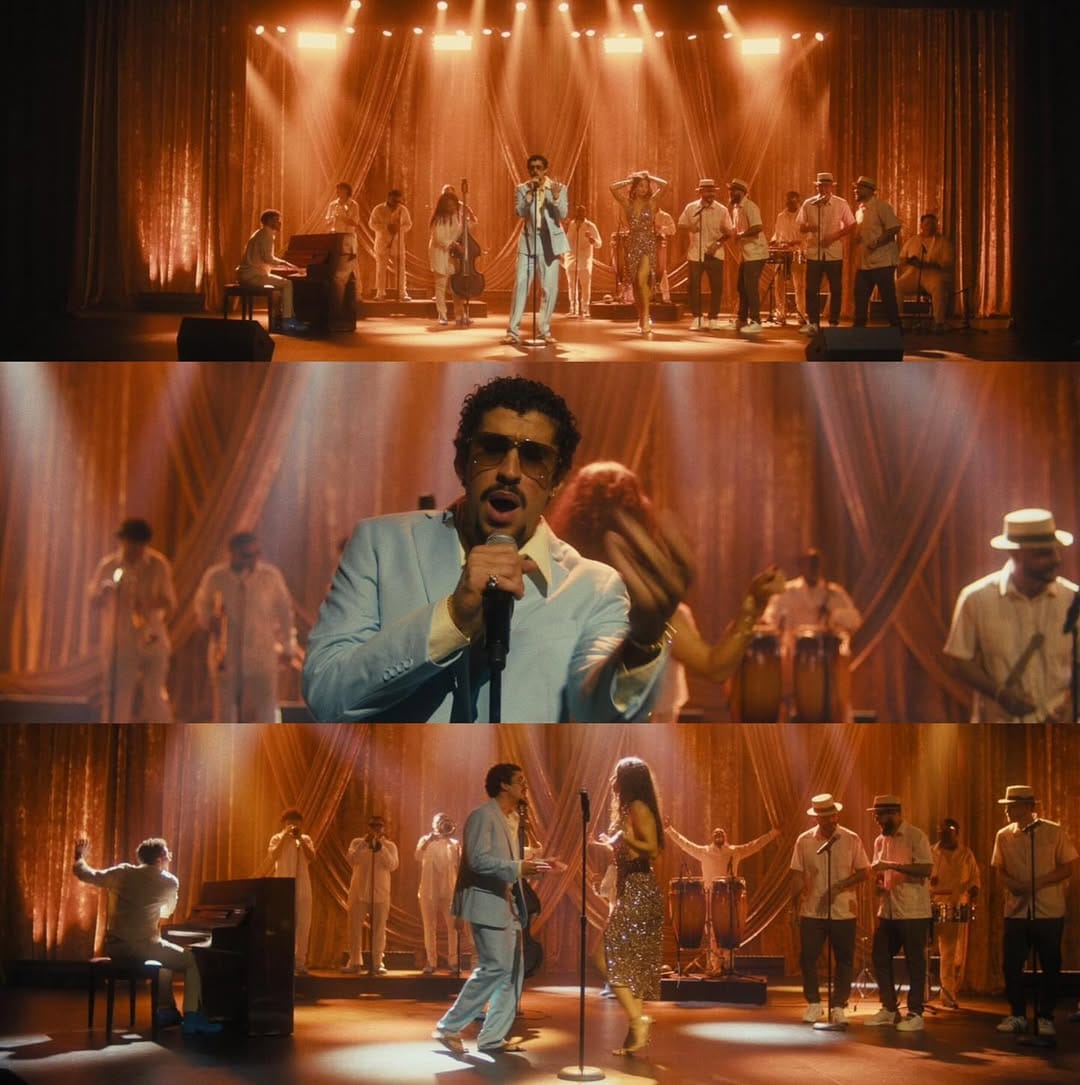
It’s an almost cinematographic character transformation. It’s as if you were watching a film where a character starts out in one way and ends up as a new person. That’s one of the main reasons why the creation of that music video felt different for López Mari. There was a huge evolution with Bad Bunny from the conceptual part to who he is as an actor and character, and his performance in front of the cameras.
For López, the evolution between both him and Bad Bunny not only happened in those aspects, but also in the way they communicate with each other. For “BAILE INoLVIDABLE,” Bad Bunny’s team invited him to the presentation of the album with his intimate circle.
There, he listened to the song for the very first time and took some notes about the structure for the music video.
“Then, he invited me to the studio. I had never been in a studio with him. I went to the studio and listened to the song 30 times. I already had my notes from the first time I listened to it and I had already drawn the narration,” López Mari said.
Listen to Kacho López Mari
0:00
/67.469333
He had drawn everything and they went over the narration together. They listened to the song 30 times and they went over the narration 30 times. Then, they went to the set where Bad Bunny was crystal clear with what was going to happen and what he had to do.
They’d cross out the drawings of what they already filmed in order to say they told the story as they imagined it.
“And after that, an editor named Luis Caraza took the project. He’s one of the world’s best music video editors. He edited BAILE INoLVIDABLE with me and there’s a phenomenal editing job done there,” López Mari said.
A phenomenal editing in which Caraza helped López Mari choosing the moments to portray Bad Bunny’s transformation. A phenomenal editing in which certain energies were chosen to achieve the musicality with which López Mari creates his timeless and iconic filmmaking.
Even if you watch “BAILE INoLVIDABLE” without sound, it feels as if you’re having a musical experience. You feel the rhythm. You feel as if you’re inside a short film and the characters are guiding you. You can hear the voices of the characters loudly in your mind as Bad Bunny leads you through his marvelous acting transformation.
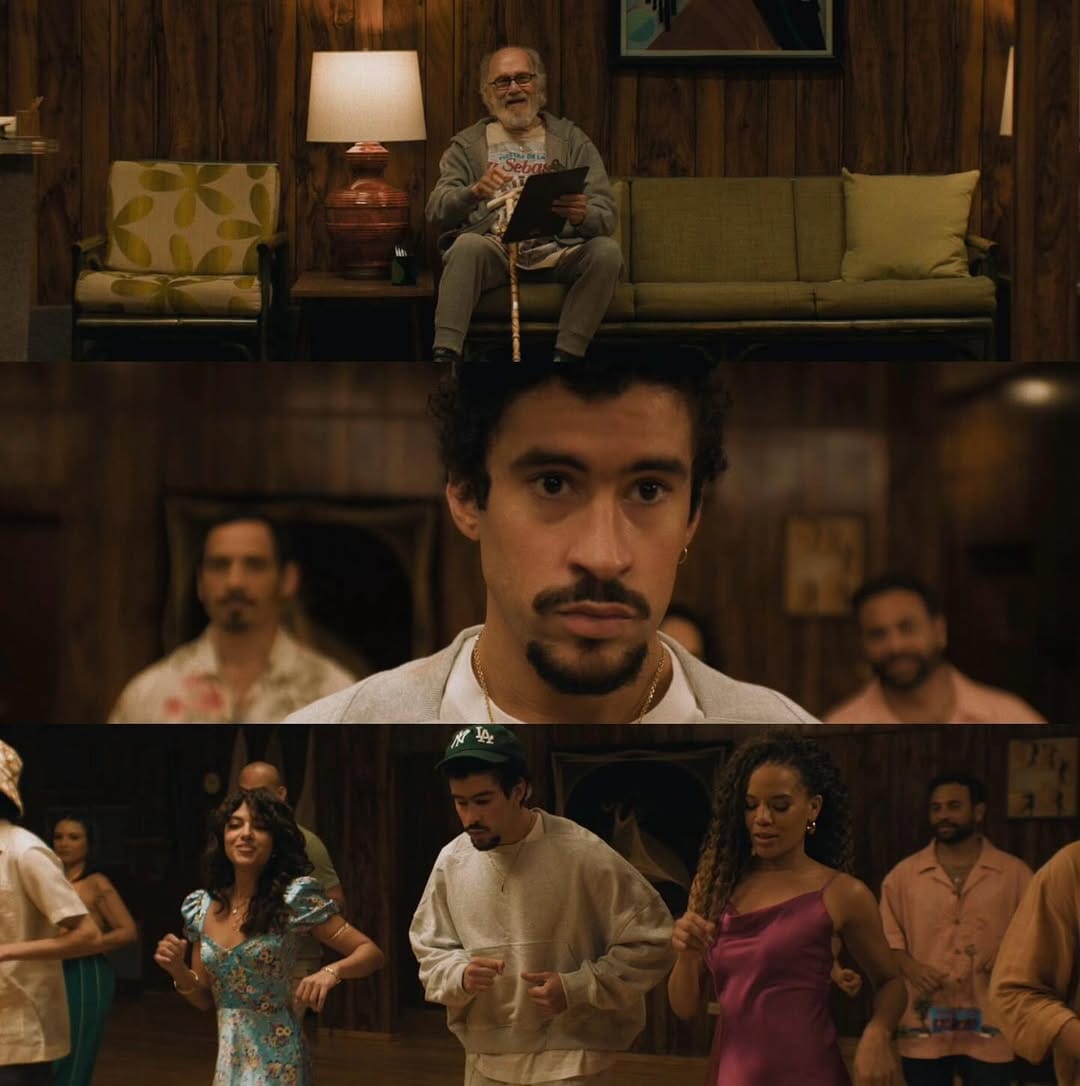
It’s almost as if you can experience the salsa dance lesson right next to Jacobo Morales as well, who was a vital figure in the music video. For López Mari, working with Morales is always a magical experience. When they finished filming, they gave the actor a standing ovation full of applauses thanking him.
Then, Morales gave them a speech asking them to be honest. To always pursue the truth as artists and filmmakers.
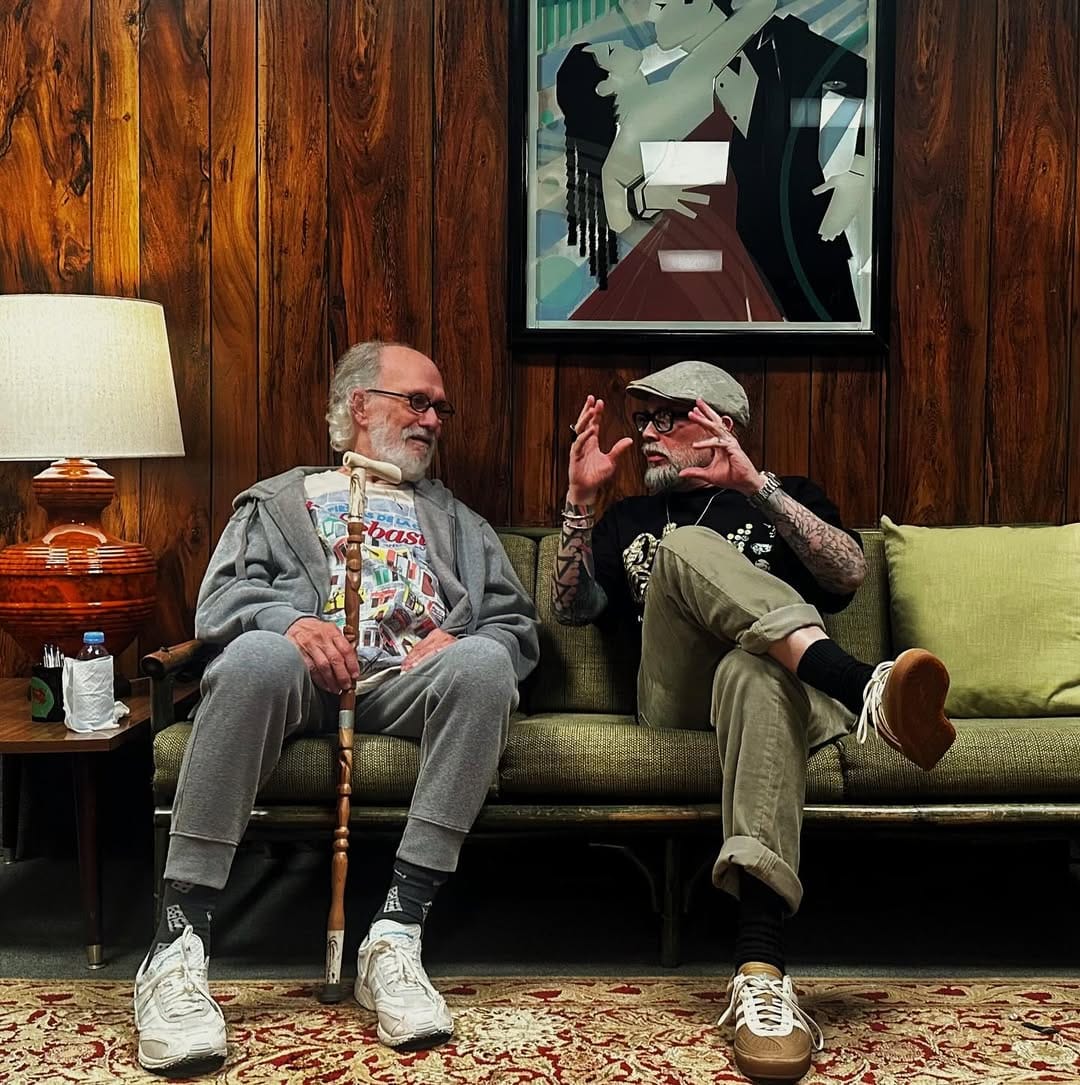
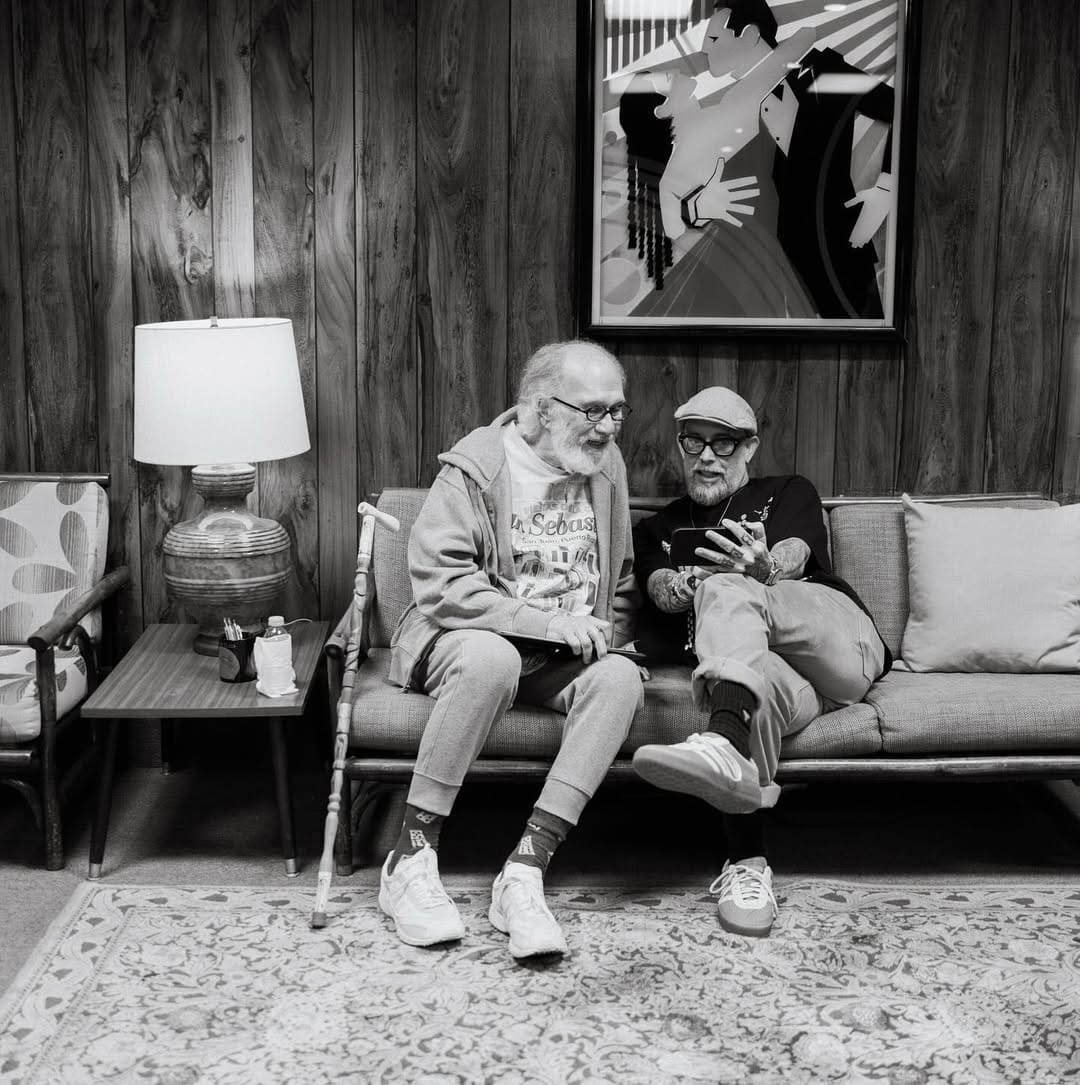
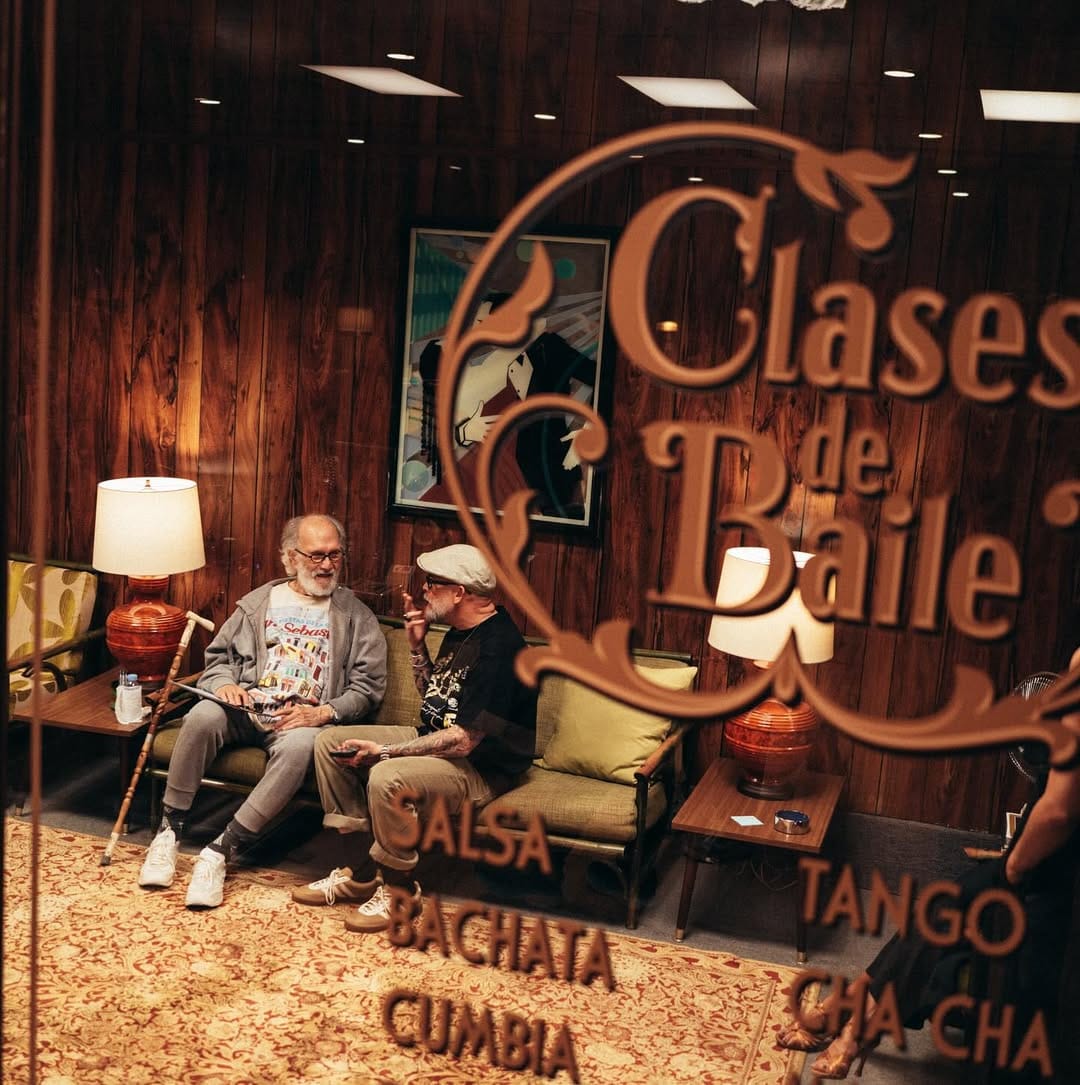
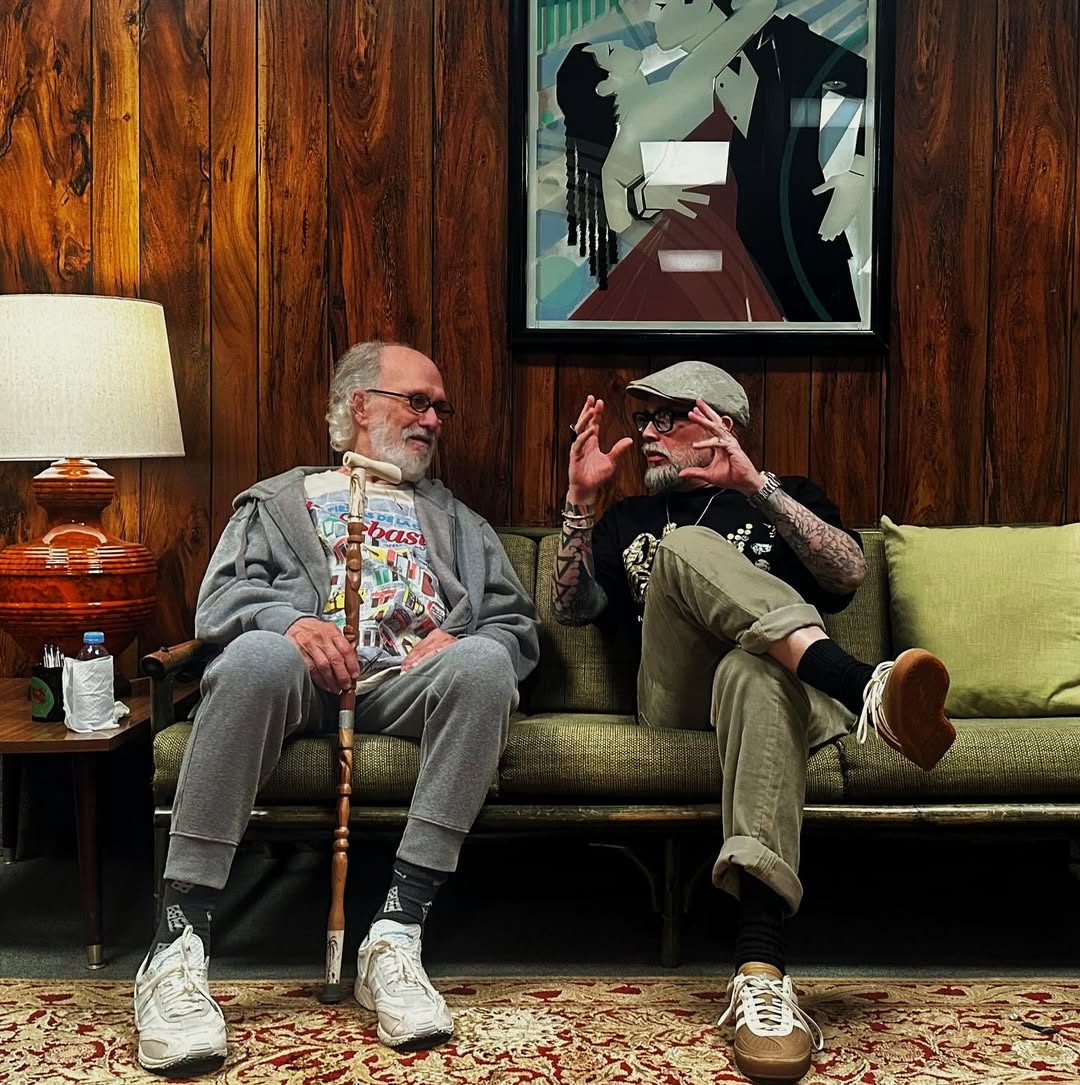
Kacho López Mari working with Jacobo Morales when filming Bad Bunny's "BAILE INoLVIDABLE” music video. | Photo via Kacho López Mari's Instagram | Impulsiva Stories
“And with that, the filming day ended. It was one of those magical moments where Jacobo serves as a master. As he always has been with us. With so much kindness and love,” López Mari said. “As the song says: mientras uno está vivo, uno debe amar lo más que pueda.”
Listen to Kacho López Mari
0:00
/55.157333
The Love for Puerto Rico
And that love and kindness with which Morales speaks can also be perceived in how López Mari creates his art and filmmaking. It can also be noticed with how he feels about Puerto Rico. His point of view as a film director and artist is filtered by his puertorriqueñidad and his Puerto Rican experience.
When López Mari worked with Bad Bunny for the “World’s Hottest Tour” in 2022 and the “P FKN R” concert in Puerto Rico in 2021, the feeling was extraordinary for him. Watching people in different countries around the world singing “El Apagón” felt amazing.
“People from any part of the world screaming at the top of their lungs that Puerto Rico está bien cabrón is an amazing thing. You being Puerto Rican and seeing that, it really touches you and it touches you deeply,” López Mari said. “And somehow, it’s a sort of demonstration about the resistance of the Puerto Rican culture that has never been let free.”
Listen to Kacho López Mari
0:00
/104.381333
According to López Mari, it has never been let free because it’s a culture that’s always been under the identity of a world power, whether it was Spain in the past or the United States in the present. Even with all the attempts of disappearing Puerto Rico, López Mari said they’re more present and alive than ever with a global existence.
“This would not be possible if a Benito did not exist. And the ones before him who opened paths and kept resisting against these world powers that were against the existence of Puerto Ricans,” López Mari said.
He believes Bad Bunny has been able to use their puertorriqueñidad as inspiration to project Puerto Rico towards a new future that’s totally designed by Puerto Ricans. That opens a space for hope, especially in a time in which it has been lost with what’s going on right now in the world. That pride that Bad Bunny has brought to the world makes Puerto Ricans stare at themselves in the mirror with love.
López Mari said it makes him look at himself and others as big and important. As creative, empathetic, and many more things. That’s how he’d want Puerto Ricans to look at themselves everywhere.
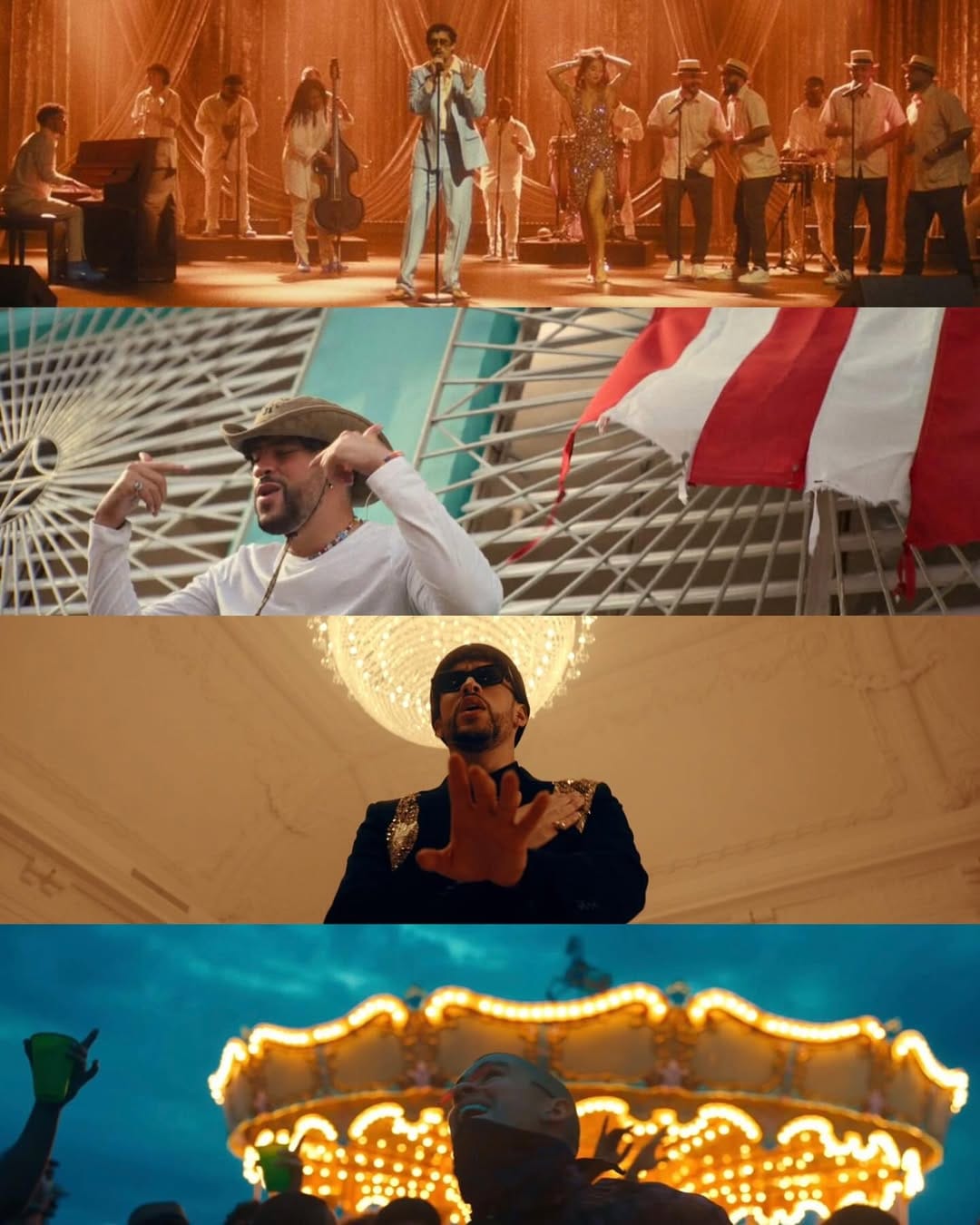
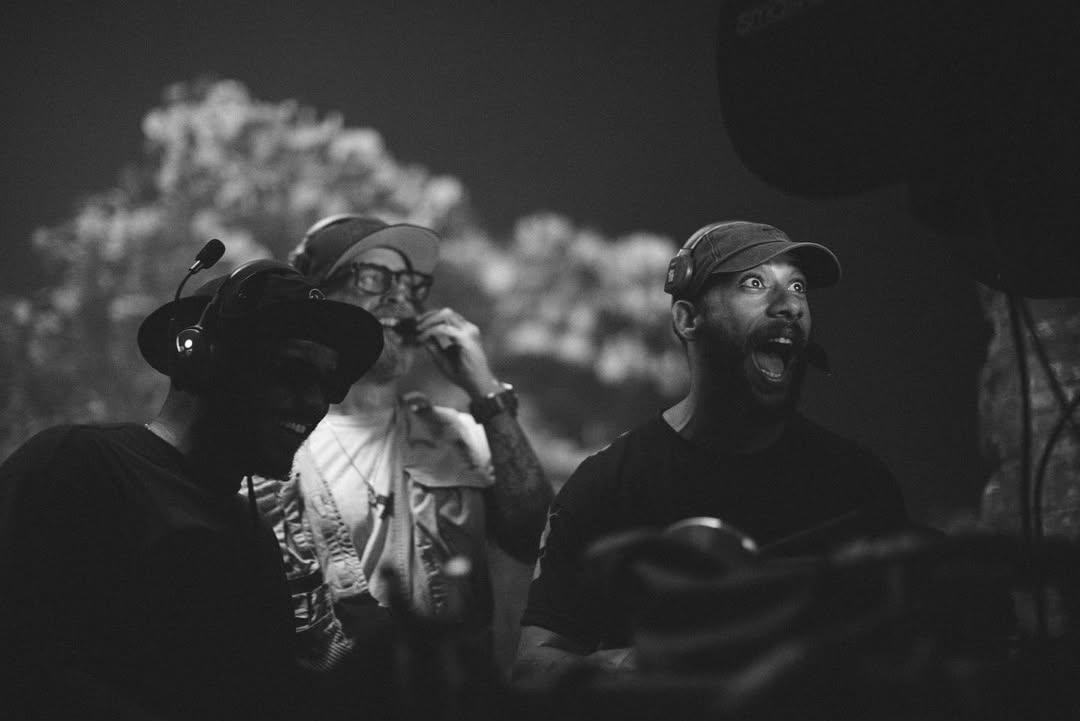
Stills from the music videos Kacho López Mari directed for Bad Bunny. | Photo via Kacho López Mari's Instagram | Impulsiva Stories
“It gives us an example in the social, political, and cultural [aspects] that the puertorriqueño is valuable. That that demonstration and proposal he [Bad Bunny] brought from the beginning, positions us and gives us a level of self-esteem we had not seen in a very long time as a country and community,” López Mari said.
Listen to Kacho López Mari
0:00
/50.669333
And that’s why López Mari’s continuous exploration and artistic creation in the form of compelling music videos and collaborations with number one artists like Bad Bunny, become timelessly iconic masterpieces.
It’s art that speaks to the audience through captivating visuals while treating complex social and political subjects with love and empathy. It’s art that created its own language that transcends trends and lives through time while honoring the artists that have shaped and defined both global and Latin American culture.
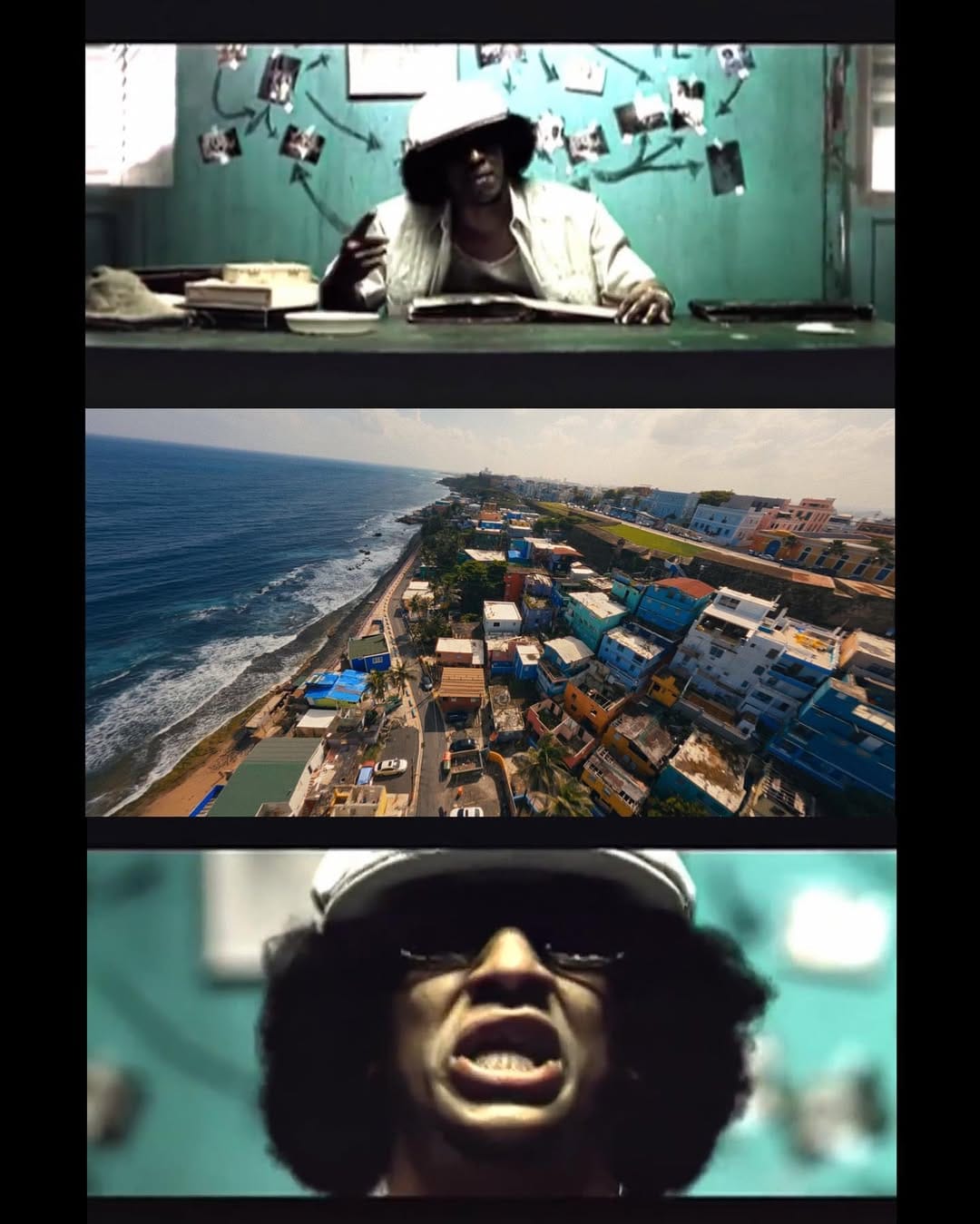
It is an iconic art and filmmaking that remains alive throughout the passing of time thanks to López Mari’s legendary cinematic career that began back in the early 2000’s.
“I still attribute to Tego [Calderón] and my first video the things that I’m doing today,” López Mari said. “I wouldn’t have done BAILE INoLVIDABLE if it weren’t for that first video for Tego.”
To learn more about Kacho López Mari’s timelessly iconic music videos for Bad Bunny, you can follow him on Instagram at @mrsandbag or at @zapatero.tv. Stay tuned next week for PART II, where we’ll explore Kacho López Mari’s collaborative path with some of the number one artists in the world that came before Bad Bunny.
Written by

Subscribe to my newsletter
Subscribe to my newsletter to get the latest updates and news