Livier Miroslava PART II
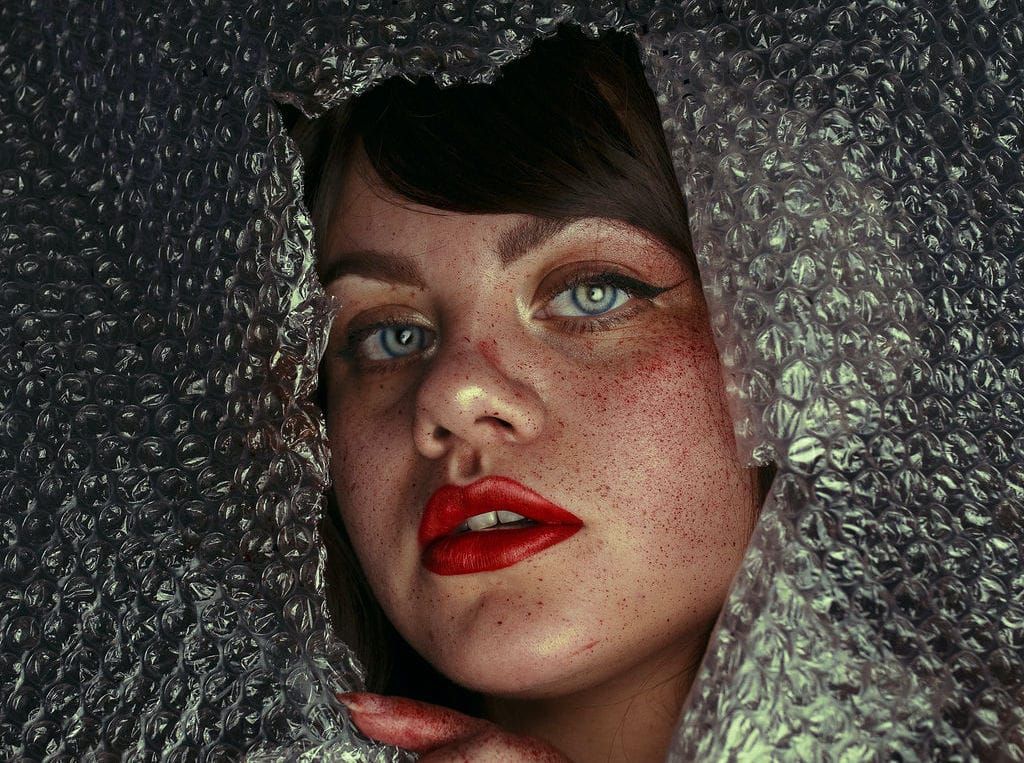
Livier Miroslava's award-winning photo "Hermanas," the campaign for Ponte Your Moños, and the nopales session celebrate Latin America.
PART II: Livier Miroslava’s Human Photography Celebrates Latin America
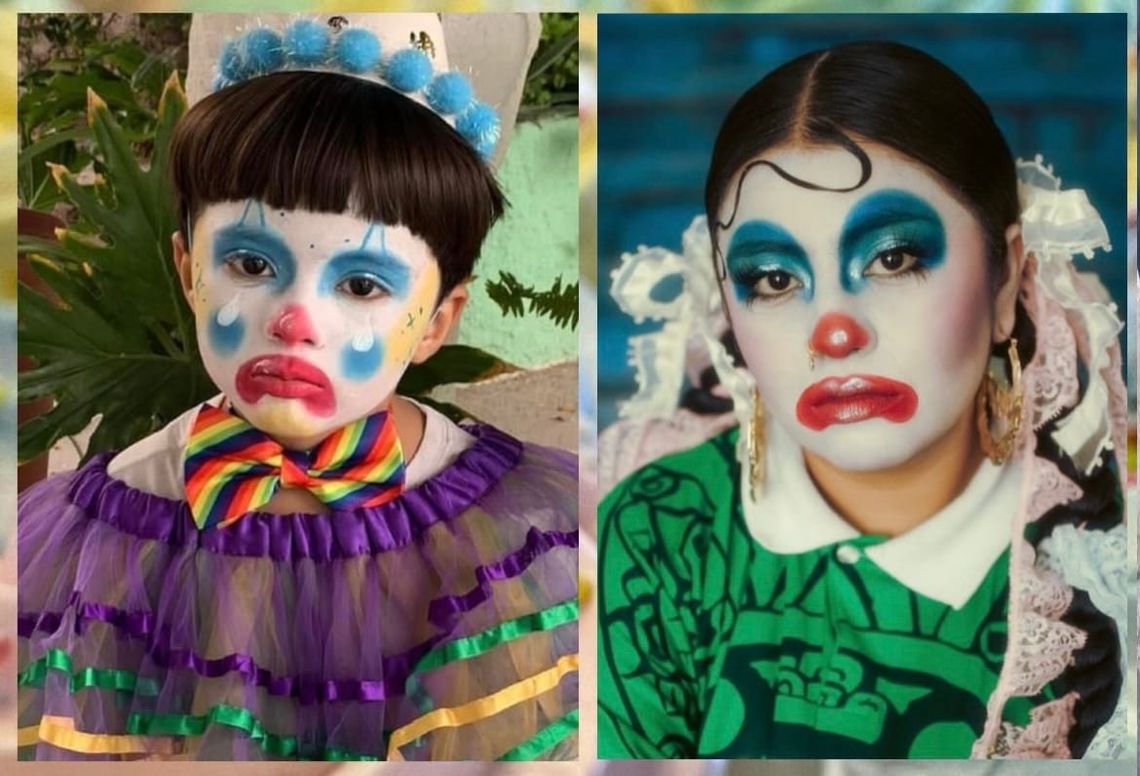
In PART I, we explored how Livier Miroslava’s brilliant photography empowers women. Now, we’ll dive deep into how Miroslava’s human photography celebrates Latin America. Remember, she did the clown photoshoot with Diana Young at the Mercado Terán in Aguascalientes, Mexico.
It was a personal project that combined vibrant colors with a model whose vivid fashion and makeup come through as bold statements. That particular photo session changed everything for Miroslava. It was the first of many sessions where celebrating Mexican, Chicano, and Latin American culture was at the center of her human photography.
“[That happened] thanks to the photo session I did with Diana at the mercado with the payasita. That day she made up her hair with some very beautiful braids. I never imagined the reach that photo session would have,” Miroslava said. “That photoshoot went viral. The videos I did for that session reached a million views.”
It was crazy for Miroslava, but it was what spearheaded her next projects. Her award-winning photograph “Hermanas” was one of those projects. Once again, she photographed Diana and her best friend Brianda. When Miroslava was planning the session, Diana mentioned her friend Brianda, who works in makeup and hair.
Brianda wanted to do the hair and makeup for Diana, so she was included in the project. Once the planning was over, they walked around downtown Aguascalientes to see what spaces really called their attention.
An ice cream shop. A flower shop. A barbershop.
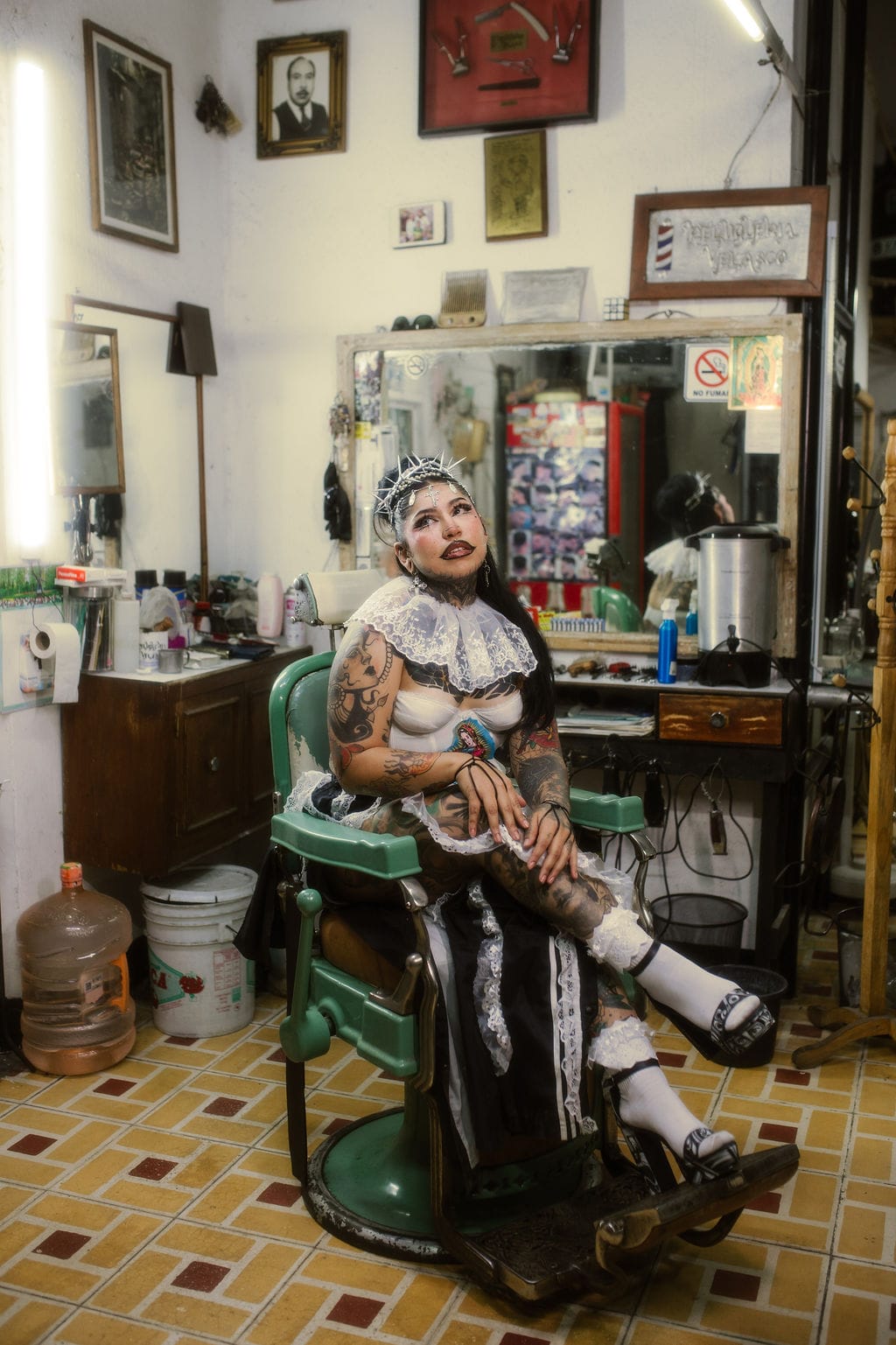
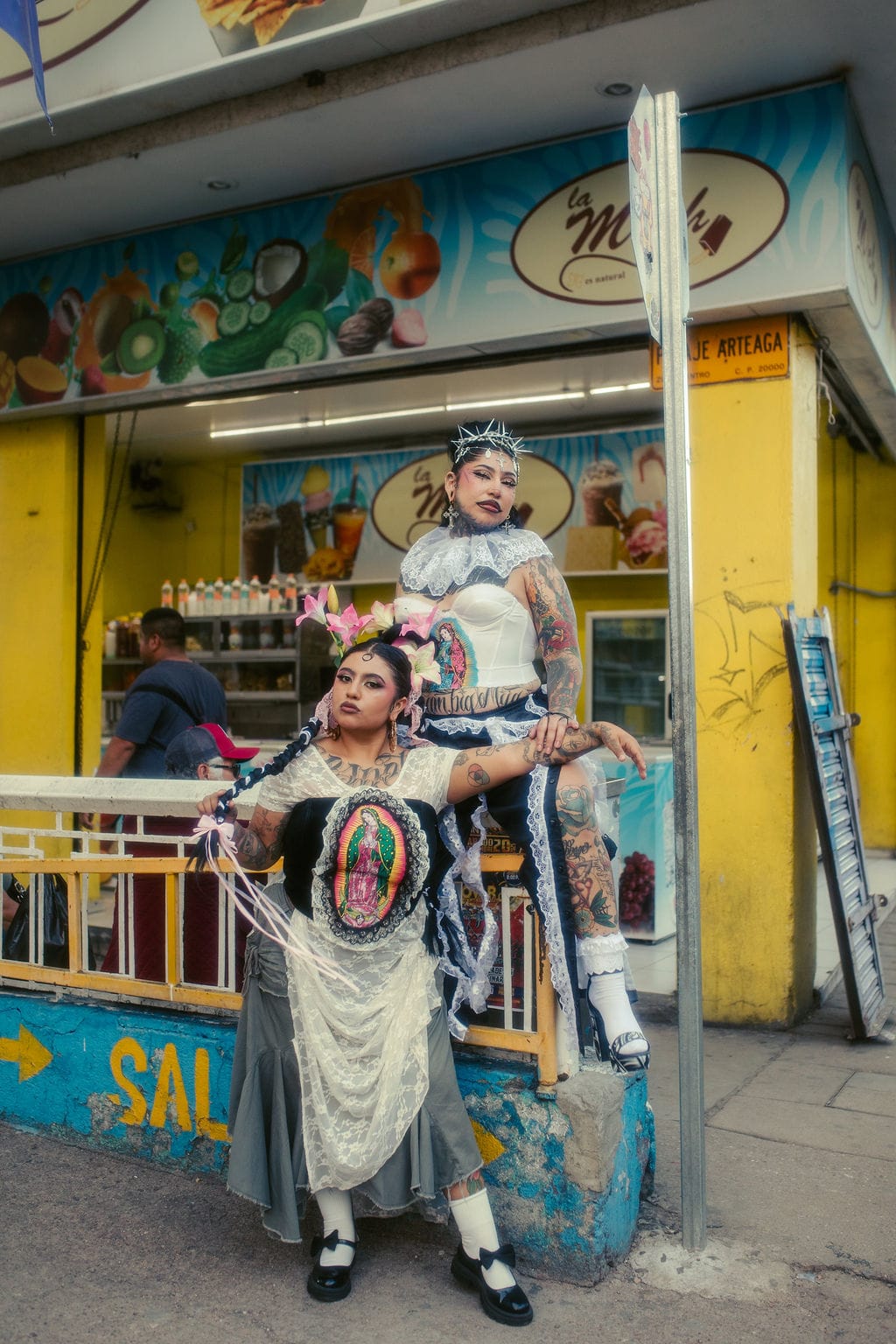
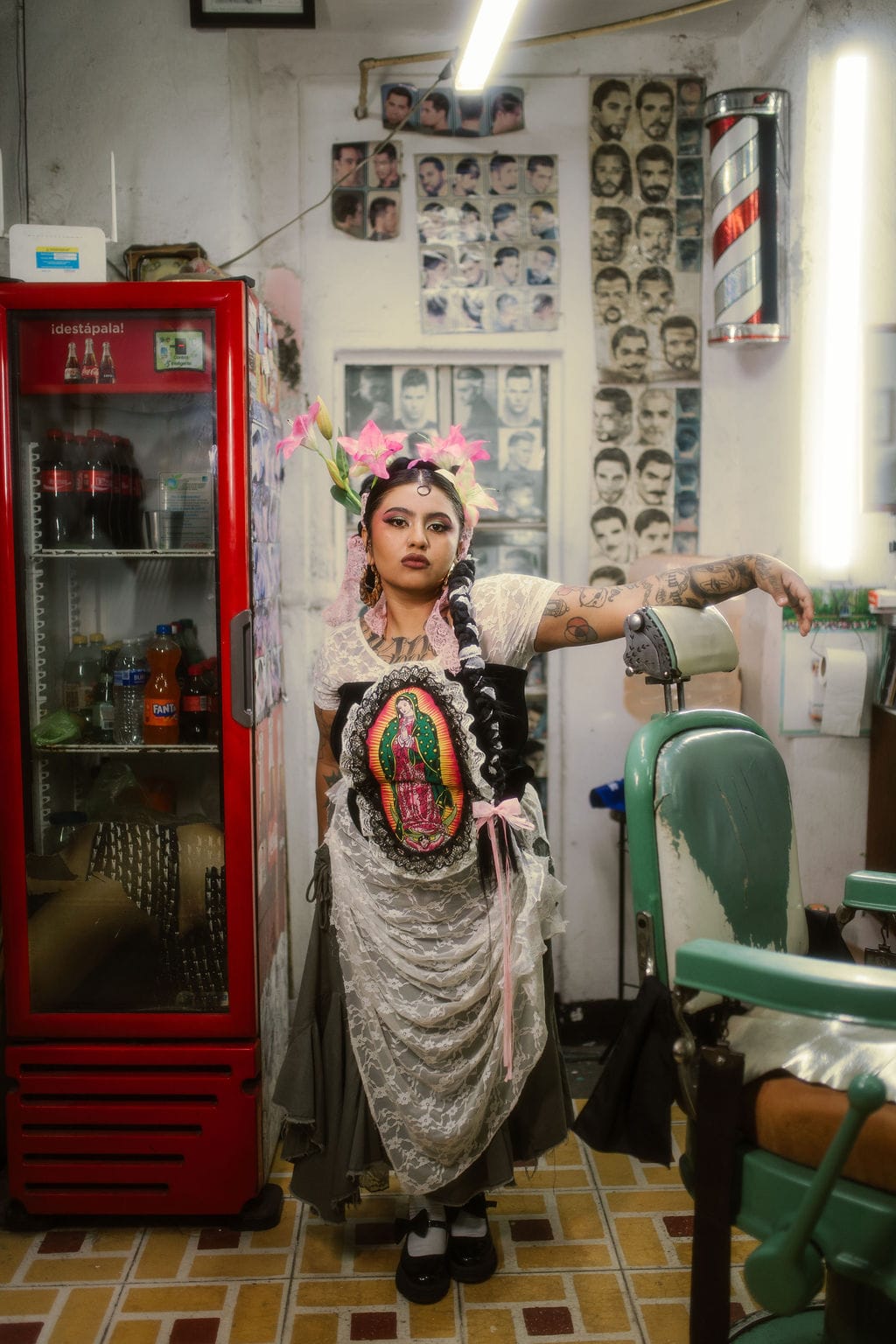
Some of the photos from the session with Brianda (left) and Diana (right) at a barber shop and ice cream shop in Aguascalientes, Mexico. | Photos courtesy of Livier Miroslava. | Impulsiva Stories
All of these were perfect places for the aesthetics that they were looking for, but then, a friend of Miroslava’s told her about Bar Lumbre.
“She told me about the bar and said: oye, this place. I went there and it’s nice. They have a virgin. I think it fit very well because Diana was wearing a virgin,” Miroslava said. “So, when we got there, I saw the place and was like: it’s perfect.”
It was perfect for Miroslava, who’s a Mexican award-winning self-taught photographer and artist. It represented the flawless mix between Mexican and Chicano culture, the Virgin Mary, and a strong reference to Frida Kahlo’s painting “The Two Fridas.”
Once they got to the bar, the process was fifty, fifty between Miroslava and the models. She told them how to position themselves until they felt comfortable enough. Then, they held their hands and when that happened, Brianda mentioned Frida Kahlo’s artwork.
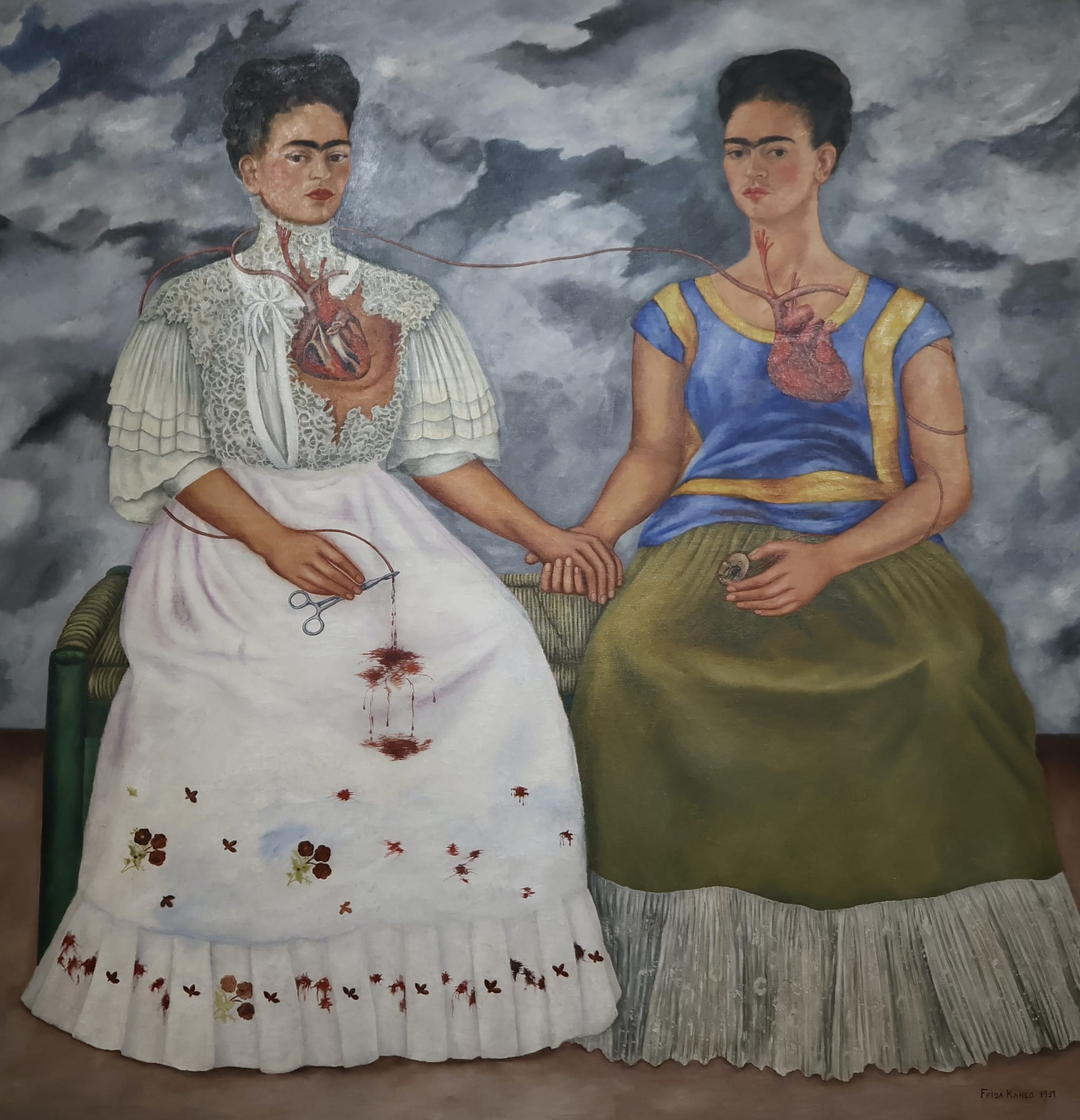
In that moment, everything clicked for Miroslava. It was about this sisterhood between two best friends, but it also came – unconsciously – from a very personal place of hers.
“I’m the youngest of four brothers. Well, I have a sister, but she passed away when she was born. So, I always felt I missed having a sister. I love my brothers with all my heart, but I feel it’s not the same if I would’ve had my sister,” Miroslava said.
Listen to Livier Miroslava
0:00
/25.829333
When Miroslava saw Diana and Brianda, the sisterhood was quite obvious. It was not planned. It happened in the moment and everything started making sense to her. It was about their sisterhood. The sisterhood with her best friend helping her during the session. And the sisterhood she shared with her late sister.
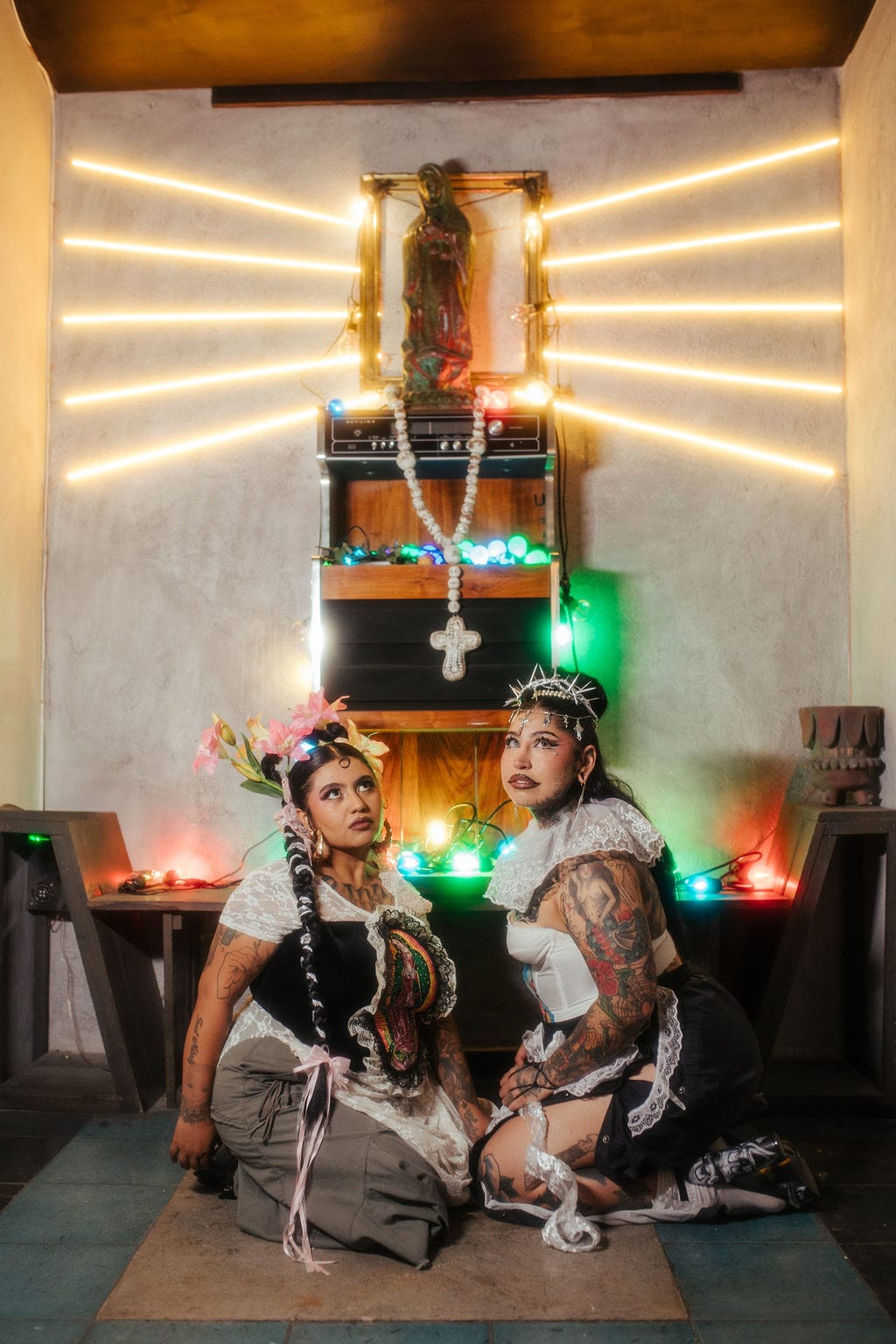
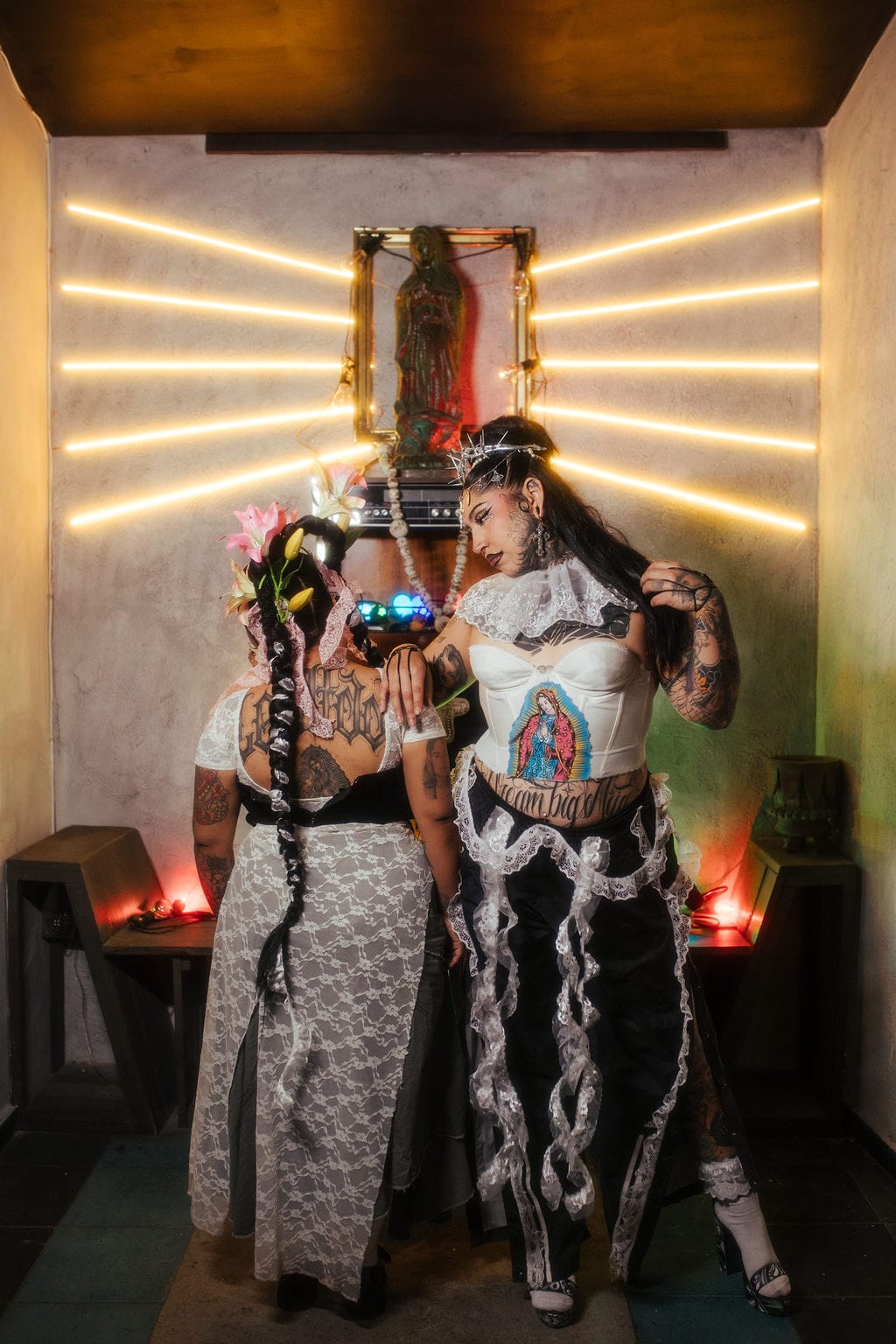
Some of the photos from the session with Brianda and Diana at Bar Lumbre in Aguascalientes, Mexico. | Photos courtesy of Livier Miroslava. | Impulsiva Stories
Everything quickly clicked on an emotional level for Miroslava. On a conceptual level, it was a bit different. The Chicano style is in reference to her lived experience growing up between the Mexican and U.S. cultures. She saw her cousins, who are Chicanos, feeling very proud of Mexico in spite of them living in the United States.
“I saw it as a way of wanting to bring together who I am. Although I’ve lived all my life in Mexico, I was born in the United States and sometimes I don’t feel like I belong here or there,” Miroslava said. “Right now, I come and go. I feel both places are my home and at the same time, I don’t feel I belong to neither one of them.”
Listen to Livier Miroslava
0:00
/22.349333
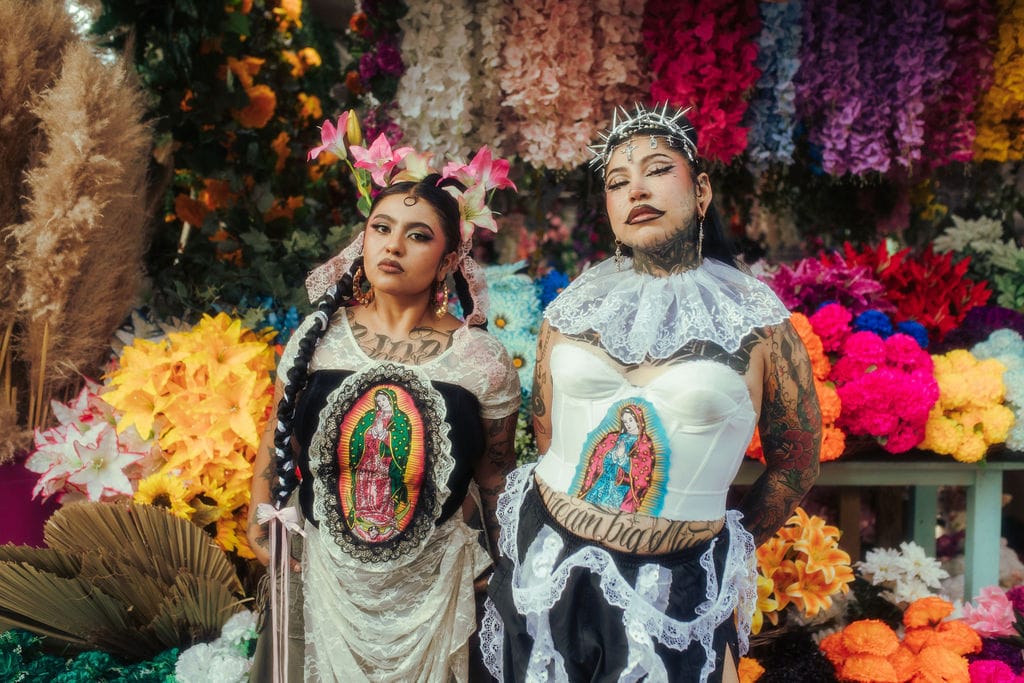
That inspired to unite both cultures through the vivid presence of the Virgin of Guadalupe. Miroslava understands the virgin as the mother who’s always there. In this particular photo, she’s portrayed three times: in Diana and Brianda’s outfits and right above them in the background.
Everything came together in a very spontaneous manner. It happened without much thought. Not much planning and simply in the moment. And it landed her the second place in the Latin America Regional Awards from the 2026 Sony World Photography Awards.
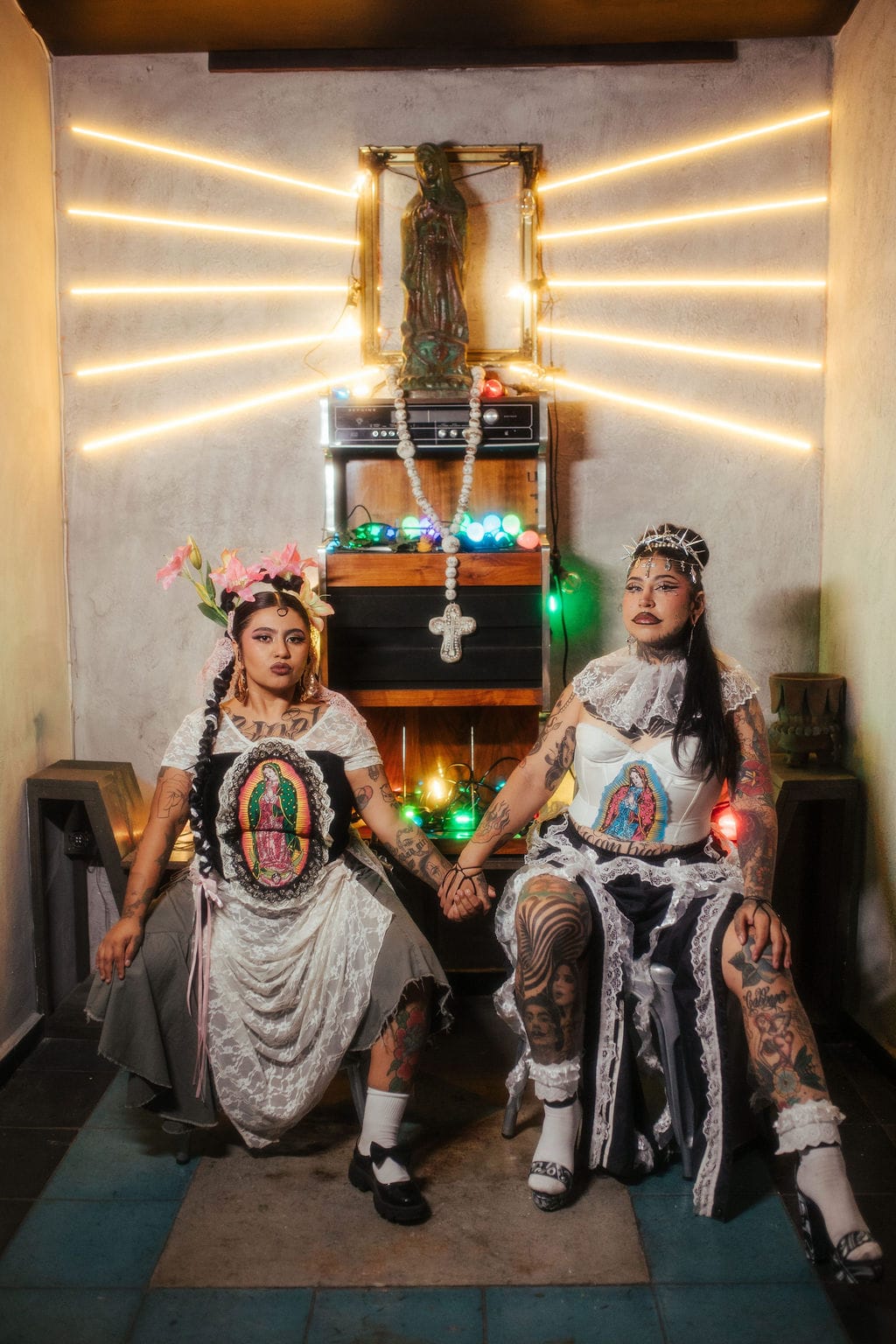
When Miroslava found out, she could not believe it. The awards reaffirmed her idea of collaboration. She’s a firm believer that when she collaborates and does things from the heart so that everyone involved can grow professionally, magical things happen.
Ponte Your Moños to Honor Latin Americans
Her collaboration for the campaign with Ponte Your Moños and Latinas Poderosas is a clear example of the magic that Miroslava passionately speaks about. This particular photoshoot also takes her back to the photos she did with Diana as a clown in the market. When they worked on that project, Diana did some braids and Miroslava became quite aware about the importance of hair.
A while after she did those photos with Diana, the U.S. Immigration and Customs Enforcement (ICE) intensified their detentions targeting Latin Americans. When Miroslava saw the project of Ponte Your Moños, it deeply resonated with her because of how they portray the pride in being Latin American and the money they raise, goes to families who have been separated by ICE.
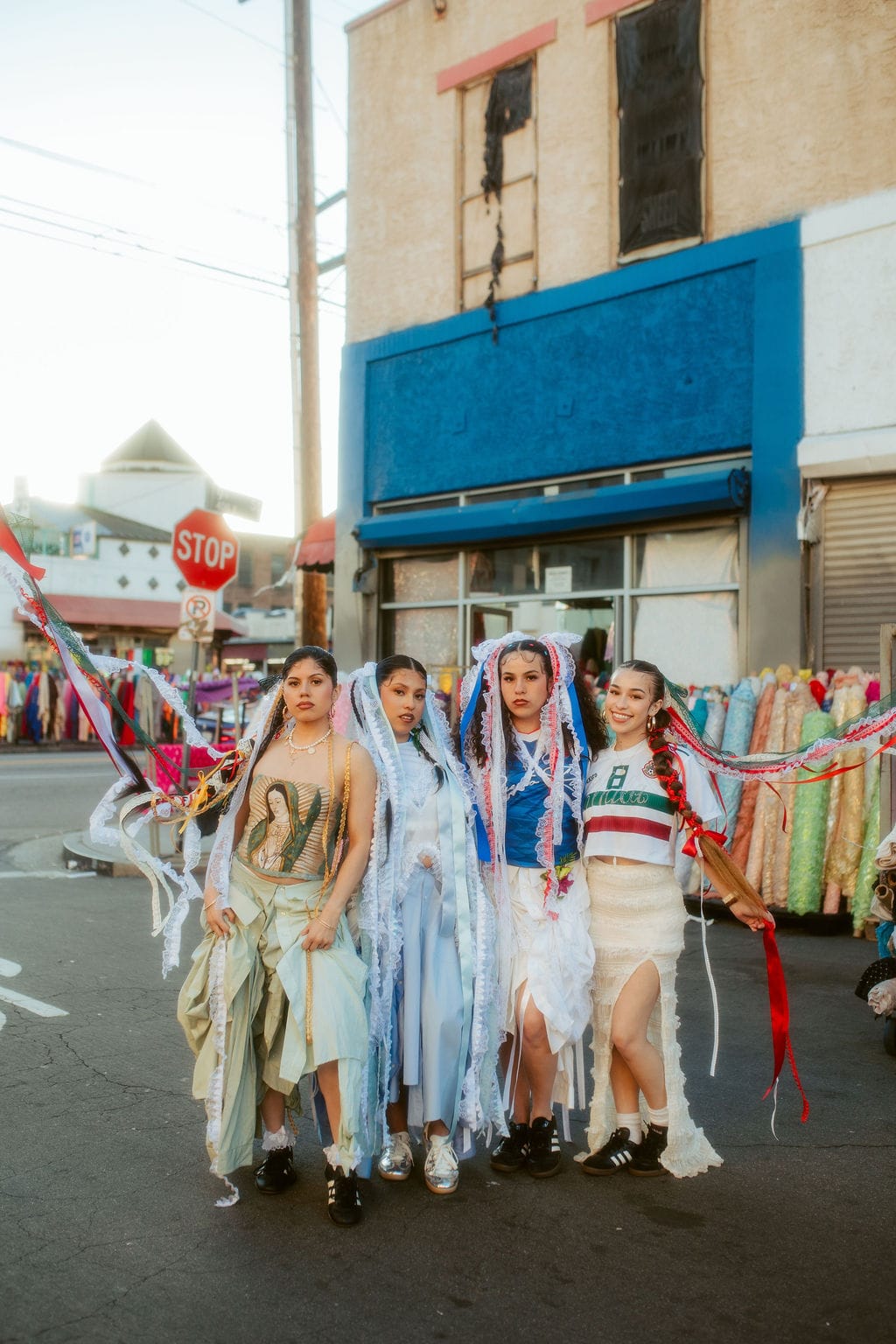
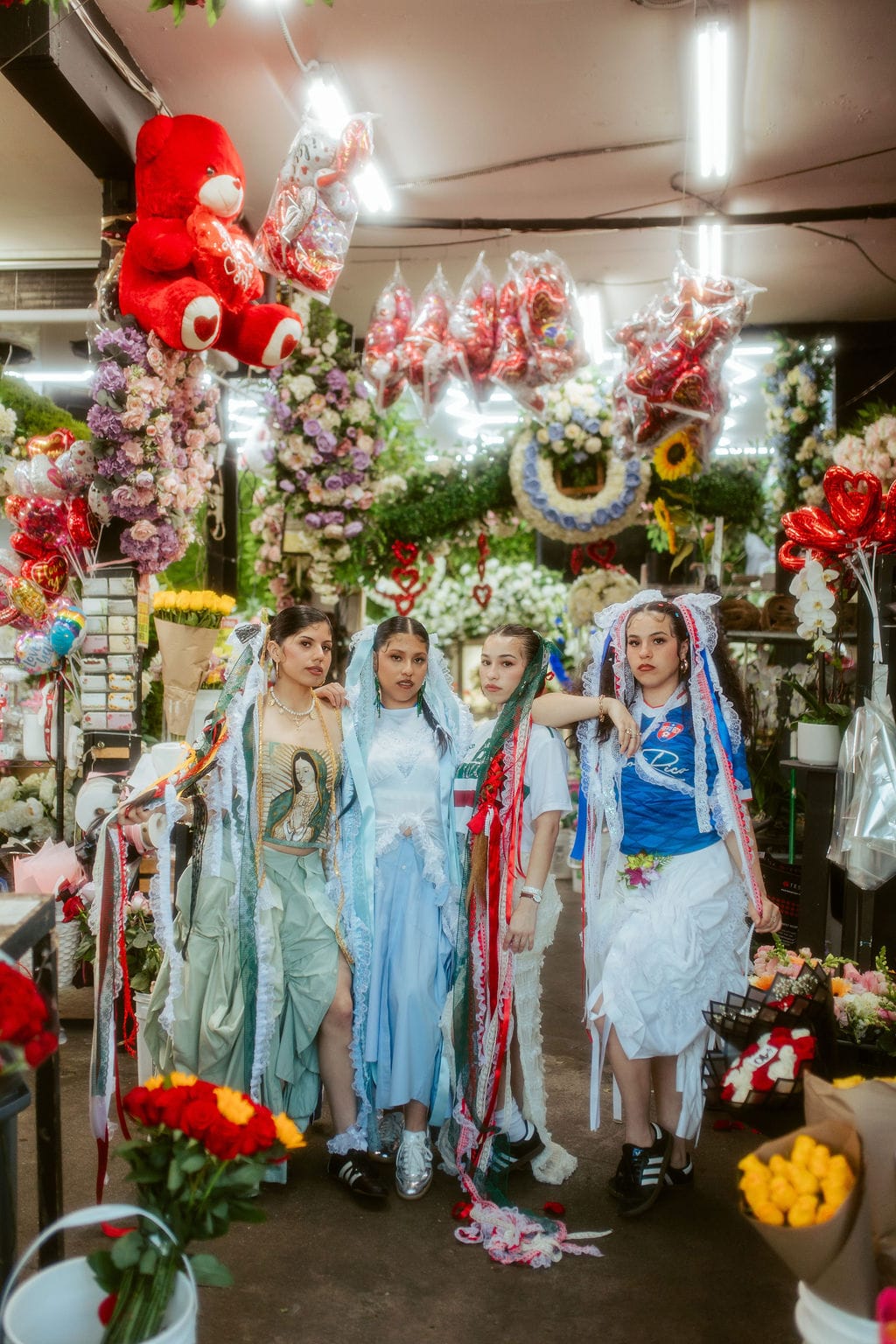
Some of the photos from the session for the Ponte Your Moños campaign in Los Angeles, United States. | Photos courtesy of Livier Miroslava. | Impulsiva Stories
“Next to it, it was like this protest against Trump’s government. Like, güey. Here Latinos are chido. United States sustains itself thanks to Latinos. I found it great that it’s a non-profit. Very like: güey, of course. To hold our roots in high regards because we’re Latinos,” Miroslava said. “We’re here. They’ll see us and we’re moving.”
Listen to Livier Miroslava
0:00
/33.581333
Miroslava really connected with the purpose of Ponte Your Moños and regarding the process, it was “pura morrita trabajando.” Everyone involved was a woman and it was quite similar to her other projects. They walked around Los Angeles looking for a space that would work well for the aesthetics they wanted to portray.
Don't Forget to Subscribe to The Story of The Story
For only $16 a month, every Friday you'll have exclusive access to
The Story of The Story. Our founder, the Costa Rican award-winning multimedia journalist and artist Elizabeth Lang, guides you through her creative process to produce her stories.
They went through callejones, which are specific places in Los Angeles with lots of Latin Americans and its culture. Miroslava had been in those barrios mexicanos before, but she had not thought of photographing them until then. So, walking around those spaces and reinterpreting them for a photoshoot felt quite different for her.
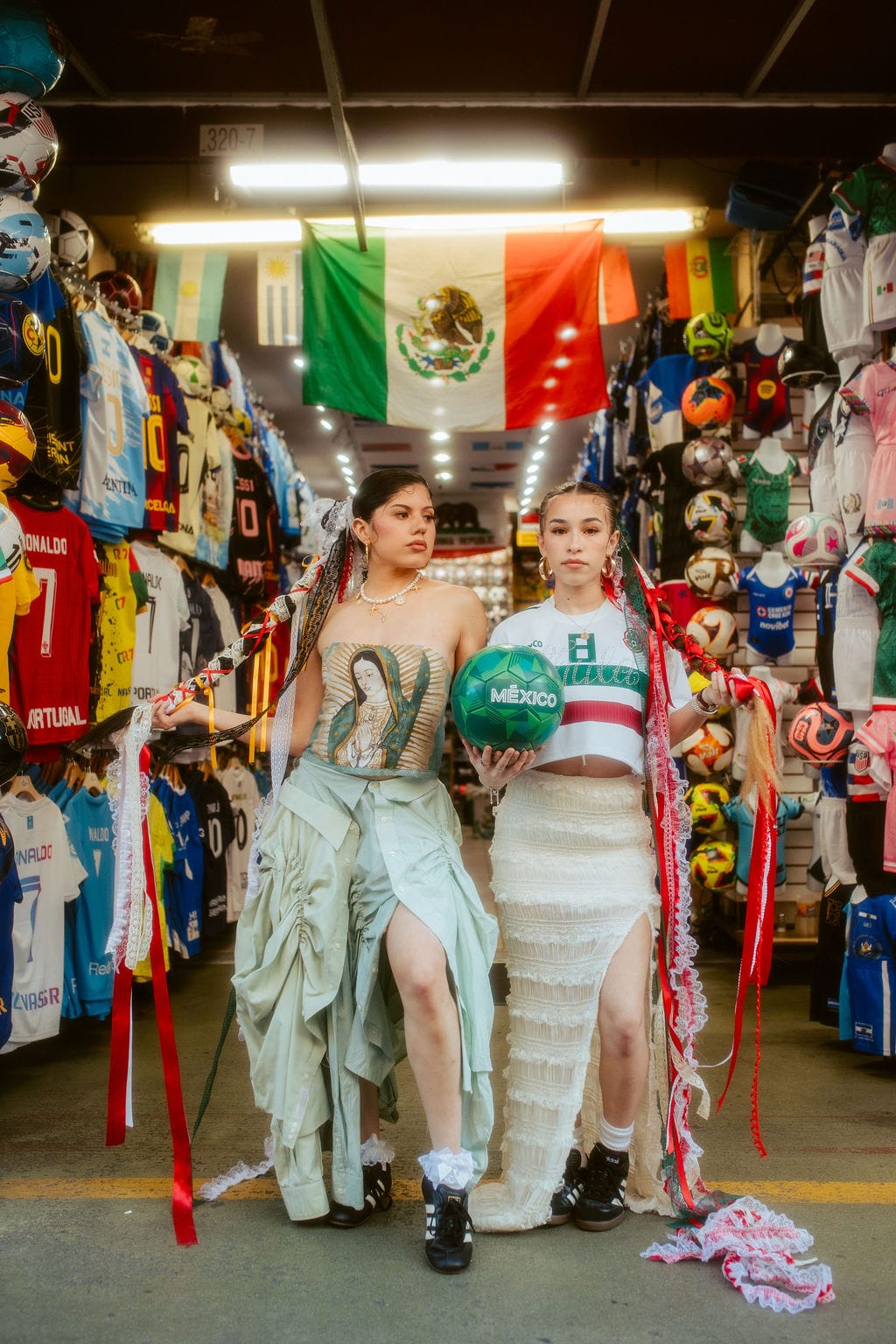
Once again, in these portraits, you can see a strong presence of Mexican, Chicano, and Latin American symbolism. There’s the Virgin of Guadalupe in the clothes. The man wearing a cowboy hat next to his raspados’ cart. The braids decorated with different colored fabrics and lace. The Latin American soccer teams’ jerseys in the background. The Mexican flag in the center surrounded by other Latin American flags. The bright colors.
It's all full of symbolisms that transmit union.
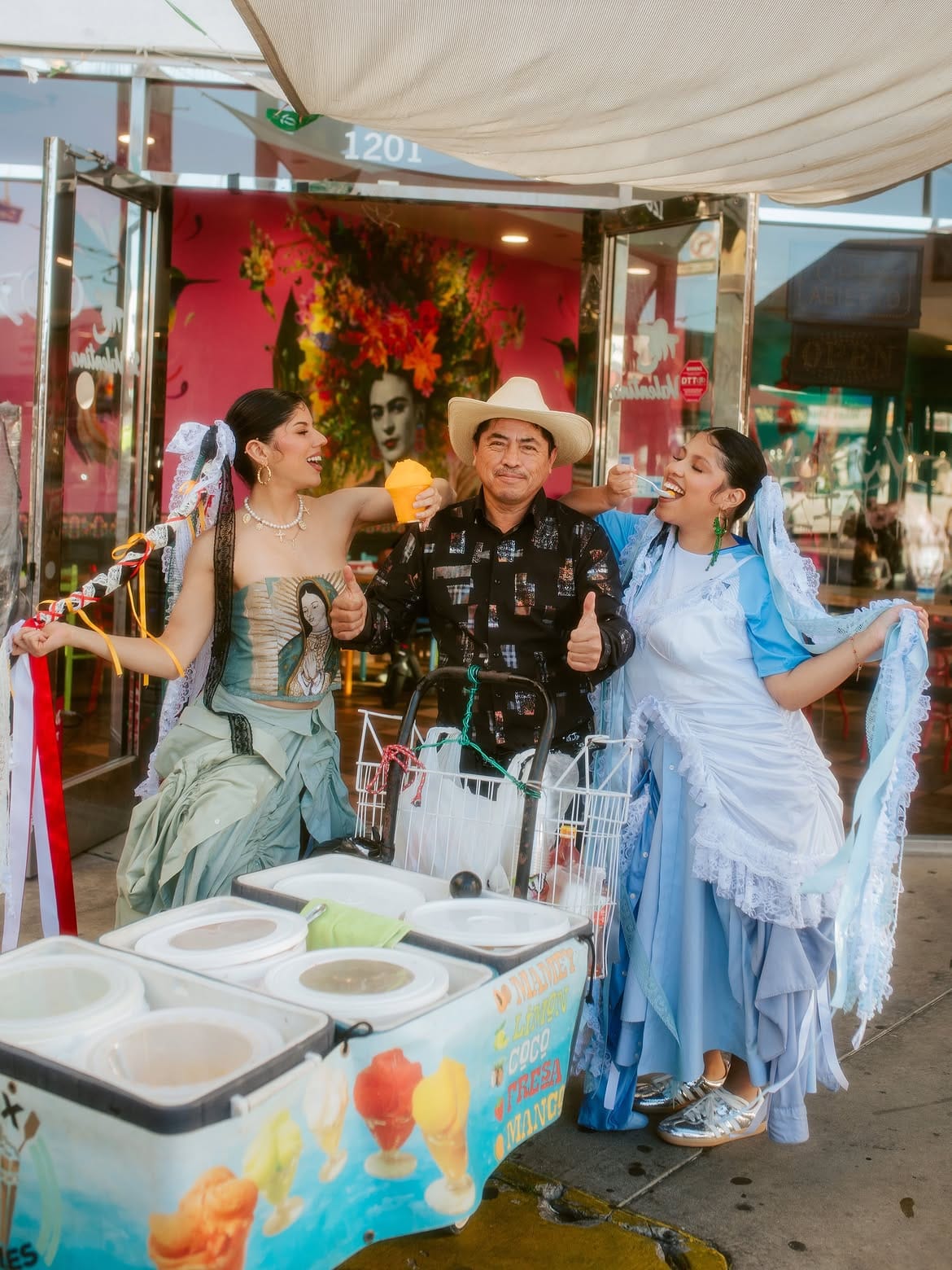
“I think it’s very crazy all this movement that we Latinos are creating. Like, güey, we’re not looking for the European photos or the European places. We’re looking for ourselves, which are our roots. What surrounds us. What makes us, us,” Miroslava said.
Miroslava believes a sense of union between Latin Americans should exist because the same things are happening to everyone in spite of their country of origin or descendance.
“We have to unite. We have to resist. I see it as a bit of resistance, but at the same time as mockery towards Trump. Like, güey, this is what we are and te chingas. We’re here and we’re not going to hide,” Miroslava said. “On the contrary. Instead of hiding, we’re proud of who we are.”
Listen to Livier Miroslava
0:00
/34.853333
Photography with a Chingo de Colores
That Latin American pride and celebration of the culture is constantly reflected in Miroslava’s human photography, not only in its style, but also through its colors. Right now, she’s at a point in which her aura is very colorful and she tends to choose brilliant colors because it’s what vibes with her. It’s what she’s feeling on the inside and what she wants to express.
It’s also because she lives in Mexico and she’s surrounded by a chingo de colores. She wants to make the most of all the different bright tones she’s immersed in. One way or another, she’s also honoring her roots.
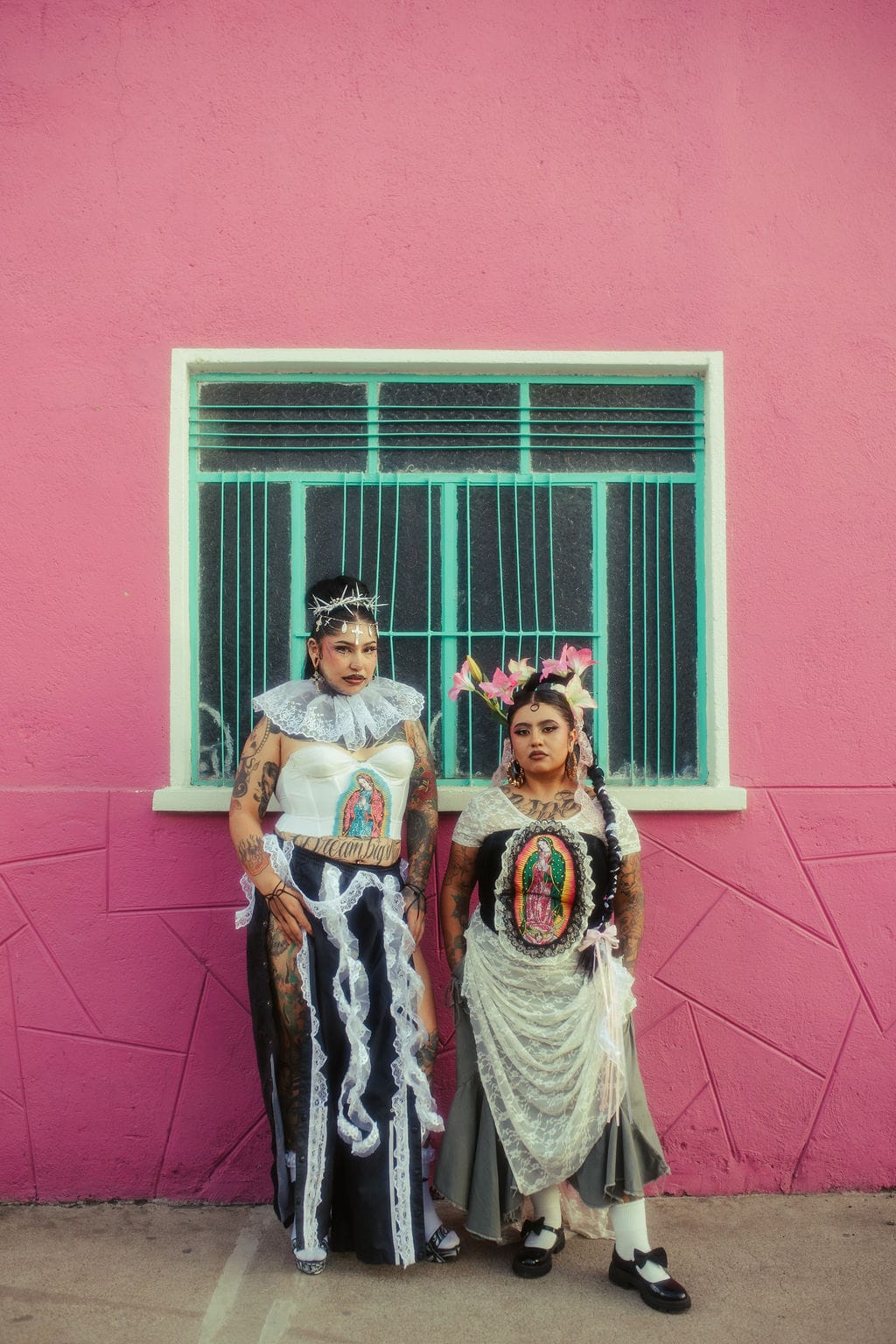
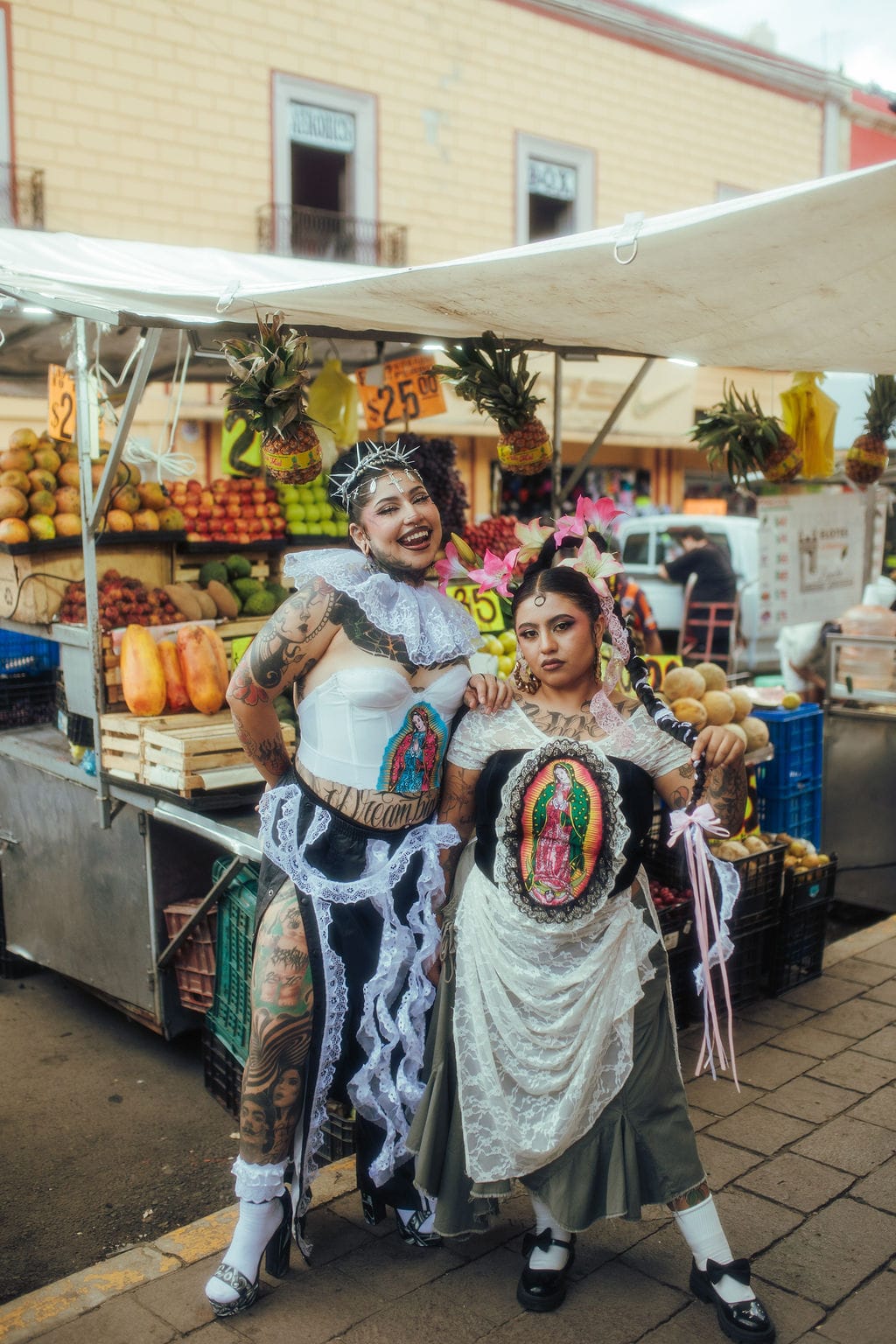
Some of the photos from the session with Brianda and Diana in Aguascalientes, Mexico. | Photos courtesy of Livier Miroslava. | Impulsiva Stories
“I feel that as Latin Americans, we’re a chingo de color. We’re a chingo of cultures. We’re a chingo of a chingo of things,” Miroslava said. “In Latin America there’s a chingo of things everywhere and in Mexico there’s also a chingo of things everywhere. You go to the mercado and you see a lot of color.”
Listen to Livier Miroslava
0:00
/21.461333
She’s noticed this vibrancy specifically when traveling to the United States. When she’s there, she feels it’s grey. So, thanks to that contrast, she’s become very aware of the clash in color palettes between Mexico and the United States. With Mexico and Latin America, Miroslava feels we like to dress up and look colorful.
0:00
/0:07
Livier Miroslava in the middle of the process to create her human photography that celebrates Latin America. | Videos courtesy of Livier Miroslava. | Impulsiva Stories
Color is synonymous with life. When she’s in Mexico, she feels alive. When she’s in the United States, that feeling changes and when she finds herself in Latino neighborhoods over there, she notices a difference in colors with the rest of the environment.
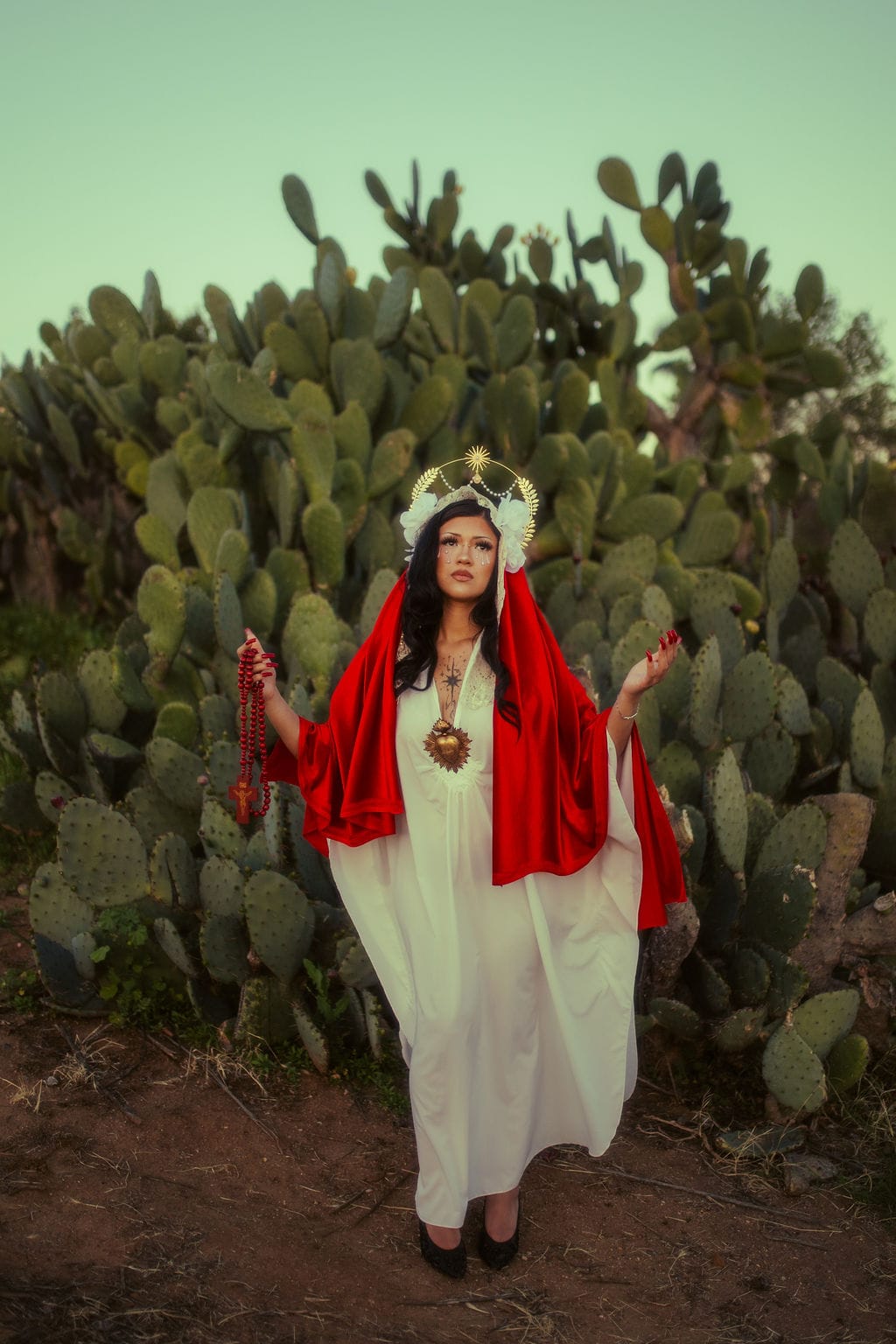
That vibrancy, contrast, and love for life in the form of colors is present in her photoshoot set with the "chicana princess" Ayerim Herrera, better known as Mercury of Love, posing in front of some nopales. This session also happened thanks to the clown photos with Diana. After publishing those photos, Miroslava gained more followers from Los Angeles.
She started meeting more artists, photographers, and models. Ayerim was one of those new followers and Miroslava was very drawn to her style and the content she was uploading. She noticed Ayerim is a very creative person, so she reached out.
The Nopales as a Nod to Mexico
“I told her this was a personal project. I told her I wanted to do some photos. She said yes. She liked it and she had this idea of the virgin crying,” Miroslava said. “It’s a representation of what’s happening in the United States.”
Right after they spoke, Ayerim sent Miroslava a few spots she’d seen and thought could work for the photos. When Miroslava saw the place of the nopales, she knew right away that was the perfect environment.
It connected her to her Mexican family in the United States and to all the things that Latin Americans are going through. The nopales became a special symbol for her in this photoshoot.
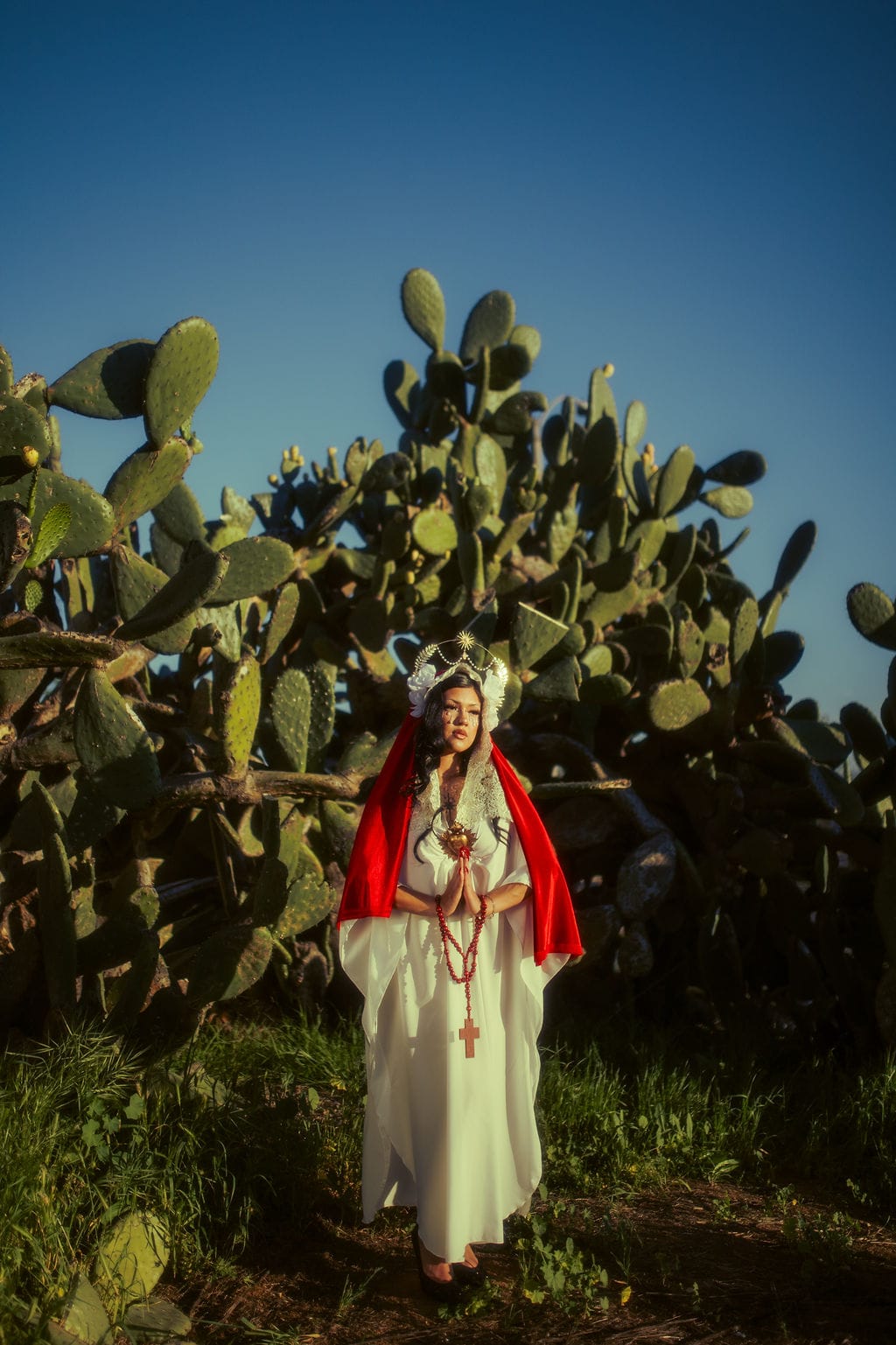
“I specifically chose the nopales. Even though, the virgin is crying for all of what’s happening in the United States because of ICE, for me it was a nod specifically to Mexico,” Miroslava said. “The nopal in Mexico is super representative. It’s in the coat of arms [of the flag].”
Listen to Livier Miroslava
0:00
/23.405333
To a certain extent, you might think these photos could be understood as a “deconstruction” of the Mexican flag. It is in the green of the nopales in the background – shot in a random street in Los Angeles. It’s also in the red cape worn by Ayerim and her white dress.
Yet, that was not the initial intention of these photos, but Miroslava likes to leave it open for interpretation. Usually, she does not like to share where the inspiration of the photos comes from to allow the audience to create their own interpretation of her human photography.
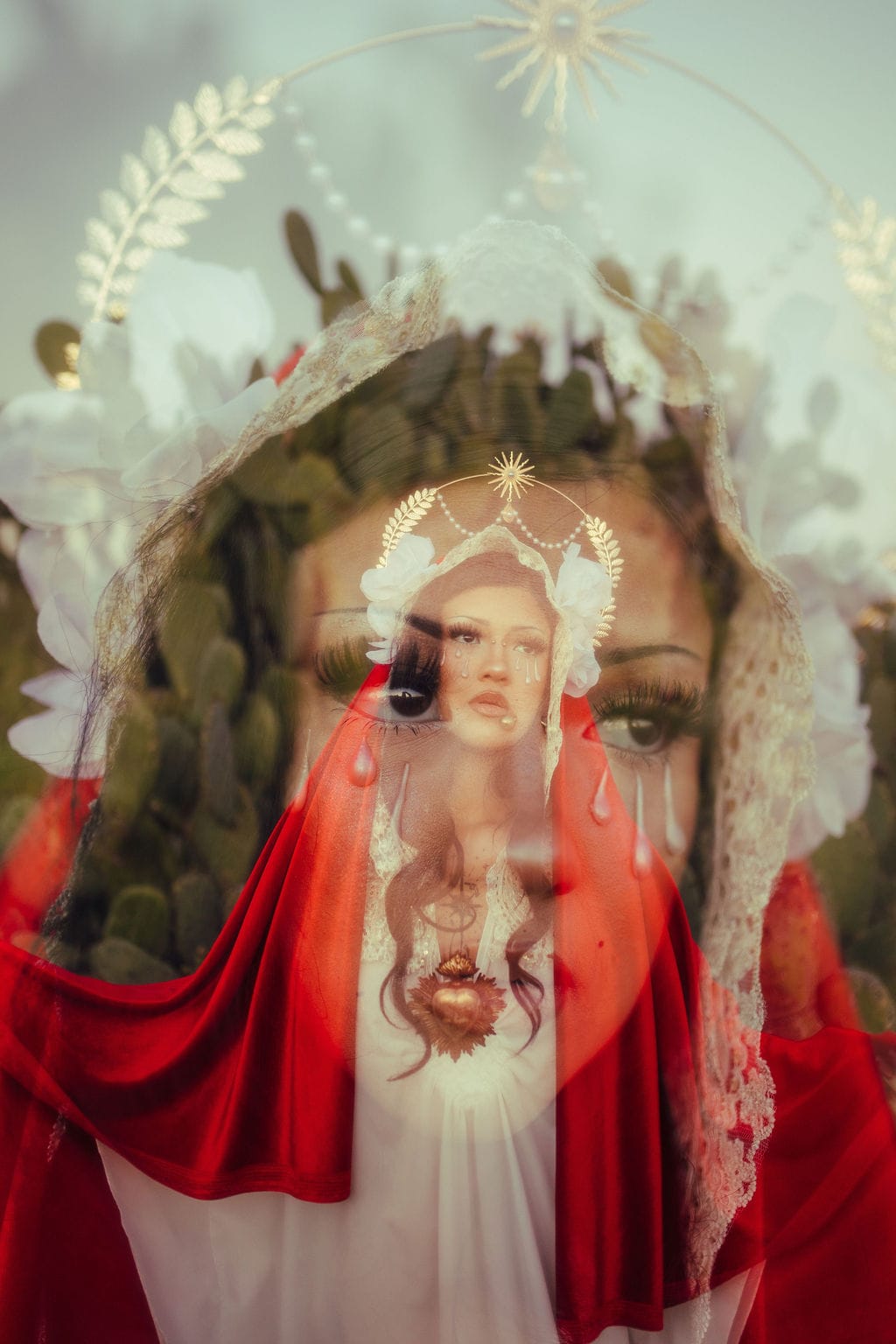
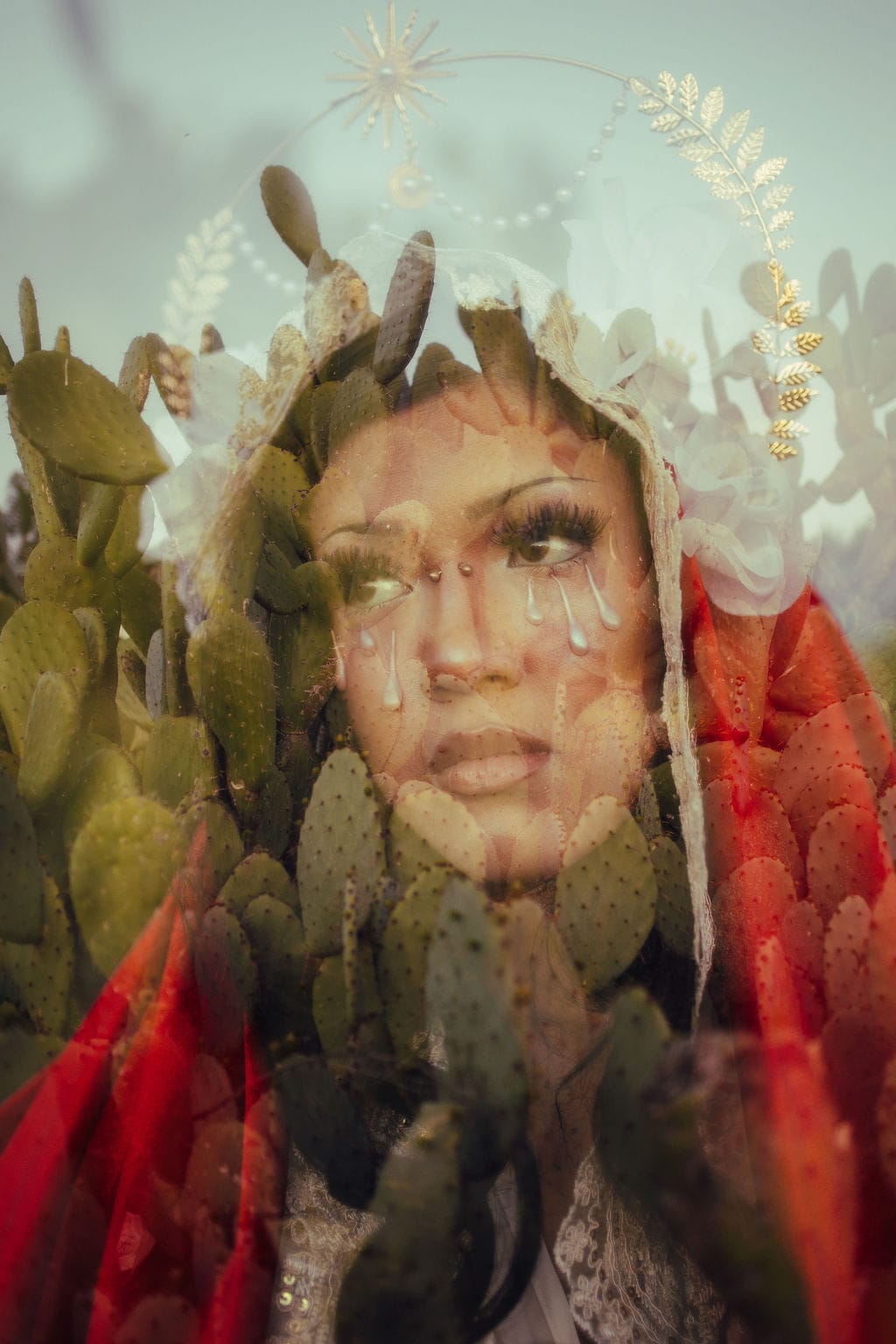
The double exposure photos of Ayerim Herrera that can be interpreted as the Mexican flag. | Photos courtesy of Livier Miroslava. | Impulsiva Stories
She does see certain resemblance with the Mexican flag. Especially in a double exposure shot of Ayerim where you can see her face up close merged in a transparency with the nopales and her own figure looking upwards. It naturally creates a vibrant contrast with the colors.
“I like for everything to be very contrasting. So, if the background creates more contrast with what she’s wearing, the better it is. The contrast happened by itself. When she placed herself there, it already existed,” Miroslava said.
That natural contrast is part of her human photography that celebrates Latin America. It's an art form that relies heavily on its vibrant colors to portray the Latin American roots. An art where Miroslava’s Mexican and Latin American identity is both directly and indirectly portrayed, whether that’s photographing its people and cultures, or her love for banda and regional mexicano music.
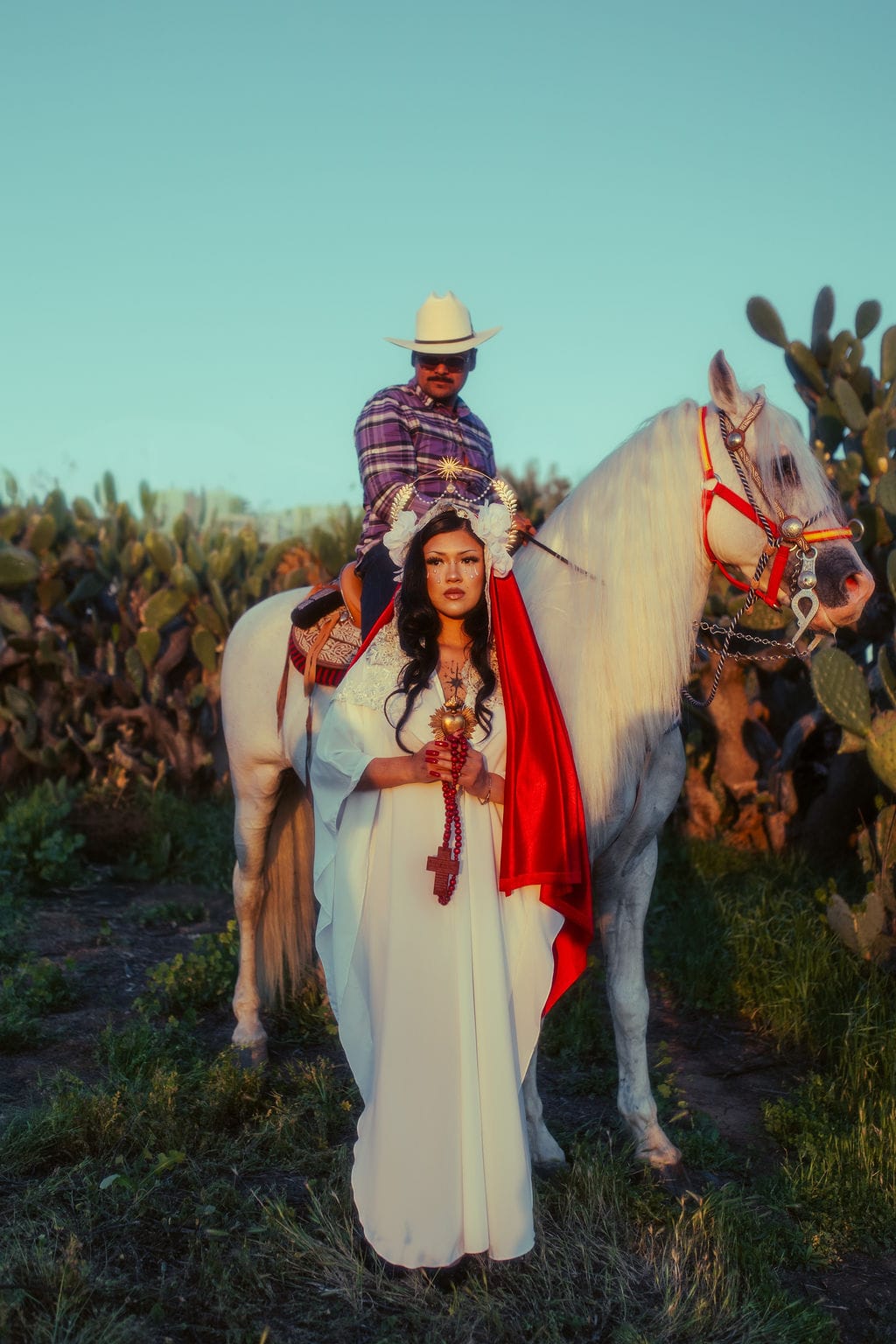
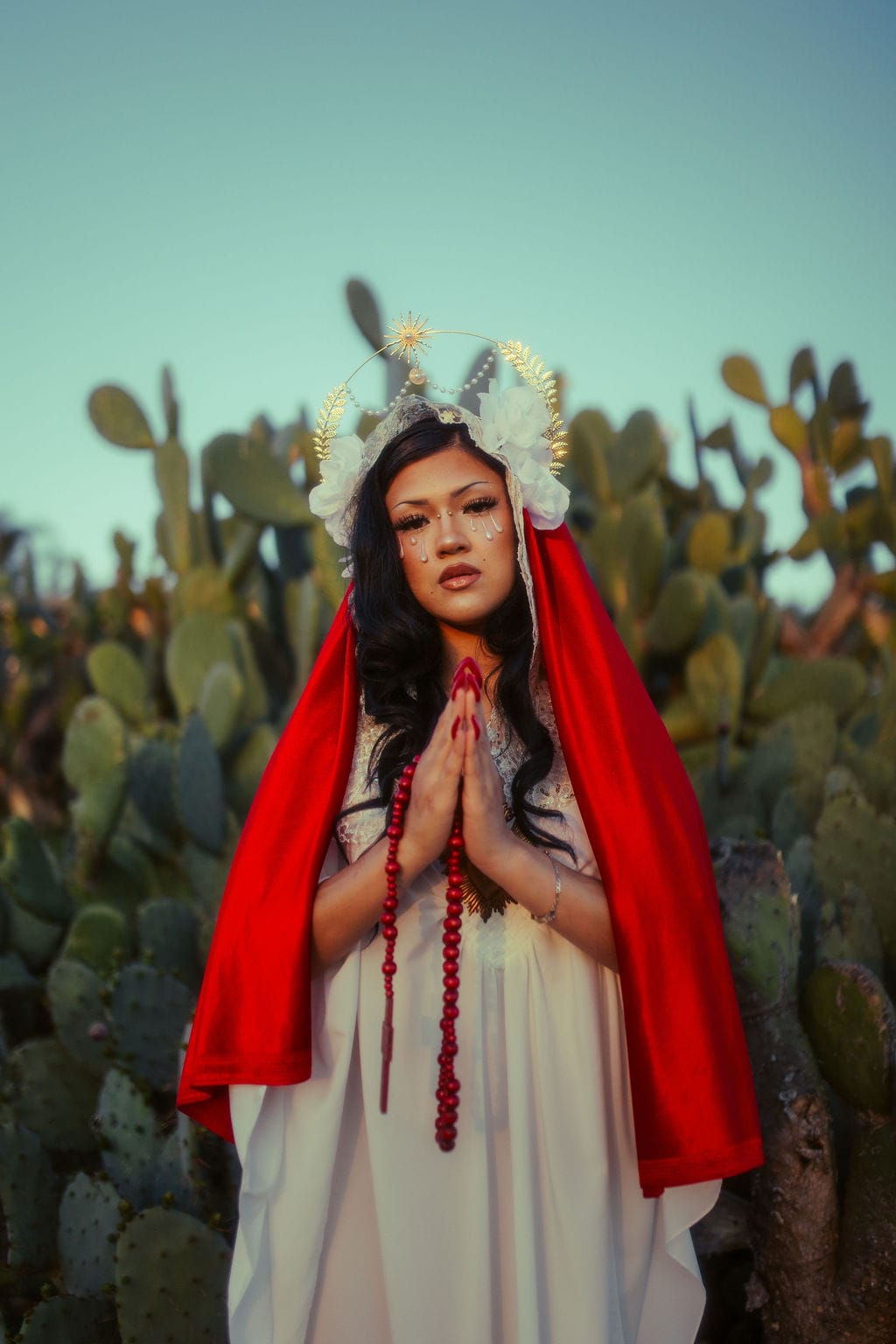
More photos from the session with Ayerim Herrera with the nopales in Los Angeles, United States. | Photo courtesy of Livier Miroslava. | Impulsiva Stories
It's there because of her love for an extremely vibrant and brilliant red in every one of her photographs. Representing that is very chido for her as she reaches many parts of Latin America, one photograph at a time.
But most importantly, it’s an empowering art that makes her feel proud and happy with herself.
“I never imagined my work would reach so many places and people. I’m very happy because photography is what I love the most [in life]. So, seeing this thing I love so much. What I do from love and for the love that inhabits me,” Miroslava said. “Seeing it’s reaching so many people and that it’s inspiring others, it makes me proud and even happier.”
To learn more about Livier Miroslava’s human photography that celebrates Latin America, you can follow her on Instagram at @liviermiroslav.
Written by

Subscribe to my newsletter
Subscribe to my newsletter to get the latest updates and news