Luis Gabriel Sanabria PART I
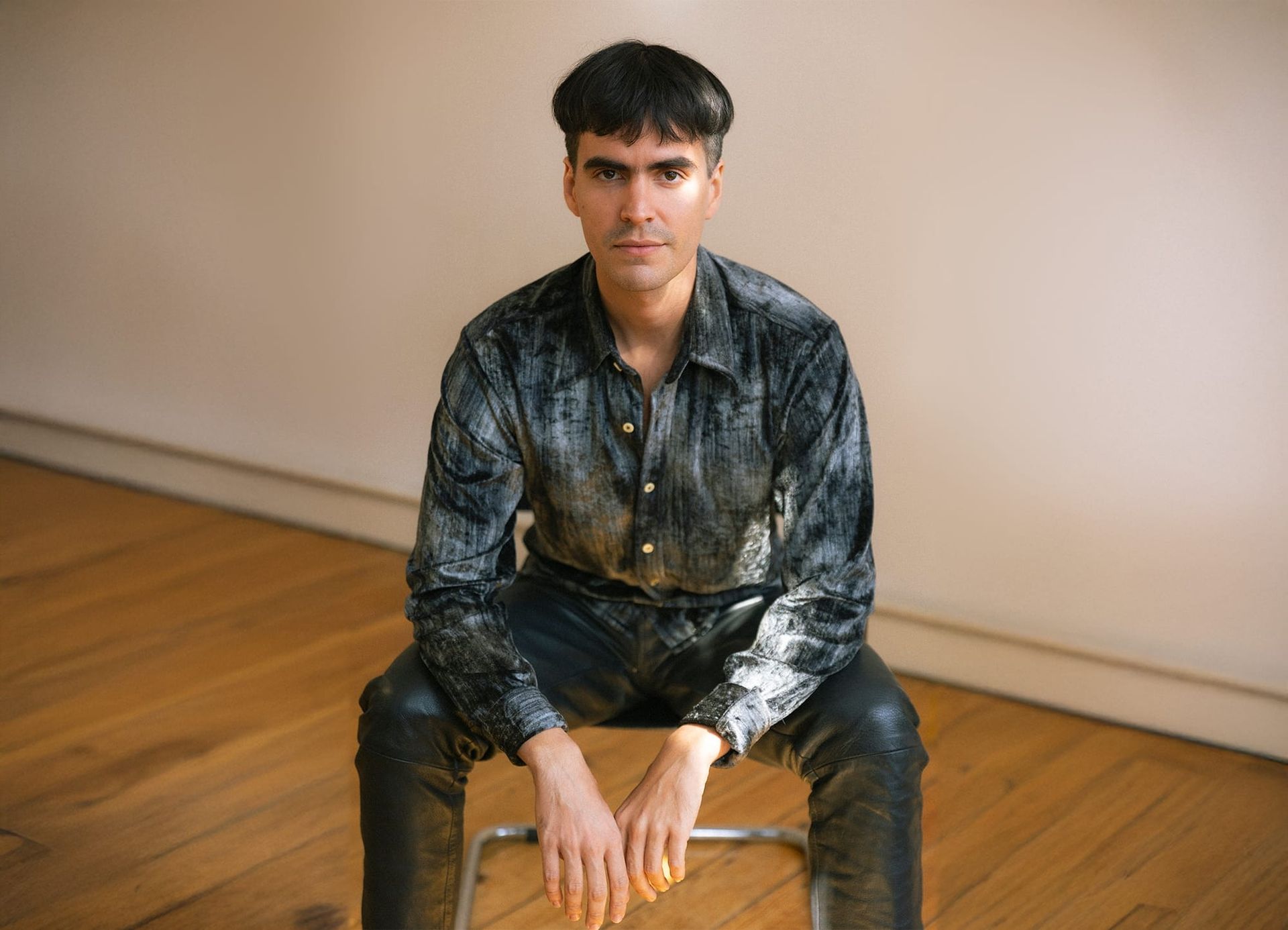
Luis Gabriel Sanabria is a Puerto Rican multidisciplinary artist who creates magical familiar vejigantes.
PART I: How Luis Gabriel Sanabria Creates His Familiar Vejigantes
When Luis Gabriel Sanabria was five years old, he moved from Puerto Rico to the Dominican Republic with his family. His parents went there to study and at that very early stage of his life, his deep interest and passion for the arts began. He started questioning who he was within the art of sculpting and began learning a lot about the characters of the carnivals in the Dominican Republic.
“We’re two very close islands in the Caribbean, but at the same time, each one of them has their very specific things. The language, the food, and also the cultural expressions,” Sanabria said. “At a very young age I was designing costumes and suits. I don’t know why it drew my attention so much and I’d also make small paper dolls. It was like this fixation of creating and drawing the costumes’ designs.”
While living in the city of Santiago de los Caballeros in the Dominican Republic, the Puerto Rican multidisciplinary artist began learning about their carnival’s characters of the lechones. These are traditional characters that “distinguish themselves with their masks, representing the face of a pig, with a long snout and tall horns. Their elaborate costumes feature a colorful, beaded romper encrusted with bells and bows.”
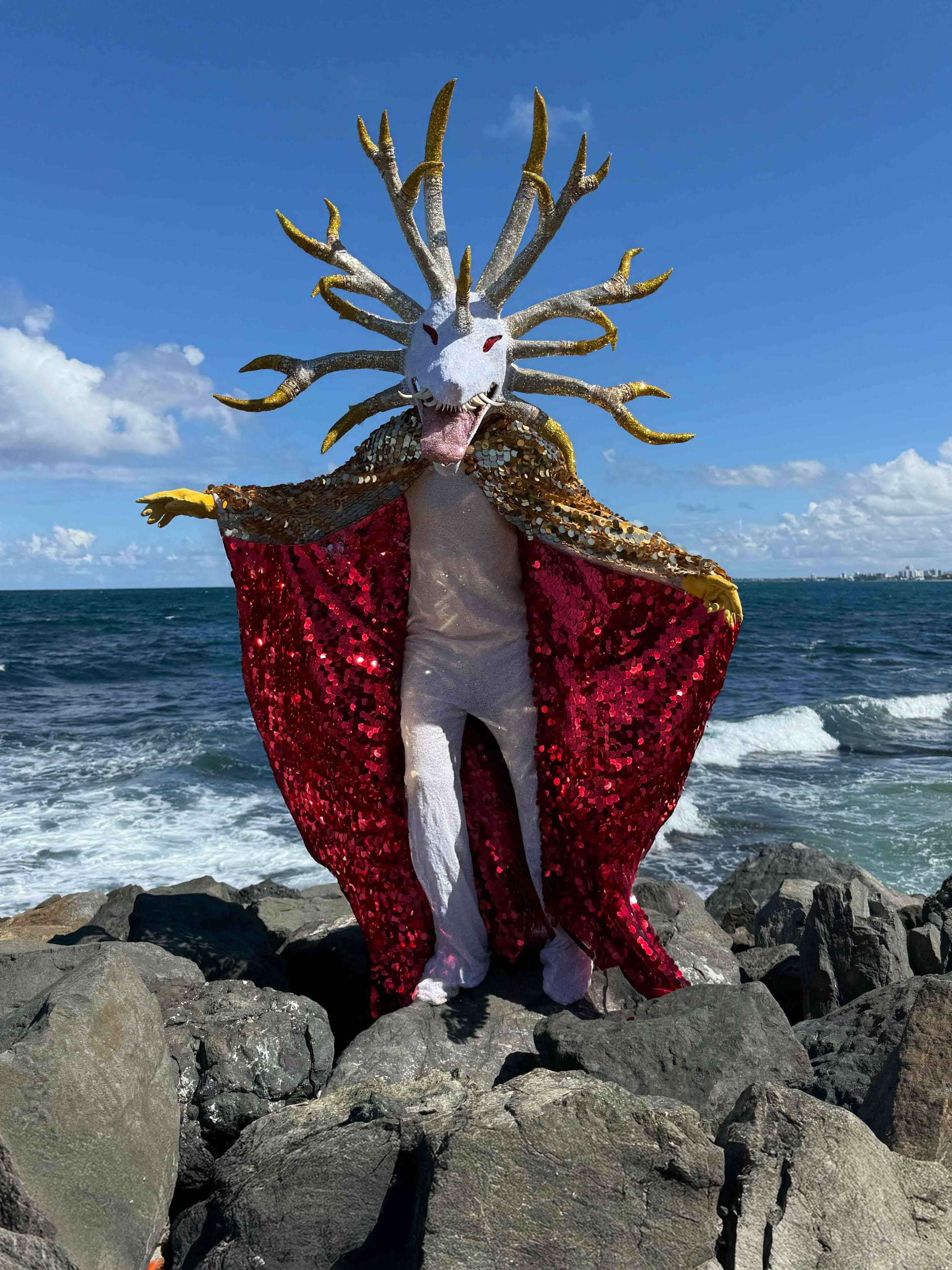
At that time, when he was a child, he began doing the masks of the lechones at school. That’s when he started understanding who these characters were and where he came from because he described the lechones as the cousin of Puerto Rico’s vejigantes. Similar to the lechones, the vejigantes are "mischievous folkloric characters always ready to stir up fun during the islands’ carnivals."
That initial fascination with his Caribbean culture led Sanabria to obtain his Bachelor of Arts in Acting and Performing Arts and his Master of Arts in Cultural Agency and Administration from the University of Puerto Rico. He loved performance as a cultural expression, which eventually he’d merge with other artistic disciplines like design, photography, theater, film, and art.
Then, during his time in college Sanabria started working with Bread and Puppet Theater, which is a politically radical puppet theater based in Vermont, United States. Bread and Puppet Theater became another "art school" for him, which took him on tour throughout different cities in the United States.
“It was that process from my childhood until university and then, going all in working with these companies. Within all these things that happened and the touring, the [COVID-19] pandemic hit,” Sanabria said. “I was here [in Puerto Rico], going out for another tour, and then, there was no theater. There were no congregations, and art was not considered something essential according to our government.”
Don't Forget to Subscribe to
The Story of The Story
For only $16 a month, every Friday you'll have exclusive access to The Story of The Story. Our founder, the Costa Rican award-winning multimedia journalist and artist Elizabeth Lang, guides you through her creative process to produce her stories.
Buy HereThat obligated him to go into introspection with himself to reflect about the path traveled throughout the years. It made Sanabria ask himself with what he identified the most. With what he wanted to create within his artistic practice. With where he wanted to direct all of what he was creating in an intentional manner.
The answer came in the form of something extremely familiar. Something that’s accompanied him throughout his life without much thought: the local icons.
Creating the Spiritually Magical Vejigantes
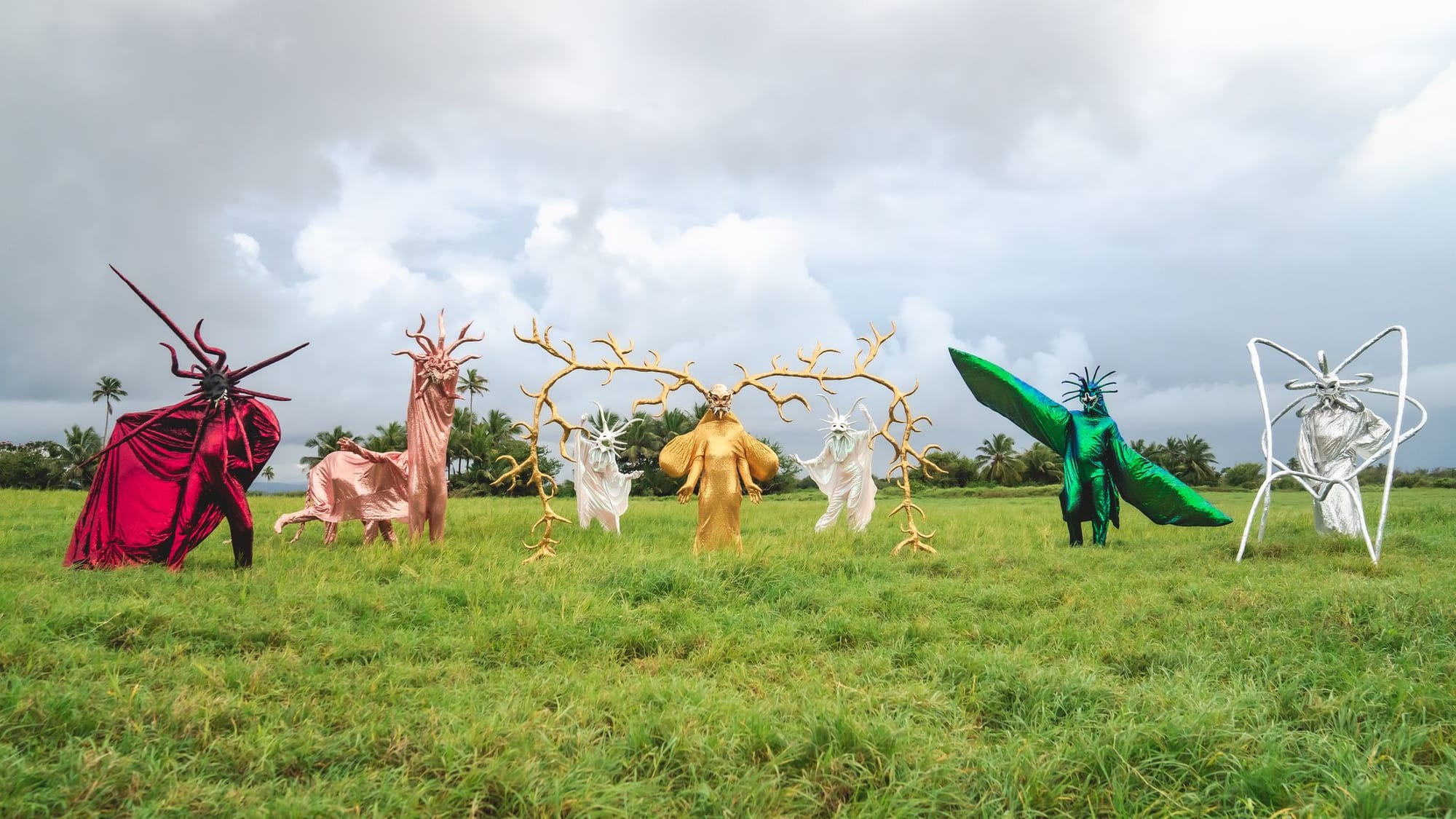
He wanted to explore this through the figure of the vejigantes and its relationship with Indigenous ancestry. That took him to the Caribbean island’s carnivals, which are one of the oldest festivities that Puerto Rico has. It also took him back to his past as a child; a time in which he connected with the carnivals without much thought. A time in which that initial connection was something very natural and that later on, as an adult, he started re interpreting from the cultural and artistic aspects.
0:00
/0:45
Vejigantes Rojo y Dorado Beach Dance. | Video courtesy of Luis Gabriel Sanabria | Impulsiva Stories
That connection is now represented in the form of beautifully shiny and shimmering familiar vejigantes. It’s in the form of Sanabria’s own re interpretation that results in the creations of spiritual and magical beings.
To understand how he’s reached this point of creating these blissful creatures set in breathtaking natural environments, we must first comprehend his creative process. Each of the masterpieces are first seen by Sanabria from a theatrical performance point of view.
“To create an image with all these characters, I always pay attention to the design part. The costume’s design. The character’s design. The set design. I work a lot with nature as the set design, but at what time of the day should I go [to nature]? What’s the weather like?,” Sanabria said. “That’s also going to affect the set design and it’s then combined with the live performance.”
He’s always thinking about his artworks from his theater perspective, which then merges with his other artistic explorations of film, sound, music, and photography. It comes from his fixation – and love – for the manipulation of objects to create stories where these characters are at the center of everything.
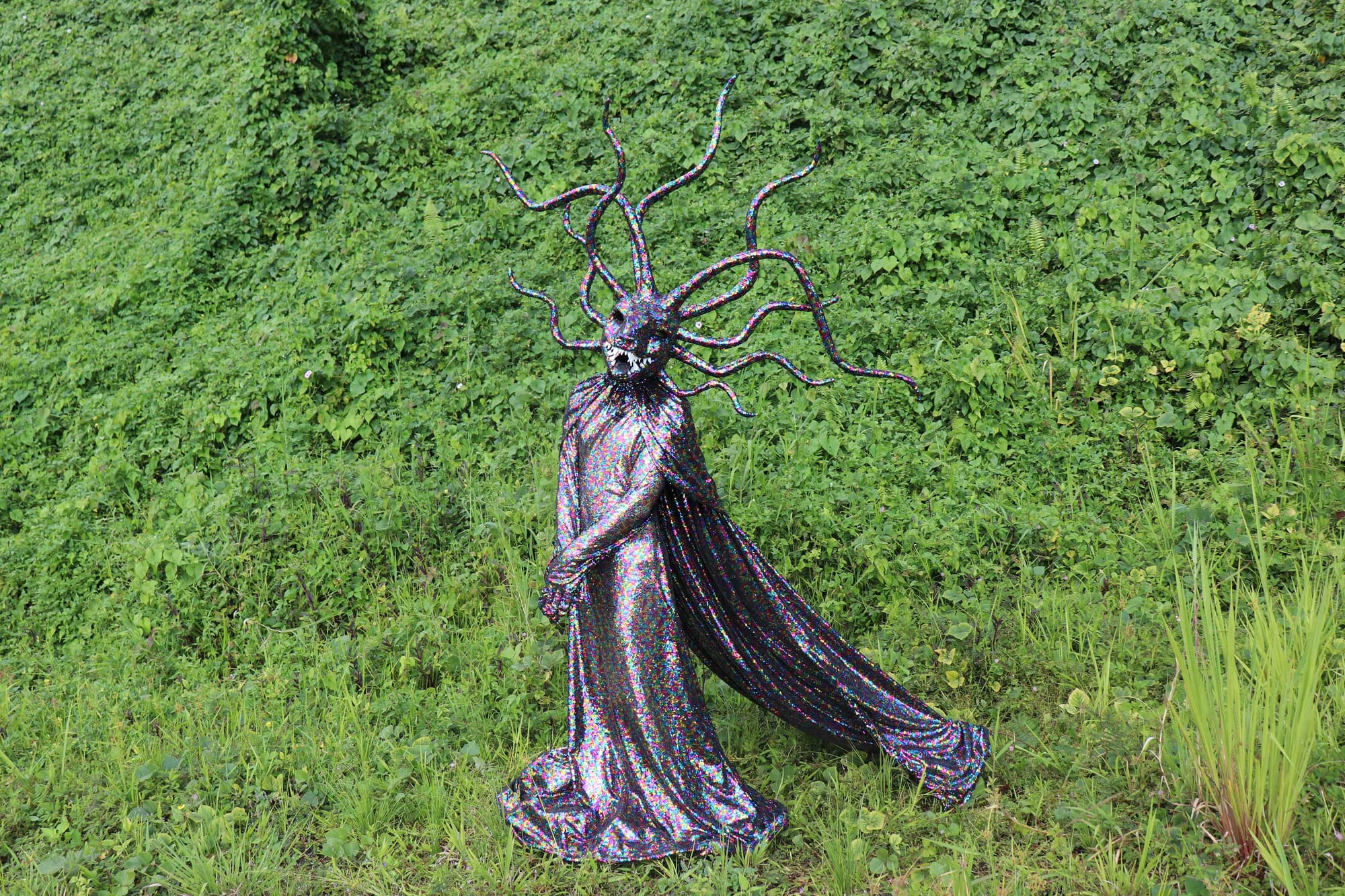
Besides the technical aspects, the vejigantes represent a direct connection to his family. There’s a direct natural link between his art and his intimate relationships. It’s also about community. This led him to his desire of representing the environment he’s in and to a certain extent, speak about the political aspects of nature in Puerto Rico.
“That has to do with the ecological fights that are happening here in Puerto Rico. It also has a lot to do with the social aspects and with our status as a colony. I think that working with these cultural subjects can be very political and I want to keep pushing myself towards that direction,” Sanabria said.
The inclination towards using his art and culture to speak about the social and political aspects regarding the nature in Puerto Rico is also tied to his philosophy as an artist. Before being an artist, he’s a humanist. His artistic practice comes from a sense of being in which it’s not only about the art, but also about the philosophies, spiritualities, the foods, and languages that surround his creations.
0:00
/0:53
VEJIGANTE ALBORADA. | Video courtesy of Luis Gabriel Sanabria | Impulsiva Stories
With this in mind, the direct process to create his pieces depends a lot on the vision he has. Sometimes it all starts from a dream. He has different drawings or ideas that he writes down. Sometimes the design is inspired by a landscape he wants to work with. An ecosystem that he wants to portray.
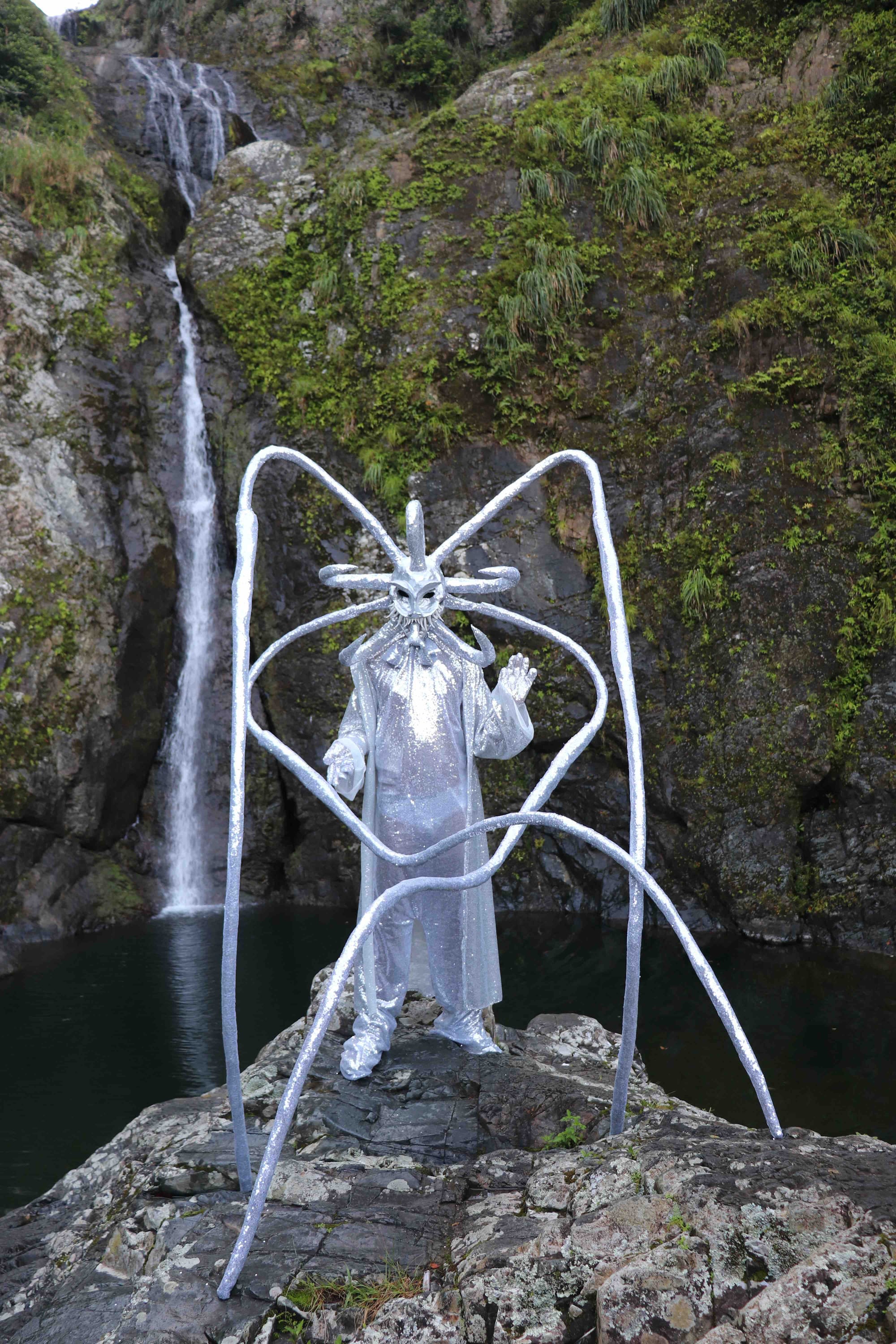
It also depends on the size of the piece he’s working with. He might also start with an image and then the “construction part” follows. He collects cardboard and paper to build the skeleton of the sculptures. He also works with paper mache and then starts to build layer upon layer until he waits for it to dry out.
After it’s dry, he starts sculpting the piece until it speaks to him. Once it is shaped, the layers of paint come in and he then ends up covering them with different fabrics. Then, the sculpting process for the teeth comes through. These are made out of clay, paper or at times, he uses animals’ teeth.
That’s the general process to create his pieces, but then there’s a defining factor for the material he chooses. If he’s going to make a piece that will be placed on a wall or something that’s merely sculptural, he likes to use ceramic for that particular case. It allows him many different possibilities.
“But when you do things that’ll be used for music videos, a world tour, theater or they simply want to use it for the carnival, that has to be with paper. It has to have a certain lightness,” Sanabria said. “If it’s something that I know that’s more for video, photography or something that lives in a gallery show, I give myself more freedom to create more sculptural things. Pieces that don’t have a performance purpose, but that do cause an impact on the image.”
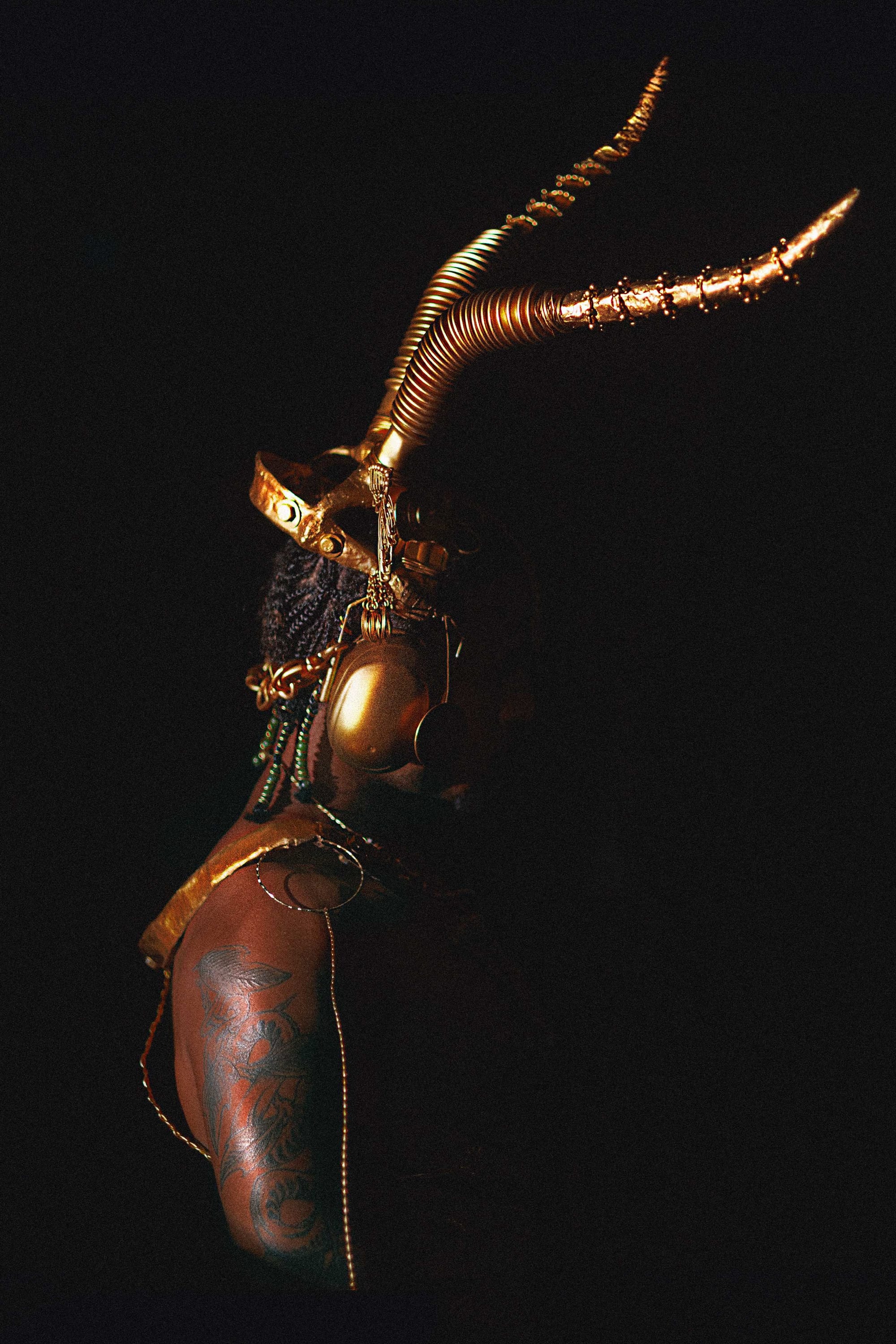
Given these combinations and explorations of different artistic disciplines in Sanabria’s familiar art, he’s been able to move throughout different spaces and groups. Some are more focused on design. Others are for museums or galleries. And others can be on the streets with a carnival or directly collaborating with musical artists.
The Vejigantes in Matt Louis’s Afro Futuristic World
Such is the case of the collaboration he did with the Puerto Rican artist Matt Louis. Louis reached out to Sanabria saying he was very interested in having his artwork participating in his musical project. They ended up becoming friends and Sanabria’s artworks were used for the cover of Louis’s debut album “GAMMA,” two music videos, and the visualizers.
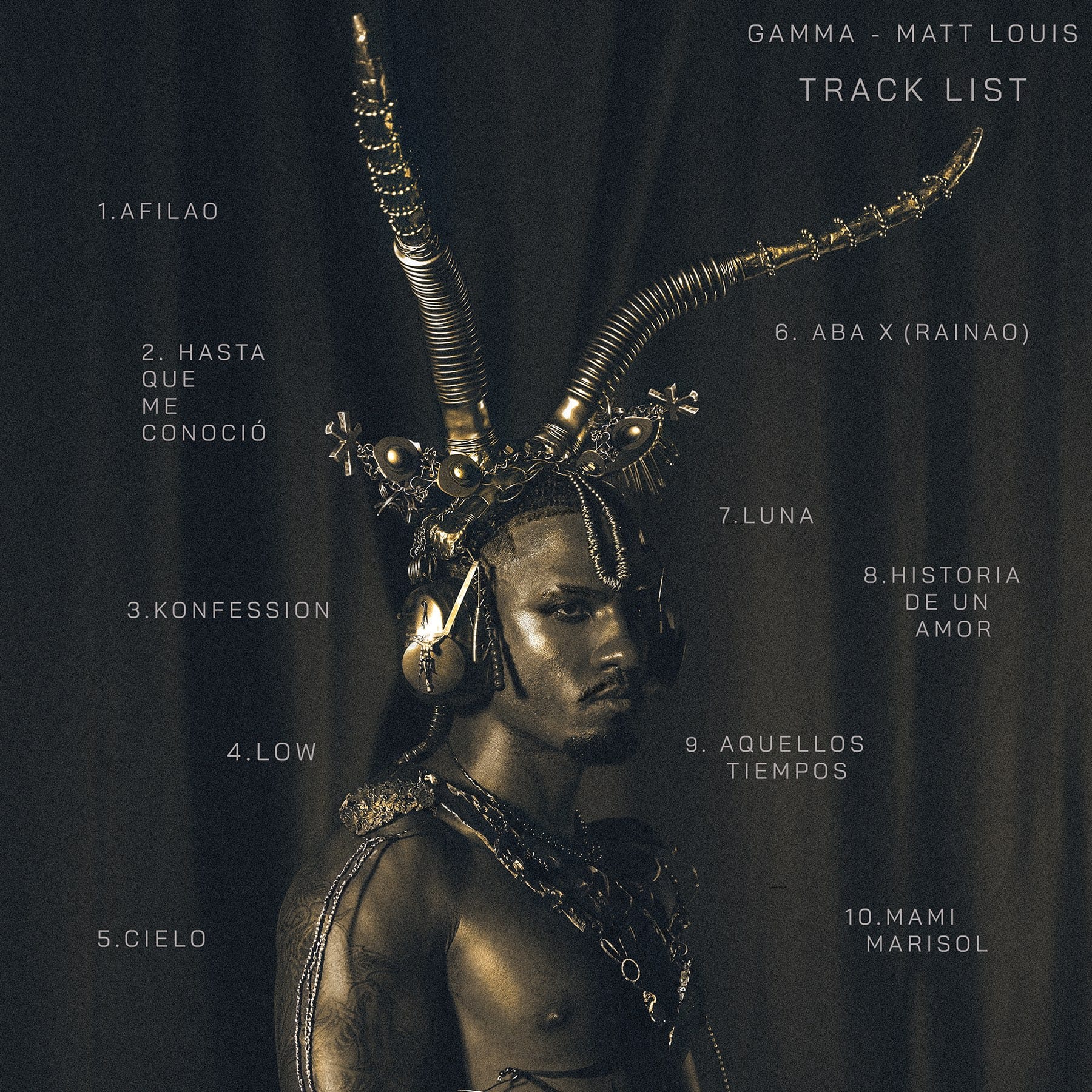
“We became friends and for the [headpiece] design for the album cover, he visited me at home. Here at the studio. He saw the house, loved it, and said: I love the vibe here,” Sanabria recalled. “We’re going to make a music video. So, your art pieces can be here and we’ll film in your studio.”
So, Sanabria was told to create various pieces for the music video “Cielo” and they were placed throughout his house. If you sit down and take a detailed look at the pieces, you’ll notice a total of four of Sanabria’s artworks. The first piece is a black and red vejigante mask, which acts as a mysterious main character throughout the music video.
The second piece to appear is a ginormous golden sculpture placed on a white wall, that just by itself, has a great presence. Then, as the camera moves throughout the rooms, you’ll notice two other blue and shiny metallic sculptures hanging on more white walls.
As Louis is told to get dressed because they’re going to heaven, you see the red and black vejigante appear once again, but this time accompanied by two other white masks that don’t quite show who they are. You can interpret them as more of the magical and spiritual beings that Sanabria creates through his familiar art.
Now, regarding the golden headpiece used for the music video “LUNA,” the album’s cover, and the visualizers, the concept behind it is quite interesting.
“That piece is in this world that he’s in and exploring. An Afro futuristic world, but also like a decadent future. A future where technology goes back to being retro and not very digital technology, but more analogous,” Sanabria said. “So, that design was sort of a futuristic, but analogous vejigante. That’s how it started and I was very interested. I said: well, it’s like this neo-Caribbean Afro science fiction and I love that.”
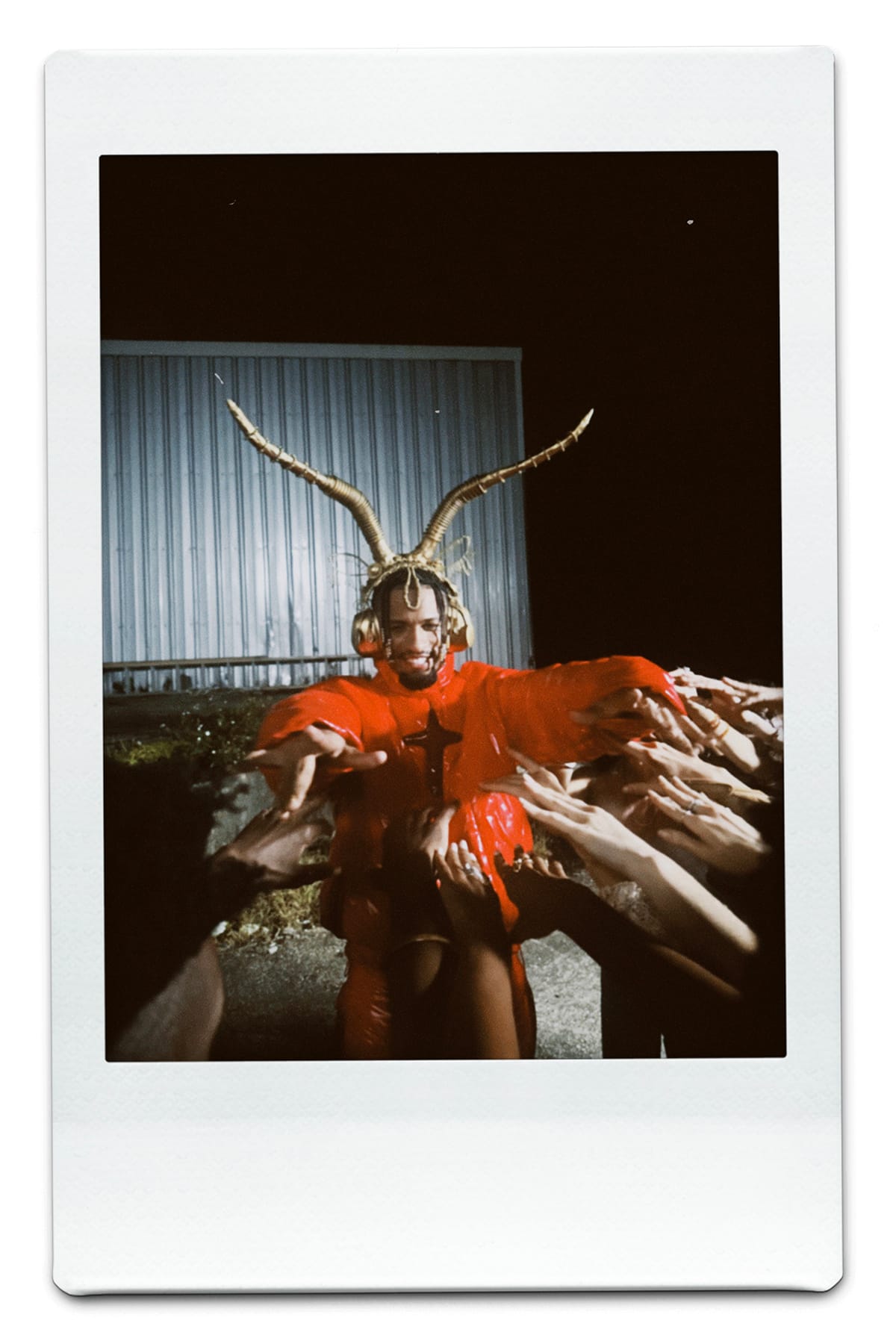
Sanabria’s collaboration with Louis is a result of his openness in conceiving his familiar art of the vejigantes. It’s an art where multiple artistic disciplines merge in which the traditional and the contemporary collide in a harmonious manner.
It’s a familiar art where spiritually fantastic characters take ownership of its natural surroundings. It’s a familiar art that made it to the mainstream in 2025 because of its natural relationship with music where tradition becomes contemporary and modern.
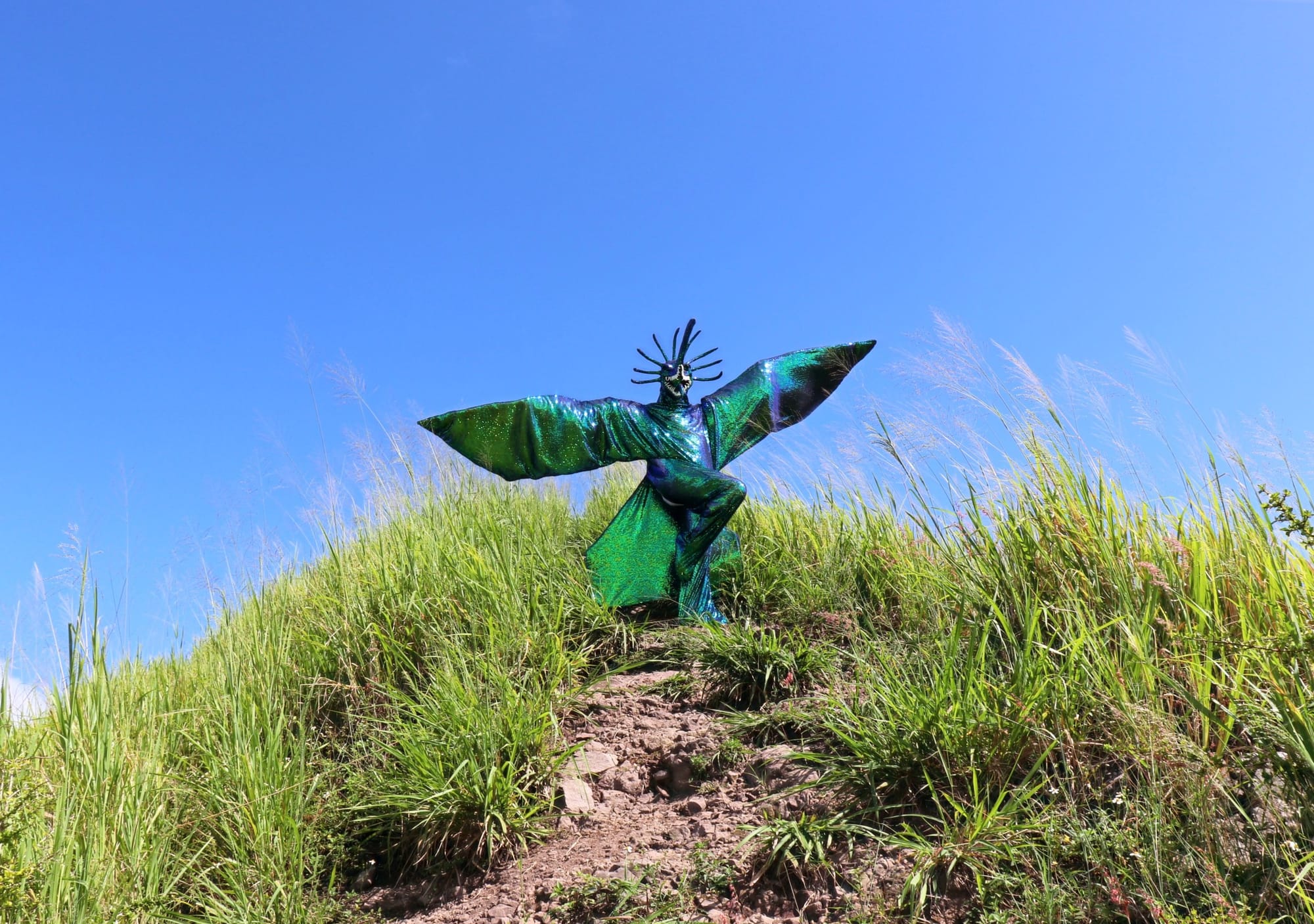
“My themes are about everything I see that concerns me as an inhabitant of this archipelago. As an inhabitant of the Caribbean and as a Latin American,” Sanabria said. “I think that’s the theme. From my position in which I can keep researching ways to express that connection between the popular, the ancestral, and the everyday with the contemporary. With the traditional.”
To learn more about Luis Gabriel Sanabria’s familiar art of the vejigantes, you can follow him on Instagram at @luisgabrielsanabria.art. Stay tuned next week for PART II, where we’ll explore how Luis Gabriel Sanabria’s art made it to pop culture through music and carnivals.
Written by

Subscribe to my newsletter
Subscribe to my newsletter to get the latest updates and news