Richie Morales PART I
Richie Morales' series "Las Voces del Genocidio," "Neo Folclor," and "Los Hijos del Vértigo" portray Guatemala's complex social context.
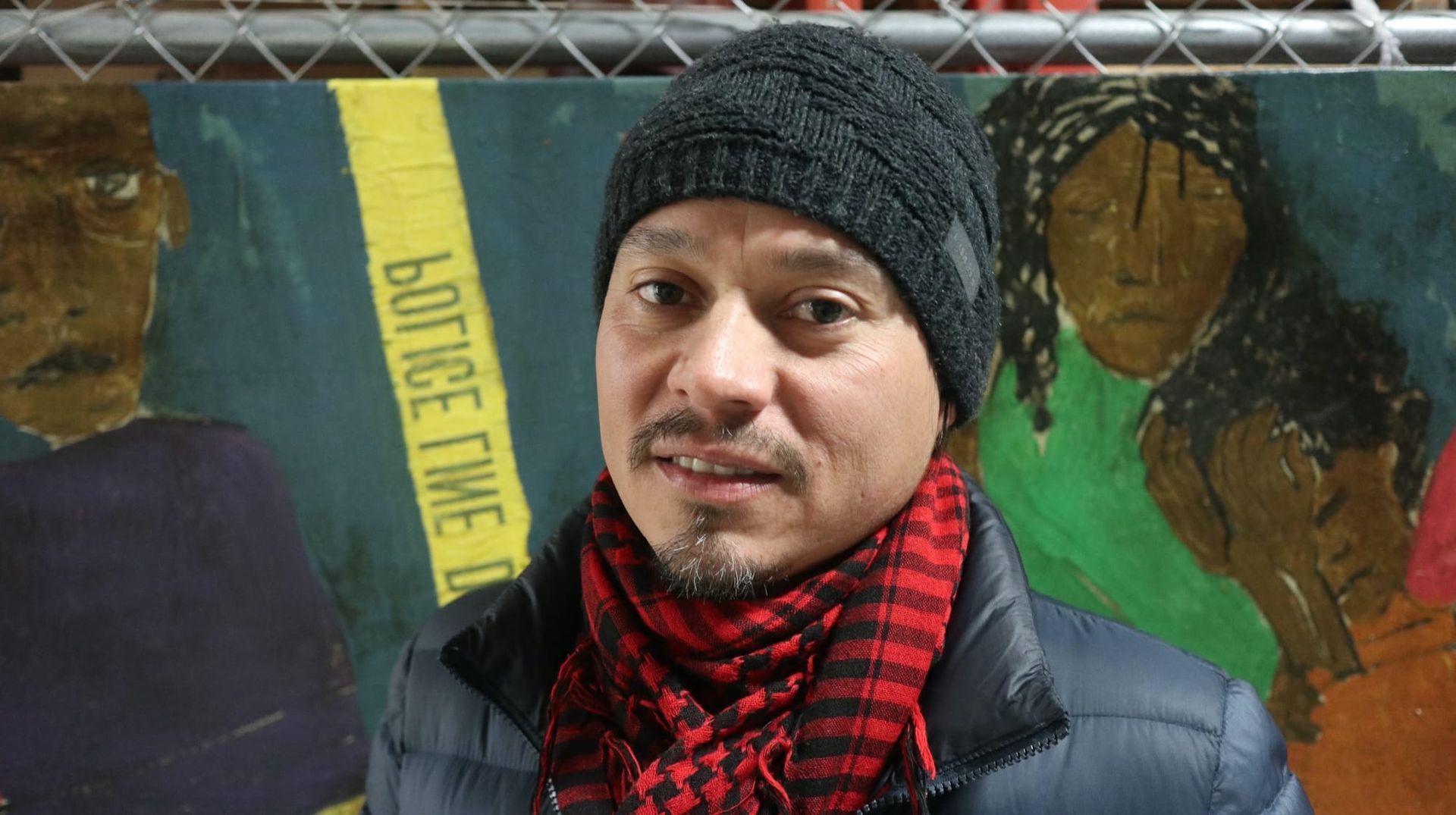
PART I: Richie Morales’ Emotionally Social Guatemalan Paintings
Ricardo Arturo Morales Rodríguez – better known in the art world as Richie Morales – has always been shaped by politics and polarities. He was born in Guatemala during the dictatorship of Efraín Ríos Montt, which is one of the bloodiest periods of the Guatemalan Civil War and Guatemalan history.
While growing up within the polarities between his parents’ families – one supporting the conservative side and the other the left side – Morales slowly developed a sense of responsibility with political and social subjects. The polarities merged with some other important events in his childhood and adolescence that opened his eyes.
“Until today, something that sets my compass of existence is hunger. When I was about five or six years old, we suffered a very heavy period of hunger. Sometimes we ate once a day. Sometimes it was nothing,” Morales said. “So, feeling that internal fire and that deep need of wanting to eat and not having the possibilities, opened my conscience.”
Paradoxically, the Guatemalan self-taught painter and artist based in Madison, Wisconsin, said it also let him know he exists. That was when he started developing his sensibility and could not be indifferent to the difficulties other people go through. He kept feeding that sensibility to the point in which it became art. To the point in which painting became his first language because of his dyslexia.
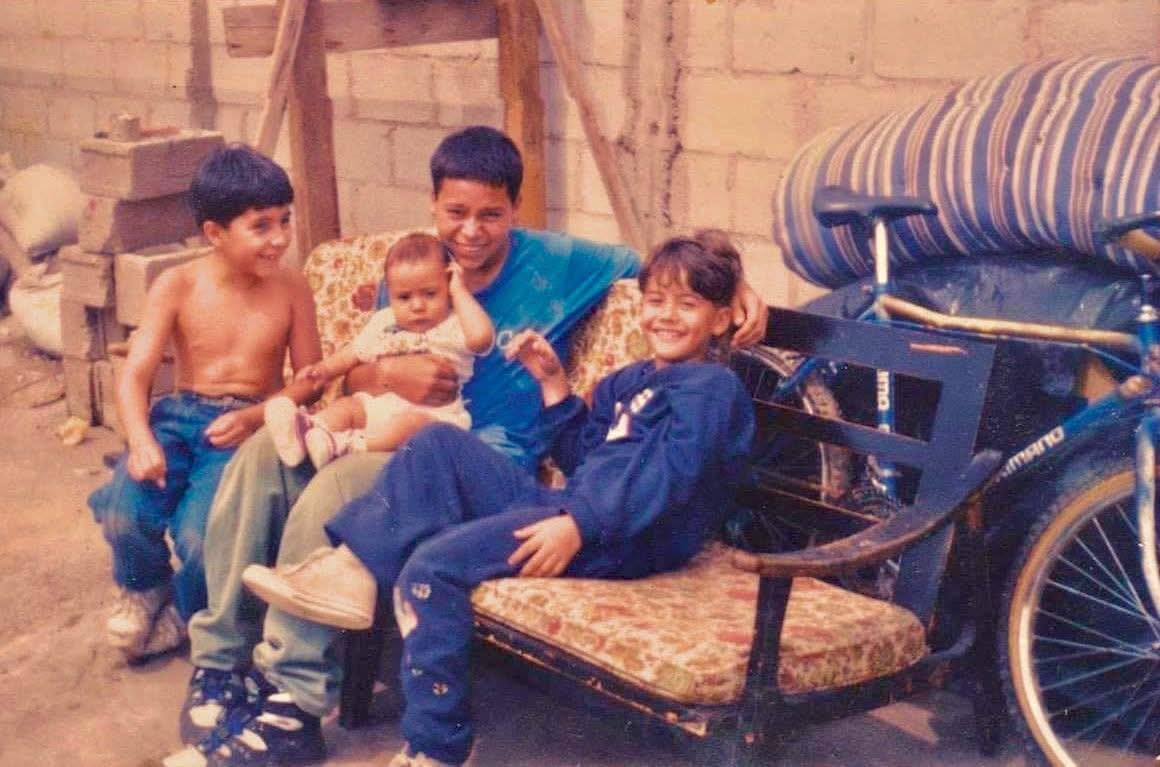
As a child, it was a great struggle for him to read in front of his classmates. He had to be trucha and al pie del cañón reading well in front of everyone. That caused him a lot of discomfort and shame. While experiencing that, he was very immersed in his drawings, where he found a safe space to express certain ideas and opinions without relying on words to do so.
“I was blocked when speaking because it was a super sexist society. I grew up with my single mother and there was a repression over me that really blocked me for many years. For me, doing this [interview] is a huge achievement,” Morales said. “It was very difficult for me to communicate verbally.”
And even though reading was a difficult task for him, literature is now one of his best friends. It’s an art form that he really loves and it has transformed his existence. It also has a great impact in his paintings. He usually references different authors and philosophers when doing his research process for his masterpieces and series.
Don't Forget to Subscribe to The Story of The Story
For only $16 a month, every Friday you'll have exclusive access to
The Story of The Story. Our founder, the Costa Rican award-winning multimedia journalist and artist Elizabeth Lang, guides you through her creative process to produce her stories.
Art became the place where he feels the safest. Where he can express who he really is and what he feels. A place where he always defends the artist’s integrity, but the way he ended up painting is “a story of an error,” as he said laughing.
As any child, he used drawings to express himself, but life happened as he kept growing.
“Due to a mismanagement of traumas and situations of my existence, I fell into substance abuse. Alcohol, drugs, and everything. So, that pushed me into rehabilitation centers. One of those centers had pieces of old shirts and house paints,” Morales said. “I asked one of the workers if I could paint and it was my first contact with color and acrylics moving on canvas.”
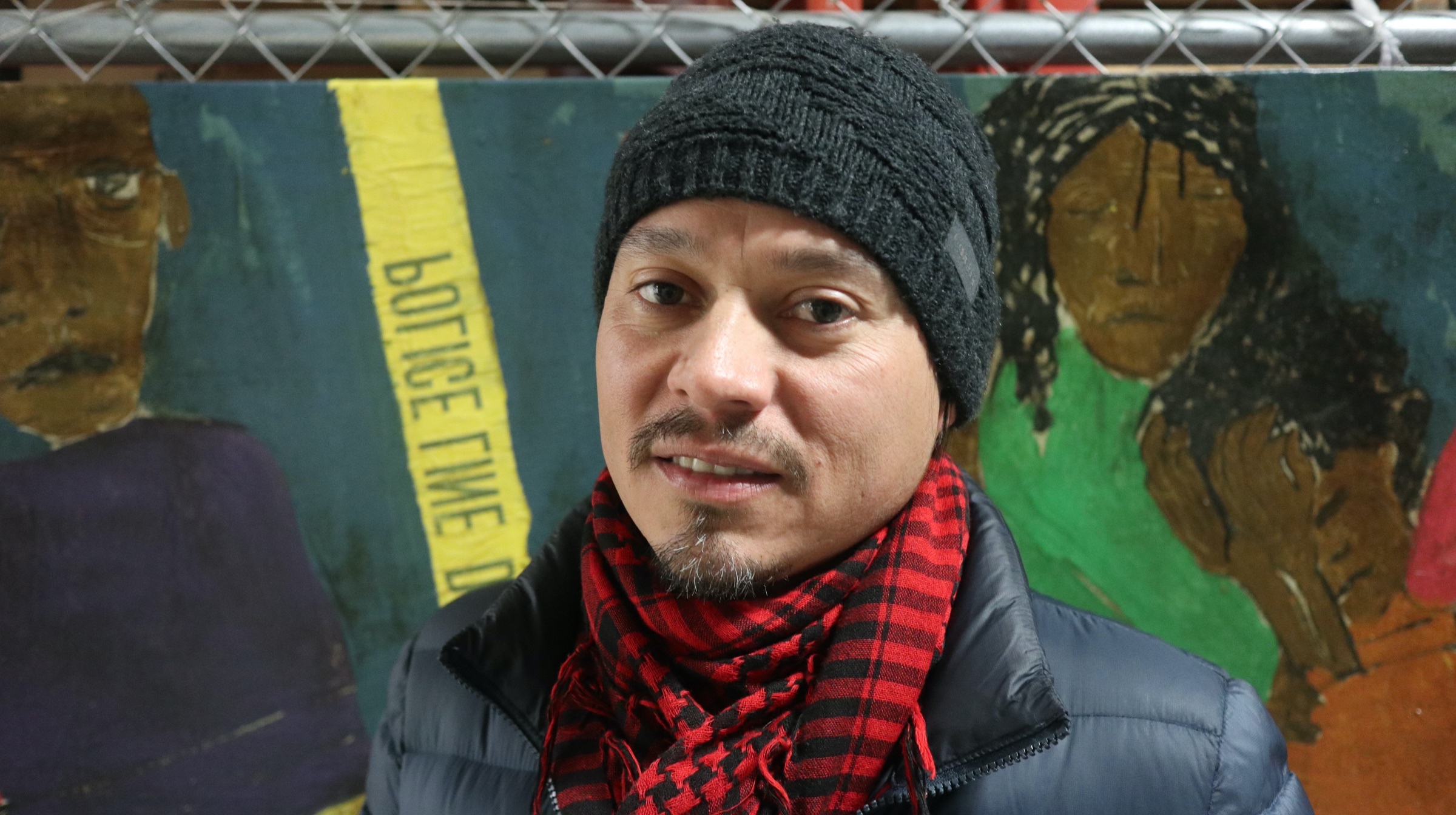
Listen to Richie Morales
0:00
/63.461333
That’s how he fell in love with paint. How he observed the textures and the possibility that an acrylic can give him. How he understood the capacity to visualize, pause, and observe what he’s creating. How the acrylics curve themselves.
And that just sparked the curiosity of going on the lookout for art resources once he “organized his life and started walking the paths of good.” He started looking for resources about color theory and suggestions from his painter friends. Since Morales is from Jocotenango, which is at a walking distance from Antigua, it was very normal for him to live and breathe art at all times.
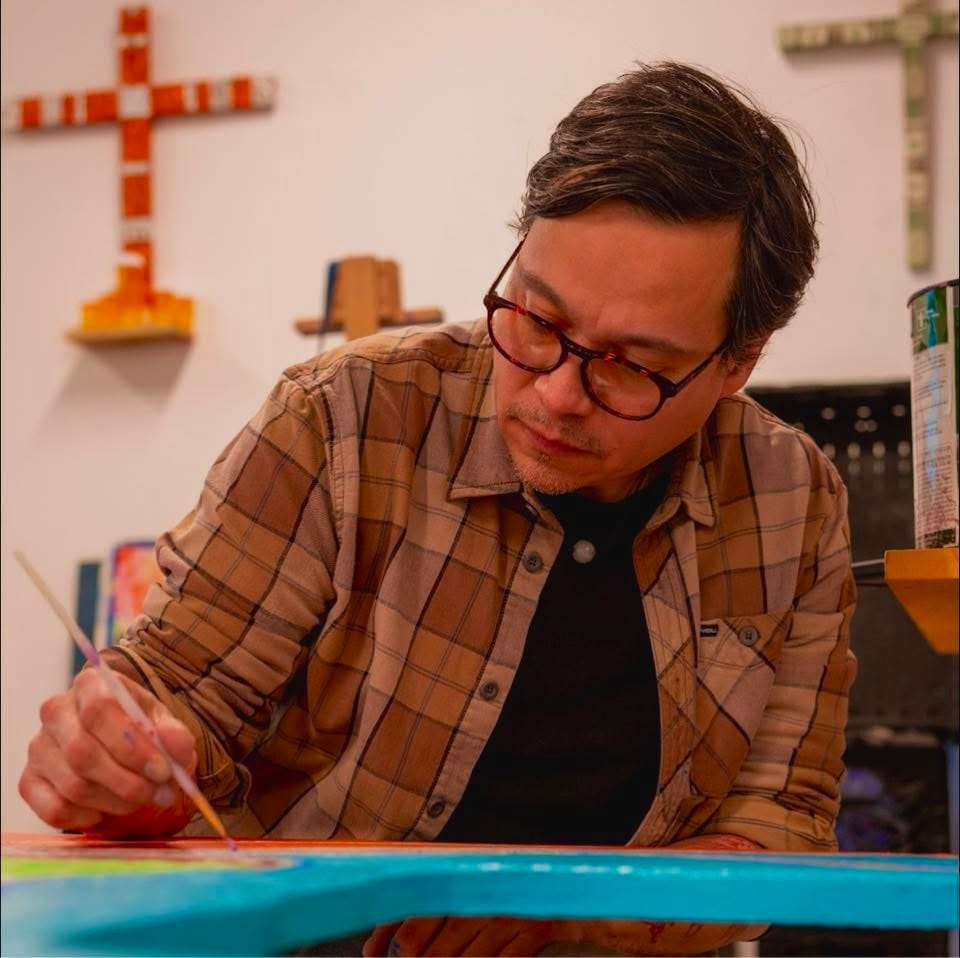
He grew up with it in every corner of his town, but it also became that thing that saved his life during times of struggle. It was the place to channel his traumas and it became that thing that still keeps saving his life as time goes by. It’s an expression that begins where words don’t have a place anymore. Where words end and the pure human expression makes its way through.
You can clearly see that in different series such as “Voces del Genocidio,” “Los Hijos del Vértigo,” and “Neo Folclor.” The first series, “Voces del Genocidio” was the one that opened the doors for Morales in the United States. Deborah Clearman, a writer from New York, saw his exhibition at the cultural center of the Universidad de San Carlos in Guatemala, where Morales originally studied agricultural engineering.
She then told him she knew of a place in the U.S. where he could do an art residency and a presentation about his series. He did the applications and then went to the Vermont Studio Center for his residency with his series “Voces del Genocidio.” These paintings speak about the Guatemalan Civil War and they’re very heavy pieces to look at with its dark earth tones.
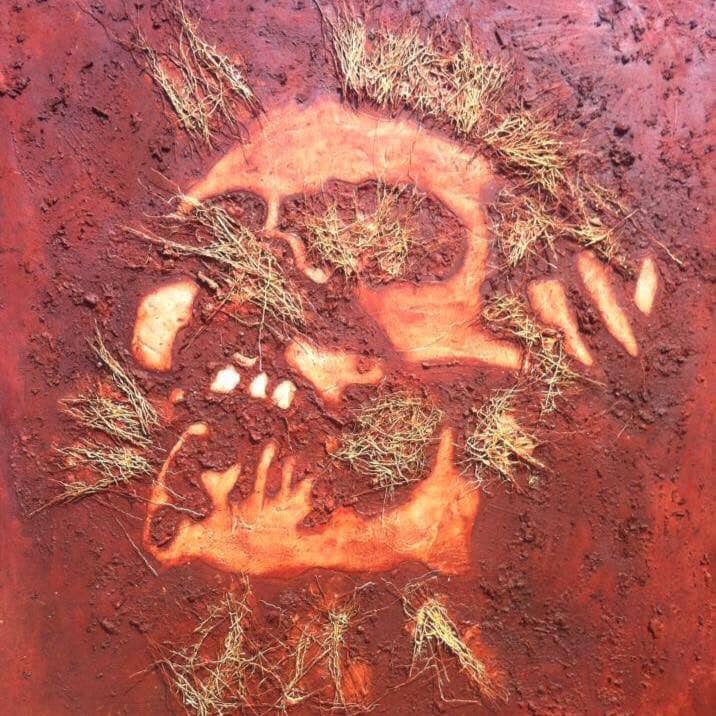
“This series speaks about exhumations. I literally painted bodies. Decomposed bodies and I added in Mayan clothes. So, you can see I used dirt from the places where the exhumations were done,” Morales said.
Diego, a survivor and friend of Morales, invited him to a place called Xexocom. Diego was about seven years old, he hid in the bushes, and saw how his whole family murdered. These deaths were part of the “estimated 45,000 people that were forcibly disappeared, their bodies buried in unmarked pits or dumped in mass graves.”
Since Diego saw what happened to his family, he was a key witness for archeologists and forensic authorities to find the mass grave. Morales observed the archeologists and forensic authorities do their work, which was quite hard to see and very powerful at the same time.
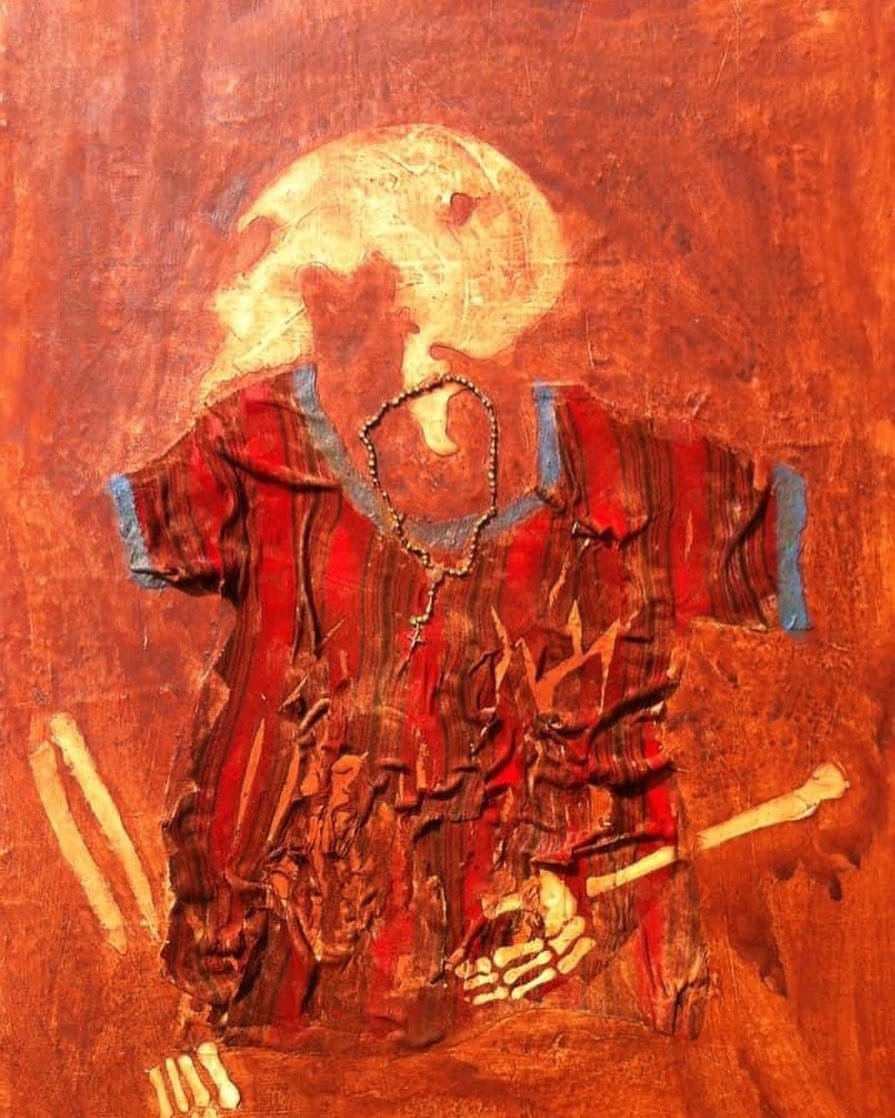
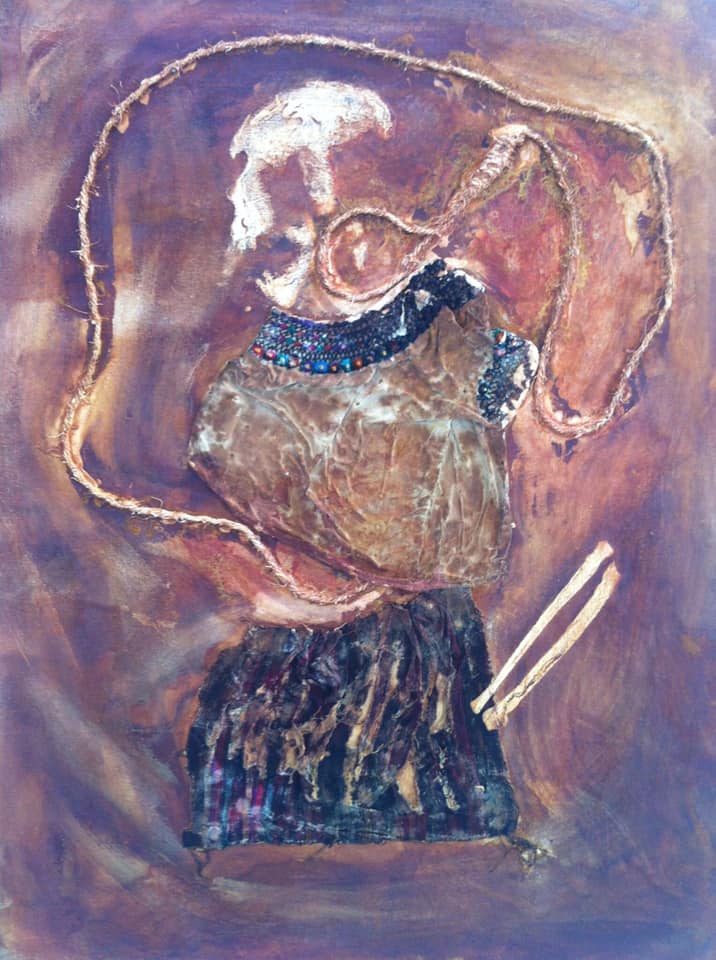
Some paintings from Richie Morales' series "Voces del Genocidio." | Art courtesy of Richie Morales. | Impulsiva Stories
It gave him a new sensibility, which allowed him to understand the importance for people to find their relatives.
“It’s a terrible anguish not knowing if they’re alive or not. If it’s them or not. Noticing that they had to get tests for their teeth and saliva samples to compare the DNAs…all of that,” Morales said. “Using the dirt from the place and in my artwork, that was a way to denounce the atrocities that were committed.”
Since this series dealt with such a complex subject, obviously the color palette selected was darker. More earth tones because literal dirt is placed on the pieces. The dark Mayan clothes also played a key role in the color.
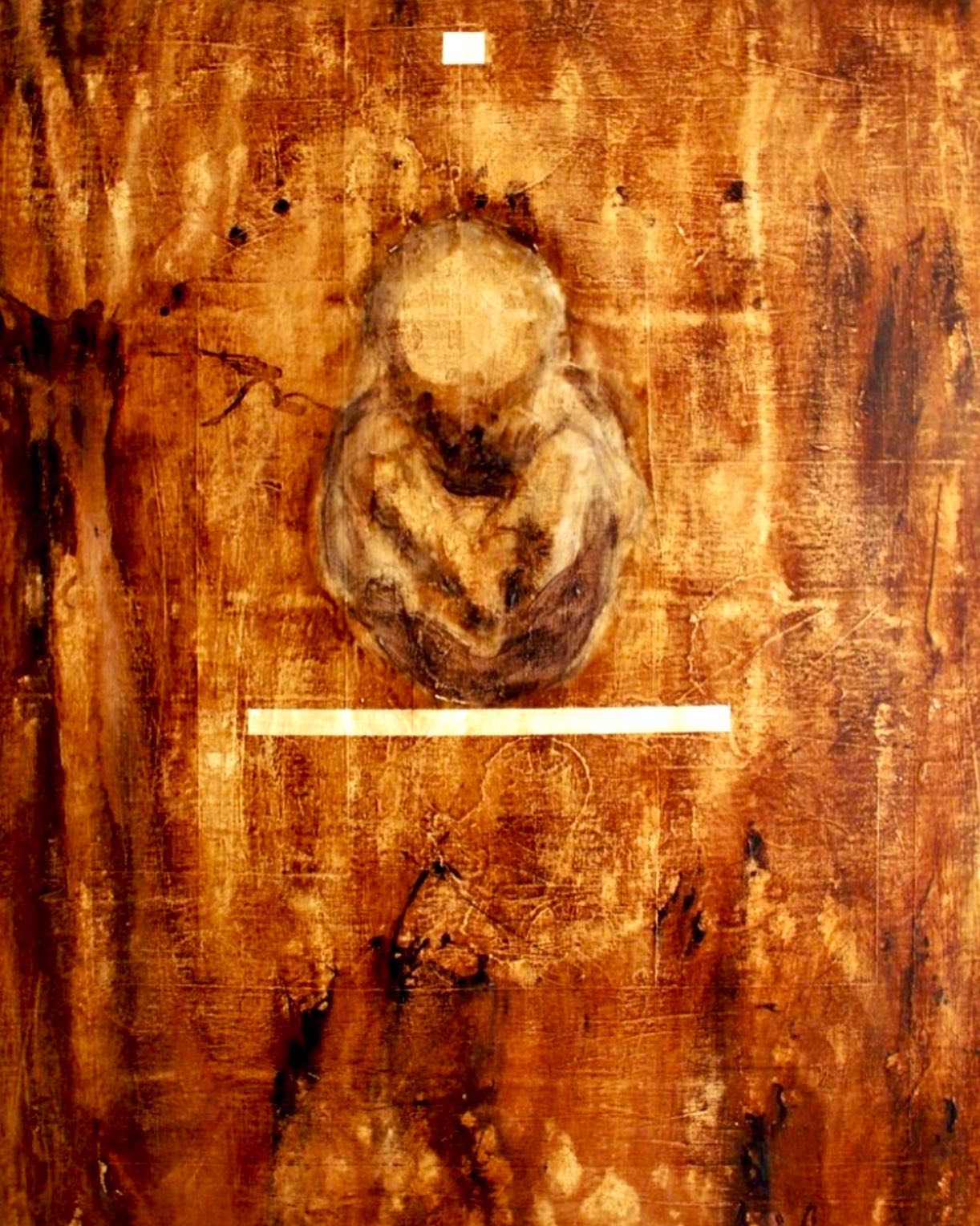
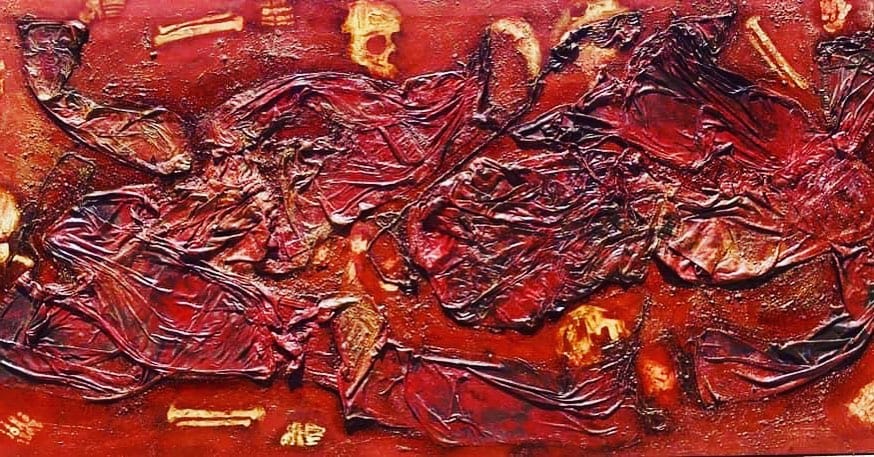
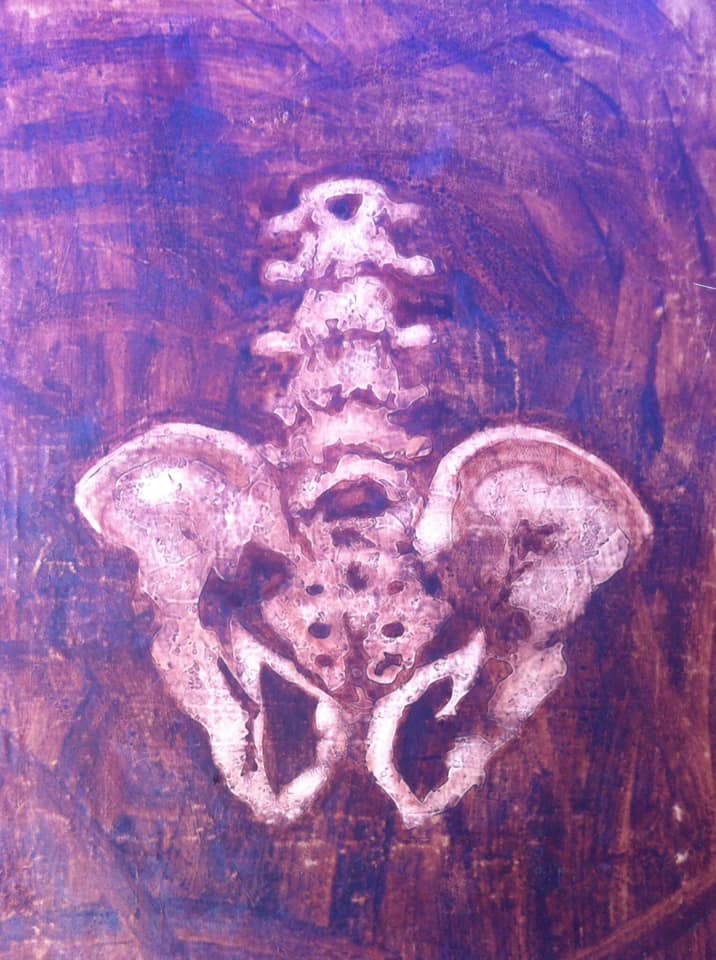
Some paintings from Richie Morales' series "Voces del Genocidio." | Art courtesy of Richie Morales. | Impulsiva Stories
You can see that Morales’ pieces really speak about very strong political and social topics. He paints political subjects because he feels there’s a lack of political education. In the case of Guatemala, Morales said that thanks to the fear of the civil war, people prefer to take no sides and not speak about it.
“They do it because they know that life in Guatemala is worthless. I mean, it’s worth what a bullet is worth. So, people prefer not to get involved,” Morales said. “As they say: don’t get involved because it’ll go wrong for you. They’ll kill you and they’re right.”
Listen to Richie Morales
0:00
/31.421333
Morales feels they’re right, but he also feels art serves the purpose of reaching another level of conscience regarding these harsh subjects. His art is a mirror of the environment he shares with other fellow Guatemalans, but at times it doesn’t sit well in his native country. It’s uncomfortable because it requires others to reflect about their realities.
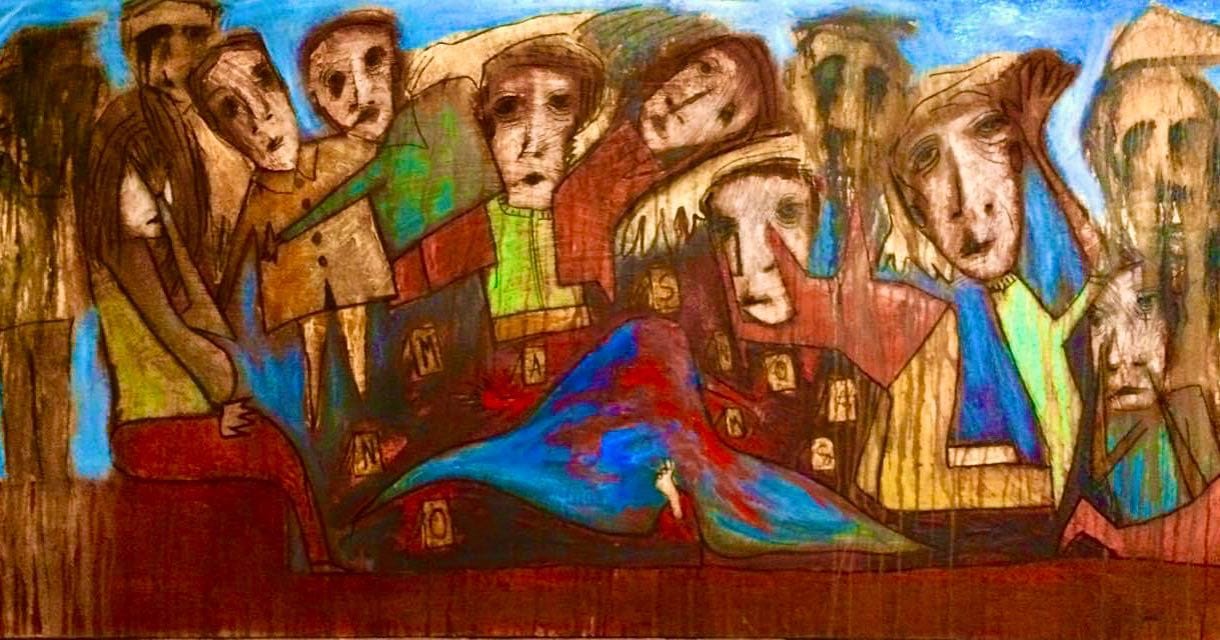
The series that made him clearly understand that was “Neo Folclor.” Just as “Voces del Genocidio,” this collection deals with very delicate subjects. It’s also related with the Guatemalan Civil War and he produced it right after “Voces del Genocidio.” He explores the concept of folklore referencing traditional culture like a dance of a marimba, a fair, or a circus, but ads a twist to it in a more reflective manner.
“Those folklores sometimes happened when someone was killed and they’d say: ah, they killed someone. There’s a dead person there,” Morales said. “So, it’s like a neo folklorization of murder. So, they’re [the paintings] basically of murders, but with very vibrant colors. There’s that contrast of vibrant and joyful colors with tragic scenes.”
Listen to Richie Morales
0:00
/31.493333
Within that concept of a contrasting darkness and light – a contrast of life and death – Morales also reflected about another very important issue in Guatemala and Latin America: femicides. The murders of women for simply being women. He’d read newspapers and be concerned with headlines stating that women were murdered for love.
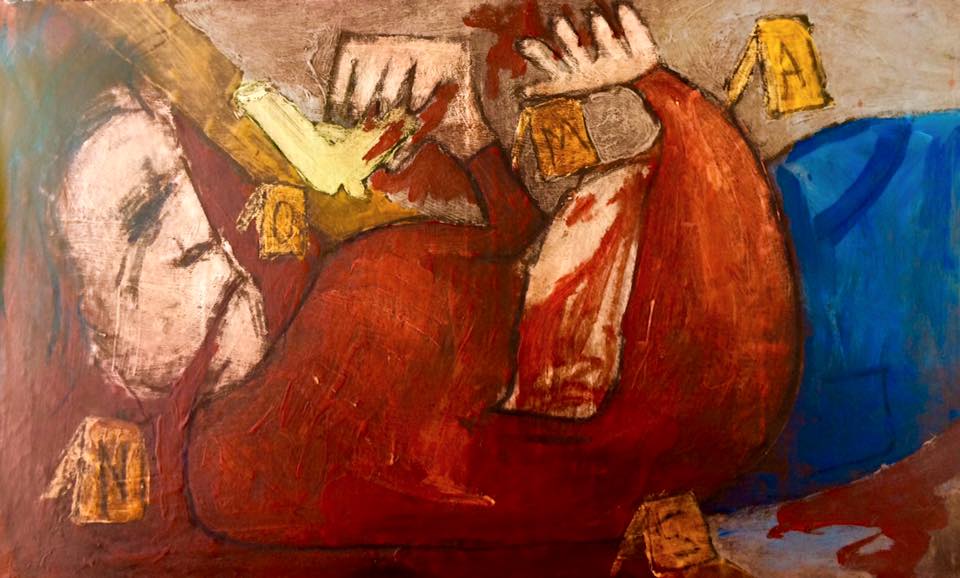
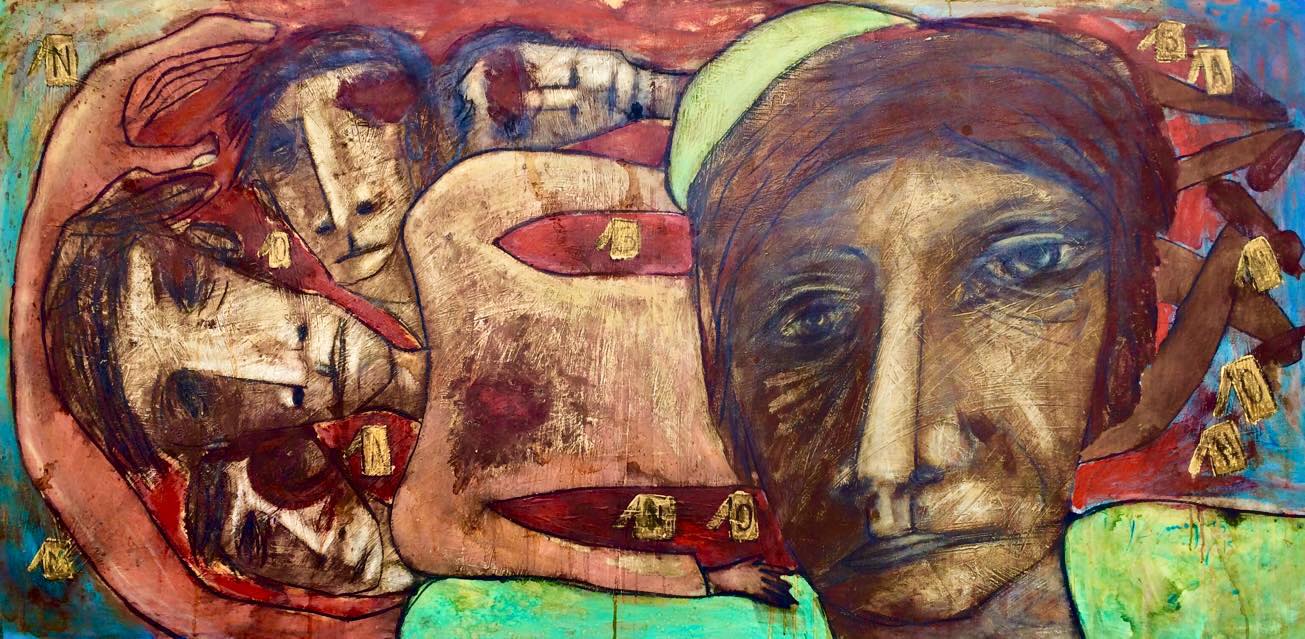
Some paintings from Richie Morales' series "Neo Folclor." | Art courtesy of Richie Morales. | Impulsiva Stories
He’d reflect about that phrase and ask himself: how can someone kill for love? It's unexplainable for him and it’s an oxymoron. It’s also very serious and to a certain extent, that moved him to visit morgues. His brother is a lawyer and connected him with someone who worked at the National Institute of Forensic Sciences (INACIF) in Guatemala. That specific place has a morgue next to the general cemetery in Guatemala City and people go there to recognize their deceased relative.
“Most of them are there for violence. So, seeing the contrasts of those scenes…for example, there was a marero who was murdered. While observing the relative who was going to recognize the marero, who was obviously a delinquent, there was a profound feeling when recognizing the body,” Morales said. “That was very shocking for me.”
That led Morales to question certain things. He noticed that intense dark scene happening in a place full of colors and vibrancy. Outside of the INACIF, there was a man selling bread. It was a folklore happening within a neo folklore. Morales led very intense research about it in his pieces where the main characters stare back at you with faces full of sadness surrounded by violence.
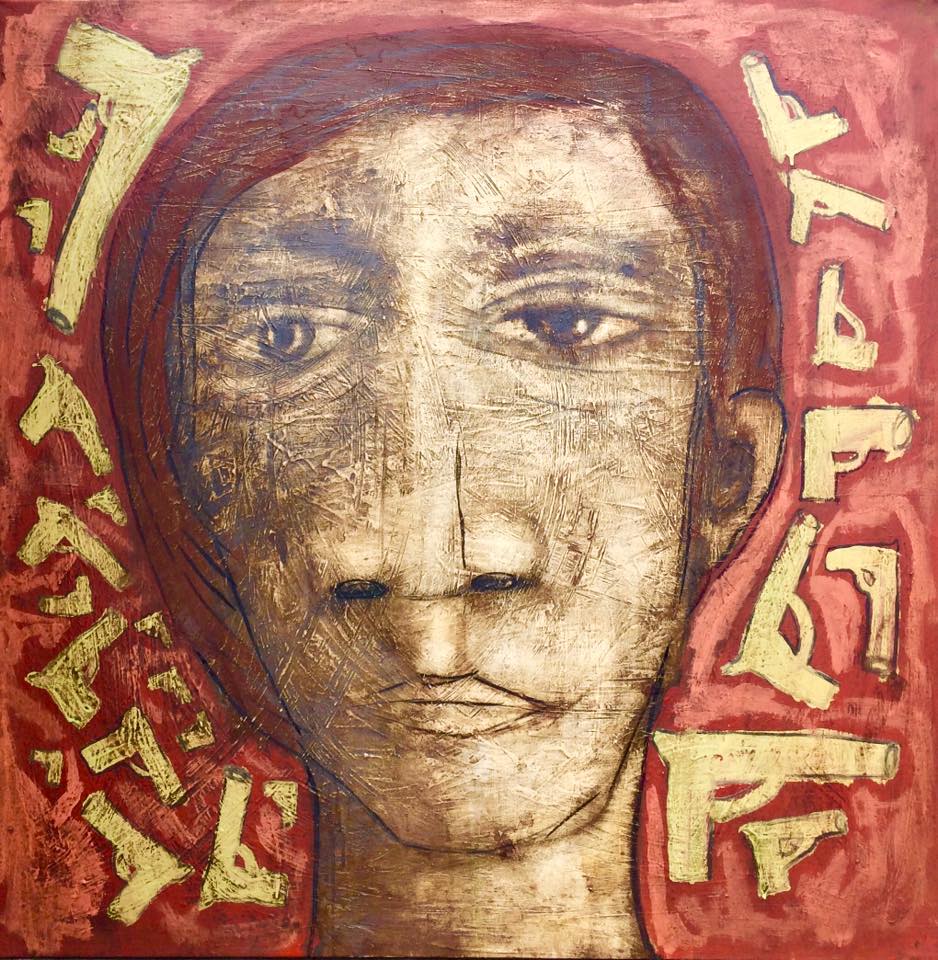
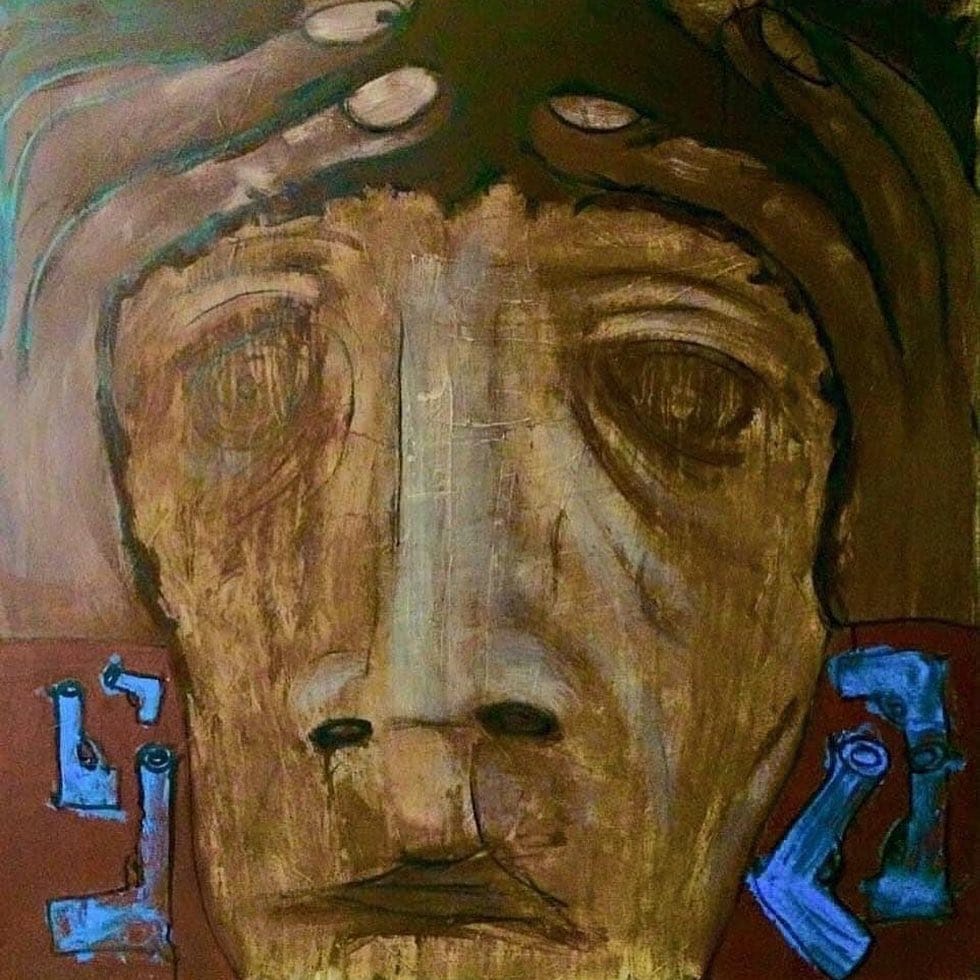
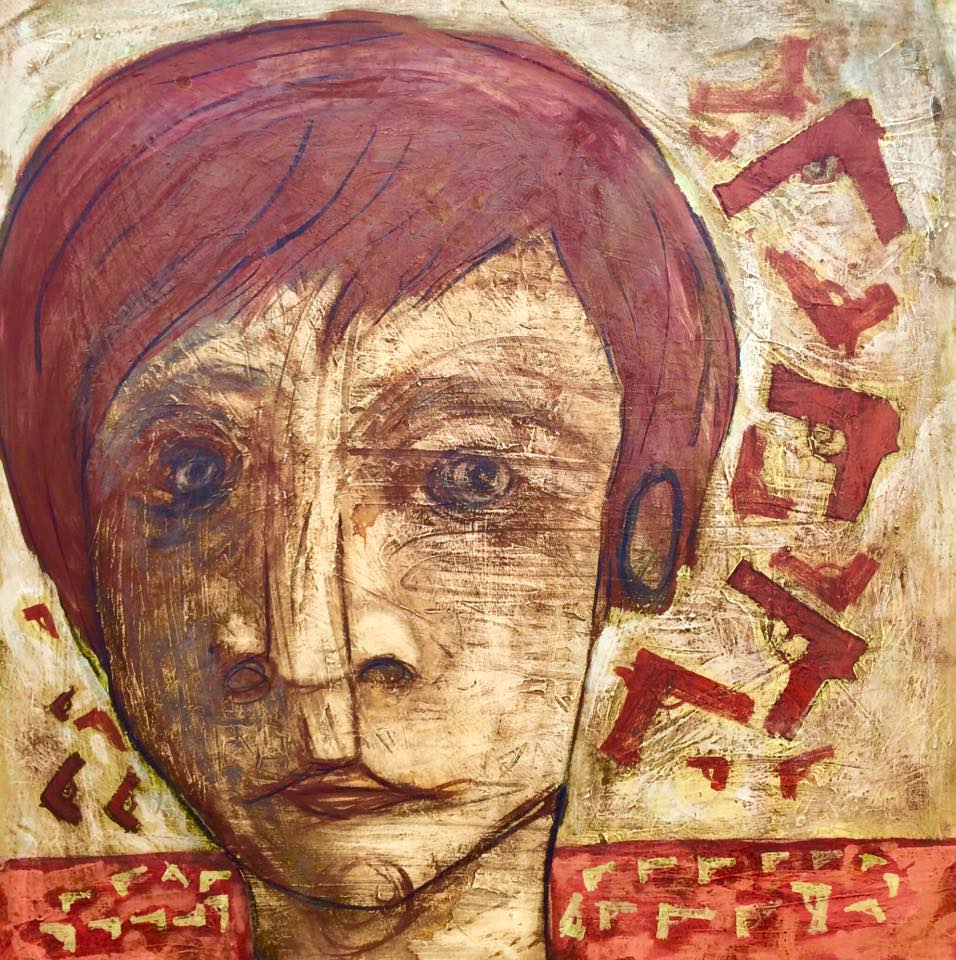
The sad faces from Richie Morales' series "Neo Folclor." | Art courtesy of Richie Morales. | Impulsiva Stories
It's a series that draws you in because of the harsh reality. It makes you uncomfortable and it makes you really think about what’s going on. Maybe because of that discomfort, it was not a success for Morales when he exhibited in two occasions in Guatemala.
“That series did not do well. It had certain relevance and a certain paradox. It’s like: this painter is exhibiting violence in a violent country. How nice,” Morales said.
Listen to Richie Morales
0:00
/36.197333
But that’s what art is all about. It’s supposed to make you feel things, whether it’s uncomfortable or beautiful. It’s supposed to make you think and reflect about life. It’s supposed to speak about difficult subjects without the use of words. It’s supposed to draw you in with an image that makes you stop for a while and wander in your thoughts. It’s supposed to shift your what's going in your mind.
And Morales really knows how to achieve that without hesitation. He just paints what he’s been exposed to and what he’s lived through in a very harsh social environment in Guatemala.
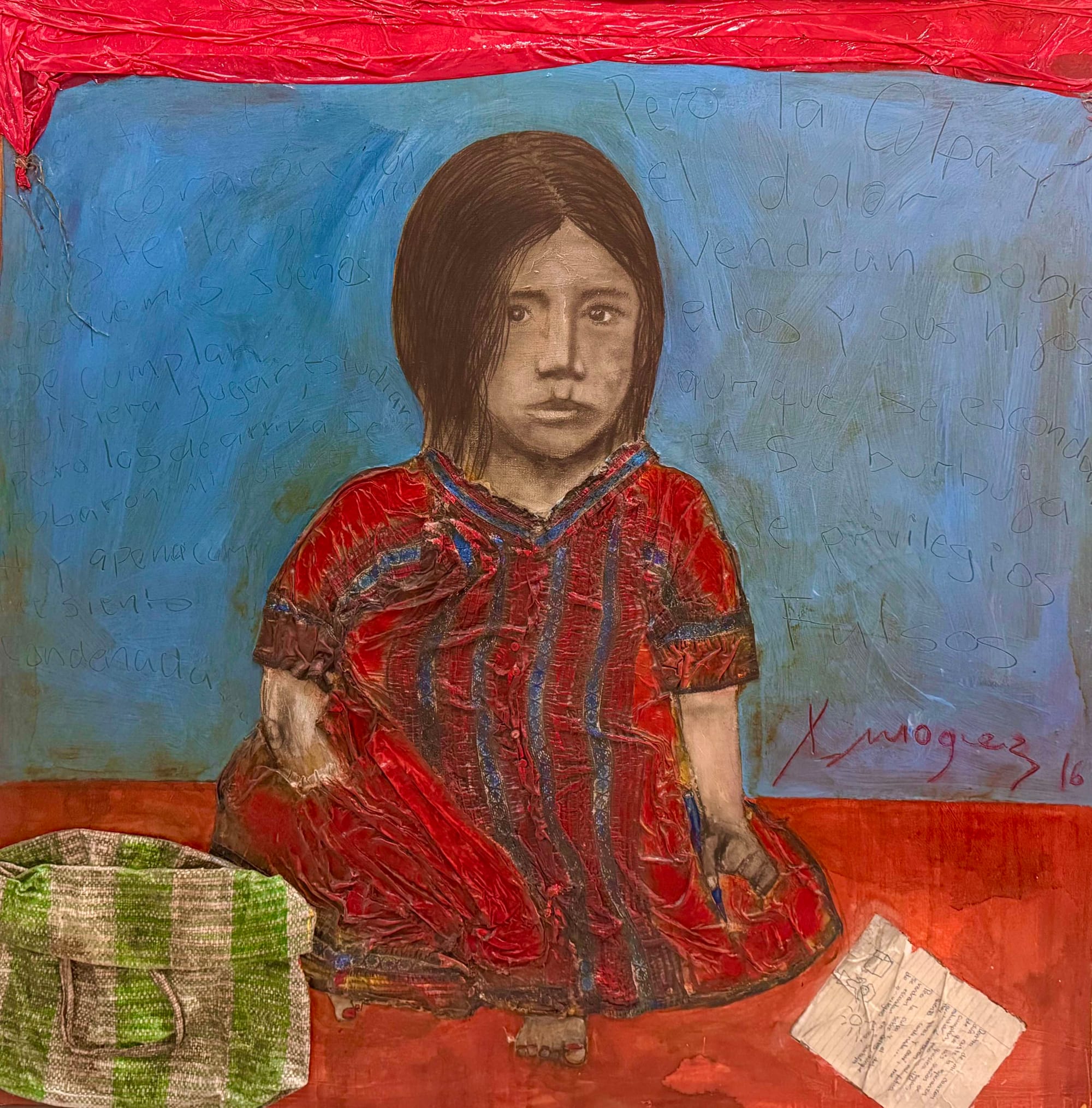
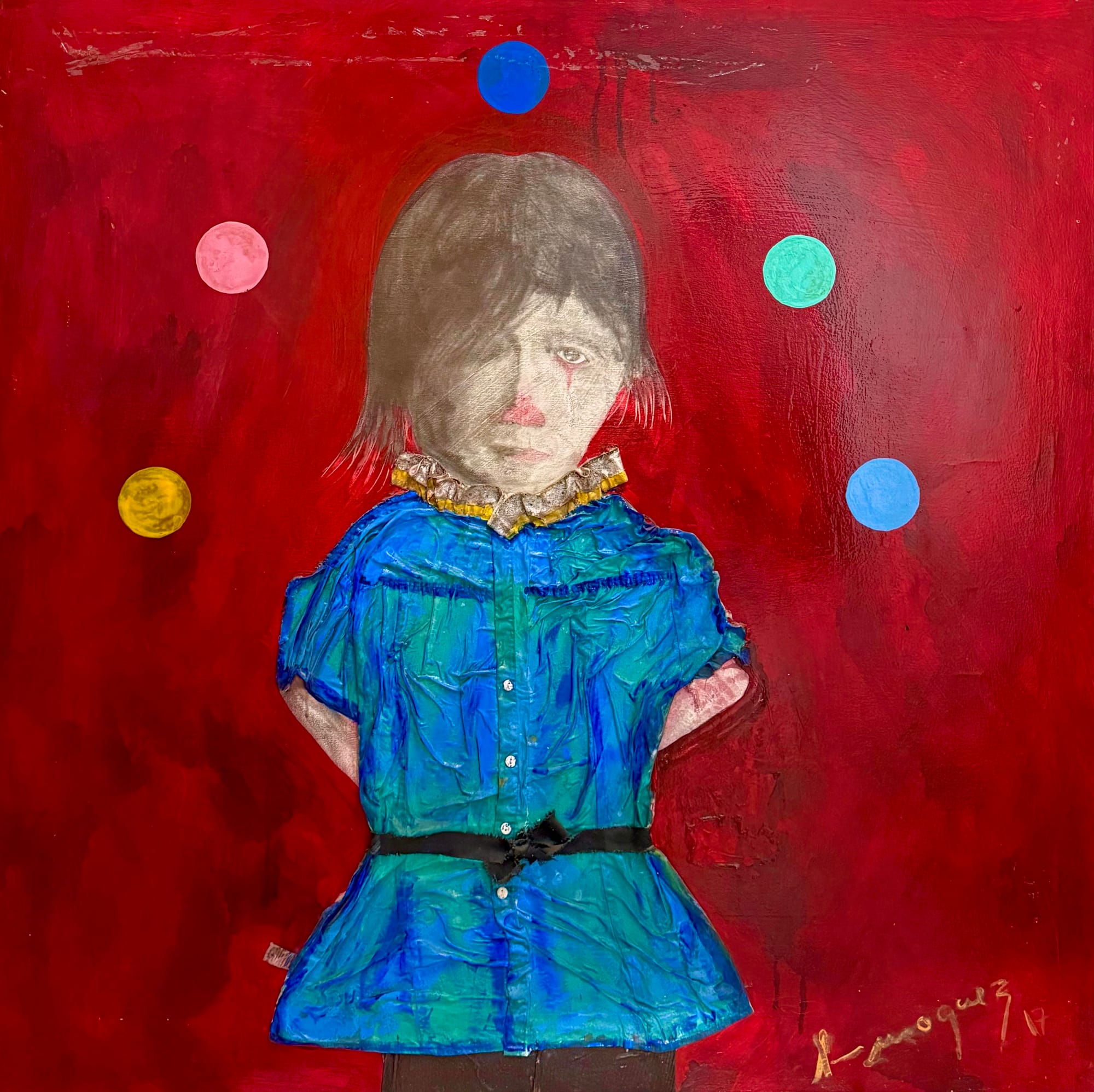
The children paintings from Richie Morales' series "Los Hijos del Vértigo." | Art courtesy of Richie Morales. | Impulsiva Stories
The other series in which this is very clear is his collection “Los Hijos del Vértigo.” When you see these paintings, you can’t shy aways from the children’s expressions of despair and sadness. These are about children working on the streets. Some are dressed like clowns and some are selling candy.
They seem to be lonely and for Morales, it’s a typical scene of Latin America.
“That series not only frames an aesthetic that’s very normal in the day-to-day of our countries, but it’s an aesthetic that hides something else. So, the invitation of that series is for the spectator to ask if there’s something further beyond the aesthetic they’re seeing,” Morales said.
He mentioned there’s a whole chain of generational violence that could stem from the past, even as far back as the invasion of the Spaniards in Latin America. Morales takes the children of his paintings there, but his utmost interest is in the German philosopher Theodor Adorno’s thought that an image hides a lot in its aesthetics. It’s a chain that goes way back and it’s unseen because it’s aesthetically hidden.
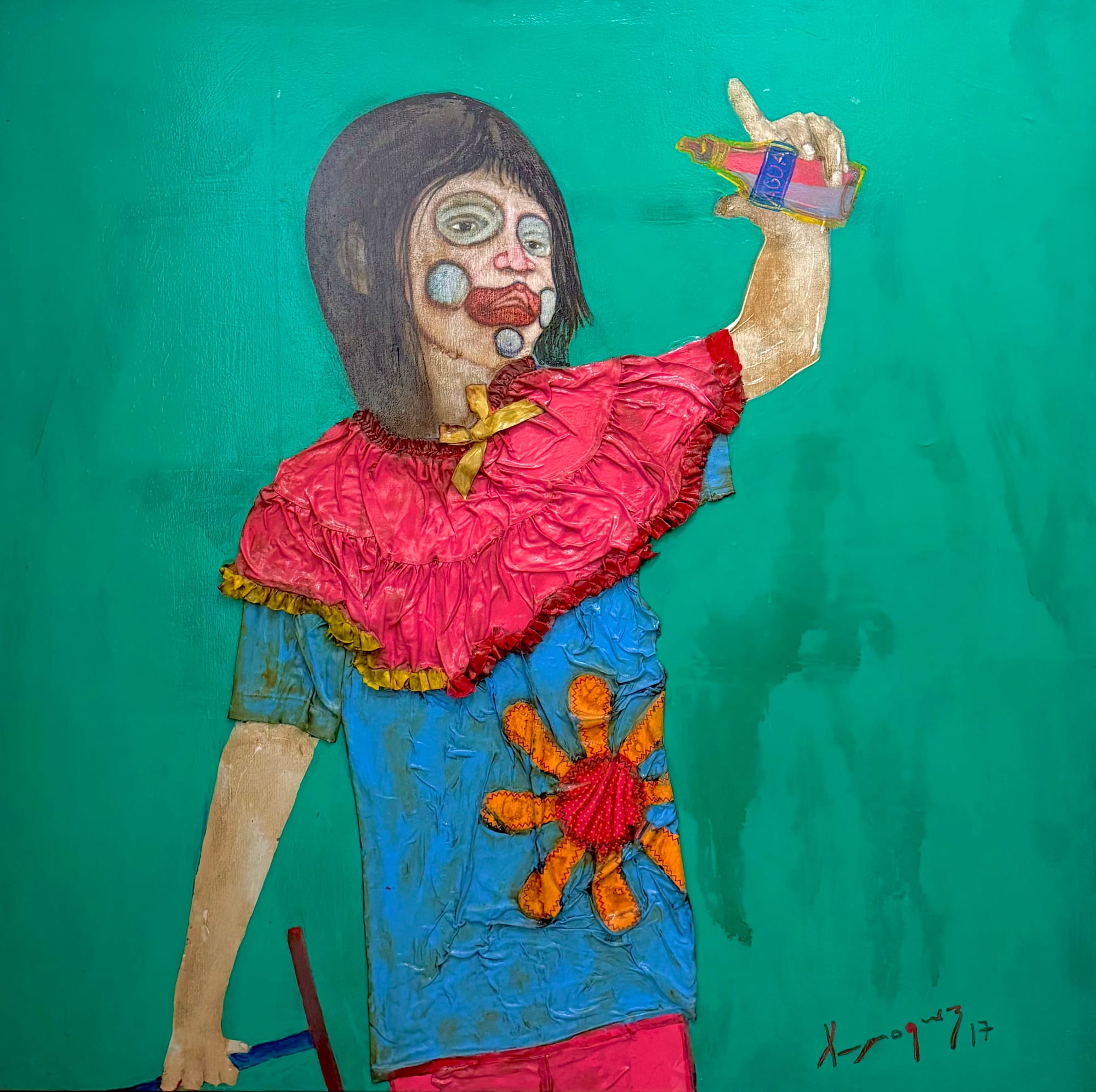
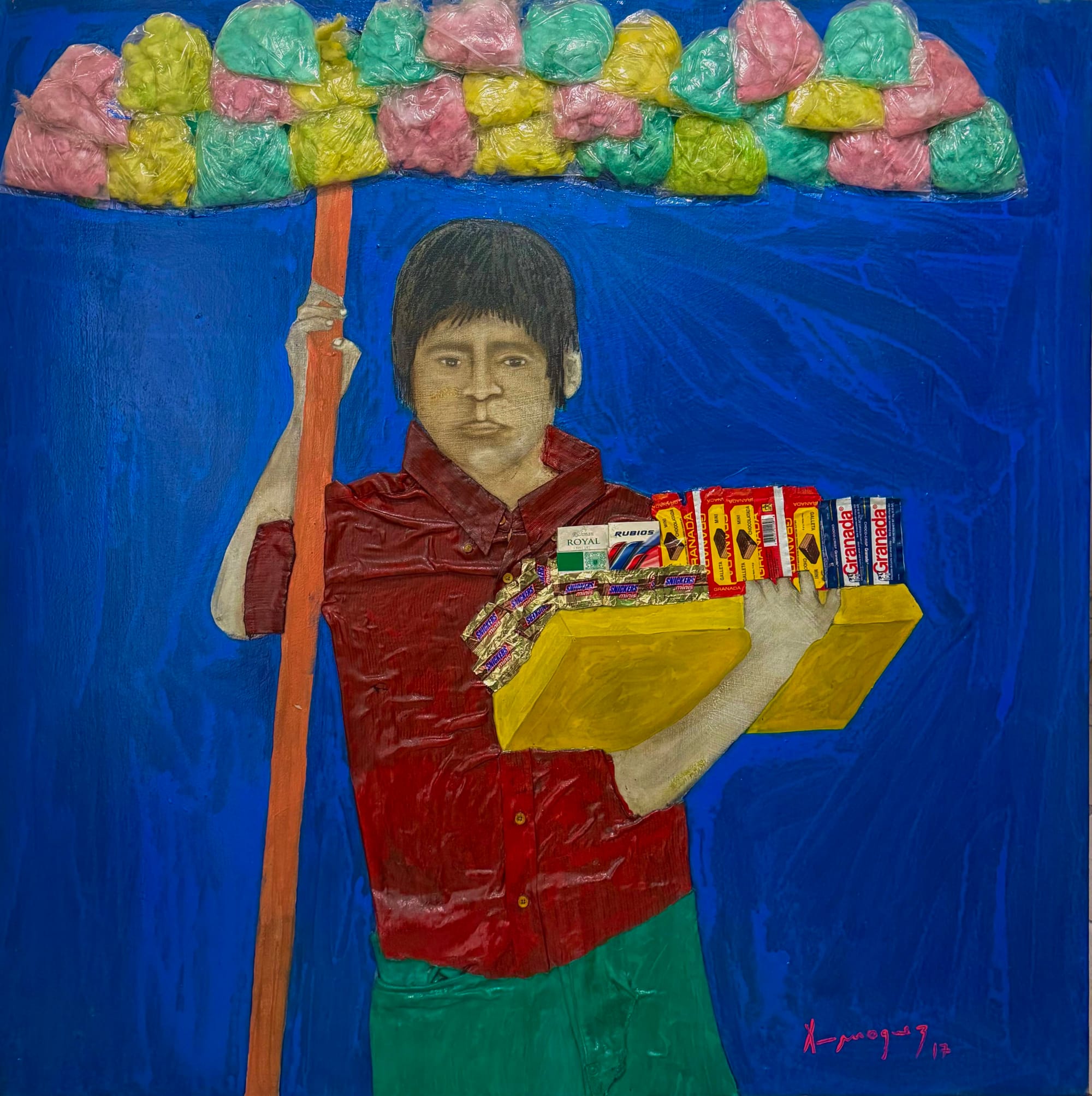
The children paintings from Richie Morales' series "Los Hijos del Vértigo." | Art courtesy of Richie Morales. | Impulsiva Stories
That’s why he named the series “Los Hijos del Vértigo,” because it generates Morales a certain vertigo in seeing a child in the streets working. It makes him question why we’re doing so badly and he reflects that many times, the answers are in the formal power structures. In the public institutions managed by the government, which he considers complicit of the issue.
If you take a closer look at the paintings, you could also be deceived if you didn’t have Morales’ explanation. Or if you haven’t walked through the streets of Latin America. You might think it’s a simple painting of a child “playing” dress up with a clown costume or holding candy to eat it. But that adds another layer to Morales’ art.
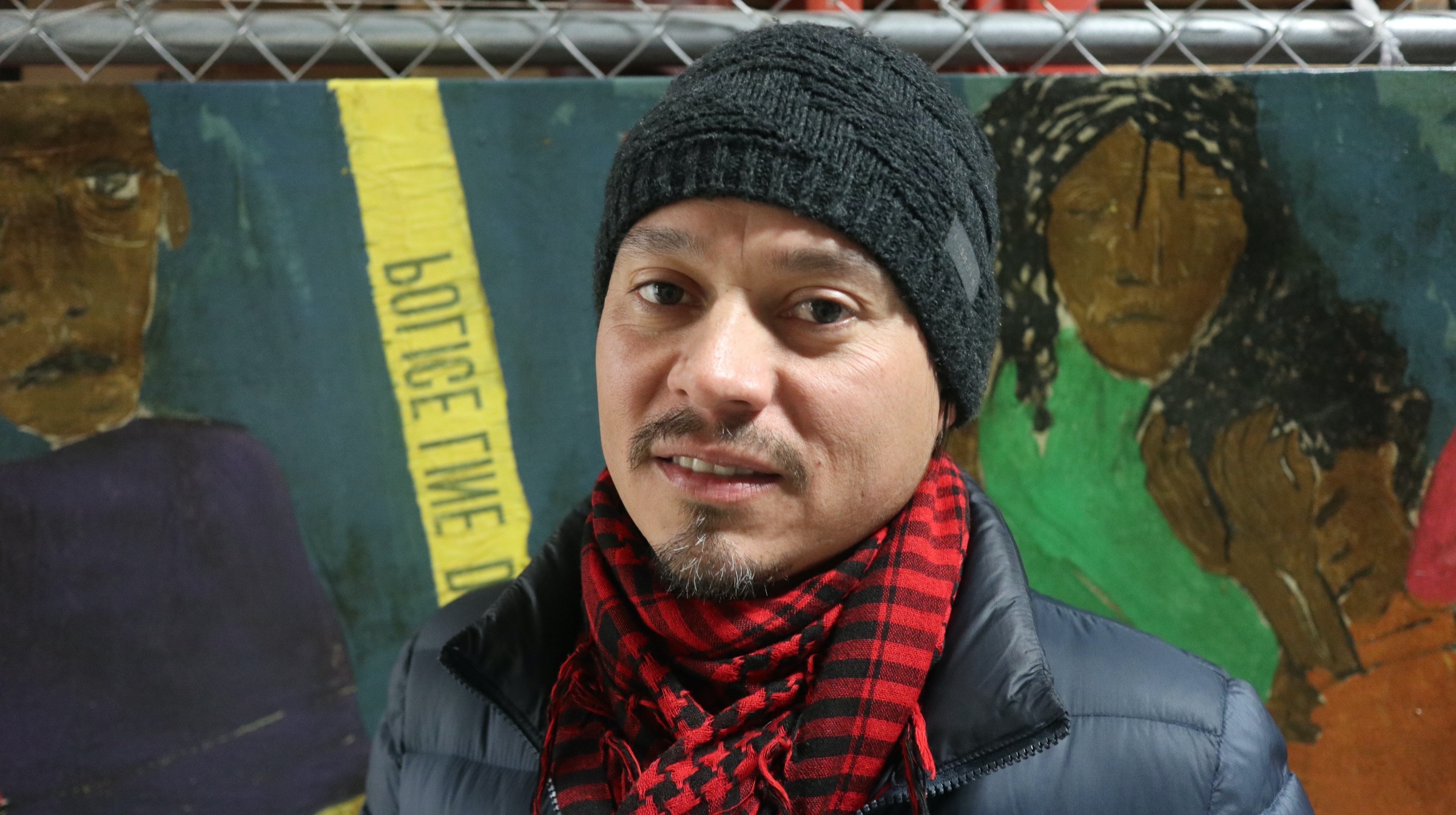
“It’s also interesting that a statement exists. The artwork exists, but there’s always an interpretation. That’s why art is so beautiful. Because it’s subjective,” Morales said. “So, people’s subjectivity far from subtracting, I think it adds to the artwork’s interpretation.”
Listen to Richie Morales
0:00
/28.421333
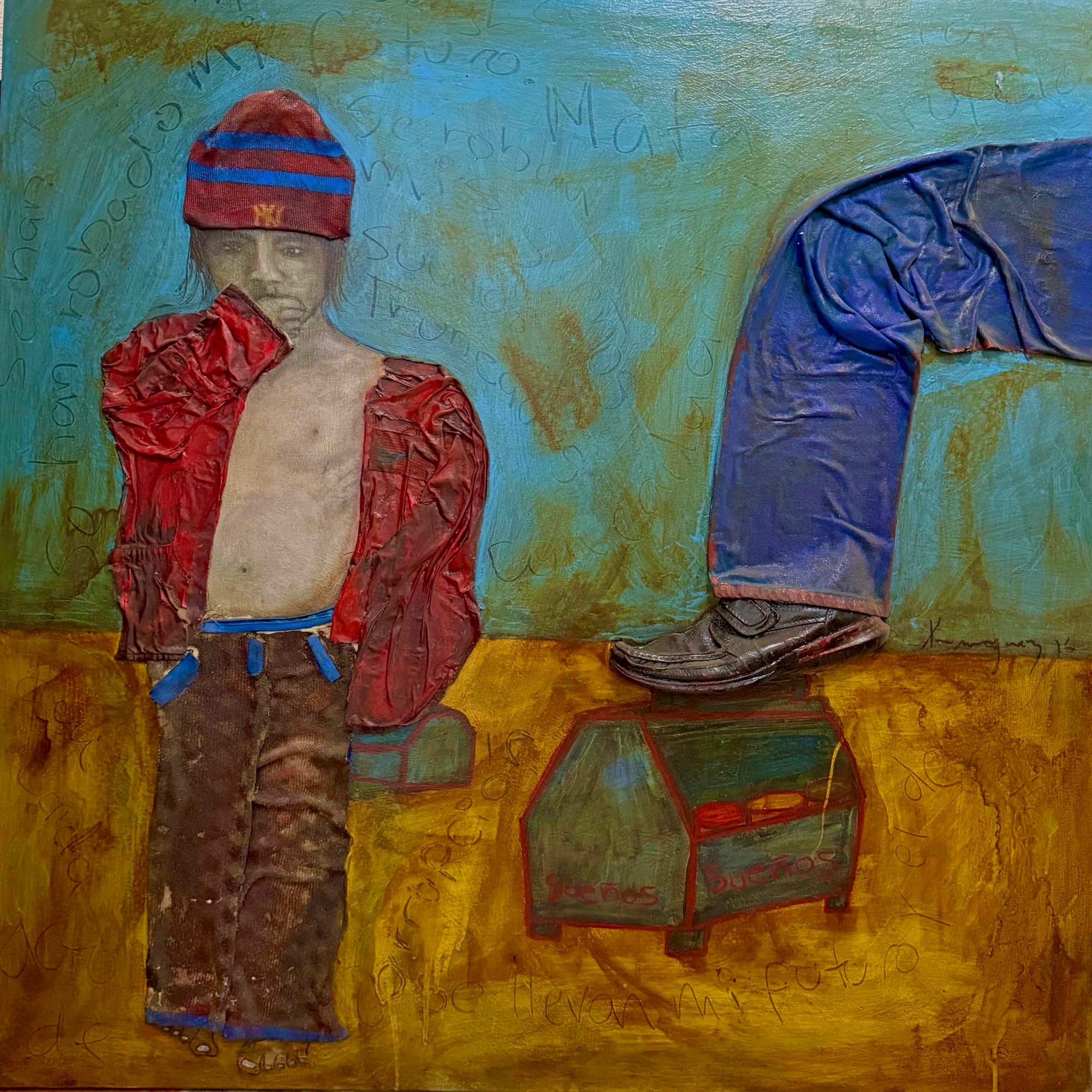
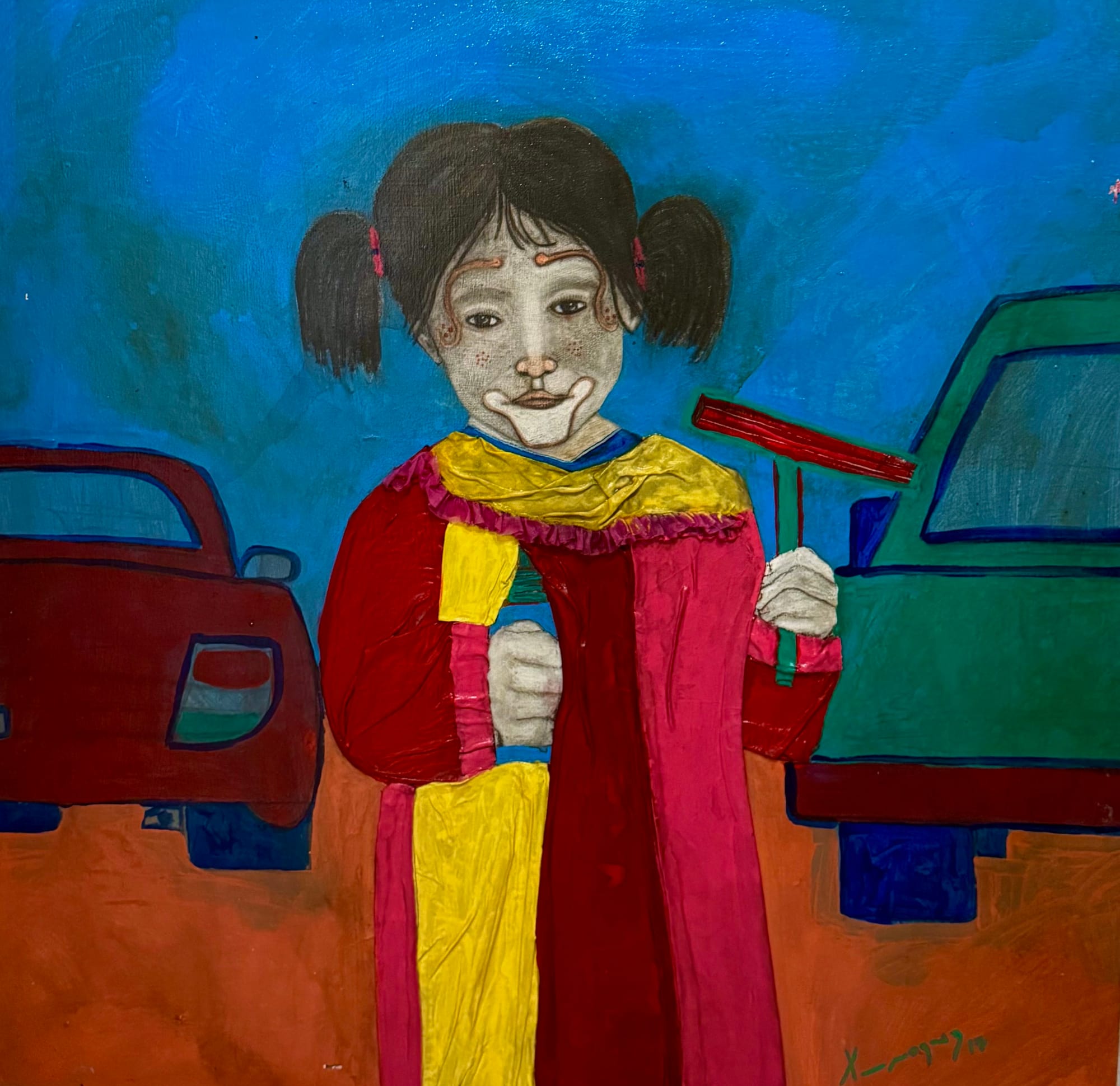
The children paintings from Richie Morales' series "Los Hijos del Vértigo." | Art courtesy of Richie Morales. | Impulsiva Stories
In that subjectivity, you can get lost in Morales’ emotionally social Guatemalan paintings. You can get lost in the dark colors that speak about tough subjects. Or you can get lost in the stares of his paintings’ characters. You can get lost in what Morales is trying to tell you about the complex Guatemalan environment he grew up in.
But it’s that subjectivity of his experiences that make his art a portrayal of the contrasts of life. The dark experiences and the moments full of light depicted in bright, vivid colors referencing Guatemalan culture. Referencing a healed Morales that reflects about the beauty in life.
“By taking a distance, I started healing. I started realizing that I needed to heal as a human being,” Morales said. “And I also needed to reconnect with other aspects in life.”
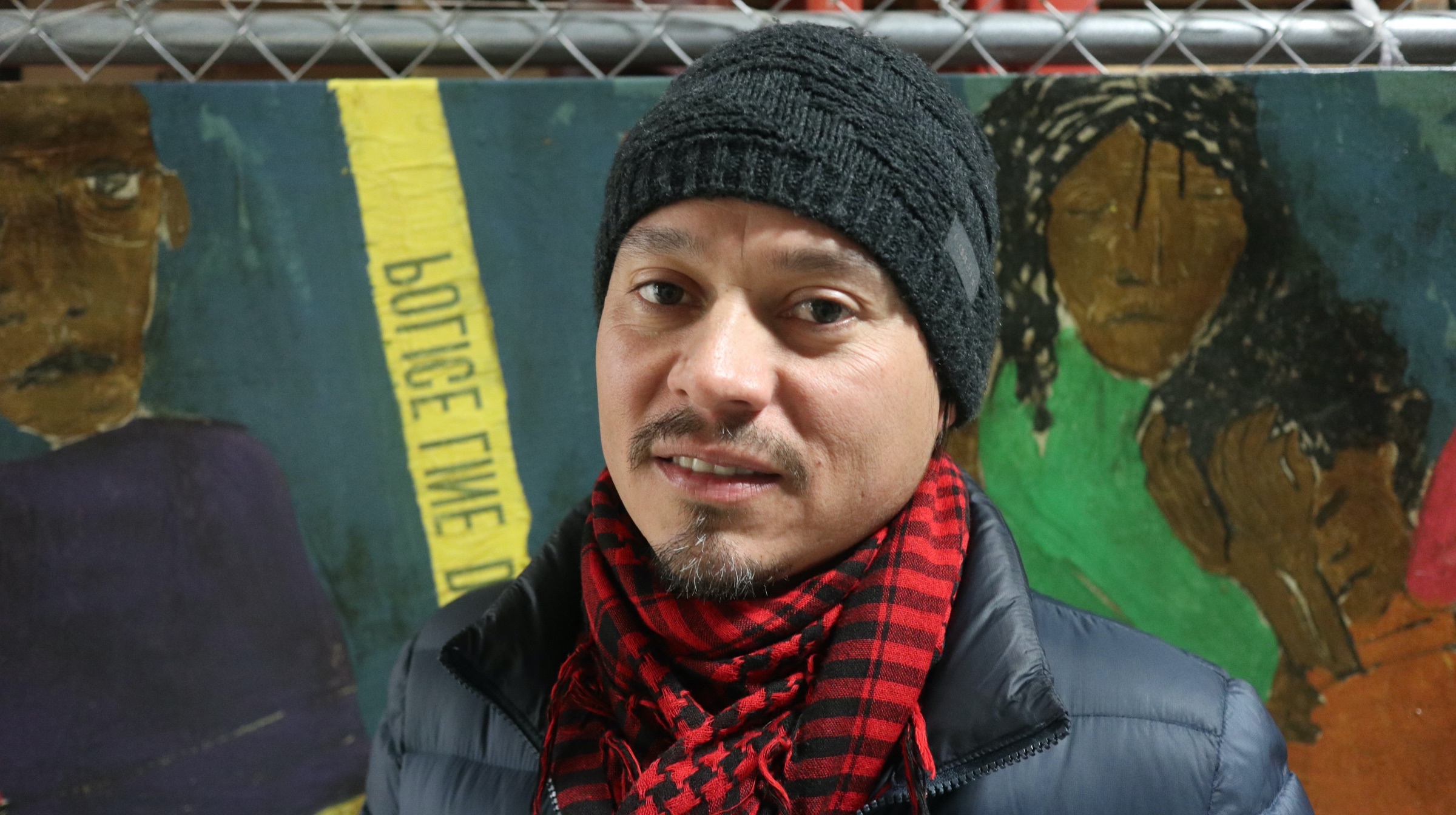
To learn more about Richie Morales’ emotionally social Guatemalan paintings, you can follow him on Instagram at @richiemoralesart. Stay tuned next week for PART II, where we’ll explore Morales’ powerful and healing Guatemalan paintings.
Written by

Subscribe to my newsletter
Subscribe to my newsletter to get the latest updates and news