Barro y Papel’s Traditionally Modern Costa Rican Mascaradas
Sol and Gustavo Barboza, from Barro y Papel, craft mascaradas that preserve Costa Rica's cultural identity and their family's legacy.
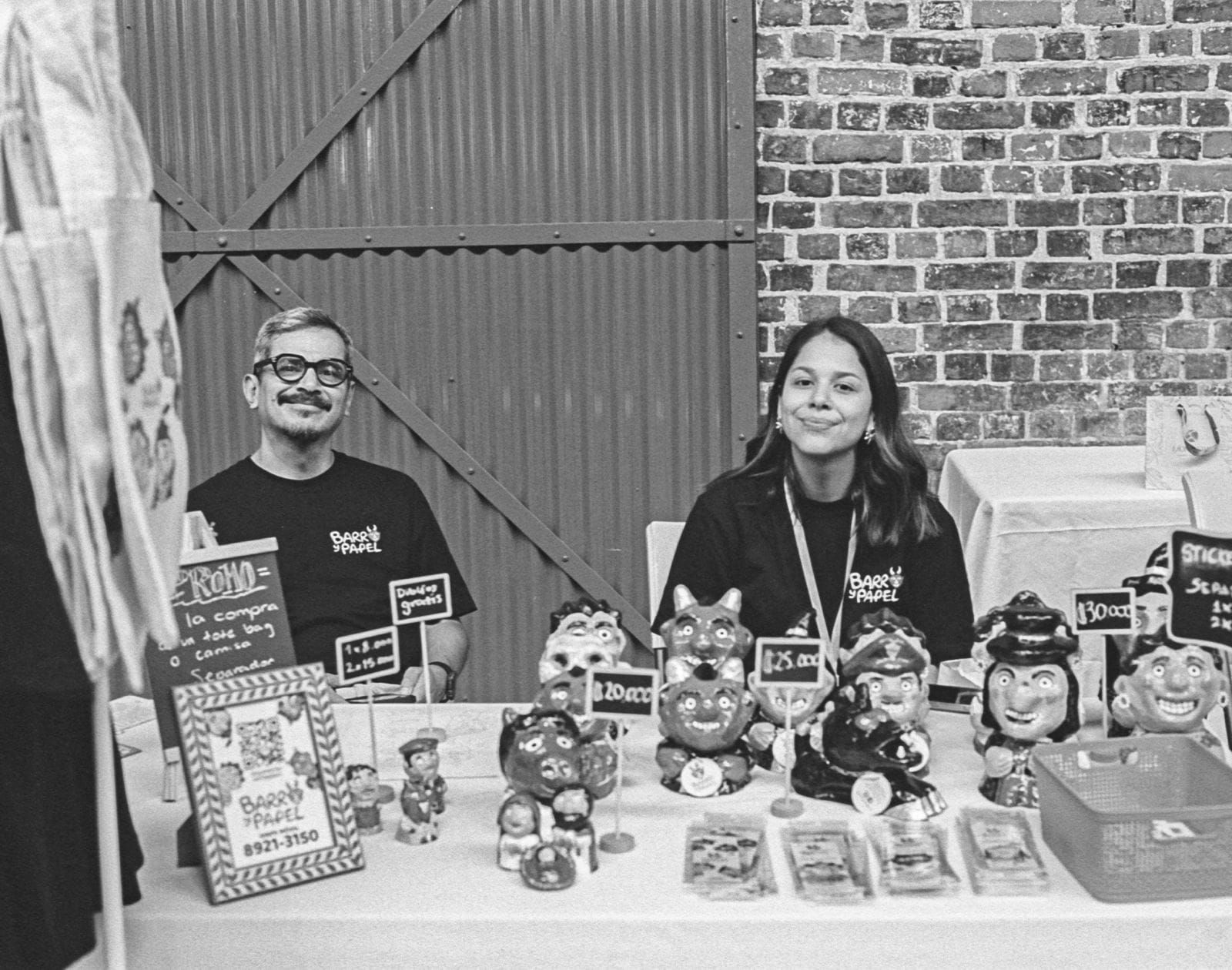
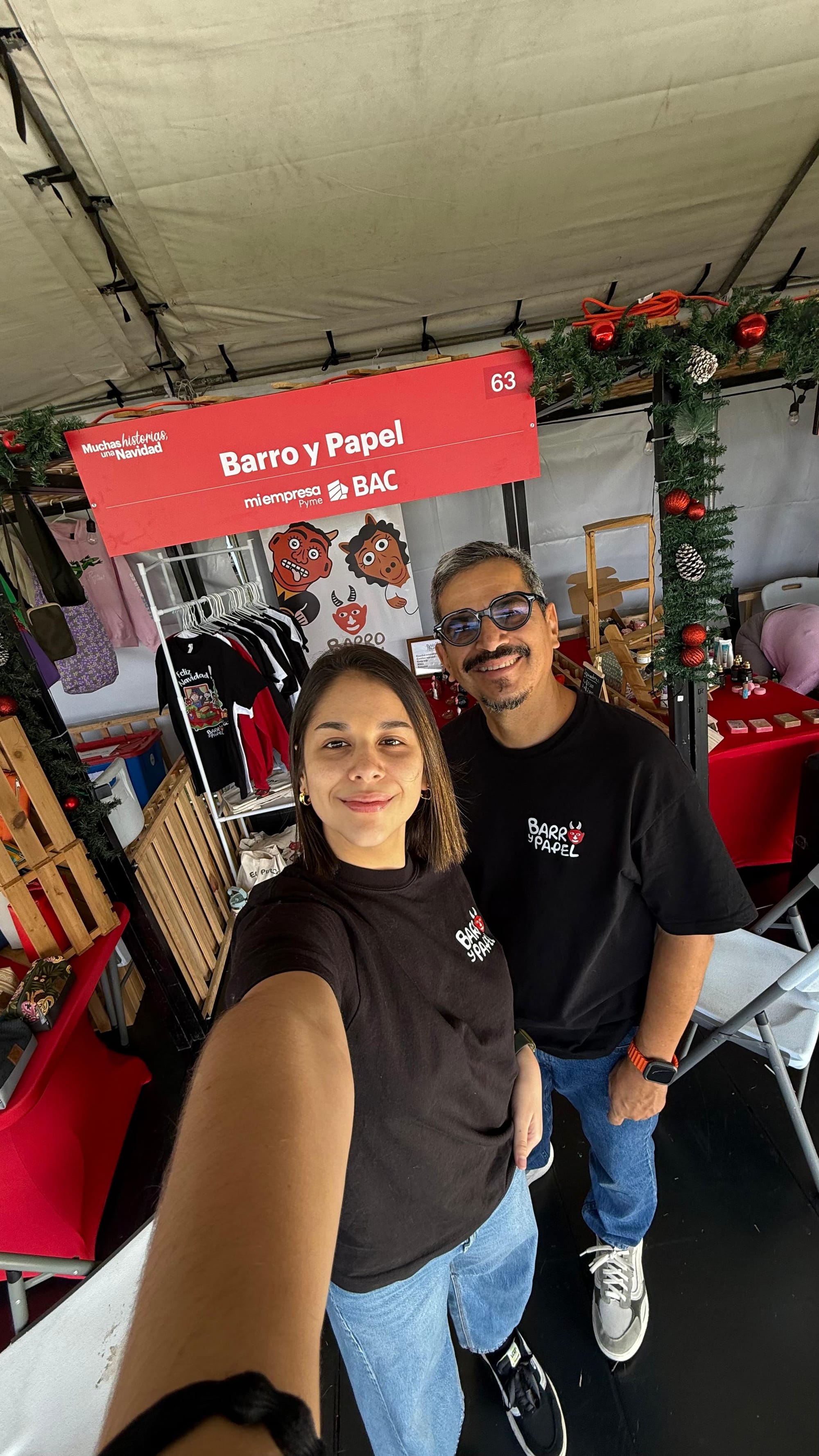
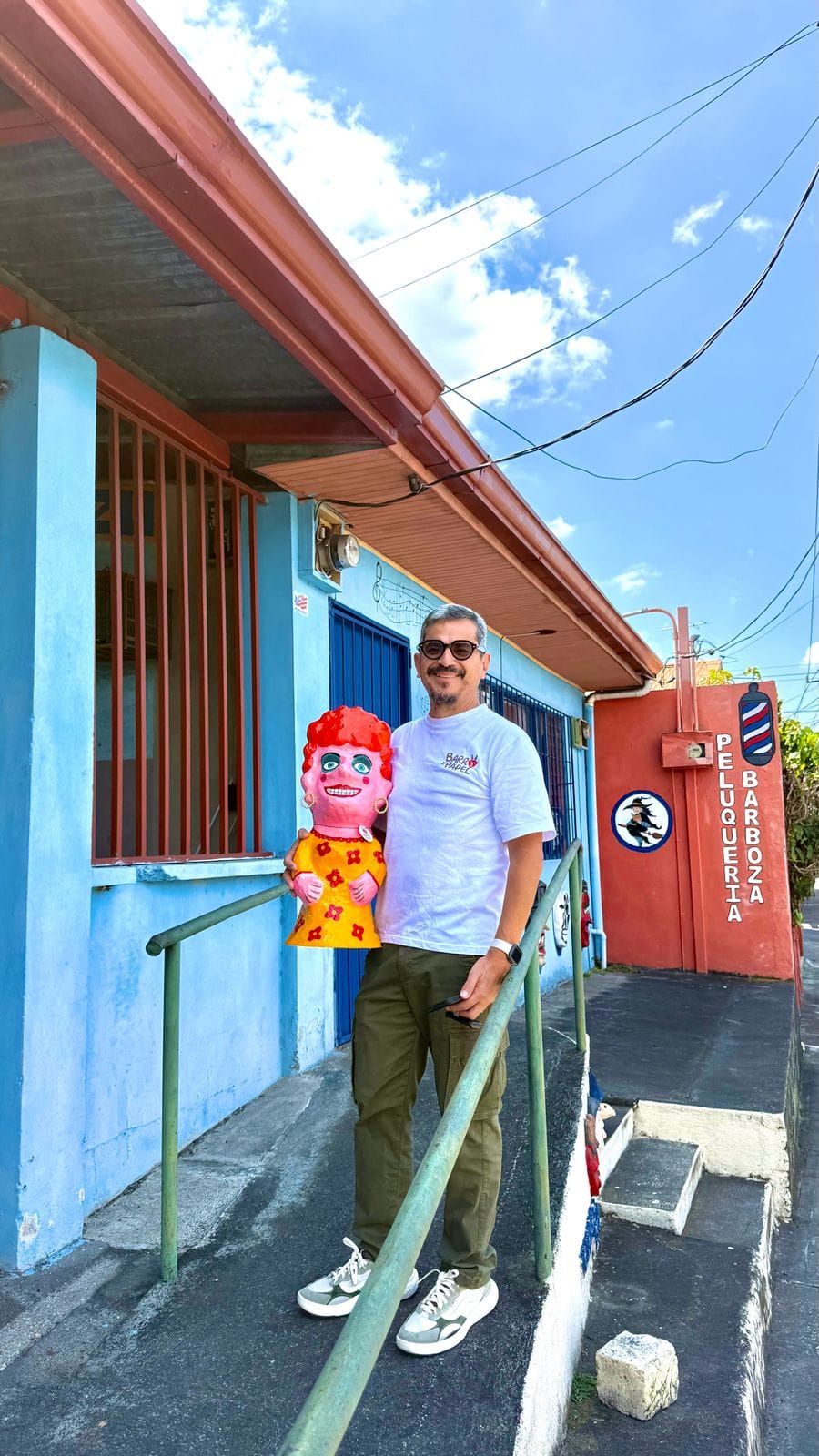
Both Gustavo and Sol Barboza grew up with mascaradas in their hometown of Escazú in San José, Costa Rica. They’re father and daughter. They share a familiar love for the art of masquerades. And they’re also the owners of Barro y Papel, a family business dedicated to create traditionally modern Costa Rican mascaradas.
It’s also a project focused on honoring Enrique Barboza: a Costa Rican traditional mascarero, Gustavo’s father, and Sol’s grandfather.
“Besides conserving traditions, we preserve my grandfather’s legacy. He has been doing giant mascaradas for fifty years and he’s now eighty-four years old. I thought: no one else in the family knows how to do this art of the mascaradas,” Sol said. “So, I’d ask him to teach me how to do them because if at any moment he’s not here, this [art] won’t die with him.”
With that strong conviction of preserving this traditional art, Sol spent around three months learning the craft with her grandfather in his workshop. They made a giant diabla mascarada together and that was how she studied the technique with her bare hands.
Both Sol and Gustavo appreciate a lot this traditional technique because they feel it’s getting lost. It’s the technique that requires the use of clay (barro) and paper (papel). As you can see, it’s the reason behind their project’s name.
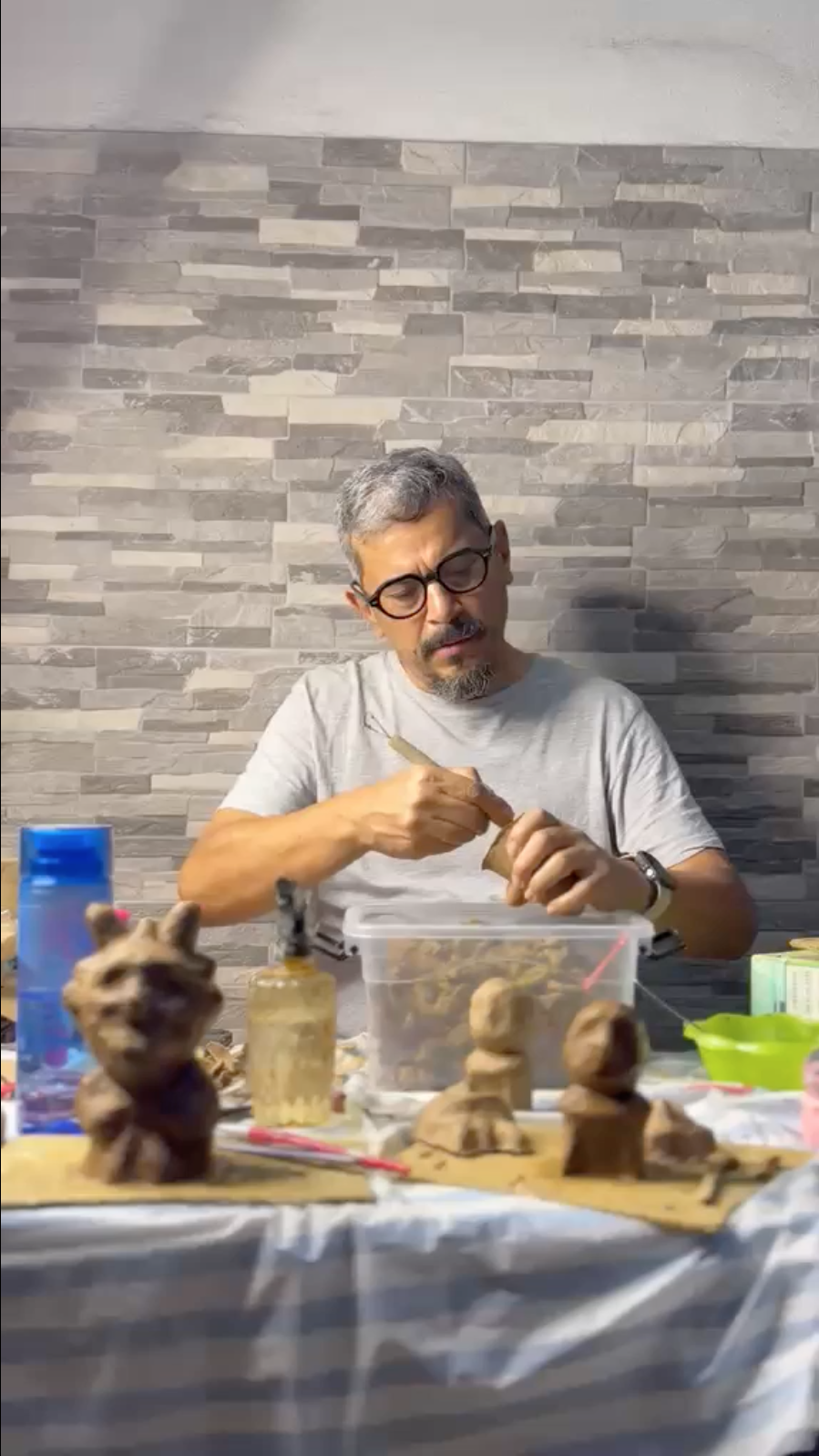
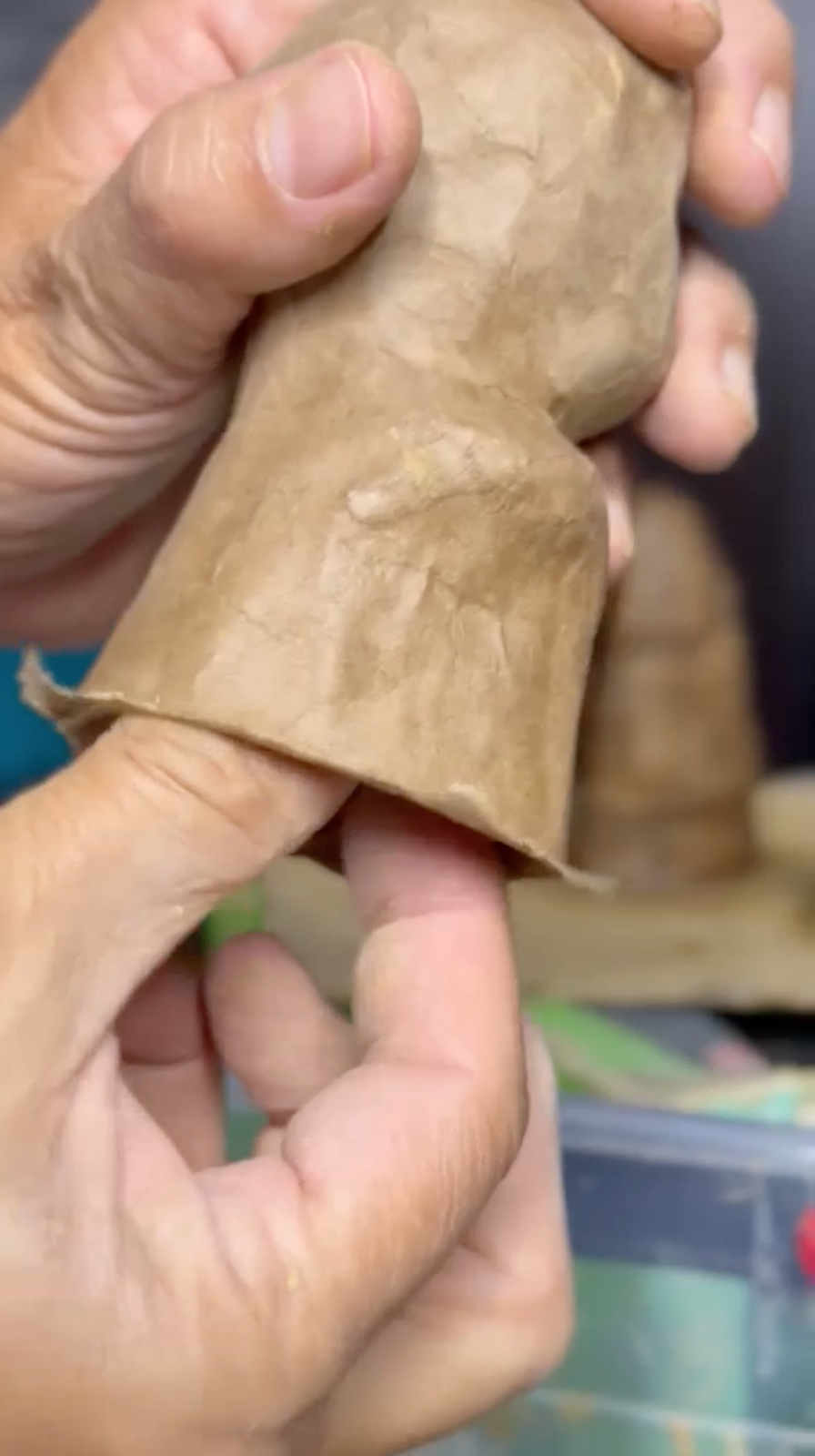
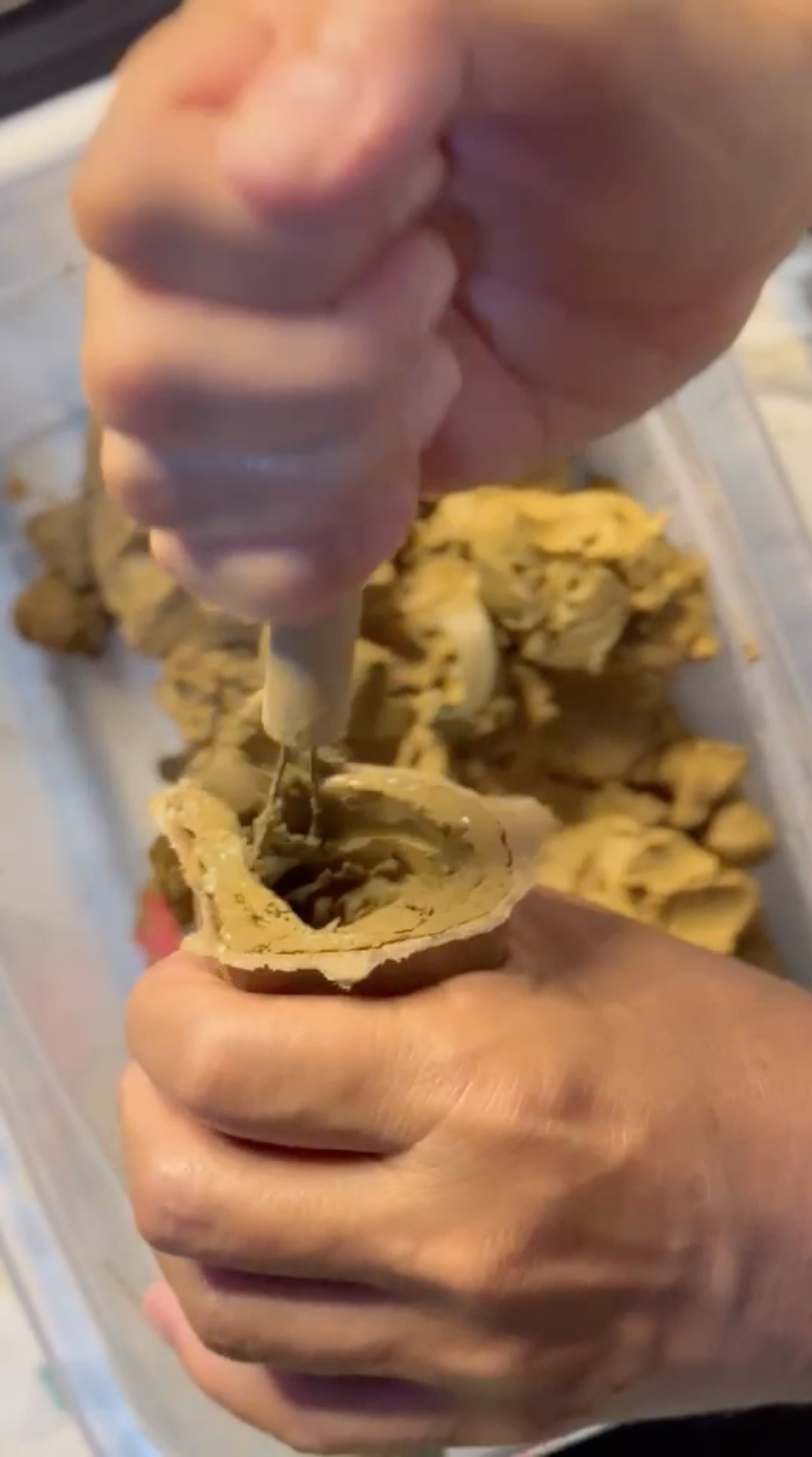
The clay and paper used in Barro y Papel's artwork. | Photos courtesy of Sol Barboza. | Impulsiva Stories
This project began last year and once Sol got a grasp of the craft, she started wondering if they could do mini mascaradas. She recalled of a time in which her grandfather did some tiny figurines for the Municipality of Escazú. They were the mini diablito (or pisuicas) and a calavera. Both Sol and Gustavo loved them, so they kept them as an ornament in their house.
“So, I told him: abuelo, why don’t we make some similar to those? We made a doctor because a while back, he had the idea of creating a doctor Moreno Cañas,” Sol said and Gustavo laughed.
Don't Forget to Subscribe to
The Story of The Story
For only $16 a month, every Friday you'll have exclusive access to
The Story of The Story. Our founder, the Costa Rican award-winning multimedia journalist and artist Elizabeth Lang, guides you through her creative process to produce her stories.
They made a miniature doctor. It was the first mini figurine they ever did together. When it was ready, Sol brought it back home and a school teacher approached her asking where she could find one of those tiny mascaradas. She wanted a diablito to decorate the school.
Sol told her they could create one for her. They exchanged their contact information and that instance was what changed everything for Sol and Gustavo. That was when they decided to go all in with the project.
“My father is a graphic designer and photographer. He studied at Bellas Artes in the University of Costa Rica. So, he’s very good with manual stuff like paint and sculpture,” Sol said. “So, that day I came in and told him: Pa, you’d be great. Why don’t we start something and finally make it a reality.”
Creating Barro y Papel
The day they created the first diablito for the school teacher, was the same day they created Barro y Papel’s Instagram account. They published their first post with their logo and explained why they were creating the mini mascaradas. To their surprise – combined with extreme gratitude – people started purchasing their pieces when they didn’t even have any photos posted.
That all started last year on April 30th, and from that day on, it’s been a wild adventure full of great surprises for both Gustavo and Sol. It started as the desire to preserve the legacy of the great mascarero and artist Enrique Barboza and became bigger than themselves. At times, they're surprised with things they did not expect at all.
It’s a project that preserves both a legacy and the culture of masquerades.
But in order to better comprehend that interest for the preservation of the Costa Rican identity, we must understand Sol and Gustavo’s perception of art. For Gustavo, it’s a direct connection with his father.
“He’s a super artist. My father, as my daughter said, has fifty years of being a mascarero. He plays the guitar. He makes furniture. He’s the barber of the town,” Gustavo said.
Besides Gustavo’s natural relationship with art because of his father, he also studied graphic design at the University of Costa Rica (UCR). But as Sol mentioned, her father was born with that artistic vein from his father and she grabbed it from Gustavo. It’s in their blood to create art, whether it is self-taught or more graphically with an academic artistic background.
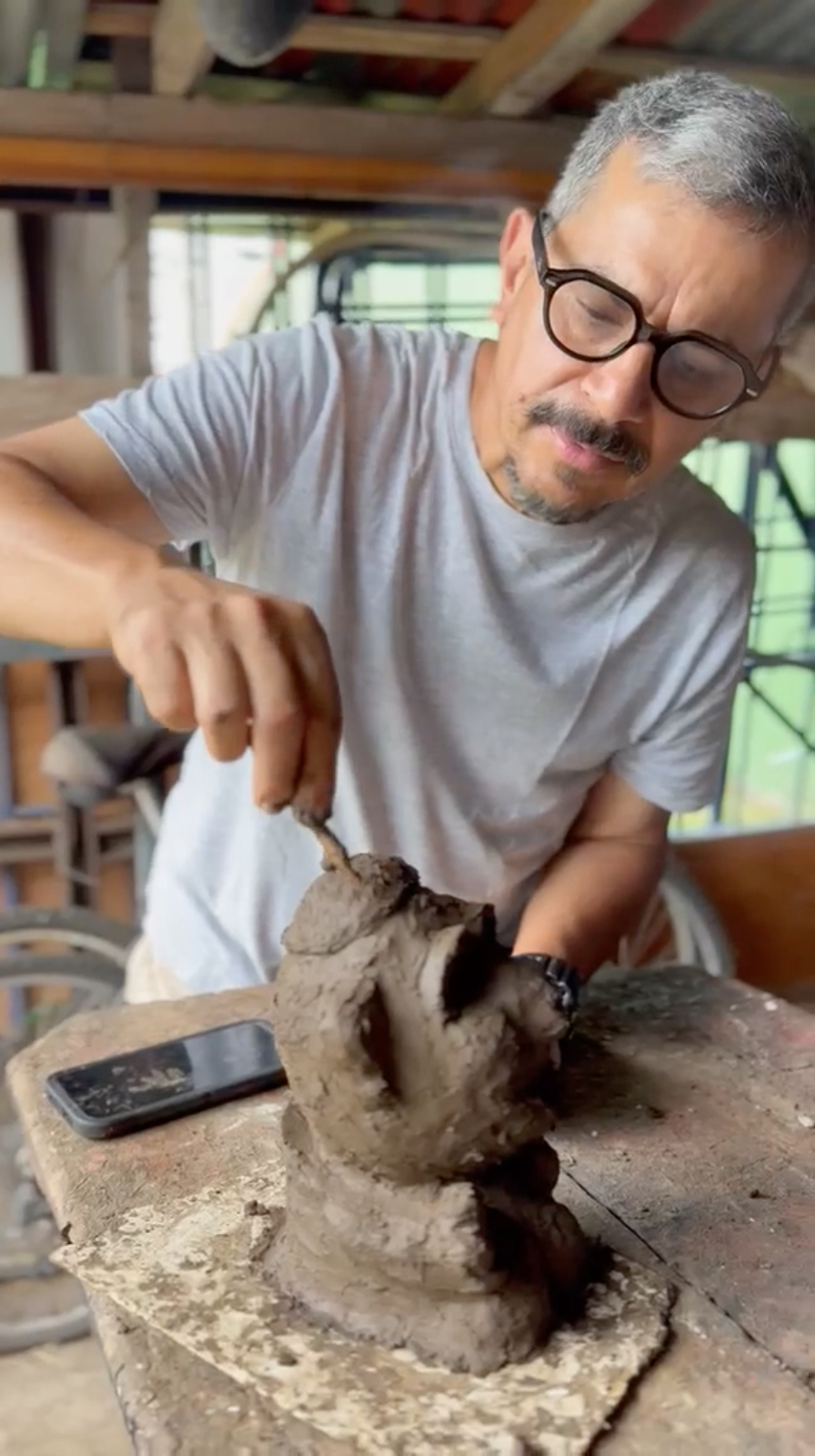
Gustavo Barboza using his tools to sculpt the mascaradas. | Photos courtesy of Sol Barboza. | Impulsiva Stories
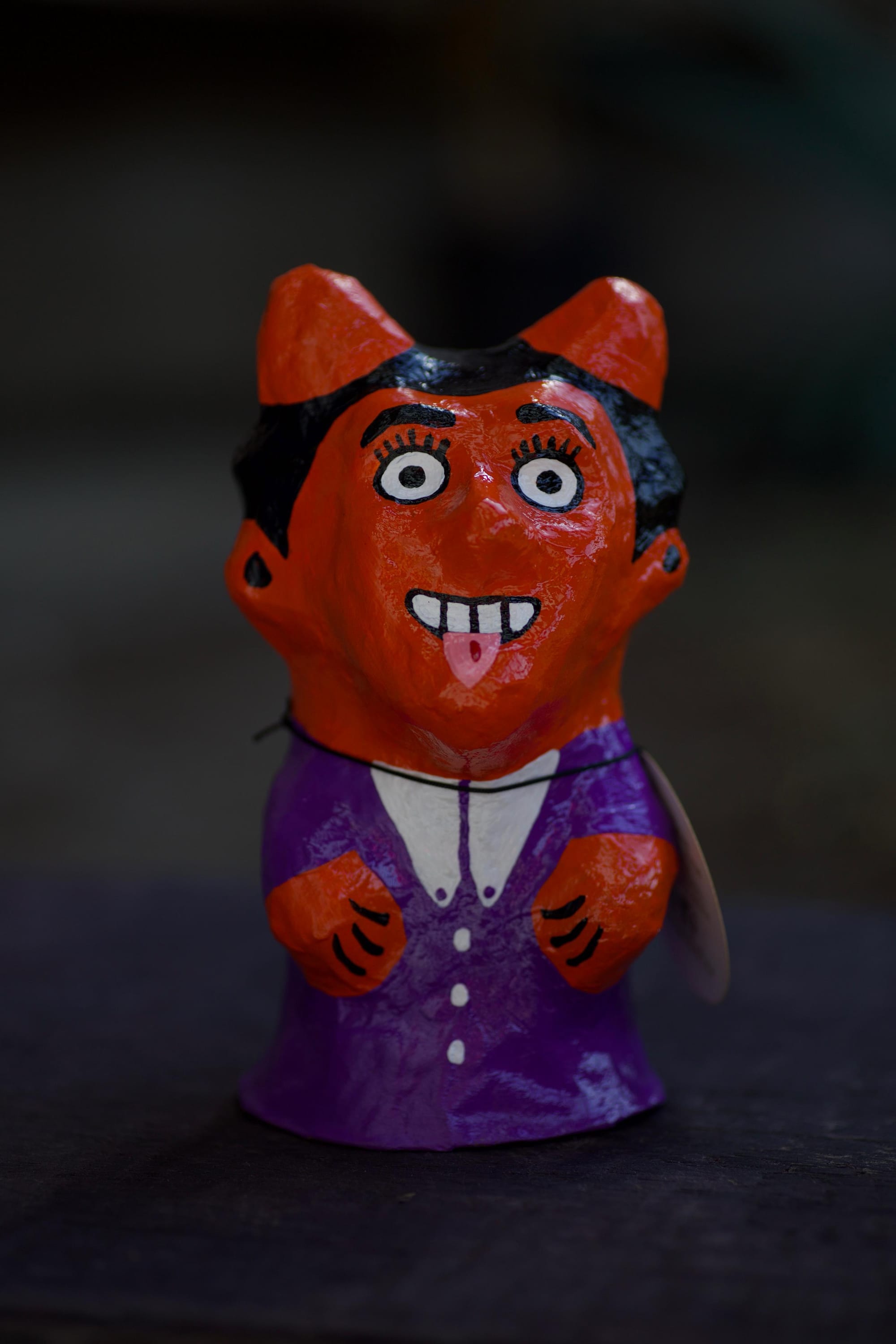
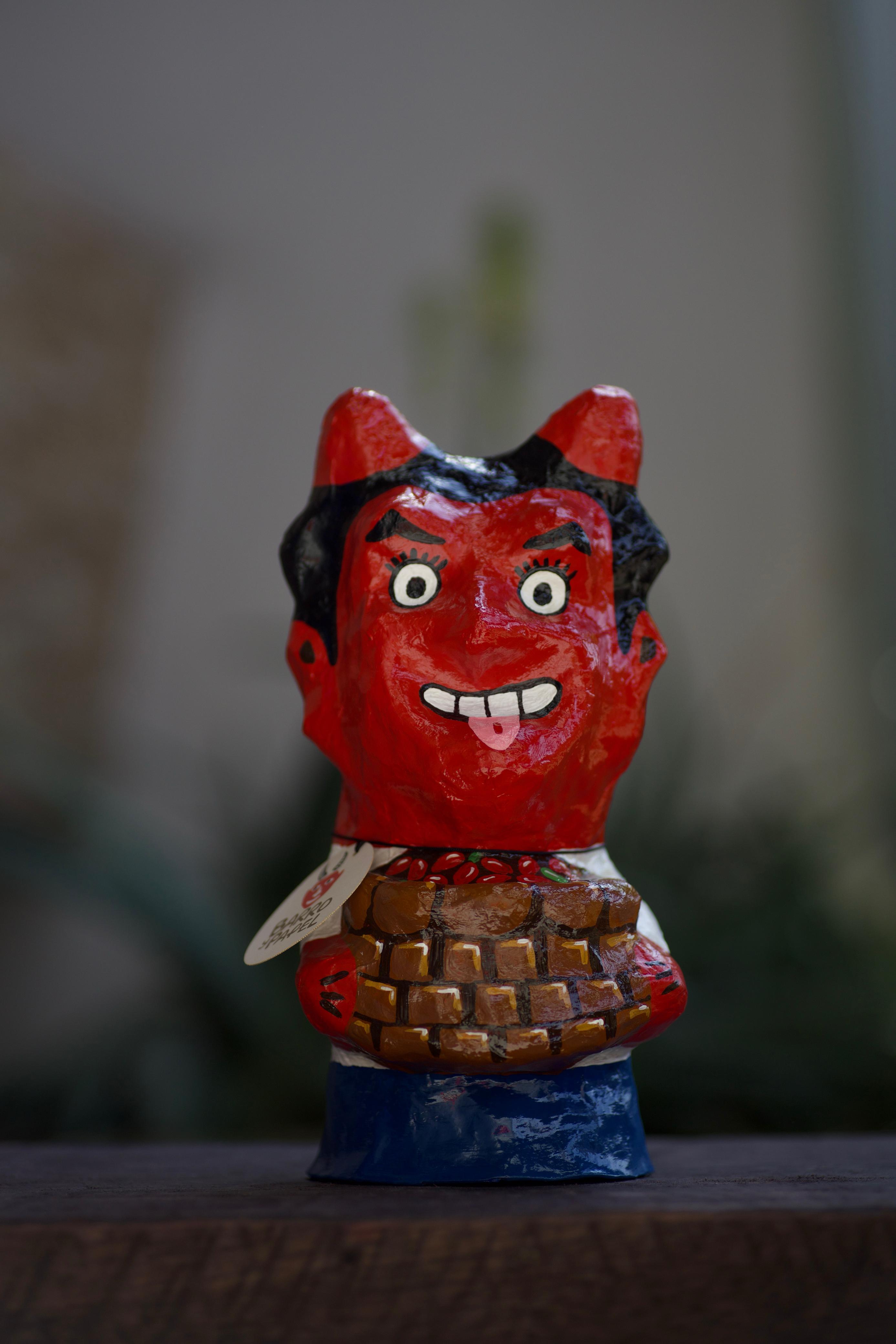
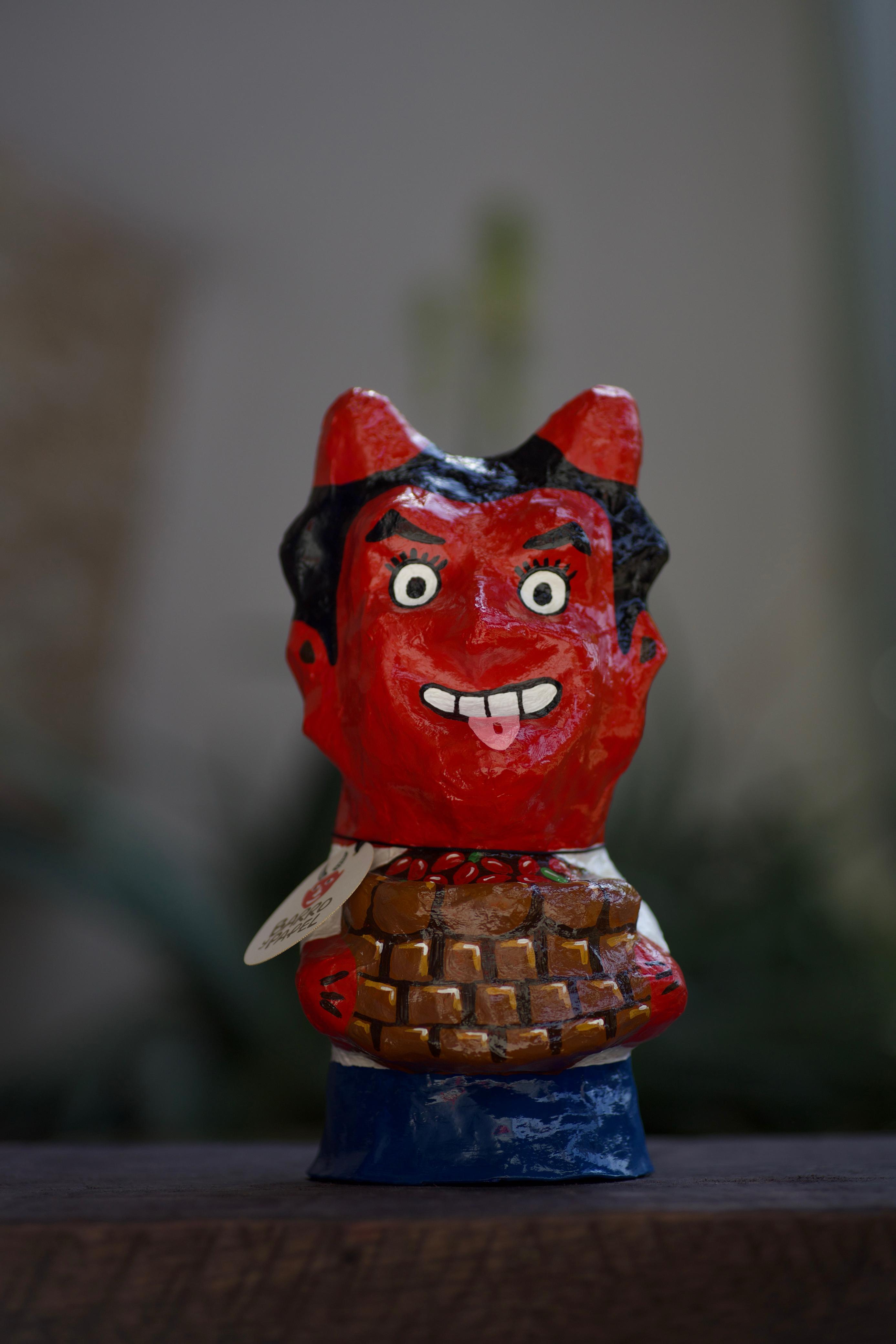
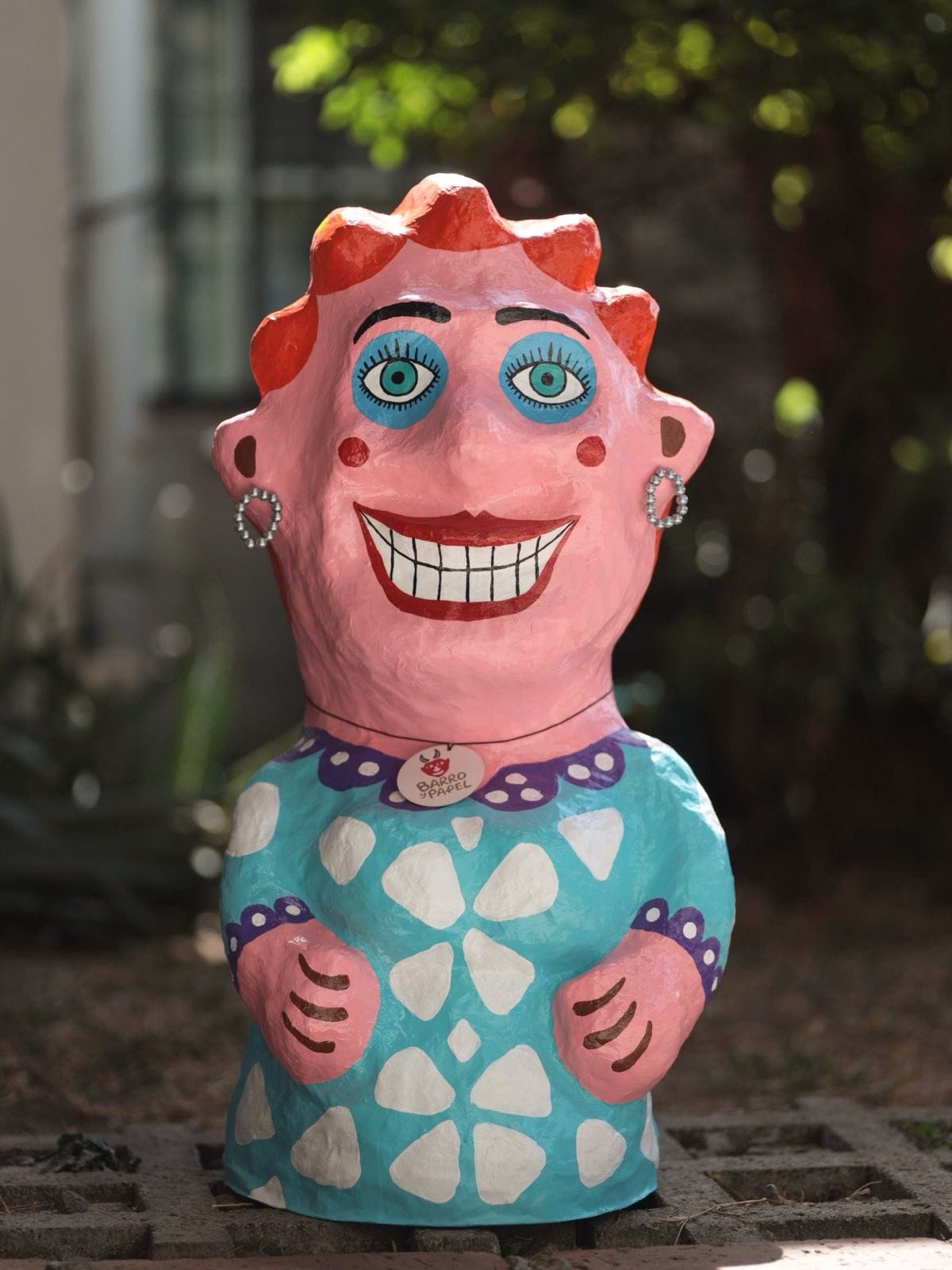
If you take a closer look to their mascaradas, you’ll notice tradition and modernity perfectly merged together. The tradition lies in the technique. The modernity is portrayed in their use of colors and the sober designs. They come together in the form of tiny figurines that are extremely humorous. That catch you with their funny expressions and brilliant joy.
As artists and mascareros, it’s still a bit difficult to grasp those descriptions for Sol and Gustavo.
“I’d define myself as a newbie in this,” Sol said laughing. “And also, very grateful with people trusting us, for the opportunities, and thinking about all of the places we’ve reached. People have bought them to take them to Argentina, the United States, Europe. All over the place.”
To that, Gustavo added that there’s even one in Africa. For him the craft takes on an emotional toll throughout the process.
“When we have to deliver them, [it’s sad because] there’s a special affection for those condenillas,” Gustavo said laughing.
Listen to Gustavo Barboza
0:00
/17.093333
Throughout that process, Gustavo noticed that what he learned during his time in Bellas Artes at the UCR, helps him with his artistic sensibility. He also uses his college tools to sculpt the clay. His process is a bit more technical when it comes to crafting the mascaradas.
In Sol’s case, she learned her grandfather’s technique of creating the figurines with her bare hands. She molds their bodies and faces with her fingers.
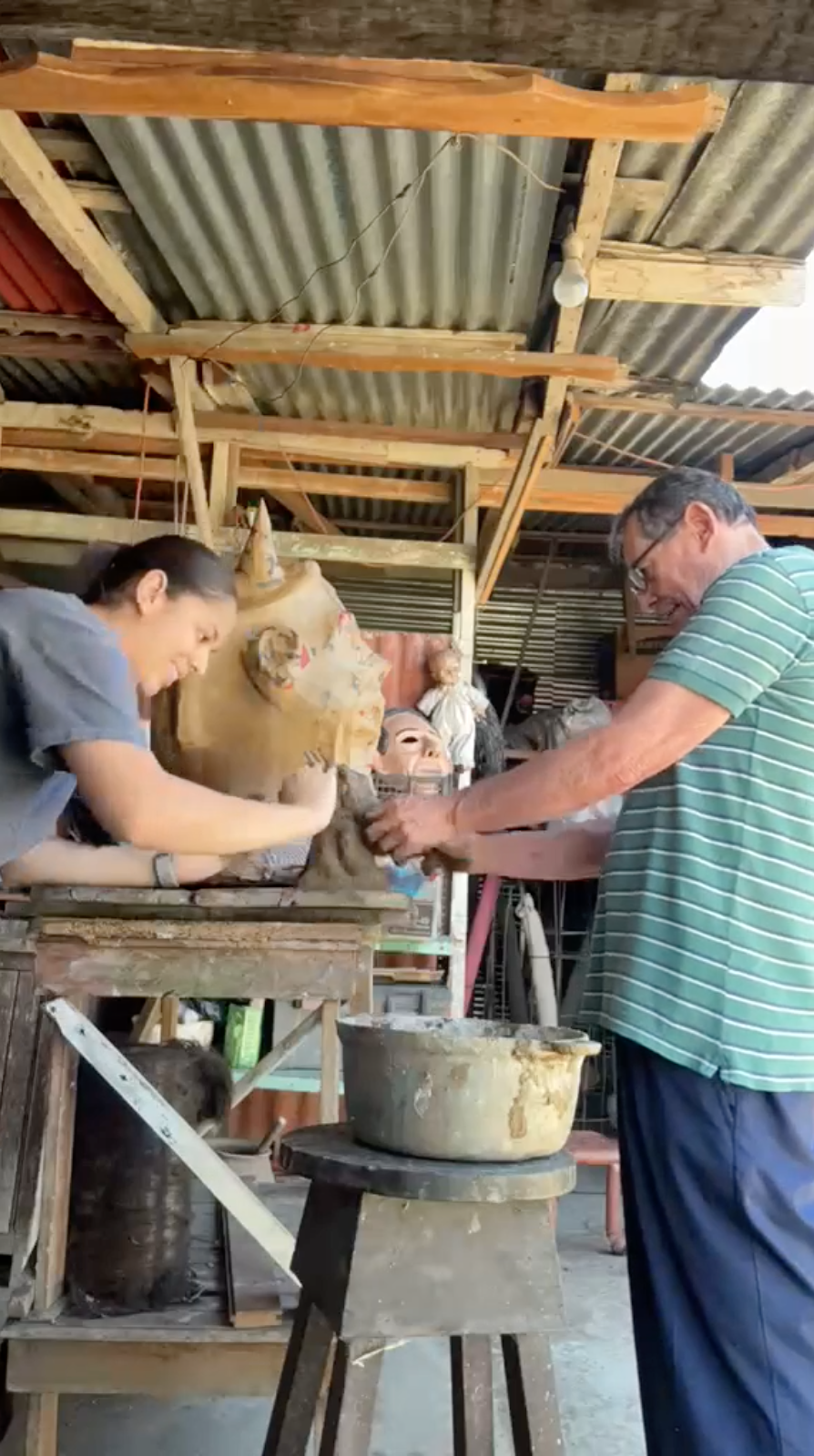
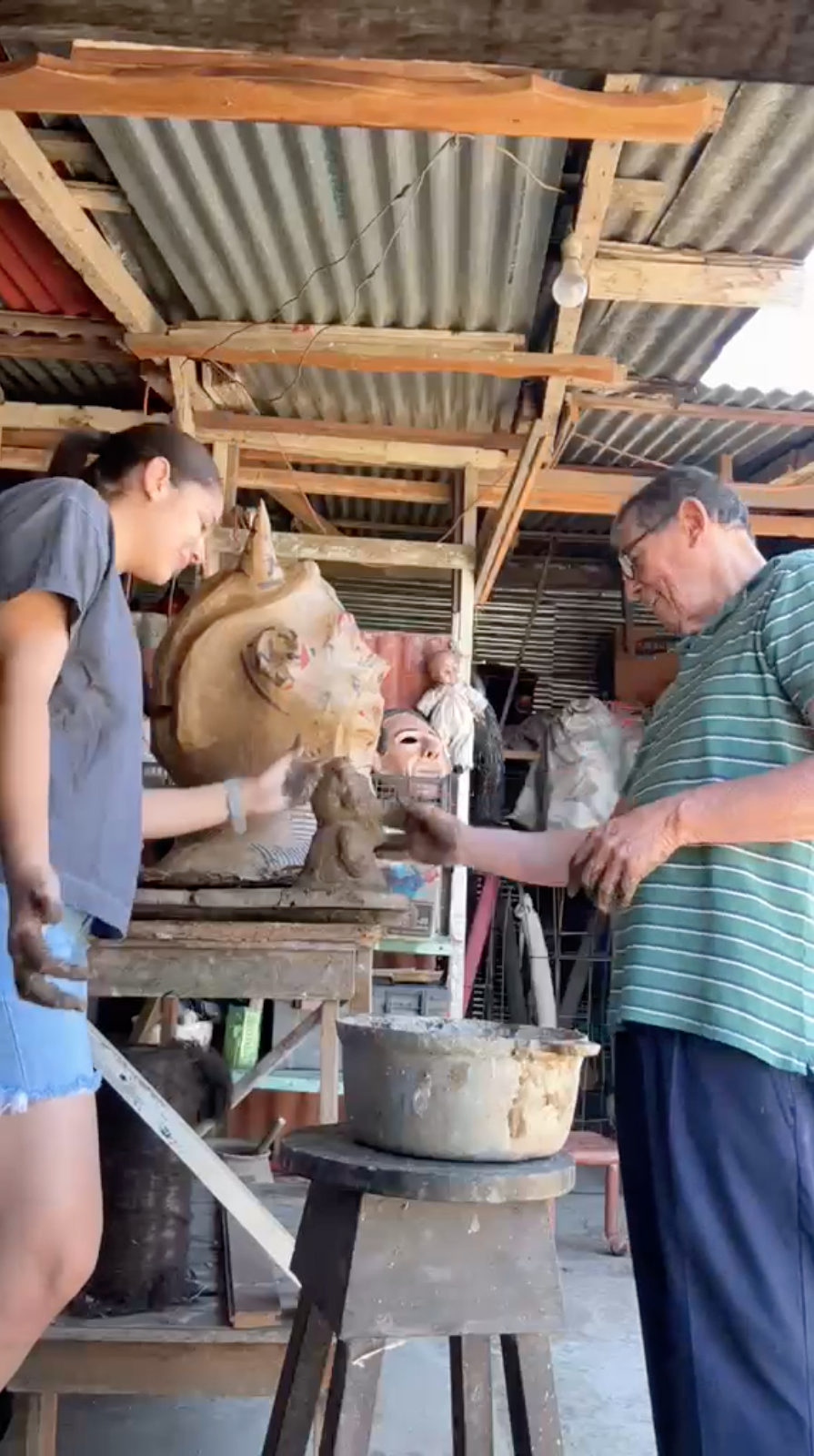
Sol and her grandfather Enrique Barboza sculpting the mascaradas with their bare hands. | Photos courtesy of Sol Barboza. | Impulsiva Stories
But that only means that both of them can achieve the same results with different methodologies. They can each sculpt the clay, glue the paper on top of the clay, and paint.
“I think we can also define ourselves as contemporary mascareros. We try to do what’s established, like a giganta, a diablo, a segua or a policeman, and bring it to modernity,” Sol said. “For example, we recently launched a tote bag, bookmark, stickers, and t-shirt collection called nadie me quita lo bailado.”
Listen to Sol Barboza
0:00
/43.853333
It’s a very festive design that spans different formats for the pieces and a varied selection of vibrant colors. It’s a continuous experimentation between tradition and modernity. There’s no fear with this artistic exploration because it responds to the current times we’re living in.
They want to preserve the older versions while adding their own graphic style and hallmark. Gustavo believes this very unique graphic style responds to Sol being very young with her distinctive tastes and his graphic design background. He tends to simplify things and make them more symmetric.
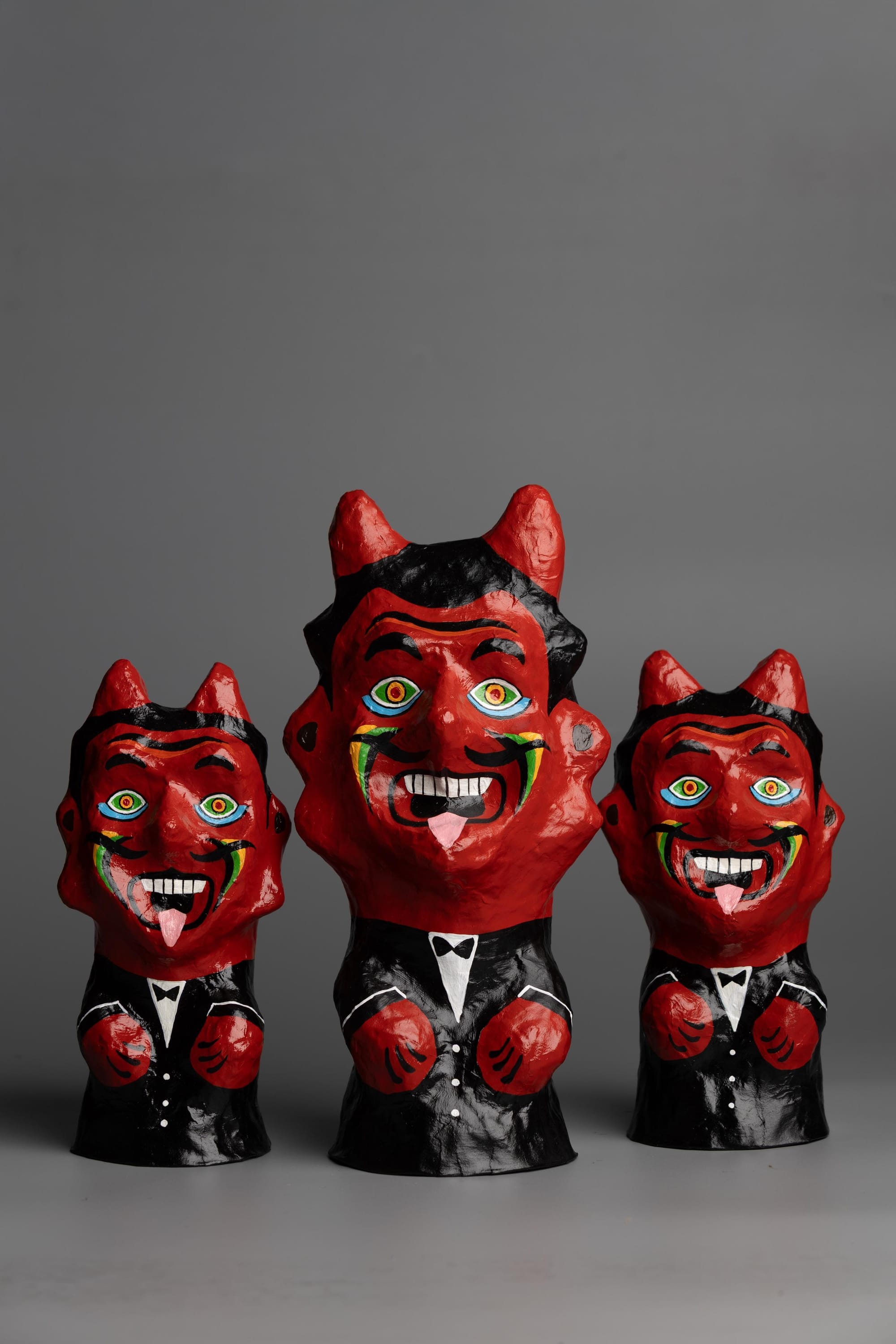
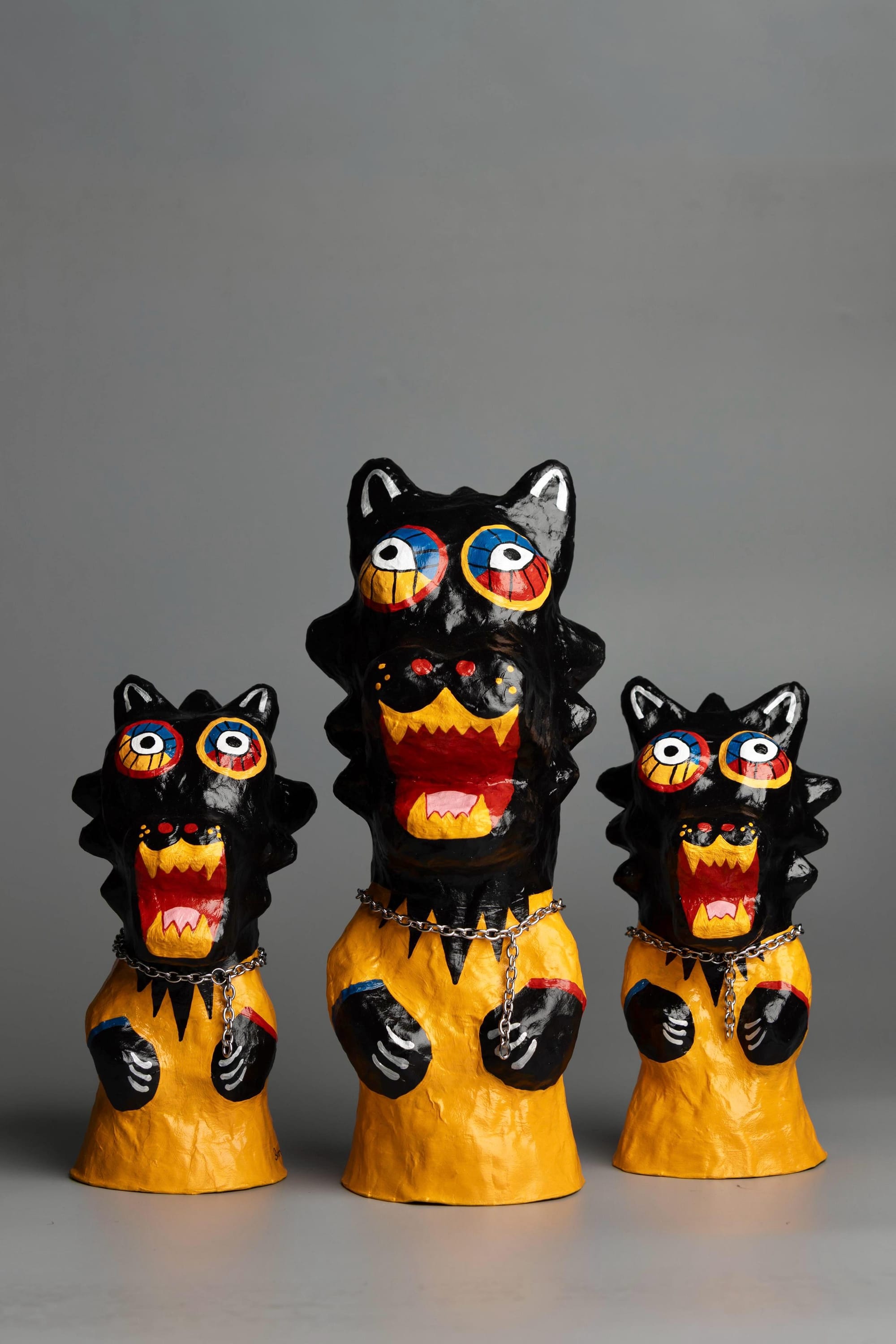
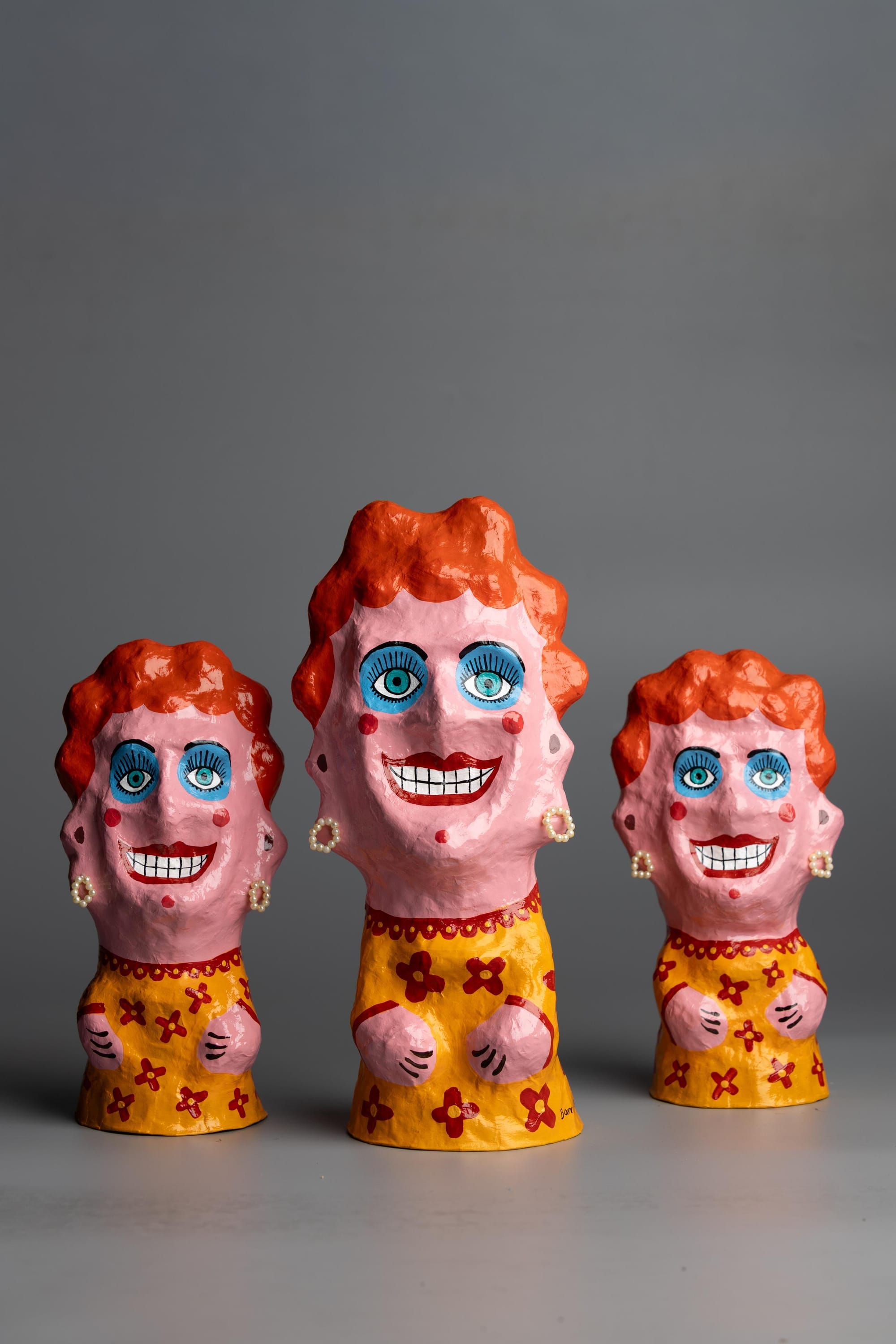
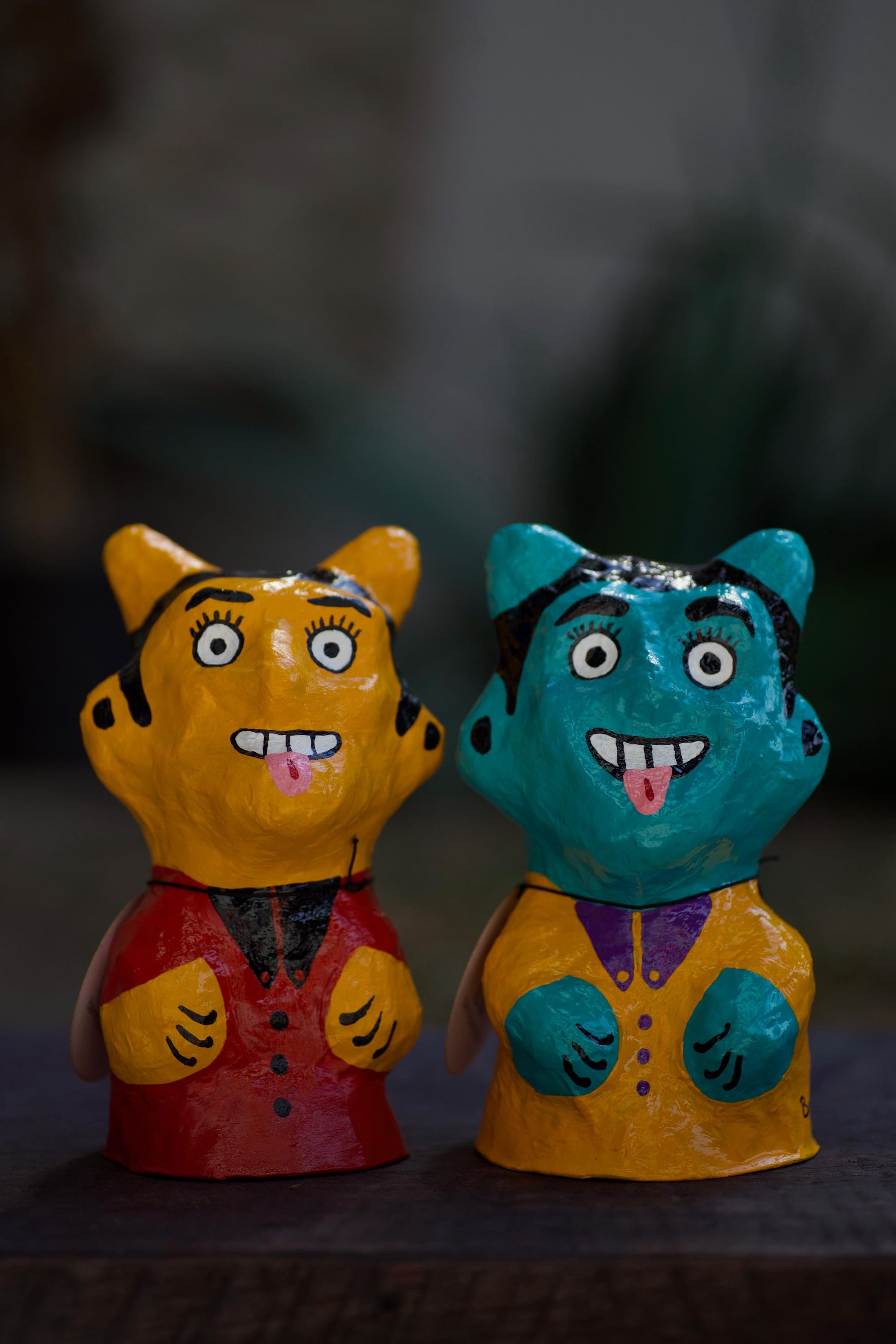
Barro y Papel's very colorful and brilliant mascaradas. | Photos courtesy of Sol Barboza. | Impulsiva Stories
“We use colors that are super vivid. The [brush] strokes need to be well done. No eye will be done badly. Everything comes out very nice and even,” Gustavo said.
That’s where the teamwork comes through. Sol considers herself to be very meticulous. She checks each line to see if they're well aligned. At some point, Gustavo called her his quality control. She makes sure every single detail in the pieces is well done for them to greatly portray the vibrancy that characterizes them.
In that vibrancy you can find what defines them as a small business and art project. It’s about family and happiness. It’s a Barro y Papel that’s open to all the possibilities that life has to offer. It also involves all of their family. Gustavo’s wife is always supporting them and his other daughter, who has her jewelry brand called Simple Magic by Cami, creates the earrings for their pieces.
And, obviously, the great mascarero Enrique Barboza, often guides them whenever they have trouble in the process. Watching them continue with his craft also got him quite motivated.
The Peluquero Mascarero
“It had been a while since his last mascarada, which was the one he did with me. Before that, it had been a long [time] since he did one and now that he sees us excited, he also gets excited,” Sol said. “So, since we’ve been doing this, he created three giant ones.”
He even asked Gustavo to paint the faces of his mascaradas. So, it’s now a mixture between Enrique’s traditional giant masquerades with Barro y Papel’s modern graphic faces.
But this technique goes way back to Enrique’s beginnings, where he made his first attempts with cardboard boxes. Then, he started with barro de olla, which is the clay found at the borders of the rivers or the pot holes on the streets.
It's a clay that’s very concha, or rough, because of the tiny rocks and dirt that comes with it. Besides his natural talent to find the best clay in nature or on the streets, Enrique developed other skills. He learned how to create the metallic structure for his giant masquerades. He learned how to paint and weld. He has even learned how to make the mascaradas out of fiberglass, which is the technique that’s most often used right now.
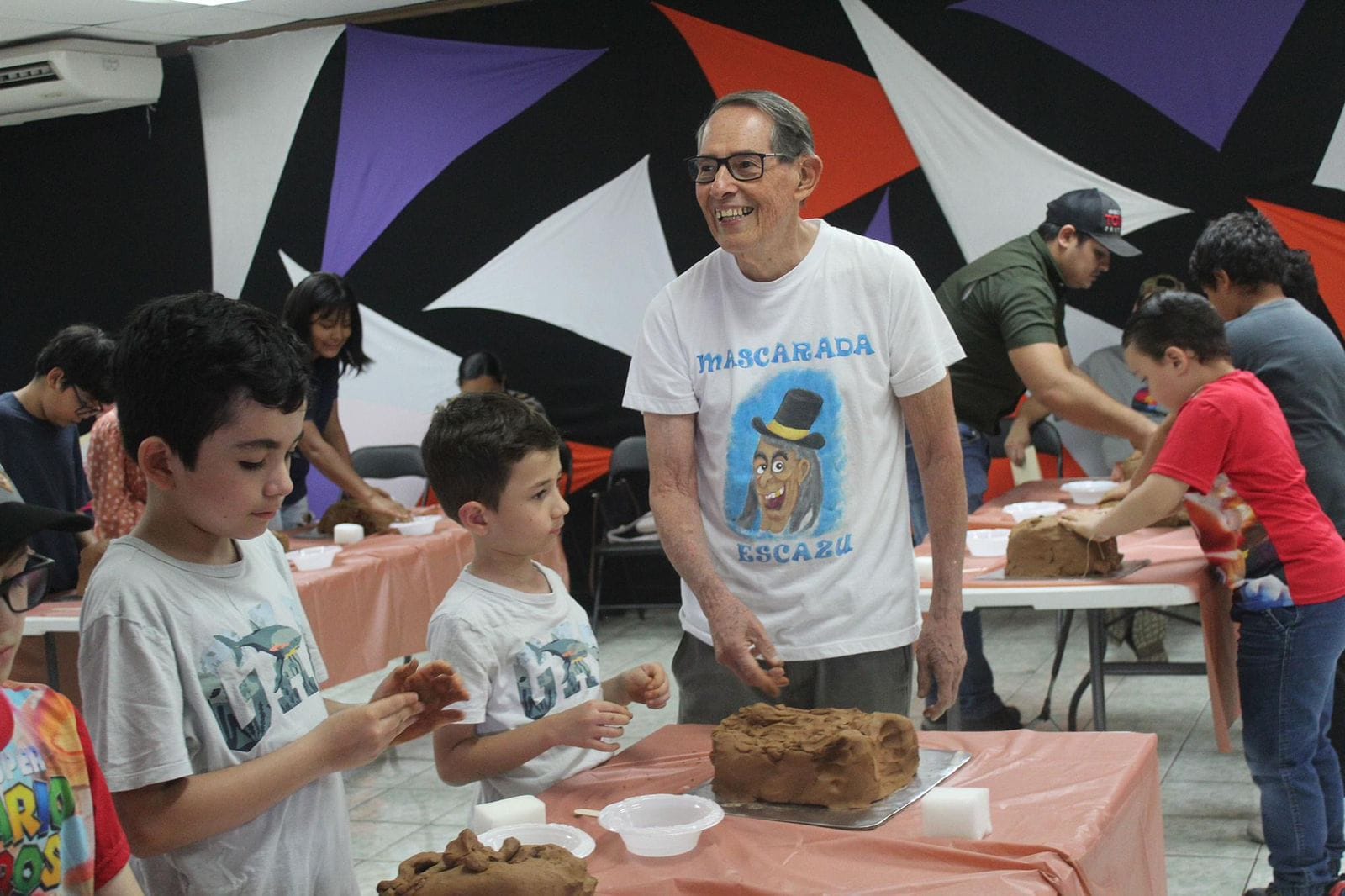
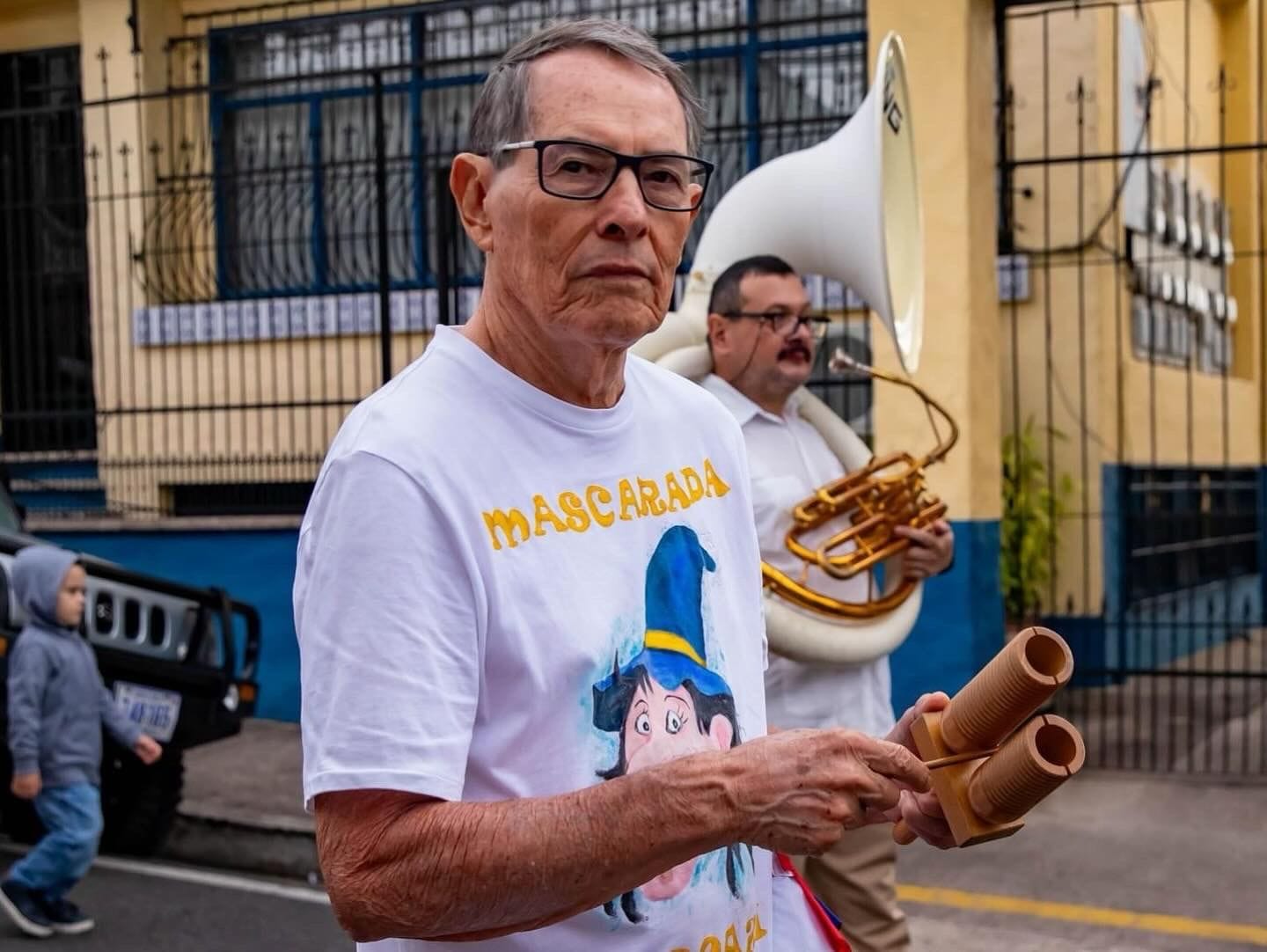
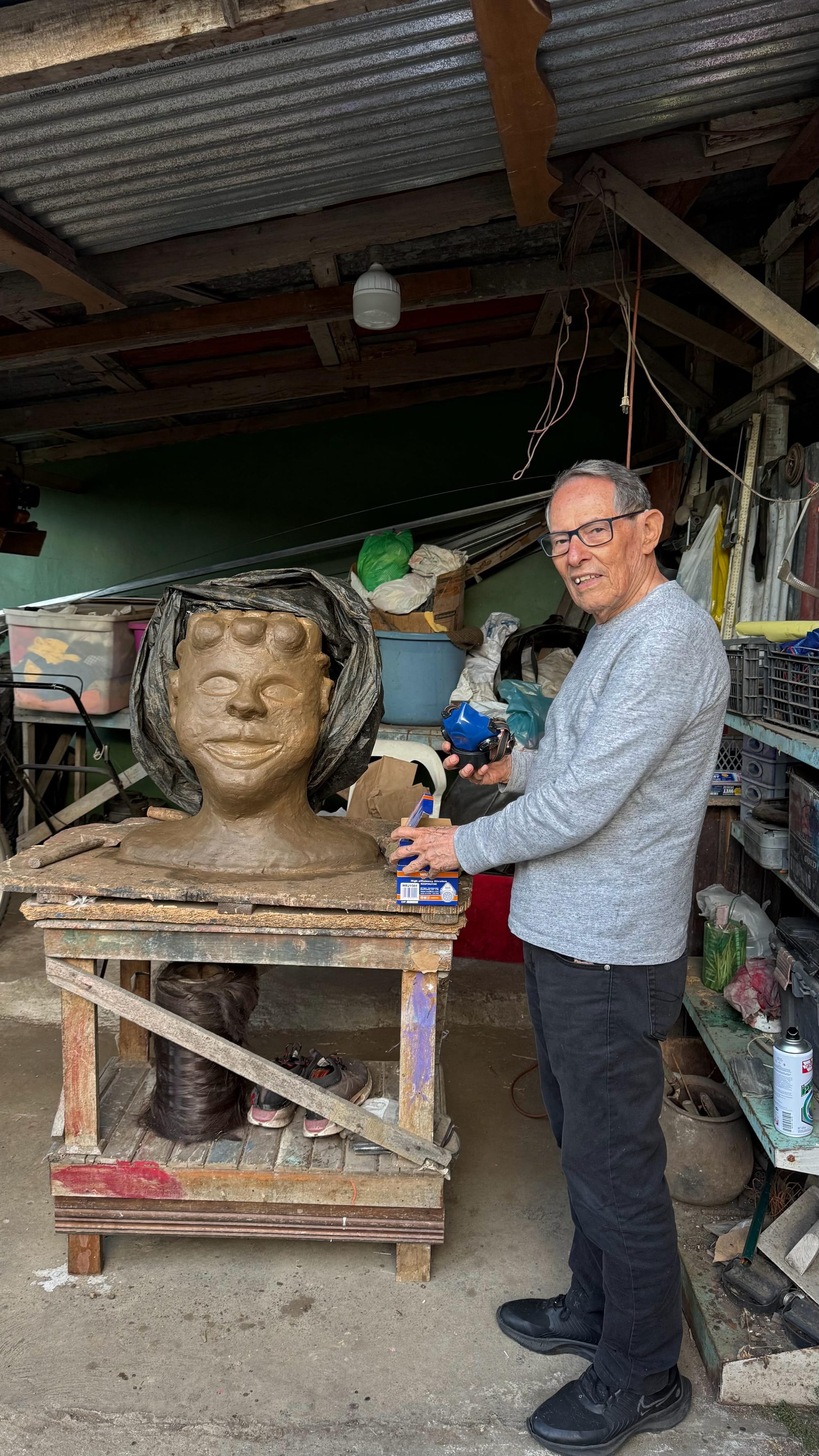
The famous Enrique Barboza of Escazú. | Photos courtesy of Sol Barboza. | Impulsiva Stories
Due to his longstanding career of mascaradas, he’s quite known in Escazú because of his traditional art. He’s also renowned for being the town’s barber. Gustavo mentioned that if you asked for the peluquero Barboza in Escazú, everyone knows who he is. He’s so familiar in his community, that the Municipality of Escazú has done various homages for him.
“Everyone knows him for being the peluquero and the mascarero. So, they now call him Escazú’s peluquero mascarero,” Gustavo said laughing.
Listen to Gustavo Barboza
0:00
/12.077333
The Creative Process of a Mascarada
Honoring the peluquero and mascarero by preserving his craft is synonymous with fun for Sol and Gustavo. It’s a very relaxing process because of the clay’s softness when sculpting the figurines. It’s the creation of an art piece that did not exist before. It’s also about community because the people around them keep an eye on their craft paper needs.
They encounter people who gift them bags all the time. They’ve built their community one humorous Costa Rican mascarada at a time. As the support grows rapidly, the dreams become crazier and bigger with the passing of time.
“A comment at the fairs we go to. Maybe people don’t buy them, but they come close and are impressed when we explain the process and the time it takes. The fact that they tell us how pretty it is and congratulate us for preserving the traditions, that fills up our heart,” Sol said. “And the objective of Barrio y Papel is fulfilled.”
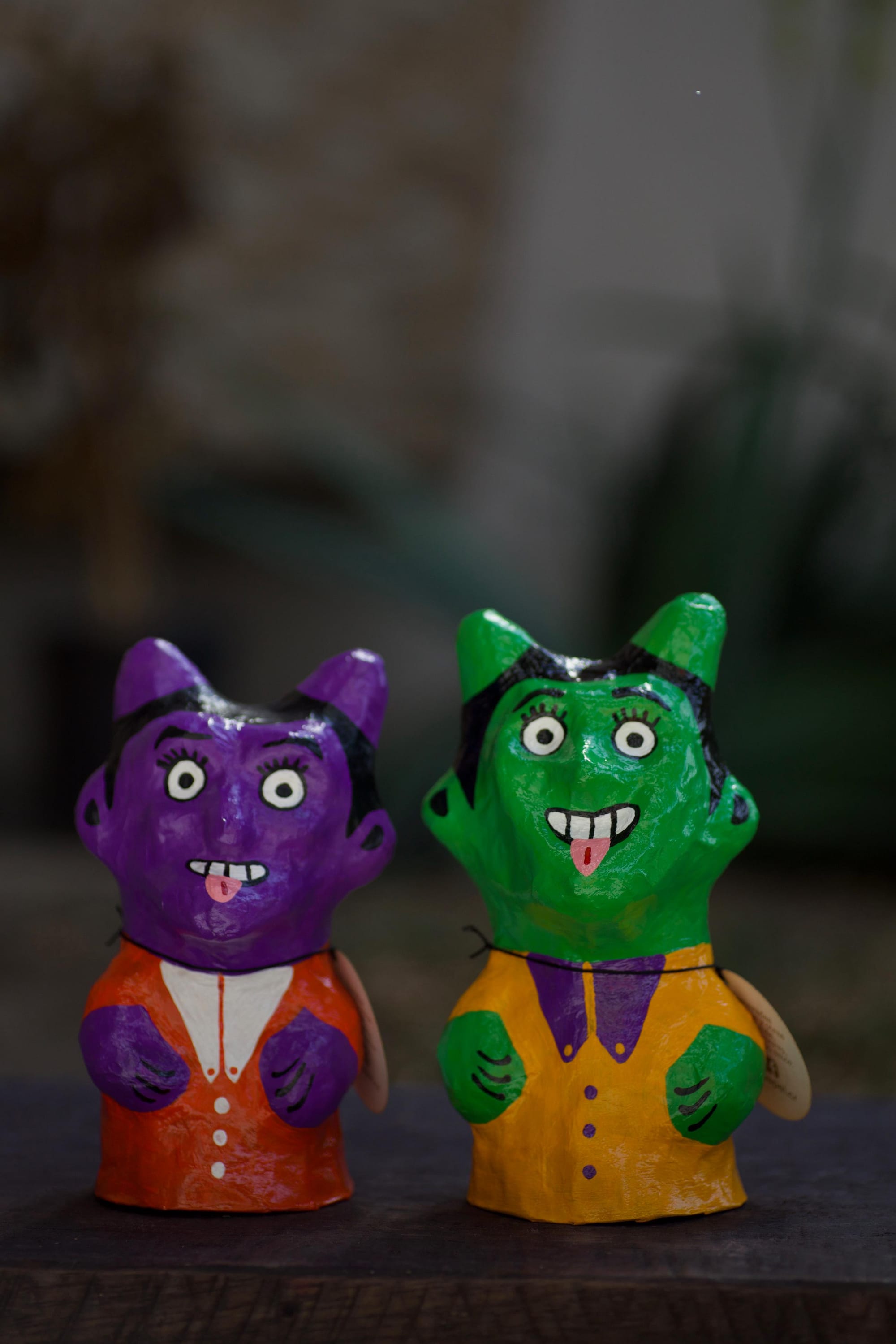
And you might be wondering what this very flattering artistic process implies. First, they sculpt the shape of the mascaradas with their clay, which they often reuse. These then go through a rapid drying process. Since it’s quite warm now, it dries quickly in one day.
Then, they prepare a special glue with a cassava starch, which they learned from Gustavo’s mother. They use this glue to place the paper on top of the clay structure. Then, Sol and Gustavo inspect the figures to see if the paper is glued well. If it isn’t, they proceed to fix it and then comes the part of taking out the clay.
Once this is done, the round of paint is next. That’s when the humorous details come in and the definition of the mascaradas’ personalities happens. Finally, the last part of process is the varnishing of the pieces so that they have that natural glow that makes them stand out.
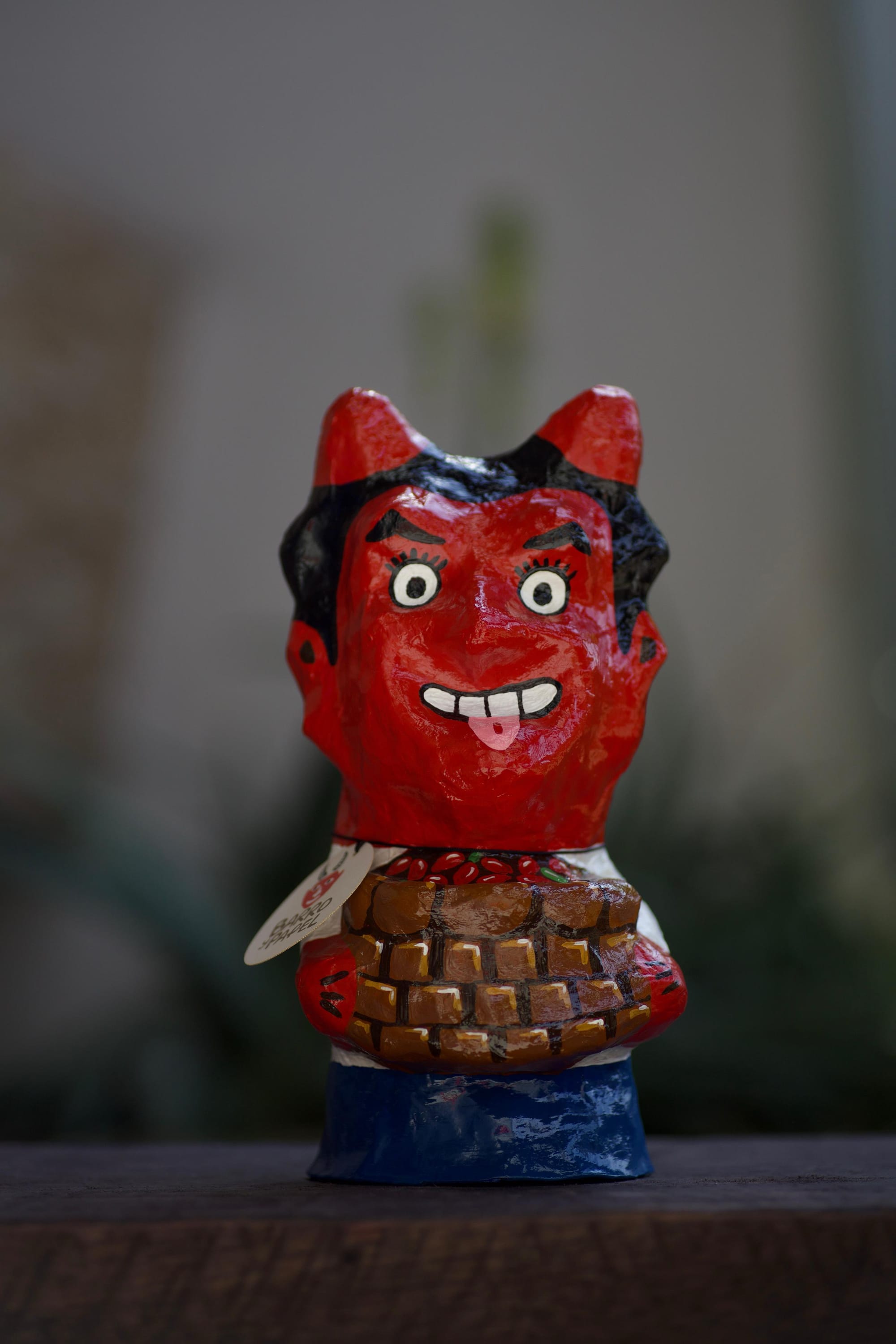
The whole process takes them about four days. One day to sculpt the clay and gluing the paper. Another day to take out the clay from the figurine and start painting. A third day to finish painting and the last day to varnish the piece.
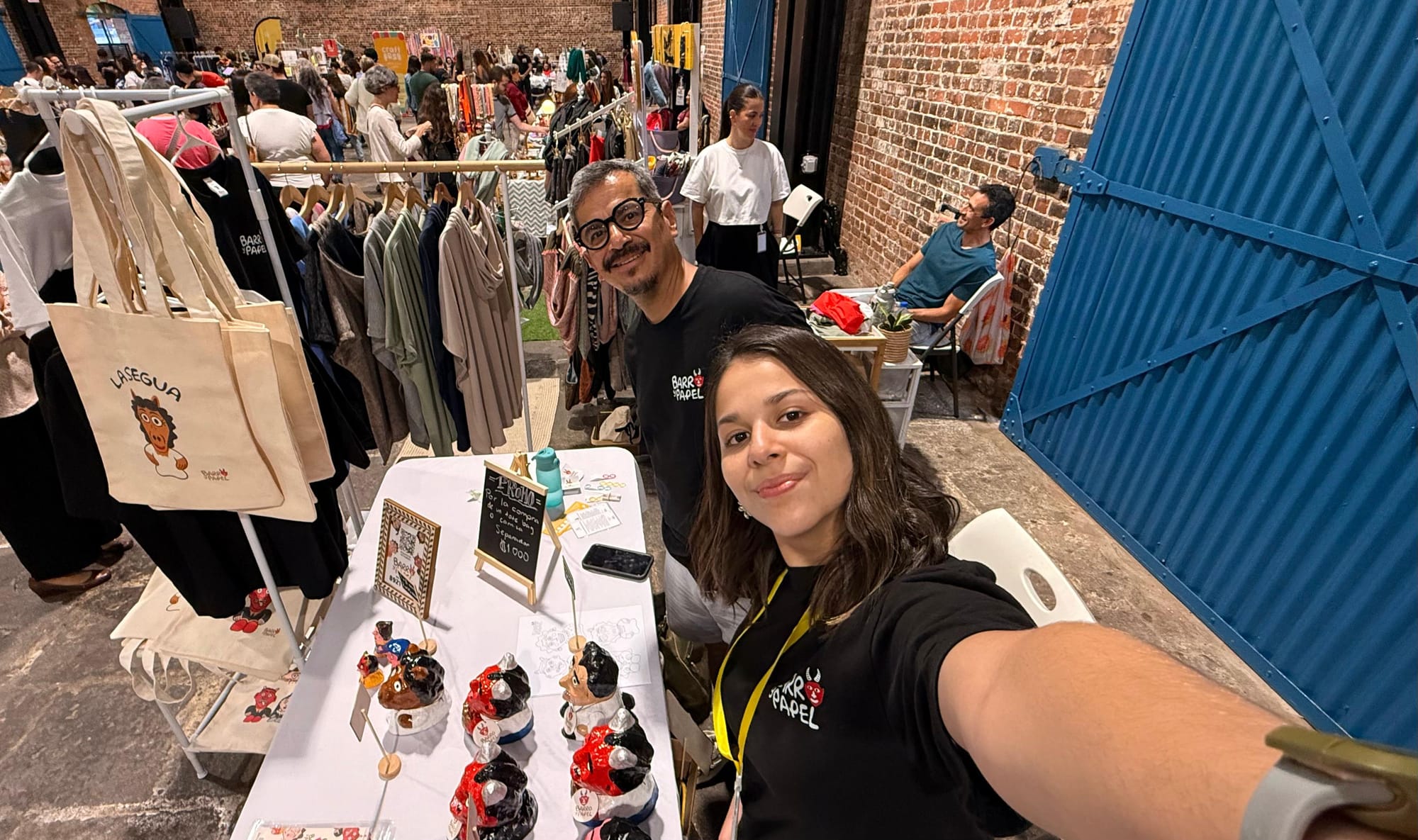
But that process varies depending if they’re doing commissions or masterpieces for a fair like Expo Pymes – the last fair they participated in in April. The preparation for this event was a great learning experience. They were finishing some commissions when Expo Pymes invited them.
“We had like twenty-two days because we had absolutely no stock,” Gustavo said. “Zero stock. So, I started doing two clays per day. I began with one per day, but I realized I could do two and then glue the paper the same day.”
Then, they continued the usual process, but in an accelerated manner. Initially, they would stop sculpting and gluing the paper a week (Friday) before the fair started. That way, they’d have enough time to paint, but they stopped on Thursday because they were exhausted. The round of paint started on Friday and the Wednesday right before the fair started, they varnished all the pieces. They crafted about twenty-eight pieces in total , that were different shapes and sizes.
Even though it was quite exhausting, it was a super fun experience for them. It was the result of a dream come true. As a family, they always visualized the day in which they would participate in art fairs selling their fun and colorful masterpieces.
And you might also notice that color is a strong element that sets their art apart. It’s both related to Gustavo’s use of color theory and the preservation of the vibrant mascaradas.
“We also want that to be our identity. Our hallmark. So, every time there’s a Barro y Papel piece, you’ll know that there’ll be a lot of color and it’s very nice to be identified by that,” Sol said.
The Costa Rican Folkloric Characters
It’s about the Costa Rican vibrancy, its identity, and its culture. Not only the colors stand out, but the characters that they craft do as well. These are the characters that appear dancing at the fiestas patronales. The characters that represent Costa Rica and its legends. Something that is ours.
Usually, they are accompanied by the cimarrona, which is a band made up by wind and percussion instruments. They brighten up the occasion and make it a huge lively festivity you can’t miss out on.
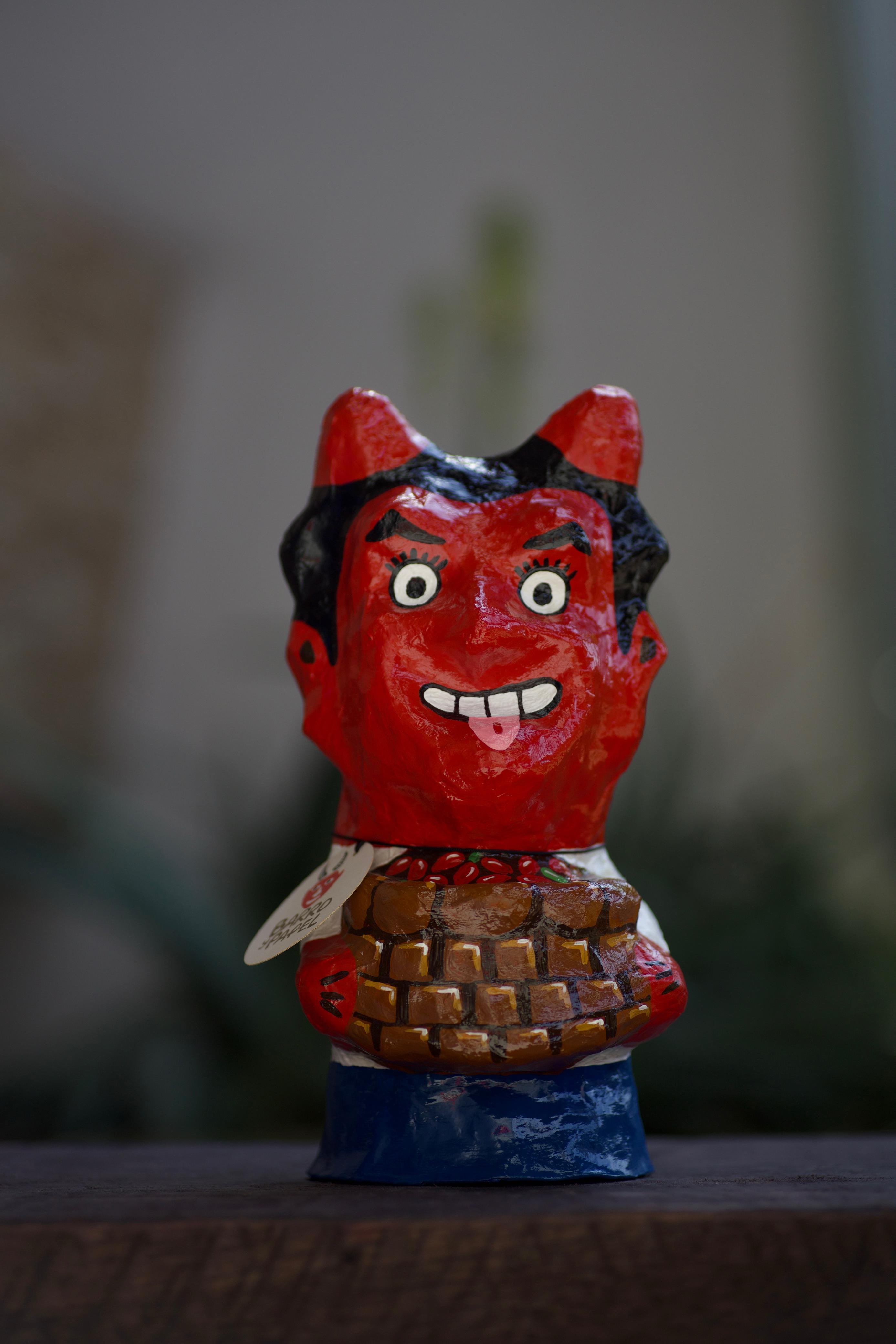
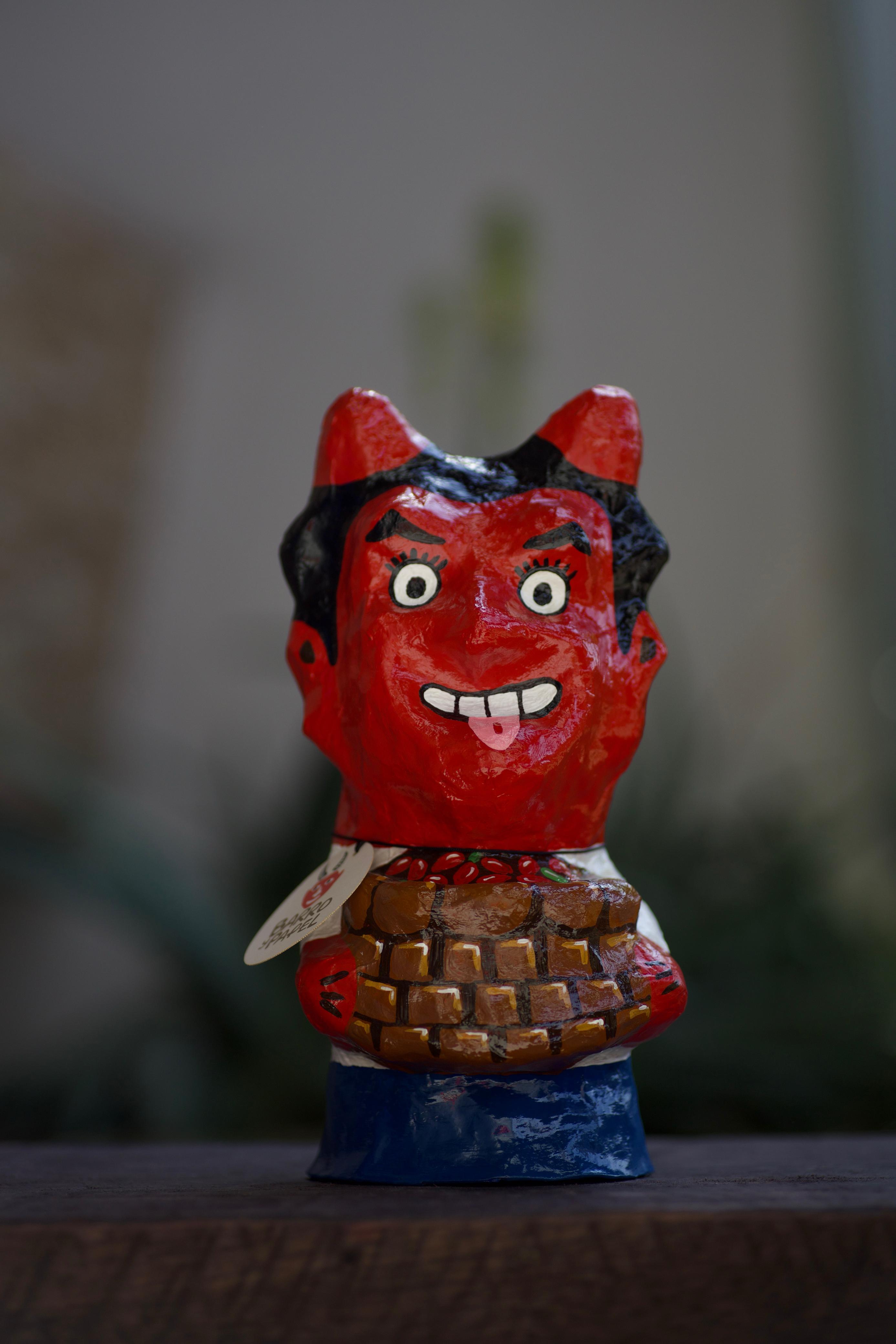
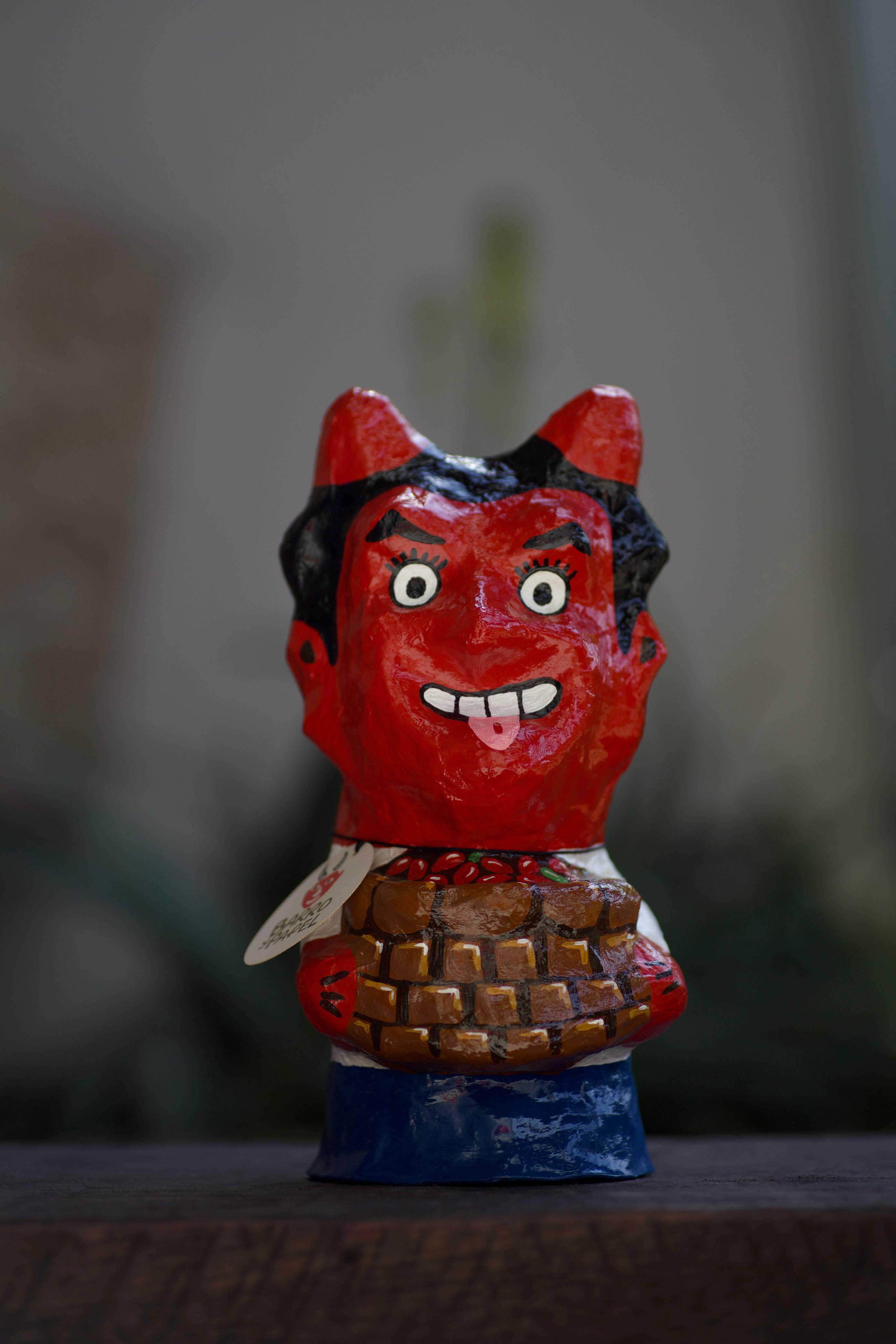
These characters include very specific figures like the pisuicas (the Costa Rican devil), which is often misinterpreted as something bad.
“It celebrates the mischievous part that we all have. It’s like [a reference to] childhood. Playing. Then, we have the gigante and the giganta, which are very typical characters that were born out of the town’s women,” Sol said. “The mascareros started doing the representations of them.”
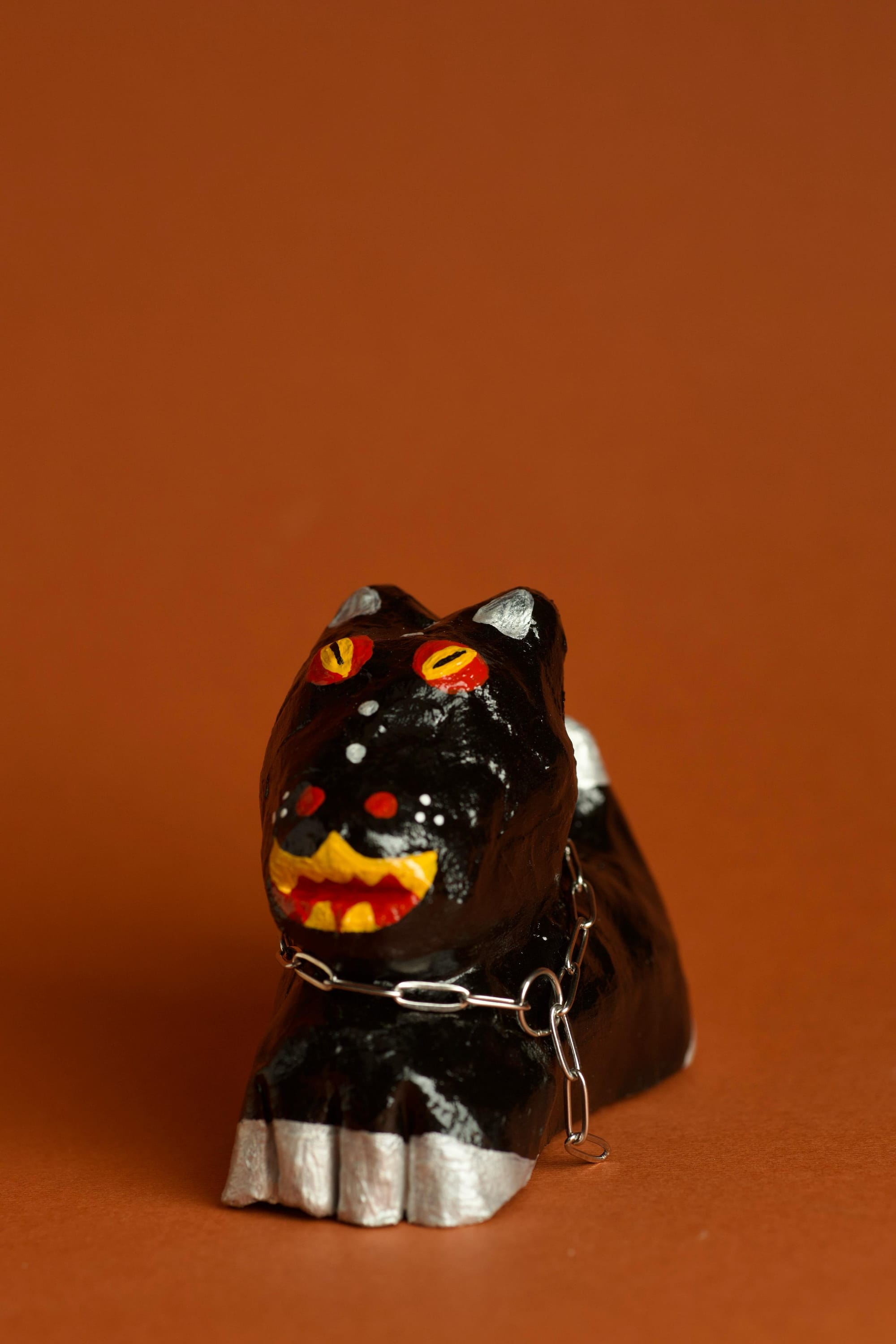
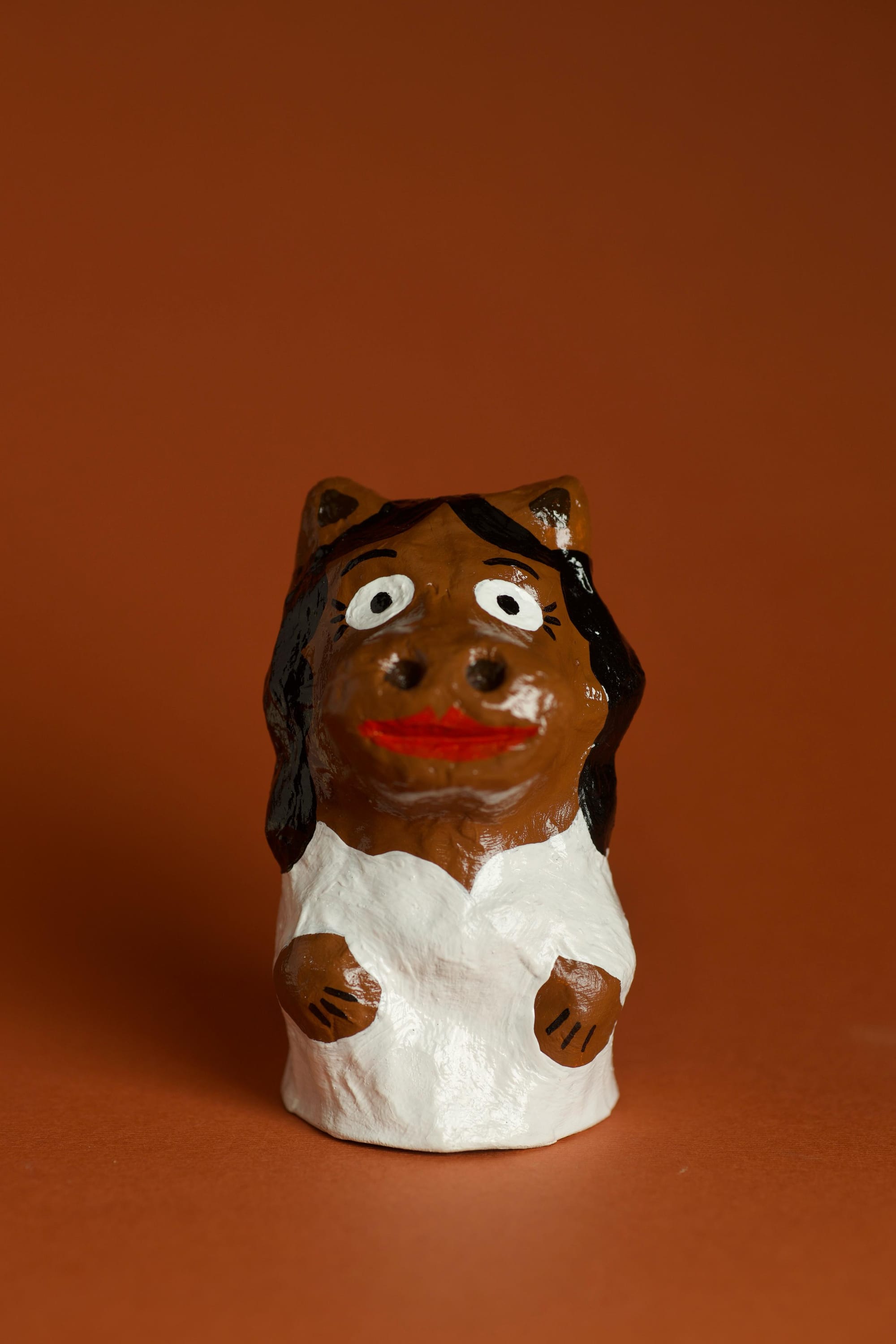
They’re the women with distinctive hairdos, mouths painted in a bright red lipstick, and their cheeks enhanced with a lot of blush. Then, they have characters such as la segua and el cadejos, which are part of the Costa Rican legends. The policeman also appears in this unique group as the one in charge of bringing the order to the festivity.
There’s also a character that is an essential element of Barro y Papel: el brujo o la bruja. The witch or the sorcerer. Since Sol and Gustavo are from Escazú – the town of the brujas – there must be one present in the tribe.
“We also have la calavera. It’s very common like death. It’s funny to celebrate death. We’re all going to die someday, so it’s a representation of enjoying life,” Sol said.
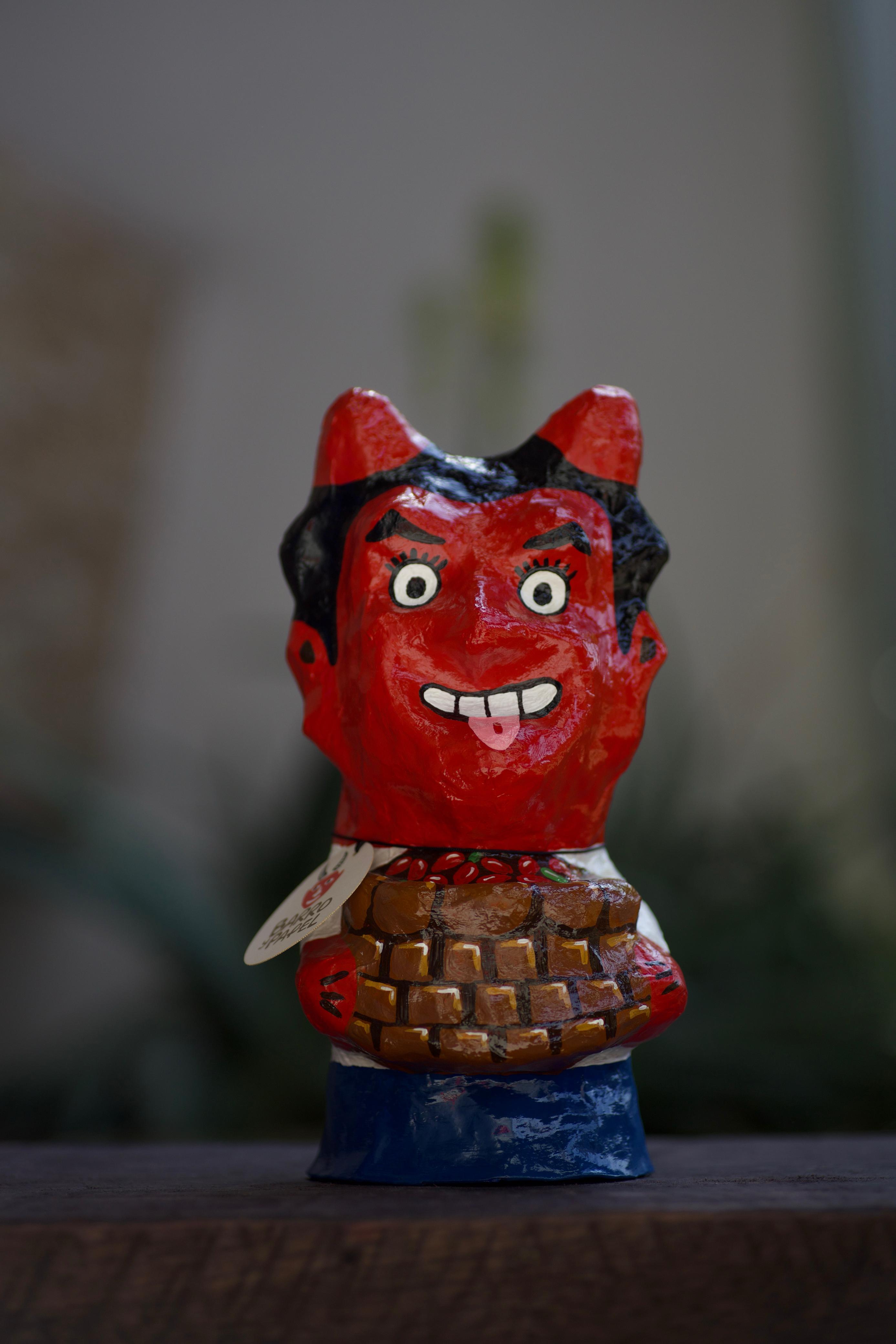
Listen to Sol Barboza
0:00
/17.885333
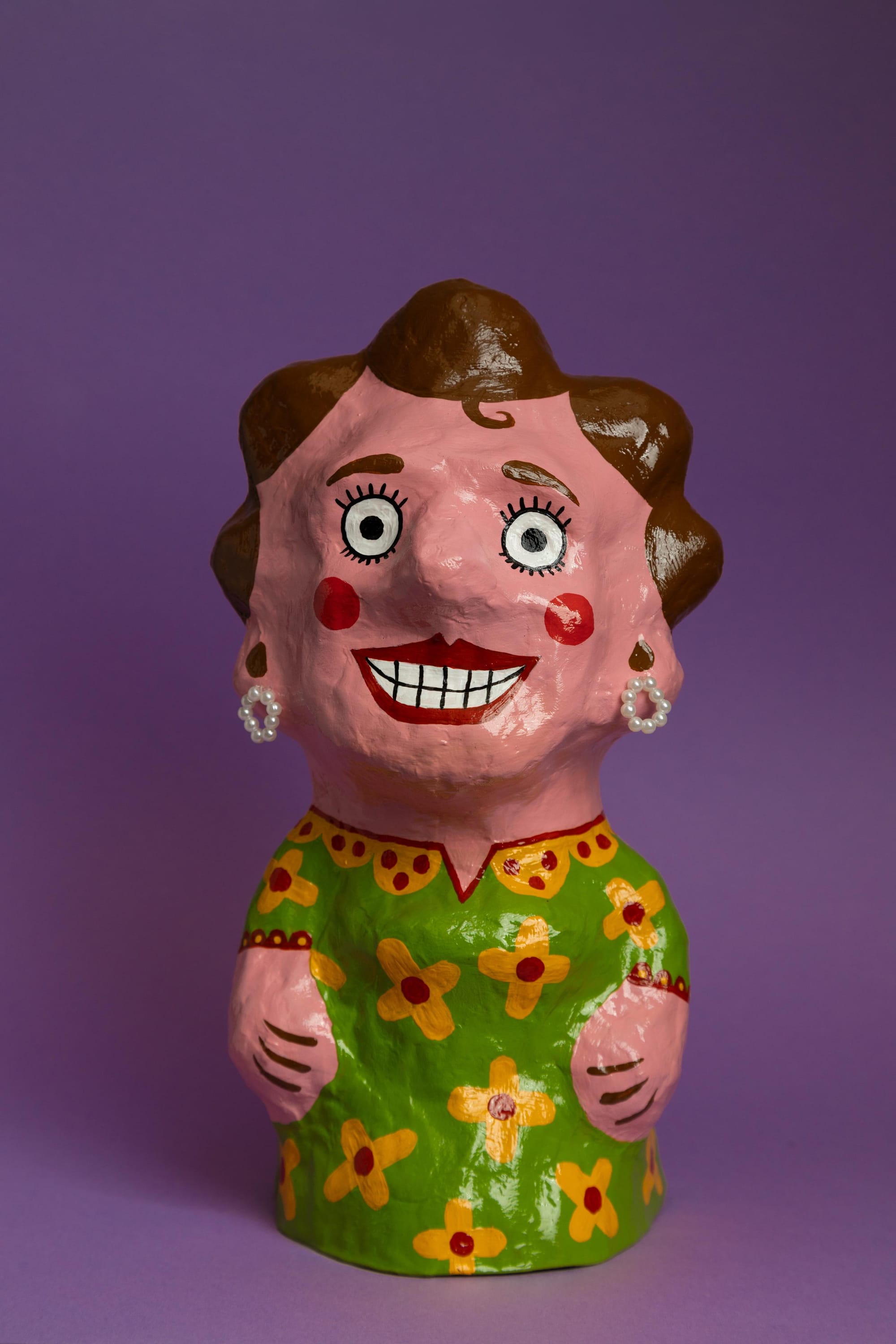
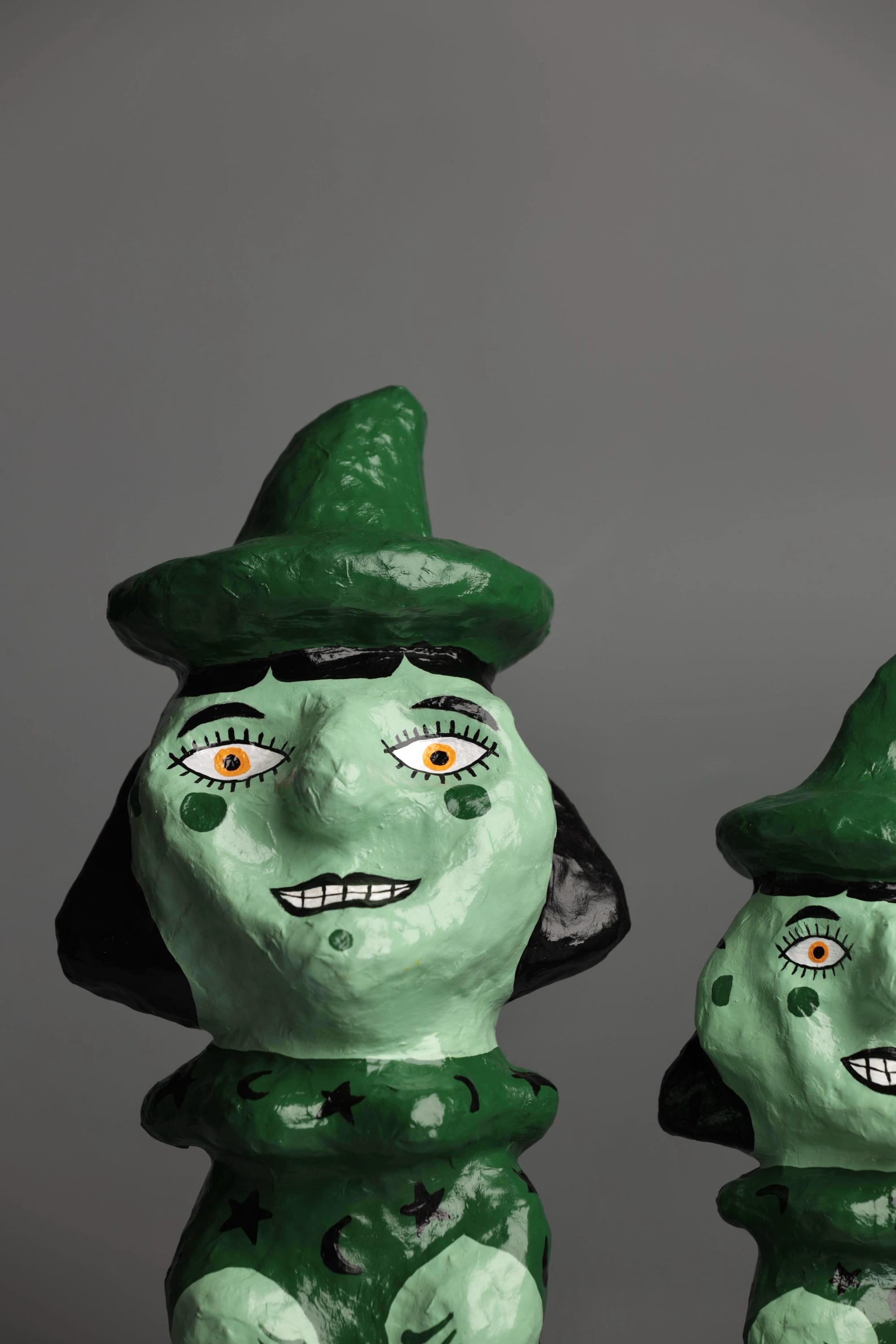
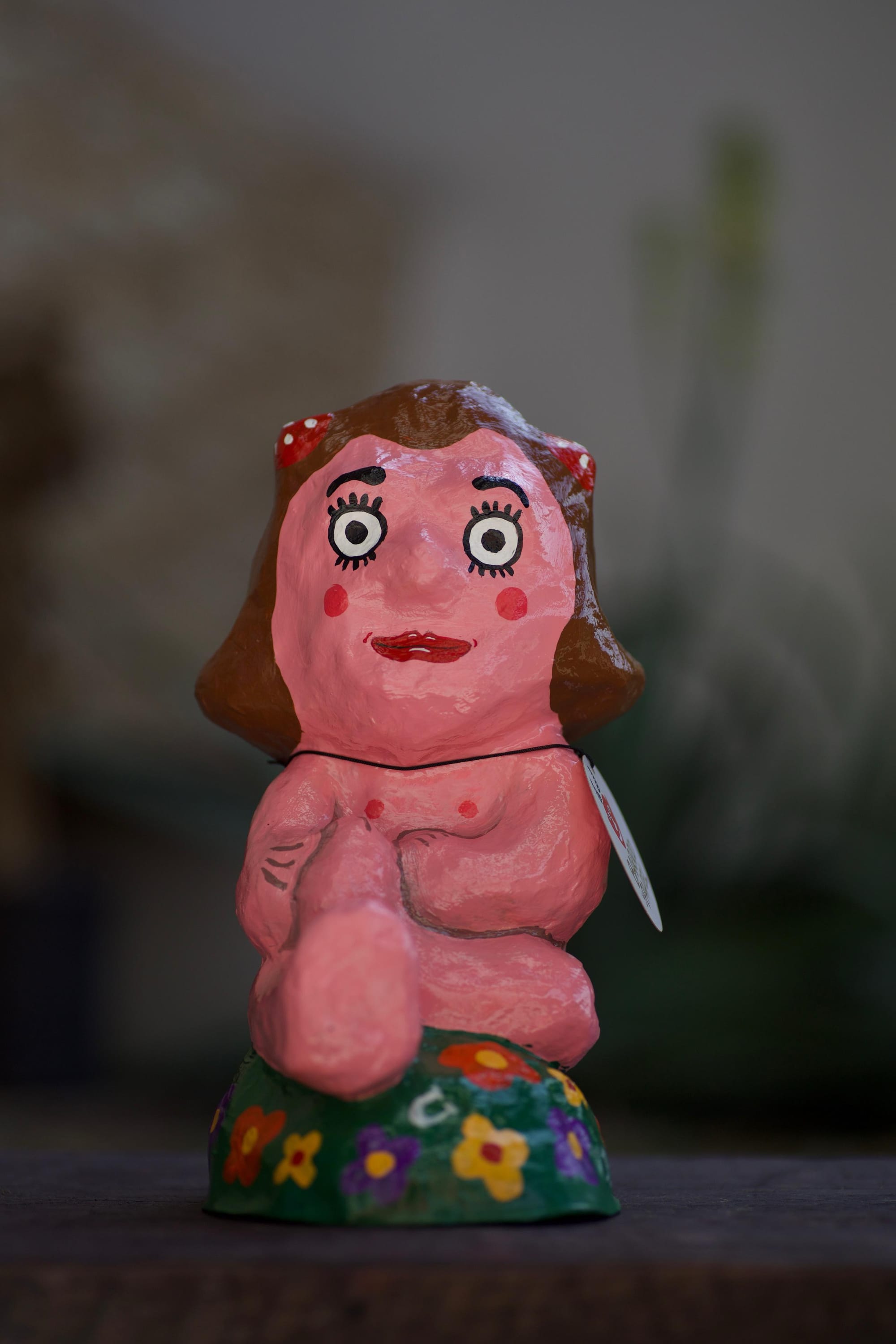
From left to right: la Giganta, la Bruja, and la Nigüenta. | Photos courtesy of Sol Barboza. | Impulsiva Stories
All of these characters are a representation of the folkloric figures we grew up with in Costa Rica. What makes us, us. It’s about continuing traditions and celebrating Costa Rica. It’s also about – unexpectedly – creating community for Sol and Gustavo. When they were only three months into Barro y Papel, they received a wonderful commission.
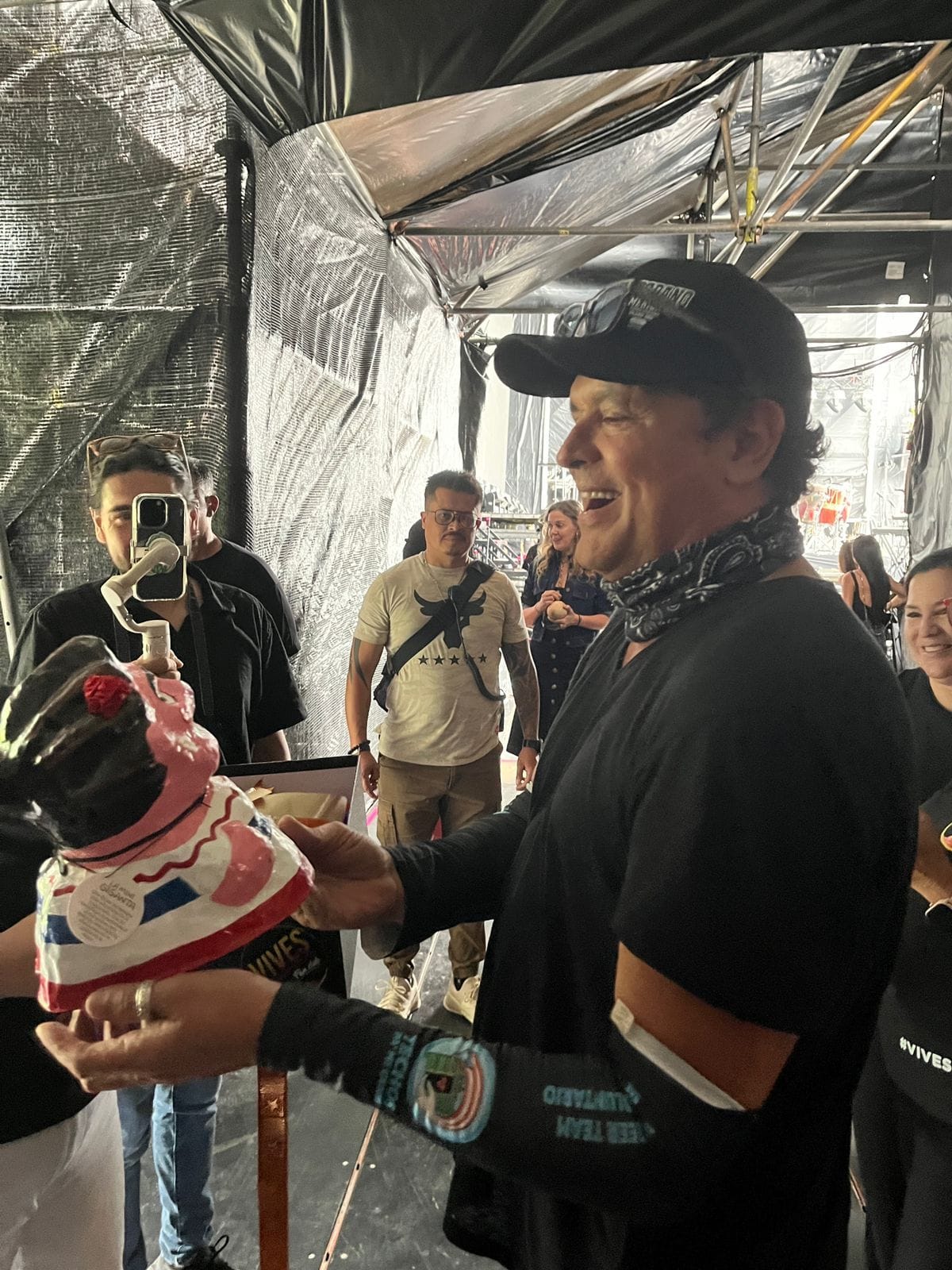
A woman reached out to them saying she was part of the Carlos Vives Fan Club. They wanted to gift the Colombian singer the signature giganta típica of Barro y Papel. Sol and Gustavo went through the usual process and once it was ready, they added a small card explaining the meaning of the mascaradas and their importance in Costa Rican culture and tradition.
“We asked them to film a video to see his reaction. They explained to him a bit about the meaning and he then commented [on our reel] saying thank you and that it was a gift full of Costa Rican folklore,” Sol said.
A Global Latin American Identity Movement
Both Sol and Gustavo were in awe and amazement because they were only three months in since the beginning of their project. Clearly, their pieces also connect on a broader level. Not just with portraying the Costa Rican identity and culture, but also by showcasing Latin American identity. These are not simple vibrant pieces. It goes way deeper than their humorous faces and brilliant colors.
Overall, the mascaradas were “inherited” as a cultural expression from the Spanish during colonial times, with their gigantes and cabezudos.
“I think tradition is part of our identity. It’s the memory of our people. The mascaradas were brought by the Spanish. From all of the bad things that happened with the conquest, it was a good thing during the colonial times,” Gustavo said. “It took root here. It’s so adopted by us ticos, that it would be a shame for it to get lost.”
This effort to preserve the Costa Rican traditions comes from the desire to be part of the change. It’s part of the desire to slow down in a world that’s going too fast. Sol feels people are looking for ways to go back to their roots.
She highlighted that artists like the Argentinian Milo J and the Mexican Silvana Estrada are creating music that speaks about their folklore, which is attracting the younger generations to build a sense of identity around that.
“They reach these generations and motivate them to approach these things, which people are forgetting about because of AI,” Sol said. “It’s how they say: now doing something with your hands is revolutionary. Using the frontal lobe is revolutionary.”
She feels everything is AI. Everything is too fast and accelerated. So, sitting down and taking time to create something so manual, artisanal, and with so much purpose, is one of their objectives. They want the new generations to think that mascaradas are cool. That they might sprout an interest in them to see the towns’ masacarada parades.
They want to create that bridge between the younger and older generations through their traditionally modern mascaradas. They want a sense of appreciation, sensibility, and identity for what’s local. For what’s ours.
For Gustavo, the interest from the younger generations in being part of this moment, in which Latin American culture is shifting the world is quite obvious.
“I think that there’s a movement to search for the roots. I don’t know if you like Bad Bunny, but look at Bad Bunny with his Super Bowl, right. I think people are trying to connect with their roots. With their pueblo,” Gustavo said.
Listen to Gustavo Barboza
0:00
/24.125333
That’s what he thinks is beautiful.
There’s a human need and desire to connect on a deeper level with this innate identity that defines us. Sol and Gustavo not only keep this sentiment alive through their mascaradas, but also do so by listening to Costa Rican music and visiting the Mercado Central in San José to see how people are selling and learn about medicinal plants.
For them, it’s chivísima to also be part of that preservation. Especially in a country where we struggle to expose our identity and culture on a global level, which is something that is not difficult for many other Latin American countries.
“Now people think that everything that isn’t gringo and is ours, seems polo [tacky or unrefined],” Sol said passionately.
Listen to Sol Barboza
0:00
/6.749333
In spite of that, it’s exciting for Sol and Gustavo to notice that there are lots of people trying to make the change. Even if it’s not as strong as it is in countries like Mexico, Guatemala, Argentina, or Puerto Rico, it is still quite thrilling.
It’s all part of their traditionally modern mascaradas.
An art form that comes from a personal and familiar stance with the great Enrique Barboza. It’s an art form that’s joyfully vibrant in its appearance and Costa Rican to the bones with its identity and culture.
0:00
/0:17
Enrique Barboza happily dancing with his mascaradas and the cimarrona in his eightieth birthday. | Videos courtesy of Sol Barboza. | Impulsiva Stories
It’s an art form that has created a sense of community for Sol and Gustavo in a very rapid manner thanks to their love, passion, and connection with their true Costa Rican roots. It’s traditionally modern art that hails from Costa Rica and simultaneously speaks from a Latin American context.
It’s an art form that’s brought them more than they ever imagined and asked for.
“What excites us the most, even though we don’t consider ourselves artists or that we don’t believe it yet, is to do our bit to not lose these things that are so important,” Sol said. And then Gustavo added, “we make mascaradas. We continue with what my father does and that’s it.”
To learn more about Barro y Papel’s traditionally modern mascaradas, you can follow them on Instagram at @barroypapel.cr.
Written by

Subscribe to my newsletter
Subscribe to my newsletter to get the latest updates and news