Espíritu Brunca’s Colorful Costa Rican Indigenous Masks
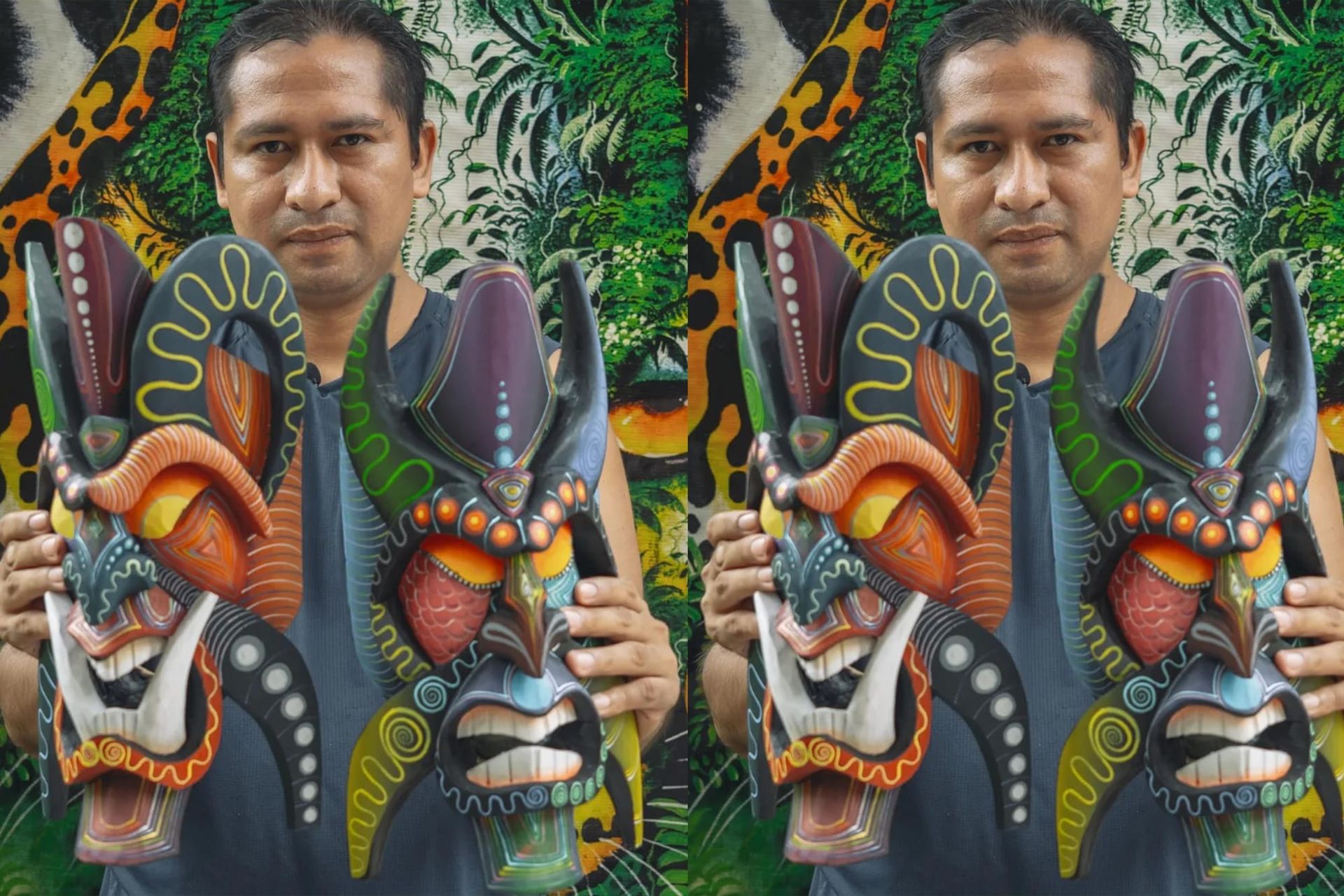
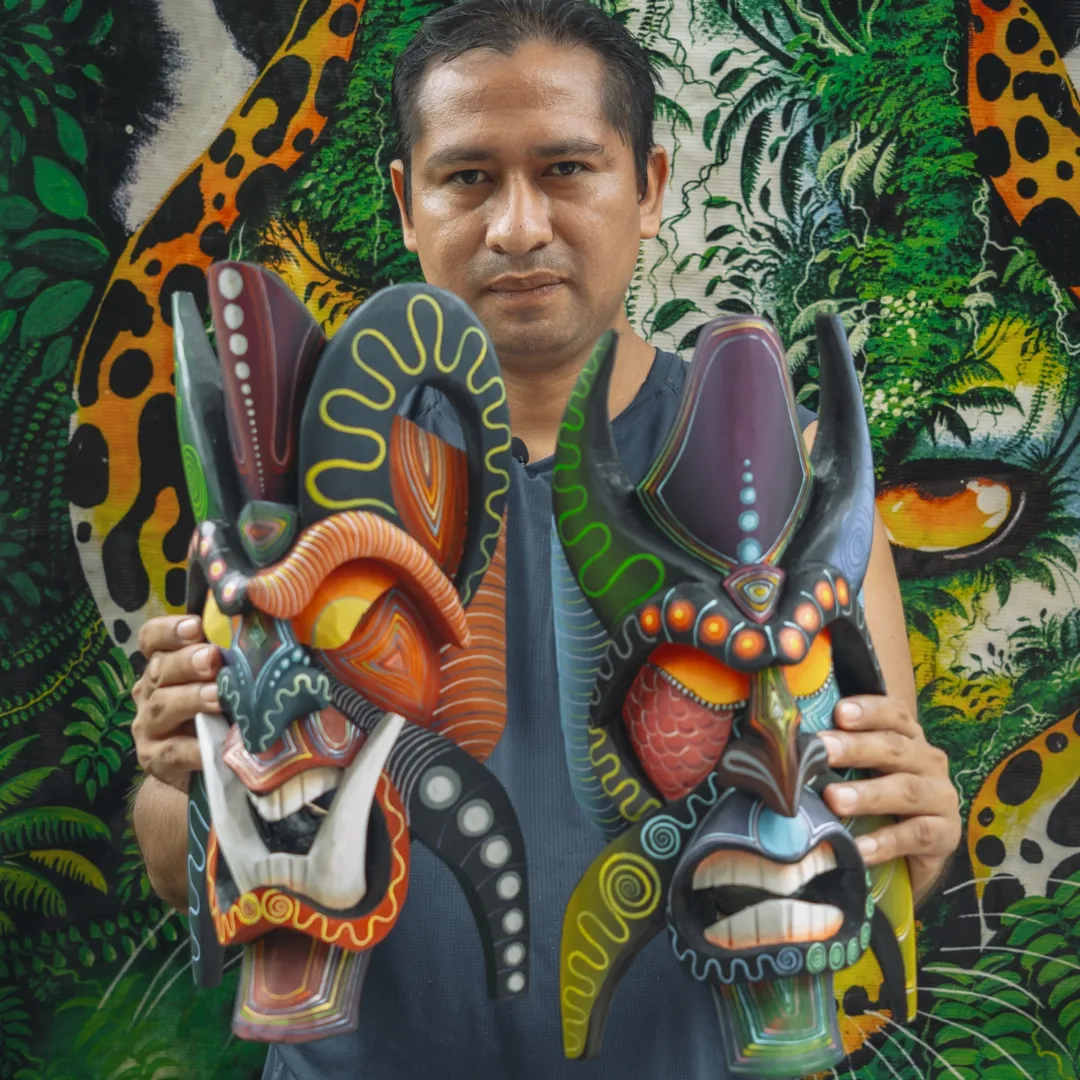
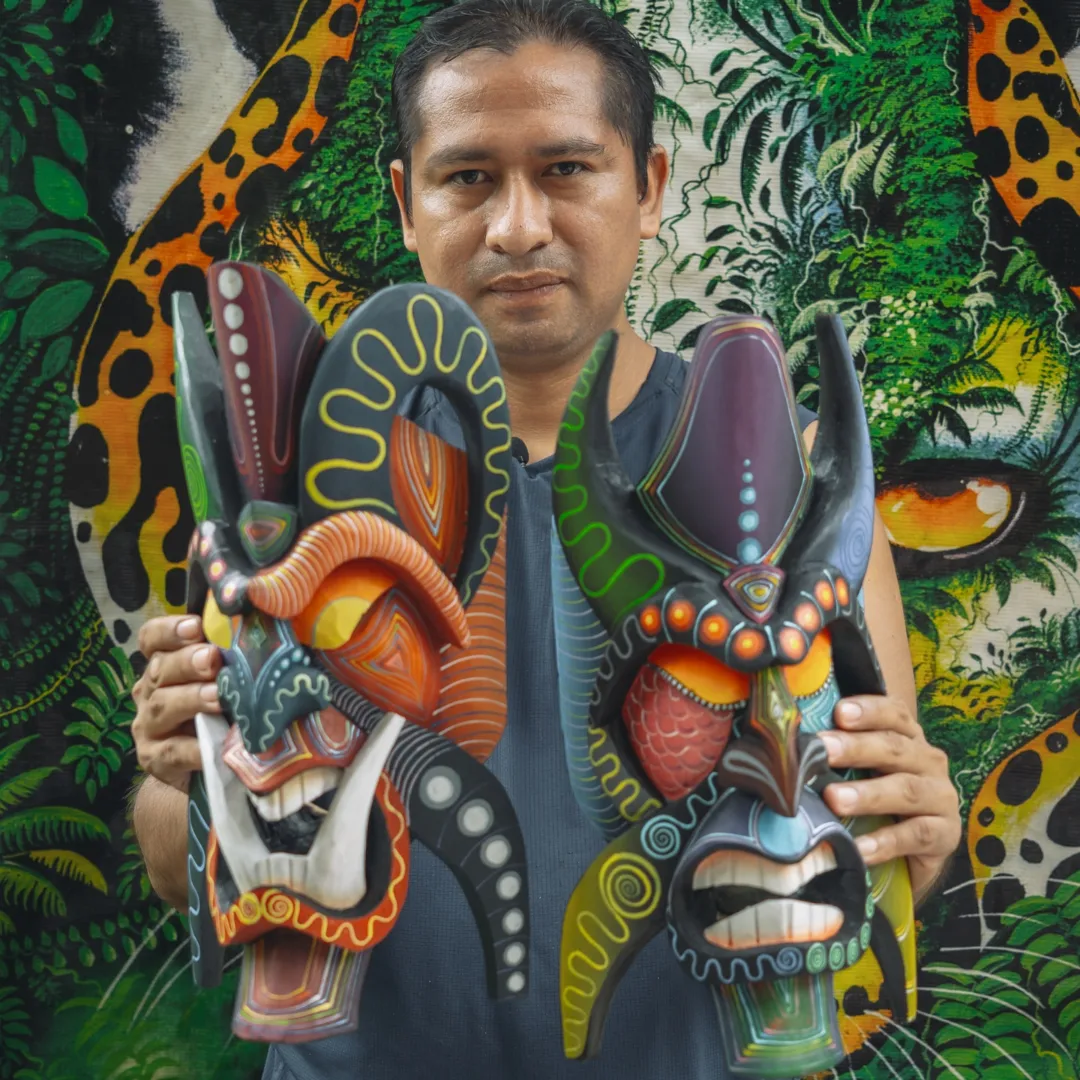
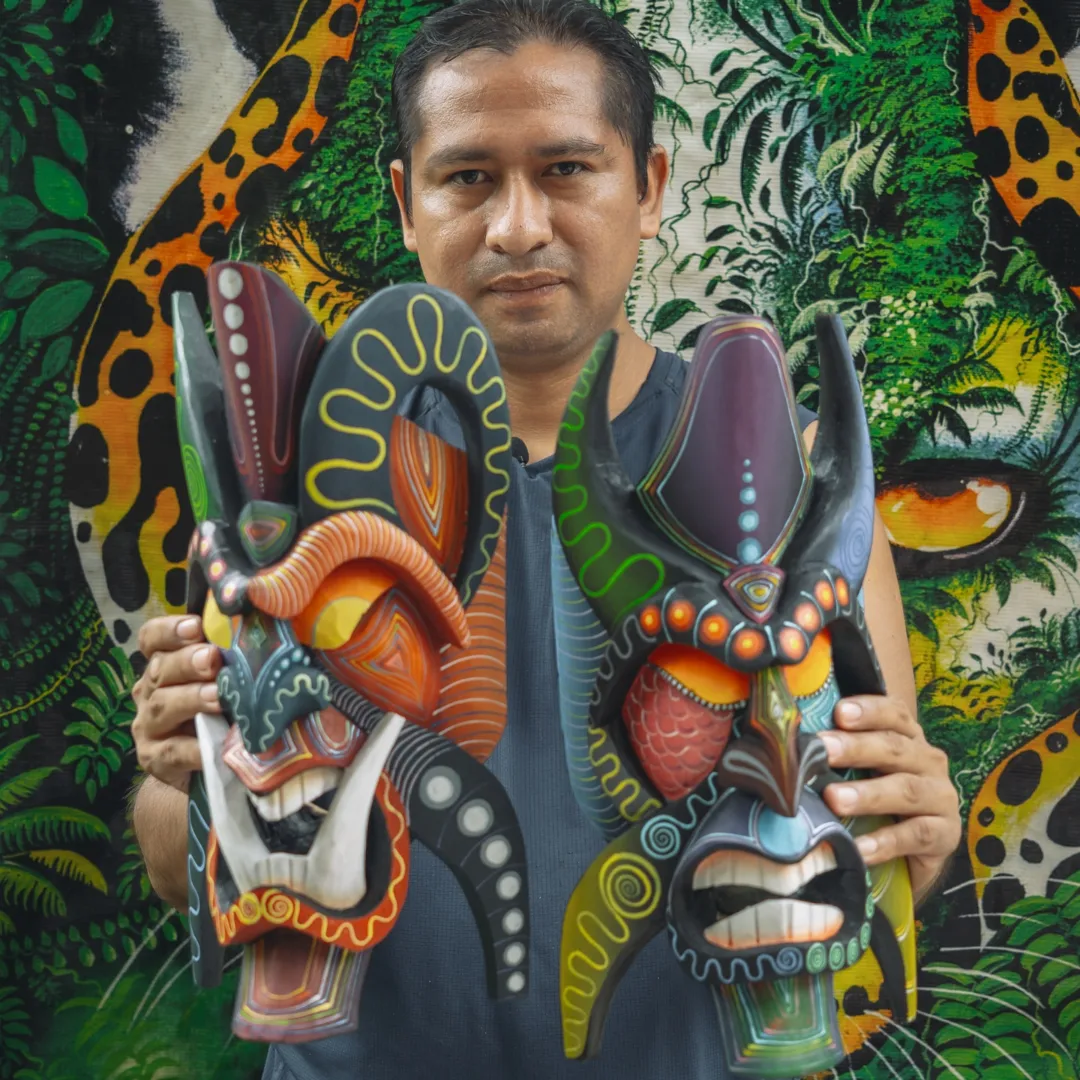
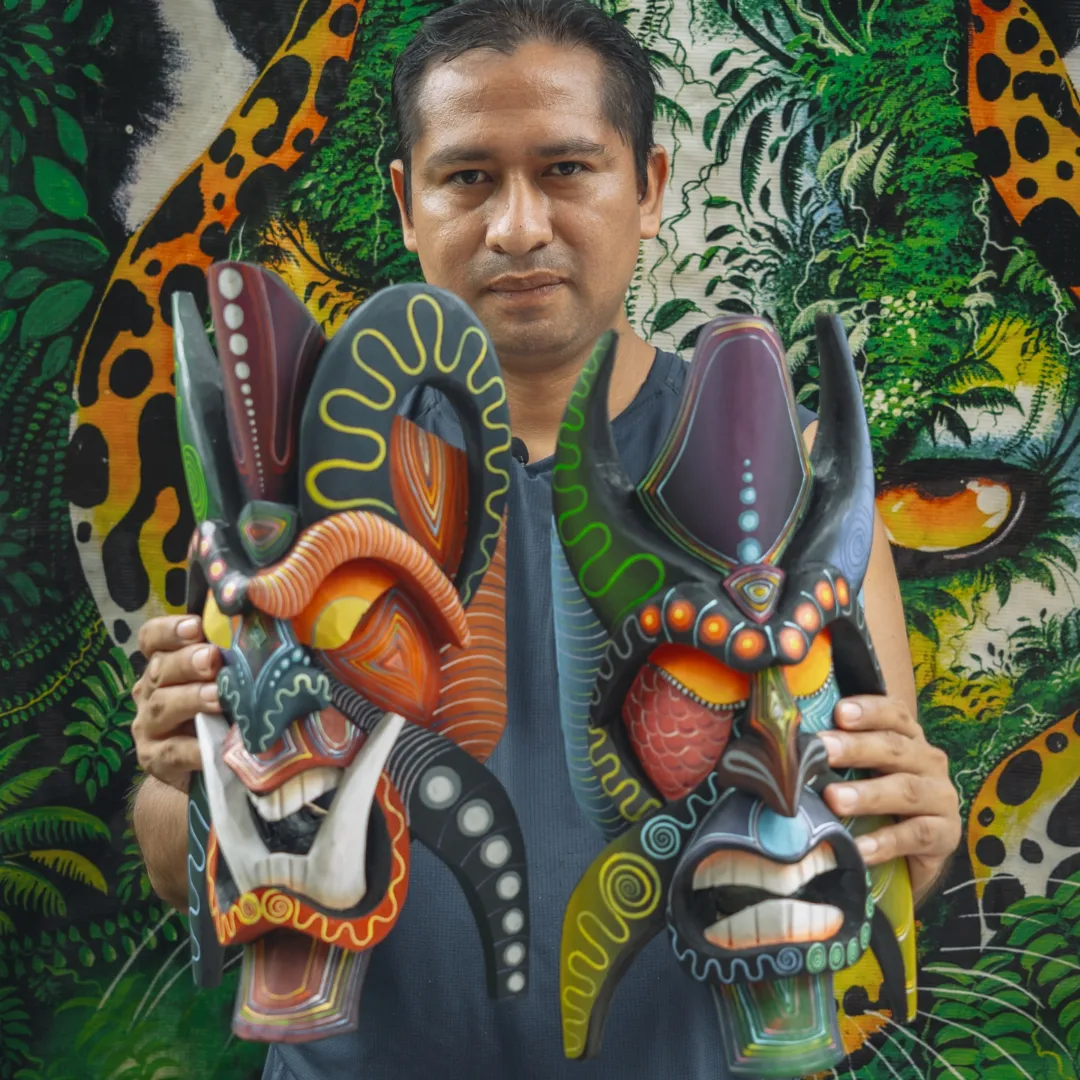
The Brunca Indigenous Costa Rican artist José Luis Rojas Lázaro continues his community's millenary art of mask-making.
To read this story in Spanish, click here.
José Luis Rojas Lázaro remembers observing his brother creating masks when he was a child. He also remembers winning art competitions in elementary school. There was something about art that was calling him at a very young age in the Indigenous Brunca region, located in the province of Puntarenas in Costa Rica.
Rojas Lázaro spent a lot of time watching his brother crafting their traditional masks because was really drawn to it. His brother worked with don Ismael González, who was a renowned artisan of the community and winner of the Premio Nacional de Cultura Popular Costarricense.
“He helped a lot rescuing all of the art of the masks and as a child, I began sanding the masks that the men were working on. When I was older, I began with the masks because it’s a bit dangerous with the chisels and knives. They’re very sharp,” Rojas Lázaro said. “So, they don’t allow you to start as a child. You have to be a certain age because you have to be very careful.”
Even though he had to wait for a while to start the craft of mask-making, Rojas Lázaro was always very interested in this art. He spent a lot of time learning by observing. His brother and friends became his “art teachers” and it’s now been twenty five years since Rojas Lázaro started practicing the craft and art of mask-making within his Brunca community.
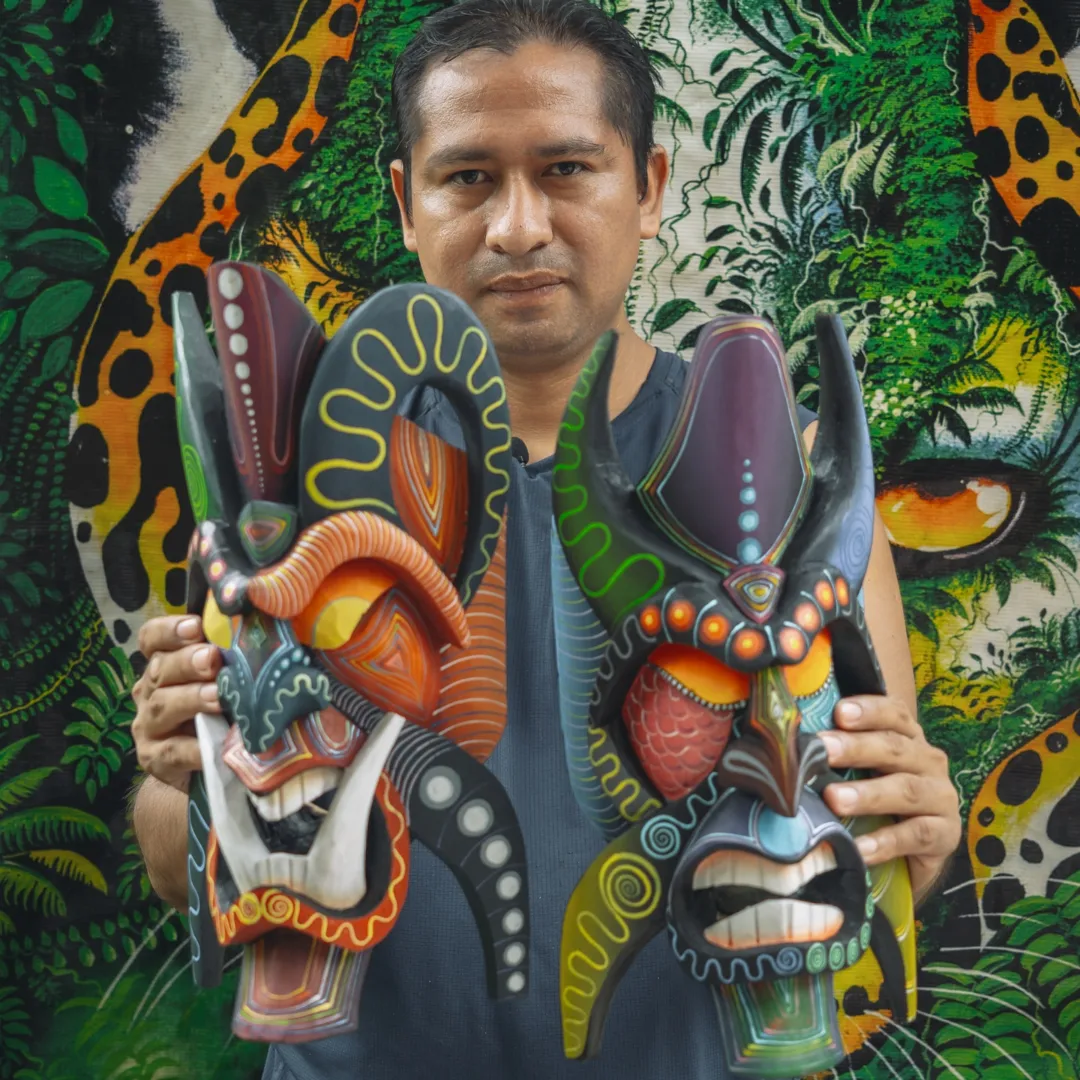
He’s one of the many artisans and artists in the region creating brilliantly vivid masks that come from a millenary tradition in a very rich Indigenous community in Costa Rica. That’s why he named his project Espíritu Brunca and throughout his many years of creating these striking masterpieces, he’s learned about the original ways in which they were painted before.
Don't Forget to Subscribe to The Story of The Story
For only $16 a month, every Friday you'll have exclusive access to
The Story of The Story. Our founder, the Costa Rican award-winning multimedia journalist and artist Elizabeth Lang, guides you through her creative process to produce her stories.
This learning process goes back to times when there were no synthetic paints and they resorted to natural tints. These included colors sourced from the barro (clay), peels, and sacatinta, which is a special leaf. Each color comes from a very specific element of nature.
Black comes from a peel called carbonero and a clay located very near to the creeks in their community. Yellow stems from a root. Blue comes from a leaf, while pink and orange also come from the peel of a tree.
“I’ve always liked the idea of the colors in nature or that they could be colored with natural things. I focus a lot on orange. And well, the vasijas in the farms and very old burials, the Brunca Indigenous people painted with that color called durávak,” Lázaro Rojas said. “It’s a terracota color. Like brownish-red.”
Listen to José Luis Rojas Lázaro
0:00
/30.4185
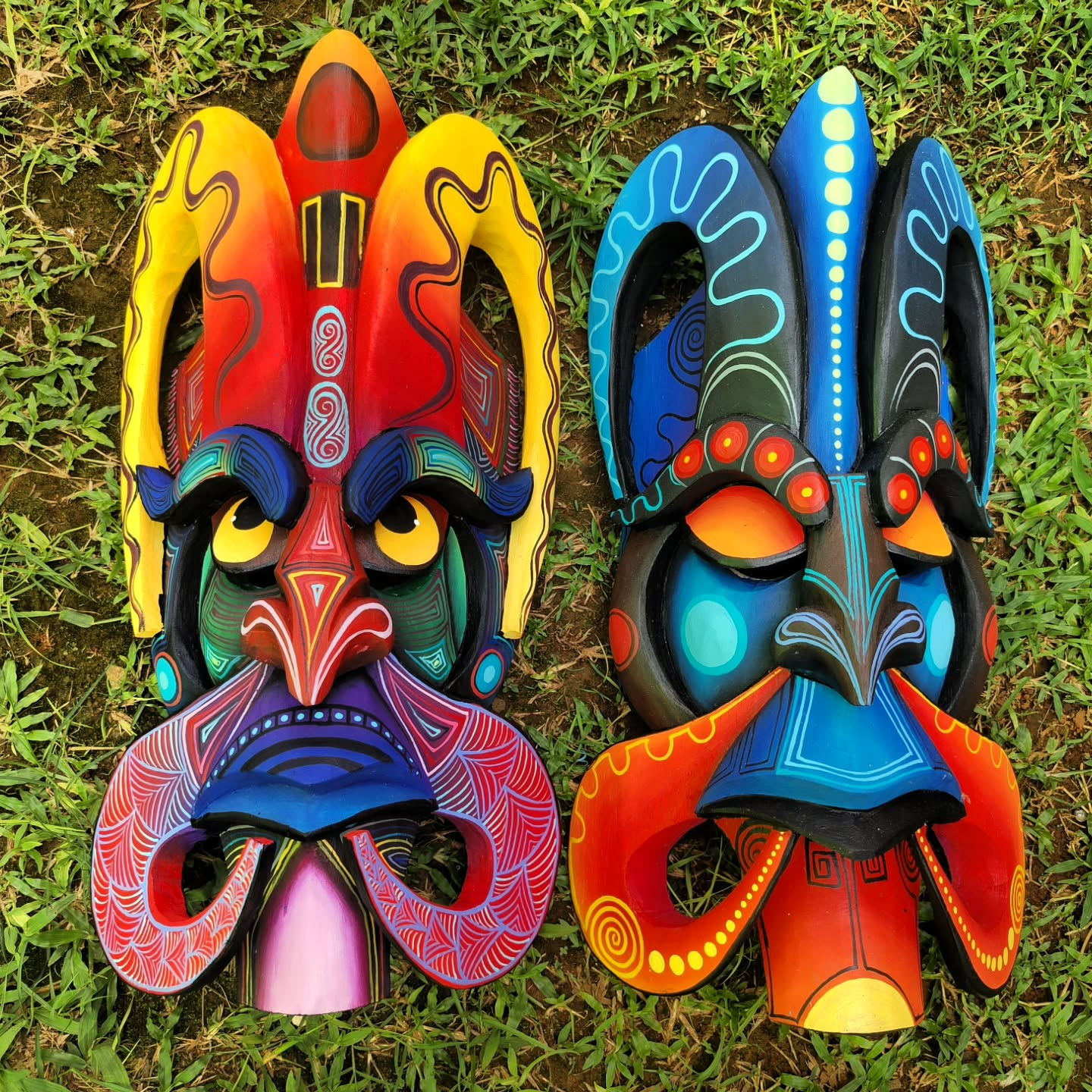
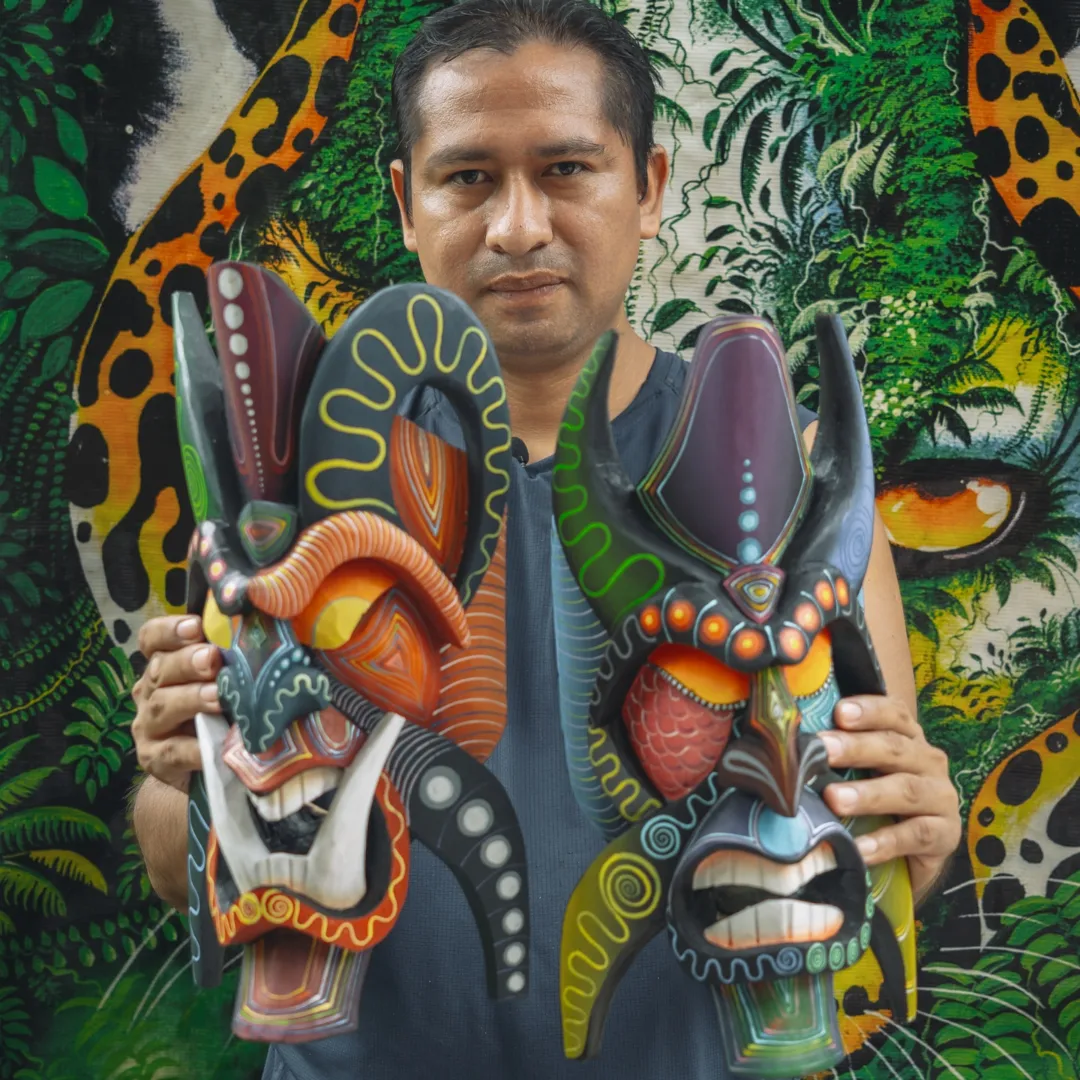
The use of these very vibrant colors exist for a very specific reason we’ll dive into later, but this brilliance is a main characteristic of the Brunca masks. According to Rojas Lázaro, these colors are also very dominant in the textiles that are hand-woven by women artisans. Blacks, reds, and yellows are always present in both the textiles and masks, which are extremely bright and intense colors that Rojas Lázaro enjoys working with.
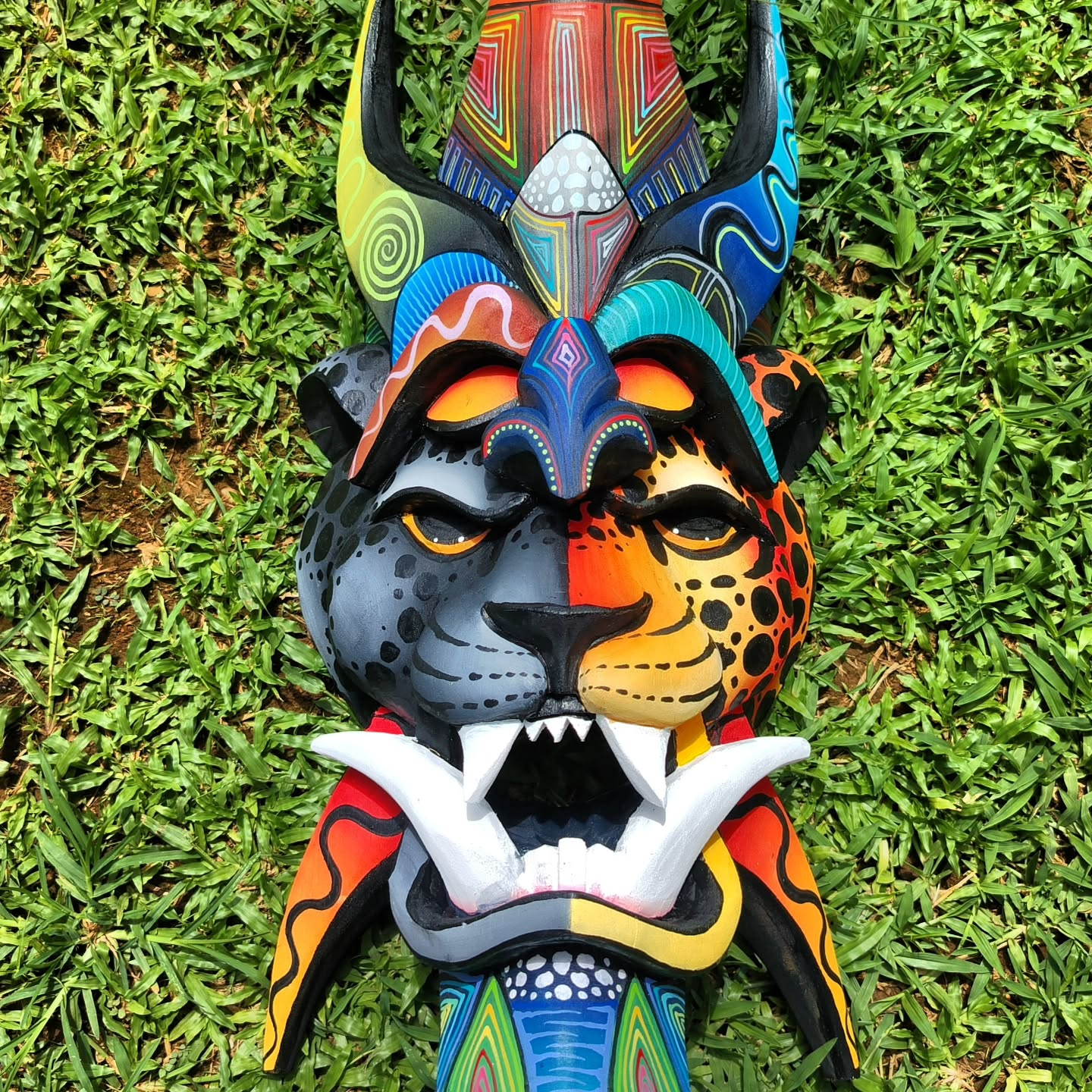
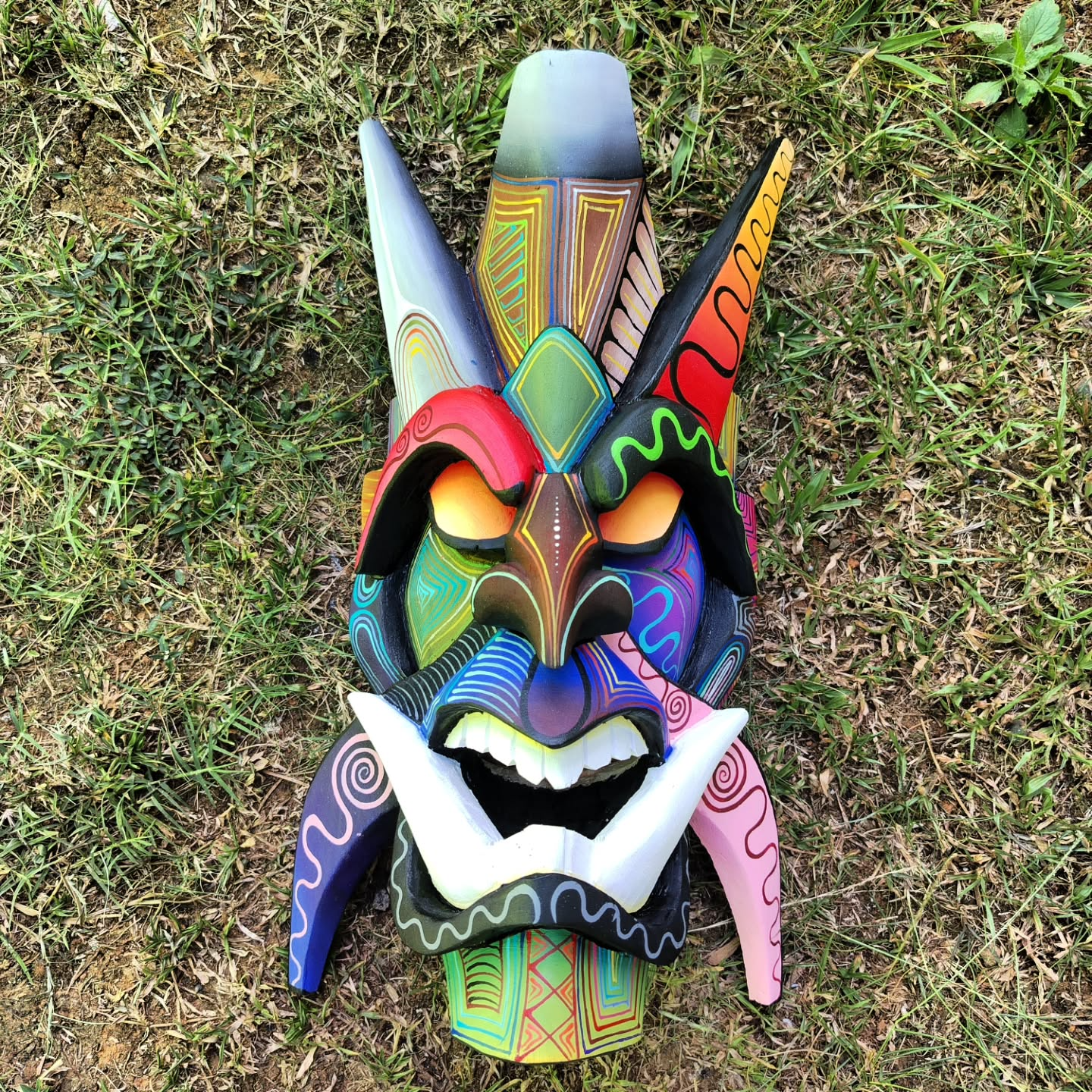
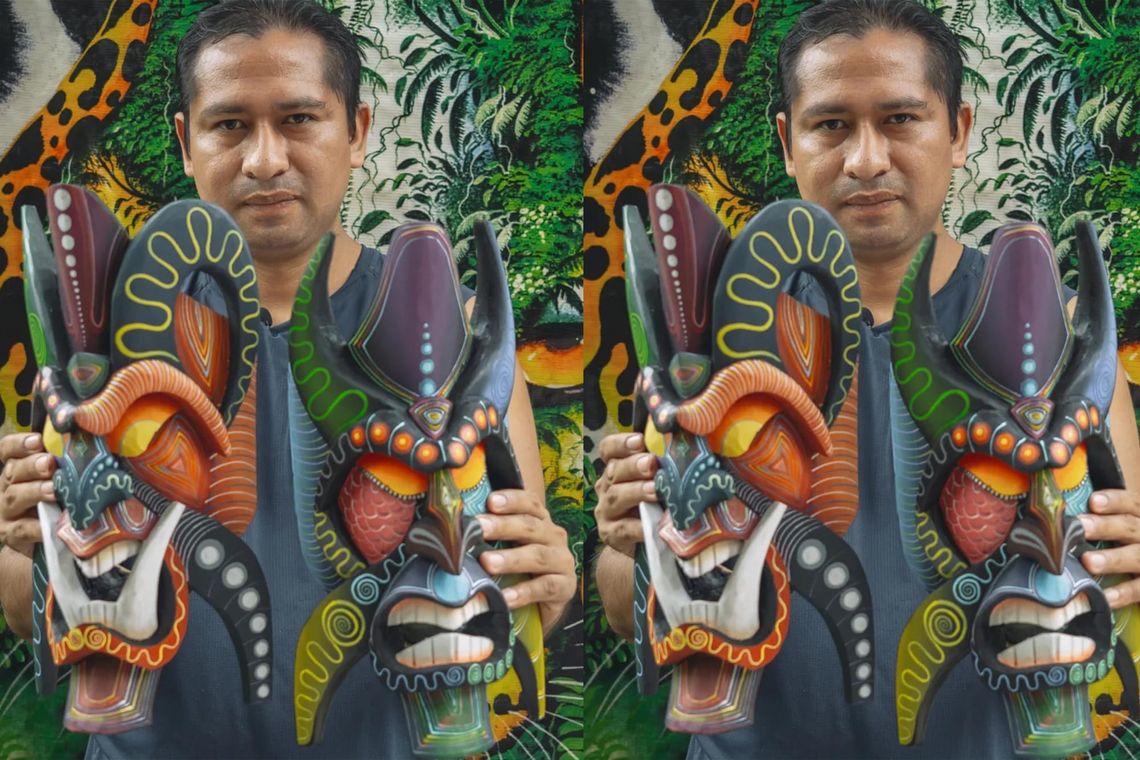
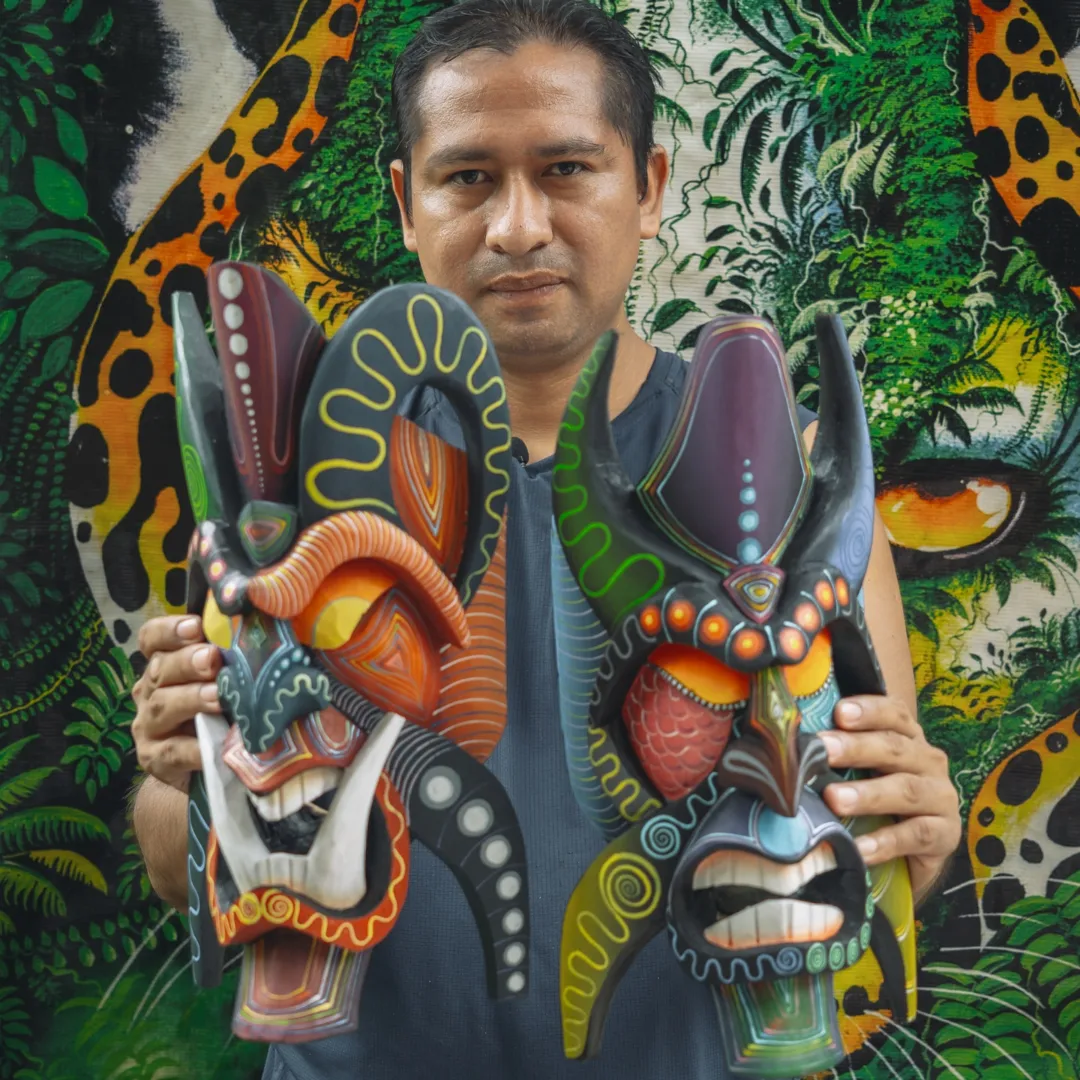
Some of the colorful Brunca masks José Luis Rojas Lázaro crafts. | Photos via Espíritu Brunca's Instagram. | Impulsiva Stories
The Masks’ Natural Process
That’s in regards to the color palette choice, but the overall mask’s process begins with the selection of balsa wood. They search for very specific pieces of this type of wood and it’s almost a scientific process they go through.
They should not cut it very near or very far away from a river. If it’s too close, the wood is soft like styrofoam. If it’s too far away, the wood is harsh like a cedar, which is why it works specifically only for handcrafts.
“The masks begin with that. With older people who know where the best materials are. Also, we have the motto that if we take one tree, we plant five more. Ten more. It's reusable. It’s not about cutting down a tree just for cutting it. It’s also about reforesting [the area],” Rojas Lázaro said.
Listen to José Luis Rojas Lázaro
0:00
/28.30575
The love and care for nature is not only represented in the masks. It’s also in the way they give back to nature for providing them with materials and life. Once the balsa wood is selected, Rojas Lázaro starts taking the measurements for the mask he creates. He decides whether it’ll be a mask in a big, medium, or small size.
Then, the carving process comes in and this can take around a week and a half to complete. It mostly depends on how fast the artisan works. In total, it takes Rojas Lázaro about two weeks to finalize his masterpieces because it’s a craft that requires lots of patience, perseverance, motivation, talent, and a great desire to create them. It’s not an art that’s produced in a quick manner or merely for economic reasons.
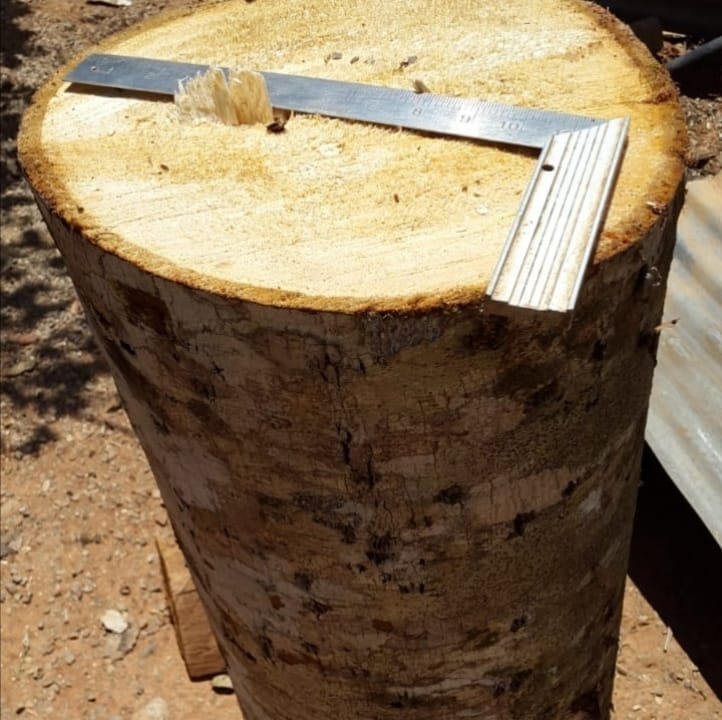
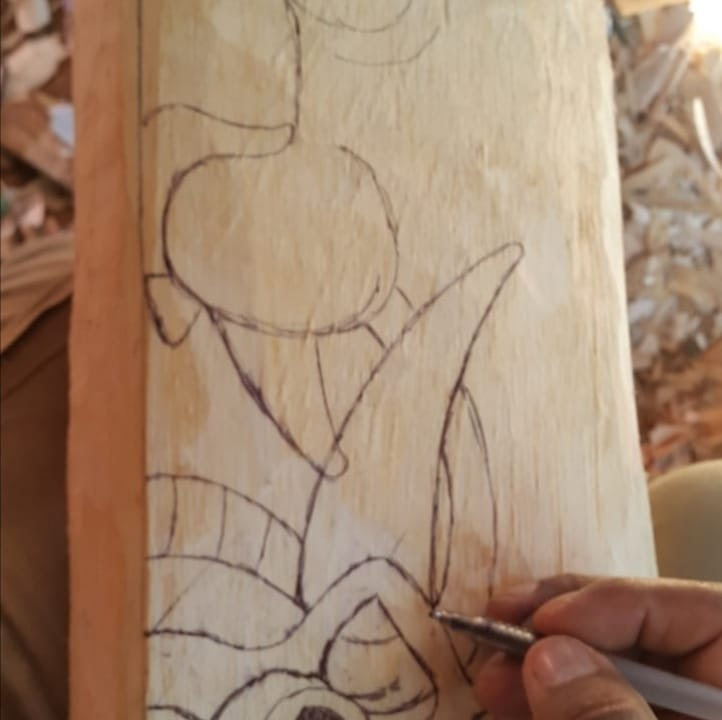
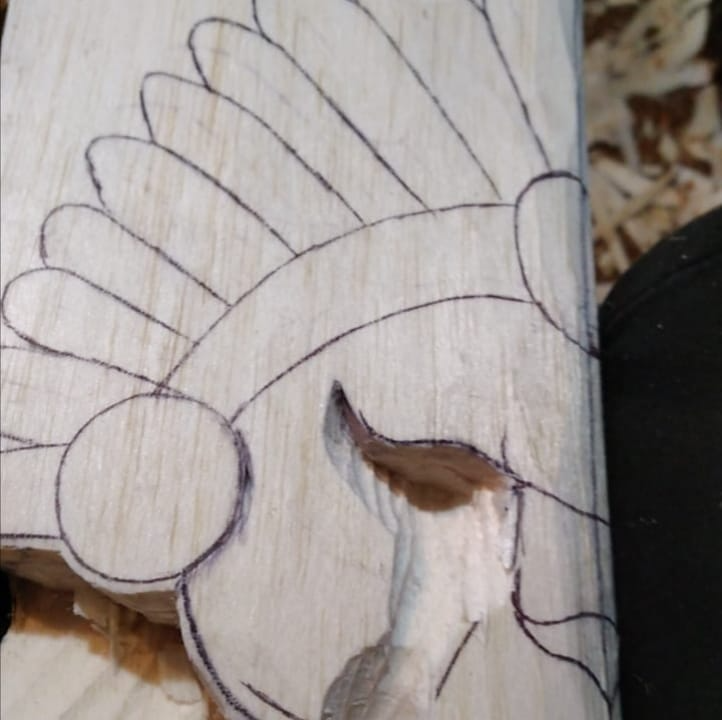
Part of the process to create the masks out of the balsa wood. | Photos via Espíritu Brunca's Instagram. | Impulsiva Stories
At least for Rojas Lázaro, it’s taken him twenty five years of constant work to master his craft. And even so, he believes he’s still learning how to improve it as time passes by.
That’s only in reference to the technical process of the masks. From a symbolic and spiritual perspective, there are many elements involved in these masterpieces. The choice of animals to represent comes from the Bruncas’ worldview and beliefs. These include the jaguar, the red scarlet macaw, the monkey, the saíno (wild pig), the Morpho butterfly, and the hummingbird.
The Natural Symbolism
These all represent different things in the Brunca culture. The Morpho butterfly signifies transition because of their transformation from a worm to a fully developed being that flies. Then, the hummingbird is a reference to births and pregnant women.
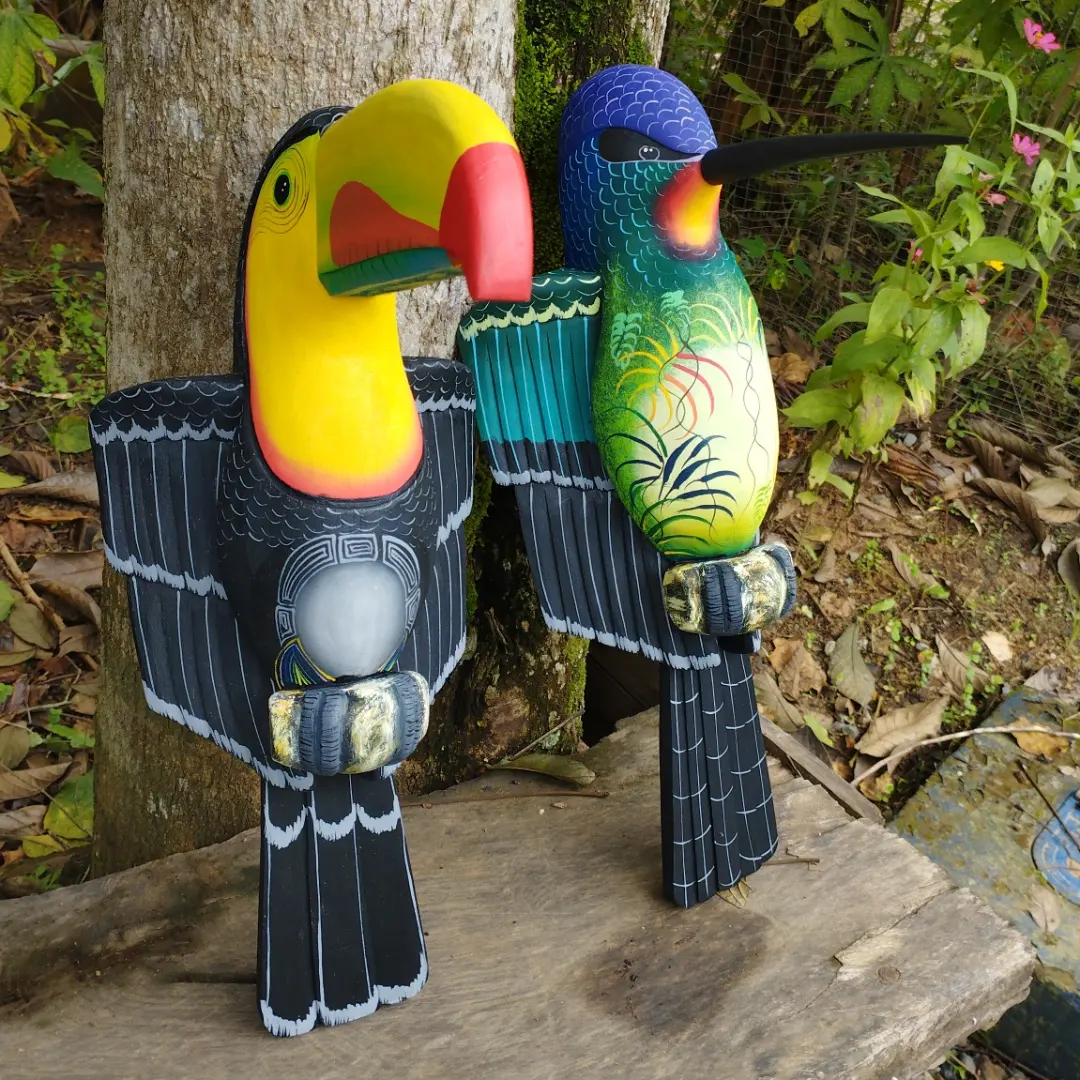
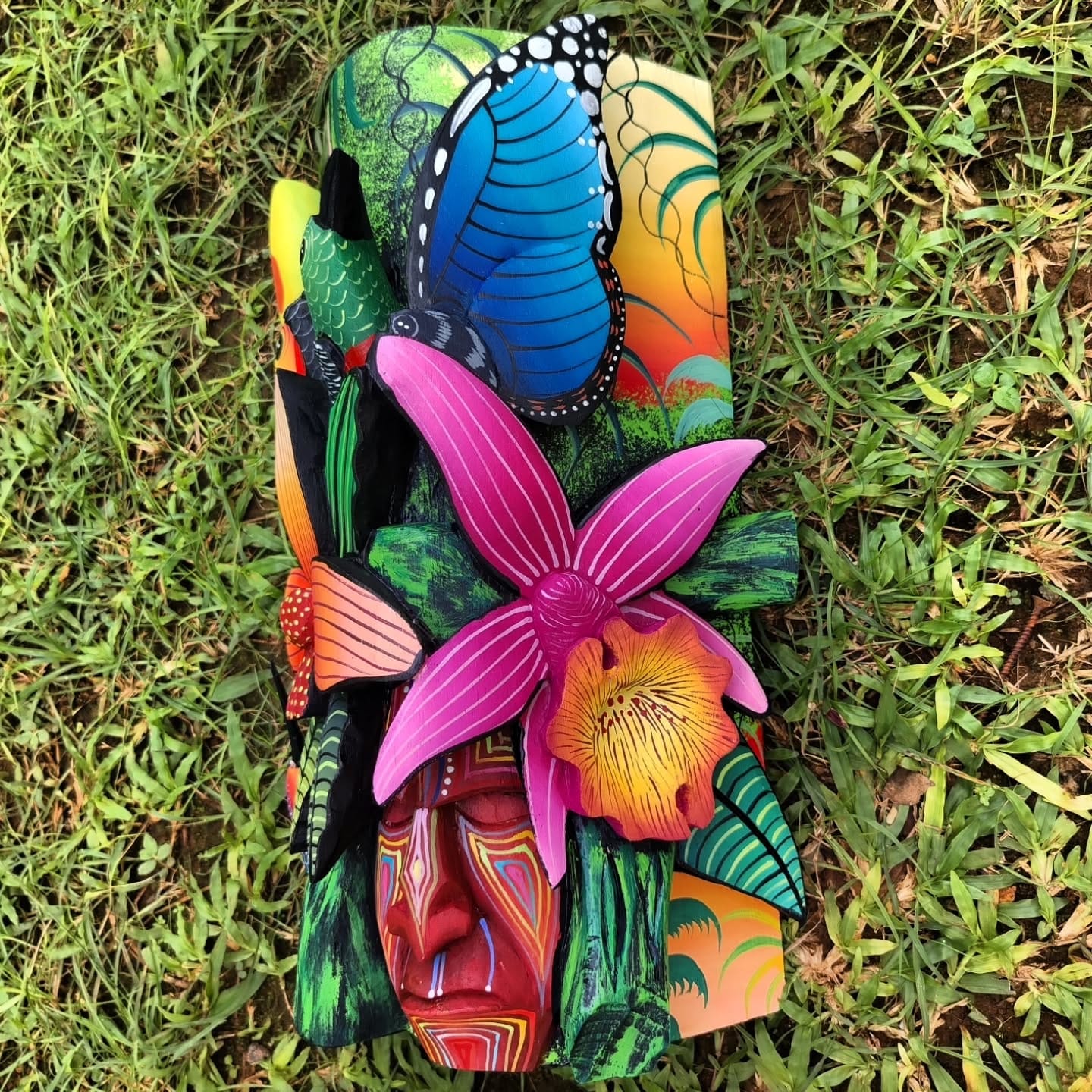
Some of the most common animals include the toucan, the hummingbird and the Morpho butterfly. | Photos via Espíritu Brunca's Instagram. | Impulsiva Stories
As for the monkeys and the red scarlet macaws, the story is different and deeper. The monkeys’ tails fold into a spiral and this particular shape holds a very spiritual meaning for the Brunca Indigenous people.
“In the hieroglyphs on the rocks, the spirals exist a lot and for our culture, the spiral is very, very important. The Brunca Indigenous person is like the phoenix bird. The story of the phoenix bird. They die and resurrect,” Rojas Lázaro said.
Listen to José Luis Rojas Lázaro
0:00
/49.694083
According to their Brunca worldview, the bull kills the diablitos (little devils). Then, the diablitos resurrect and kill the bull. So, the spiral is the symbolism for the return to a new life. In regards to the red scarlet macaws, Rojas Lázaro said it’s a beautiful story that he really loves about his culture.
“Apparently, there were sea gods. They’d come out and only show themselves to the Bruncas because the Bruncas would take them feathers of the red scarlet macaws,” Rojas Lázaro said. “The Bruncas would show them those feathers and they’d come out of the sea to greet them.”
Listen to José Luis Rojas Lázaro
0:00
/20.272083
Just like with the red scarlet macaws, the saínos share a similar story in the sense that it’s a very important animal that strongly represents the Bruncas. Rojas Lázaro mentioned that, according to the stories of the Spanish crown, the conquistadors called the Bruncas saínos. This was because the Bruncas were great for war. They were also very angry. The wild pigs move as a herd and are terrible, as Rojas Lázaro explained.
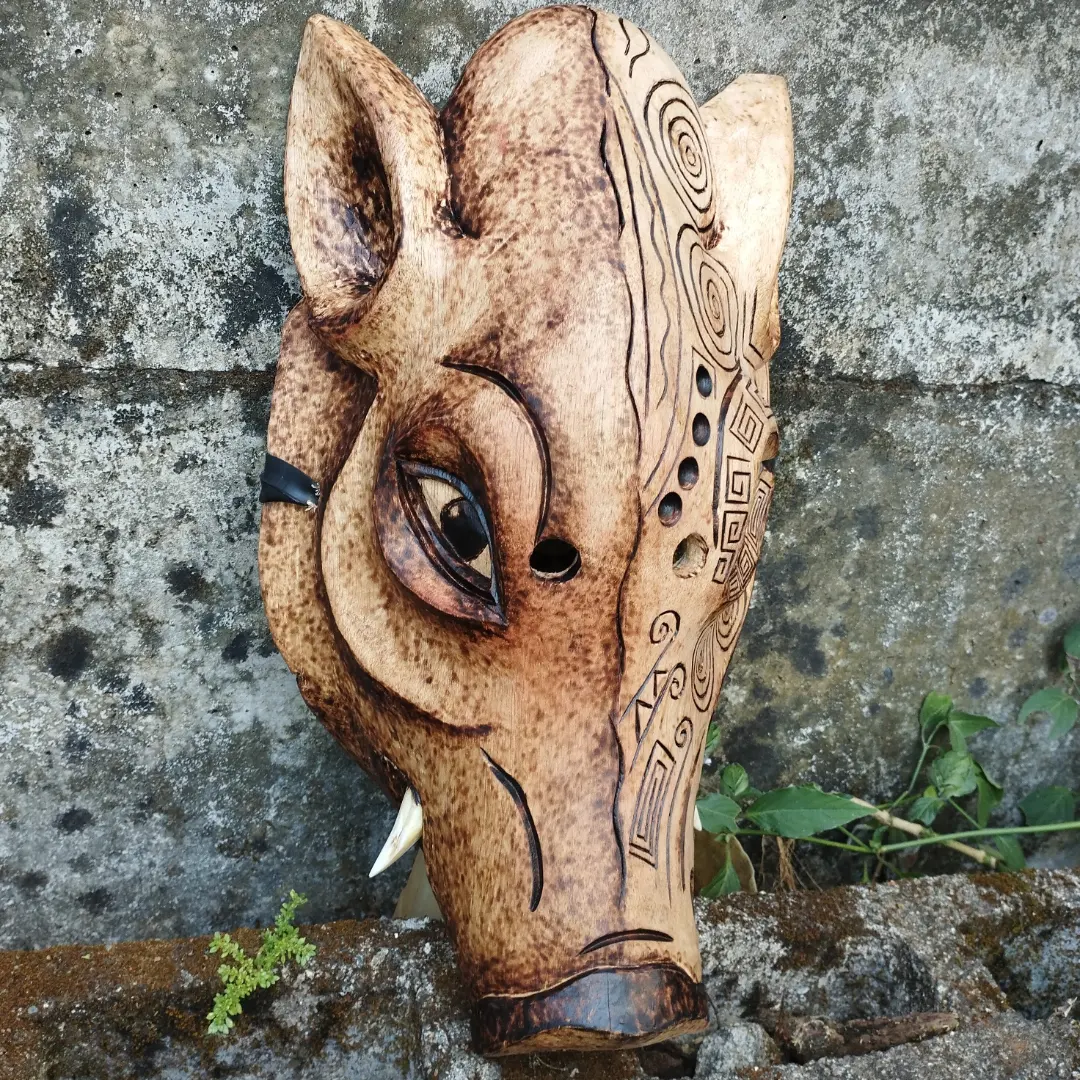
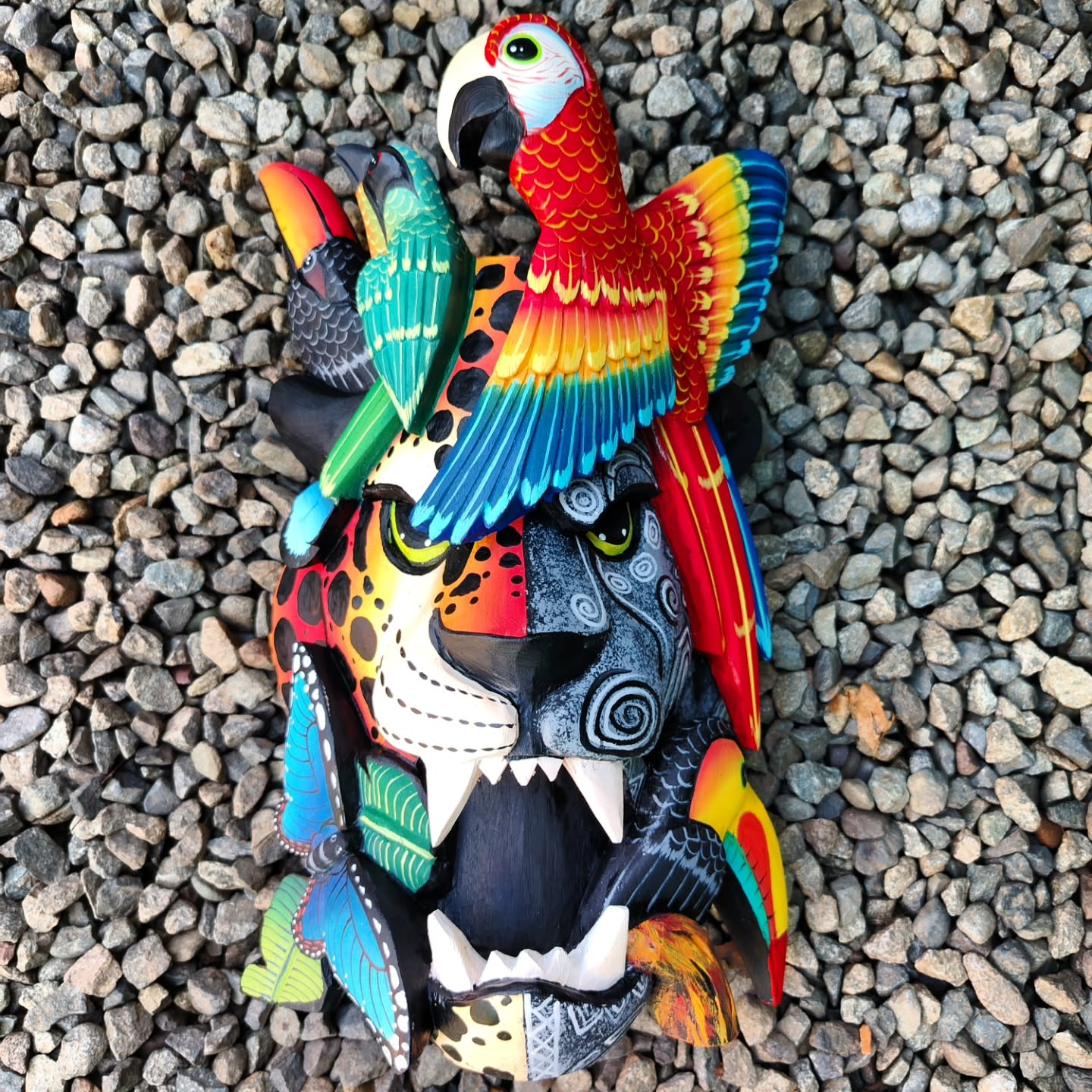
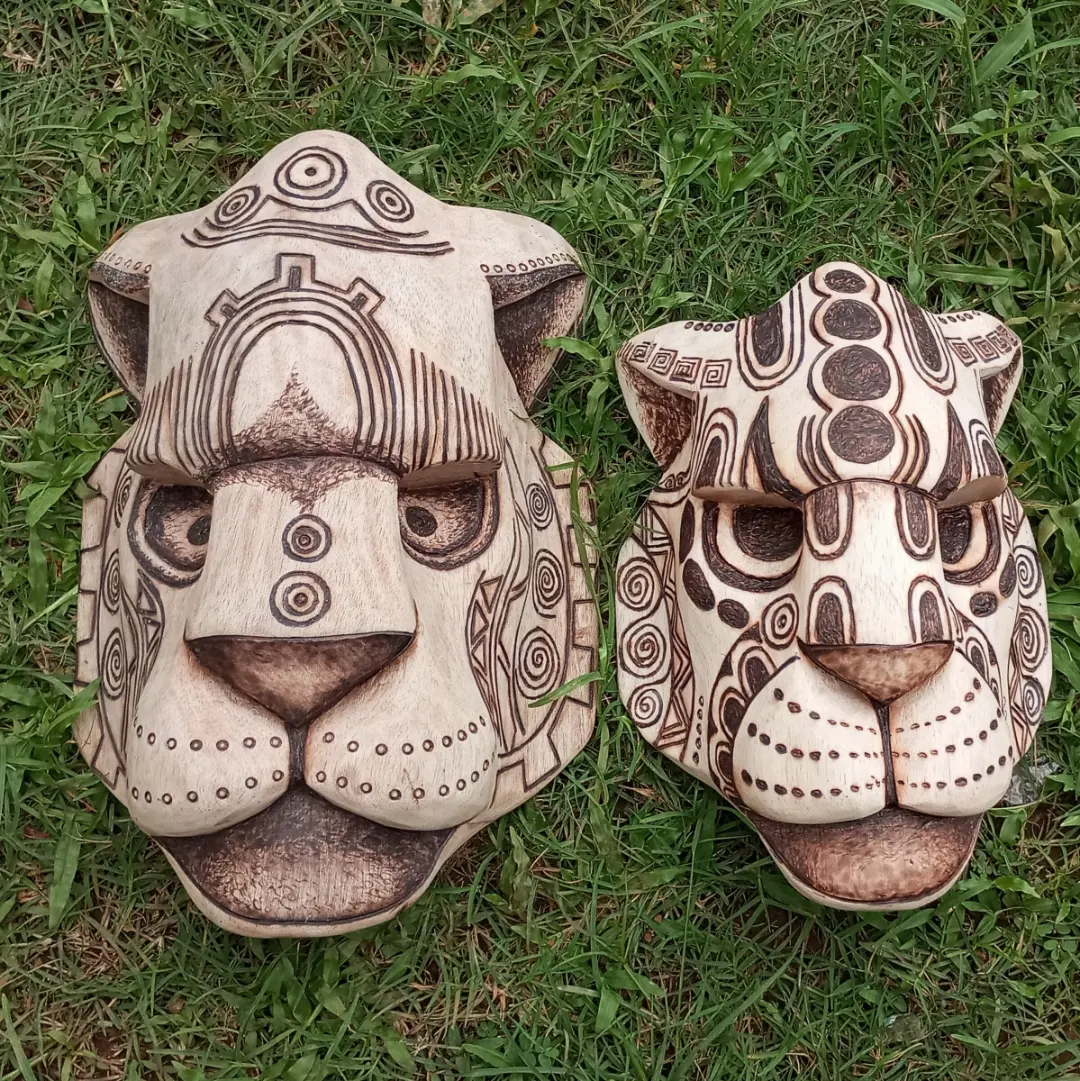
The saíno (left), the red scarlet macaw (center), and the jaguar (right) as Brunca masks. | Photos via Espíritu Brunca's Instagram. | Impulsiva Stories
And with the jaguars, the representation of these beautiful felines responds to their labor of being the guardians of the mountains. In their Brunca language, the jaguars are called curá.
As you can see, the masks Rojas Lázaro and his fellow colleagues create are not empty pieces. There’s a lot of cultural baggage behind them. Not only in the selection of the colors and animals, but also with the representation and the way in which they’re crafted.
“It’s not an empty mask. It’s a mask that will represent many things from our community. Many of the things that we believe in as Indigenous people. That we respect as Costa Rican citizens. It’s not an empty mask,” Rojas Lázaro said. “Nature means everything to me.”
Listen to José Luis Rojas Lázaro
0:00
/27.392833
This thought refreshed Rojas Lázaro’s memory. He remembered of a time when a young woman asked him that if they didn’t believe in the Catholic religion, what did they believe in before.
To that, he said that the elder people told them they only believed in the sun, the water, and the mountains. They basically believed in nature. So, for him, nature is everything. It’s what shapes their Brunca life and culture. It’s this thing – or being – that he thinks about non-stop. That he speaks about with his friends and they come up with ideas on how to save it and preserve it.
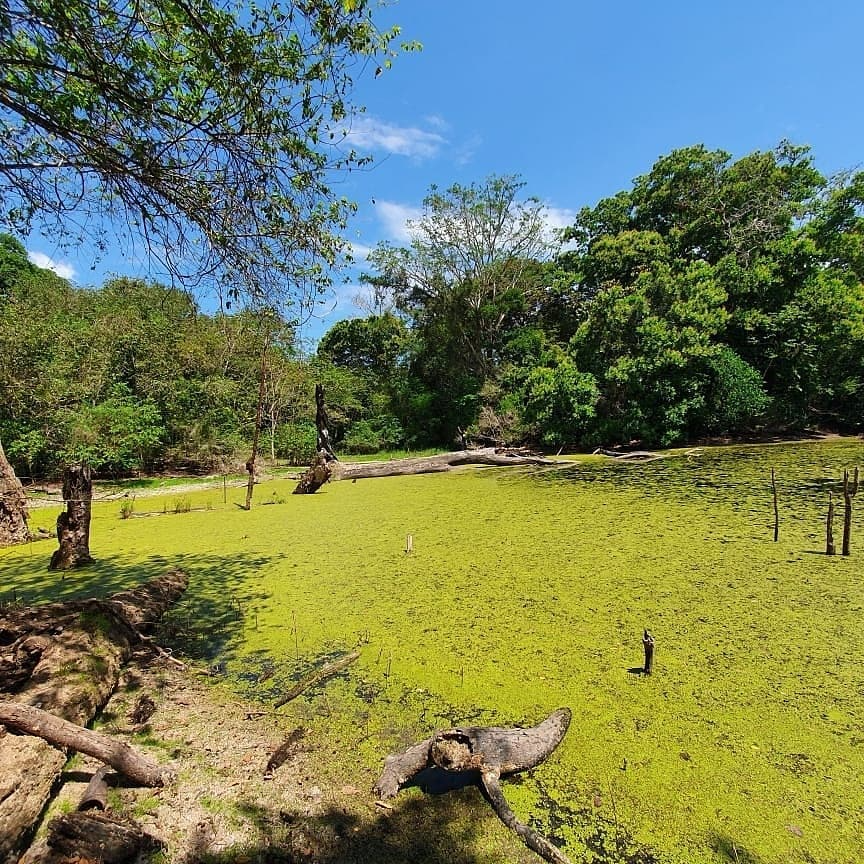
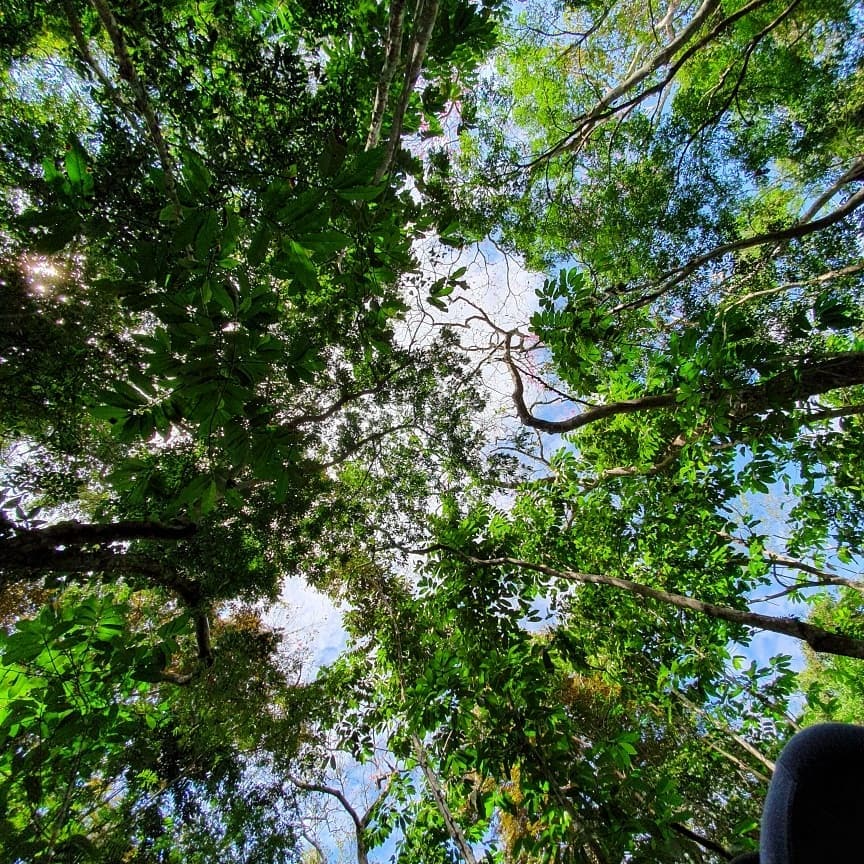
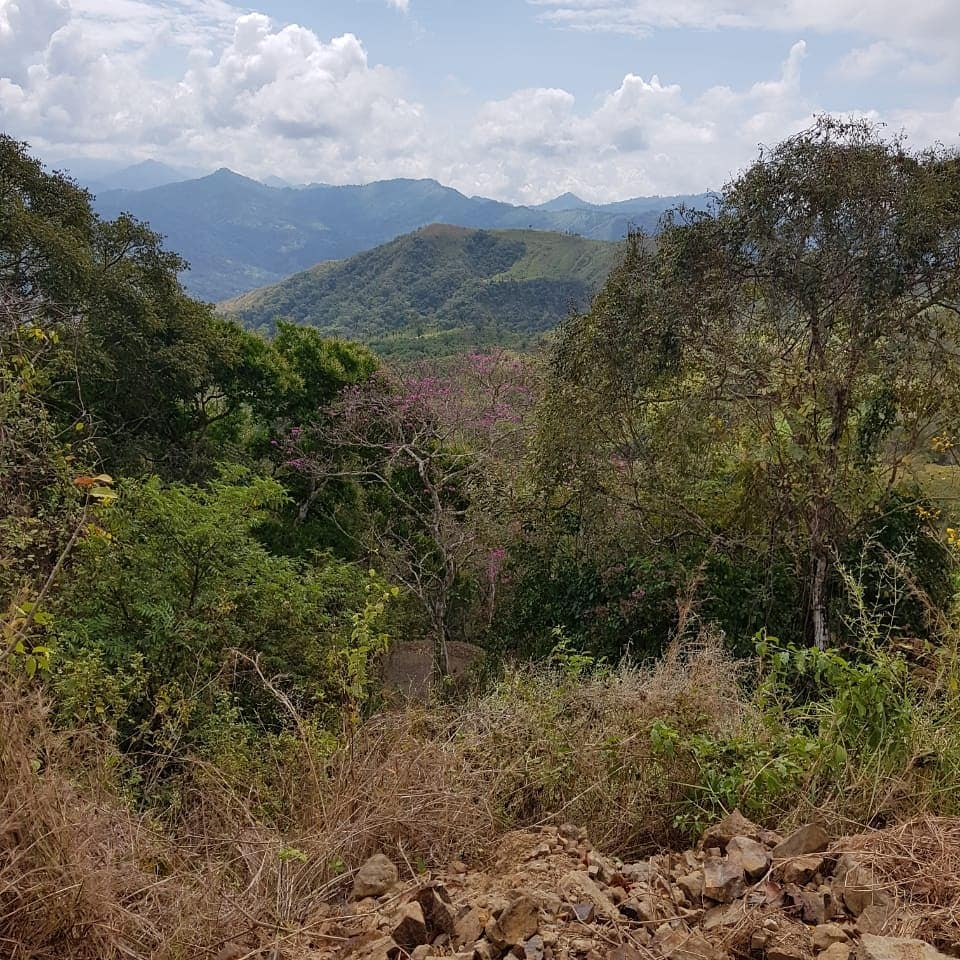
Some of the natural landscapes that characterize the Brunca region. | Photos via Espíritu Brunca's Instagram. | Impulsiva Stories
He also feels very proud of coming from a community that’s very rich in all the senses. Rich in its gastronomy. Rich in its natural sites. Rich in its cultural masks. It’s something that simply fulfills him, makes him happy, and that no one can take away from him.
And those feelings that Rojas Lázaro naturally transmits when he happily and passionately speaks about his culture, are clearly captured in his masks. This ability to transfer these emotions to the masks is one of the most important elements of his craft. Whenever clients ask for a tailored-made mask, he wants them to really enjoy the piece and receive it with the same great vibes he works with.
“I always tell people that the Boruca masks don’t have a magnetism. They don’t have some shamanism [element] or anything like that. Just as any piece that’s done with love or whatever thing you do with care, it’s going to have a great vibe,” Rojas Lázaro said.
Listen to José Luis Rojas Lázaro
0:00
/21.837083
0:00
/0:24
The Brunca celebration of the Fiesta de los Diablitos. | Video by phninja via Espíritu Brunca's Instagram. | Impulsiva Stories
The Fiesta de los Diablitos at the Land of the Ashes
At this point, you might be wondering what Boruca is if it was not mentioned before. It’s the Spanish word for Brunca. And you might also be wondering what purpose the masks serve amongst the Brunca Indigenous people.
Well, you have to understand better the Brunca community and its traditions. Rojas Lázaro described his people as a community that’s in resistance. In their native language, Brunca means land of the ashes.
“Land of the ashes means that they were [Indigenous] people that were very mistreated during the times of conquest. As the existing Bruncas, we’re a resistance from the colonization and now of globalization, which is another important challenge for our community,” Rojas Lázaro said. “I’m very proud of being part of this community and being able to transmit a bit of my knowledge to the new generations.”
Listen to José Luis Rojas Lázaro
0:00
/52.119833
He’s focused on allowing outsiders of the Brunca region to see them as a valuable community and even though the Internet poses a lot of challenges, he’s using it to his advantage. He wants to reach other people and share his culture virtually. For others in Costa Rica and outside of the Central American nation, to learn that there are beautiful Indigenous cultures in the country.
This sentiment is strengthened even more when sharing the cultural background behind the masks and their use for the celebrations of the Fiestas de los Diablitos, which are declared as Intangible Cultural Heritage of Costa Rica. This is the maximum festivity awaited all year-round in the community. It’s celebrated at the end of the year and everyone in town gets ready to have a great time.
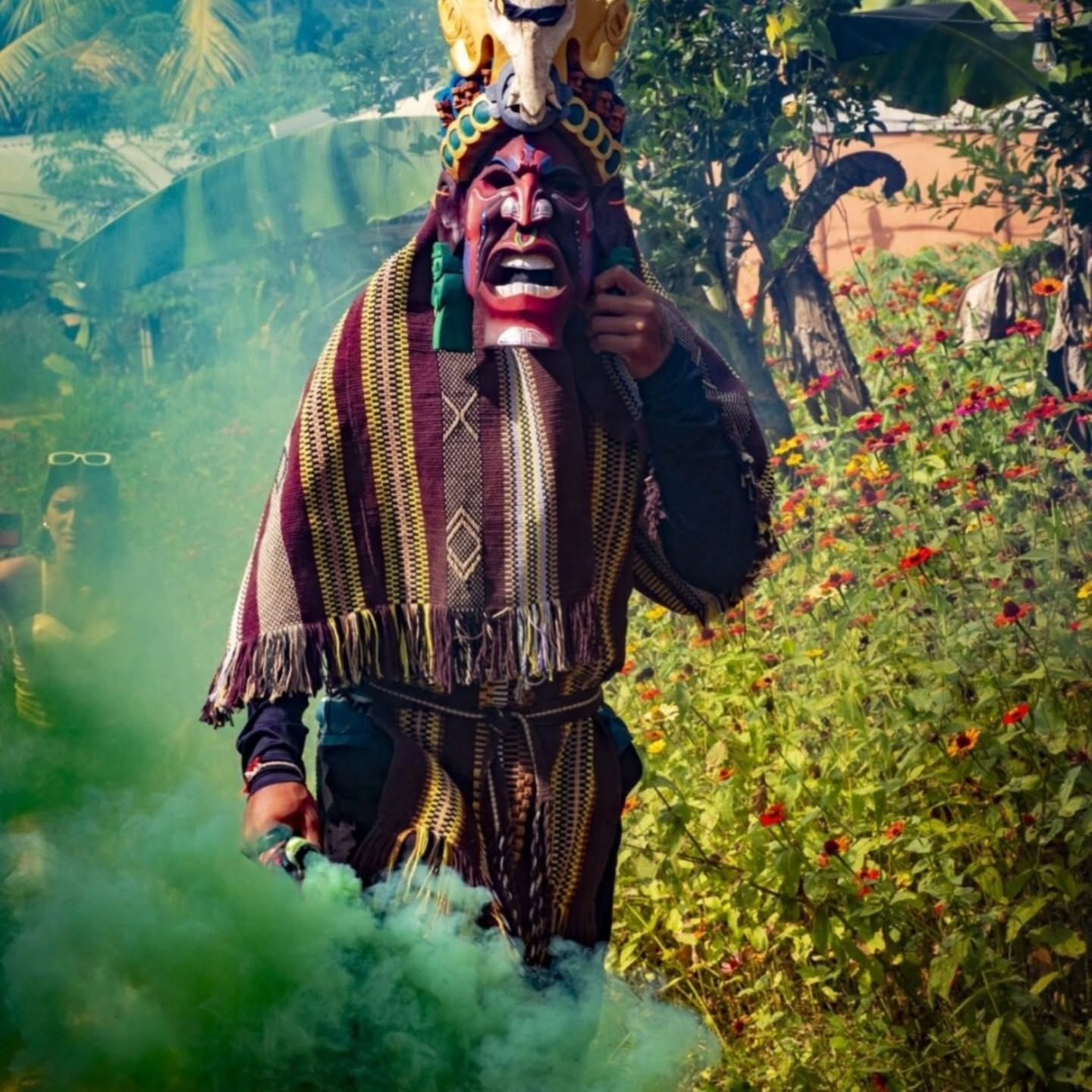
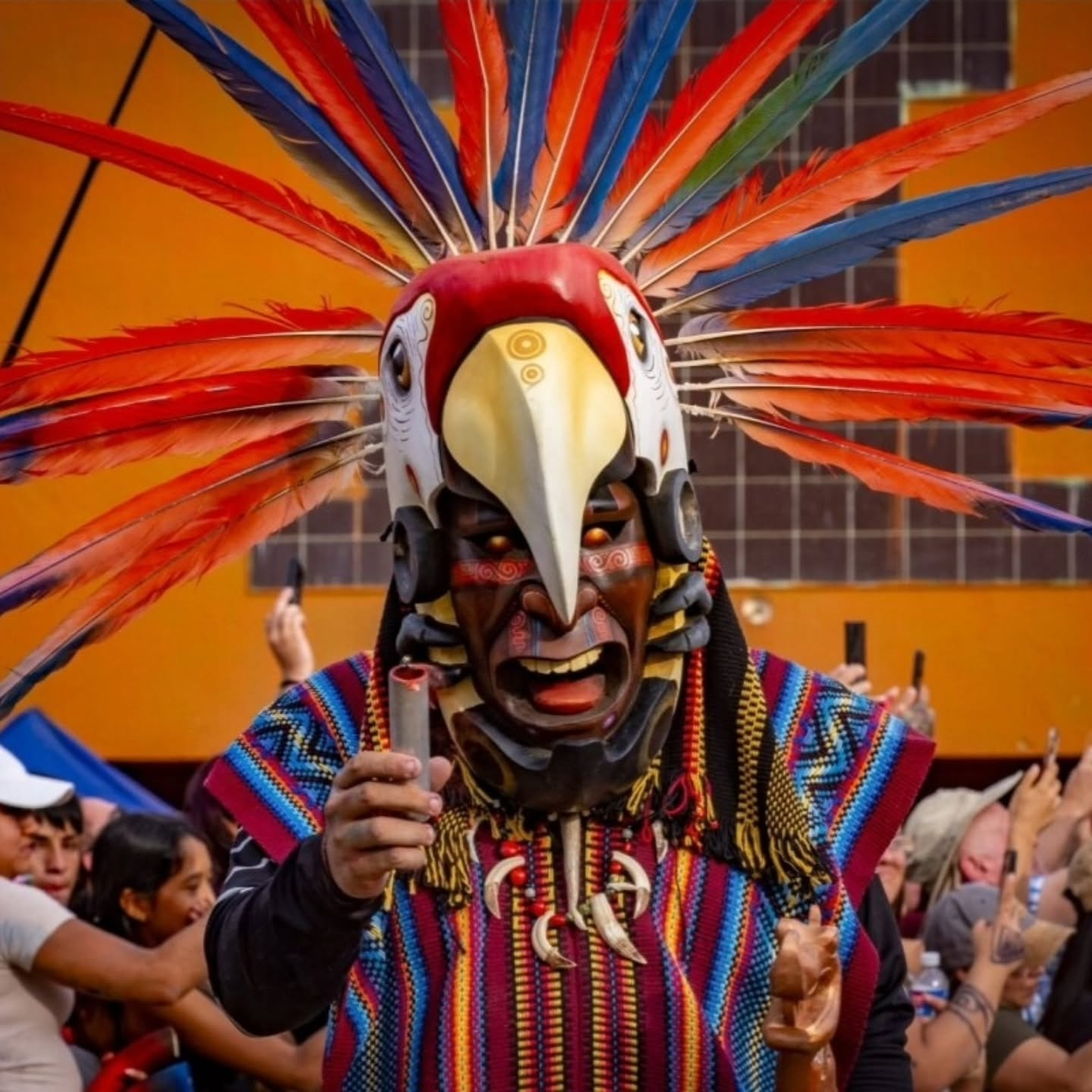
Some of the men wearing the traditional Brunca masks for the Fiesta de los Diablitos. | Photos via Espíritu Brunca's Instagram. | Impulsiva Stories
Not only does it create a financial support for the families, but it’s also a way to honor their roots, traditions, and culture. Everyone in the community benefits from the activities, whether it’s the women making the chicha, women selling food, or the children brightening up the environment.
And it’s also the great celebration where the colorful mask are “on exhibit” for the public. The traditional masks are specifically created to be worn during these festivities. The most common mask is the one of the diablito, which has nothing to do with the devil. These are crafted to express a lot on their faces.
That’s where color comes in strong because fury and joy must be shown in their facial expressions. According to Rojas Lázaro, the elder women told them that the masks where mainly created for these celebrations, which are a commemoration of when the Bruncas won and defeated the Spanish conquistadors.
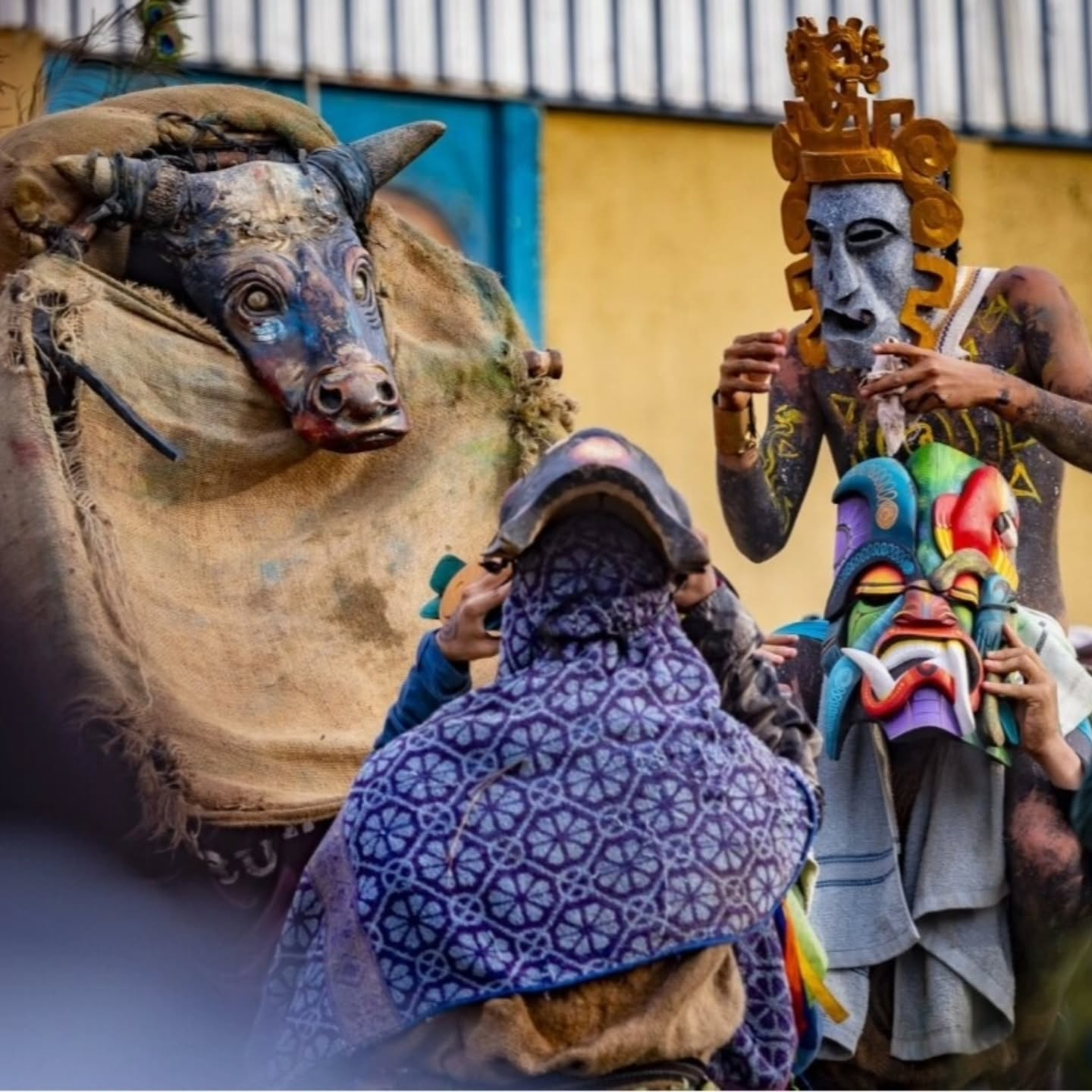
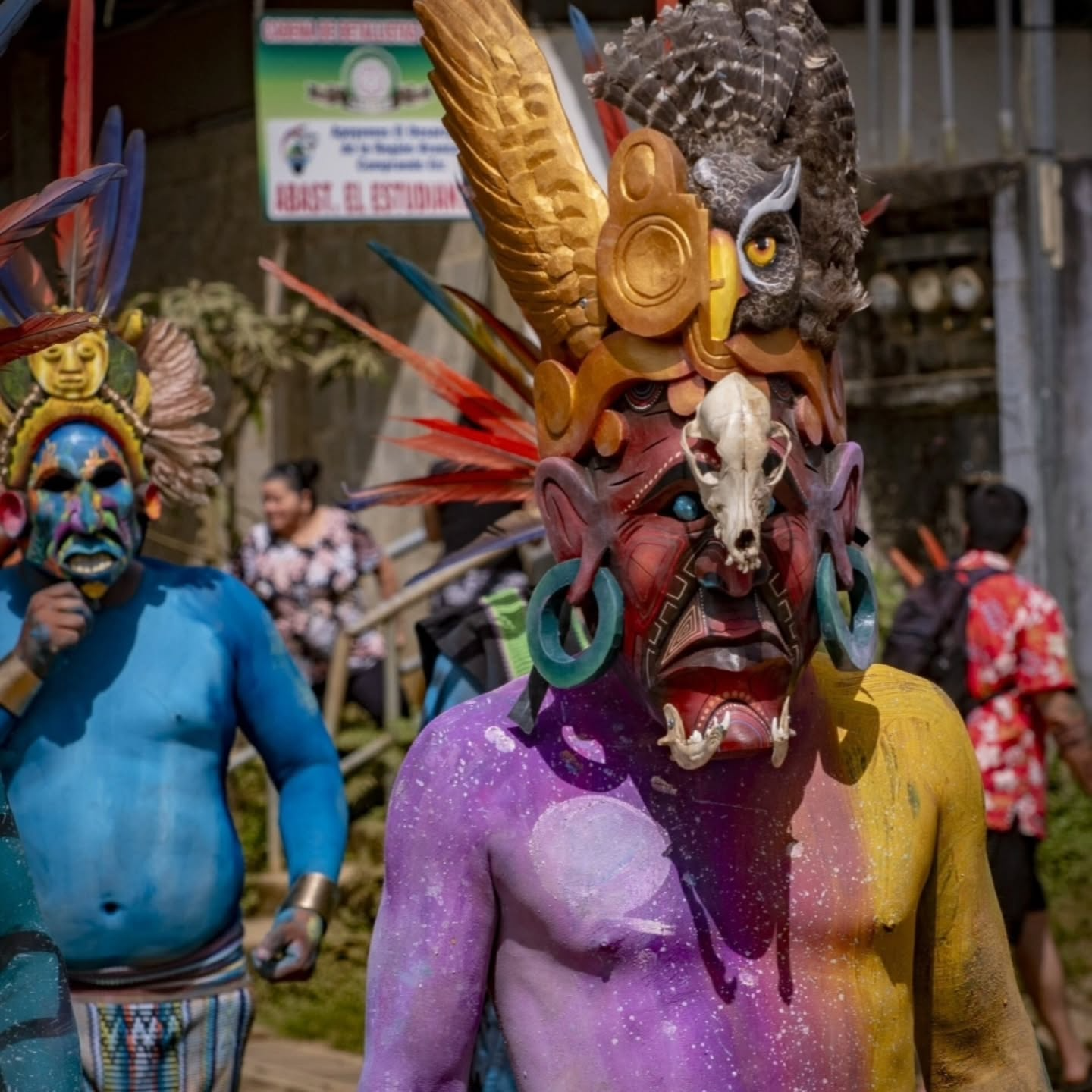
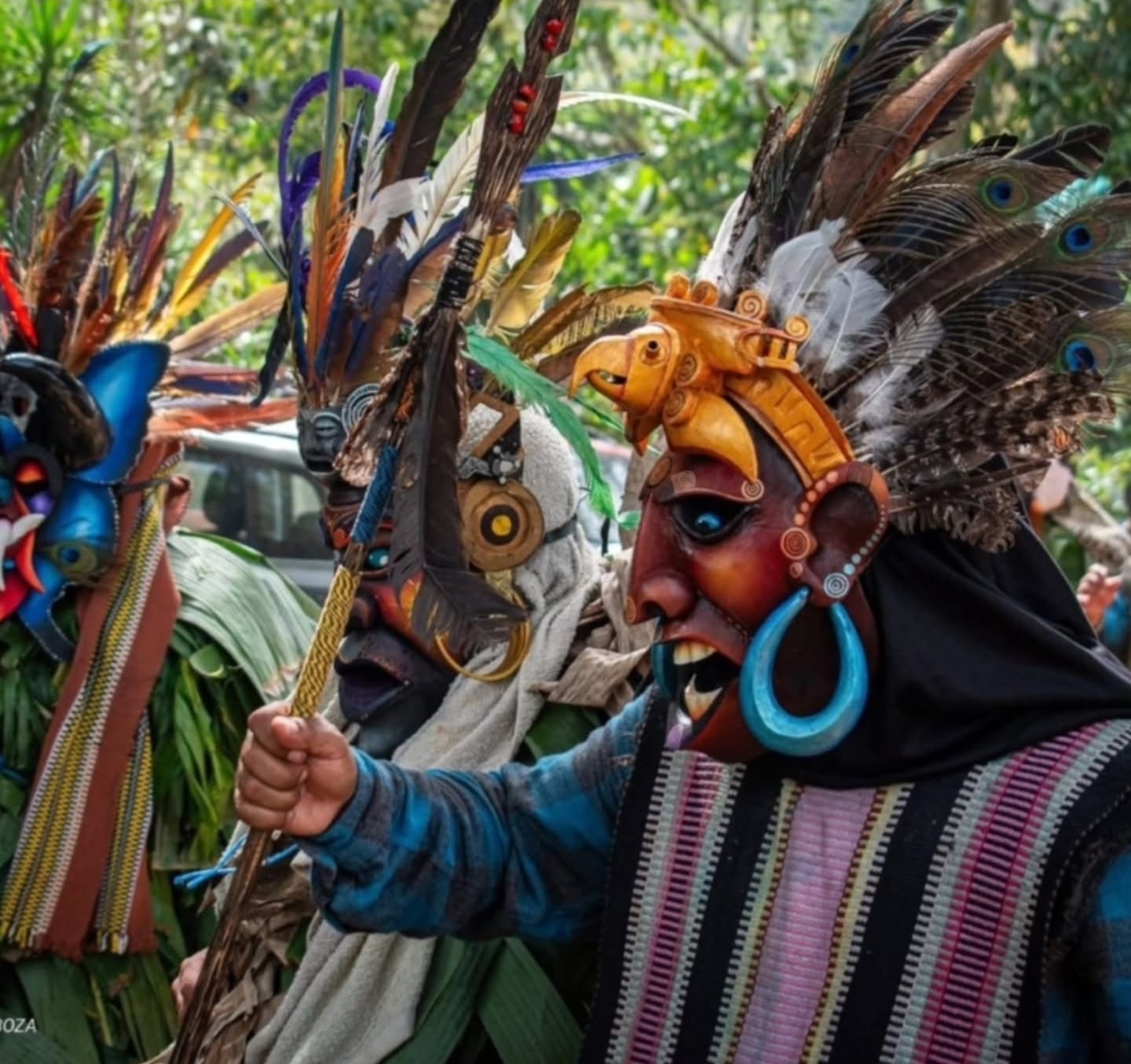
Some of the men wearing the traditional Brunca masks for the Fiesta de los Diablitos. | Photos via Espíritu Brunca's Instagram. | Impulsiva Stories
“The mask with an expression of a shaman is used mainly by people who are in front of the game [dance]. Those who are in charge of the Juego de los Diablitos. The elders are in front. The assistants and the arreadores are making sure the diablitos don’t come out of their zone. For people to not come into the game,” Rojas Lázaro said. “They’re making sure that a non-Indigenous person is not playing in the game.”
Listen to José Luis Rojas Lázaro
0:00
/33.183333
The masks worn by these men are crafted by the artisans of the community throughout the year. Rojas Lázaro mentioned that each artist has the opportunity to make a new marvelous creation in this time period. Creating a pieces that really draws people's attention so that the men who wear them are showcasing their artistic talents in the best way possible.
The masks are pieces that become the protagonists in these celebrations, but they’re also accompanied by more elements. If you take a closer look, you’ll notice their typical dresses and bodypaint. Generally, they’re wearing burlap sacks, which Rojas Lázaro mentioned is the most traditional garment. They also wear textile belts and a fabric cloths that cover their heads. Along with this, the men cover themselves with plantain and banana leafs to draw more attention to themselves and look more eye-catching.
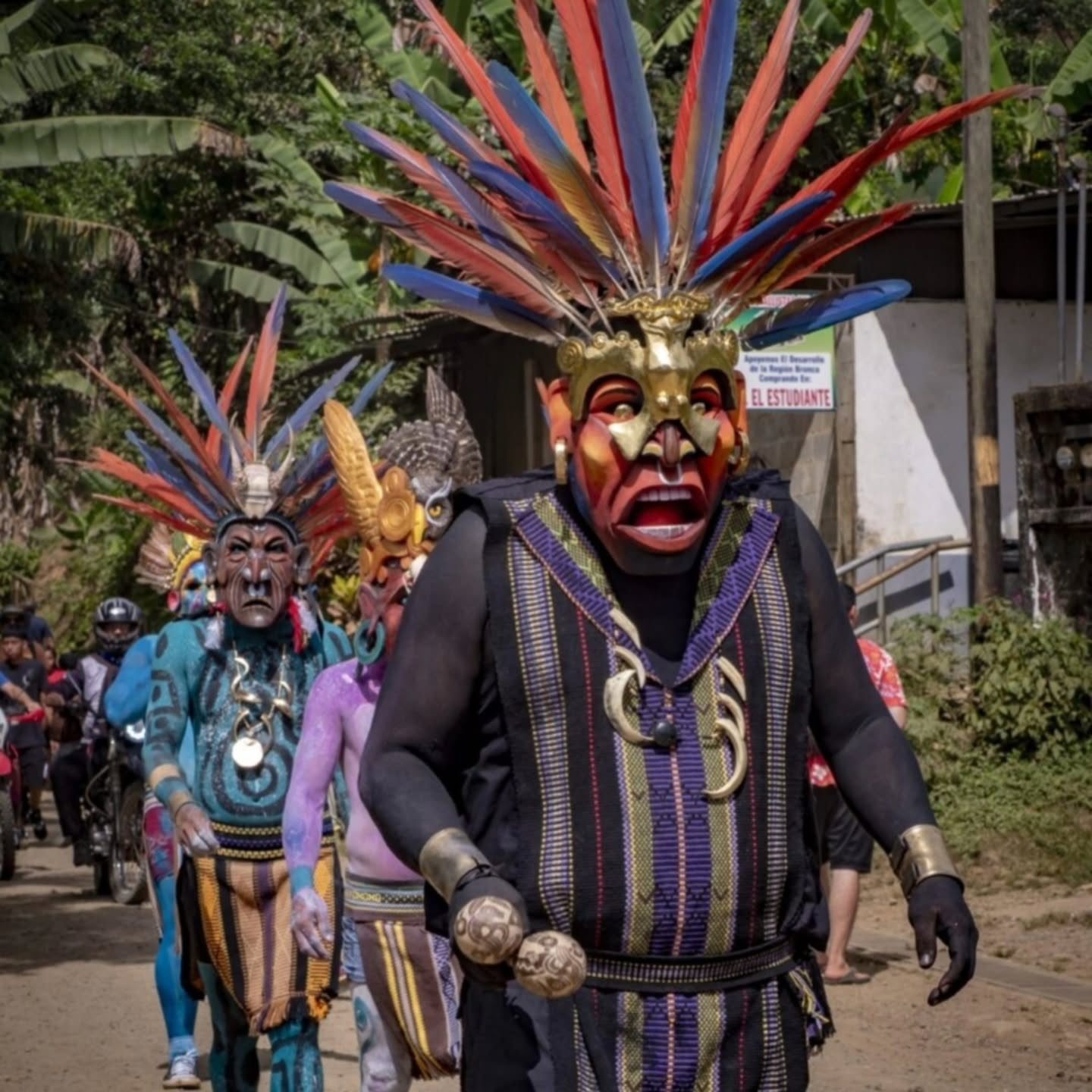
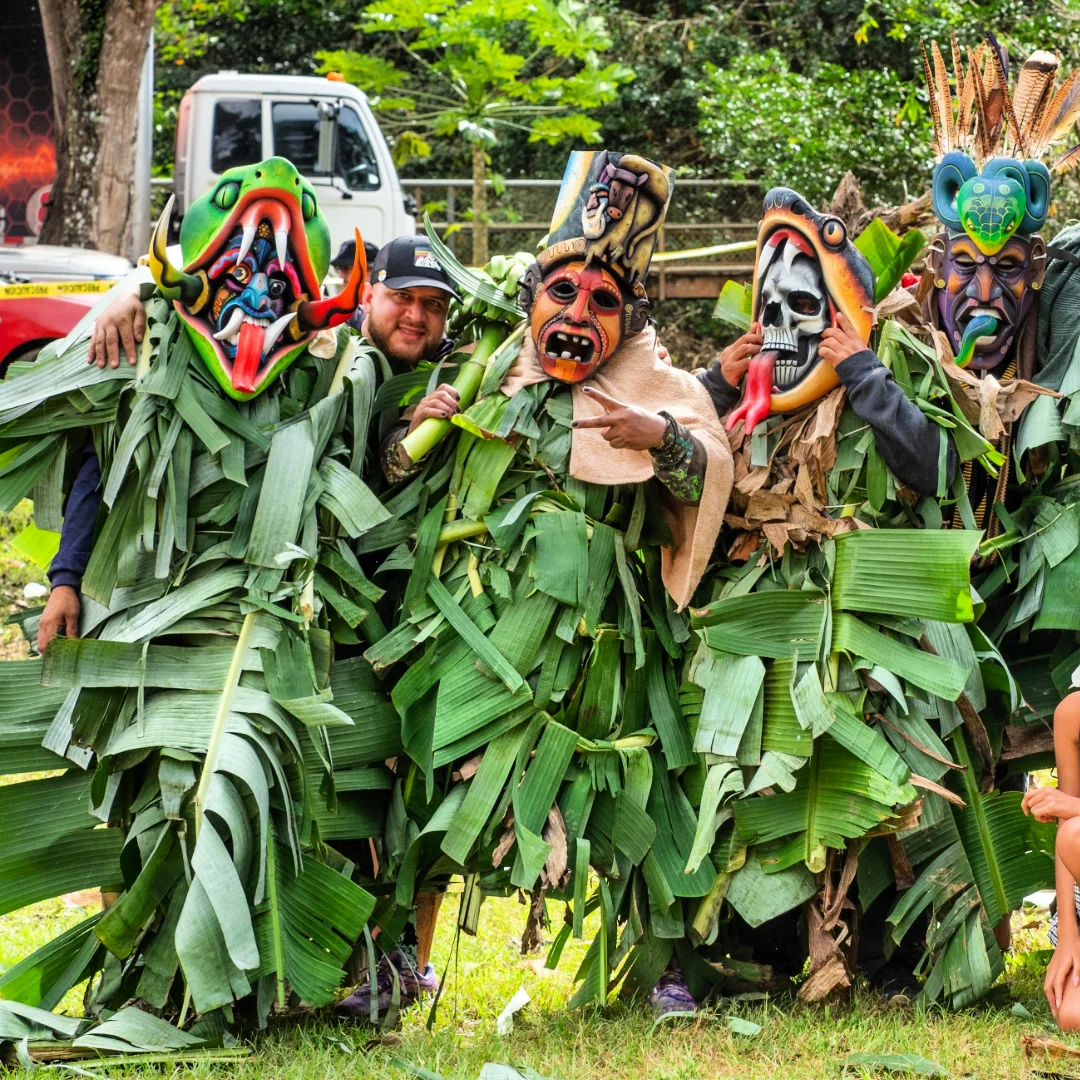
The cloths and banana and plantain leafs worn at the Fiesta de los Diablitos. | Photos via Espíritu Brunca's Instagram. | Impulsiva Stories
The Fiesta de los Diablitos is the greatest celebration of the Bruncas where the colorful masks are finely showcased. These are the festivities that the Brunca people look forward to throughout the year and they’re a source of maximum expression where Rojas Lázaro practices his craftsmanship at Espíritu Brunca.
It’s an art that speaks about the Brunca Indigenous community, their traditions, their roots, and Rojas Lázaro’s innate love for his culture. His love for nature and his compromise to transmit the knowledge to the new generations for the art of the mask to live on and resist a new form of colonization.
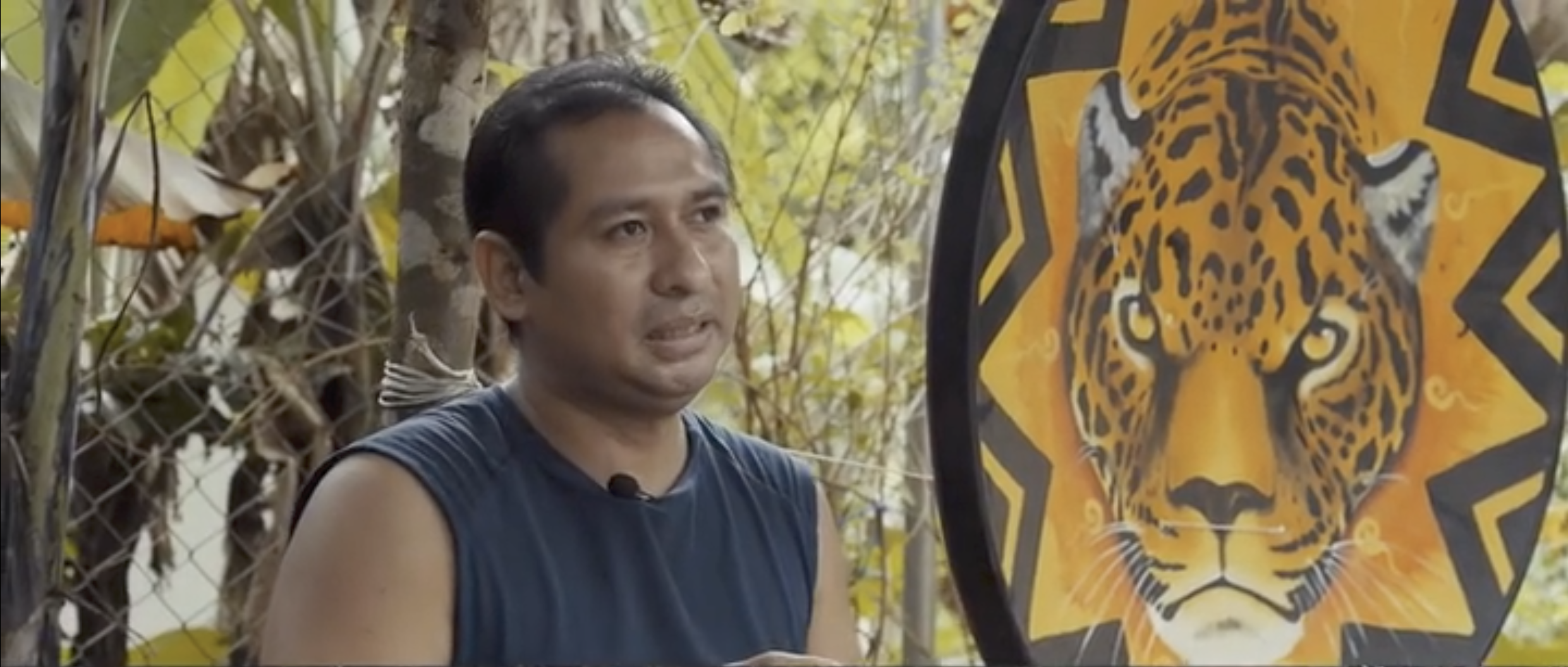
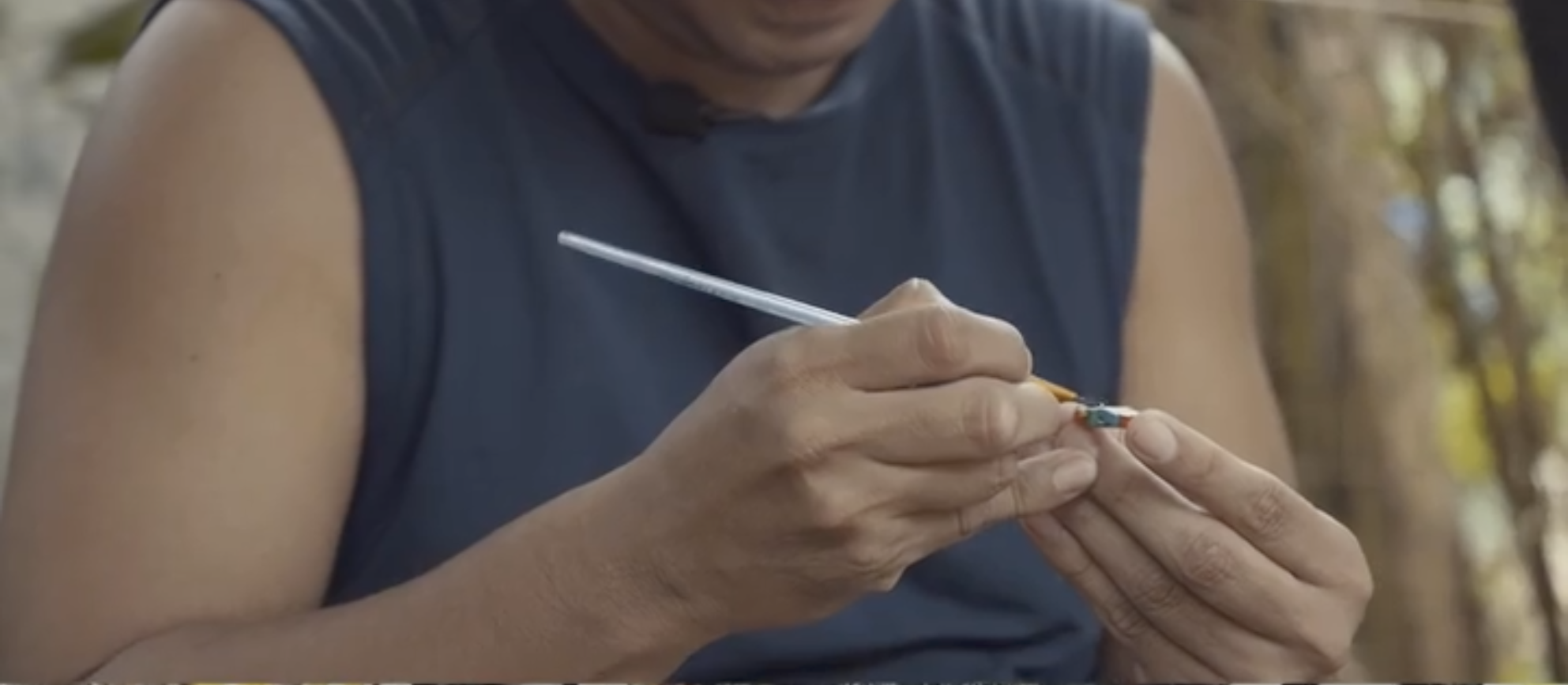
José Luis Rojas Lázaro working on his craft. | Photos via Espíritu Brunca's Instagram. | Impulsiva Stories
It’s a marvelous and colorful Costa Rican Brunca Indigenous art that instantly draws you in because of its vibrancy. They’re masks that originate from tradition and culture. From Rojas Lázaro’s literal dreams and from his pursuit in innovating this craft in modern times.
It’s art that comes with the greatest vibes and Rojas Lázaro’s desires to connect with others through his culture.
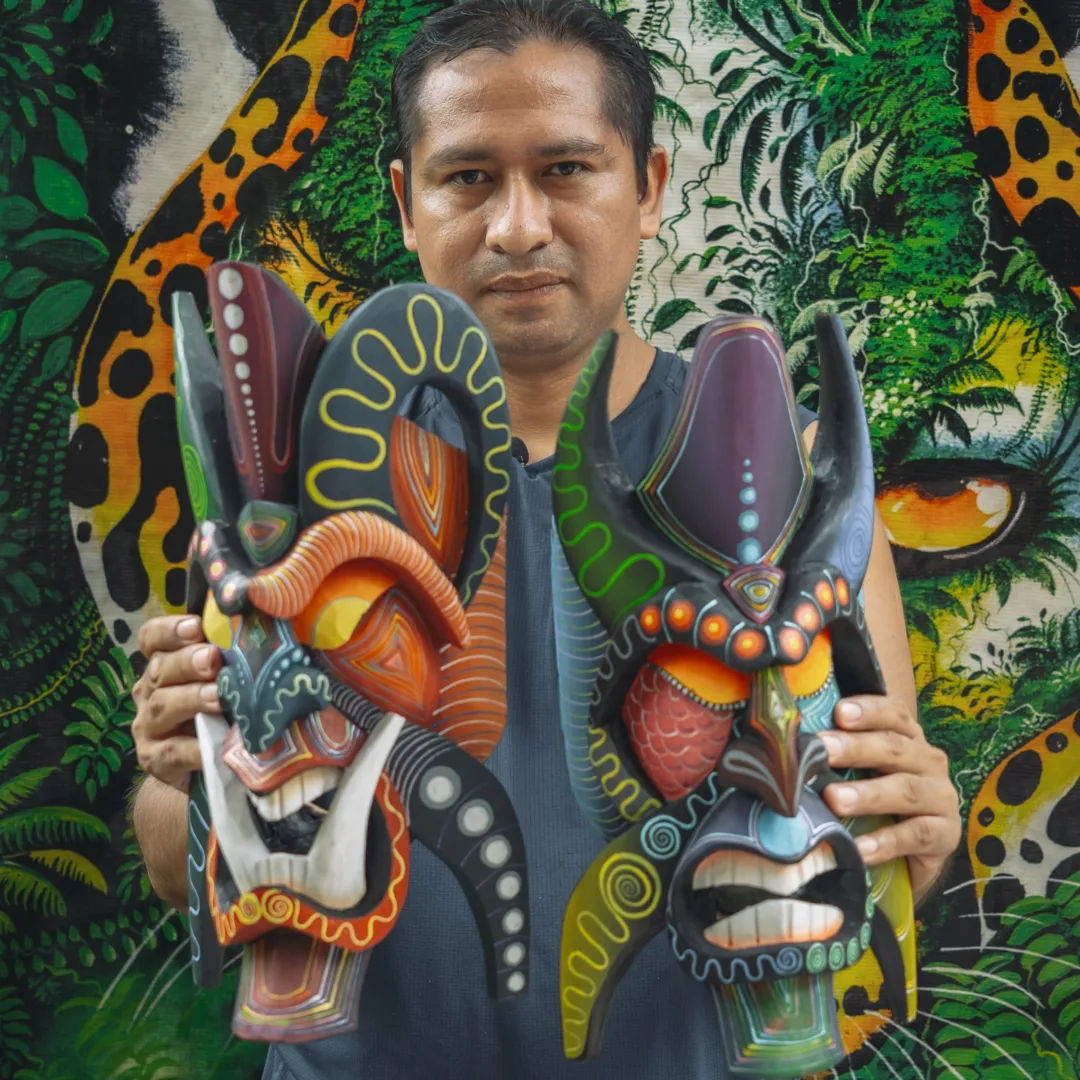
Listen to José Luis Rojas Lázaro
0:00
/38.060917
“Greetings from Costa Rica. I’m from the Boruca community. A community with history. A community that welcomes you to this world of art that we do with lots of care. With lots of beauty,” Rojas Lázaro said. “With lots of color for the people who want to observe it.”
To learn more about Espíritu Brunca and José Luis Rojas Lázaro’s colorful Costa Rican Indigenous masks, you can follow him on Instagram at @_espiritu_brunca.
Written by

Subscribe to my newsletter
Subscribe to my newsletter to get the latest updates and news