Tiffany Román Louk PART III
Tiffany Román Louk experiments with her sensorial and humane music in her EP "melifluo" and the documentary "Reaching for the Sun."
PART III: Tiffany Román Louk’s Deeply Sensorial and Humane Music
In PART I we explored Tiffany Román Louk’s neoclassical reggaeton and in PART II we learned about the magic in her musical collaborations. Now, we’ll understand the deeply sensorial and human aspects of her music. Those intangible elements that make her art an immersive experience for the audience and the listener.
The Puerto Rican-Chinese musician, pianist, artist, composer, and producer can easily create that experience through her many musical roles. It comes from a truly and deeply personal definition of herself that determines the work she does.

Don't Forget to Subscribe to
The Story of The Story
For only $16 a month, every Friday you'll have exclusive access to
The Story of The Story. Our founder, the Costa Rican award-winning multimedia journalist and artist Elizabeth Lang, guides you through her creative process to produce her stories.
“First of all, you define yourself as a human, right. Then, throughout time [people start] defining you and you define yourself. I started as a musician. My first love was the piano,” Román Louk said. “So, from there, playing the piano in front of others started and that makes me take the title of pianist.”
That made her take the title, which later on came with more descriptions for the activities she was carrying out. That’s how she started seeing herself as a composer, producer, and artist, but for Román Louk being a person and maintaining her humanity will always be at the forefront. It’s the most important aspect of what she creates and the messages she transmits with her music.
Remember that she goes through various processes to create, which depend of the project she’s working on, who she’s collaborating with, and the format, whether it’s with an orchestra, popular music, or a film production. As usual, her composition journey begins in a solitary manner.
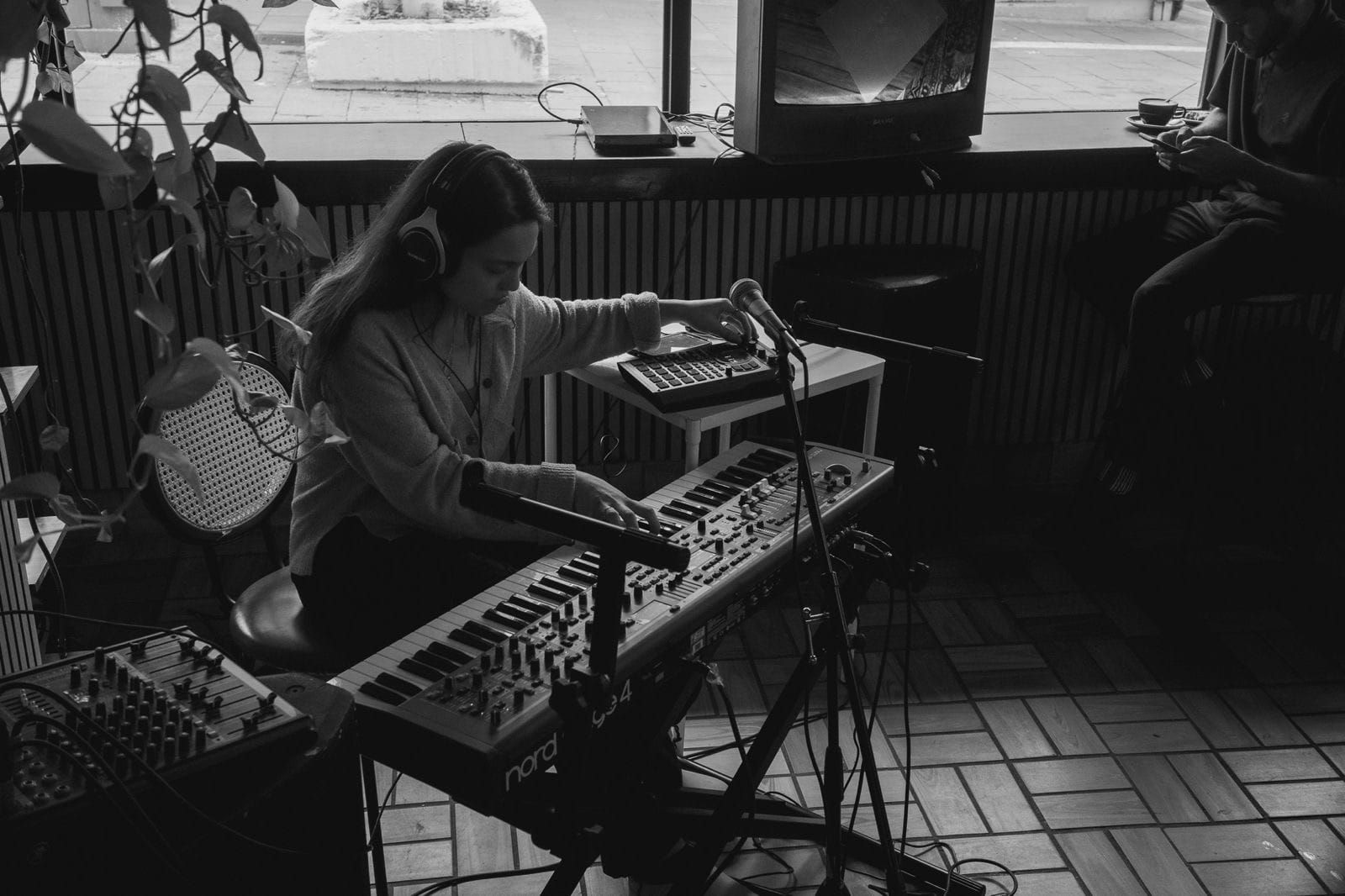
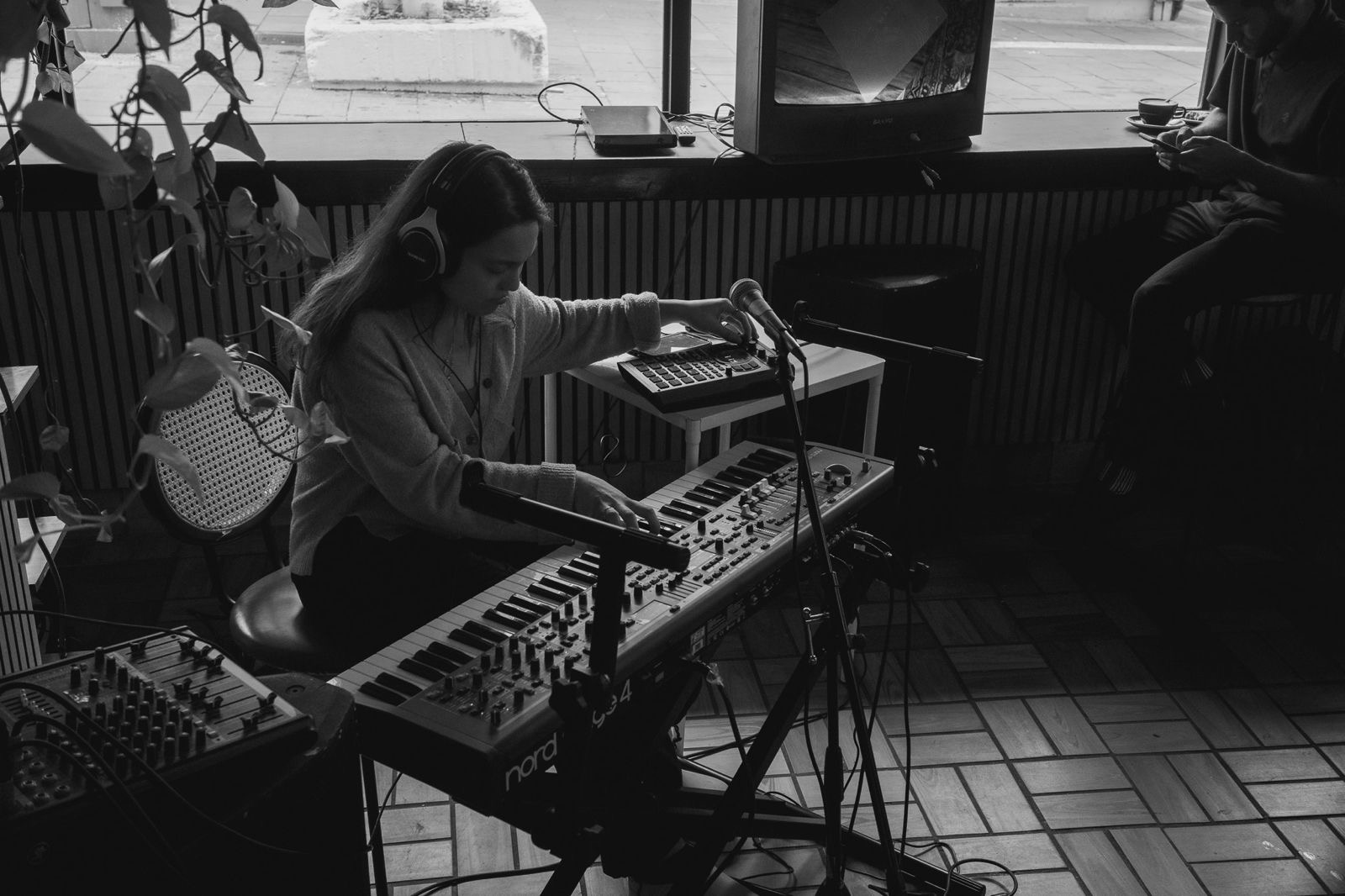
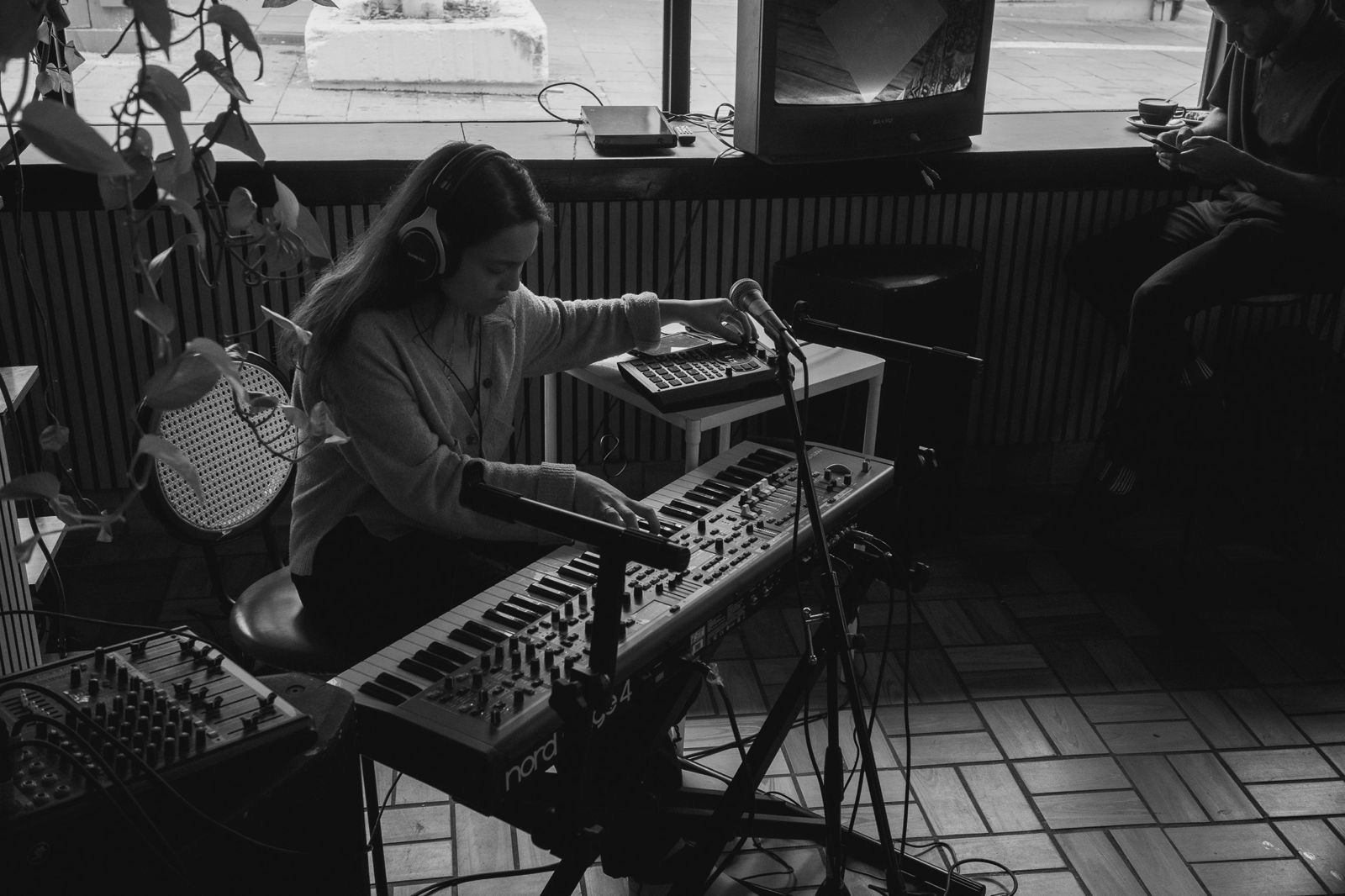
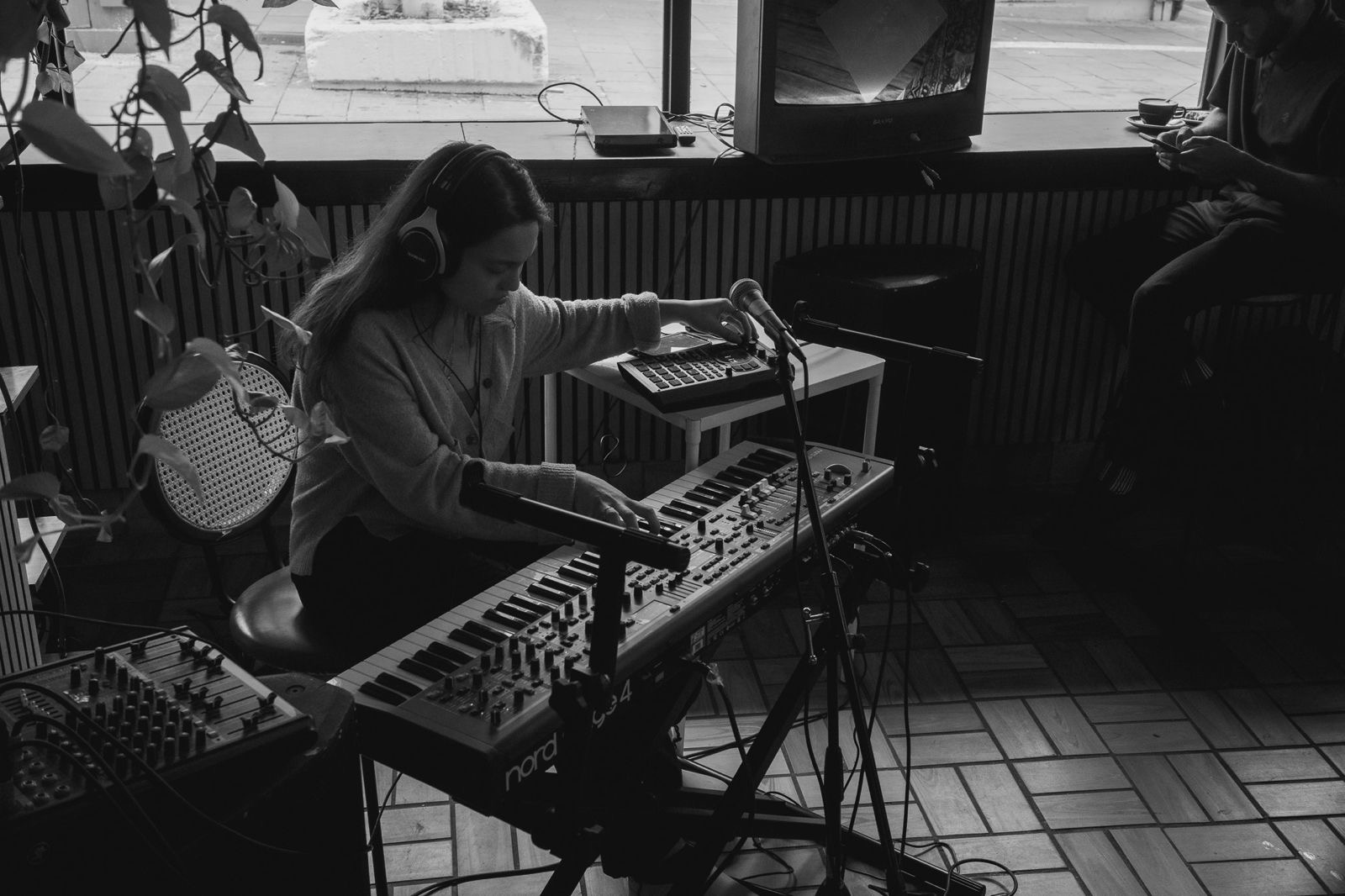
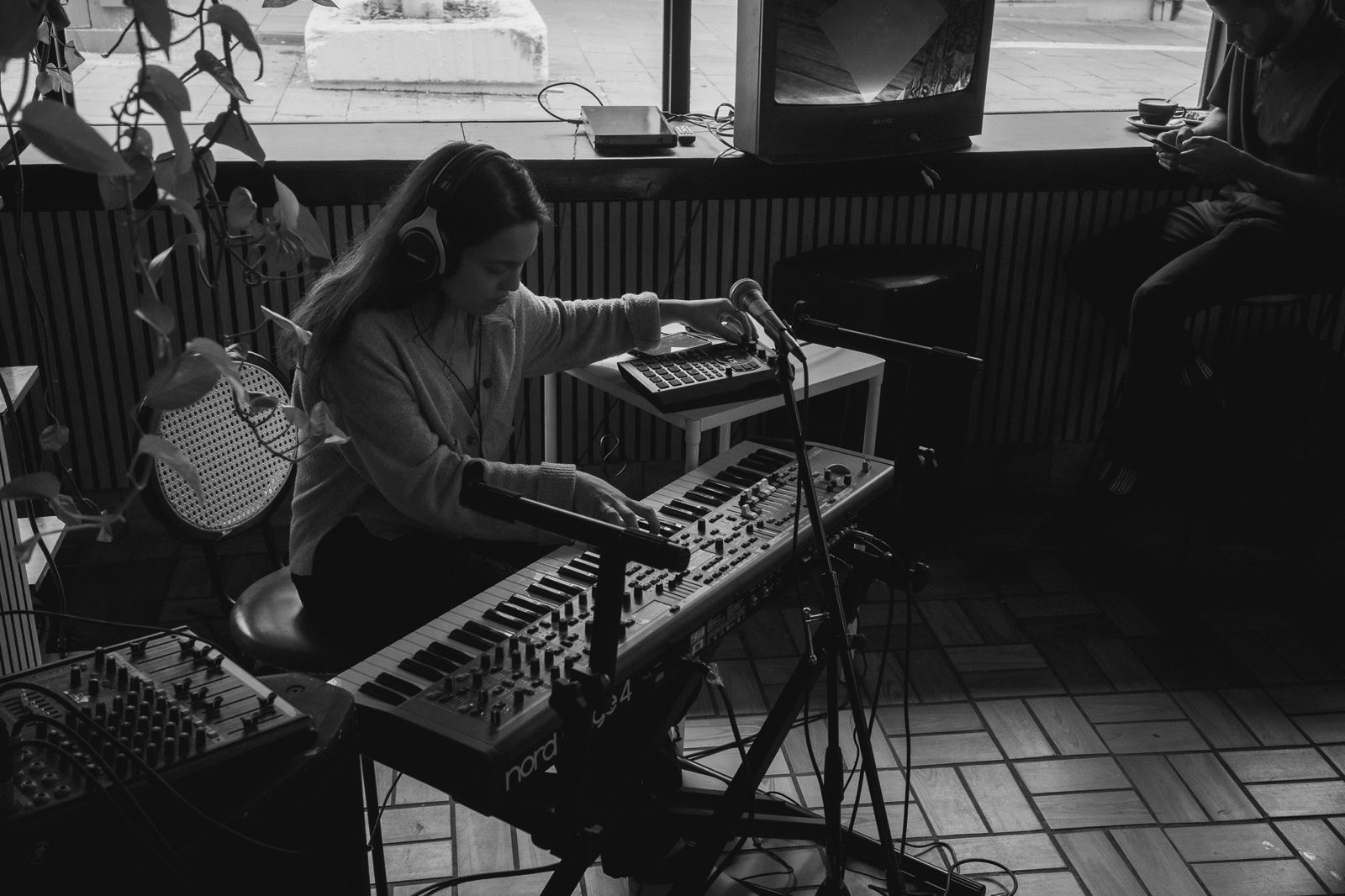
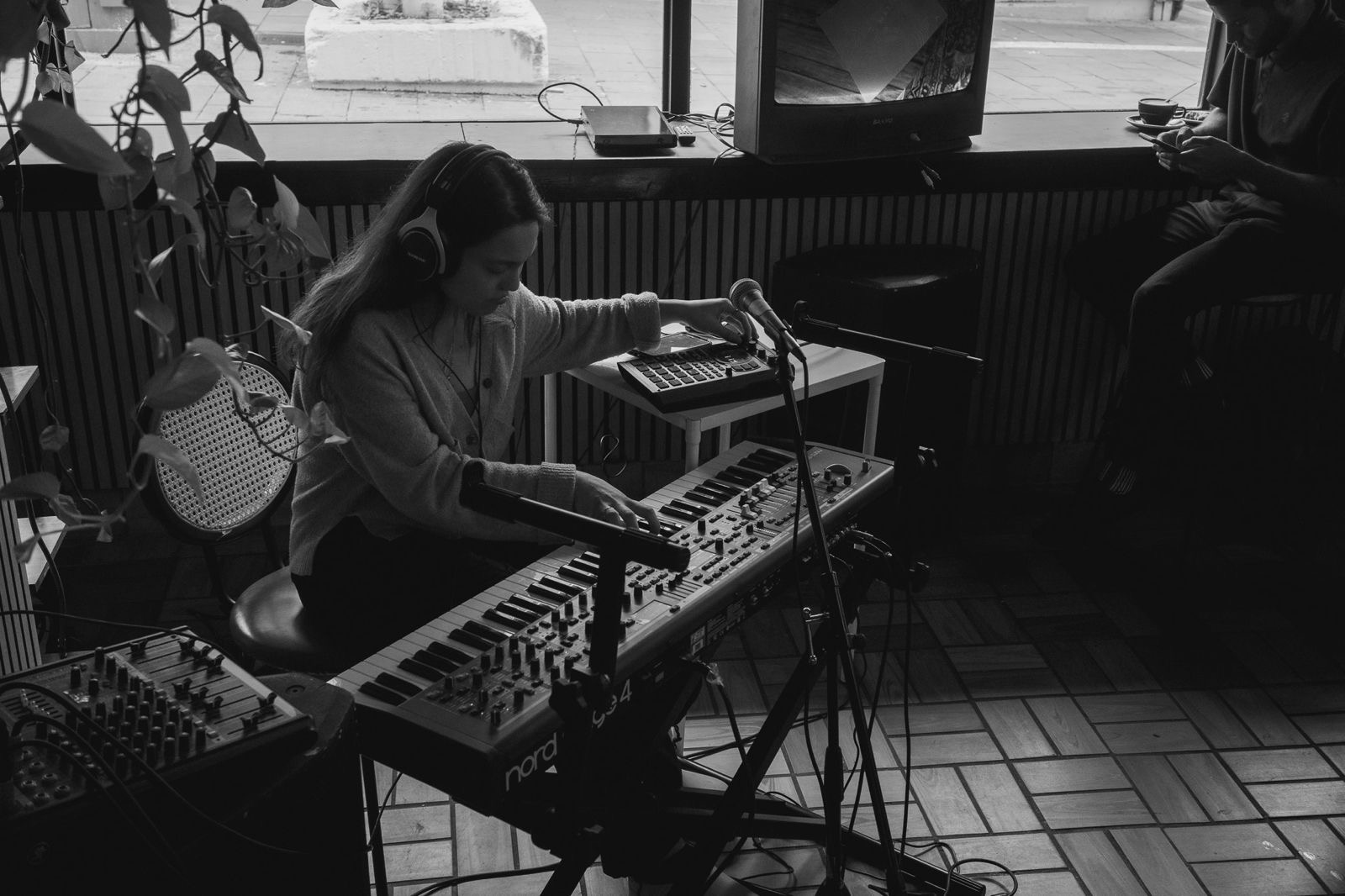
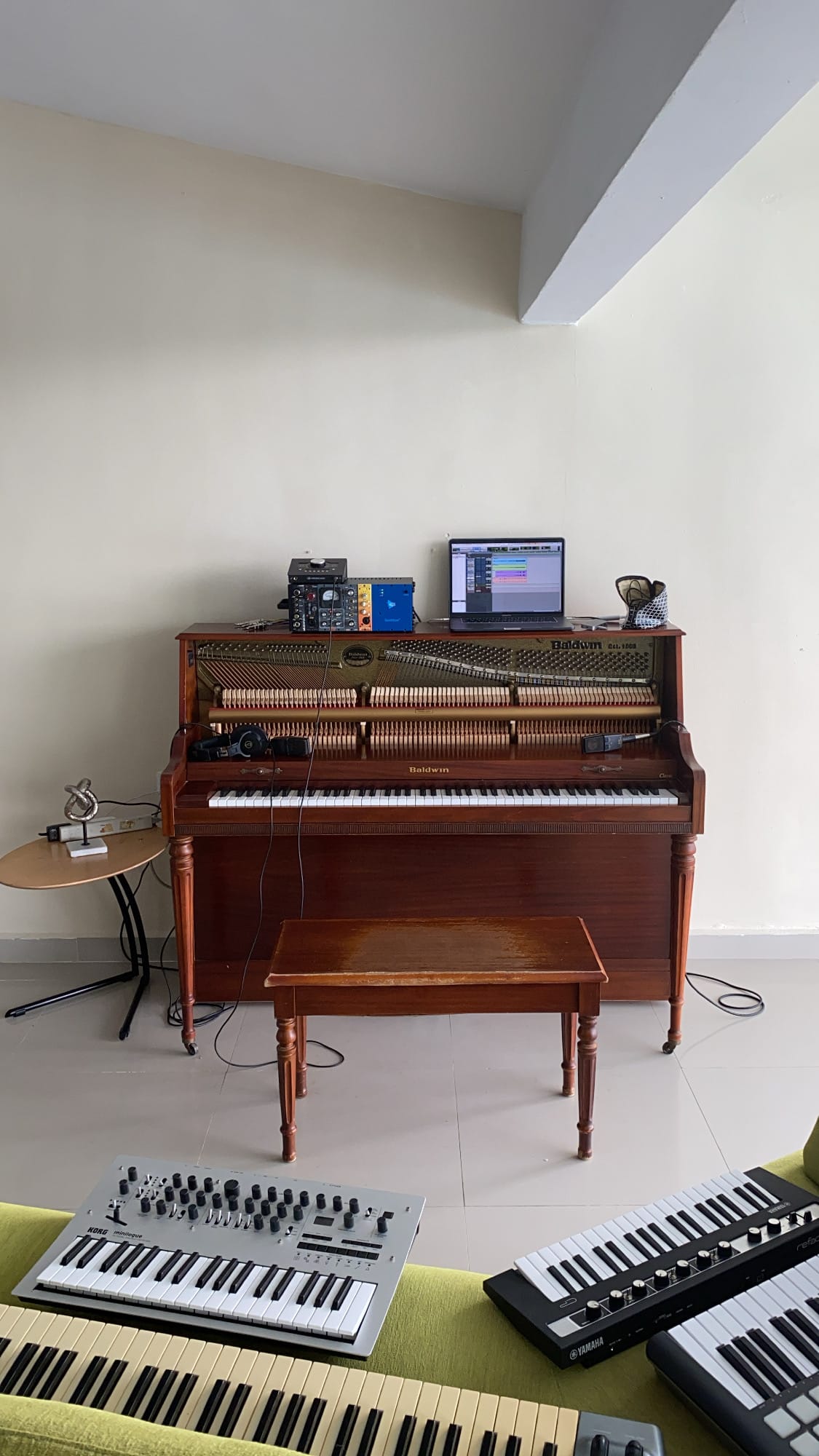
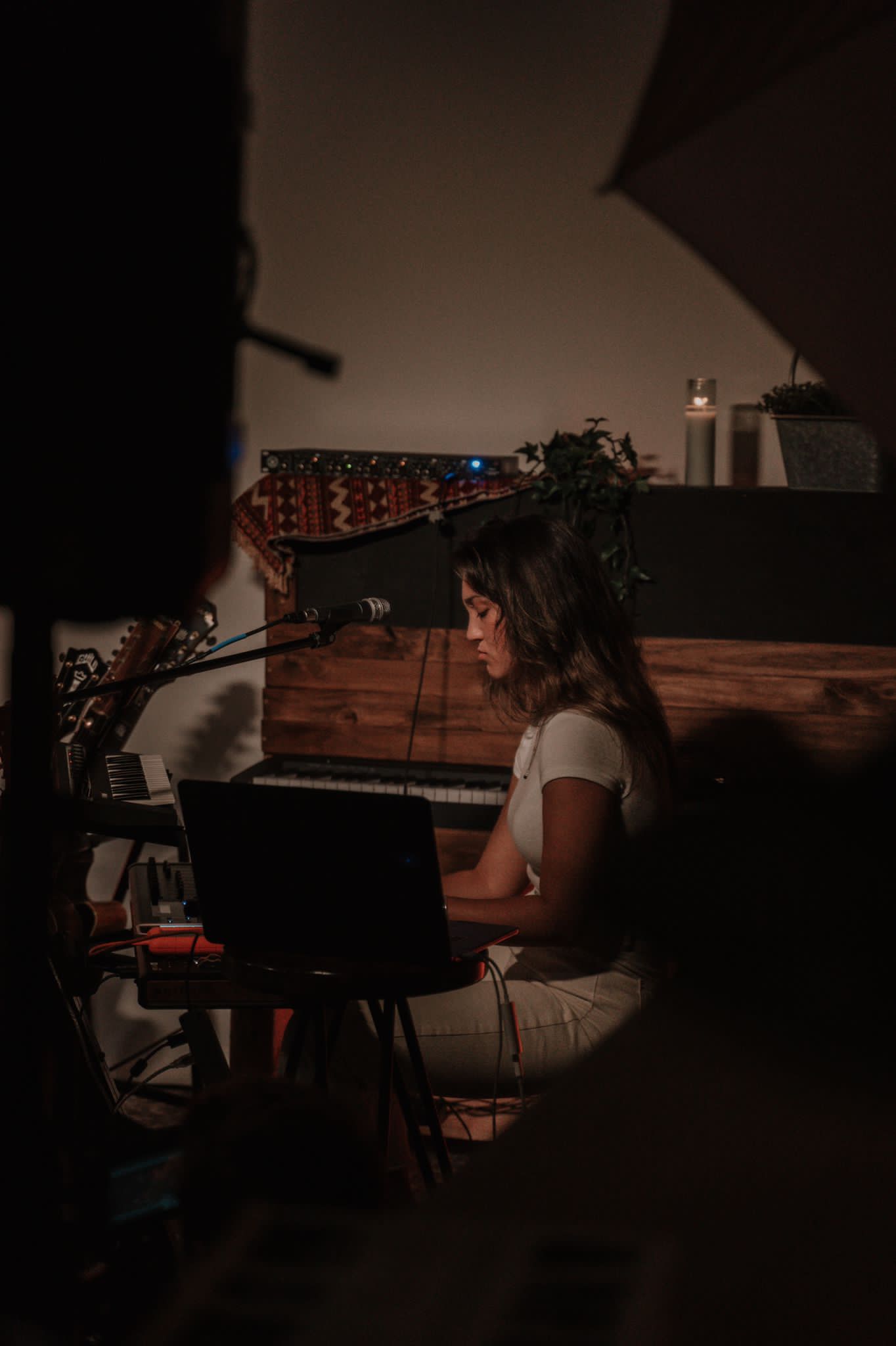
The piano is her main ally and company in this part of the process. It’s the instrument where she starts her improvisation. Then, she listens to the melodies she likes. She repeats them until a sort of song is shaped. She continues to record it and then listens to the song various times. She goes on a trip of changing and modifying the piece until she’s satisfied with the result.
That’s her composition process on a general manner, but when it comes to film scoring, the music must be related to what she’s seeing and the story being told.
“The process is more collaborative. It’s more of a conversation between the visual [elements] and what one listens to. There are times when you have to follow the story more, rather than doing what you want and however you want,” Román Louk said.
Emotions as Music
It’s more of a perfect combination between composition and improvisation to musically portray where the story is taking her. Regarding her personal projects, it mostly depends on what she’s feeling and how the chords, melodies, and rhythms help her convey those sentiments and emotions in her music.
At all times, she’s very clear on what she wants composition-wise. If the emotion is more nostalgic, she already knows what chords to use to reproduce that nostalgia. It’s based on music theory and knowing how to define a specific emotion musically.
“There are chords that make you feel a type of emotion that's more profound. They’re mostly minor chords. Some seventh [chords] and additional notes are added in because it gives off a bit of magic,” Román Louk said. “They’re different modes of a scale and there are different chords that bring another type of color and emotion.”
Listen to Tiffany Román Louk
0:00
/57.701333
In that search for the perfect sound matching an emotion, Román Louk relies heavily on her knowledge about music theory. That’s why she resorts to an ostinato, which she described as a repetitive melody. It’s like a loop and it originally comes from her love and passion for the neoclassical music and piano.
But when it comes to the raw emotional process to create the music, Román Louk thinks there’s no process per se. Sometimes, she does not decide how she feels. There’s no right way of being and feeling.
“What I can say is that you must keep yourself open. Through the process of creating, be as open as possible to make mistakes. In the moment of creating, you cannot judge yourself that much,” Román Louk said.
As long as she keeps herself open, whenever the songs are more formalized and the editing process comes through, it’s easier to shape the pieces. Her philosophy of an open mind makes the process way much more fun for her because it brings her more joy.
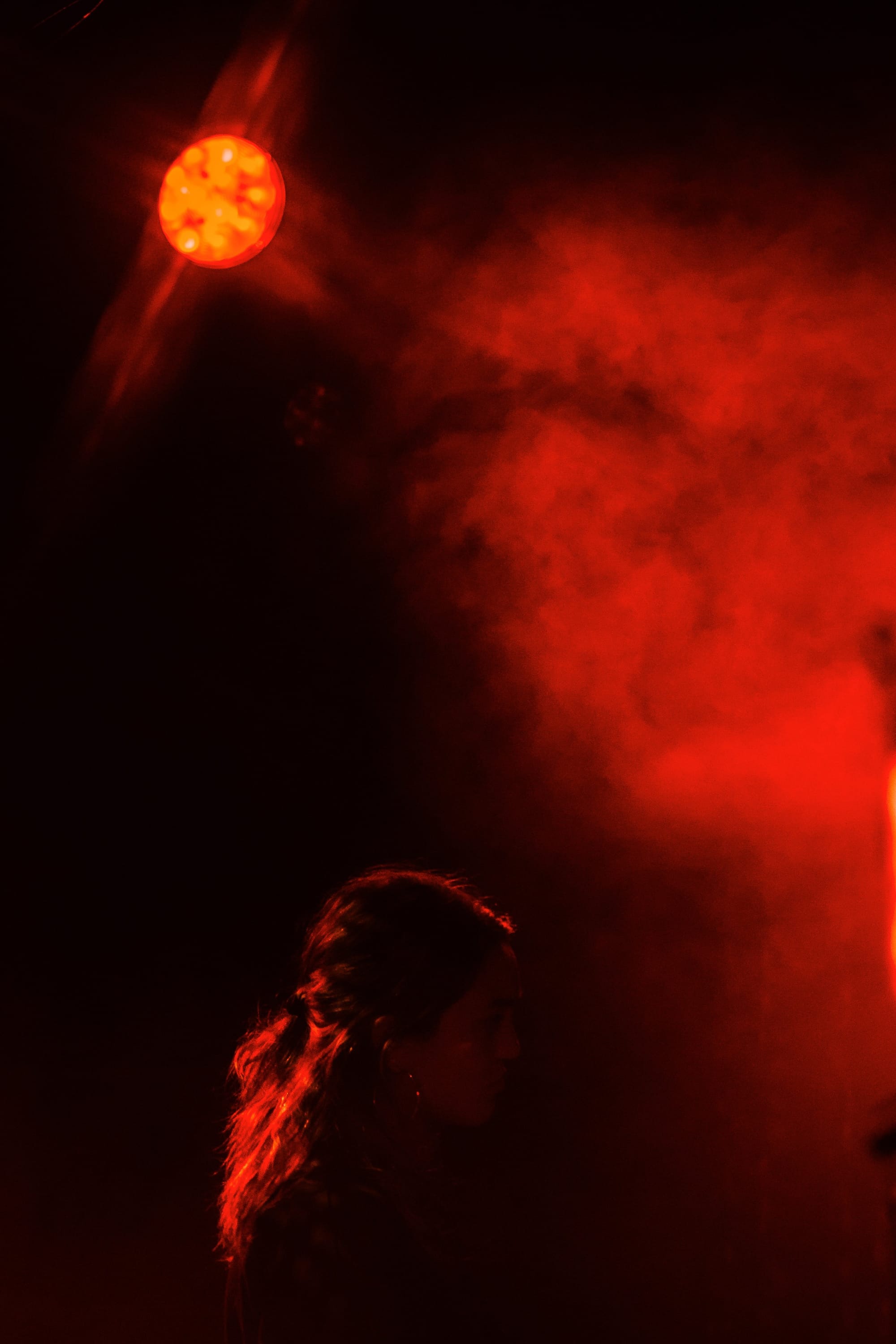
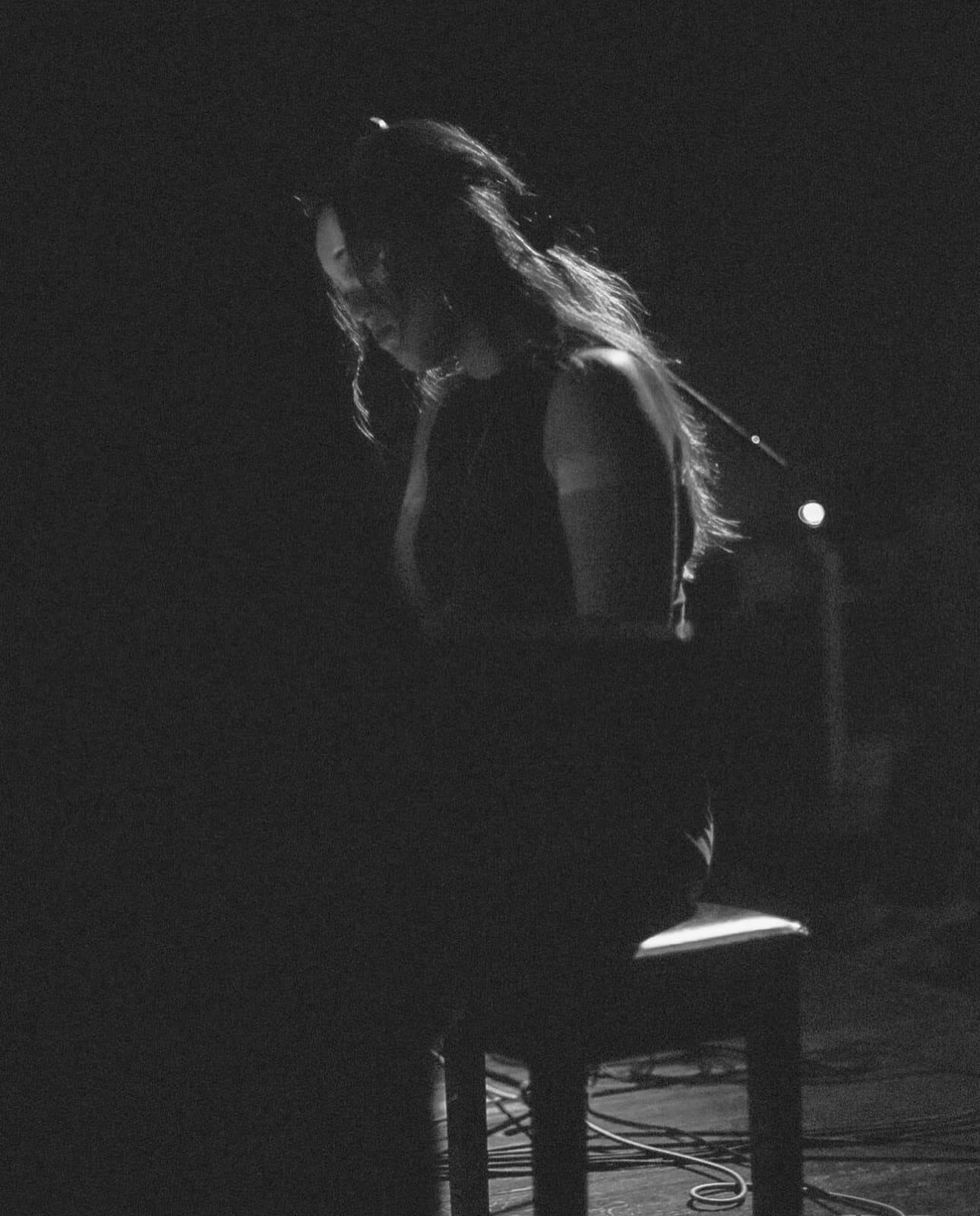
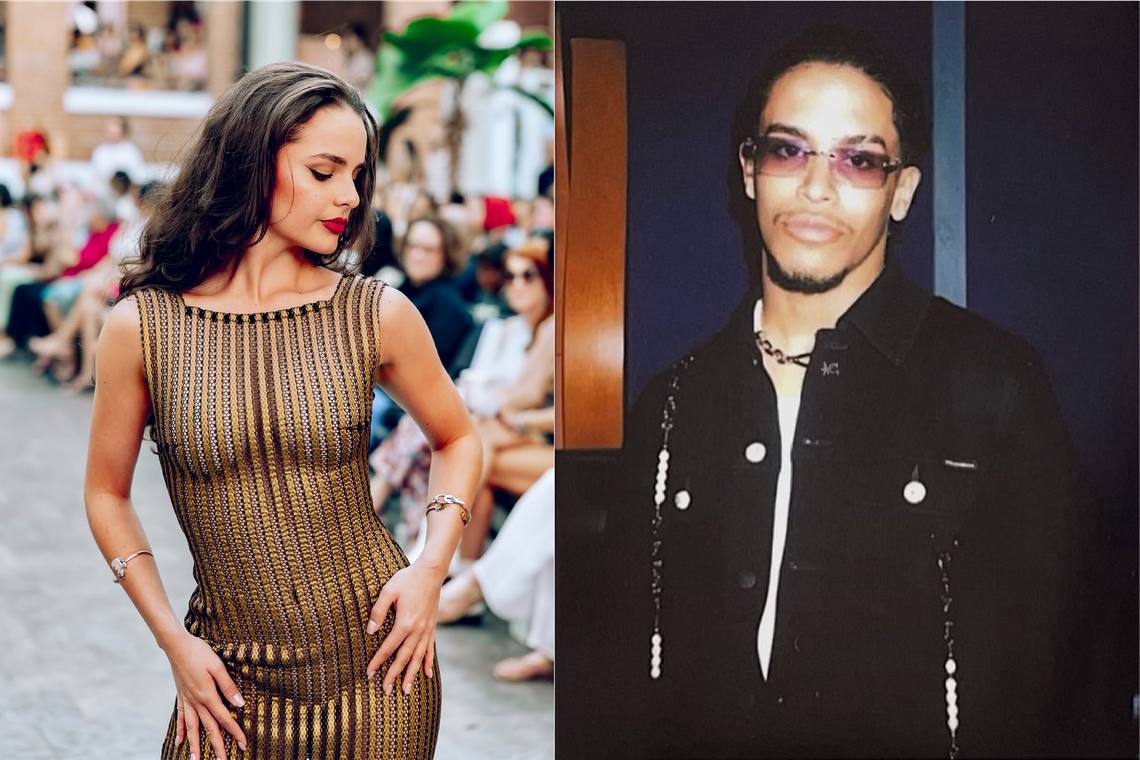
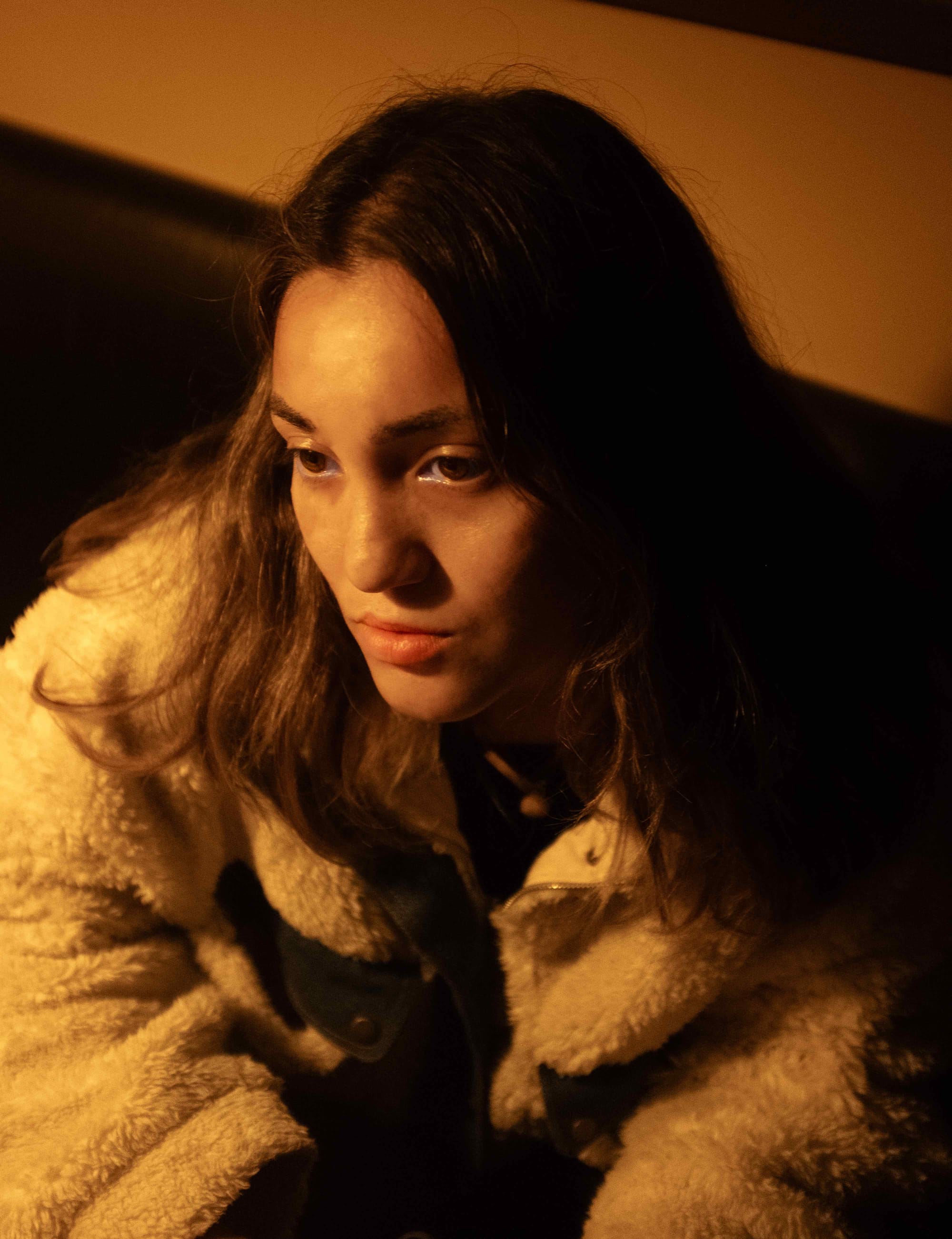
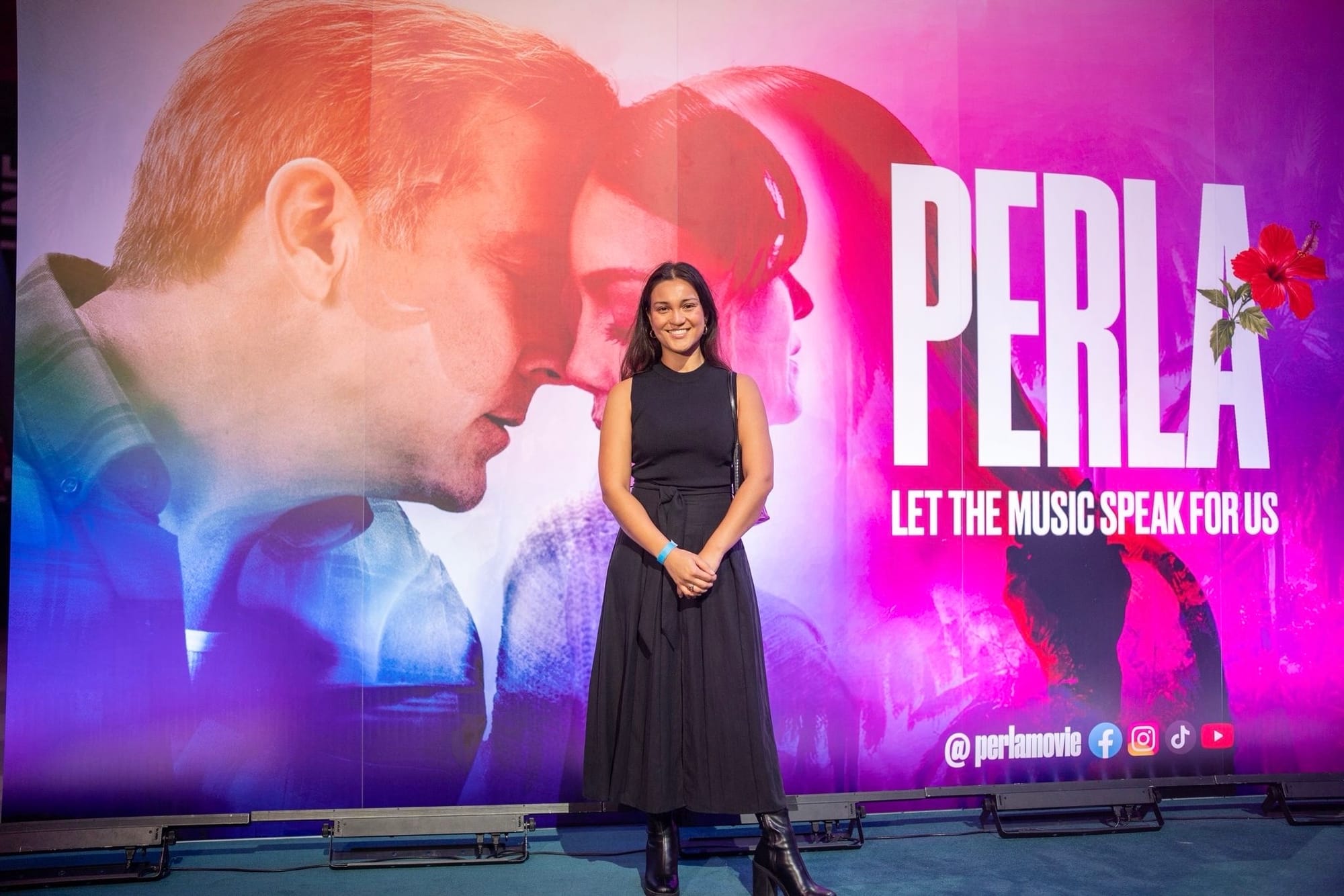
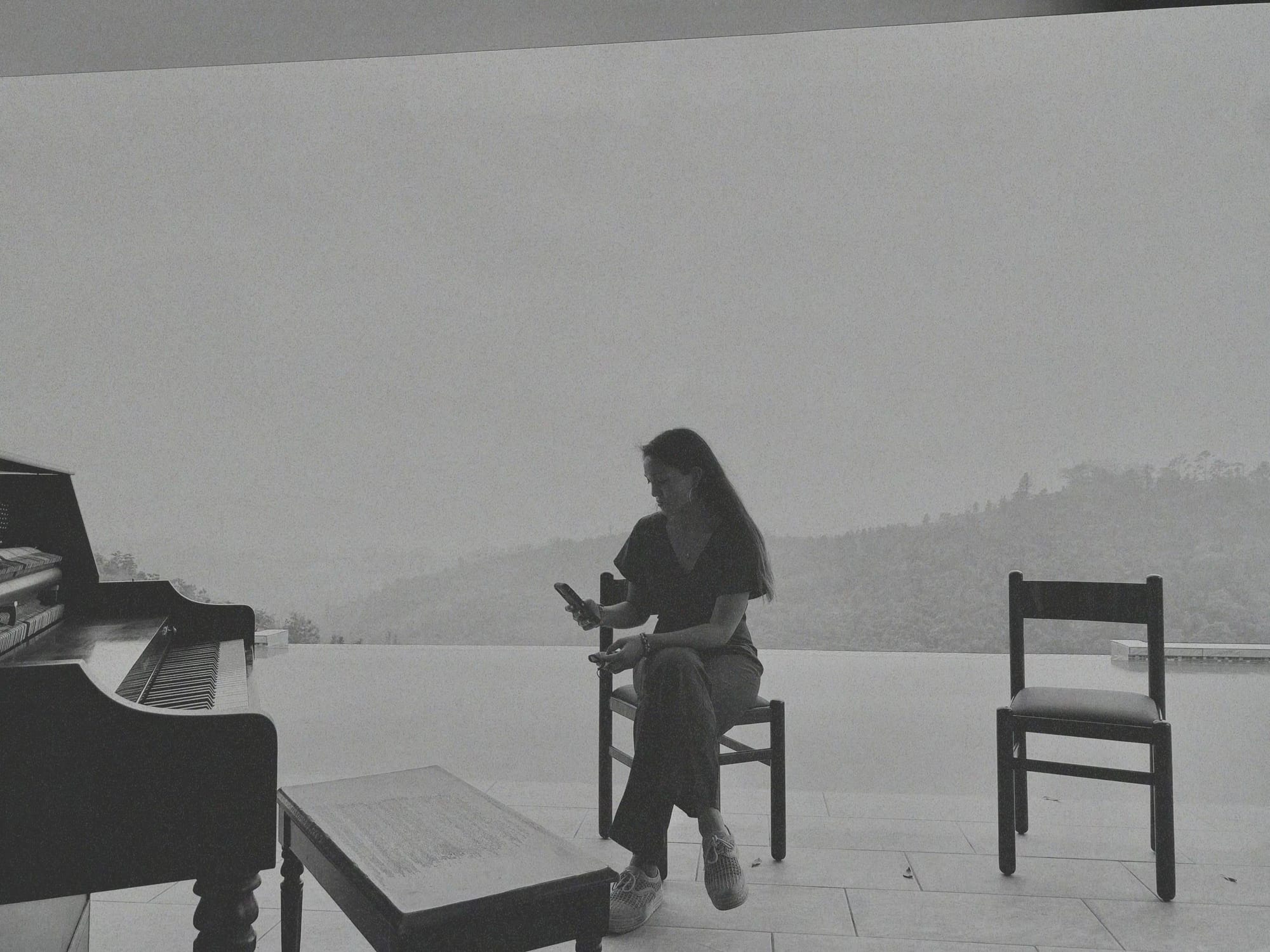
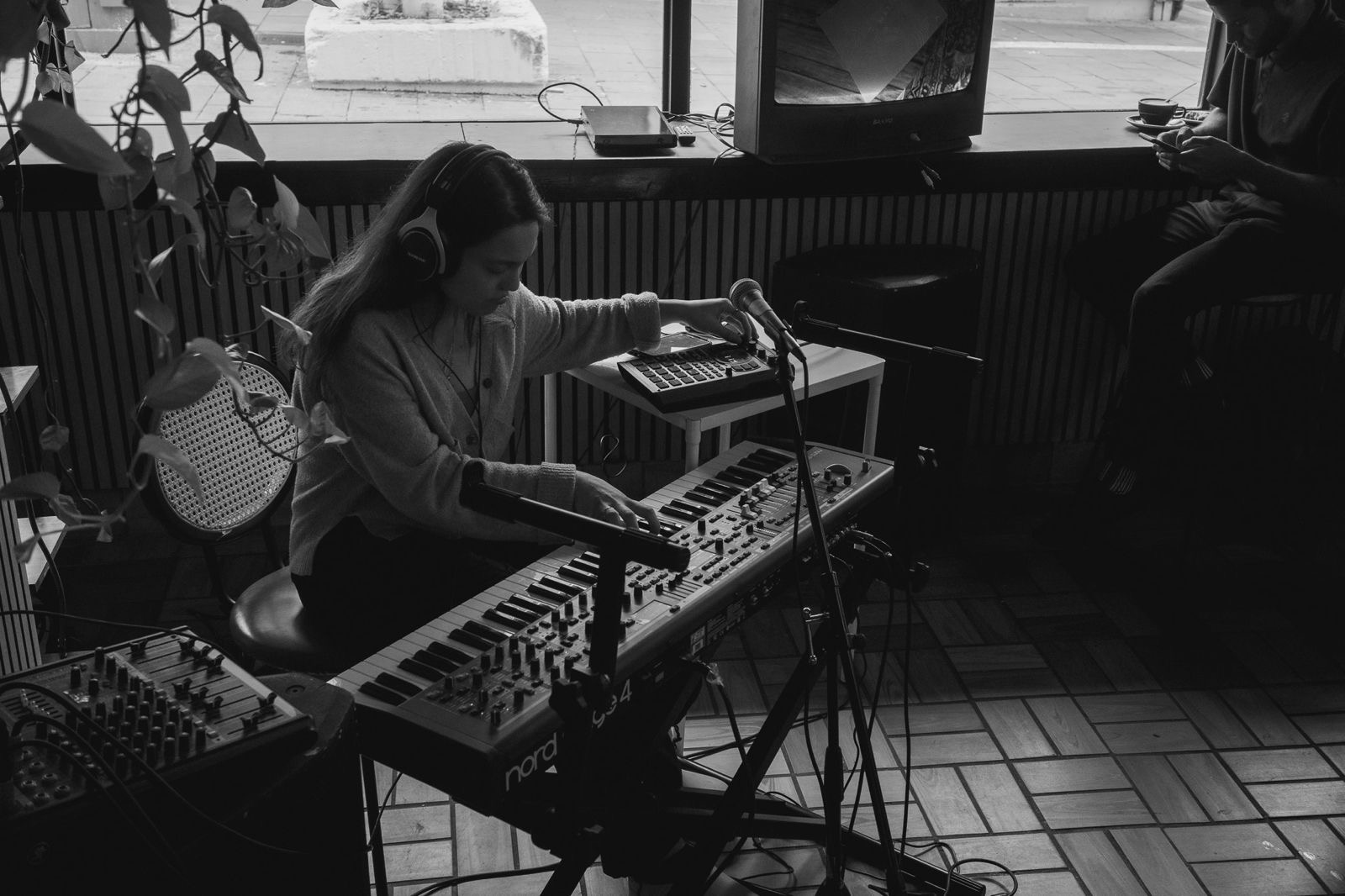
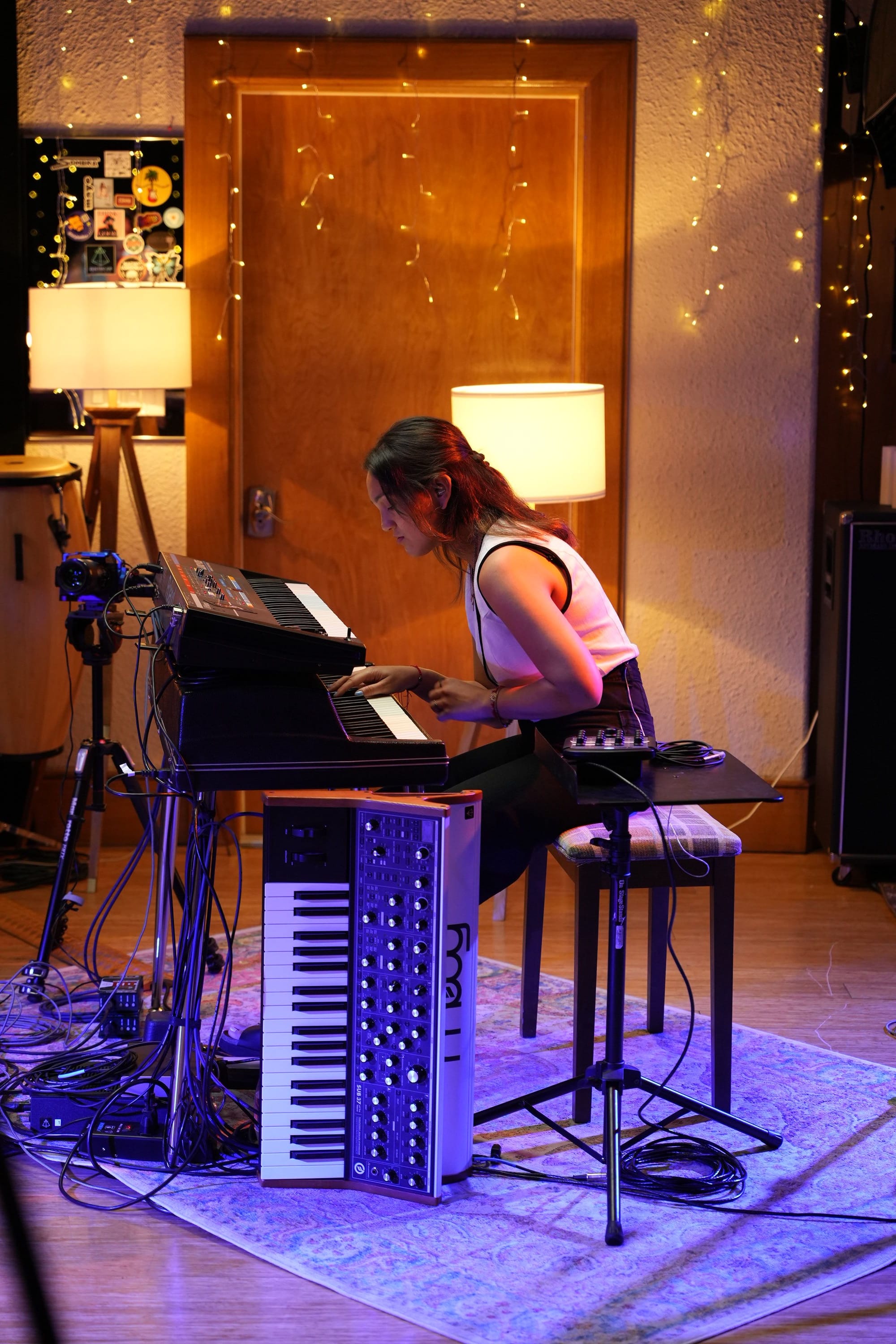
Tiffany Román Louk playing the piano. | Photos by César Berríos and Ana Paula Alonso. Courtesy of Tiffany Román Louk. | Impulsiva Stories
“It doesn’t matter how sad the song is,” Román Louk said laughing. “You give yourself the moment to experiment.”
The moment to experiment means exploring her inner world of nostalgia and sadness; a world she doesn’t even understand that much because she’s a really happy person. Román Louk is quite attracted and intrigued by that environment and she adds another essential element: surprise.
She loves for the listener to get a sense of enjoyment out of the sonic surprises she brings into her sound design. She relishes on creating sounds that are strange, unusual, and fresh. Sort of to keep the audience guessing and engaged in her musical masterpieces.
And even though she has a very clear idea that she’s very intrigued with the nostalgia and sadness when it comes to her original compositions, she believes that each person has their own interpretation.
“What I find sad, might not be sad for another person,” Román Louk said.
It’s as if it were subjective for each one of us how we experience music. How we connect with it and what feelings and emotions sprout when we listen to it wherever we are at in life during that moment.
And as long as her music connects with one person, Román Louk feels she’s already winning in life. Maybe the natural connection her music creates with other people relies on how immersive it is. At times it feels as if you’re listening to a film on your headphones. Or as if you're listening to a soundscape.
“It’s based a lot on giving surprises. In surprising yourself. I think it’s more about surprising yourself. I place [these elements] every four bars to make something new and there, you keep it up,” Román Louk said. “Something new is happening.”
Listen to Tiffany Román Louk
0:00
/22.685333
Musically Flowing with “melifluo”
It’s a sensorial experience because of how she keeps adding elements and layers to her masterpieces. It’s a playful practice between adding and removing pieces of the puzzle to make the emotion way much more surprising for the listener. Her EP “melifluo” is her debut solo musical project where you can actually experience all of this.
It was released in 2024, but it was a masterpiece she wanted to get out into the world for a very long time. Once she finished the tour with Benito, she knew it was time for it to come to live in the public sphere. Way back then when she was touring around the world, she created several demos she listened to while working and traveling.
“It calmed me down. With so much travel and time, you feel like you don’t know where you are or what time it is on tour,” Román Louk said. “I listened to that EP and it calmed me down. So, I wanted to release it. If it calmed me down, I knew it could also calm down other people.”
Listen to Tiffany Román Louk
0:00
/51.581333
Even though it was released in 2024, she sees it as a project that she wants to keep working on. One in which she can soon continue adding songs. In this moment, the EP contains five singles. Each one of them had a different creative process and a distinct source from where it began.
“paris layover,” for example, captures the nostalgia and solitude she’s very fond of. It’s the first song and she created it on an airplane when she was on her way to France. At the beginning you can hear the flight attendant speaking, which gives you an idea where you’re set – or where Román Louk’s mind is at.
She then ended up at a hotel and had a layover in Paris. While she was at the airport, she was quite impressed of how people were just walking around and really anxious to get to the next place. In that hustle and bustle, there was something that stood out to her: a baby sitting on a chair laughing.
“There’s a sound of a baby almost at the end that can be heard in the distance. I was really drawn to the idea of like: wow, I’m here at an airport full of people and everyone’s going to their destination,” Román Louk said. “But no one is smiling, except the baby.”
Listen to Tiffany Román Louk
0:00
/36.725333
With “septiembre,” the process was a bit different. She describes this song as neoclassical. There are various chords reminiscent of her beloved genre and it was done in one take. She was in a studio in Barcelona, Spain and recorded the piano. She loved the sound. It was very pleasant and relaxing. Once she released it, she noticed that it calmed down others, which motivated her into doing more pieces like that one.
The next piece, “i don’t know what to say,” was more about experimentation with voices, analog sounds, and synthesizers. It was all created in her computer. To a certain extent, it’s the merging of the analog and digital methodologies and sounds. It’s a deep exploration of ambiance through different and unusual rhythms, chords, and melodies.

Then, “verano 2016” comes through. Román Louk sees this song as a summer day at the beach with a group of people. With those friends that are not present anymore in your life. It feels like that; at least it’s what she wanted to convey through her rapid beats and fresh sounds.
And the last song is “azul,” which is in reference to the blue sky. It’s about this concept that the sky is always blue, but she was also exploring different hues of this color. That tonality made her question what it would sound like. It was part of her ongoing queries about moving through different spaces asking herself how these environments sound or how her lived experiences become marvelous masterpieces.
That’s where her imagination reigned freely and saw no limitations. That’s where even colors translated into sounds. Her EP’s cover is a bright and brilliant orange. And her song “azul” makes you feel blue, whatever that means.
“I think that the day I composed that song, the sky was very blue. How does that song make me feel? It makes me feel like a certain type of blue,” Román Louk said laughing. “But I don’t know. The cover is orange and I’ve always loved that color.”
Listen to Tiffany Román Louk
0:00
/33.293333
Orange is warmth for her. She does not know if it means something in particular. If it’s about friendship or something genuine, but she wanted orange to be synonymous with a certain flow.
Maybe it’s a certain flow within the pieces or the colors themselves. Maybe it’s a certain flow about a universal experience with which anyone can identify with. Or maybe it’s about a genuine, real, and humane familiarity in how she creates music and the themes she tackles through her piano, composition, and production.
The Humanity in Alzheimer’s Disease
Creating music for projects that speak about the human experience and people's real lived personal narratives is a main interest for her. You can really grasp that from the film scoring she carried out for the documentary “Reaching for the Sun,” which speaks about Alzheimer’s disease and the scientific advancements for the disease, its diagnosis, and treatment.
“I was very drawn to it because it’s real. It’s human. I think it’s important for me to have projects like these that fulfill me. That they’re genuine,” Román Louk said. “So, this project has a type of music that goes hand in hand with the music I create and love doing.”
Listen to Tiffany Román Louk
0:00
/32.549333
It worked really well for her. The documentary was released in 2024. Before its launch, an agency from New York reached out to her. They told her they had a project about Alzheimer’s disease and technology, which is a science that seeks to hopefully find a future where Alzheimer’s can be eliminated.
Throughout the documentary, the disease itself is explained by three different doctors: Dr. Marwan Sabbagh in Arizona, United States, Dr. Takeshi Iwatsubo in Tokyo, Japan, and Dr. Craig Ritchie in Edinburgh, Scotland. The experts’ knowledge is combined with testimonies of people suffering or caring for relatives with Alzheimer’s and dementia.
The story is told from a very humane perspective in which emotions are at its best due to the sensitivity of the subject. Given this, Román Louk composed its music in a manner that it accompanies the story rather than it being a distraction of what is being told.
Whenever she composes for a film – regardless of the genre – she creates music that’s effective. It always depends of the story being told. There needs to be a relationship between the visuals and the music. The piece must mark certain moments on the screen, but without being obvious.
“It’s more like a music bed. You feel it, but don’t notice it’s there,” Román Louk said.
And even though this documentary doesn’t specifically speak about the relationship between music and the brain, Román Louk does know that music has a strong relationship with memory. People who suffer from Alzheimer’s disease might listen to music and remember about things from their past that, otherwise would not come to mind if it weren’t for a specific song.
“I think it has a lot to do with that relationship with the brain and even more with the body. You listen and remember moments immediately,” Román Louk said. “It’s like: I listen to a song and quickly, it reminds me of a moment I was with that person or that I went to a concert with that person.”
Music is many things for Román Louk. It’s her neoclassical reggaeton. Her reason to exist in this world. The magic that brings excitement to her life.
It’s that intangible thing that takes her to different countries around the world to perform live. It takes her on wild collaborations with many different artists. It brings her to a deeply sensorial state reflecting about herself and the humanity of those around her.
It's the reason why she started as a musician in her childhood and continues it into her adulthood.
It’s also the reason why she feels a lot of pride being from Puerto Rico and being able to share with others what she’s learned throughout time. She also knows that there are other women in Puerto Rico who can identify with that sentiment and she takes it very seriously to keep opening spaces for others to travel on this path as an artist.
She seeks to inspire, but also continues to travel on an endless learning path.
“I’m still expanding myself. I don’t think that I’ll ever finish this discovery process, but I do see that this love for music will keep growing. I feel closer to myself. It makes me a better person,” Román Louk said. “I understand that time on this planet is very short. So, if I use it for music, I’m very happy with that.”
To learn more about the magic in Tiffany Román Louk’s deeply sensorial and humane music, you can follow her on Instagram at @tiffanyromanlouk.
Written by

Subscribe to my newsletter
Subscribe to my newsletter to get the latest updates and news