Richie Morales PART II
Richie Morales explores time and memory in his series "Los Efectos del Tiempo en la Memoria."
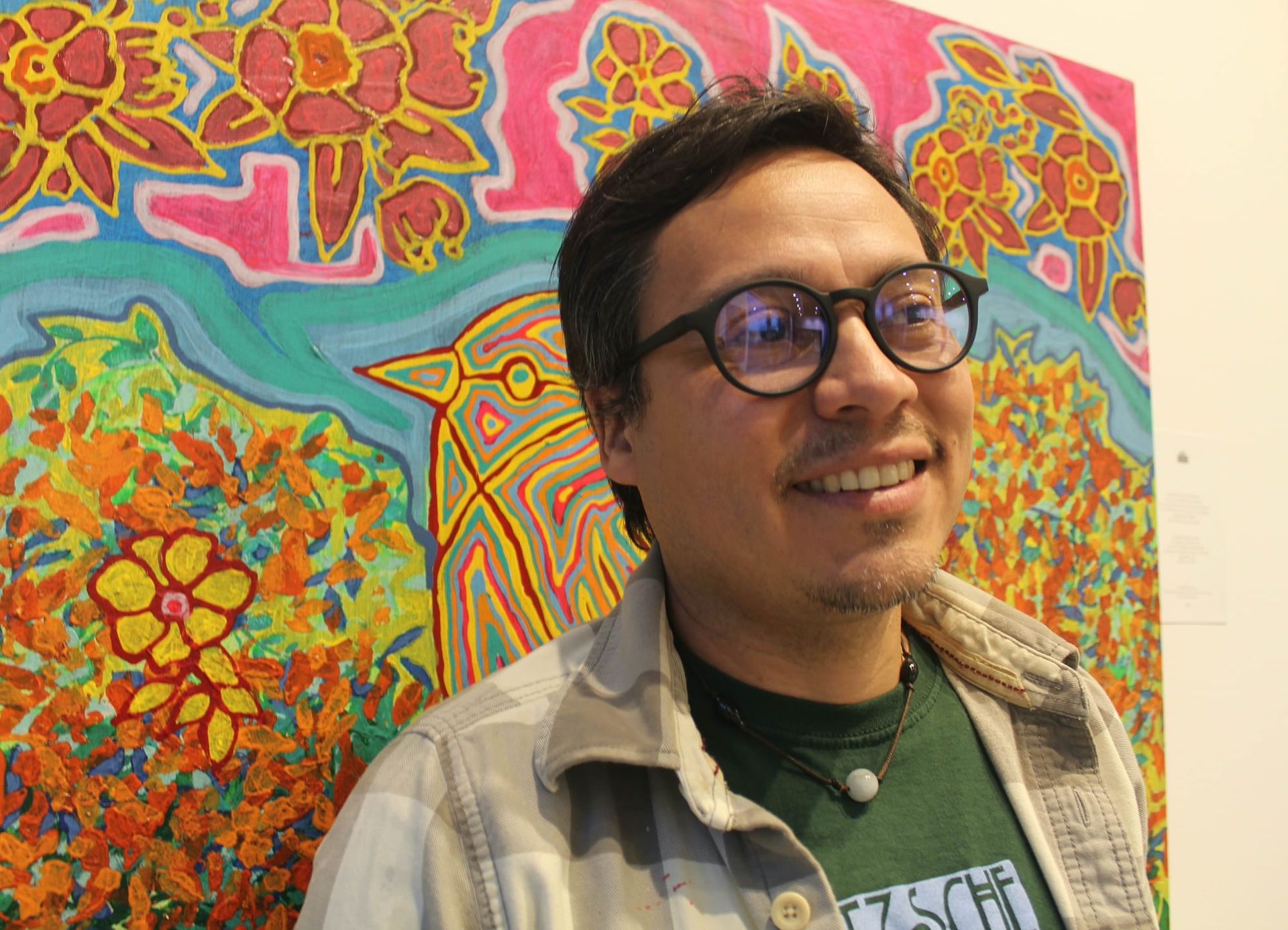
PART II: Richie Morales’ Powerful and Healing Guatemalan Paintings
In PART I, we explored Richie Morales’ emotionally social Guatemalan paintings. Now, you’ll notice a different side of Morales. You might even think that you’re seeing paintings from another artist because of the abysmal change in themes and color palettes. The emotions and motivations to create changed as Morales grew as an artist and person. The messages he wants to communicate to the world also changed because of his personal evolution.
Remember, the Guatemalan self-taught artist and painter did a residency in Vermont. Afterwards, thanks to a friend, he went to Madison, Wisconsin to do a mural at the Centro Hispano (now called Centro). There, he met Geraldine Paredes Vázquez, who is currently the CEO of the non-governmental organization YWCA in Madison. They met and then got married.
“I came here and painted. One thing led to another and I stayed. I met my wife here and I stayed here. Since then, I’m here,” Morales said.
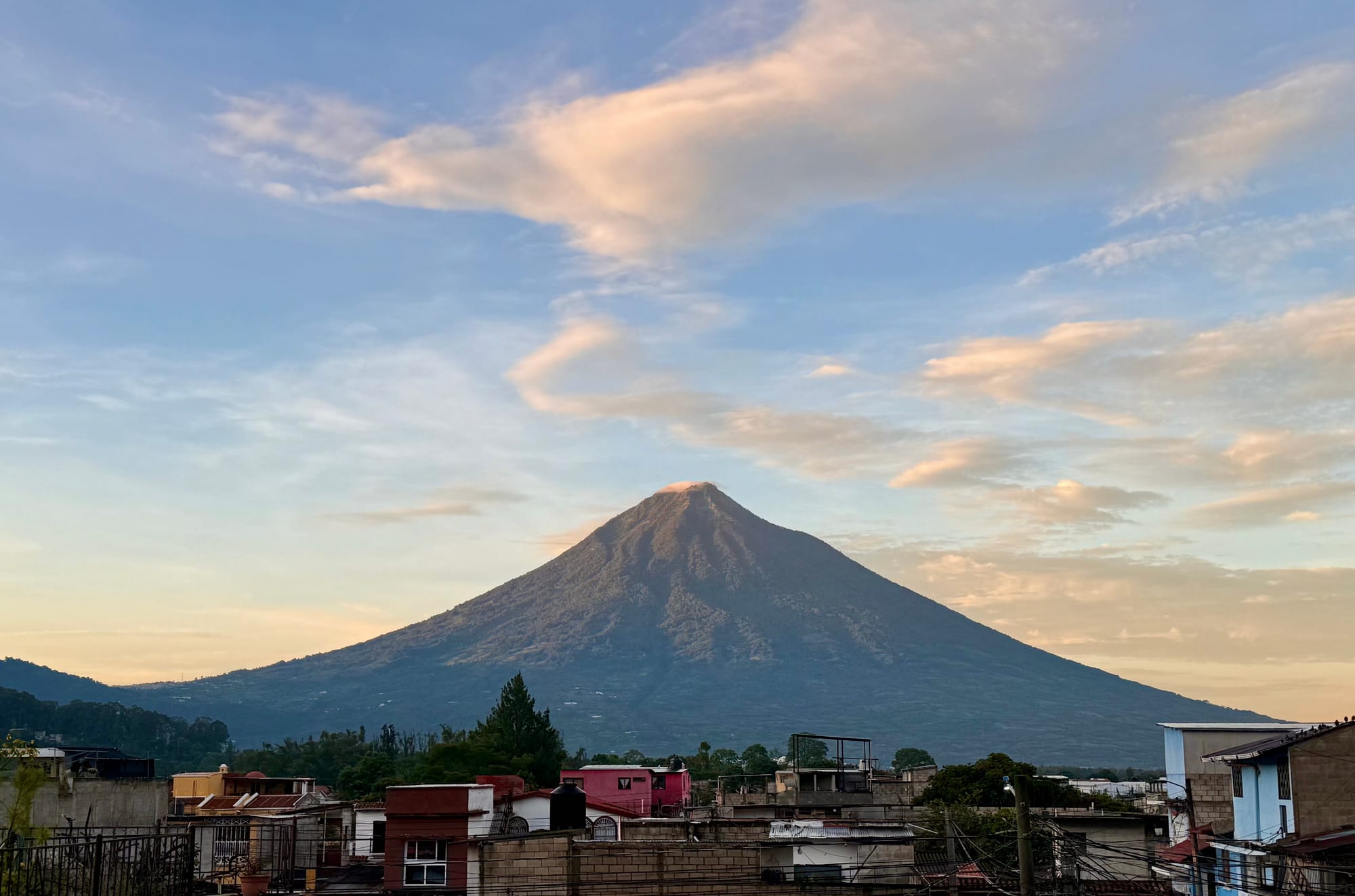
Then, for a brief period, they lived in Costa Rica because Paredes landed a job as Director of Experiential Education at the United World College. During their time in Costa Rica, Morales felt the pura vida nation shared a strong similarity with his home country of Guatemala. Geographically, it felt the same because of the volcanoes.
The Arenal Volcano in Costa Rica reminded him of the Fuego Volcano in Guatemala. It felt like home for him, but with a slight difference in the slang. He enjoyed the time in Costa Rica because people were really welcoming with them and then, after two years, they returned to Madison around the end of 2018 or beginning of 2019.
Don't Forget to Subscribe to The Story of The Story
For only $16 a month, every Friday you'll have exclusive access to
The Story of The Story. Our founder, the Costa Rican award-winning multimedia journalist and artist Elizabeth Lang, guides you through her creative process to produce her stories.
They wanted to look for a place to establish themselves. A place where Morales could have a studio and a stable job. That was when his art began changing and morphing into very vibrant masterpieces that showcase Guatemala’s colors in a very powerful and healing manner.
He started looking inward and began creating from a place of healing rather than denouncing violence. It became much more personal. But at the same time, it became an art practice that speaks about the cultural vibrance of Guatemala.
“By taking a distance, I started healing. I started realizing that I needed to heal as a human being,” Morales said. “And I also needed to reconnect with other aspects in life.”
Listen to Richie Morales
0:00
/17.981333
When he moved to Madison, he started immersing himself more in the nature that the city has to offer. He started noticing that his reality was not violent like it used to be in Guatemala. He stopped watching the news and started reading other things, which allowed this new art to sprout.
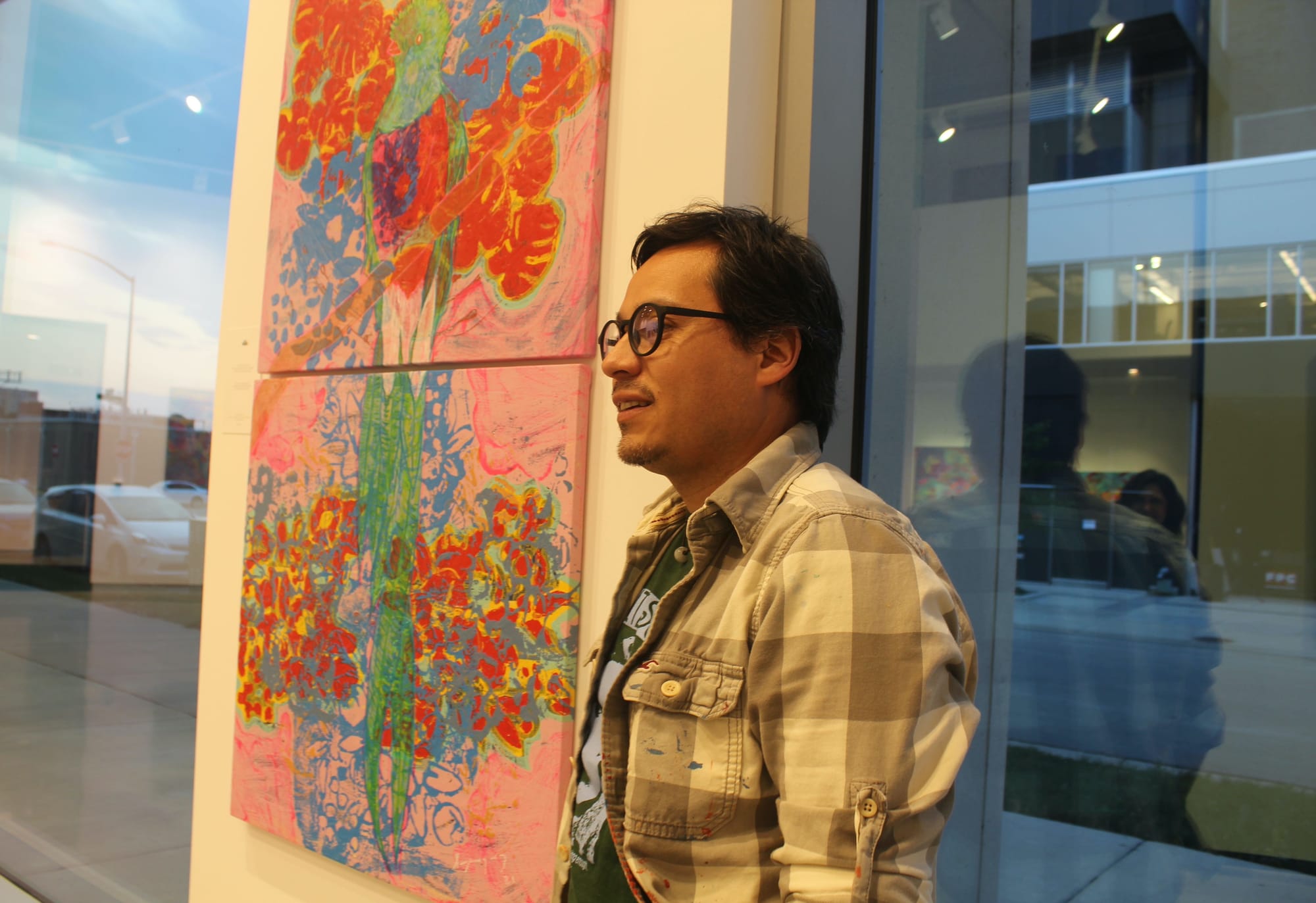
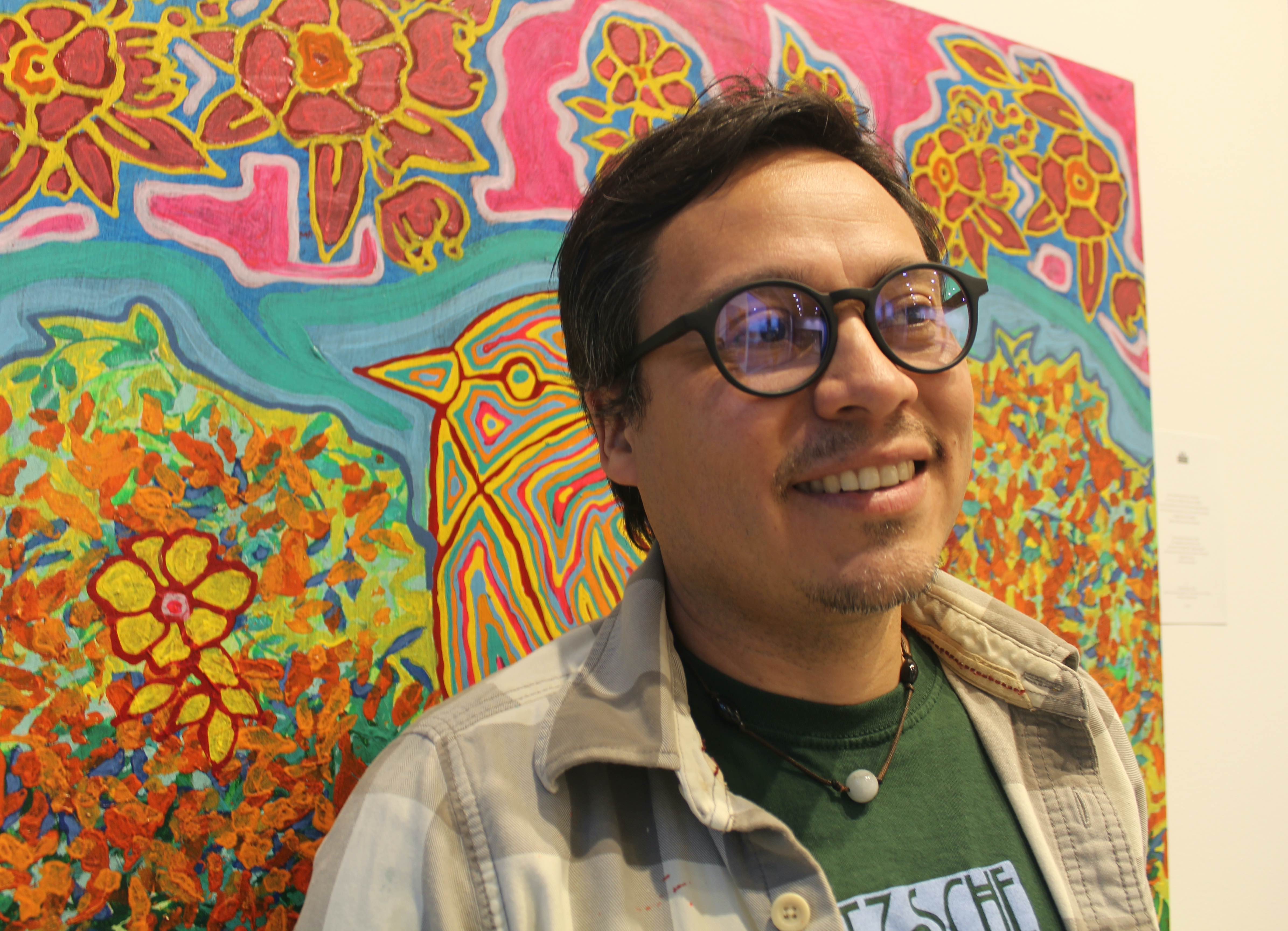
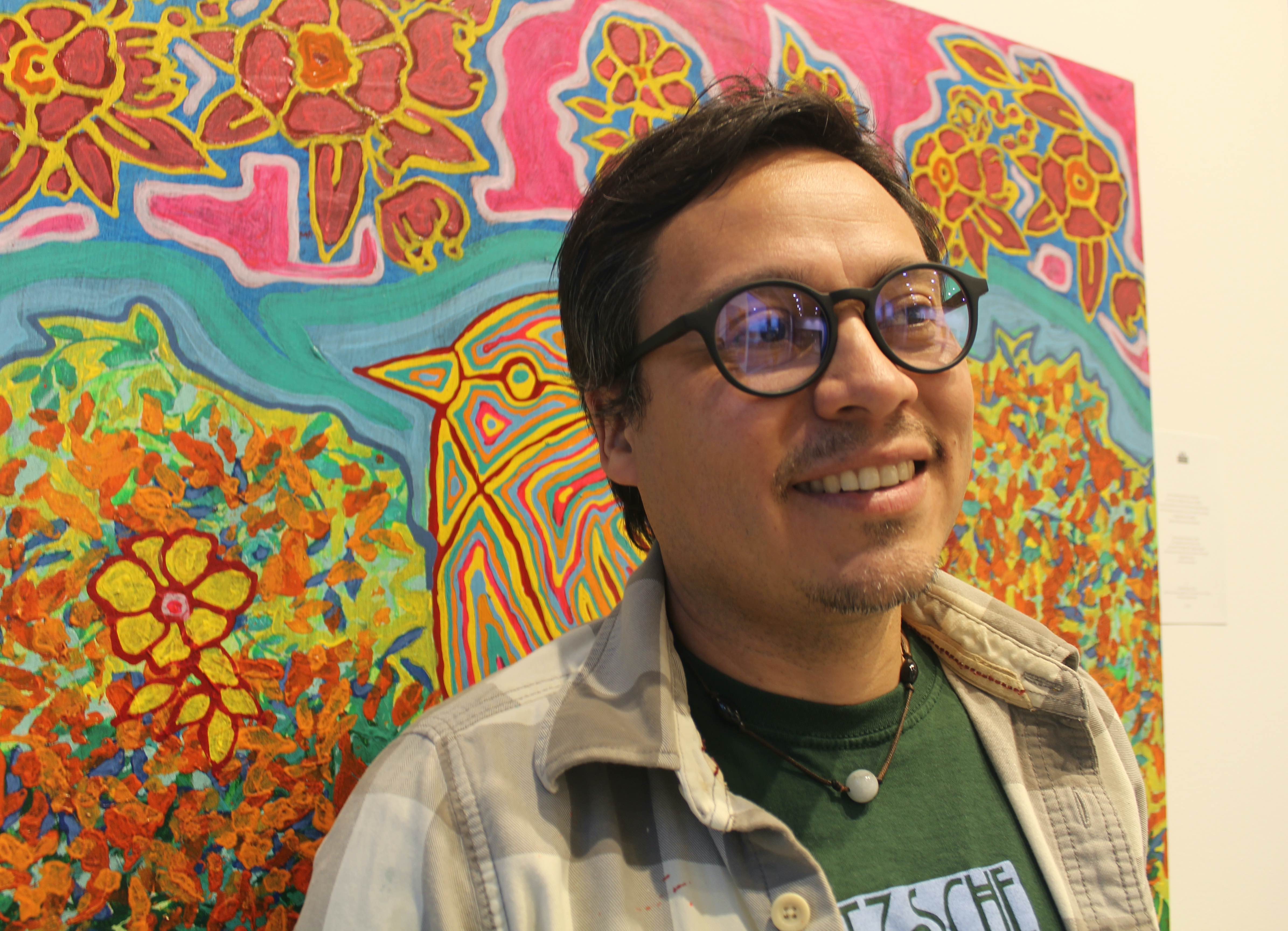
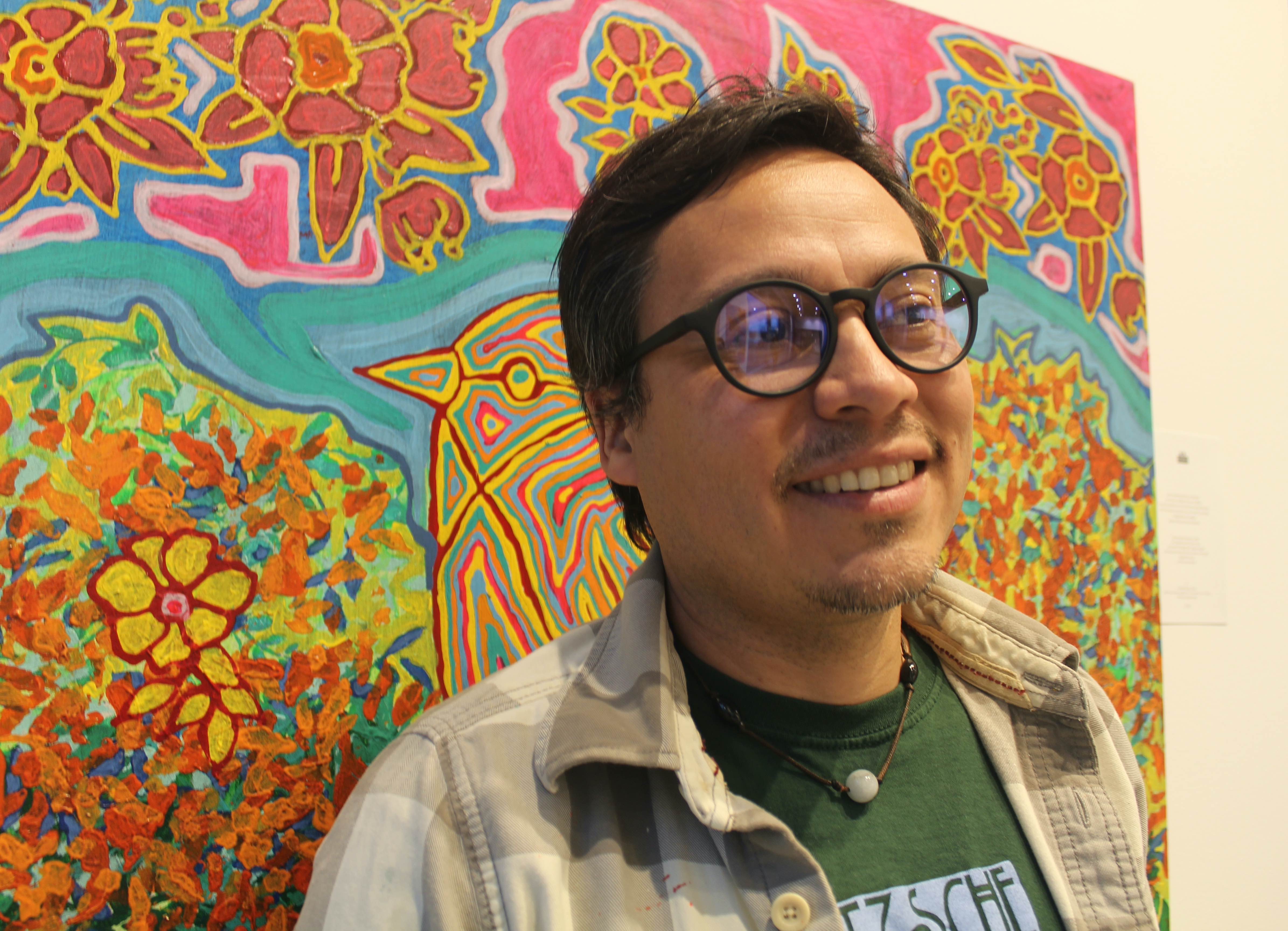
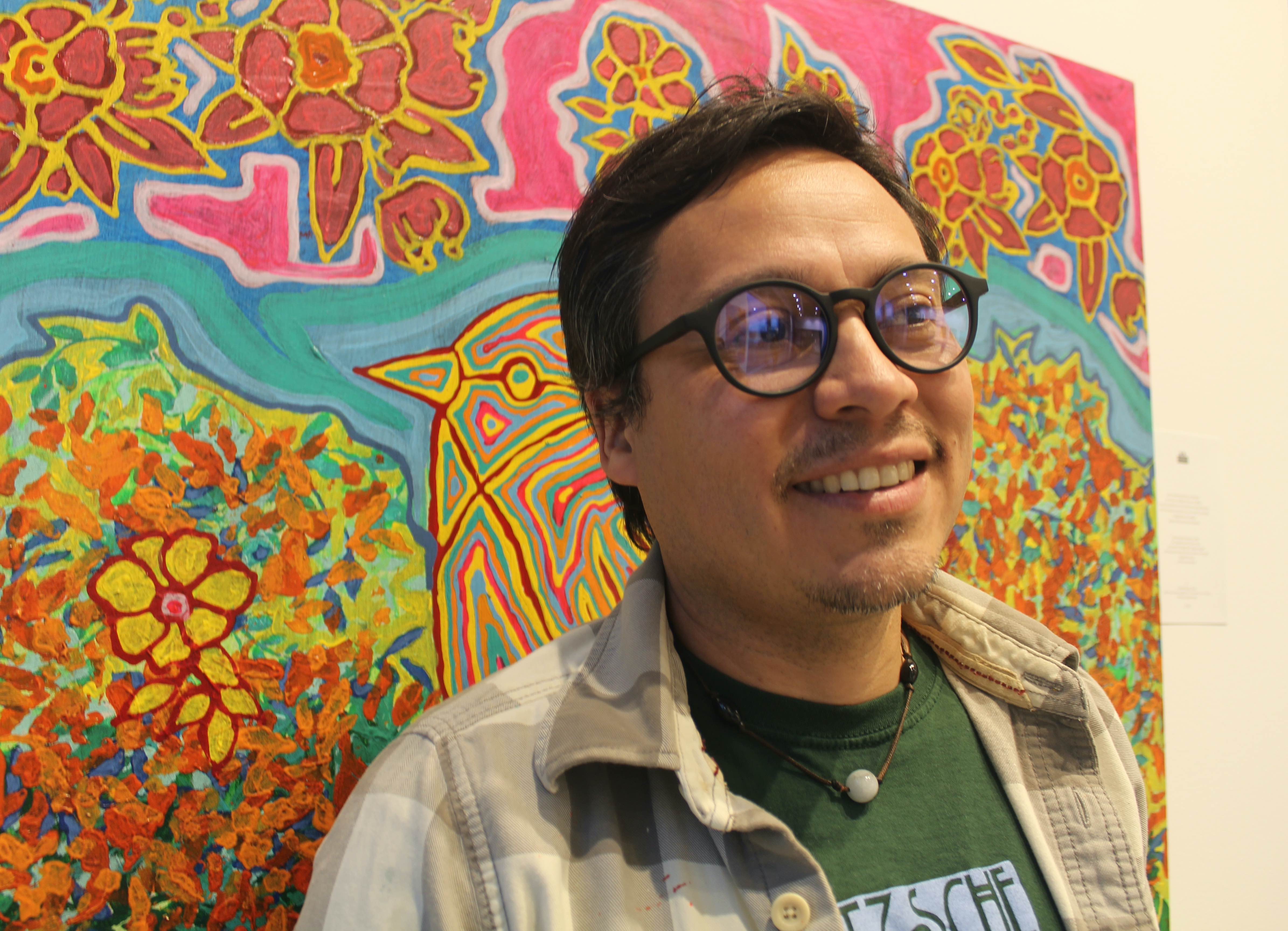
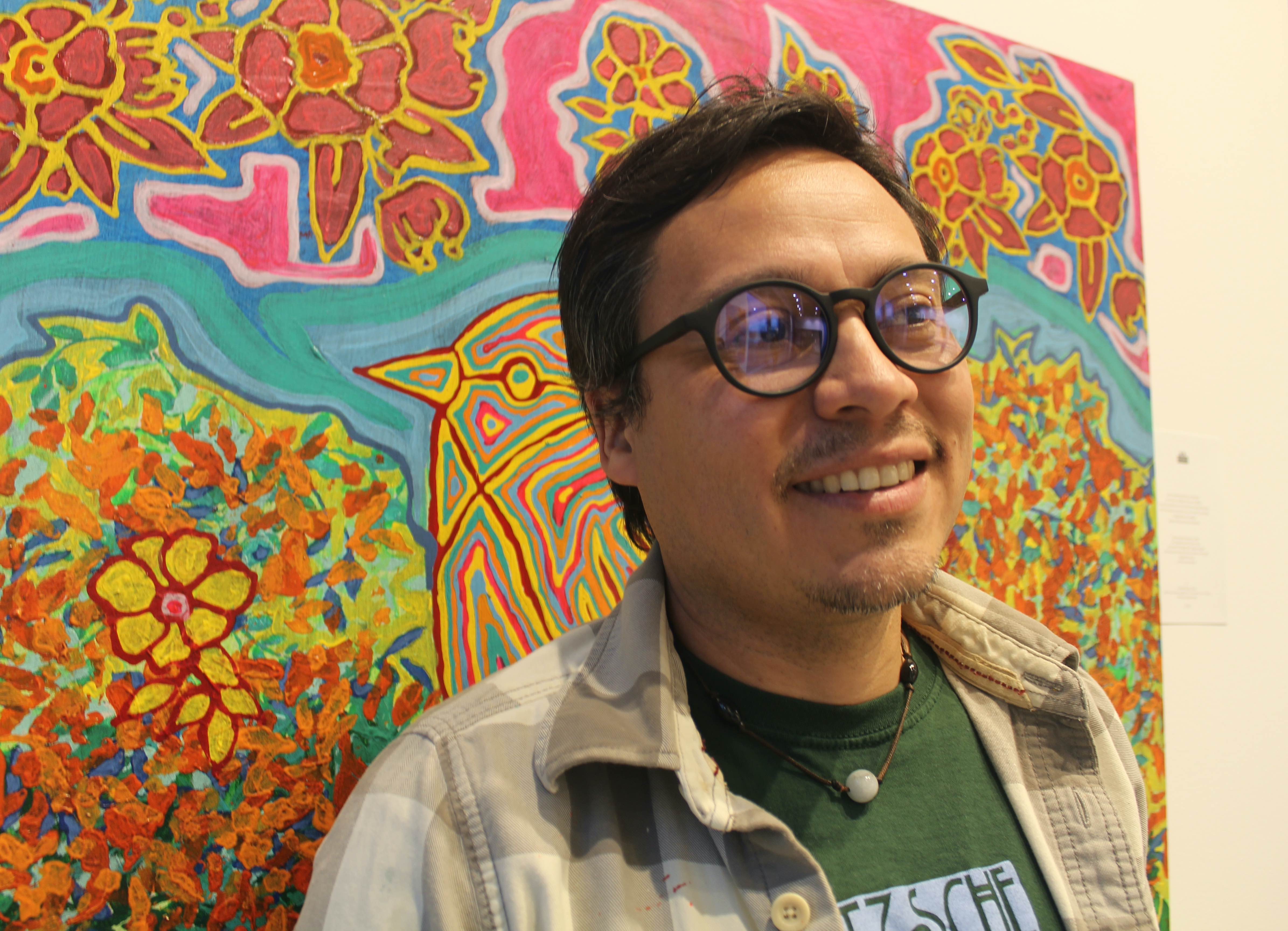
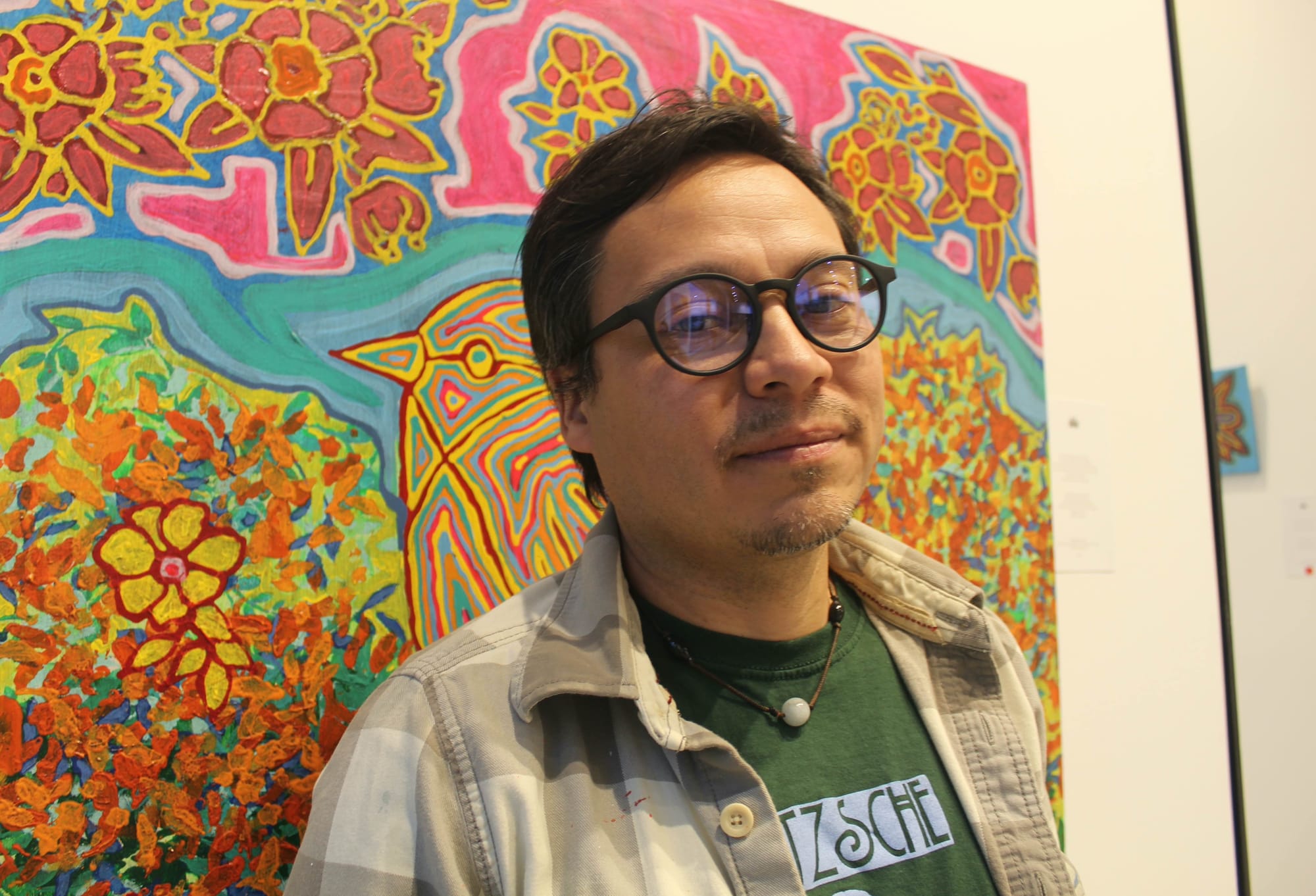
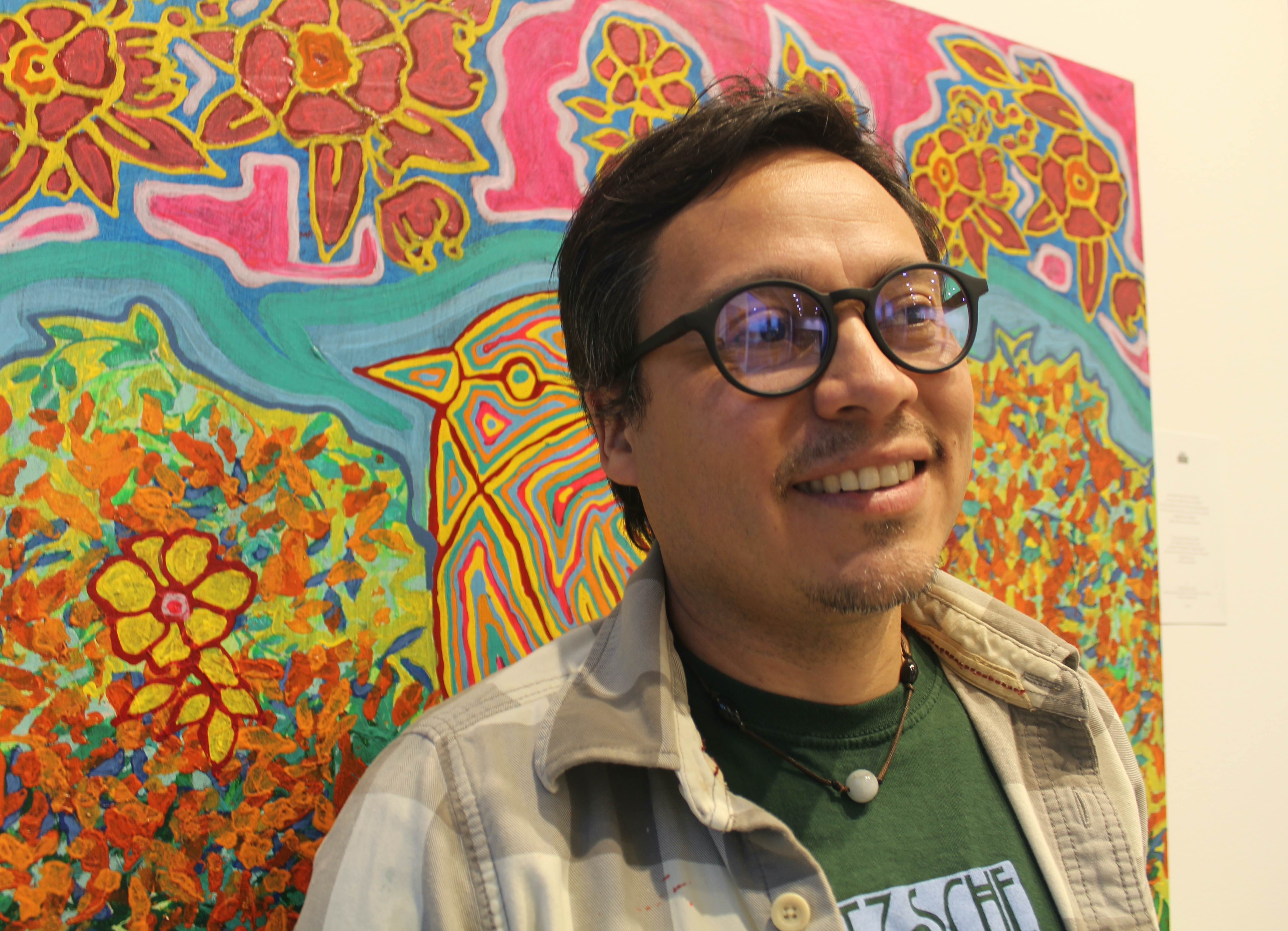
Richie Morales posing next to his quetzal painting in the exhibition “Los Efectos del Tiempo en la Memoria” in Madison, Wisconsin in 2021. | Photo by Elizabeth Lang. | Impulsiva Stories
Yet, he found himself in his solitude at the beginning of his times in Madison. He was far away from Guatemala and didn’t have much friends while starting out a new life and adjusting to a new place. While he was navigating that solitude, he learned a lot and began noticing that there’s a beautiful side to life and he needed to explore that.
Painting Memories
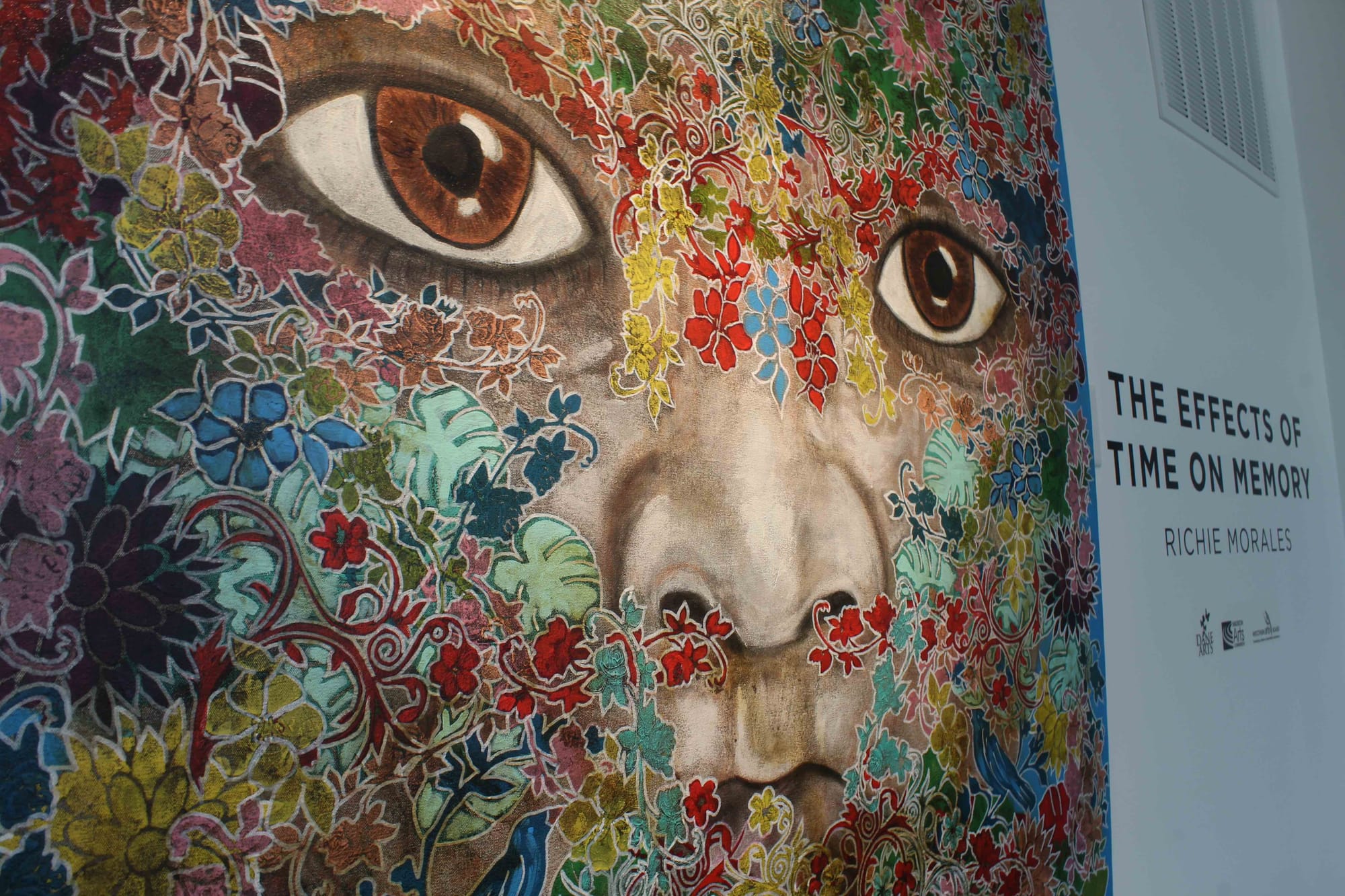
That exploration resulted in his series “Los Efectos del Tiempo en la Memoria,” which speaks about the complexity of our memories portrayed in beautifully layered paintings of Guatemalan flora and fauna. The main characters of the pieces are crafted in a way in which they’re reminiscent of the traditional Guatemalan güipiles.
These are traditional garments worn and crafted by Indigenous women in Mexico and Central America. In Guatemala, they’re a staple and statement in their culture rooted in their Indigenous identity.
But you might be wondering what Morales’ paintings referencing traditional patterns have to do with the complexities of our memories. This idea of painting memories comes from a very personal experience for Morales.
“They exist in my conscience and I have a grandfather who died from Alzheimer’s. That’s why I’m very interested in memory. I saw how my grandfather faded through his memory. He went from being an excellent furniture-maker and storyteller, to mix things,” Morales said. “It was very brutal to watch that.”
Listen to Richie Morales
0:00
/34.757333
Very deep inside of him, he believes he paints about memories out of the fear of losing them. Maybe it’s sort of a documentation of his own memories. It’s also Morales wondering what a memory really is and how these arise whenever we have a familiar smell or listen to a specific song.
But then, he wonders where that conscience is and when the memory reaches your mind, if they’re various memories juxtaposed or if they’re an interpretation we give during the present.
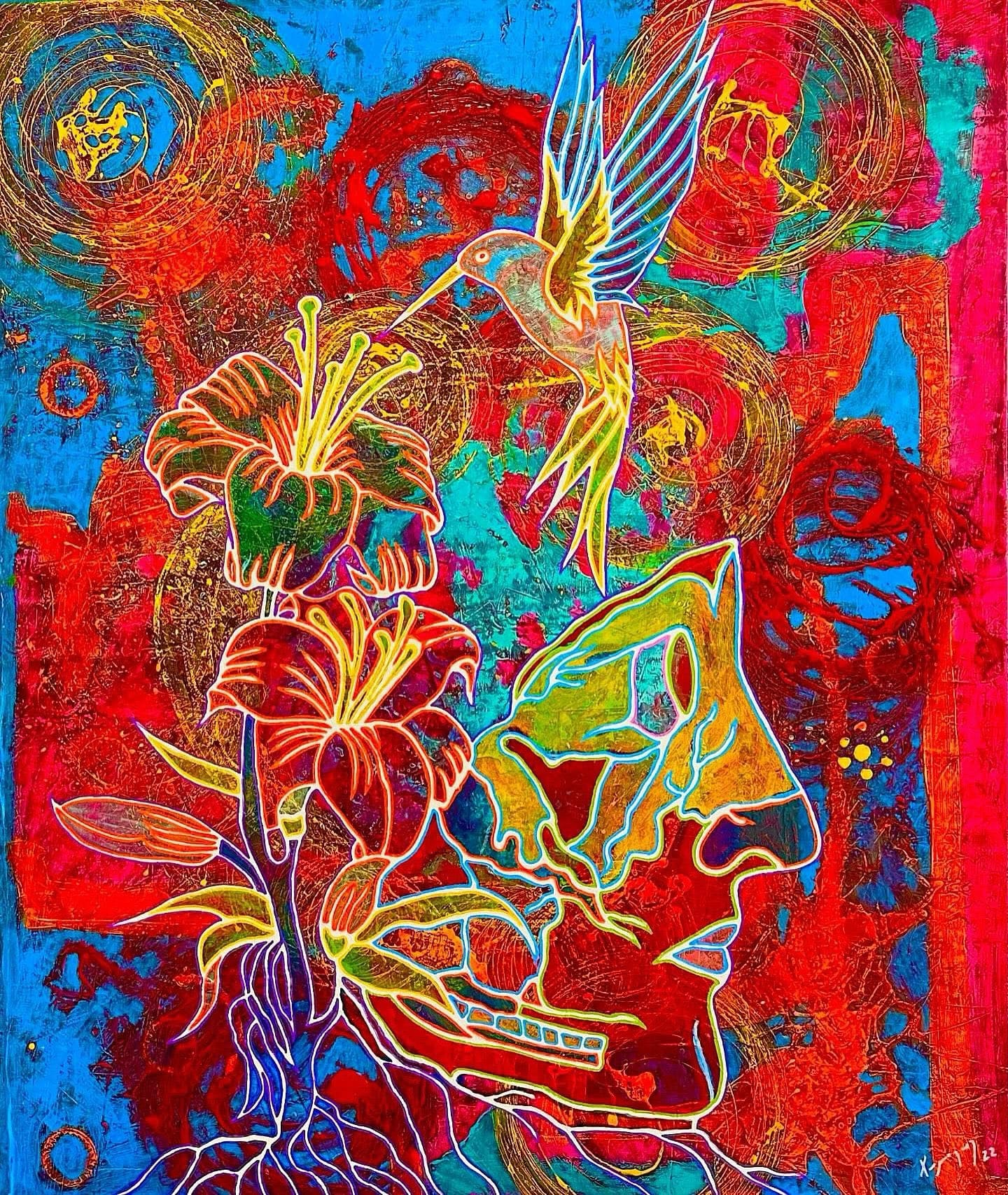
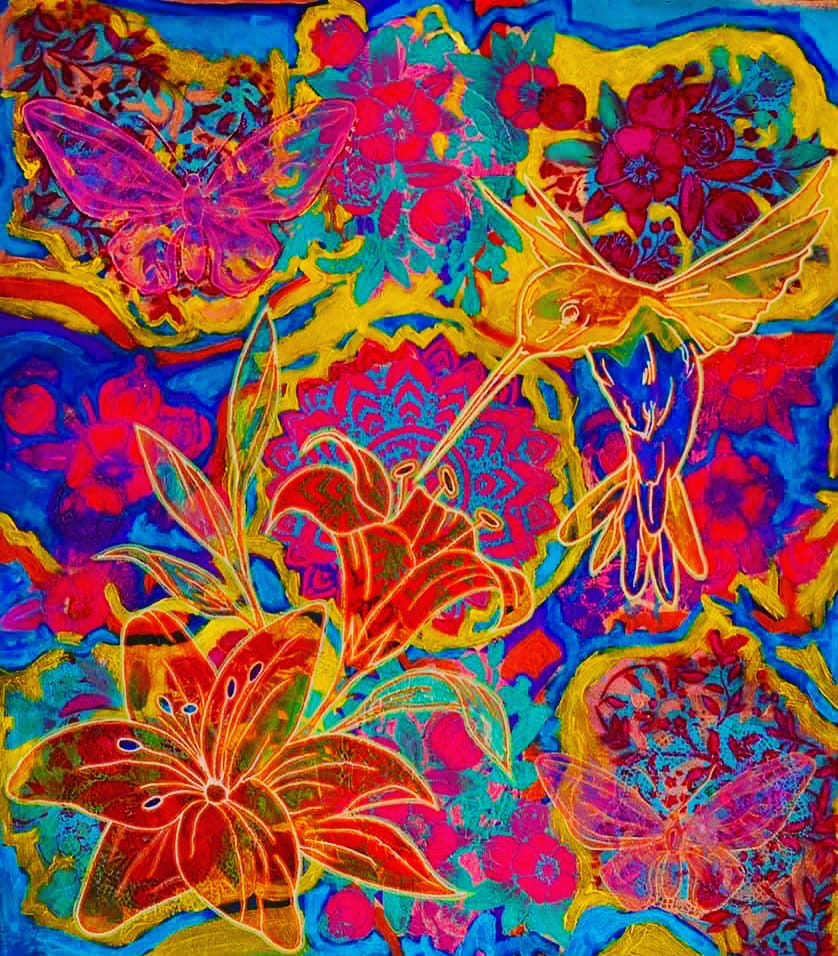
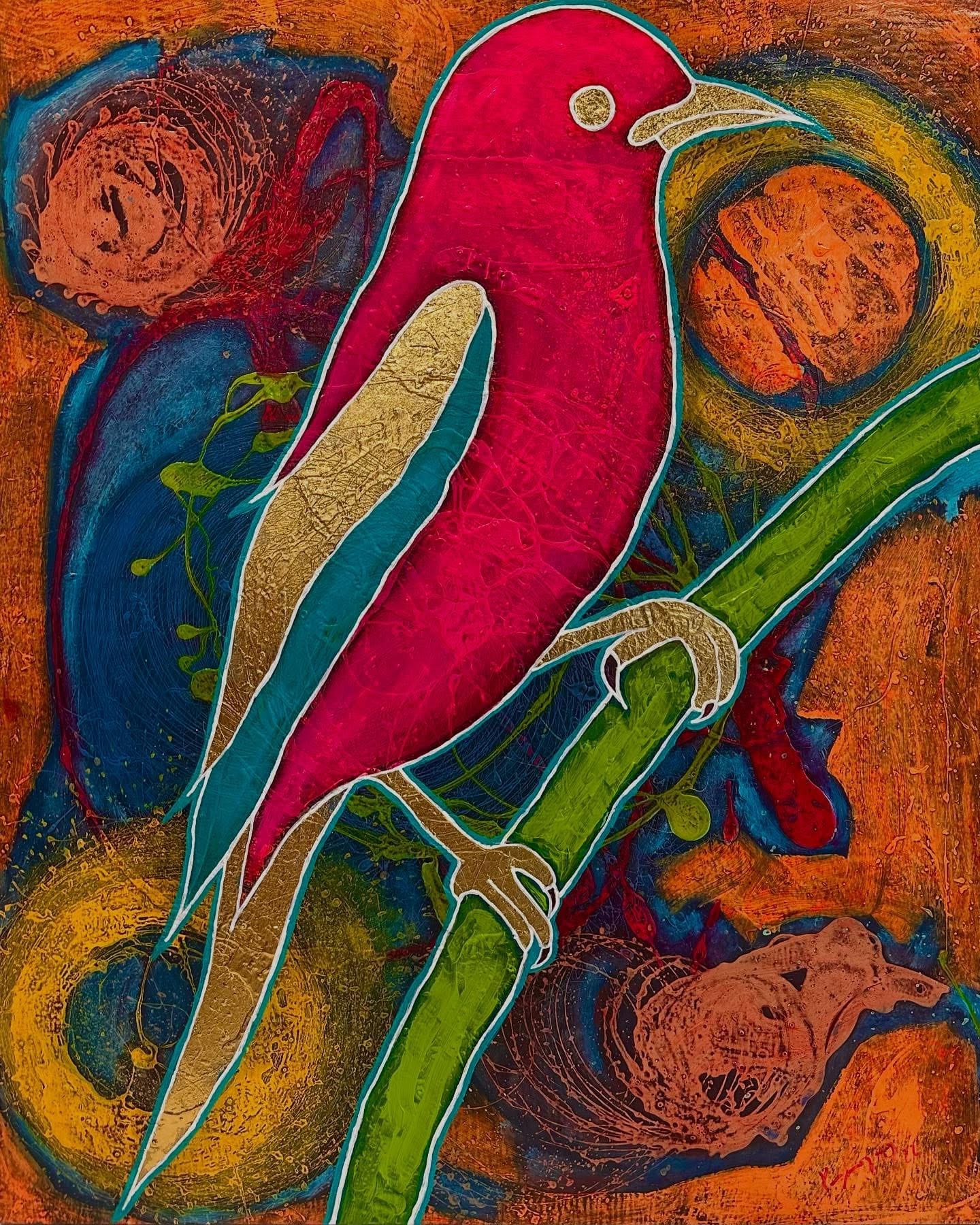
Richie Morales' vibrant and colorful paintings. | Photos courtesy of Richie Morales. | Impulsiva Stories
“So, what I paint has that: the present, but with memories. They can be juxtaposed and what I’m interested in is if it’s the truth. Does the truth exist or are they interpretations?” Morales said. “So, there’s not only one being’s whole truth. There are perspectives.”
Leaning Into the Emotions
These queries respond to a more conceptual process of Morales’ powerful and healing Guatemalan paintings. When it comes to the actual artistic process, he usually prepares the canvas, which is very cathartic for him. He lets himself feel whatever comes his way in the moment.
If the piece asks him to cry, he cries and he does not paint in an aesthetic manner. He then does his first loose brush strokes. He applies a lot of layers and makes textures. If he’s happy, he dances or zapatea on top of the paints. He throws the paint, lets himself free, and then sees the result.
It’s about being present in the moment feeling whatever he needs to in order to express himself one brush stroke at a time. It’s about exploring different emotions such as pain and suffering. Even though Morales is not a big fan of pain and suffering, he’s noticed both of these sentiments have transformed him. He’d prefer to live in a world with less suffering, but it’s given him a different perspective on life and it’s made him more sensitive.
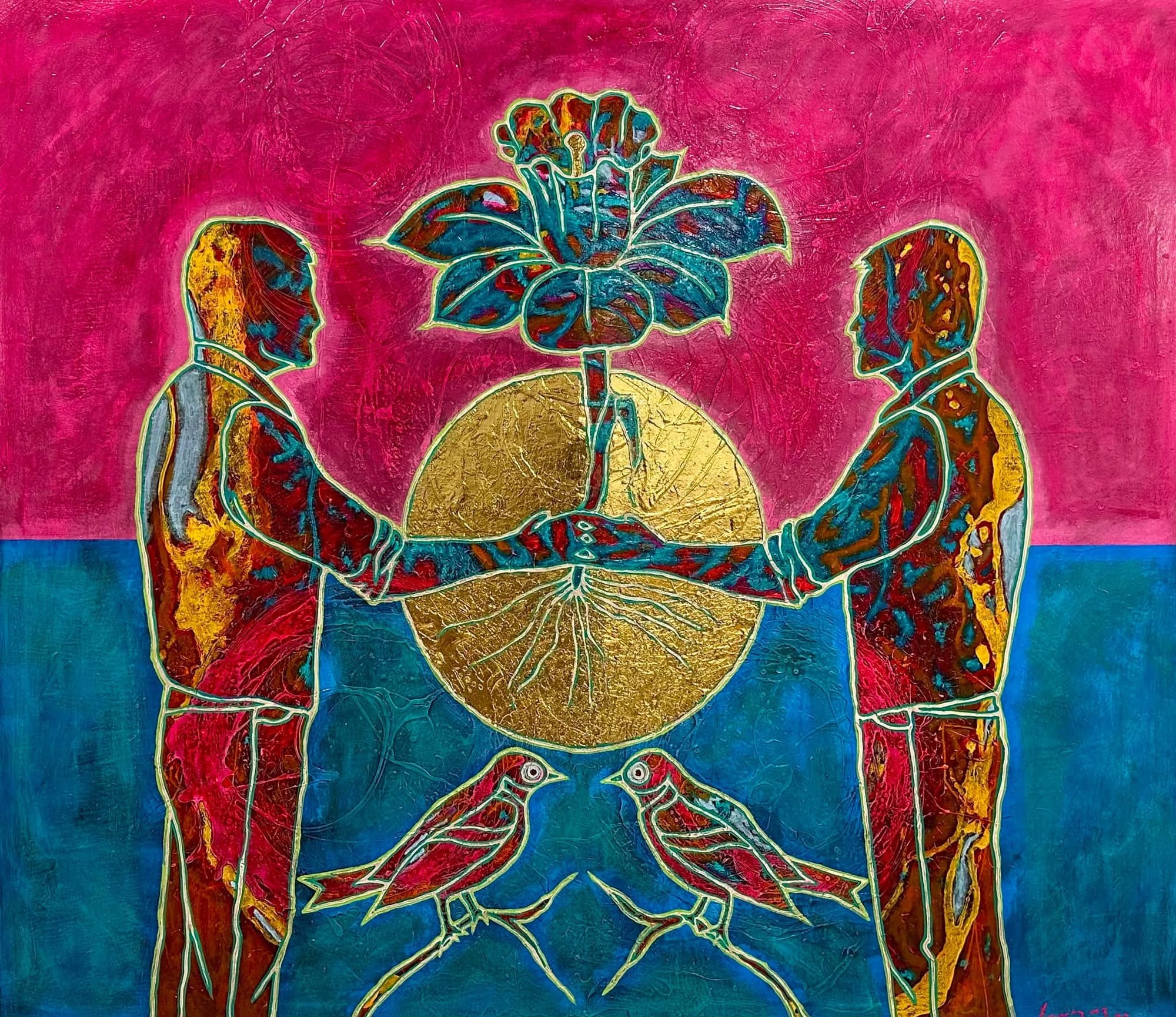
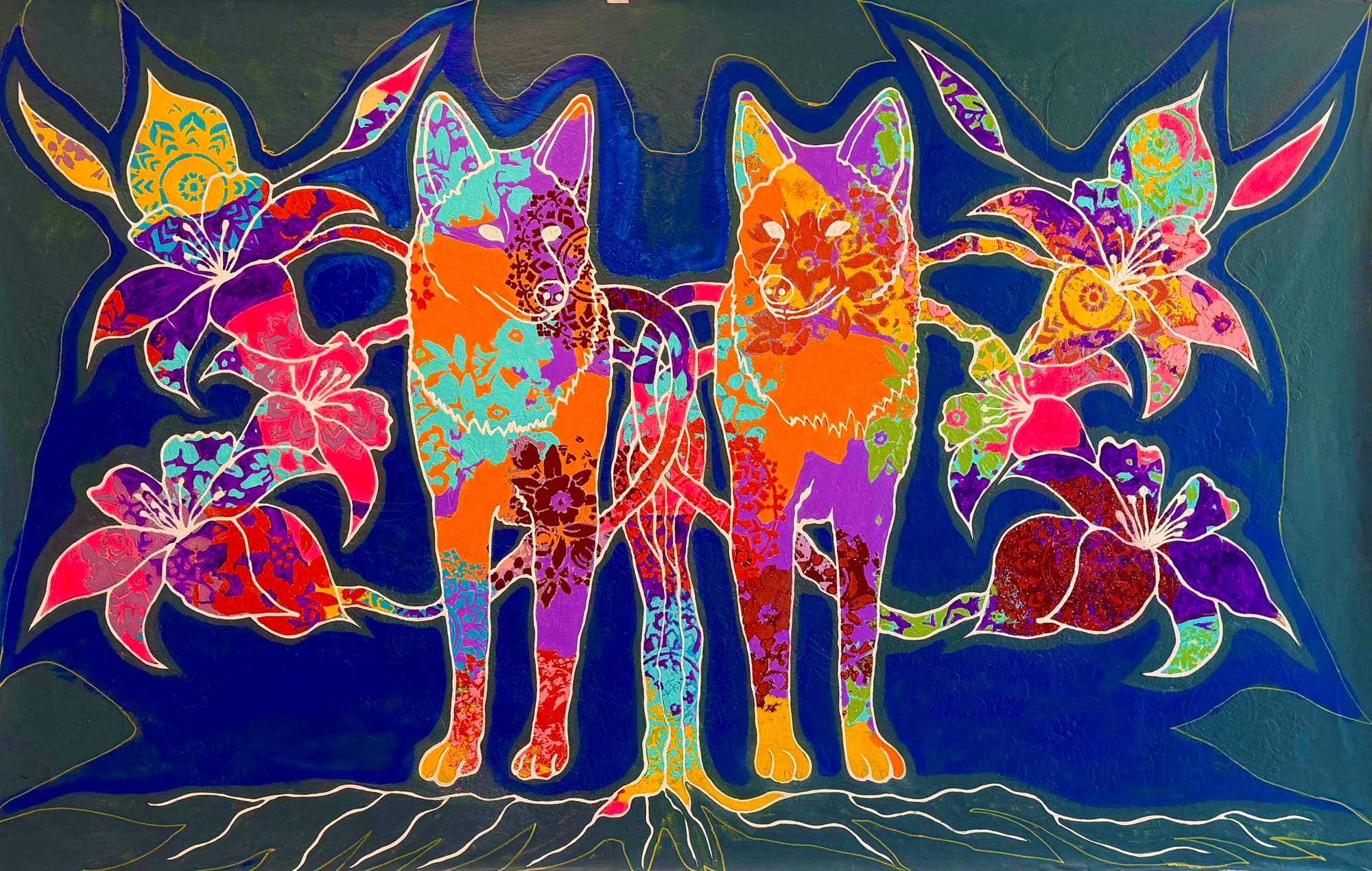
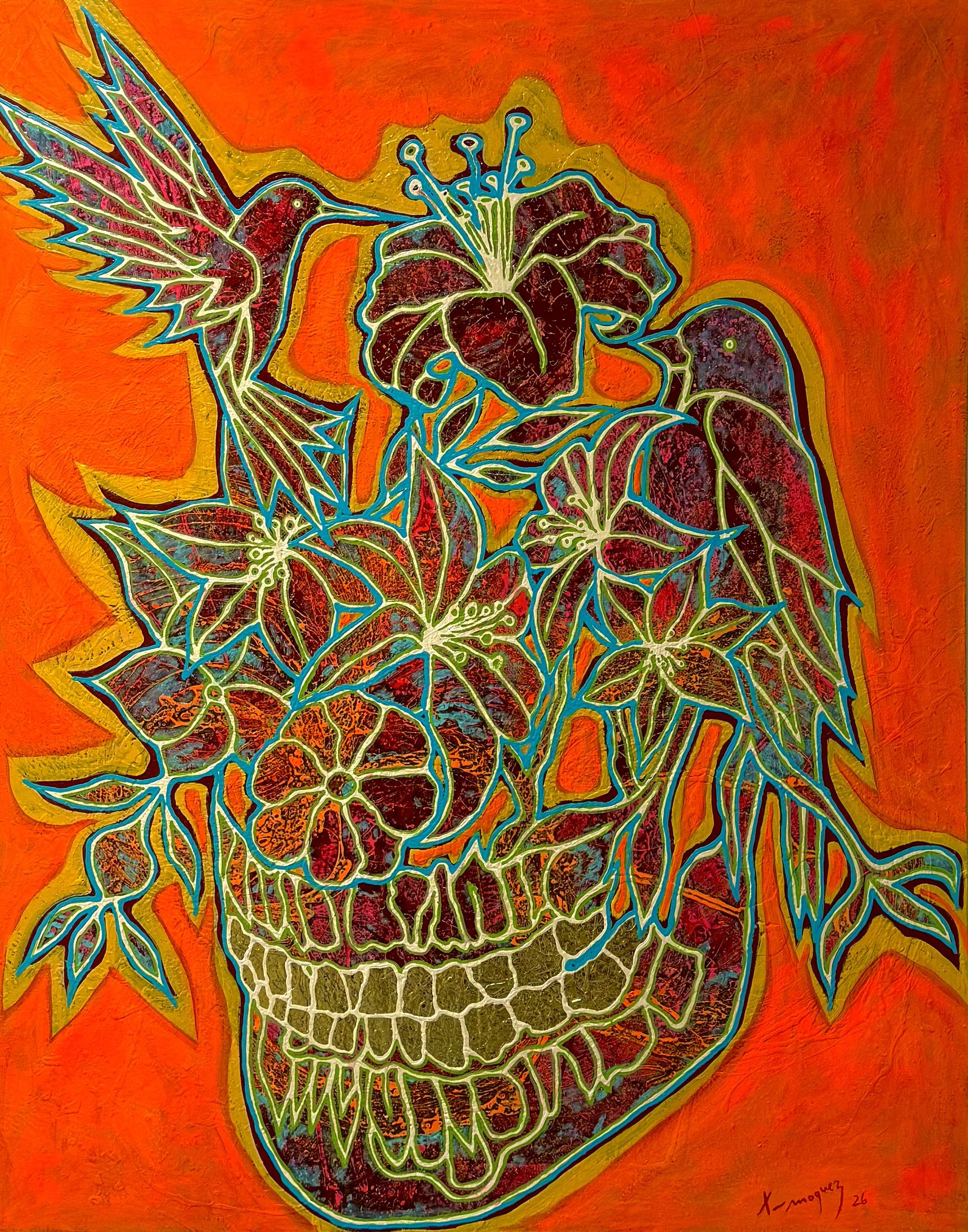
Richie Morales' vibrant and colorful paintings. | Photos courtesy of Richie Morales. | Impulsiva Stories
“It’s about the suffering, but without falling into a toxic pessimism. It’s more about always trying to see where you can go and improve,” Morales said.
Once he has his emotions quite clear and lets himself free on the paints, he deals with the aesthetic process. That implies looking at his sketches and seeing which ones belong to the piece he’s working on. While he’s researching, he’s doing his sketches and then finds a place for them in his chaos that he says is “un tanto caórdico.”
That means his process is chaos and order at the same time. Even though it’s chaos, in the end it makes complete sense and results in beautiful and vibrant pieces that draw you in. Just as with his previous paintings from the series “Las Voces del Genocidio,” “Neo Folclor,” and “Los Hijos del Vértigo,” you simply can’t look away. You have to take a step closer to really observe his masterpieces.
You have to grasp in the details in its multiple layers. It’s not a simple painting. It has multiple vibrant colors that make sense together and there’s something deeper because of the way Morales plays with the layers. They’re transparent and allow you to see different patterns in the back.
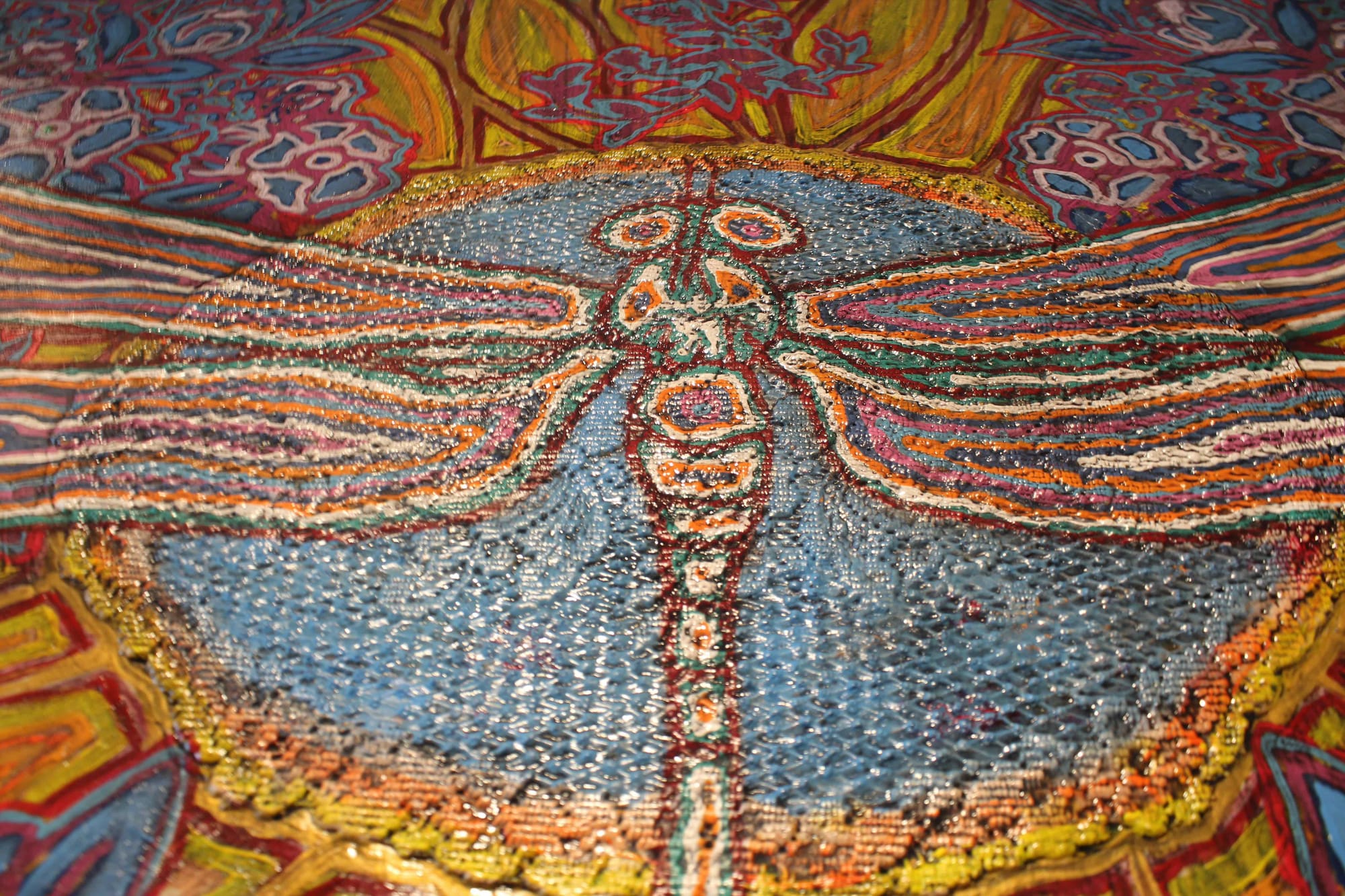
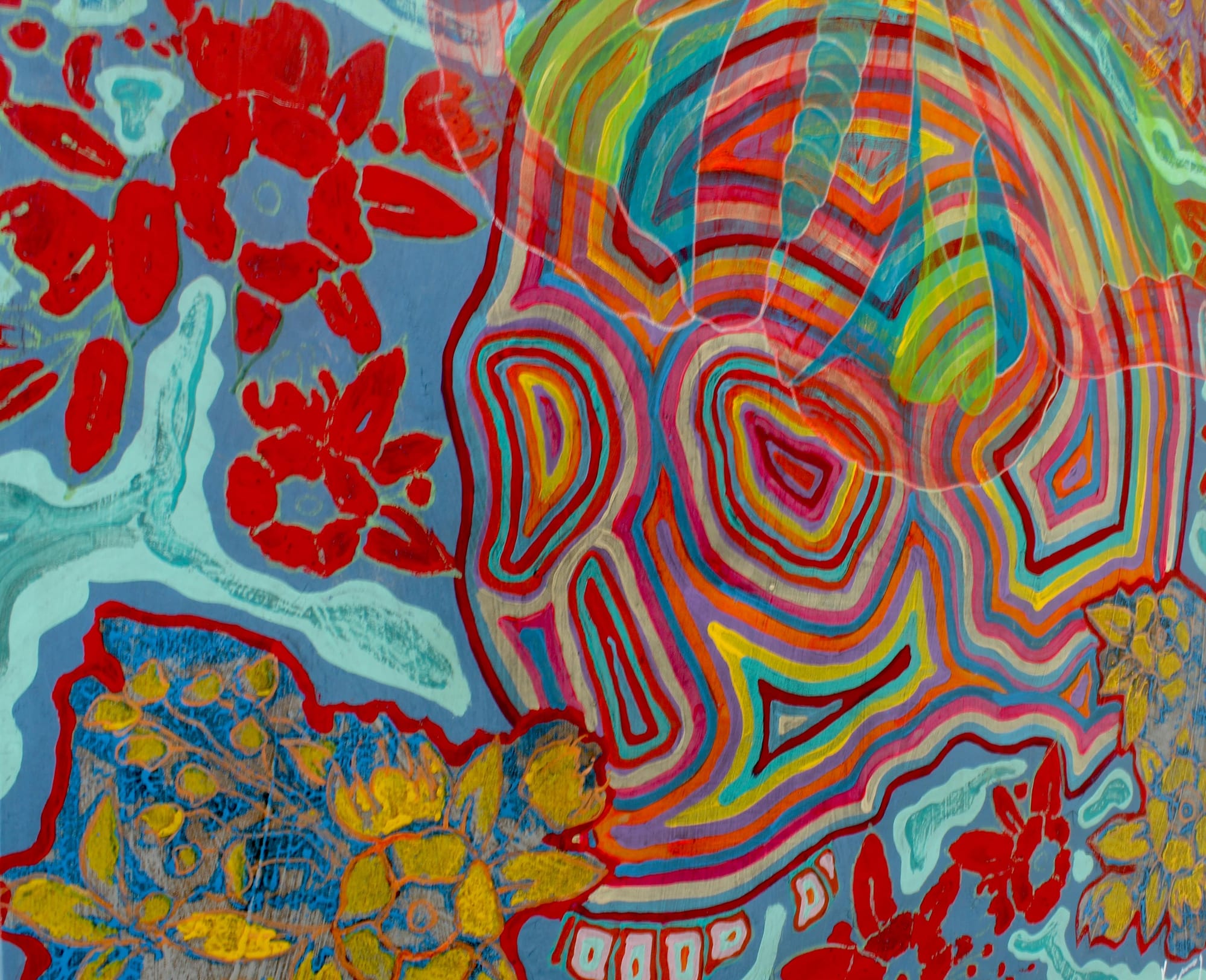
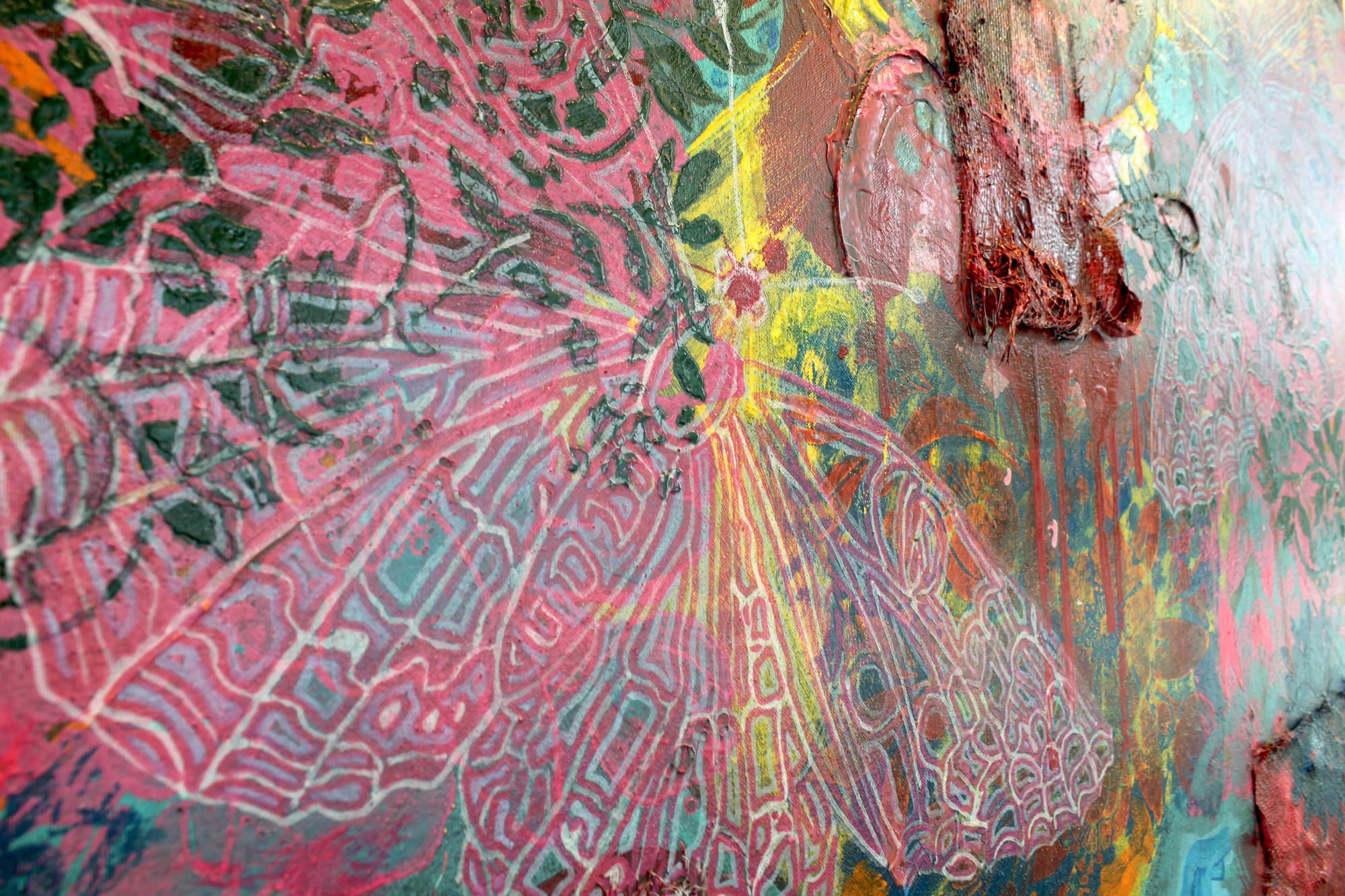
Details and close ups of Richie Morales' paintings from his exhibition “Los Efectos del Tiempo en la Memoria” in Madison, Wisconsin in 2021. | Photo by Elizabeth Lang. | Impulsiva Stories
They’re also extremely textured once you lean in closer, but for some reason there’s a certain familiarity you connect with instantly. It feels like home. It’s a simple familiar feeling that Morales easily creates in his paintings.
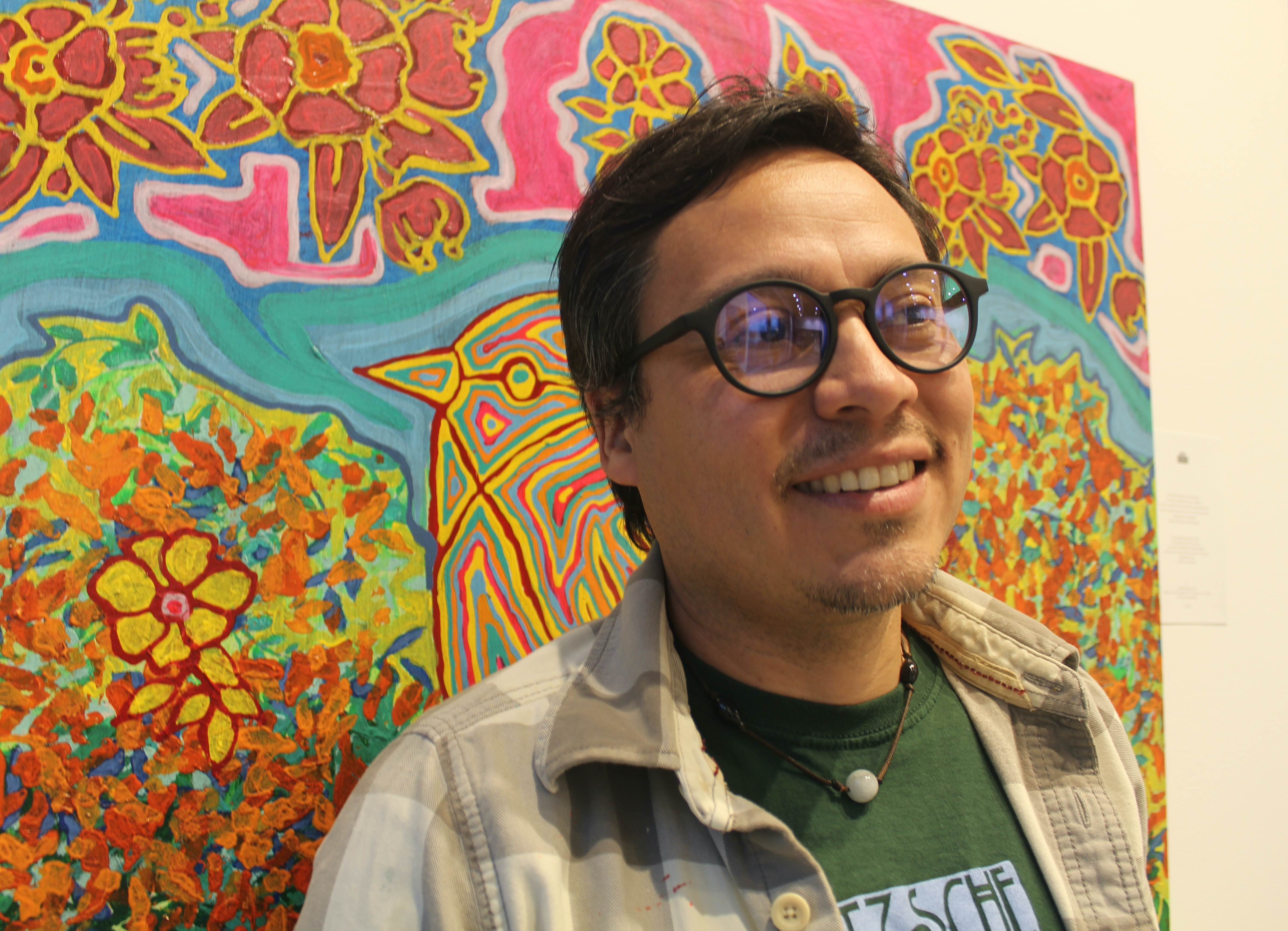
“This last series I painted, which is the one that’s fresher, comes out of the necessity or longing for Latin America. So, it’s full of colors, layers, birds, beings, and human parts. All coexisting,” Morales said. “I think it was the longing for Latin American markets. The colorful houses. People always wearing colors.”
Listen to Richie Morales
0:00
/49.733333
A Latin American Tragedy of Colors
It’s about a yearning to go back to Guatemala and enjoy its vibrancy every day. It’s also a juxtaposition of these new brilliant paintings next to those from the series of “Voces del Genocidio” that have a deep darkness because of the exhumations.
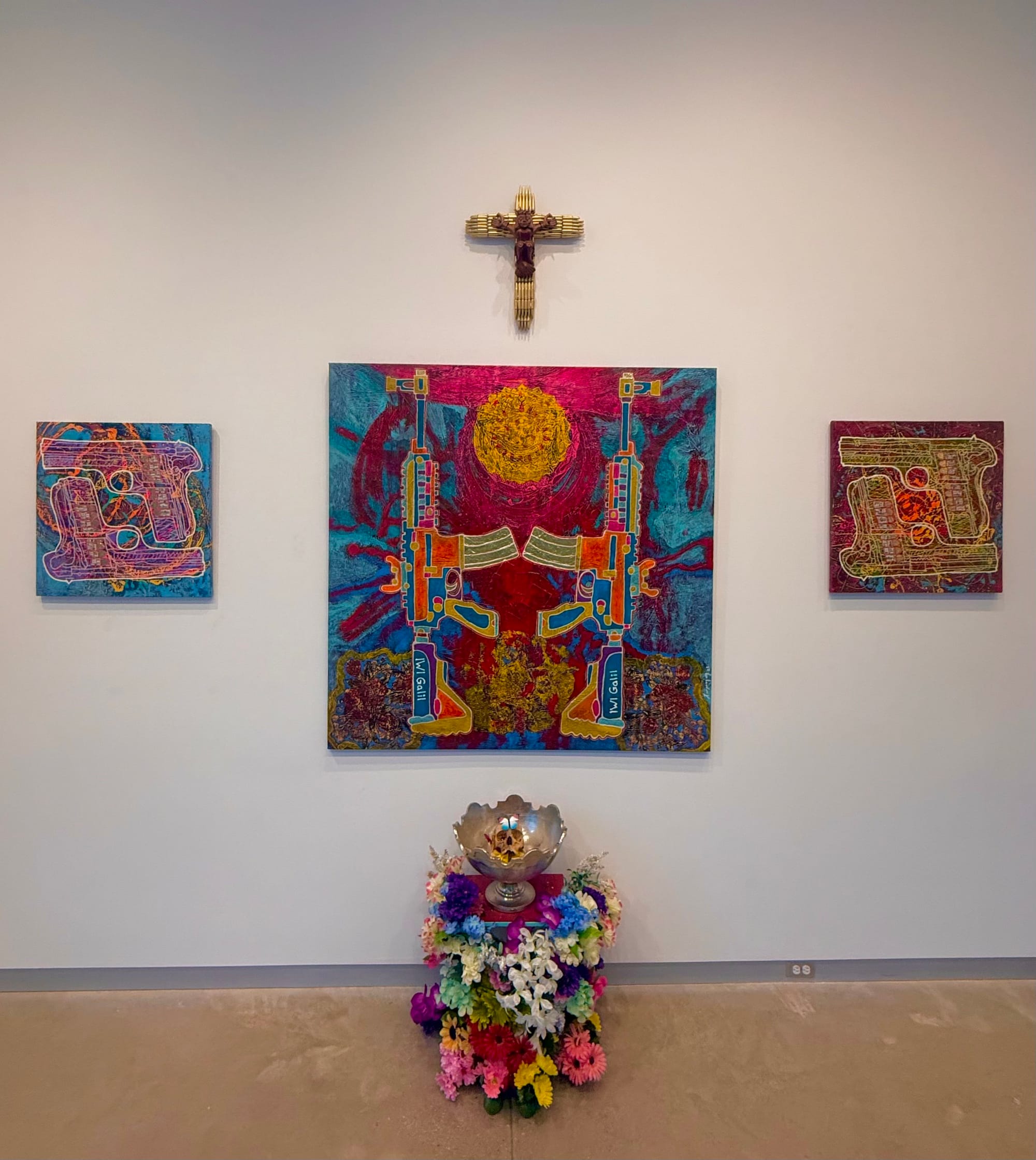
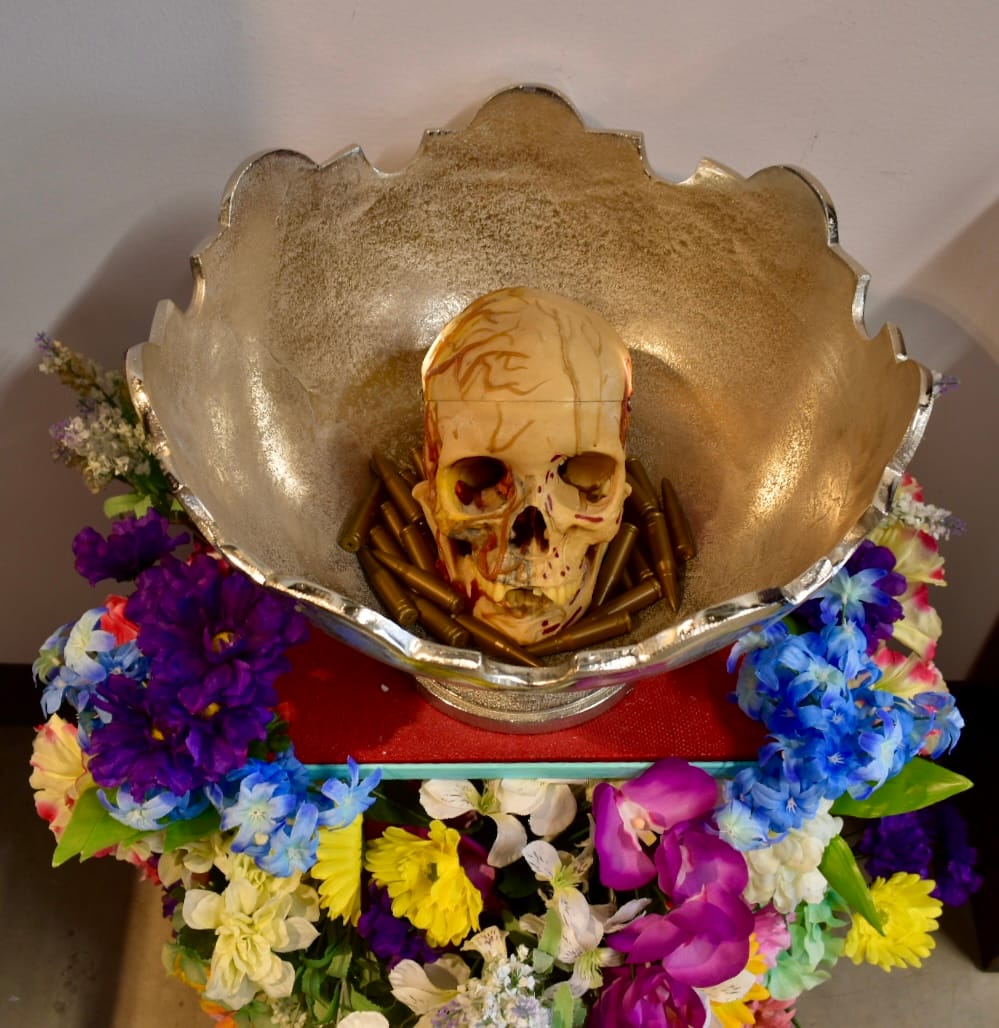
Richie Morales' paintings reflecting about violence in a colorful manner. | Photos courtesy of Richie Morales. | Impulsiva Stories
This contrast of color palettes between Morales’ series is quite evident. Not only does it depict a literal change in colors, but it also signifies an evolution in him as a painter and person. It’s synonymous with painting the very clear contrasts we live in throughout Latin America. It’s the darkness with the light. The obscure with the brightness. The life with death.
“But that contrast is precisely Latin America. It’s a tragedy of colors, right,” Morales said. “It’s a tragedy that has many colors.”
Listen to Richie Morales
0:00
/11.429333
Latin America is a tragedy of colors. A very powerful phrase coming from Morales’ even more powerful and healing Guatemalan paintings that portray Latin America’s many coexisting realities. This is obvious in his color palette selection, which now draws you in to the Latin American tonalities because of his longing for his home.
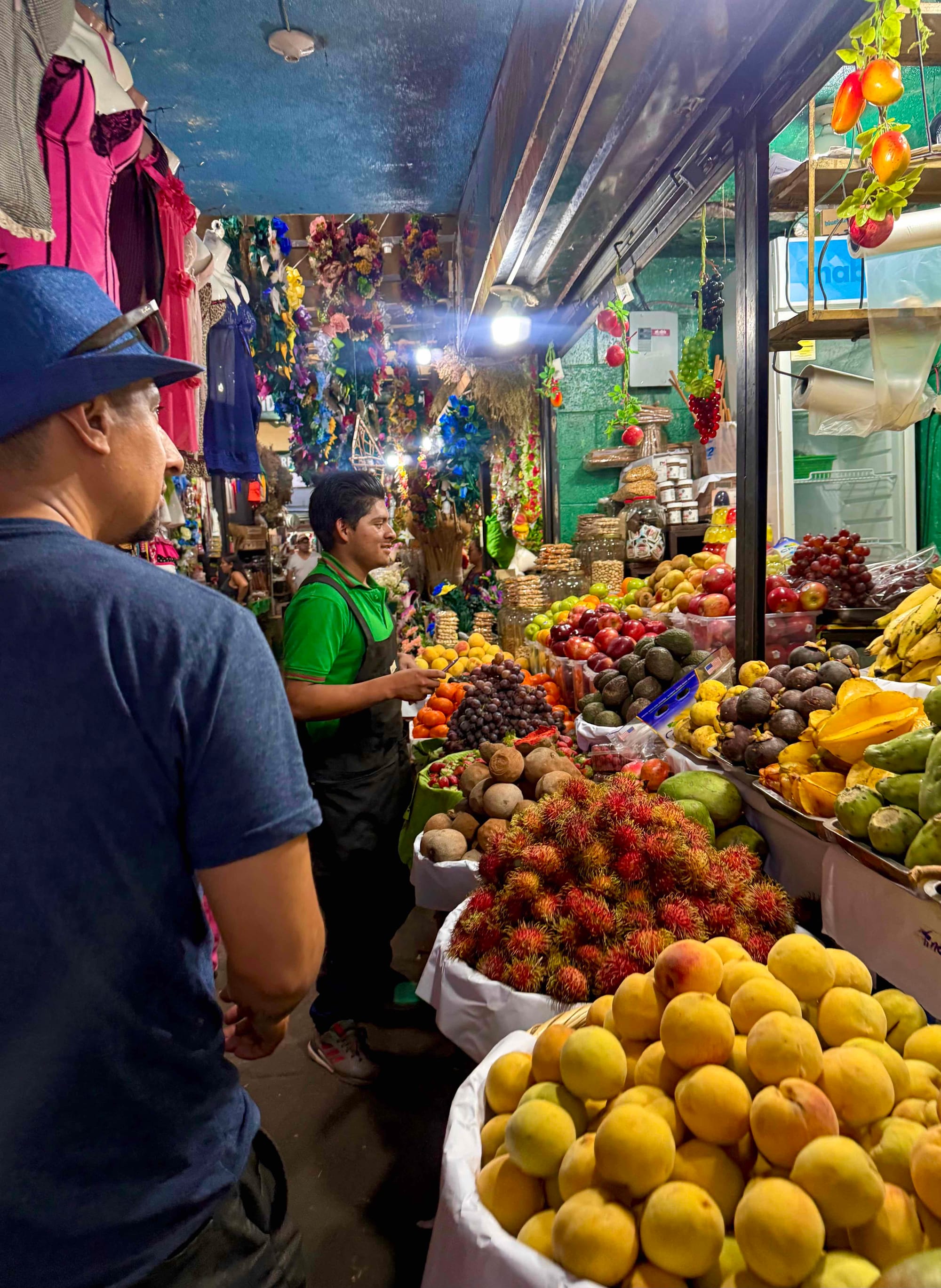
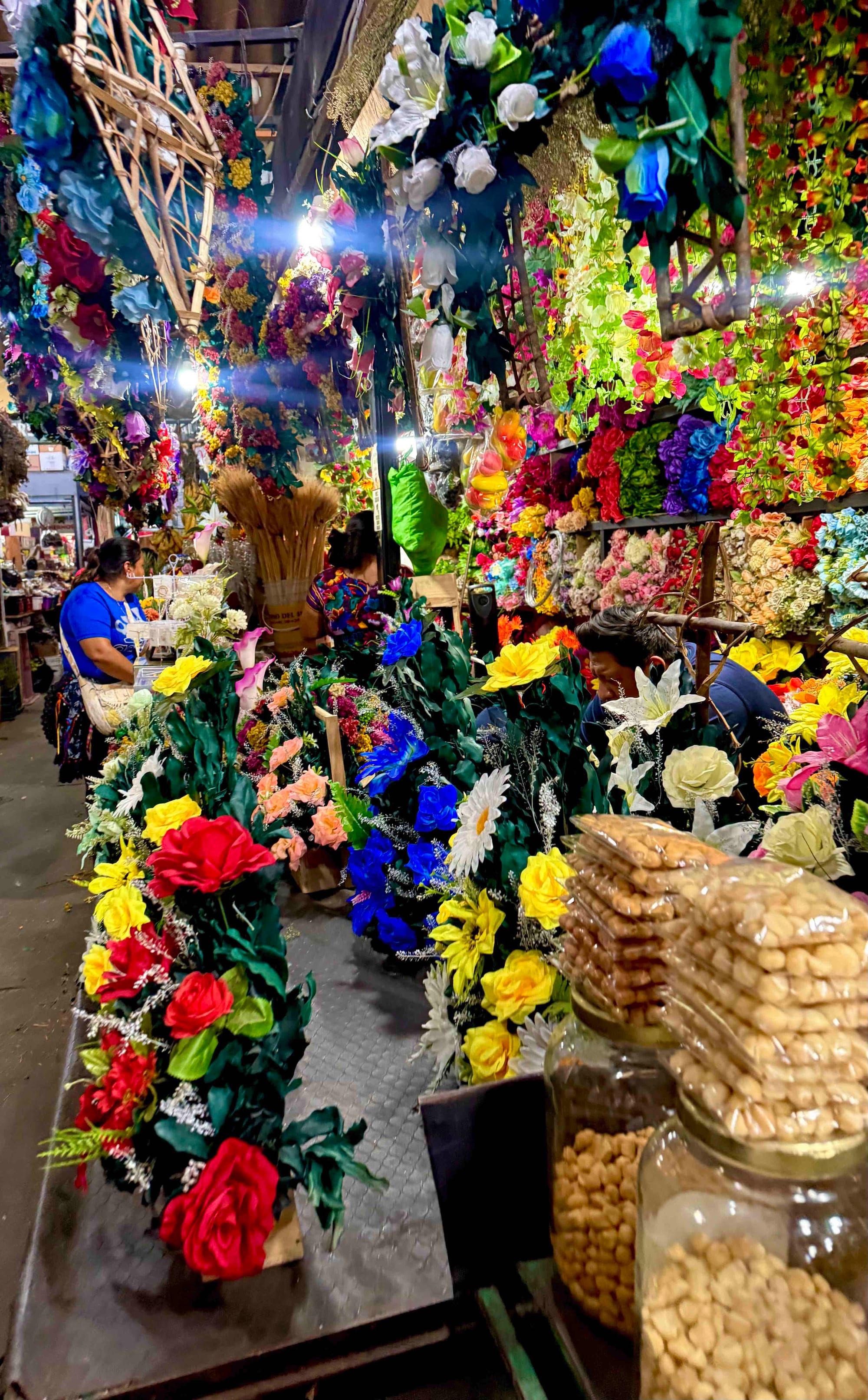
Richie Morales' yearning for the Latin American markets and scenery from his home country Guatemala. | Photos courtesy of Richie Morales. | Impulsiva Stories
It stands out because of its vividness and his love for contrasts. He believes that when these contrasts are opposites, an “other” is created and he feels part of that “other,” mainly because of Donald Trump’s politics.
“Us Latinos are the other or the scapegoat. They’re using us or weaponizing us to do his politics. Us migrants become that other. That other that is the enemy. That other that’s different or whatever you want to call it,” Morales said. “So, that juxtaposition of colors, I think it’s that other and I see myself represented there.”
Listen to Richie Morales
0:00
/47.213333
Morales’ relationship with color palettes comes from a very deep need of connecting with his Latin American roots. It’s what he grew up with, whether it was smelling them in the flowers, the food, the people, or the buses. They make him feel at home and while living in the United States, he lacks those colors.
That loss of vibrancy made him realize what he’s longing for and it made him more sensitive to what’s not there anymore. He compares it to when a relative dies. They pass away and you accept their death, but as time goes by, you start noticing their absence. That’s what he feels happened with the lack of Latin American colors in his life.
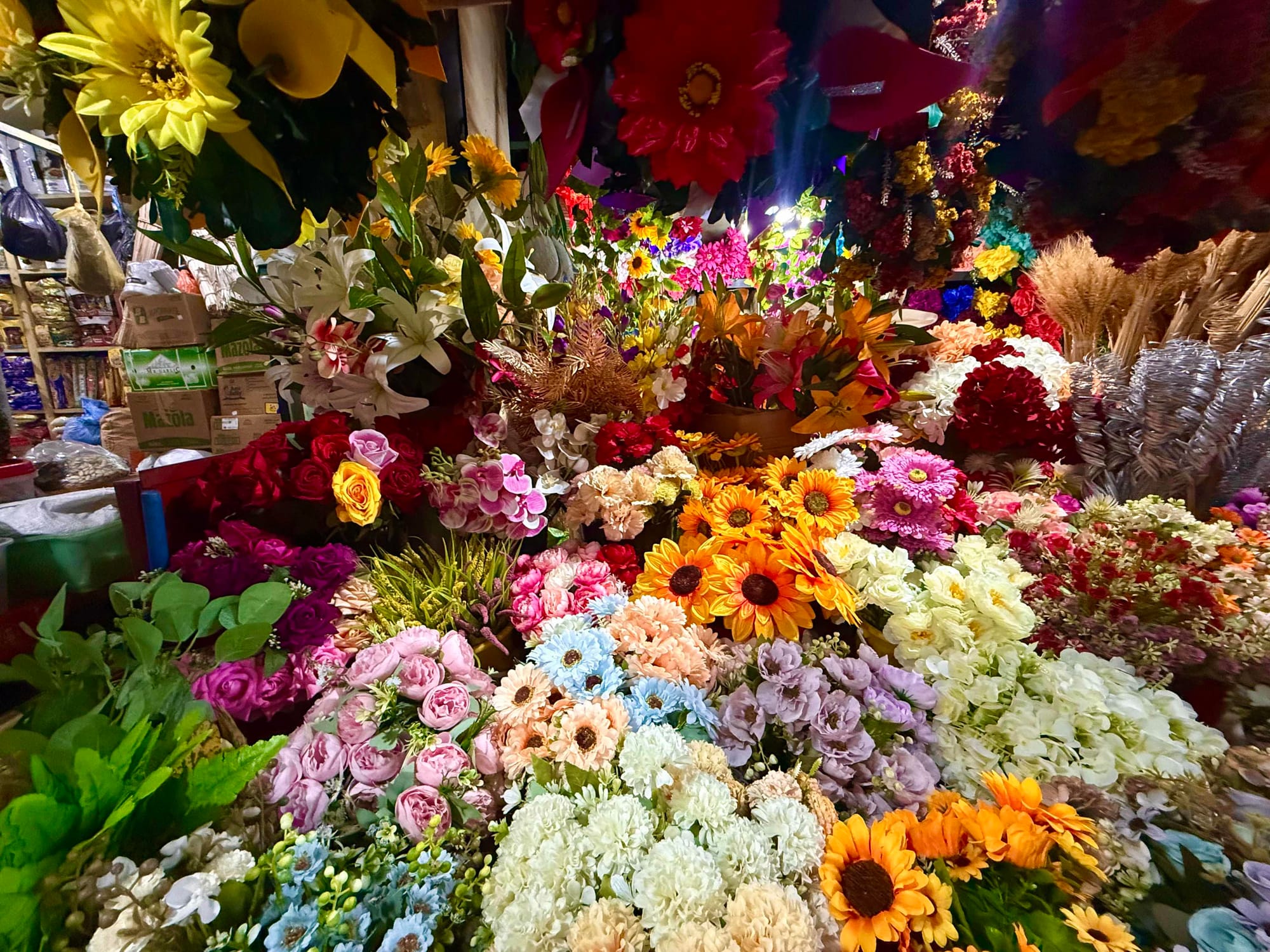
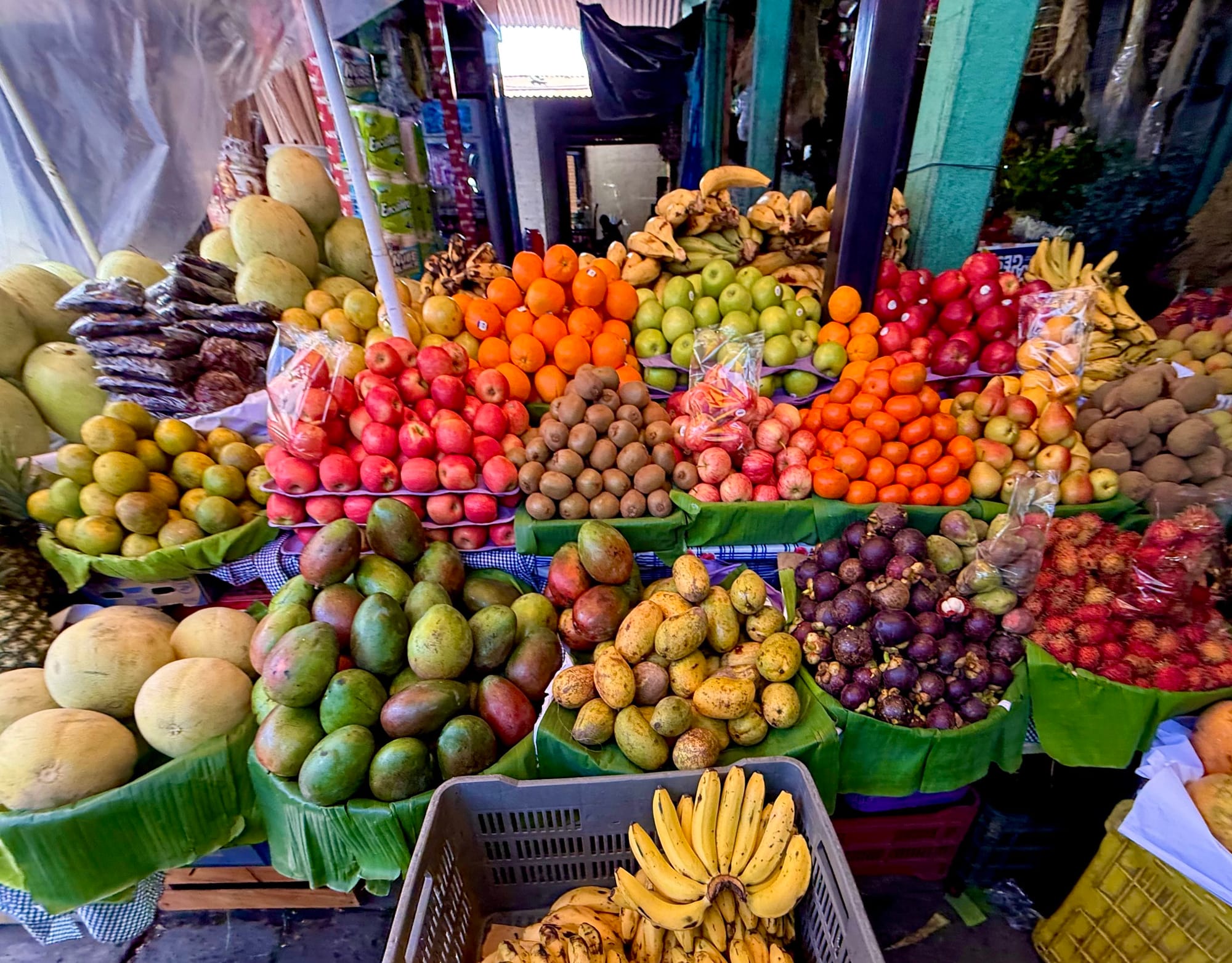
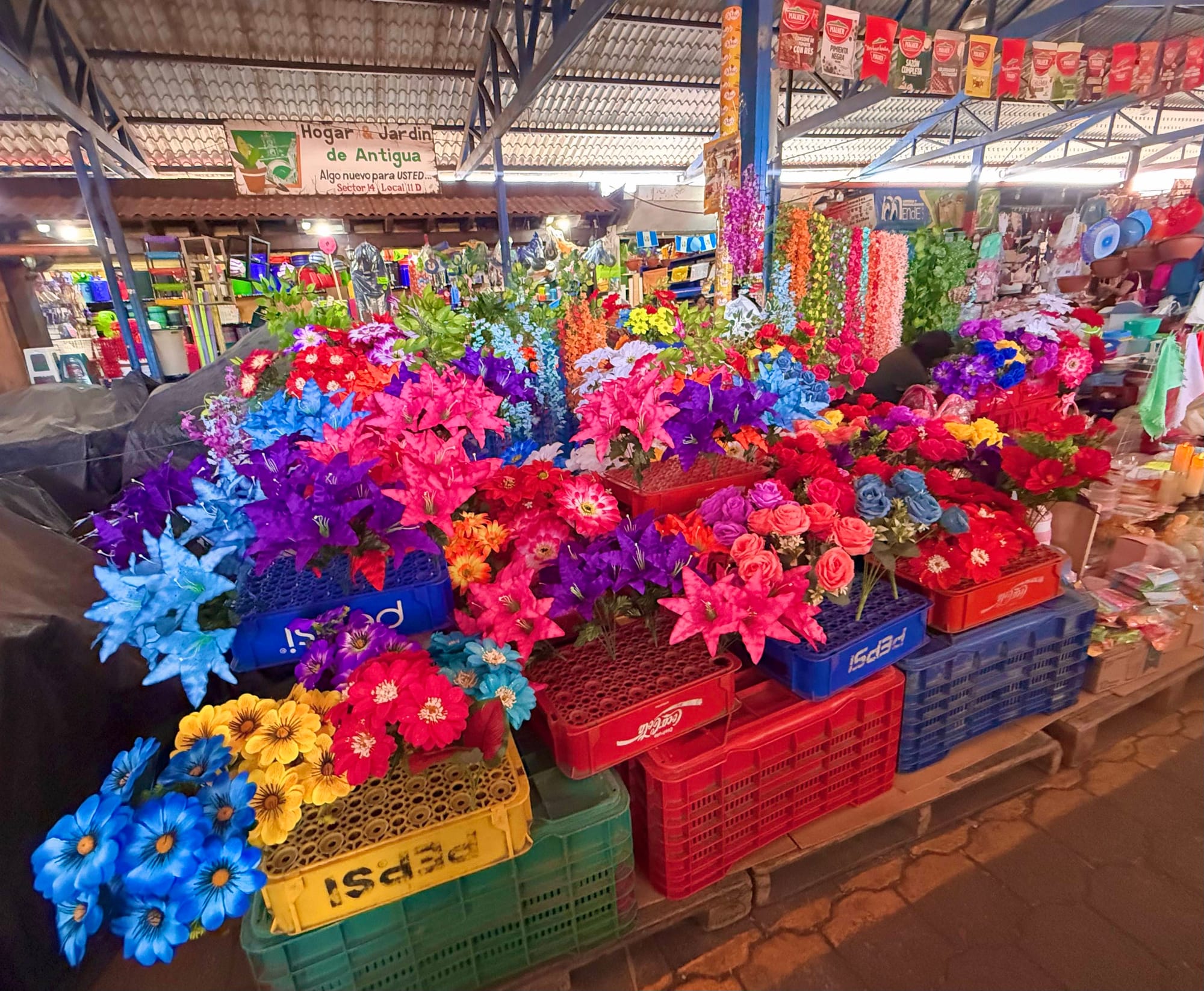
More beautiful and colorful scenes from the markets that inspire Richie Morales' art. | Photos courtesy of Richie Morales. | Impulsiva Stories
Living like that invited him to explore these different vibrant tonalities. In his mind, he travels through the different traditional markets and experiences the visual ecstasy it is to visit these places.
“I think that since I live in the United States, [the colors] give me the sensation or reclaims who I am, in the sense of where I come from, which is Latin America. Specifically, Guatemala,” Morales said. “It places me within a framework of painters that use a very vibrant palette. So, I feel more Latin American every time I use more colors.”
Latin America is Powerful and Capable
That exploration of Latin American colors obviously led him to indirectly paint both Latin American and Guatemalan identity. He’s interested in it because he believes that because of the past of colonization, military oppressive governments, and economic crises in the region, we have not been allowed to really know what we’re capable of.
For Morales, Latin America is and will be a center with lots of people who will change the world in the future. It’s a region that has a lot of life and an energy that Morales has not experienced in other cultures.
“We have so much resiliency and a capacity to keep going despite the difficulties. I think that reclaiming and strengthening that, gives us a place of dignity and that’s what I’m interested in. As a Latino and with my Latin American condition, that’s what I’m interested in,” Morales said. “Reclaiming that and for people to emerge and bring out the best of themselves.”
Listen to Richie Morales
0:00
/35.117333
Morales believes that is achieved by supporting each other and leaving behind the metaphor “del canasto de cangrejos” that was imposed since the colonization of Latin America. The idea that they made us believe we’re something we’re not. For Morales it’s quite clear: it’s time to knit a new reality together.
A new reality that’s built through the language we use to describe ourselves. A new reality where we speak about what we’re capable of creating and one in which we make it happen.
“So, knowing that, I think we have to start changing the narrative. We have to stop saying: no, Latinos can’t do it,” Morales said. “Off course we can. We speak Spanish here [in the U.S.] and we speak English, even if it’s chueco. So, it’s not that we’re dumb or that we’re less. On the contrary, we’re showing we can keep going, even those who don’t have the language.”
Listen to Richie Morales
0:00
/33.701333
That’s something Morales really admires and he thinks that narrative against us is because they fear us. It’s because they know Latin America holds a cultural power and richness like no other.
You can see it clearly within Morales’ practice not only because of the direct reflections of Latin America in his paintings, but also in the way he paints. This stems from the Holy Week processions done in Antigua, where large colorful carpets are done on the floor. That activity in particular is so normal in Morales’ life, that he realized it has opened up many possibilities for him when he’s creating.
When he paints his giant canvases, he kneels on the floor horizontally. He realized it was the tradition of the processions that unconsciously invited him to work his pieces that way.
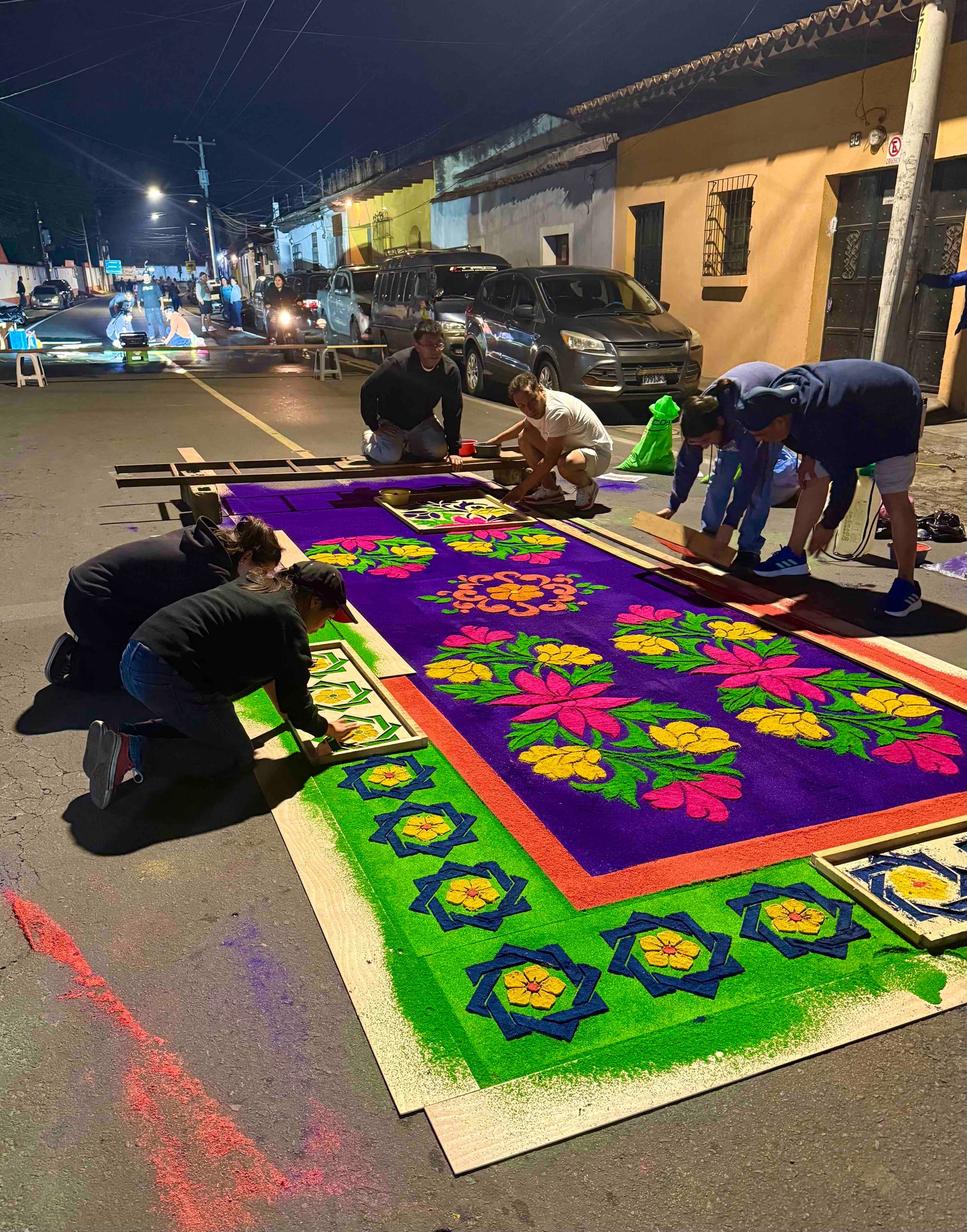
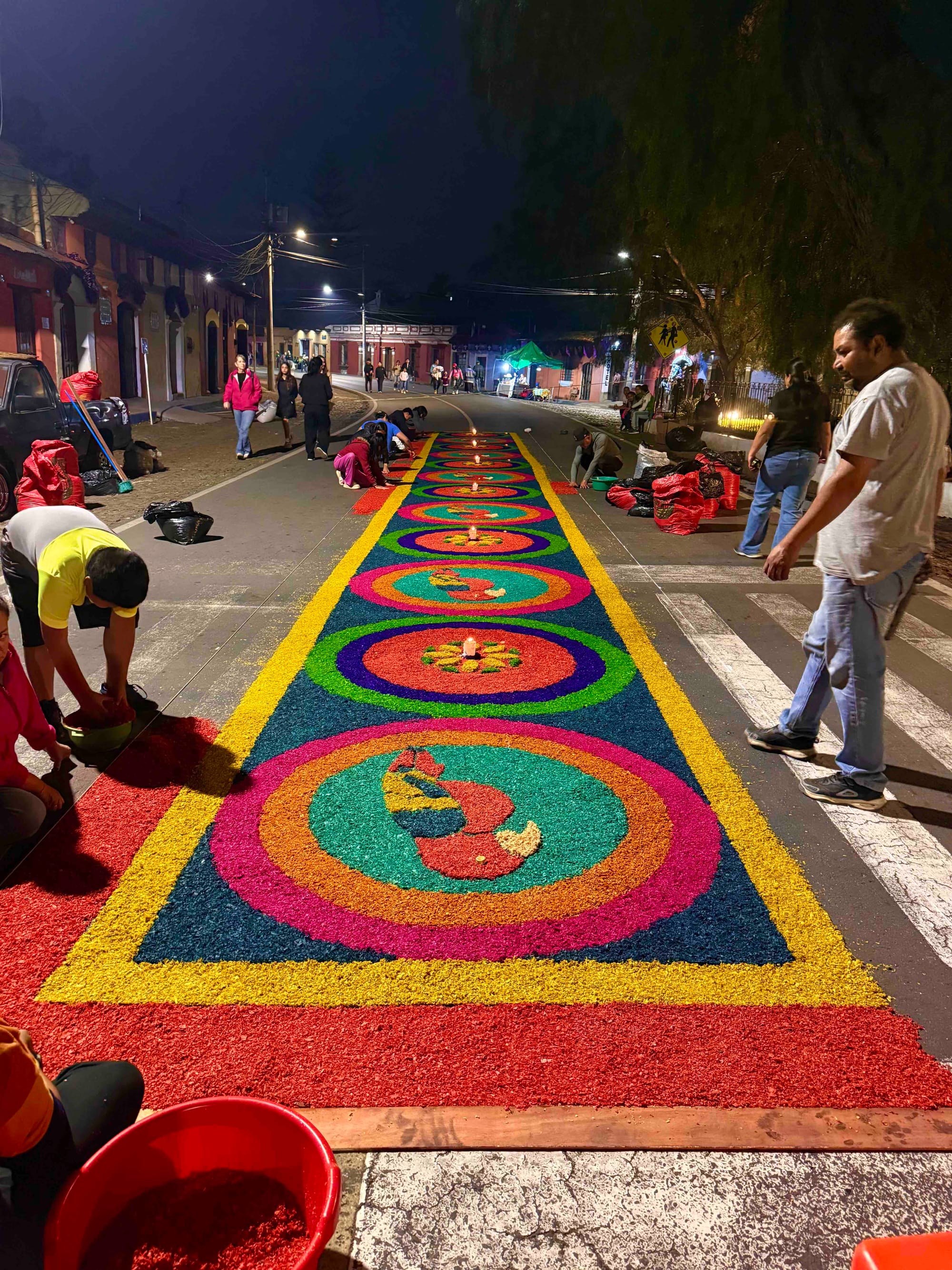
The carpets from the processions during Holy Week in Guatemala that inspire Richie Morales' art. | Photos courtesy of Richie Morales. | Impulsiva Stories
And as you can see, every aspect of his life – whether that’s simply being Guatemalan or getting inspired from the colors that he grew up with and now longs for – is deeply influenced by Latin America and its cultural power.
That’s why Morales’ powerful and healing Guatemalan paintings portrays beautiful flora and fauna that’s really familiar. It’s an art form that takes you on a trip through memories and time, especially if you’re from Latin America because the nature he paints with the bright textures of the güipiles, feel like home.
It feels familiar, wholesome, and cozy. It’s something that Morales achieves really well in his masterpieces thanks to his deep introspection and his need to heal through art.
And it’s also art that astounds him.
“Looking back and seeing my surroundings with what I’ve produced, what I’ve read, and what moves me, impresses me. If you would’ve asked me when I was fifteen years old. When I was really high and no one gave a peso for me. Almost as a cero a la izquierda,” Morales said. “I never would’ve been able to visualize that I was capable of all of this.”
To learn more about Richie Morales’ powerful and healing Guatemalan paintings, you can follow him on Instagram at @richiemoralesart.
Written by

Subscribe to my newsletter
Subscribe to my newsletter to get the latest updates and news