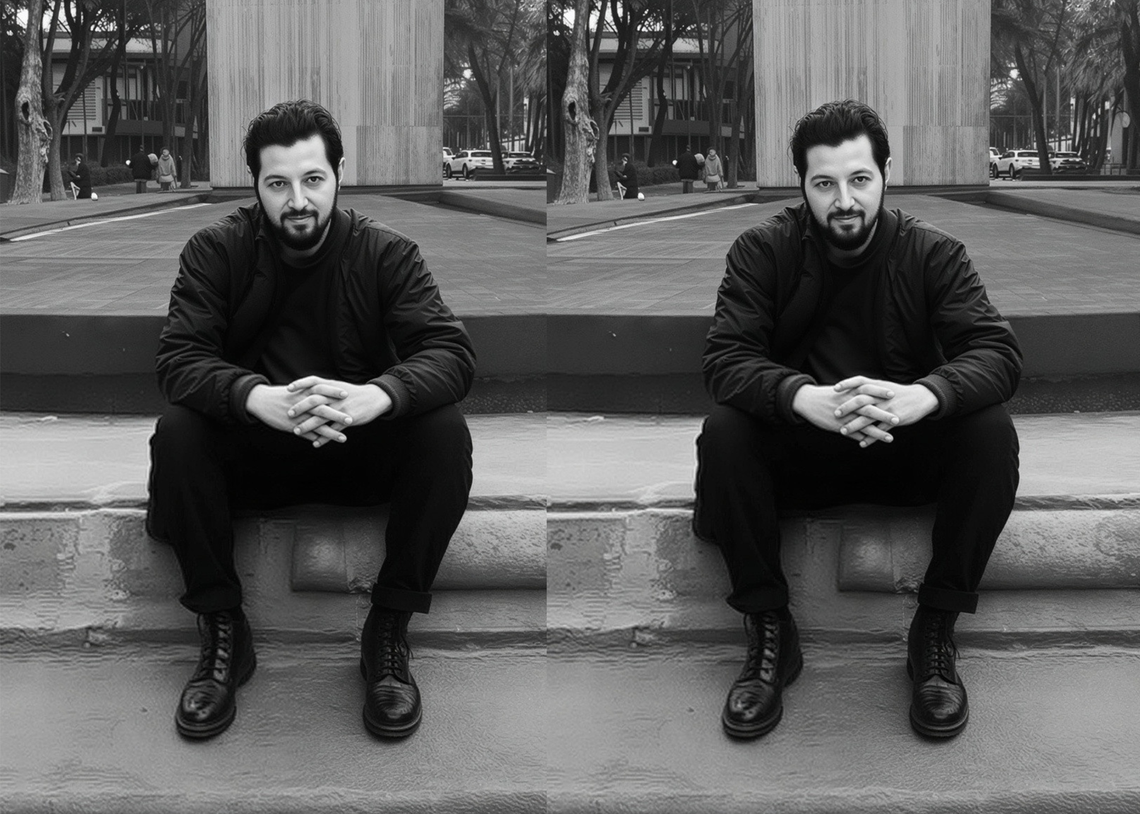
Wainer Méndez PART II
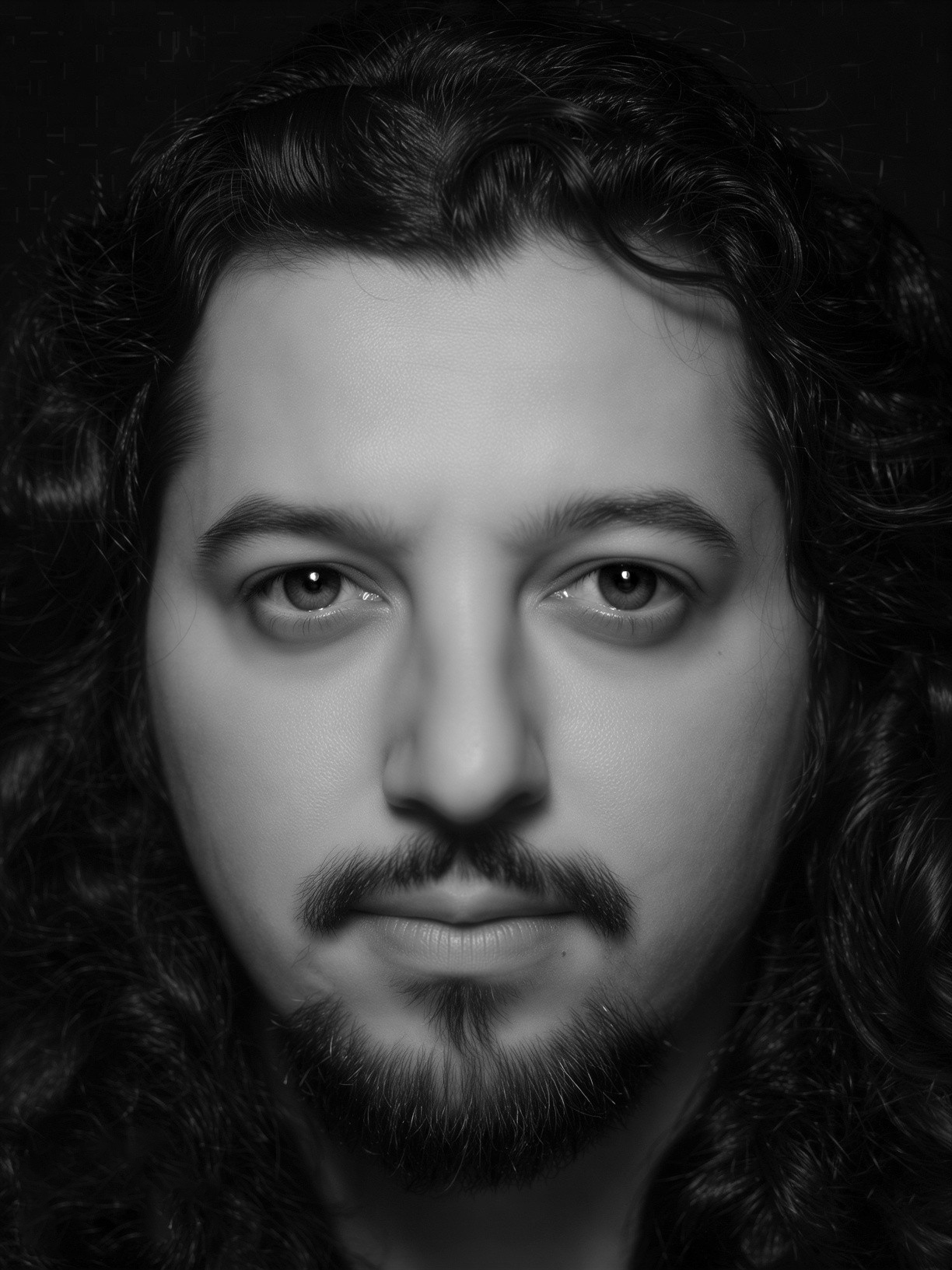
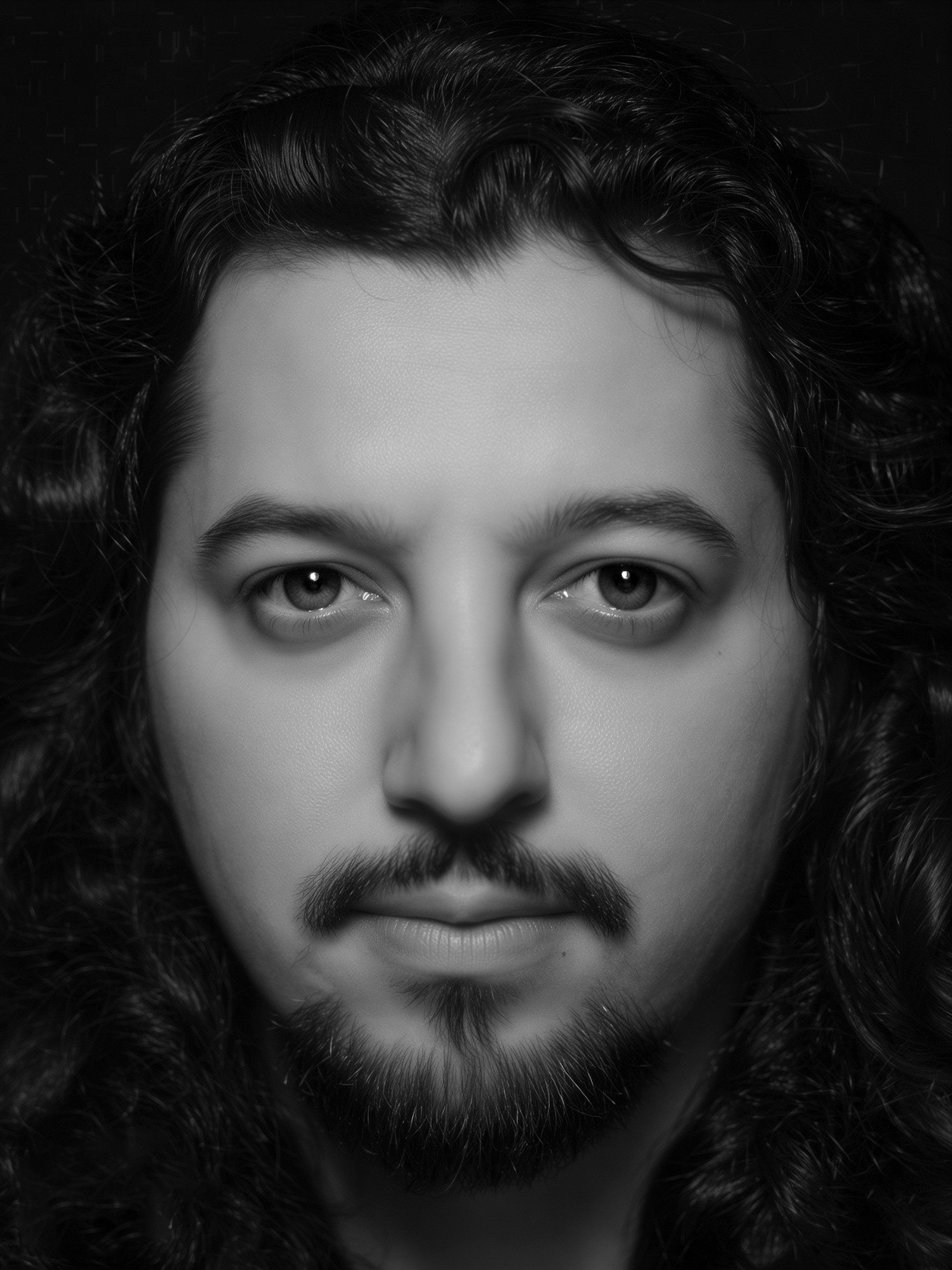
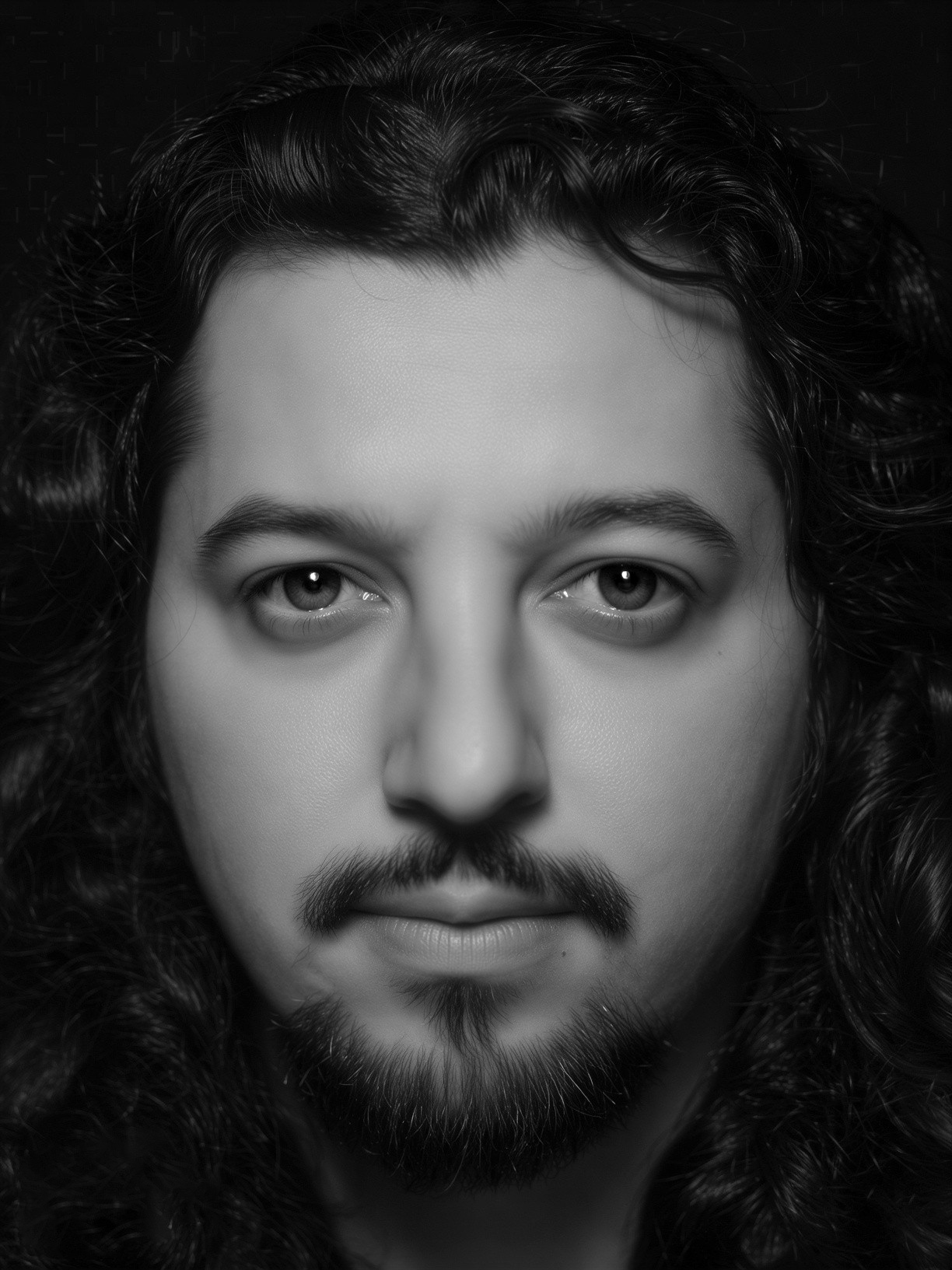
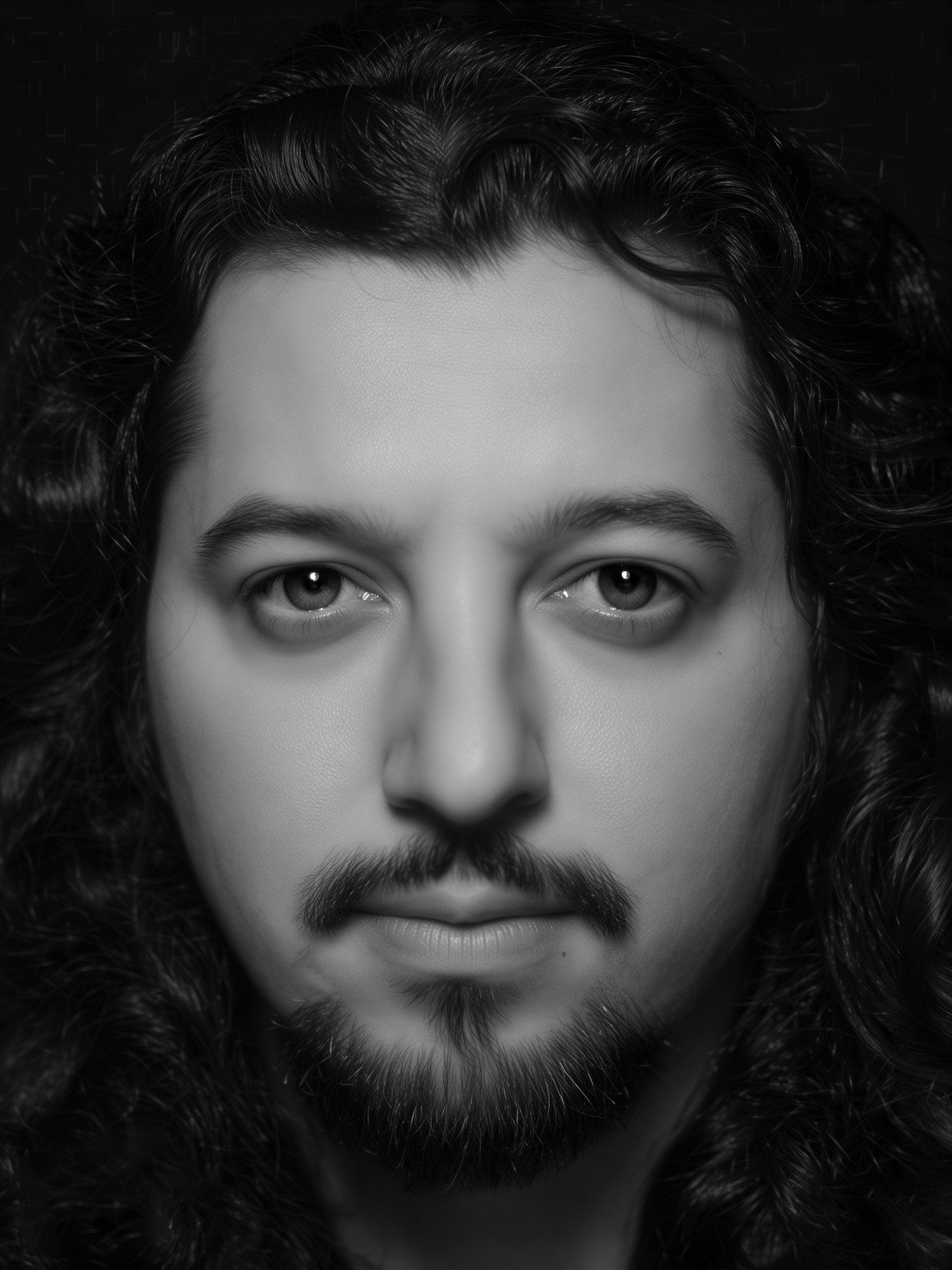
The Costa Rican film director Wainer Méndez explores Costa Rican identity in his film "Dama de las mil máscaras."
PART II: Wainer Méndez’s Filmmaking with Costa Rican Identity
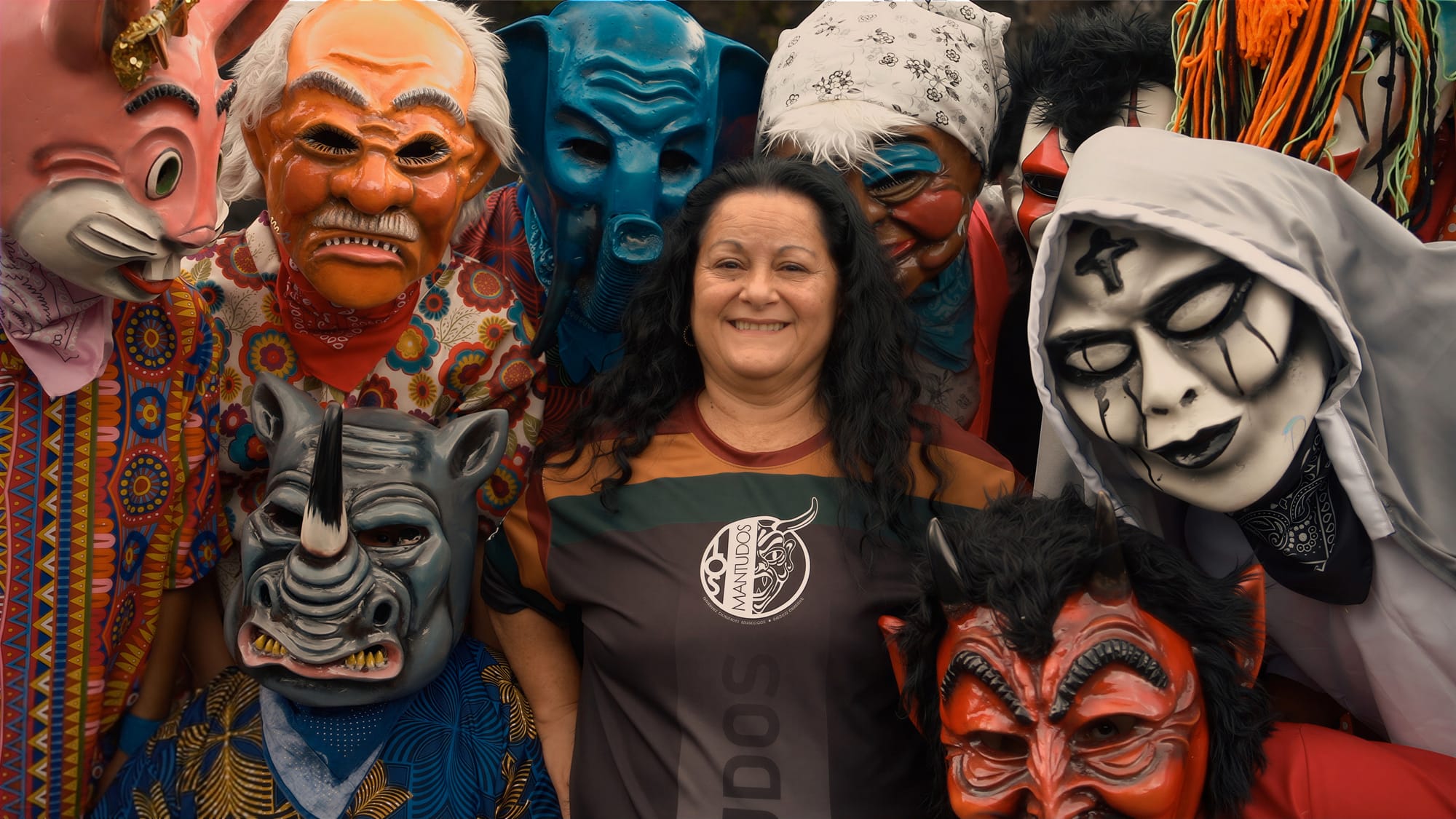
In PART I we explored Wainer Méndez’s Costa Rican community filmmaking. Now, we’ll dive deep into understanding his filmmaking with Costa Rican identity. Remember that his documentary “Dama de las mil máscaras” was created from the desire of collaborating with Damaris González – Costa Rica’s first woman mascarera – and accompanied by her community of Barva in the province of Heredia.
Everything sprouted from the longing of showcasing a group of people and artists focused on preserving the tradition of masquerades in Costa Rica, which is strongly linked to its identity. Méndez, who’s a Costa Rican award-winning self-taught film director, wanted to portray Damaris as a strong mascarera and empowered leader that takes care of her community.
“I thought it was fundamental to tell a story about this character. And it’s not only a story about a character. Actually, the film is a story about the town of Barva and the tradition of the mascaradas there,” Méndez said. “I thought it would be interesting to make a film about this tradition through Damaris’s eyes.”
When Méndez and Damaris started collaborating, he began entering Damaris’s world. An environment that’s very symbolical, mystical, and magical. The mascaradas go back to the times of colonization when Spain conquered America. But in the particular case of Barva, there’s a strong relation to its Indigenous traditions.
You can see that clearly at the beginning of the film, when Damaris starts speaking about her Indigenous ancestors. Throughout the movie she explains that on a deeper level. Everything is linked to the Cacique Barvak, whose settlement was in Barva before the Spanish arrived.
Don't Forget to Subscribe to The Story of The Story
For only $16 a month, every Friday you'll have exclusive access to
The Story of The Story. Our founder, the Costa Rican award-winning multimedia journalist and artist Elizabeth Lang, guides you through her creative process to produce her stories.
While Méndez worked on “Dama de las mil máscaras,” several texts from Barva's writers guided him through the legend behind the town.
“It was about the fundamental historic event of the Spanish invasion in our continent. It’s about understanding which is the relationship between the form and use of the masks with the resistance of the Indigenous people and the symbols of the representations of these characters,” Méndez said. “At that time, the masks were resistance against the Spanish.”
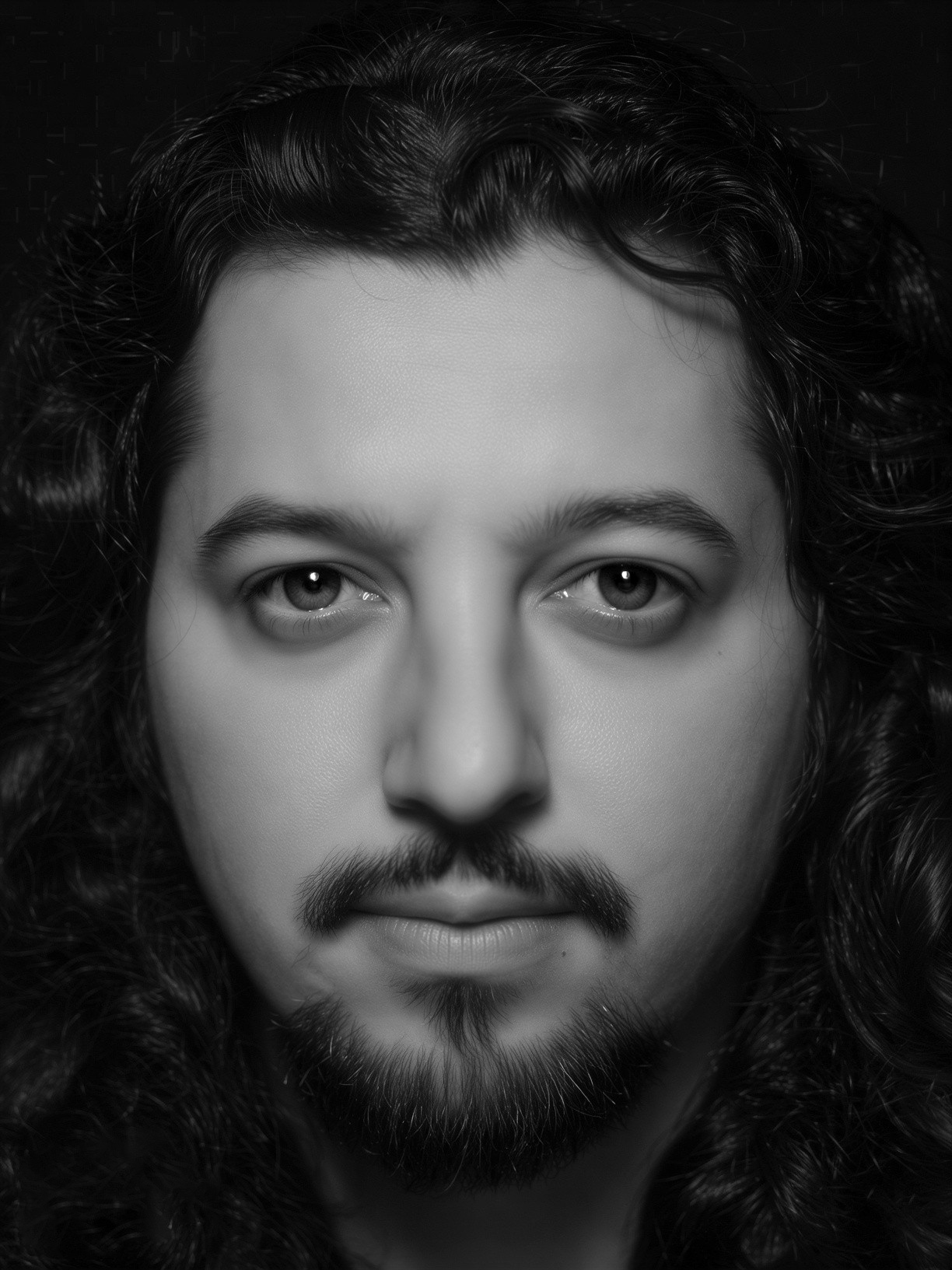
Listen to Wainer Méndez
0:00
/35.213333
These first manifestations of the mascaradas go back to 1569 when the Cacique Barvak was in charge of the area of Barva. These initial appearances of the mascaradas then also merged with the celebrations of the patron San Bartolomé, which has a direct link with why people dance on the streets with the masks and the cimarrona.
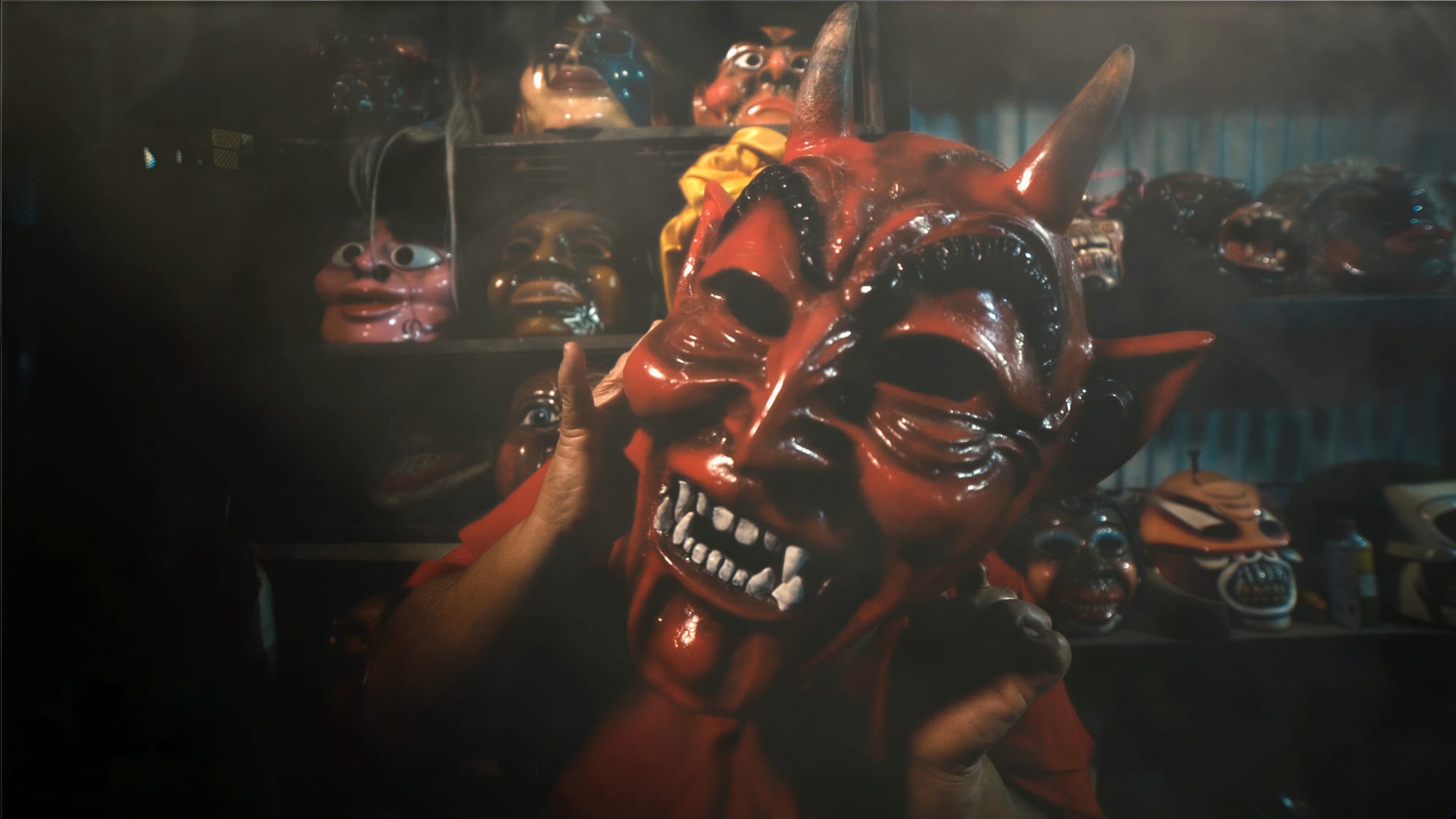
It’s the mix between the Indigenous culture and the imposed religious traditions from the Spaniards. Méndez wanted to bring in this cultural narration through Damaris’s language with a wilder expressive aesthetic and you see this in her masks with animal faces.
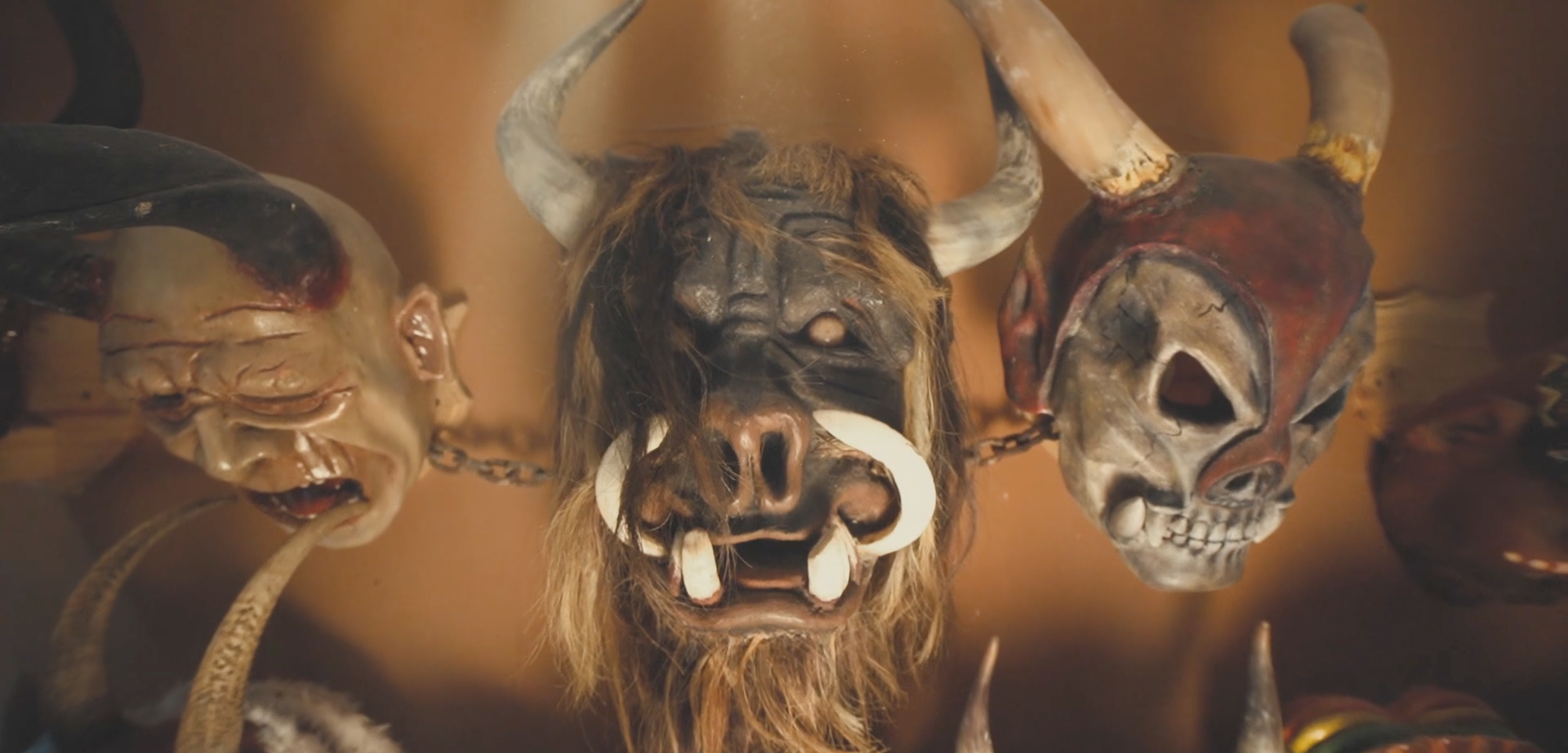
The masks with a wilder expressive aesthetic and animal faces. | Photos courtesy of Wainer Méndez. | Impulsiva Stories
Damaris’s Mystical World
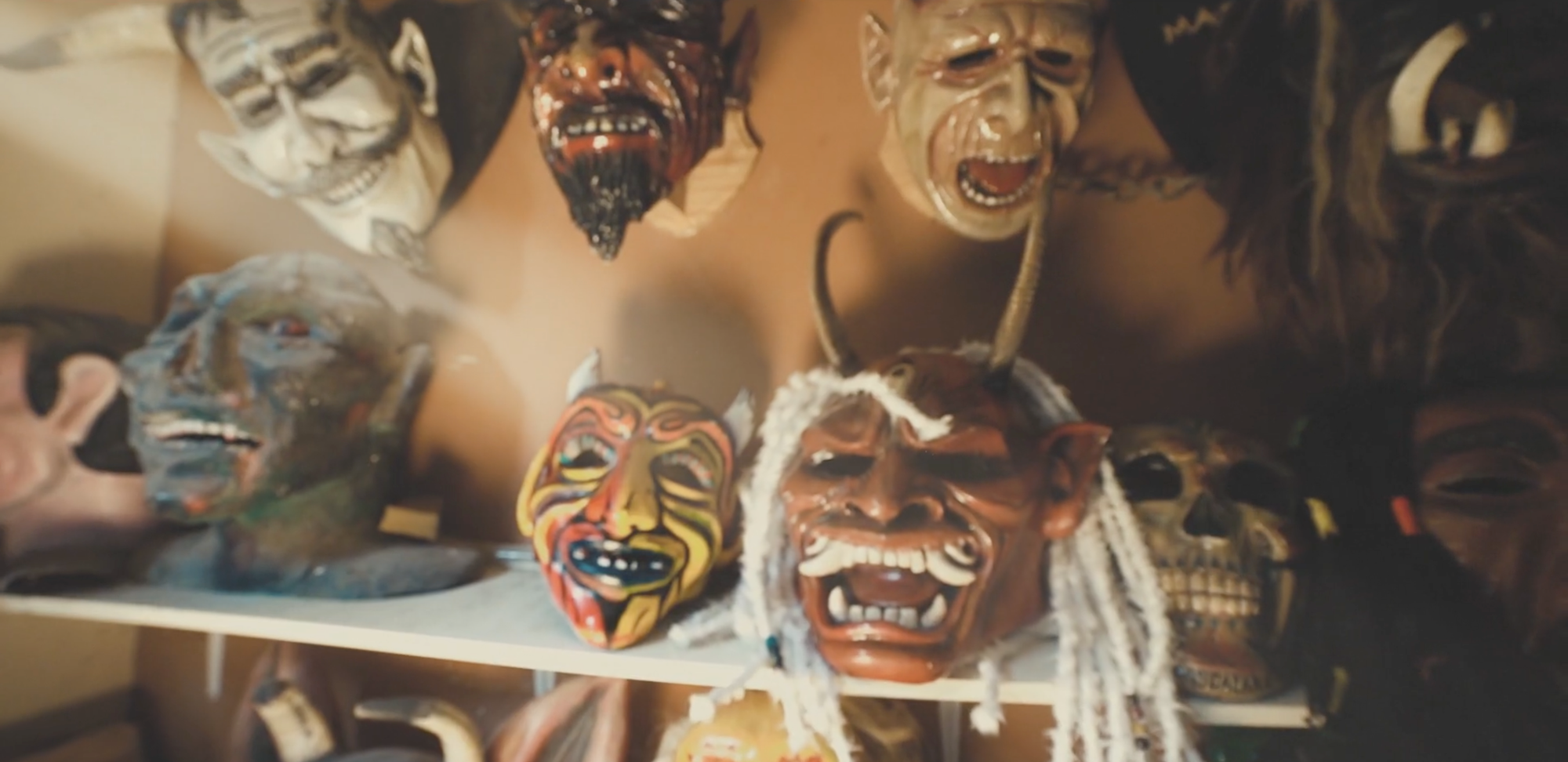
When Méndez shows them on the big screen, these directly communicate the spiritual aspects of the mascaradas to the audience. They come alive in the workshops of those who create the masks.
“At Damaris’s workshop, you feel things there. You live things there that are not easy to explain. There’s a magic realism in the day-to-day. There’s a sensation there of spiritual spaces that she’s opened communication channels between those spirits and deities she represents in her symbolic and magical world,” Méndez said.
That’s why these masks come alive in a very particular way that’s not easily explained. Méndez described the space they live in in the workshops as one that’s a bit melancholic or at times “dead” because they’re alone. No one uses them. They’re set in a space where it seems that nothing happens.
But the reality is quite far from that.
When he entered those workshops, he understood the masks carry a lot of energy. The spaces they live in are full of energy as well. Everything has a meaning. Everything that the artist goes through when creating the mask is impregnated onto the final piece.
And it’s then combined with the energy of those who then wear them to dance out on the streets at the collective participation in the celebration.
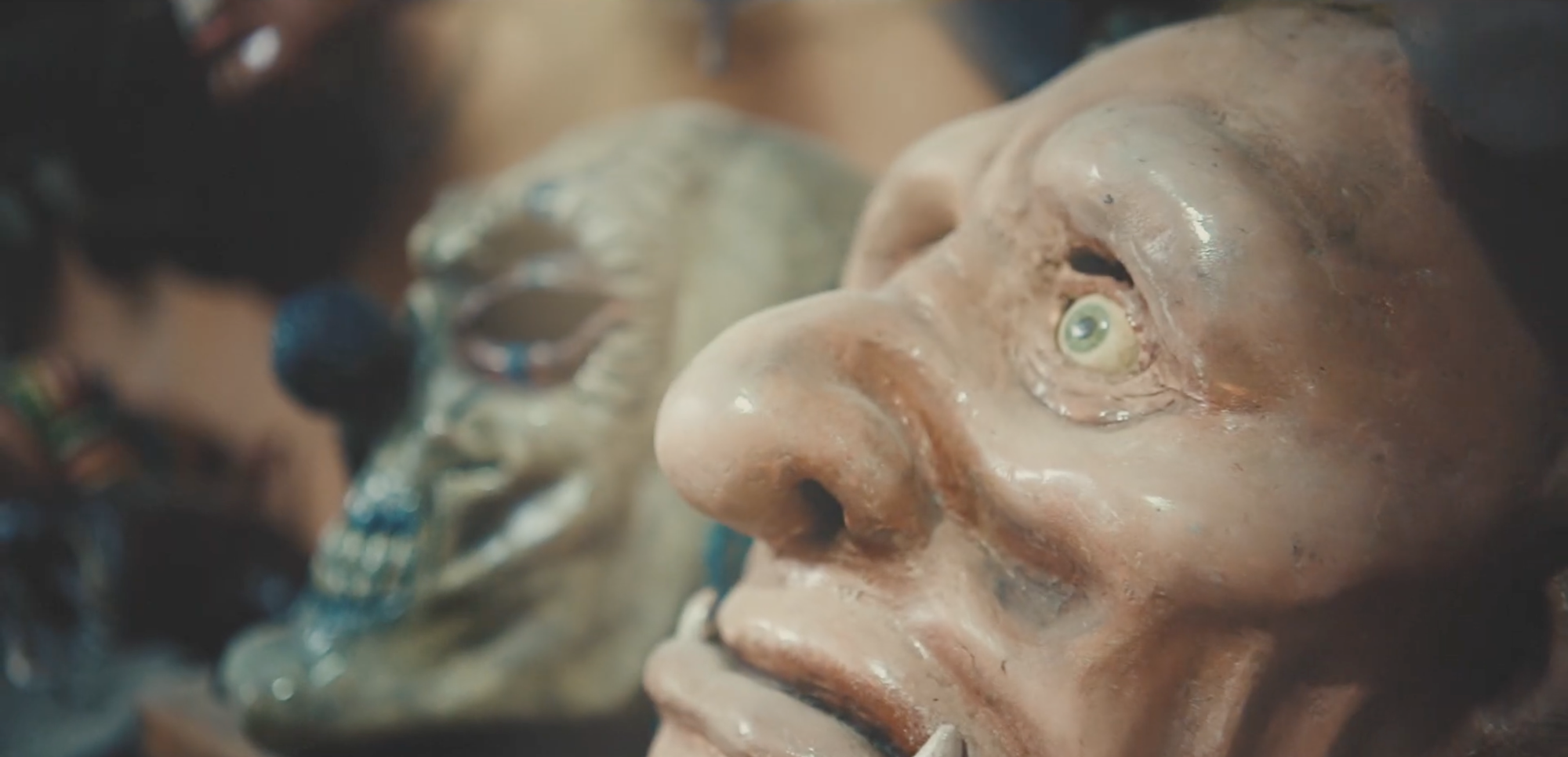
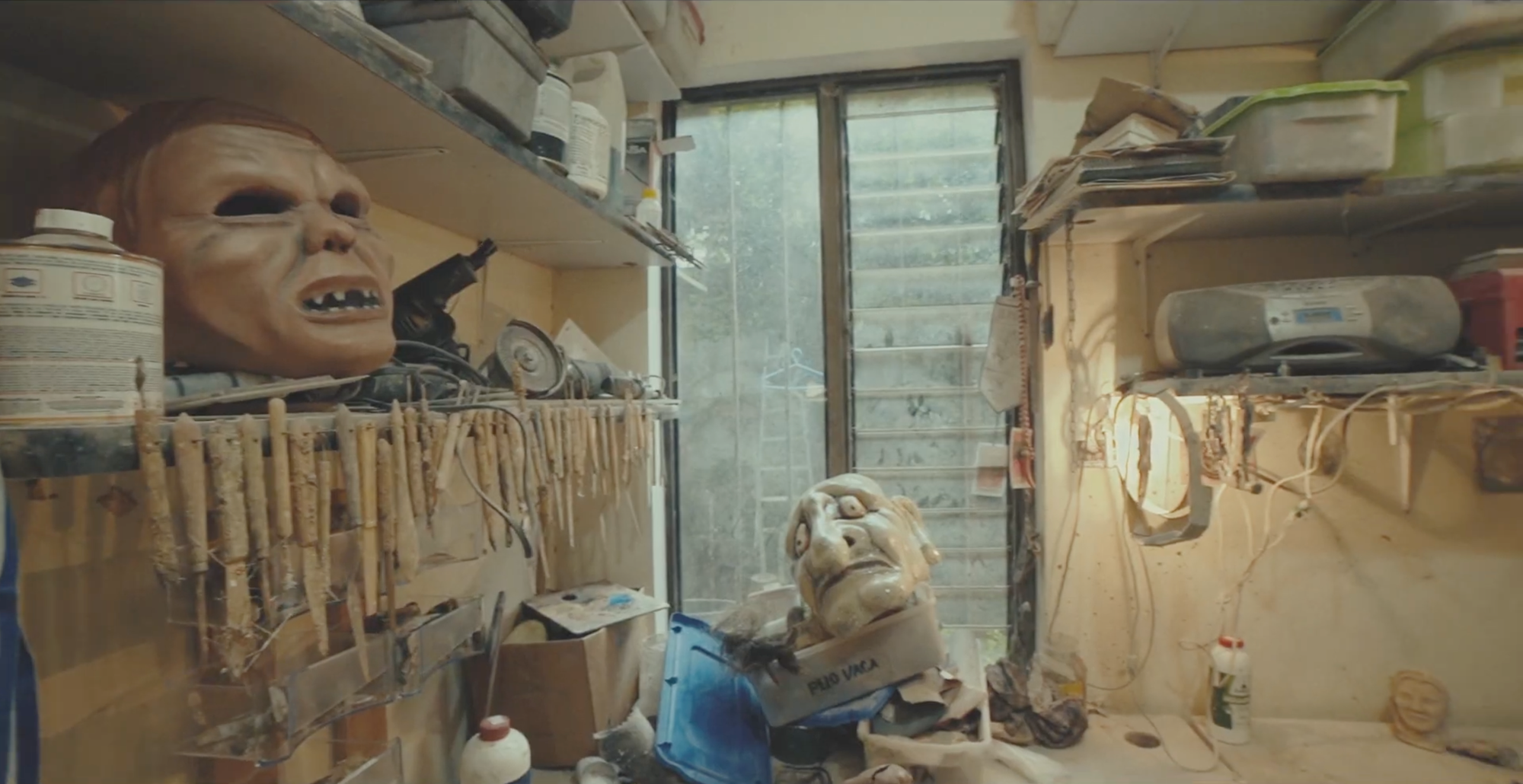
The masks with their own lives at the mascareros' workshops. | Photos courtesy of Wainer Méndez. | Impulsiva Stories
The masks might look like they’re still when they’re taken back to the workshops, but they’ve gone through a lot. And that obviously creates another layer of its Costa Rican identity. It’s not simply based on the symbols. It’s about everything that happens around the mascaradas and its cultural expressions.
It’s about the colonial times and how they’ve been kept alive throughout time by the people of the town who love the tradition. It’s about a person like Damaris: a strong woman who has fought throughout time for her craft.
Her identity as a woman also comes through in a strong manner in her masterpieces and this speaks about the gender inequalities that Costa Rica faces.
“Women have had to make their work invisible by hiding in anonymity or hiding behind masculine figures. Damaris was not believed that she was the mascarera because they thought it was her husband for a very long time [who made them],” Méndez said. “Even after her husband died, they still kept thinking she didn’t do the masks.”
Listen to Wainer Méndez
0:00
/44.069333
Méndez explained that there’s been a discredit towards women mascareras from behalf of men and the patriarchy. And this expands on a local level to women who have given great things to Costa Rica in whatever space they move through.
But right now, he thinks it’s even more important than ever to liven up this conversation. Especially because of what’s happening on a political and social level both in Costa Rica and throughout the world. These are moments where women’s rights in the Central American country are being questioned and doubted, which ties directly with the tradwife movement on social media and the narrative questioning women’s right to vote around the world.
On a more local level, Méndez mentioned the worrying amount of femicides – the murders of women simply for being women – occurring in Costa Rica.
“We’re not facing it as we should. And I think that even though women have more participation in working environments or social representation, I don’t think there are equal opportunities in salaries and many other things. We should be a bit critical with this,” Méndez said. “This film then gives us a satisfaction in saying that there are women who fight and sustain such a big world like one of tradition.”
Listen to Wainer Méndez
0:00
/39.461333
Even if others have tried to minimize Damaris and her craft as a woman mascarera, she has fought back. She’s resisted and became a woman who achieves everything she goes after in spite of the challenges. Someone who keeps fighting hard to keep alive the tradition with a strong Costa Rican identity.
A Shared Latin American Identity
And that also connects on a broader level with Latin American identity because the crafting of masks is a shared cultural expression throughout the region. It’s one where these celebrations have certain commonalities and other diverse elements that tie to an identity founded on a cultural resistance.
Méndez said that even though Latin America was colonized and has been culturally bombarded over the past years, the traditions have survived and are alive.
“They’re identities that remain relevant. They’re alive. That even today, they have their roots in the Latin American people and each one of those roots connects us. We’re a great family and I believe that, in that sense, we can all see each other in that film,” Méndez said.
Listen to Wainer Méndez
0:00
/35.693333
This relational aspect with an innate Latin American identity was very clear when Méndez screened “Dama de las mil máscaras” at the Costa Rica International Film Festival (CRFIC) in July of this year. During the first screening of the documentary at the Cine Magaly in San José, the presentation was accompanied with a special appearance of the mascaradas and cimarrona before entering the movie theater.
Méndez, Damaris, and her community were able to take the popular culture from the streets of Barva, Heredia to the Cine Magaly in downtown San José. While the mascaradas and cimarrona were in mid celebration there, the people waiting in line were dancing along, especially the festival’s guests from other Latin American countries.
0:00
/0:04
The mascaradas and cimarrona at the Cine Magaly (left and right) and the mascaradas' celebration in Barva, Heredia. | Photo courtesy of Wainer Méndez. | Impulsiva Stories
This particular showcase was of utmost importance for Méndez because it allowed the film to be enjoyed by people from different parts of Costa Rica. And it was also the clear example that Costa Rican identity is present no matter what space it is in, whether it’s a public one on the streets of Barva or a more reserved private one like the Cine Magaly.
By bringing in the popular culture with a strong Costa Rican identity, Méndez and the protagonists of the film felt that breaking that barrier was very important.
“From the beginning, we’re inviting the audience to be part of this celebration or at least, to have a taste of what the movie will be like. So, we took the cimarrona and mascaradas dancing. People were also dancing. It felt like it was also a part of the film for people to connect a bit with the idea of what the movie transmits,” Méndez said.
Listen to Wainer Méndez
0:00
/31.325333
Once everyone was inside the movie theater, the masks were placed on the borders of the stage, which made the overall experience of “Dama de las mil máscaras” different. It added to the portrayal of Damaris’s magical and mystical world that was then screened. It allowed the audience to get a foreshadowing of what they’d watch on the film, which was then strengthened on screen through the use of a vibrant color palette and joyous music.
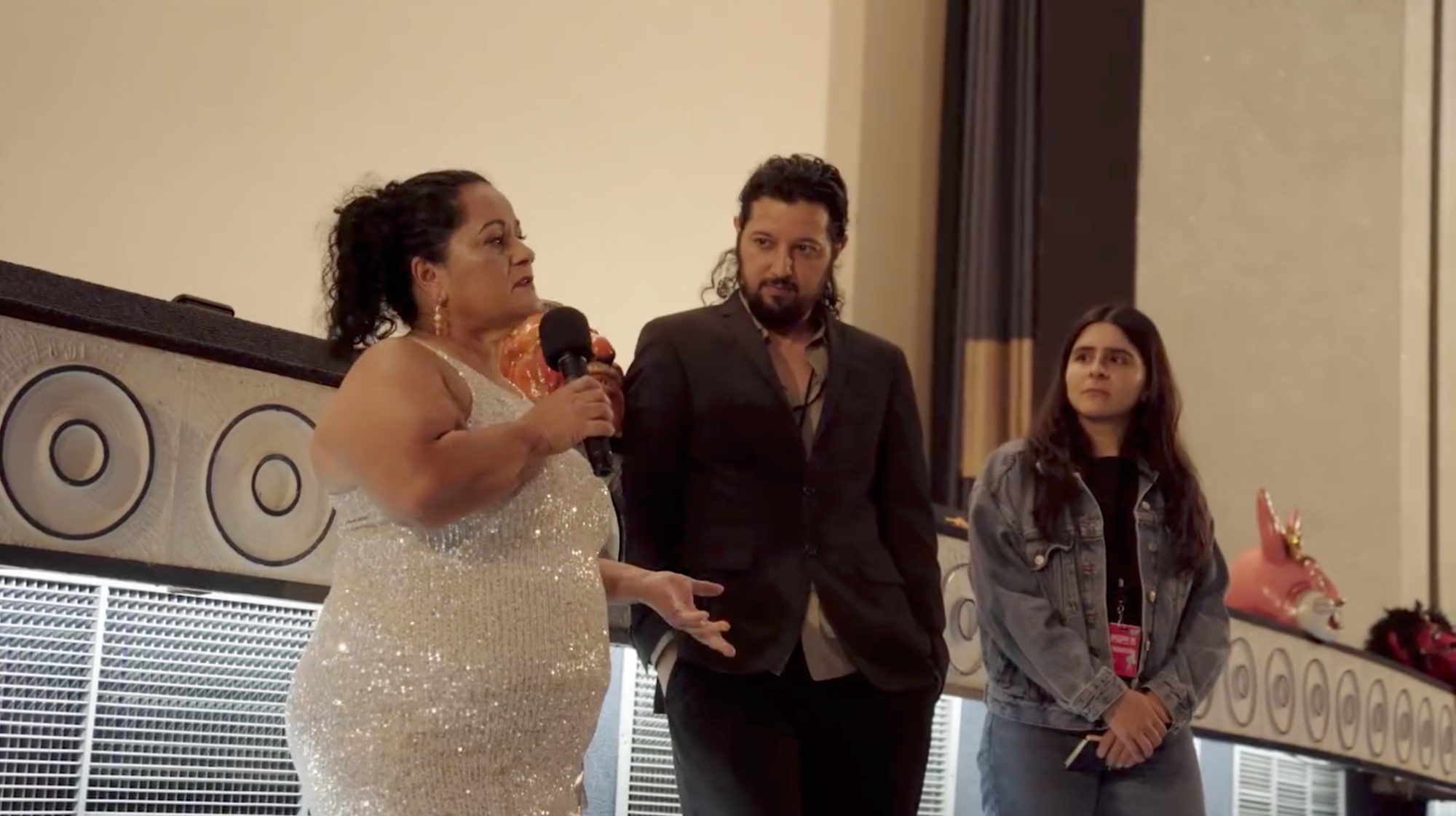
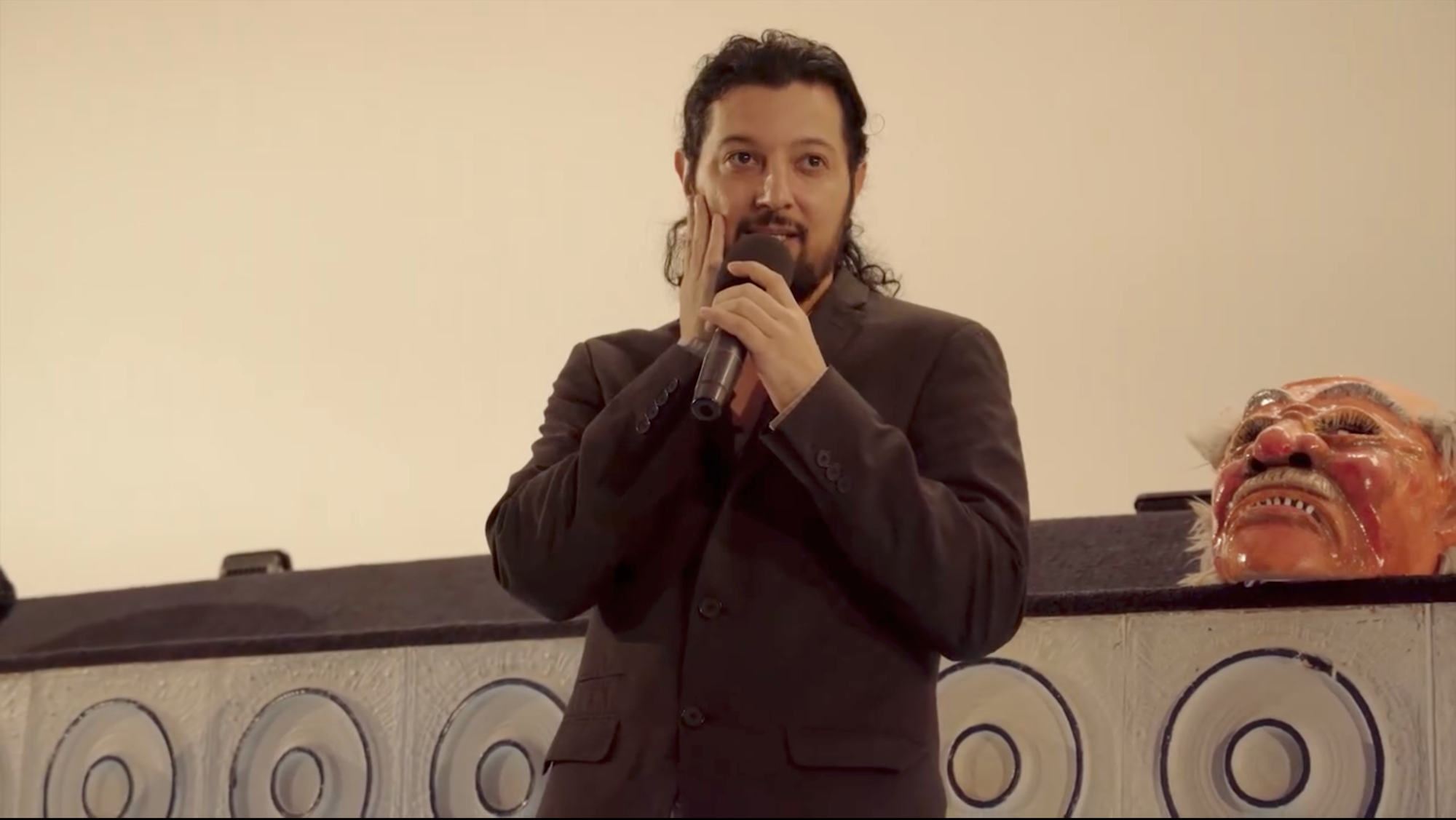
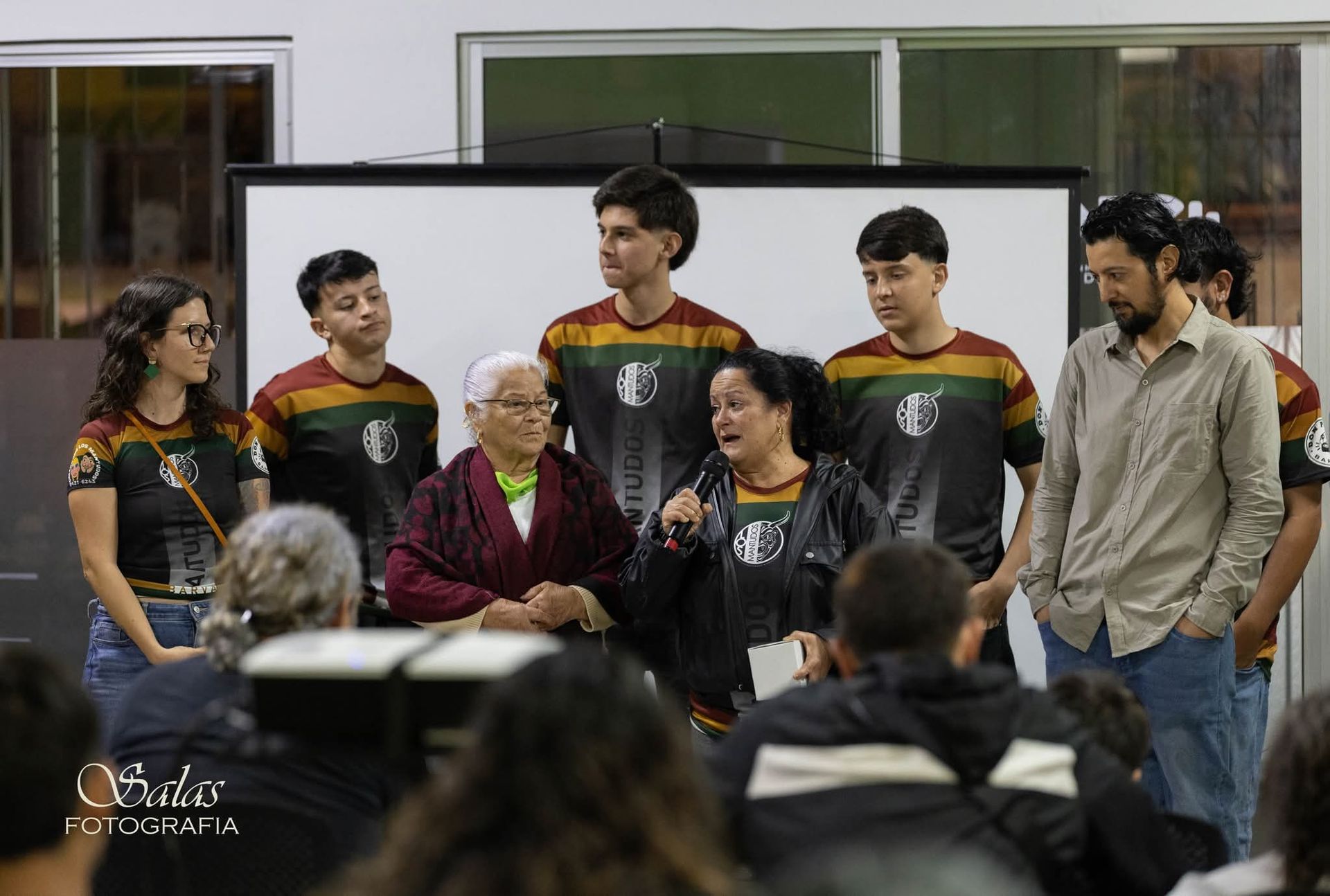
Wainer Méndez and Damaris González speaking at the screening during the CRFIC. | Photos via CRFIC. | Impulsiva Stories
The Different Layers of Costa Rican Identity
Regarding the color selection, the choices were based on playing with the shadows to create a more contrasted ambiance. It was a saturated color palette that generated certain vibrancy and energy behind the creation of the masks. It was a mixture between the natural environments where Damaris is set, the masks themselves, and the places where the mascaradas live on their own when no one is wearing them.
As for the music, Méndez worked on during a year and a half. The main tools used for this were the midi with various pianos.
“It was inspired on the music used before for the parties, which was the military band. So, lots of music with a different tempo. Many elements of an orchestra, but more military and then these bands reproduced in the towns,” Méndez said. “There was a trumpet, a bass drum, a snare drum, a sax, and things like that.”
That’s where the cimarronas come from and Méndez wanted to include that to obviously add another layer to the Costa Rican identity in “Dama de las mil máscaras.” It’s a documentary filled with many Costa Rican identities.
One comes directly from Damaris with her craft of the mascaradas. Another one honors her Indigenous ancestors and the preservation of a tradition that emerged from their creations that go as far back as the colonial times of Costa Rica. Another one that places the mascaradas and cimarronas in the present.
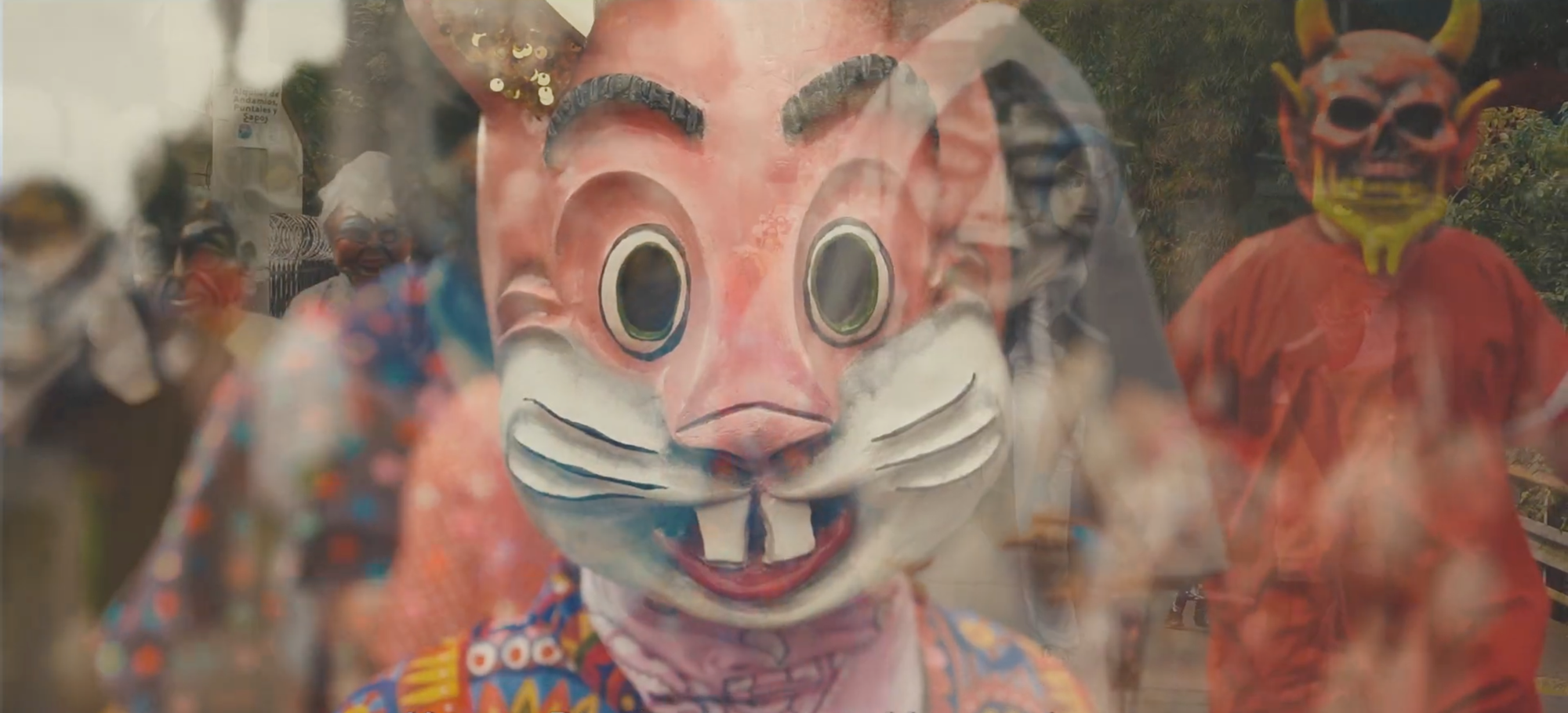
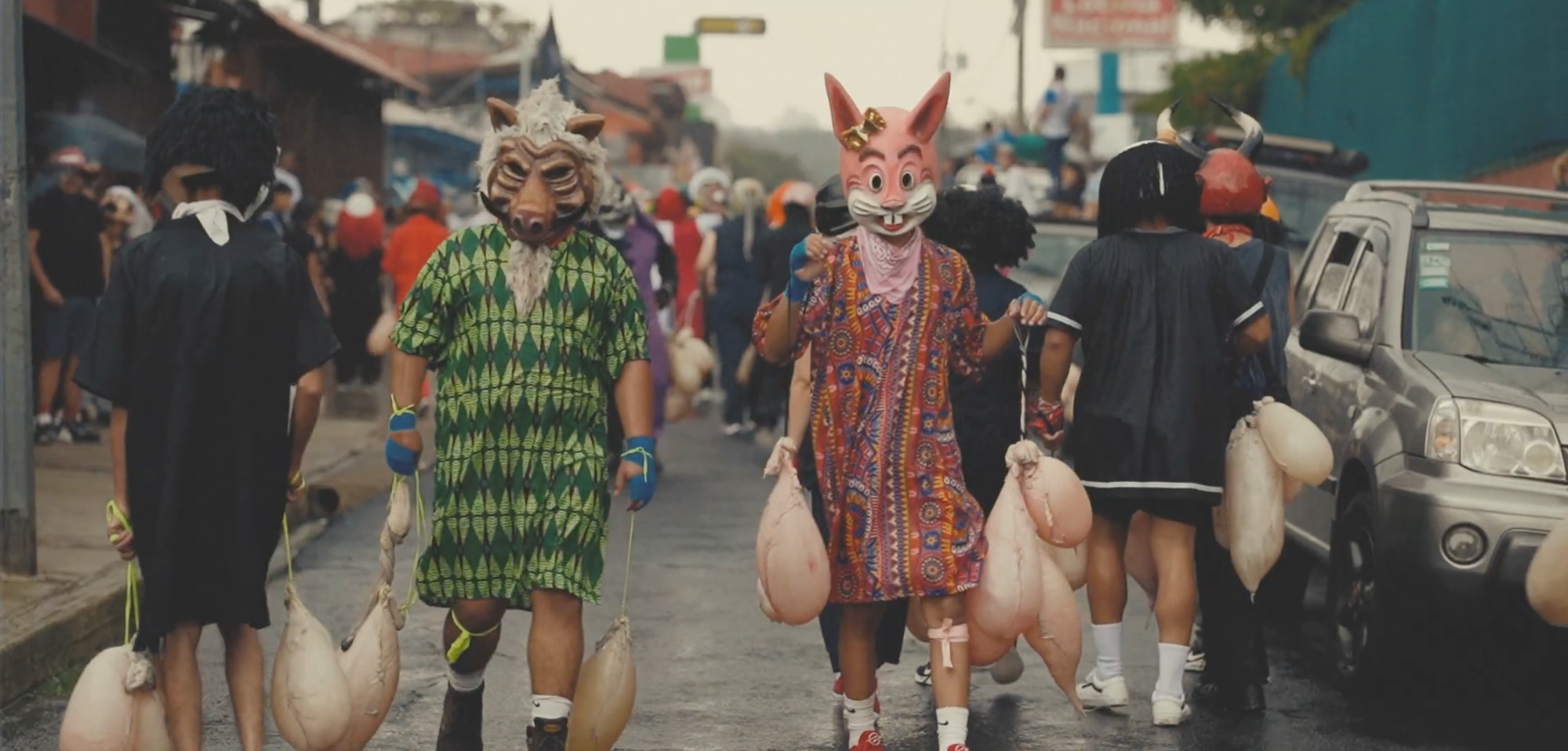
Scenes from the mascaradas captured in the documentary "Dama de las mil máscaras." | Photos courtesy of Wainer Méndez. | Impulsiva Stories
And another one speaks loudly about Damaris’s experiences as the first woman mascarera of Barva and Costa Rica. It’s a mixture of diverse identities that exist in the country because Méndez believes there are many Costa Ricas. Not just one and the Central American nation is extremely big in spite of it being small in territory.
So, it is through filmmaking that he can portray these different identities with his ongoing collaboration with the communities that define Costa Rica.
Listen to Wainer Méndez
0:00
/30.125333
“In this country we need to build our own identity and autonomy in a way in which we can reach populations, people, and audiences through filmmaking,” Méndez said. “They’re the constructors of that identity. They should be the people that watch it and feel identified with it in their own lives.”
To learn more about Wainer Méndez’s filmmaking with Costa Rican identity, you can follow him on Instagram at @wainer_mendez or @arajo_films.
Written by

Subscribe to my newsletter
Subscribe to my newsletter to get the latest updates and news