Esta Isla PART III
Lorraine Jones, Cristian Carretero, and "Esta Isla" take Puerto Rico around the world and make history with their debut feature film.

PART III: Esta Isla Takes Puerto Rico Around the World
In PART I we explored “Esta Isla’s” Puerto Rican tropical realism and the ten-year-long journey Lorraine Jones and Cristian Carretero went through to create their debut feature film. In PART II we dove deep into why “Esta Isla” portrays Puerto Rico’s social issues. This week, we’ll learn about how the film takes Puerto Rico around the world.
We first have to travel back to June 7th in 2025: the day of “Esta Isla’s” world premiere at the Tribeca Film Festival in New York City. Before that initial screening, Jones and Carretero were offered to do the premiere at the South By Southwest (SXSW) Film Festival or at Tribeca. They did a thorough search to see what each festival offered them and ended up going with Tribeca.
“The Puerto Rican audience and diaspora there [in New York] is gigantic and it’s a historic place in New York. During that week of Tribeca, it was the Puerto Rican week [National Puerto Rican Day Parade],” Carretero said. “We were there for Tribeca and we went to the Puerto Rican parade. We were carrying a poster of the film como unos anormales.”
While Jones and Carretero were there, they put up their own merch kiosk and invited people to go watch “Esta Isla.” Jones and Carretero’s grassroots approach in promoting their debut feature film drew attention from other participating film directors who didn’t quite understand why they were out on the streets selling their merch.
Don't Forget to Subscribe to The Story of The Story
For only $16 a month, every Friday you'll have exclusive access to
The Story of The Story. Our founder, the Costa Rican award-winning multimedia journalist and artist Elizabeth Lang, guides you through her creative process to produce her stories.
When they were invited to participate at Tribeca, Jones and Carretero were initially asked if they wanted to be on the international or national category. That created a bit of confusion for the Puerto Rican Emmy award-winning film directors and artists.
“International because we feel, in a certain way, that we belong more to Latin America than the United States,” Carretero said. “And then, the programmer convinced us that it would draw more attention to the colonial thing if we were in the national category.”

Listen to Cristian Carretero
0:00
/27.317333
Since they were in the U.S. category, Jones and Carretero felt they were sort of invading them, which was a strong statement on their behalf. It pondered a question: why was a Puerto Rican film in that category?
And that was even more surprising and impressive for Jones and Carretero.
They were not expecting to win anything. Just going to Tribeca was a huge gift for them and they felt they had already won by being there. They were super happy and thankful about it because it was the most incredible thing that could happen to them.
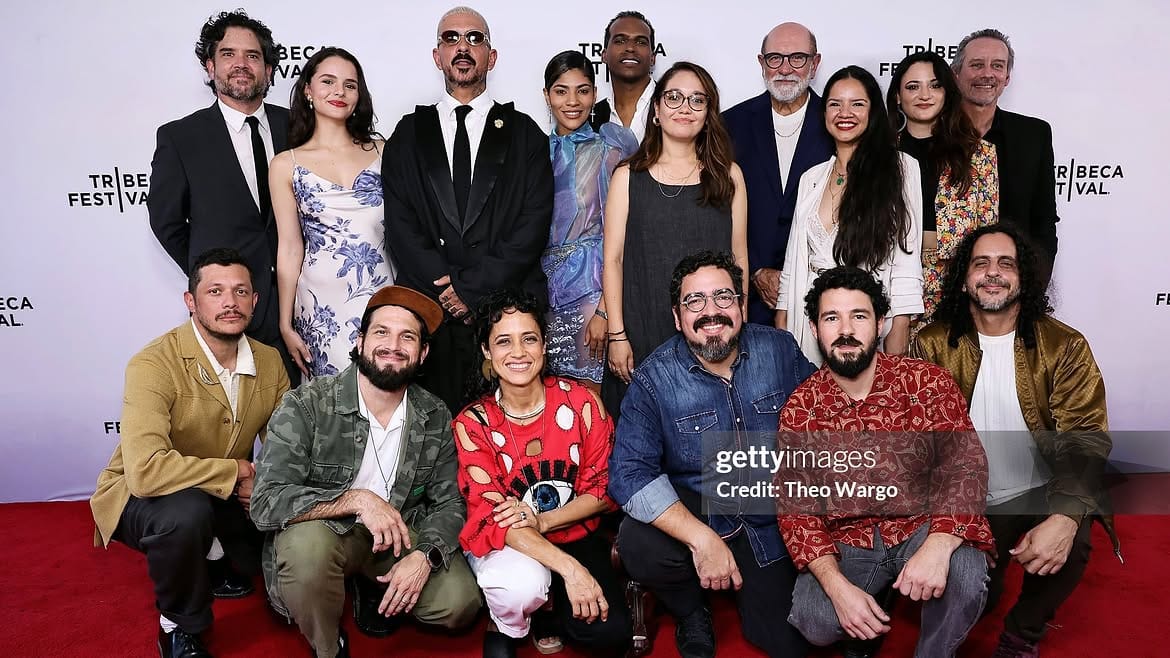
“A lot of Boricuas went. Almost all of the casting crew went there and it was really beautiful. And so, winning and that it was three awards. I didn’t know how many awards we could win. I thought it was only one,” Jones said excited. “The fact that it could be three and we won them was like: what the fuck?”

Listen to Lorraine Jones
0:00
/24.341333
“Esta Isla” won the Best New Narrative Director, Best Cinematography in a U.S. Narrative Feature, and Special Jury Mention for Best U.S. Narrative Feature awards at the Tribeca Film Festival in 2025, which was an amazing feat for Jones and Carretero.
Carretero mentioned that the Best New Narrative Director award was very important because both national and international films from all the festival were competing for it. And the jury was also made up of super cool people who Jones and Carretero admire. The recognition of their work from their behalf was a huge surprise for them.
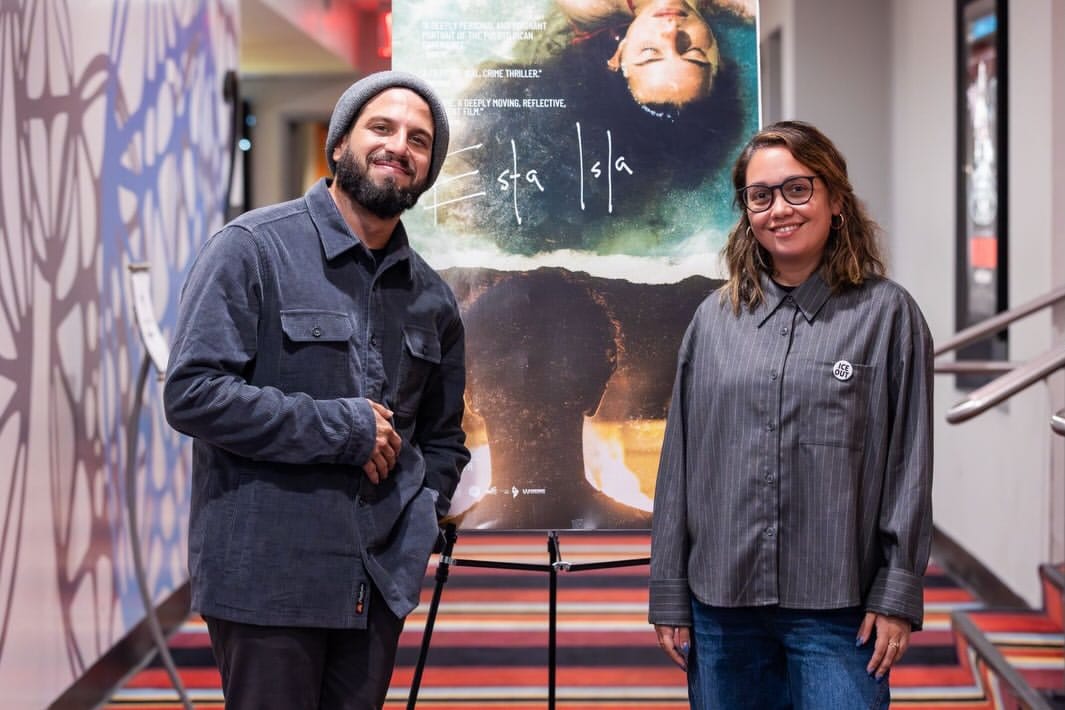
The awards were the clear acknowledgement for their breathtaking and soul-searching fiction film that tells the coming-of-age and lovers on the run story of two Puerto Rican teenagers. It was also the beginning of another new process for Jones and Carretero: the marketing and distribution of the film.
Once the reviews about “Esta Isla” started coming out, more film festivals from around the world started getting interested in the movie. That meant that wider and more diverse audiences would get to see “Esta Isla,” which is one of Jones and Carretero’s favorite parts of the process.
“What happens with the awards is that, I guess it generates more publicity and marketing. When you have no money or almost nothing at all [for marketing], these things help a lot with more people finding out about the film. More festivals want the film,” Jones said.
But more than anything else, Carretero and Jones cherish the fact that this allows for more reactions to happen. This means that the audience and the critics can make “Esta Isla” theirs.
Right after their world premiere at Tribeca, “Esta Isla” began its international travels through different film festivals around a wide selection of countries like the United States, Mexico, Brazil, France, Italy, Sweden, Switzerland, Cuba, the Dominican Republic, Greece, Panama, Spain, the Netherlands, and Costa Rica.
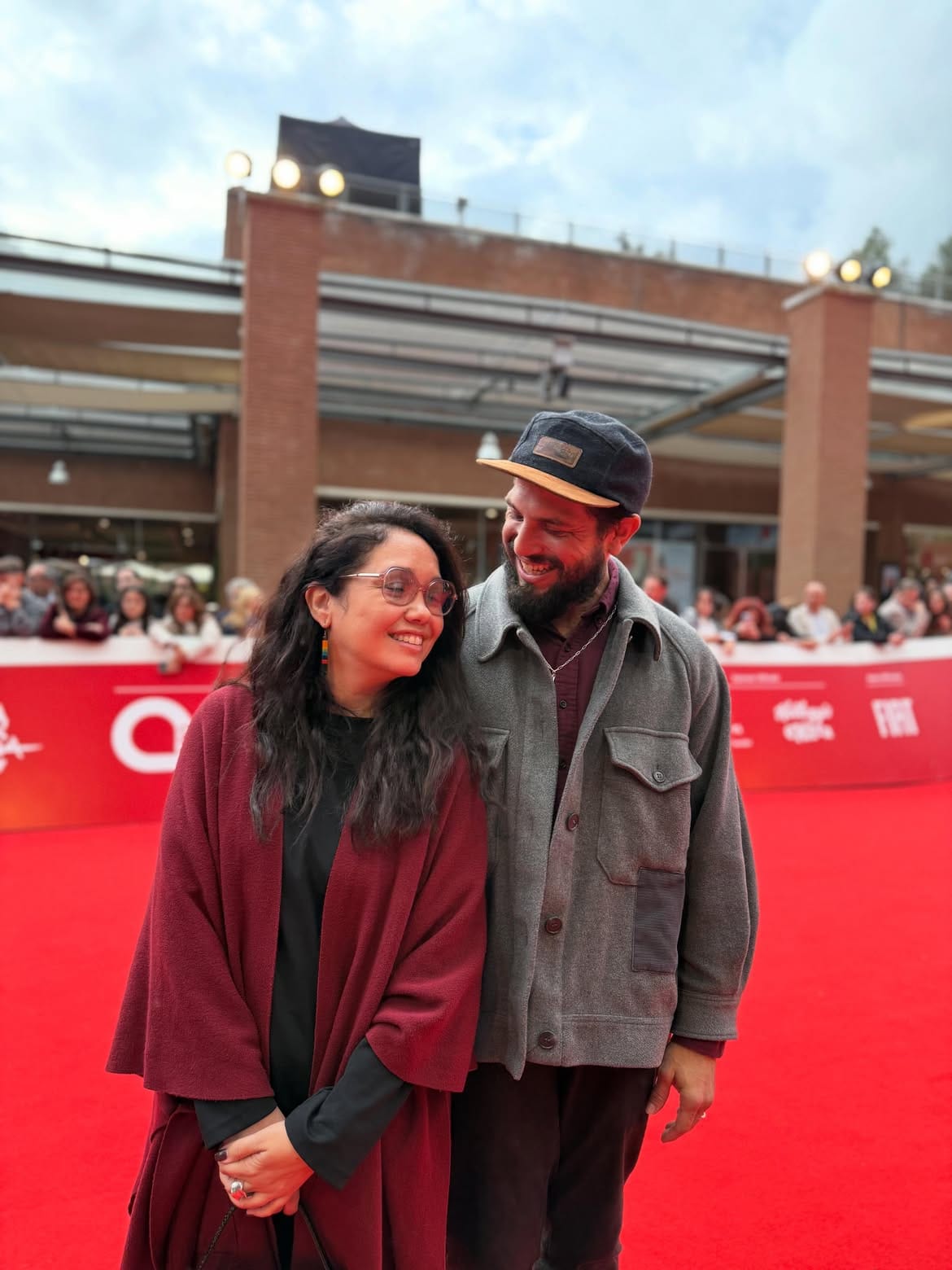
“Esta Isla” Makes Puerto Rican History
That festival circuit has been an ongoing journey since June of last year and many things have happened for Jones, Carretero, and “Esta Isla” since then. Earlier this year in February, “Esta Isla” became the first Puerto Rican film to be nominated and to win the John Cassavetes Award at the Film Independent Spirit Awards.
“The first film nominated…and with that, it was like: wow. That’s so cool. They’re like mini Oscars because they work very similarly,” Carretero said.
The Film Independent Spirit Awards are like the Oscars for independent film. A table at the award ceremony costs about $20,000. Jones and Carretero had to find sponsors to get the spot on the table and when they arrived to Los Angeles, they saw huge billboards of the movies that were competing for the awards.
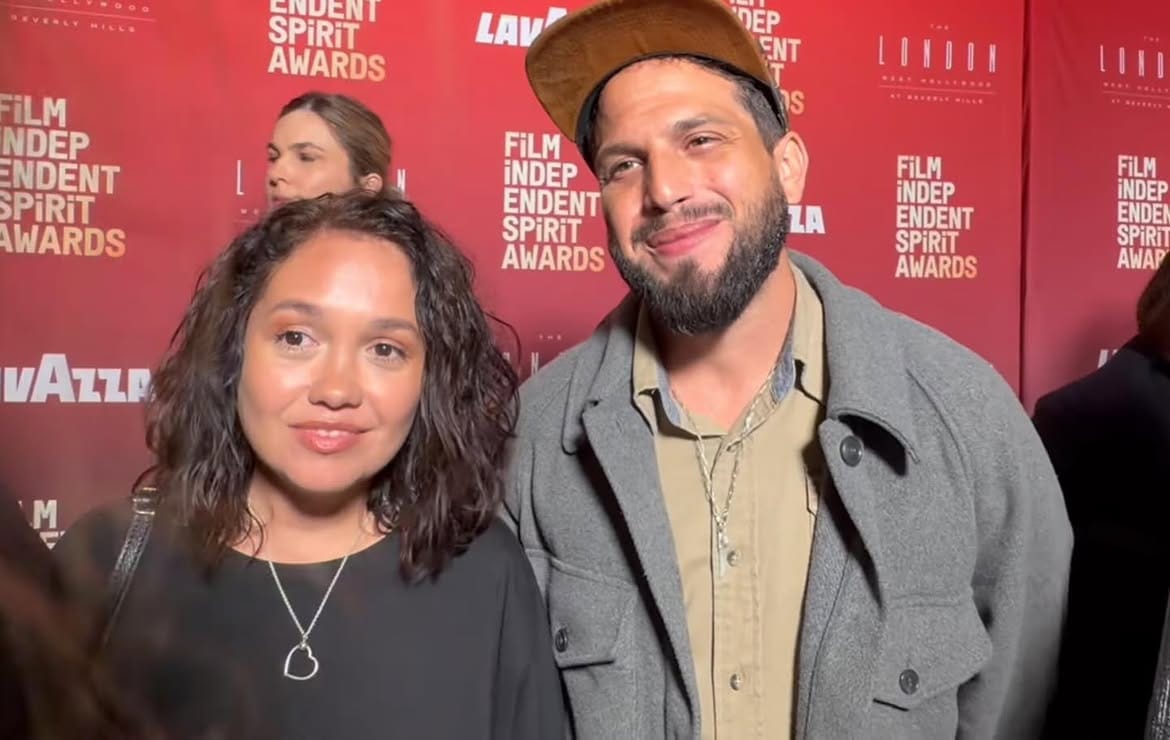
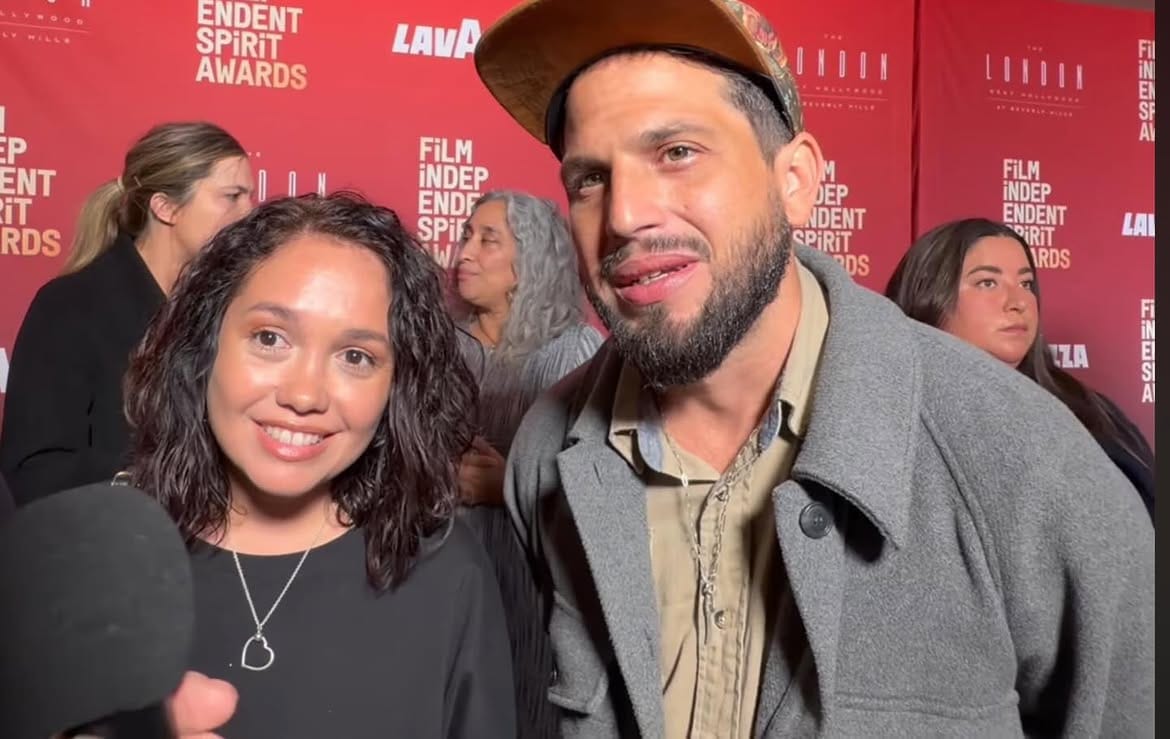
Lorraine Jones and Cristian Carretero during the Film Independent Spirit Awards in Los Angeles in February of this year. | Photos courtesy of Esta Isla. | Impulsiva Stories
A lot of films, directors, and crews they admired were participating. These are people, who at some point, inspired Jones and Carretero to create their tropical realism and deep human filmmaking. Simply being at the ceremony was a huge achievement for both of them.
“They seated us up at the front. Diablos, this table is so cool. It’s chévere. Someone from production came and told us: look, your category is coming. Don’t leave,” Carretero said. “We were like: this is so weird. This didn’t happen with other people. Oh shit. I think we’re going to win or something.”

Listen to Cristian Carretero
0:00
/31.517333
During that brief waiting moment full of suspense, Jones and Carretero said to themselves: ¿qué carajos?
They were wondering what the guy from production said.
And they started to prepare themselves mentally. Carretero saw a steady cam in front of the table that was filming them.
He just thought: shit. Ahora sí. It’s time.
But he also thought it could be a reaction camera to catch him applauding when the winner would be announced.
“And we still didn’t know. Then, when they said Esta Isla, it was like: whaaaaat? And we had written a speech. We practiced just in case and thank God,” Carretero said. “Lori was going to say most of the speech, so I was a bit more relaxed. I had the intro and outro.”

Listen to Cristian Carretero
0:00
/21.077333
Jones thought beforehand: if they’d win, she’d want to say something very nítido. She needed to practice in advance because she knew she’d be nervous in the moment and wouldn’t know what to say. It was better to have something prepared because it’s a very important and big platform.
They wanted to clearly express themselves in a great manner. Besides that, one week before they won, Bad Bunny had done his groundbreaking halftime show at the Super Bowl.
“That had recently happened, about one or two weeks before, and it was like: wow. This pompeaera with Puerto Rico on a global level. It felt super nice to be able to place Puerto Rico over here,” Jones said grateful.
When the U.S. actors Dylan O’Brien and Jane Levy announced “Esta Isla” as the winner, Jones and Carretero went to the stage. They began the speech and said: “we’re from Puerto Rico.” Then, everyone started shouting and applauding.
Both Jones and Carretero were like: what?
It was like: wow. They said Puerto Rico and the audience applauded. It was weird and bien brutal at the same time for them.


Lorraine Jones and Cristian Carretero receiving the John Cassavetes Award at the Film Independent Spirit Awards in Los Angeles in February of this year. | Photos courtesy of Esta Isla. | Impulsiva Stories
Afterwards, they went backstage and ran into Kate Hudson, who congratulated them for their win before they went to a room with the press to answer several questions.
“They asked us about Bad Bunny, so we said that Bad Bunny is like that because of things that happened in Puerto Rico. Like Hurricane María. Many things that happened and that made him this very reactionary figure,” Carretero said. “Then, at the party many people congratulated us and spoke with us because this was the most important award. It’s the most guerrilla one. Even though we did it with less than one million dollars.”
Now, remember Jones mentioned back in PART I that they were offered to film in the Dominican Republic and during the Covid-19 pandemic, the government in Puerto Rico had given funds for filmmaking. Those funds were about $1.7 million per movie and at the time, Jones and Carretero thought everything was conspiring against them because that money didn’t come through.
Yet, they made it this year into the category of the Film Independent Spirit Awards for a film made with a budget under $1 million. That was when Jones understood that you never know what’s ahead of you and what life has planned for you.

The fact that they won that specific award was well-celebrated during the party of the Film Independent Spirit Awards because of all the work that entails doing a film with that kind of budget. Carretero remembered that those who spoke with them during the party respected a lot their labor and it was a very gratifying experience.
“In the end, the most important thing was to bring it here to Puerto Rico and finally present it at the movie theaters. For people to connect with it and right now, people are still going to the movies,” Carretero said. “It’s having a ripple effect. Socially, it’s quite interesting and we’re still learning. Trying to understand well, but we did it without any expectations.”

Listen to Cristian Carretero
0:00
/38.405333
An Emotional Process of “No Pain, No Gain”
Besides the long international travels and recognitions, what Jones and Carretero have found the most rewarding is the response from the audiences. The connection that the film has achieved with people both from Puerto Rico and all over the world. It’s also about the long ten-year journey they’ve gone through to create their film with mesmerizing characters and all of the sacrifices and frustrations behind the process to achieve their greatness.
0:00
/0:11
Lorraine Jones and Cristian Carretero at the CRFIC in late July of this year. | Video via CRFIC's Instagram. | Impulsiva Stories
When they visited Costa Rica during the Costa Rica International Film Festival (CRFIC) in late july, during the section of questions for their screening, a man in the audience shared a wise reflection. He told Jones and Carretero that art nourishes itself from suffering and that often times, that makes the journey of creation even more worthwhile.
“The fight or the struggle. There can be suffering, but also not giving up and going against the current. Create your own path. That’s what he said. That true art pieces come from that fight. From the struggle,” Carretero remembered. “From certain suffering, pain, and it got me thinking: are you saying our film is an artwork?”

Listen to Cristian Carretero
0:00
/29.957333
As the saying goes: no pain, no gain. And if you didn’t struggle through the process, maybe you didn’t get to the heart of it. At least, that’s what Carretero believes and it relates to the extensive process they went through in those ten years of creation.
Jones mentioned that for them to go through with everything, they had a lot of love for the stories they were telling and the people they wanted to include in the film. It was also about a deep appreciation for the themes they were exploring that dealt with sadness, loss, and lots of happiness. It was a strong pursuit for keeping alive the traditions.


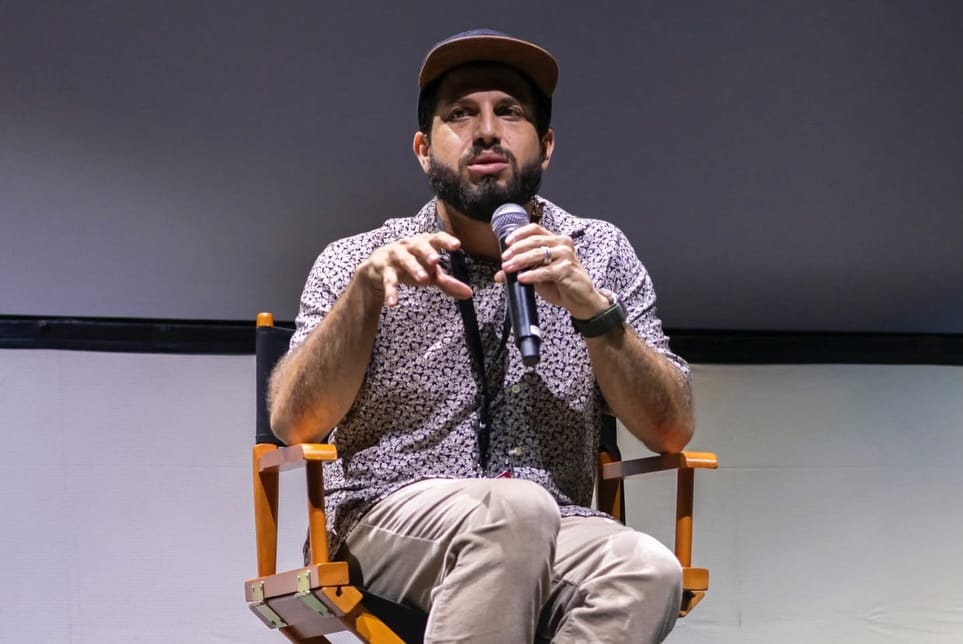
Lorraine Jones and Cristian Carretero (left and right in Panama) and "Esta Isla's" screening at the Cine Magaly in San José, Costa Rica during the CRFIC. | Photos courtesy of Esta Isla. | Impulsiva Stories
For Carretero, it was mostly about sacrifice and the willingness to take the risk in doing something without knowing how it would end up. Taking the leap of faith. Not for the money, but for the desire of seeing something done.
Going against the wind and the current while doing it however they wanted. Knowing that everything was against them and trusting their bliss. Seeing then that everything had a certain reverberation when it started to fall into place in the best way possible because in the end, it made sense.
And it was what they wanted all along the way. That specific feeling is one of the most gratifying ones for Jones and Carretero as filmmakers.
“That inspires me to like: fuck it, I’m going to keep pushing hard, trust my intuition, and let myself go with those voices that speak to me. Simply keep pushing,” Carretero said.
That deep conviction in following their instincts and trusting their intuition because they knew they had a powerful story in their hands, was what kept them going. It was what fueled their passion and devotion to share “Esta Isla” with the world and what kept them going in times of stress and frustration.
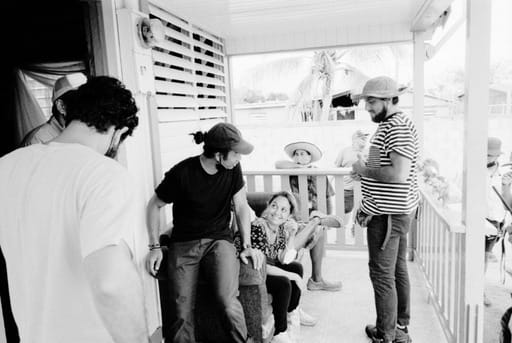
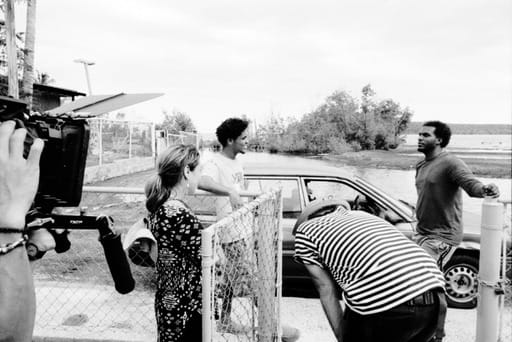
Some photos behind the scenes of "Esta Isla's" filming in Puerto Rico. | Photos by Juan Pablo Aramburu Charneco courtesy of Esta Isla. | Impulsiva Stories
When the funding didn’t happen, Jones and Carretero sought to keep the inspiration alive. They kept believing strongly in what they wanted to do. Asking themselves when it would happen and after they’d get rejections for the funding, they never took for granted all of the work done for the applications. They kept trying and went on with the next application.
“Then, when we were filming on set, it was really beautiful. I think there were lots of feelings of love, inspiration, and brotherhood there because everyone and all of the universe were conspiring on our favor,” Jones said. “That’s how it felt and it was really magical. Beautiful.”
The collaborative magic on set working with the actors and actresses who created “Esta Isla’s” extremely compelling characters is one of the great reasons why the film has been such a huge success at the film festivals. Something that’s done with love, care, and passion will obviously have great results on the big screen and will connect with the audience because it feels real and human.
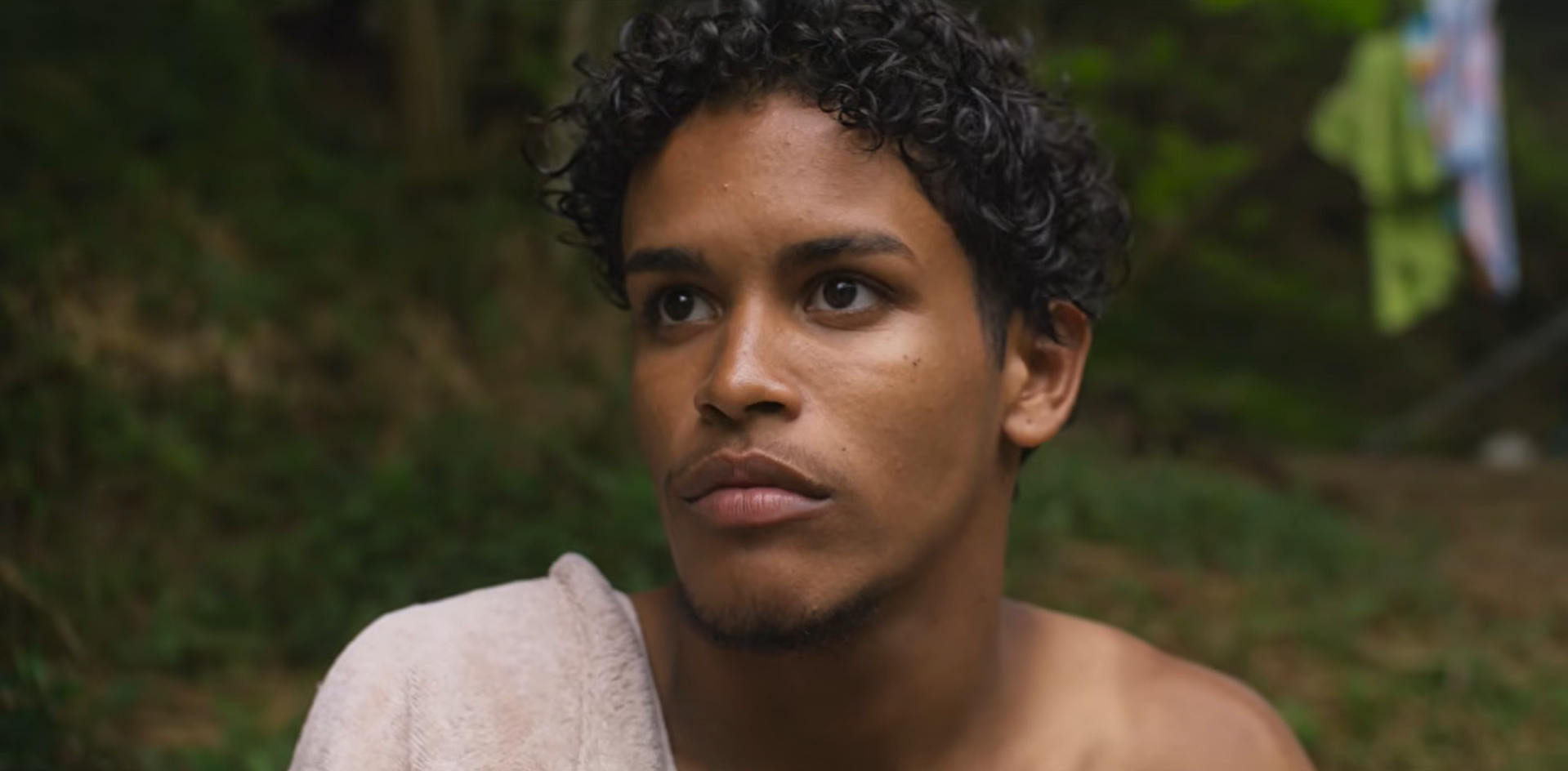
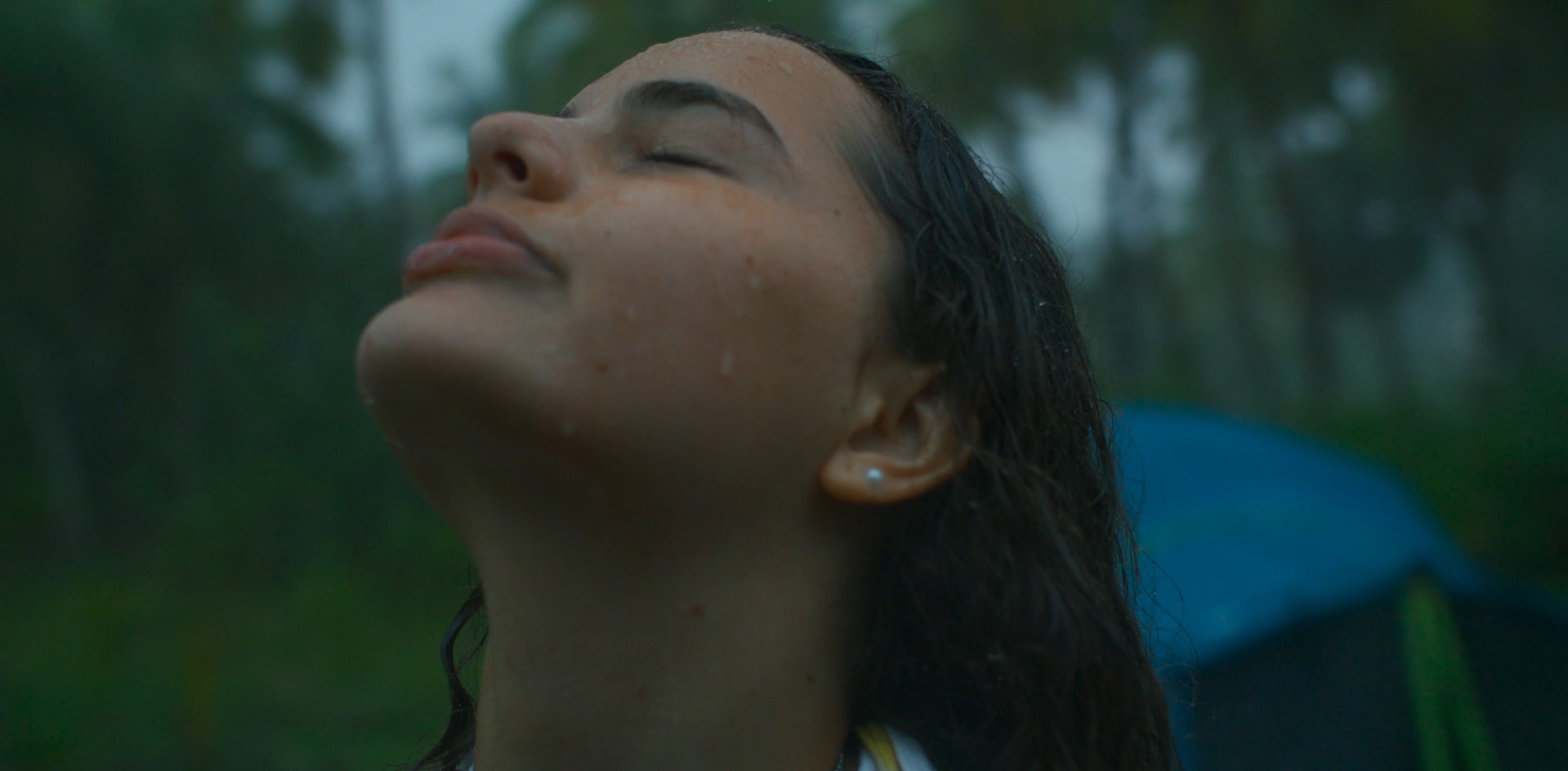
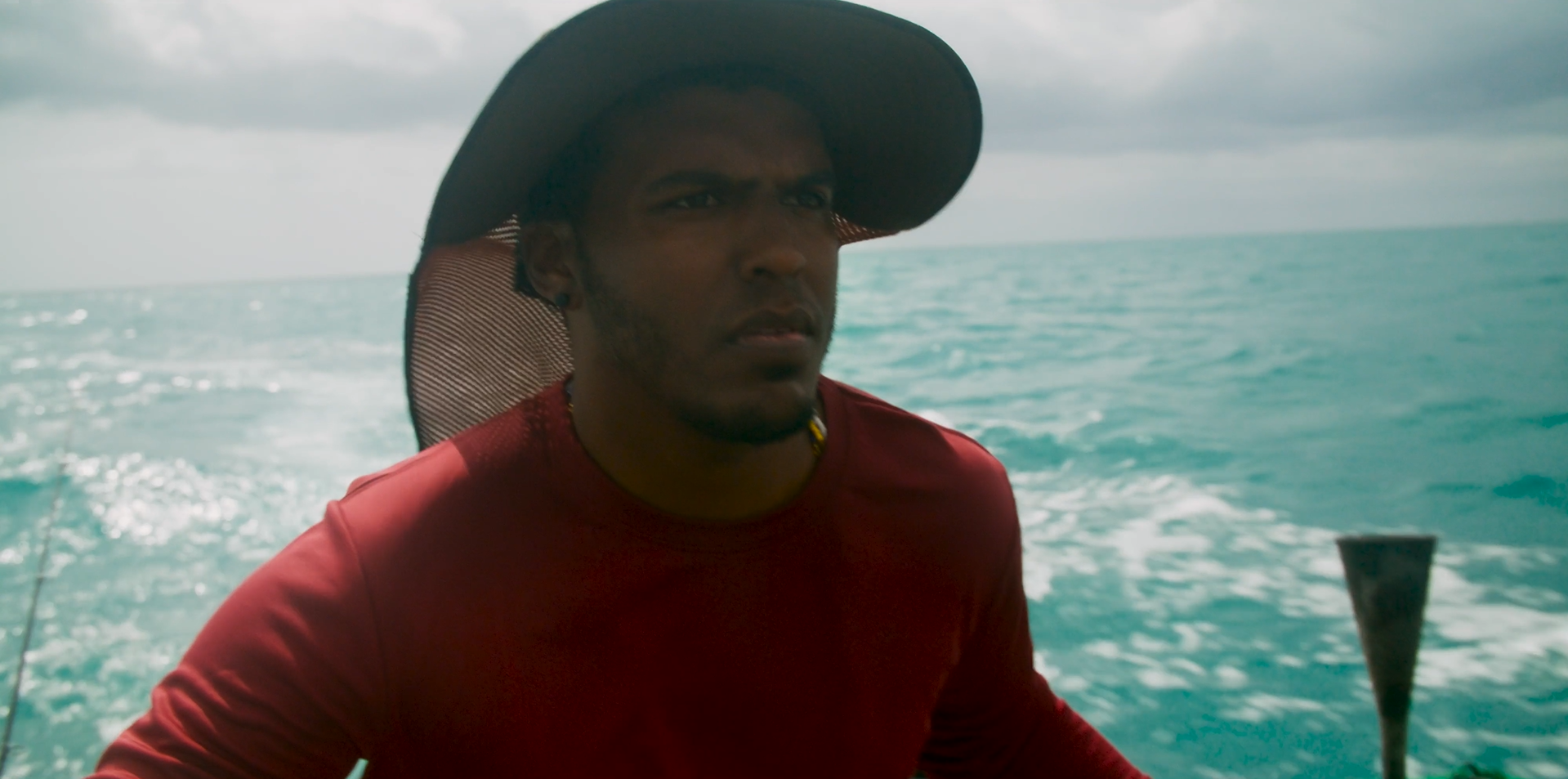
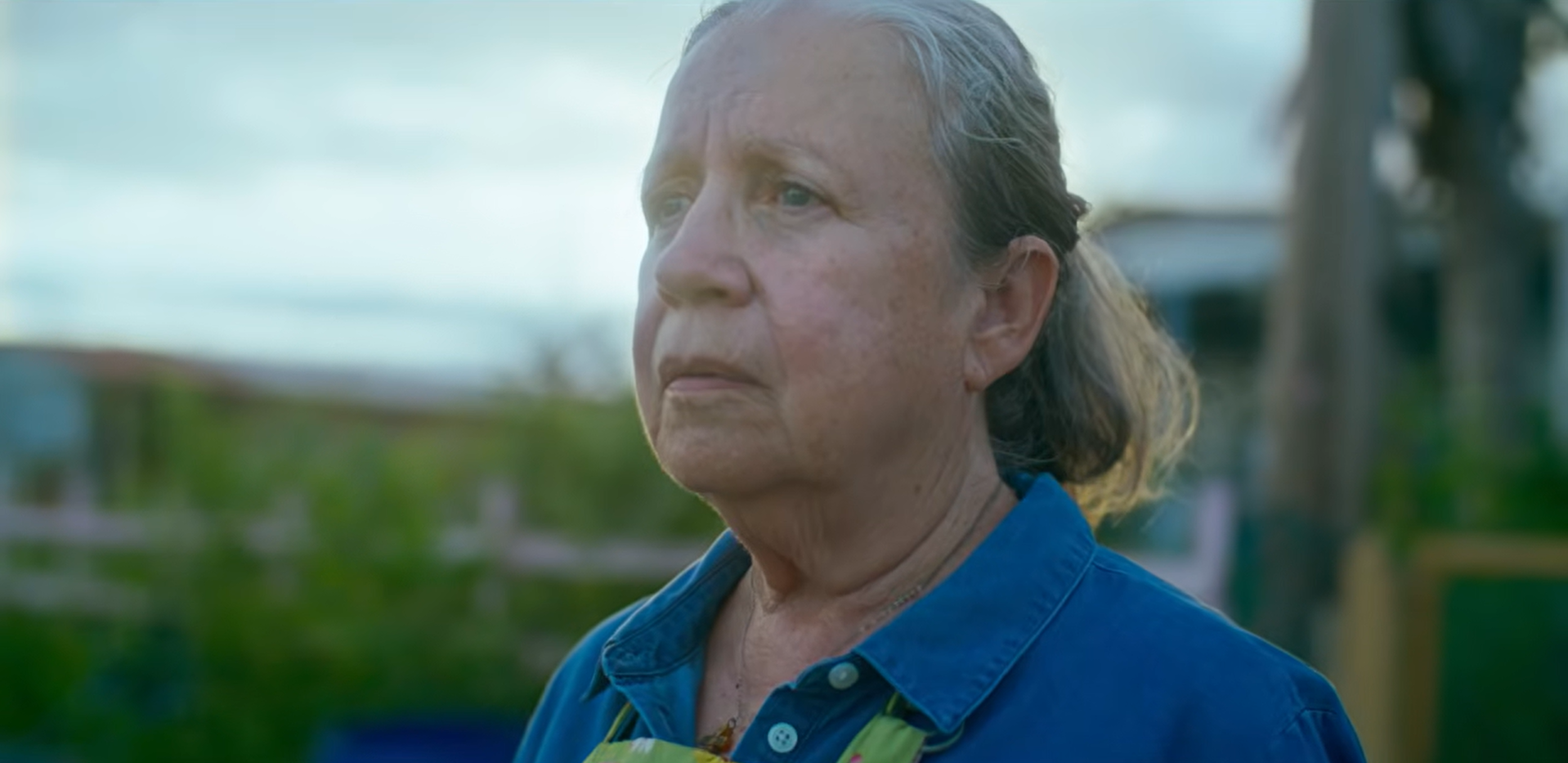
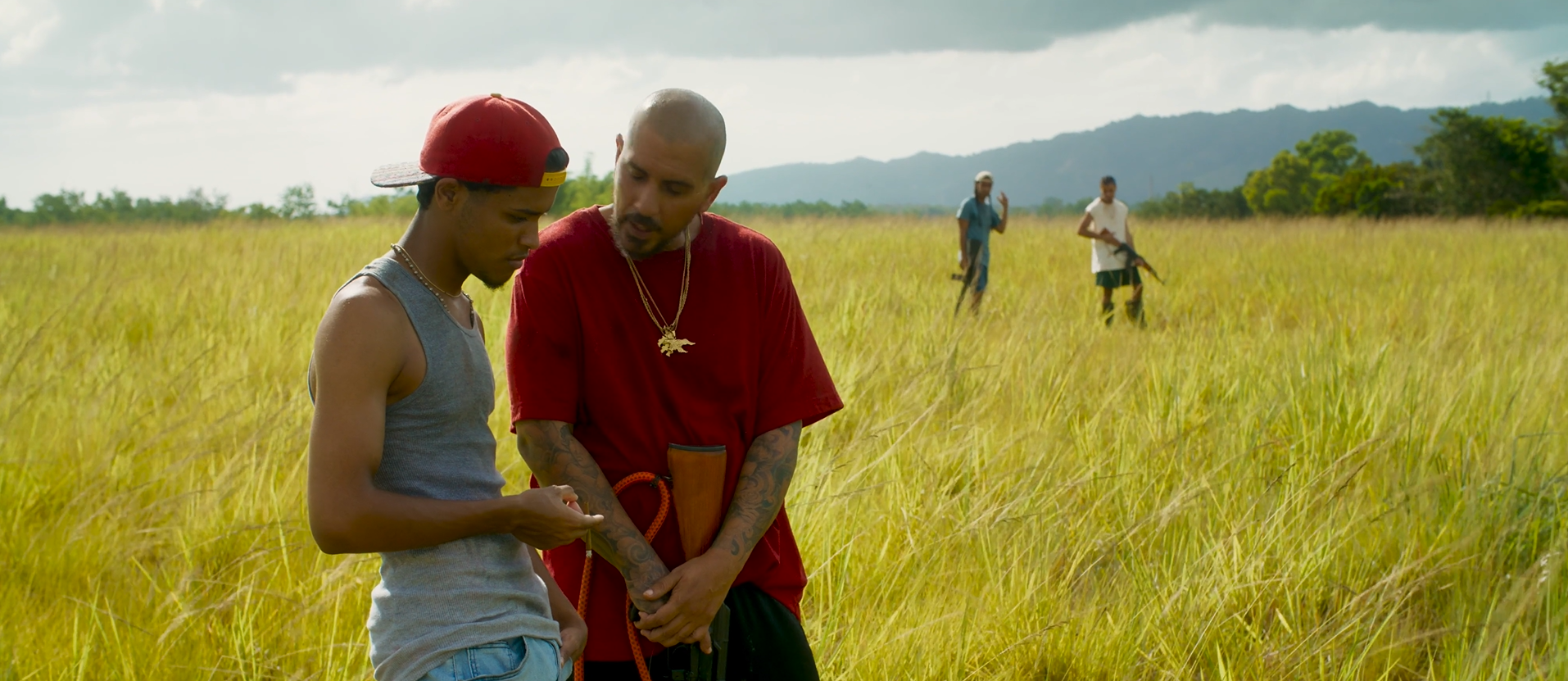
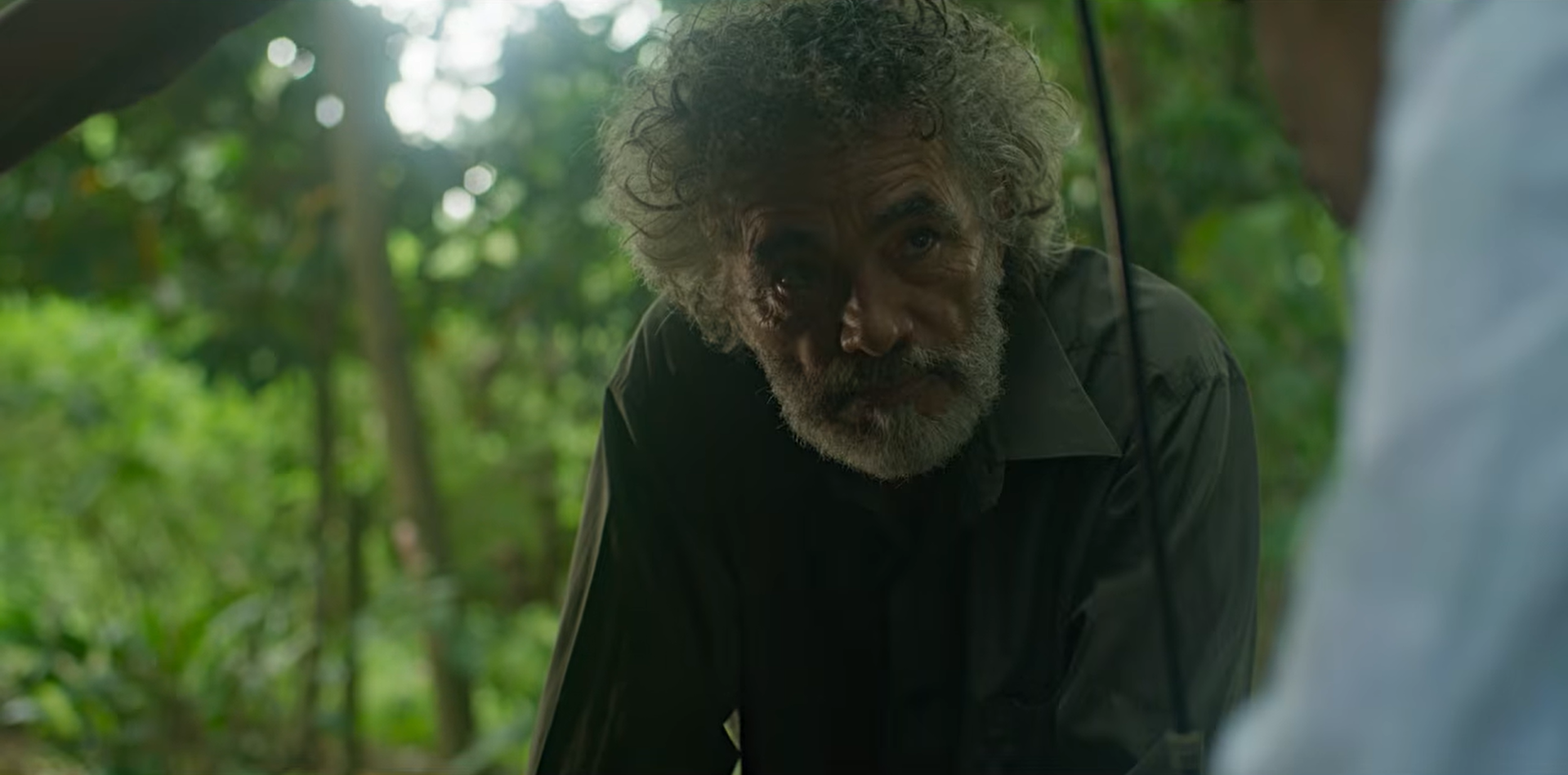
Some of "Esta Isla's" compelling characters in order: Bebo, Lola, Charlie, Aida, Moreno, and Cora. | Photos courtesy of Esta Isla. | Impulsiva Stories
Not only did they get to different movie theaters all over the world, but they also landed “Esta Isla” on Apple TV, Prime Video, multiple airlines, and various movie theaters in Puerto Rico. They also landed a robust distribution around the United States in different cities including New York City, Chicago, Miami, Los Angeles, Denver, Roxbury, Holyoke, Worcester, Houston, Watertown, New Haven, and Fairfield.
“That’s very nice because it was a dream to be in the film theaters in Puerto Rico and in other places. It definitely was a great dream come true and to reach the airlines was another dream,” Jones said. “Having a Puerto Rican movie on the menu. I’ve never seen a Puerto Rican film [there] and now, in a few airlines, Puerto Rico will be represented in filmmaking on an international level. They’re a lot of dreams come true.”

Listen to Lorraine Jones
0:00
/48.269333
“Esta Isla” became a dream true for Jones and Carretero because they speak from their realities in Puerto Rico. They speak from a place of passion and strongly believing in what they’ve created. In representing Puerto Rico in the best manner possible through their tropical realism that reflects about the island’s social issues.
Believing in Yourself
It’s also about believing in a strong Puerto Rico with empowered people who see a future with a different reality. People who continue to fight for their island and for a future in which believing in themselves can take them far in life.
“This idea that we can’t survive [without the U.S.] is fucked up because it translates to something personal. So, it’s understanding yourself as a person that does not believe in your potential and we have to break with that big political colonizing mentality,” Carretero said. “That, after all, it becomes something personal.”

Listen to Cristian Carretero
0:00
/22.445333
Both Jones and Carretero broke with that idea with their personal conviction of creating “Esta Isla” and taking it around the world. They believed in themselves, the film, their characters, the amazing actors and actresses who brought them to life, the communities, and most importantly, the connection they’ve created with the audiences around the world.


The whole crew of "Esta Isla" during one of the screenings of the film in Puerto Rico this year. | Photos courtesy of Esta Isla. | Impulsiva Stories
They created a film that has the ability to connect on a deeper human level thanks to the raw personal and relatable narrative they brought to life. But they also understood “Esta Isla” could feel familiar with other Latin American countries because of the shared realities and experiences in the region.
“I feel super united with the filmmakers of Latin America. I feel we have a lot to tell. Lots of beautiful things and also super strong and difficult ones, but I also feel there’s a lot of interest in our filmmaking,” Jones said.
Whenever Jones sees Latin American films, that’s where she sees herself. That’s where she feels reflected and represented. They’re the stories with which she can easily identify with, while also understanding that Latin America and its people share a lot of similarities.

Their film “Esta Isla” is clear example of those shared realities, feelings, identities, and struggles. It’s an artform that took them to the unknown in their ten-year-long journey by enjoying the ride. They swam and embraced the depth they were creating throughout that decade, which allowed them to travel around the world showcasing their love for Puerto Rico and being true to themselves.
It's art that inspires them and that fully embraces who they are as filmmakers from Puerto Rico, the Caribbean, and Latin America.

Listen to Cristian Carretero
0:00
/47.405333
“I know that right now, riskier filmmaking is being done in Latin America. We’re always seeing the models from Europe or the United States and it’s like: forget about that. We’re going to do our own thing in our own way,” Carretero said. “If they say we’re good, now I'll feel better. No. We don’t have to define ourselves by them and it’s super cool what we’re all doing.”
To learn more about Esta Isla’s Puerto Rican tropical realism, how it explores Puerto Rican social issues, and how it took Puerto Rico around the world, you can follow Lorraine Jones and Cristian Carretero on Instagram at @estaislafilm or @experimentoludico.
Written by

Subscribe to my newsletter
Subscribe to my newsletter to get the latest updates and news