Jota Studios PART II
Jota Studios' art has a direct connection with music from artists like Young Miko, Álvaro Díaz, Feid, Bad Bunny and old reggaeton.
PART II: Jota Studios’ Musical Puerto Rican Graphic Design and Animations
In PART I, we explored how Jota Studios designs and animates the nostalgic Puerto Rican experience. Now, we’ll understand why his art has such a direct and natural connection with music – specifically Boricua music. It’s something that simply exists in his art without much thought because it’s an elemental part of his being.
It’s so normal in Jota Studios’ life, that some of his first commissioned pieces were thanks to music. He even remembers of the time that the Puerto Rican producer Joedyyrt gave him his first opportunities to work in the music industry.
“My designs always have a certain musical influence. Whether it’s reggaeton or salsa. Music moves me a lot,” Jota Studios said. “So, the fact that he gave me that opportunity back then was something really big for me.”
Listen to Jota Studios
0:00
/20.141333
Thanks to this, Jota Studios really doesn’t see a tangible relationship between graphic design, animation, and music. He sees them as art forms that exist in the same universe. They hold each other’s hands, but most importantly, they influence each other. One does not exist without the other.
Don't Forget to Subscribe to The Story of The Story
For only $16 a month, every Friday you'll have exclusive access to The Story of The Story. Our founder, the Costa Rican award-winning multimedia journalist and artist Elizabeth Lang, guides you through her creative process to produce her stories.
Buy HereSince music has always been very present for him, some of his first graphic design pieces were in collaboration for the Puerto Rican artist Young Miko. This happened during the times she was not yet a global megastar. Jota Studios was still studying graphic design and they reached out to him asking for a title card for Young Martino’s music video “2seater” featuring Young Miko and Juanka.
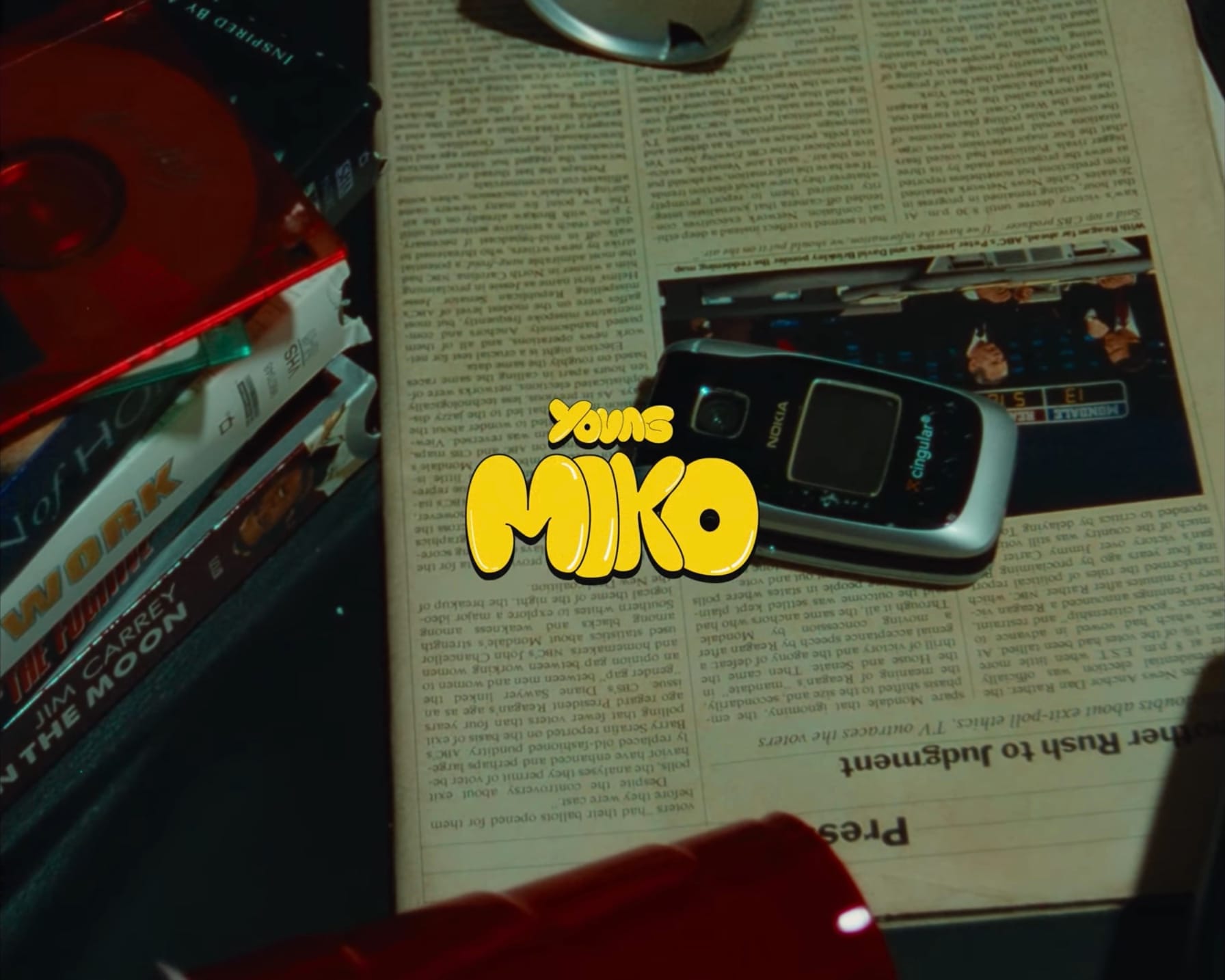
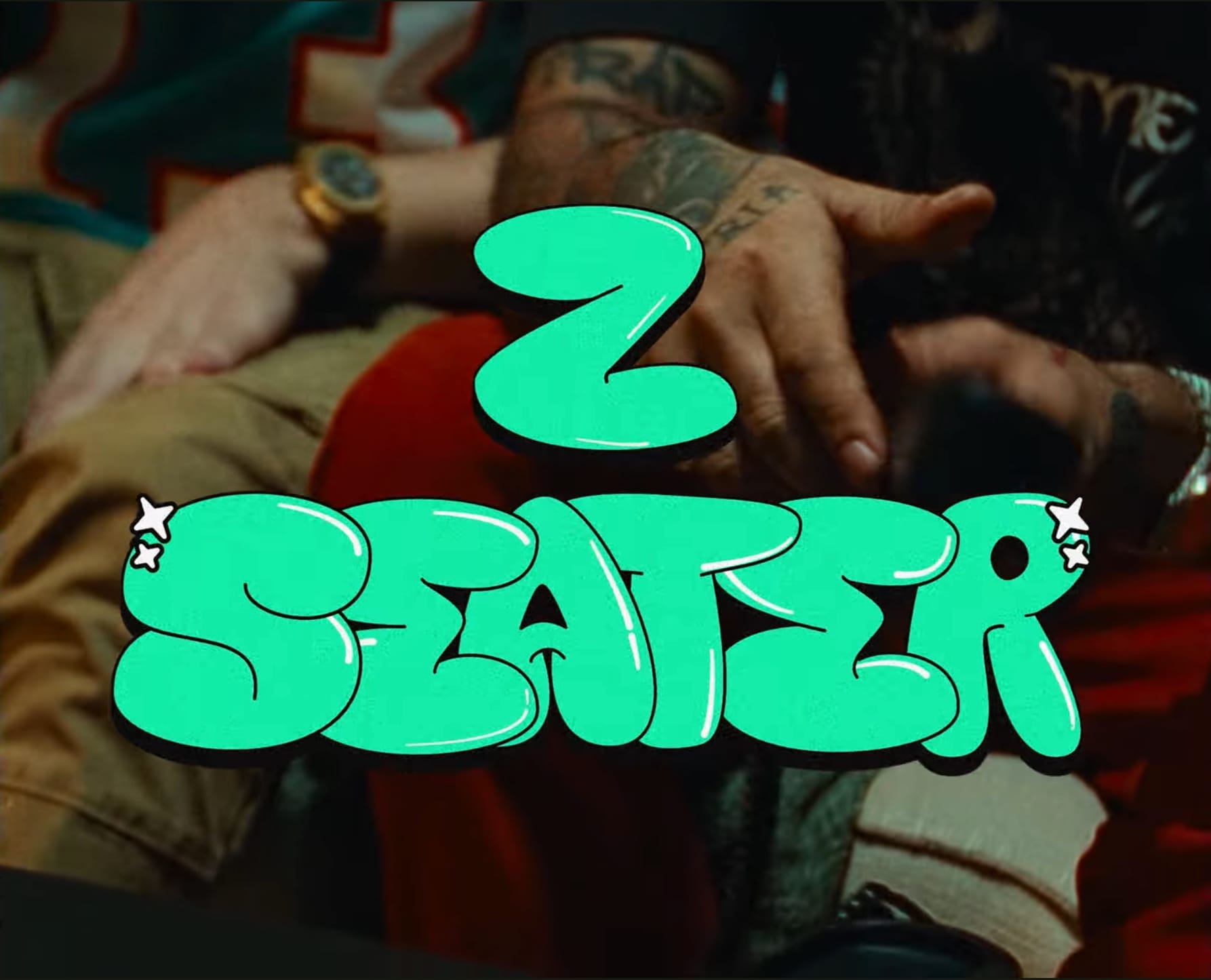
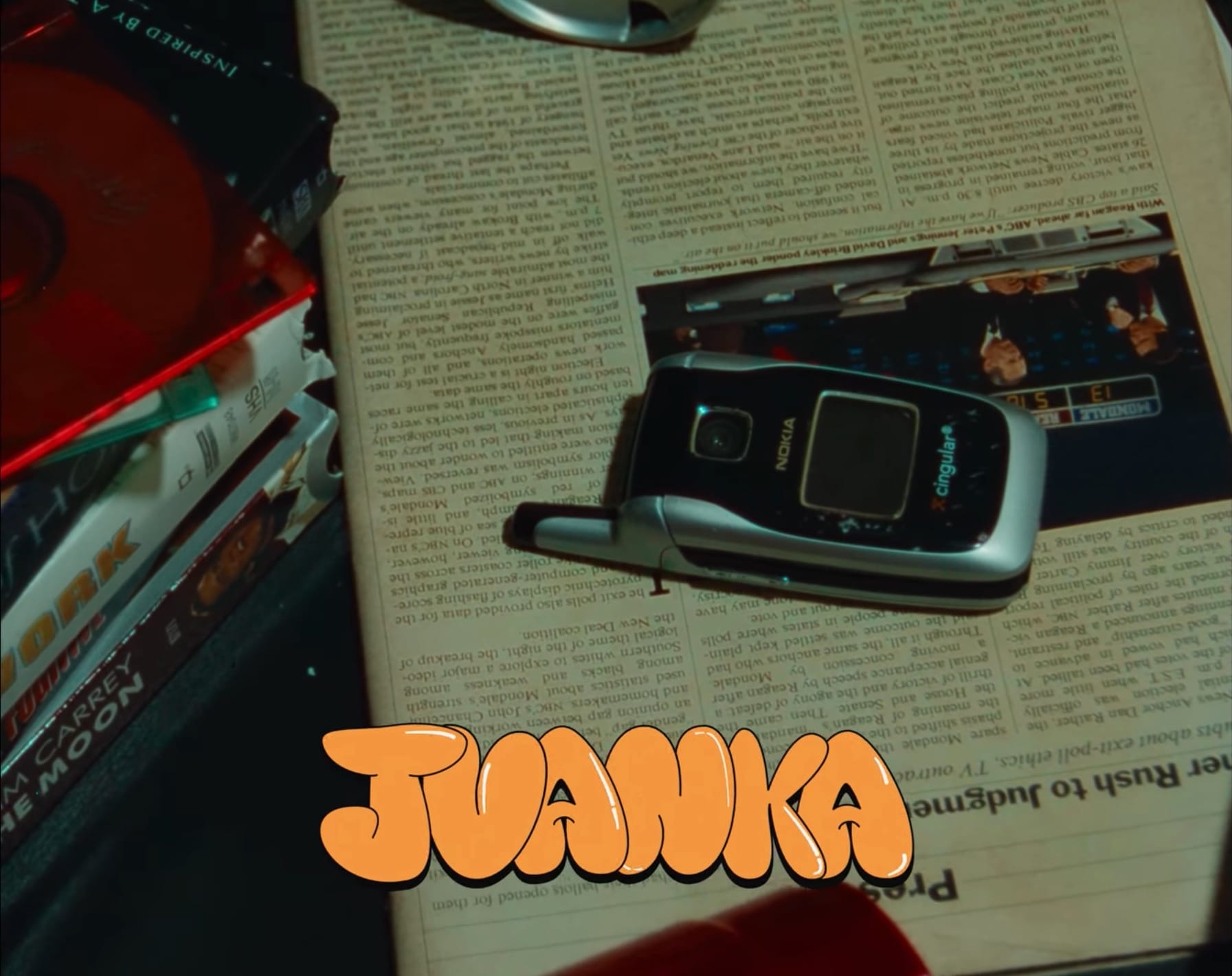
Jota Studios' typography for the music video "2seater." | Art via YouTube. | Impulsiva Stories
“A title card are the letters that appear at the beginning [of the video]. The name of the song and by that time, I was exploring a lot with typography. With what they call bubble type, which is very rounded and almost like graffiti,” Jota Studios explained.
He did that initial title card and they called him again to do the cover art for Chris Jedi’s song “Condado” featuring Lunay and Young Miko. For this particular piece, there was more creative direction from behalf of Chris Jedi, the producer of the song. He told Jota Studios very clearly what they wanted. It was a back-and-forth process. It was much calmer because of how well structured the creative direction was.
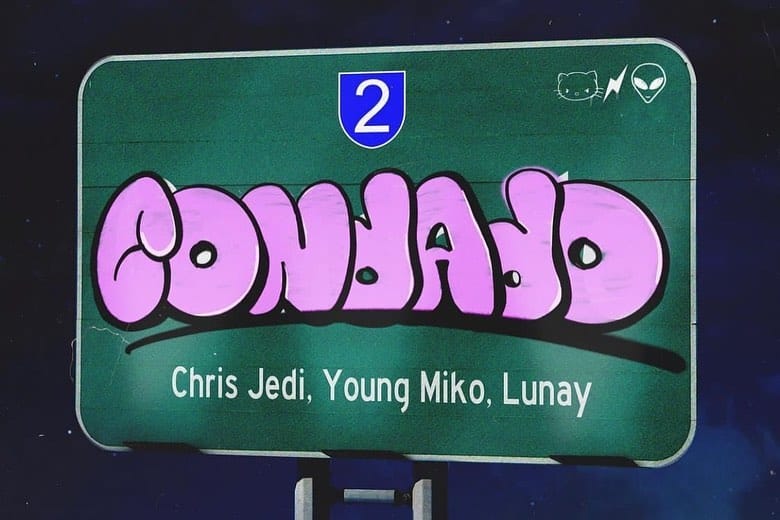
That made the job easier for Jota Studios. In the case of “2seater,” he was super nervous.
“When they asked for that title card, I didn’t even know what a title card was. I looked it up on the Internet. I was in the design university when they called me and said: we need something,” Jota Studios said laughing. “I said: sí dale. Let’s go.”
Listen to Jota Studios
0:00
/40.229333
He said yes without knowing what a title card was. He just went in with great attitude despite the nerves. His hands were sweating. He’d wake up doing the piece and when he turned it in, it was completely worth it. He loved seeing the team’s reaction. He loved seeing the emotion for it. When they told him thank you, it was a great relief for Jota Studios.
The nerves are never lacking whenever he collaborates with other artists. He always questions himself: will they like it? And they obviously do because he keeps getting new commissions and collaborations. Not necessarily because doors open from artist to artist, but because Jota Studios – as a graphic design project or studio – has kept itself very independent.
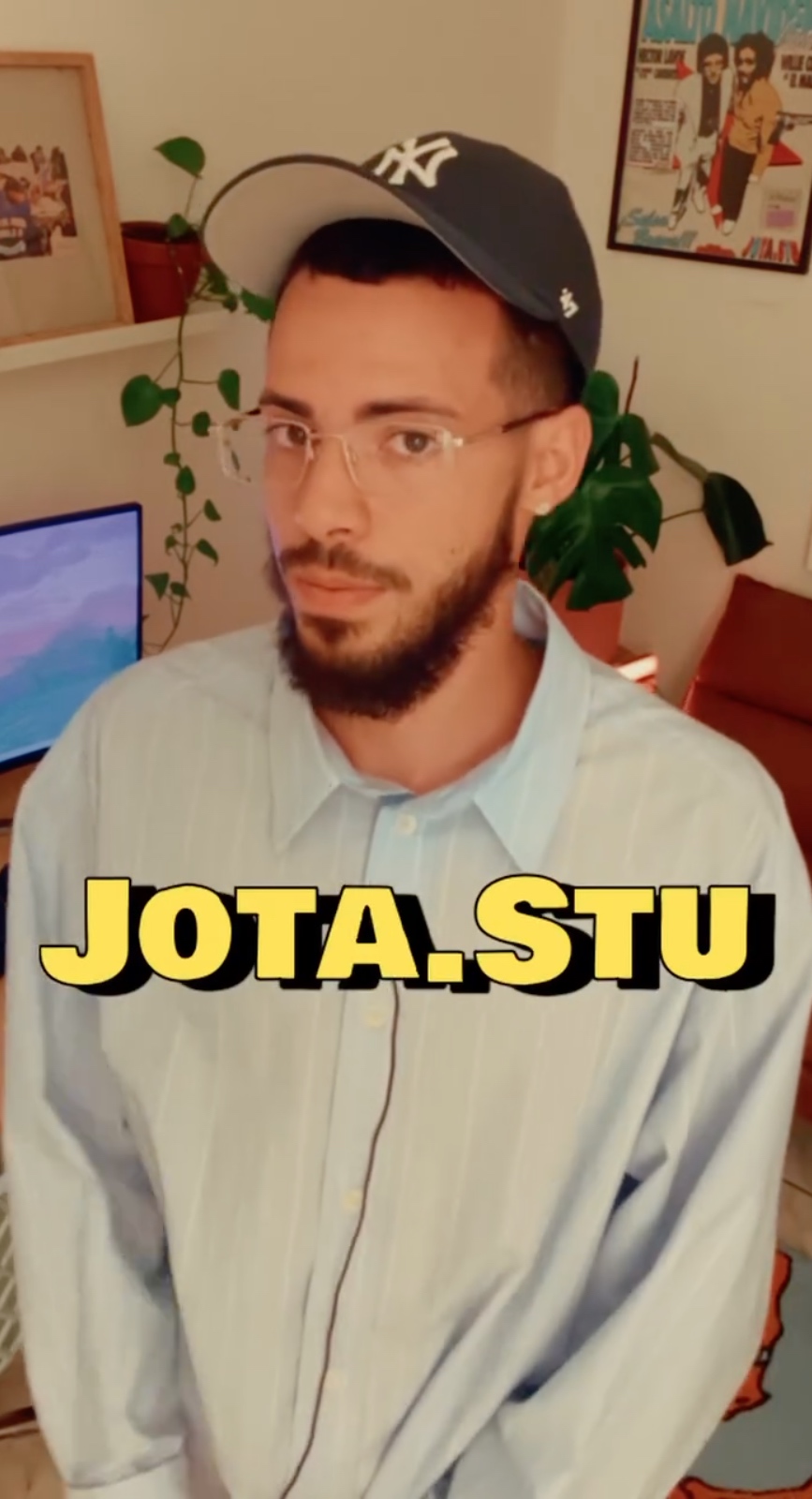
“It looks like we’re throwing projects created by ourselves pa nosotros mismos,” Jota Studios said.
Listen to Jota Studios
0:00
/12.389333
That’s the magic behind his art. The secret ingredient that keeps him going. He creates because he loves it. Not because it’s an obligation. That allows him to explore his own interests and then create in a collaborative manner with the artists that reach out.
Going From Fan to Collaborator
Such was the case with Álvaro Díaz’s music video “GATITAS SANDUNGUERAS VOL. 1” featuring the Colombian artist, Feid. Díaz’s photographer, Waiv – who Jota Studios described as a tremenda persona – asked him if he was busy for a project. Jota Studios said no and he was then asked for various visuals because Díaz and Feid were going to release a music video.
That was a major achievement for Jota Studios.
“Really, before designing [for him], Álvaro Díaz was for me like…you know. I admire him a lot as an artist and now being able to work him. Even before he did the Choli, I had already seen him singing in 2019 at a local [spot],” Jota Studios said in awe. “I was a great fan of him and now being able to work with him, is amazing.”
It was a process where he was given a lot of creative freedom. They simply told him, more or less, what the project was about and what direction they wanted. It took Jota Studios about a week to create the designs and once he shared it, they thanked him. It was a really smooth process and when Jota Studios saw the final results of the music video, he was super happy about it.
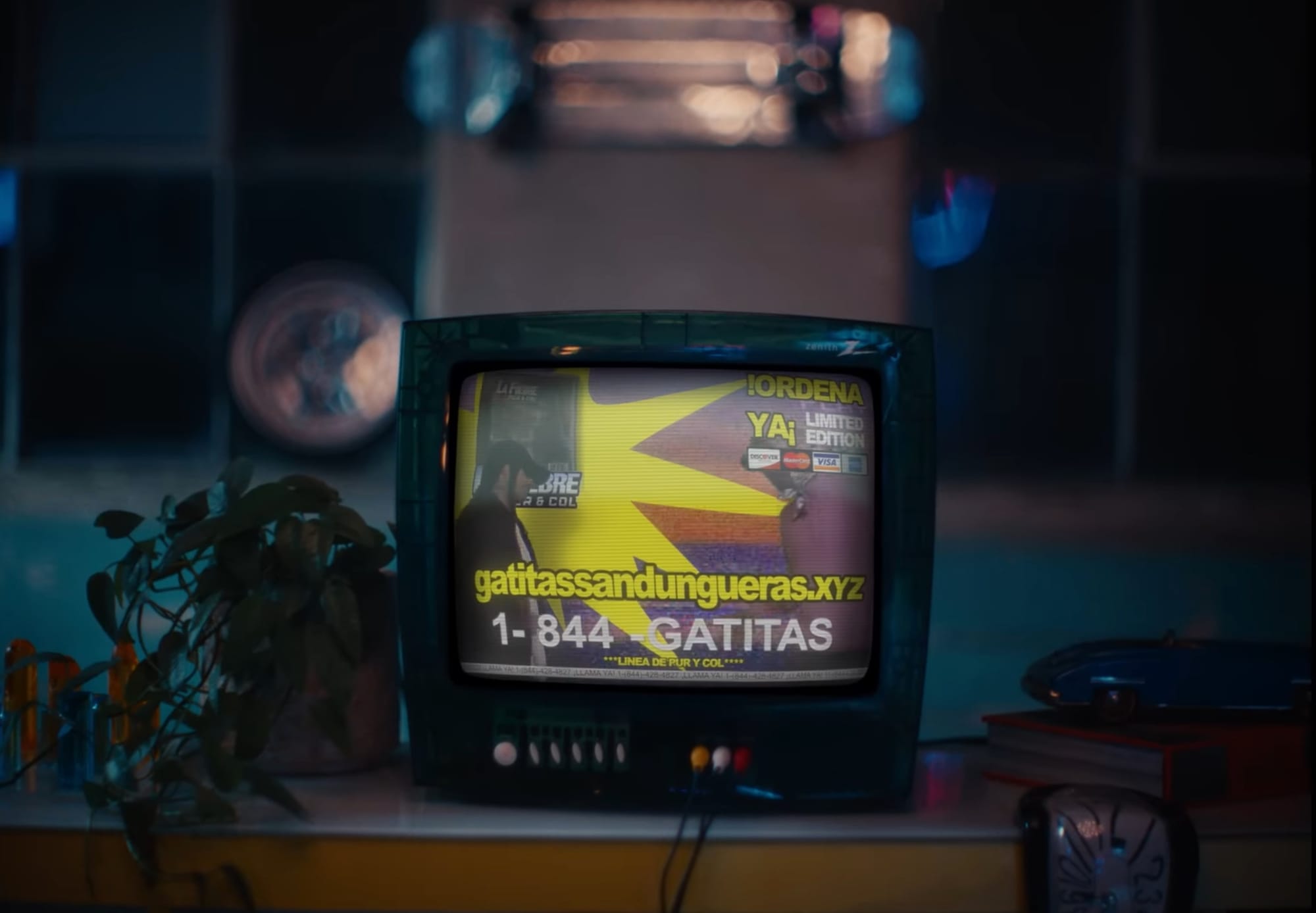
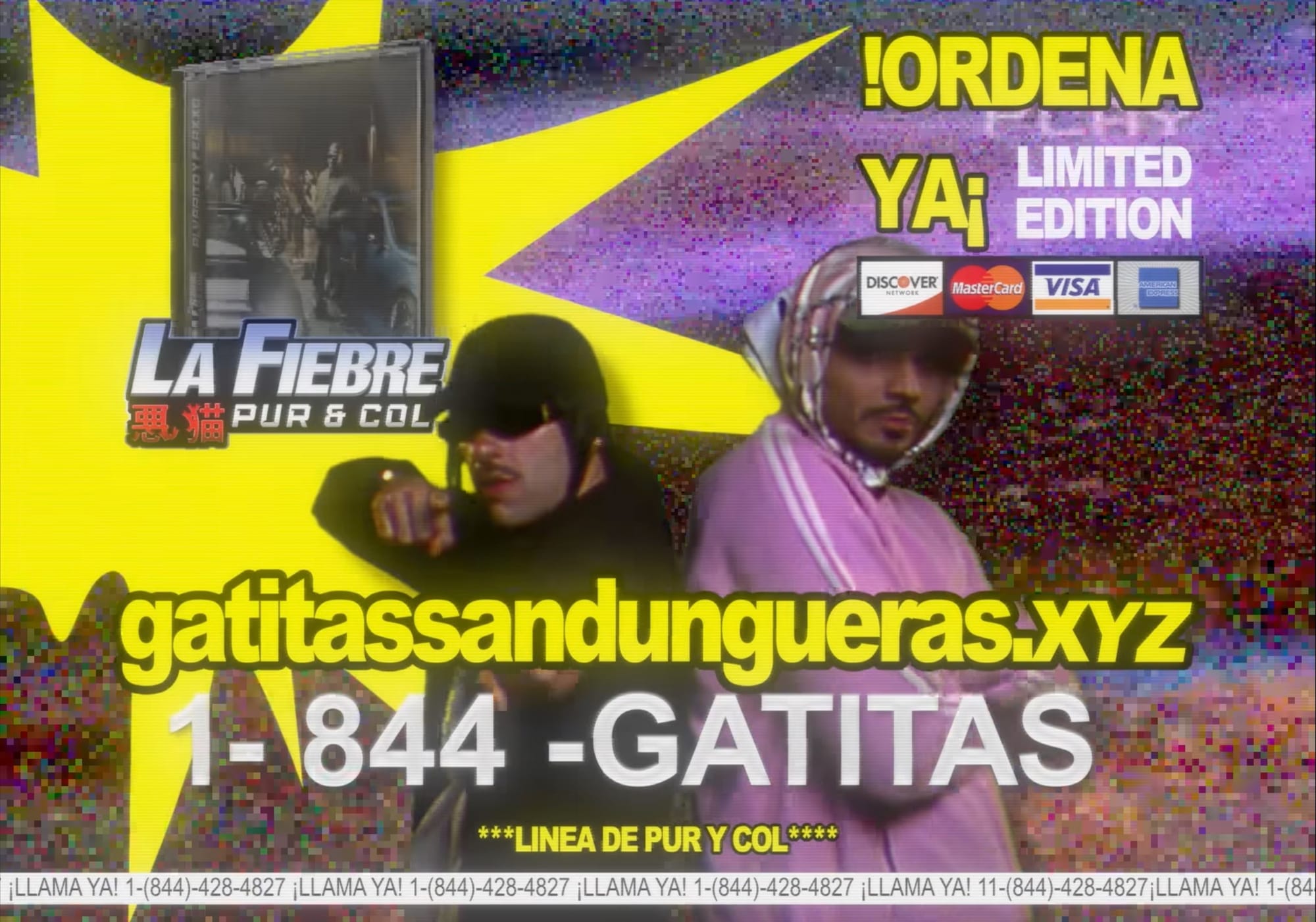
Jota Studios' designs for the music video "GATITAS SANDUNGUERAS VOL. 1" by Álvaro Díaz and Feid. | Art via YouTube. | Impulsiva Stories
You can see his brilliant yellow and blue old school ads on the TV telling people to call the number 1-844-GATITAS for Díaz and Feid’s product. There’s even a free poster if you call that number.
And there’s also a Mortal Kombat sort-of-design where they’re playing hand games instead of seeking the final fatality of the characters. It’s a very fun video evoking the nostalgia of the past with different aesthetics from videogames, TV shows, and even ads – something that easily connects to Jota Studios’ graphic design and animations.
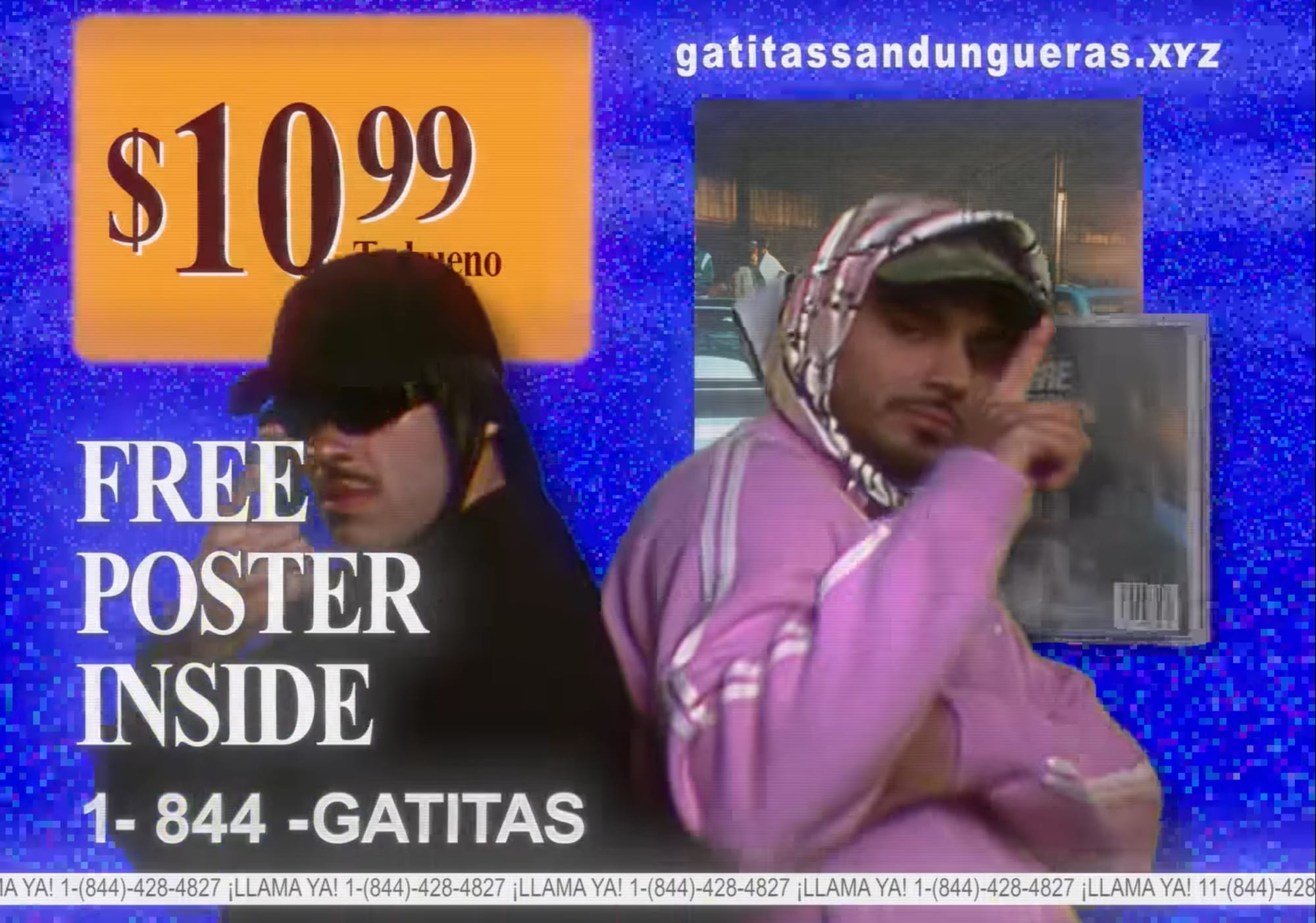
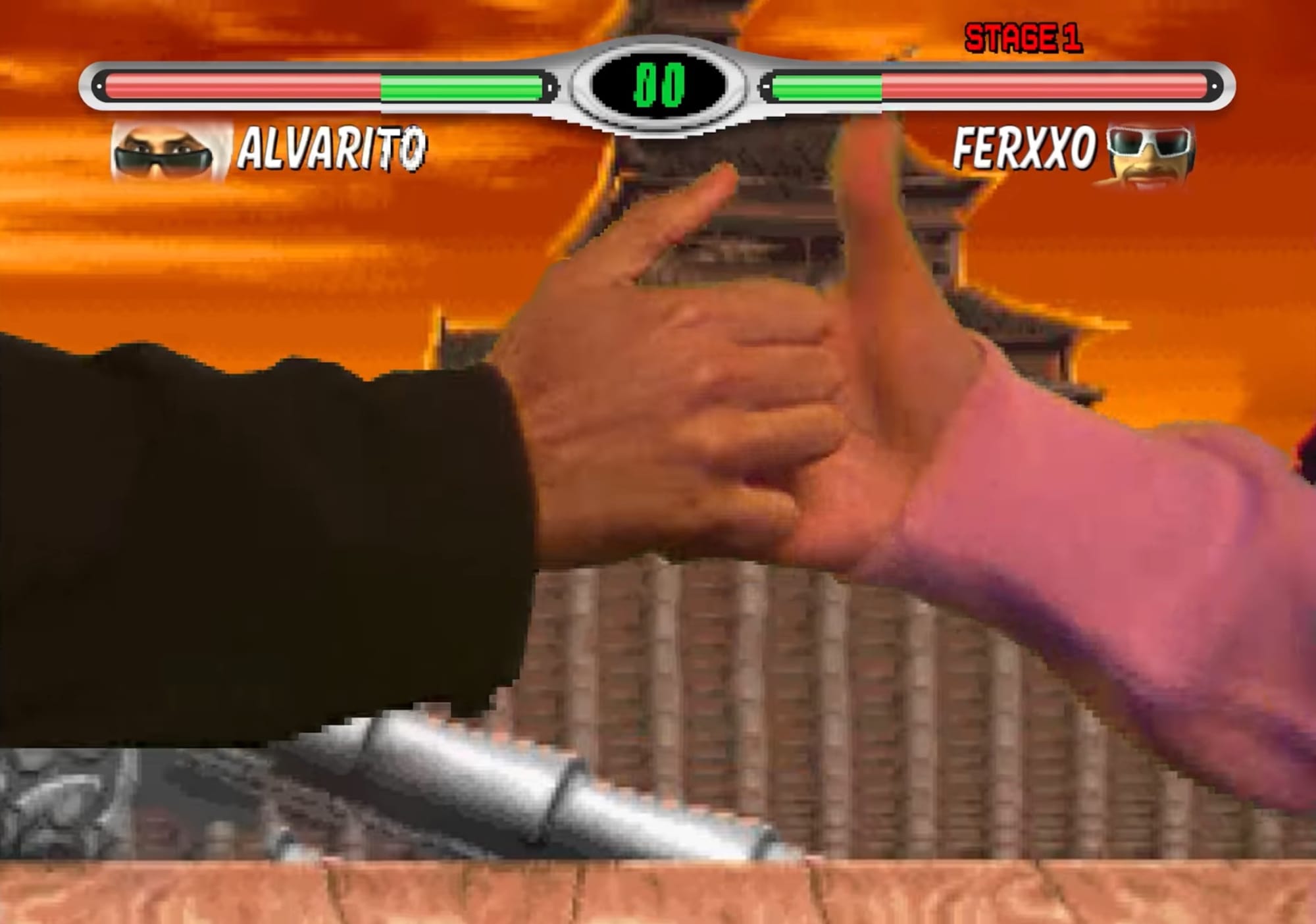
Jota Studios' designs for the music video "GATITAS SANDUNGUERAS VOL. 1" by Álvaro Díaz and Feid. | Art via YouTube. | Impulsiva Stories
That’s why he felt so satisfied with the final results. It was quite exciting to see many of the visual elements he created, appear multiple times throughout the video. They had a major role in the aesthetics.
“And fun fact, that’s the only video where they’ve given me credit as a graphic designer. Previously, I’ve done various pieces for different artists and they’ve never given me credit and this was the first music video where it happened,” Jota Studios said. “It appears there and it was a brutal experience.”
Designing the Current Puerto Rico
And Jota Studios is all about experiencias brutales where he’s focused in creating. Remember, his projects come from a place of “creado por nosotros pa nosotros” in an independent manner. His animations reminiscing the nostalgic Puerto Rico caught Bad Bunny’s attention. About a year before he released his groundbreaking Grammy award-winning album “DeBÍ TiRAR MáS FOToS,” he was already liking Jota Studios’ animations.
Jota Studios believes that probably must have influenced Bad Bunny’s decision to work with him for the Residencia “No Me Quiero ir de Aquí” in Puerto Rico in 2025.
0:00
/0:19
Jota Studios' animations of la casita with Bad Bunny. | Art via Jota Studios' Instagram. | Impulsiva Stories
“I think he already knew about my art and literally, about six days before the album was released, his team reached out to work on some things,” Jota Studios remembered laughing. “Some visuals that never came out, but the work was still done.”
Even though Jota Studios worked on those visuals that never came out, another opportunity came through for him. A week before the Residencia started – held from July 11th to September 20th in 2025 – Jota Studios was asked to design various merch pieces.
He obviously said yes and he was given a lot of creative freedom in the process. He was not told to keep a specific line. They wanted his colorful and vibrant designs on their t-shirts. So, Jota Studios created those memorable masterpieces during a historic time for Puerto Rico. He did them, but did not know they had already released the t-shirts.
0:00
/0:12
Jota Studios' animations of Bad Bunny's "EoO" song. | Art via Jota Studios' Instagram. | Impulsiva Stories
“My mom one day calls me and says: mira, I think there’s a nene here wearing your shirt. The one you did for Bad Bunny. And I was like: ¿qué embuste? If that has not been released,” Jota Studios said excited. “And she says: no, really. I then told her: Mami, go ask him where he got the shirt.”
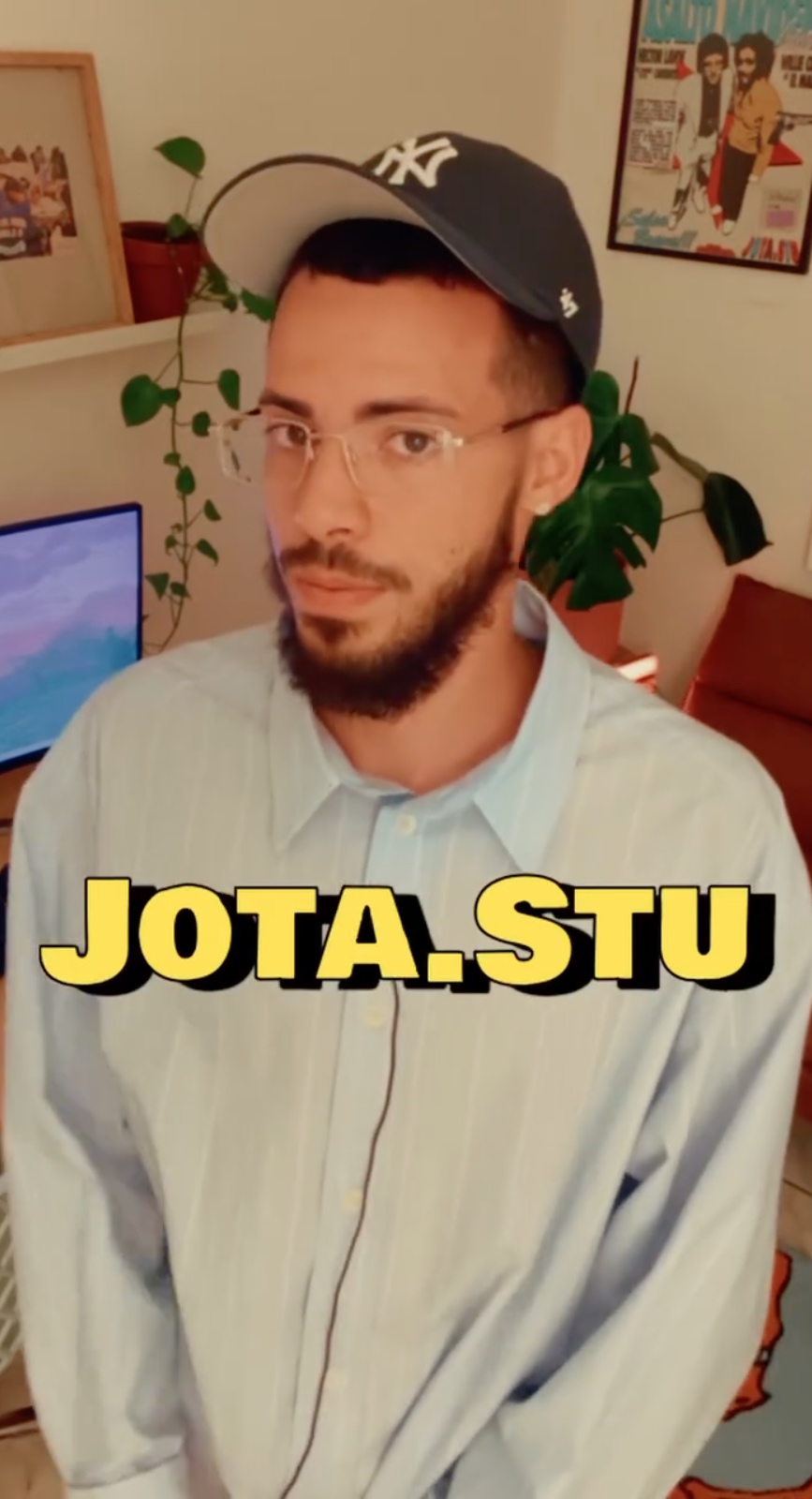
Listen to Jota Studios
0:00
/42.821333
She asked the nene and he said he bought it at the Residencia.
“And there, I could not believe it. I did not know,” Jota Studios recalled.
That same day, Jota Studios went to the concert and saw his work there. It was an incredibly gratifying experience for him. One of those experiencias brutales he’s very grateful for. Working with Bad Bunny was a goal he wanted to achieve for a while. It was not his main goal, but it was always on the back of his mind.
Something he thought of as: diablos. If it happens, it would be amazing. Especially while seeing how big the Residencia was for Puerto Rico.
“And it’s not like main character there, but being able to say: I was part of that in some way. I’m very proud of the work I did. Acho, I thank God and it was something I’ll carry with me forever,” Jota Studios said. “[When I’m old] I can tell my children: you know what? I worked with Bad Bunny. And they won’t believe me.”
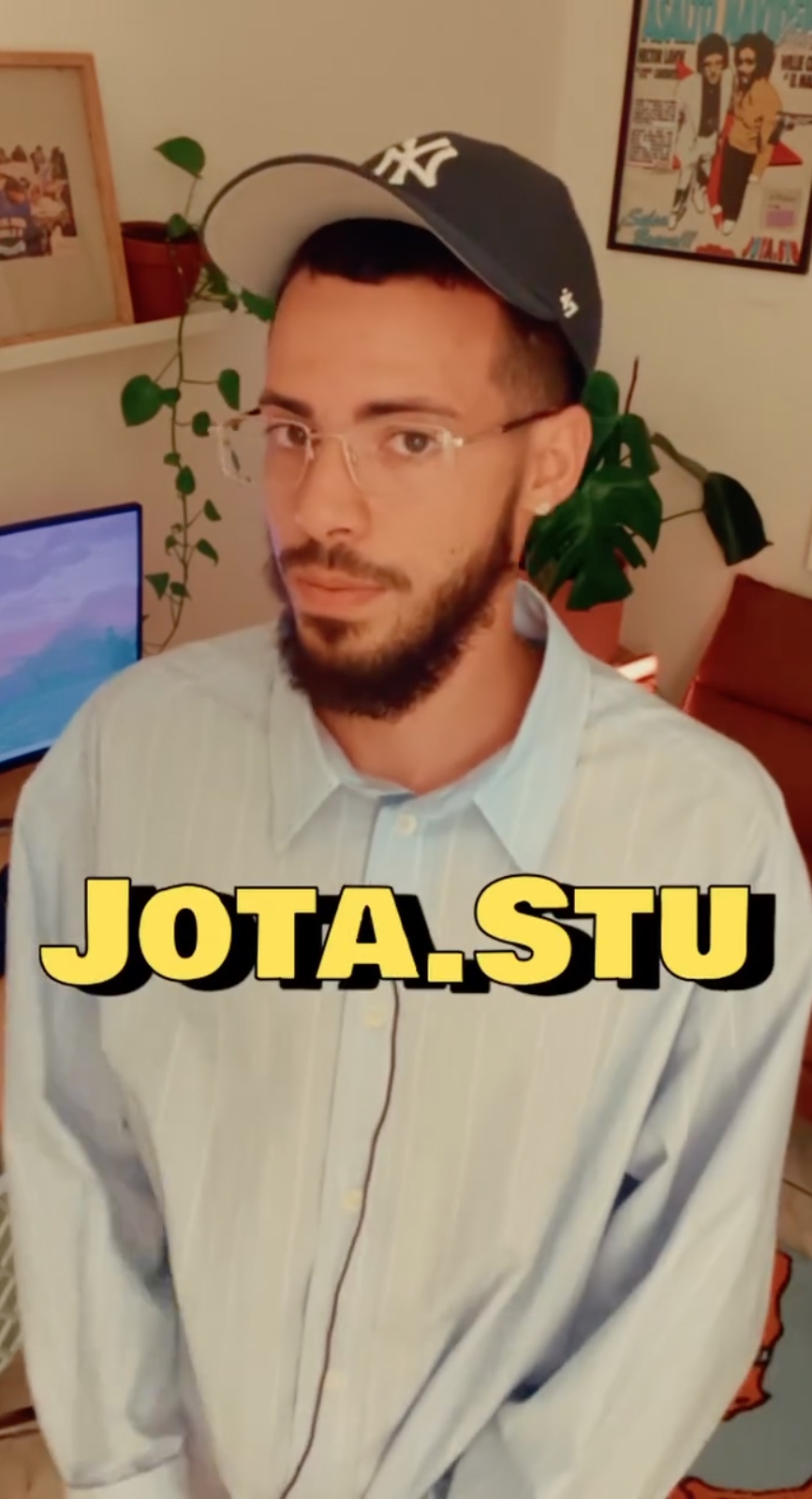
Listen to Jota Studios
0:00
/34.661333
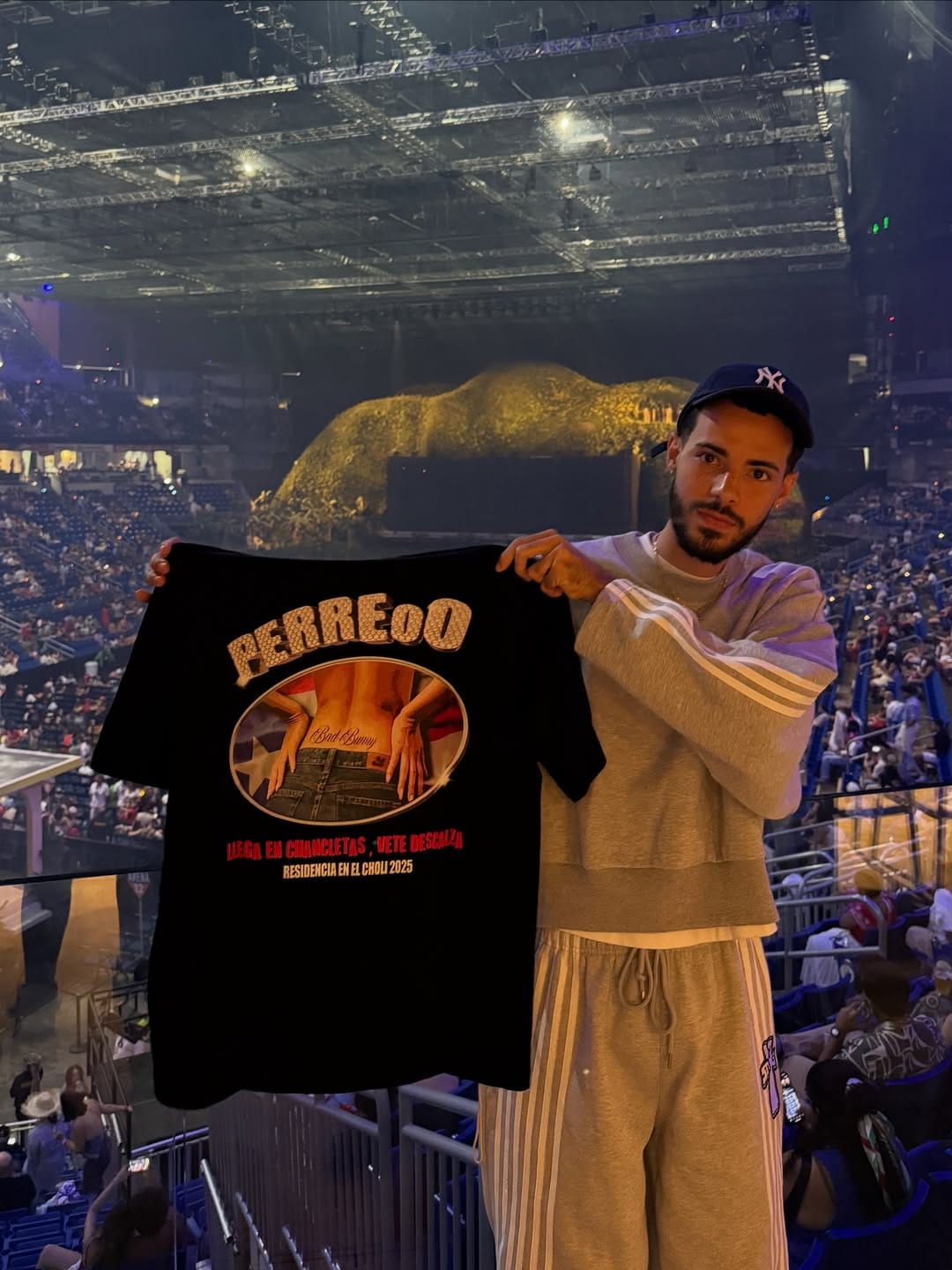
He did two designs for the t-shirts. One speaking about perreo with the pattern of the letters from Bad Bunny’s song “EoO.” It’s a woman’s bare back with a Bad Bunny tattoo on the lower part with a Puerto Rican flag behind. It’s placed on a black background and at the bottom it says “llega en chancletas, vete descalza,” which was actually inspired by women going to concerts with sandals and leaving without them. The “PERREoO” is done with a diamond texture because Jota Studios wanted the caco – or reggaetonero – aesthetic.
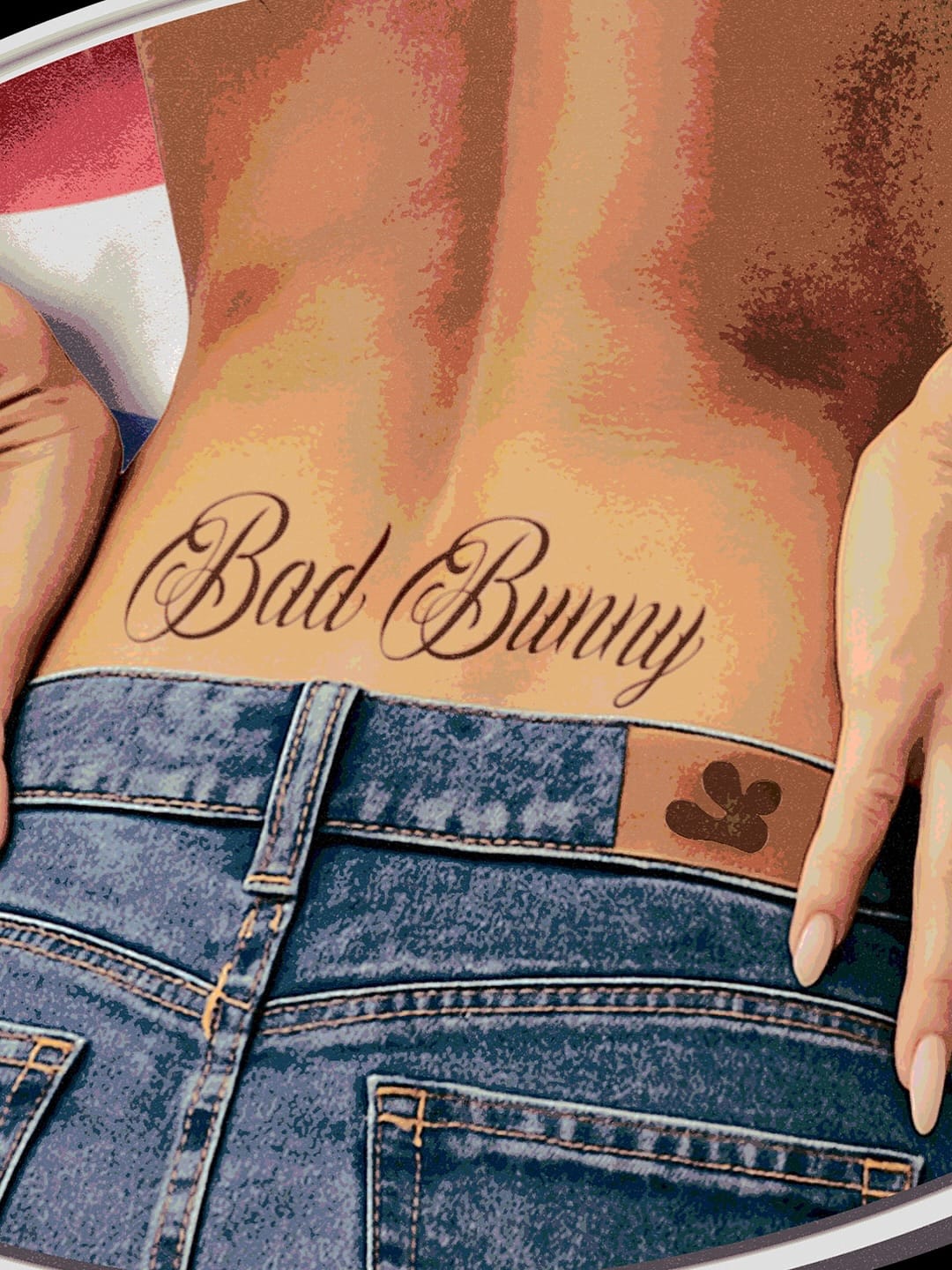
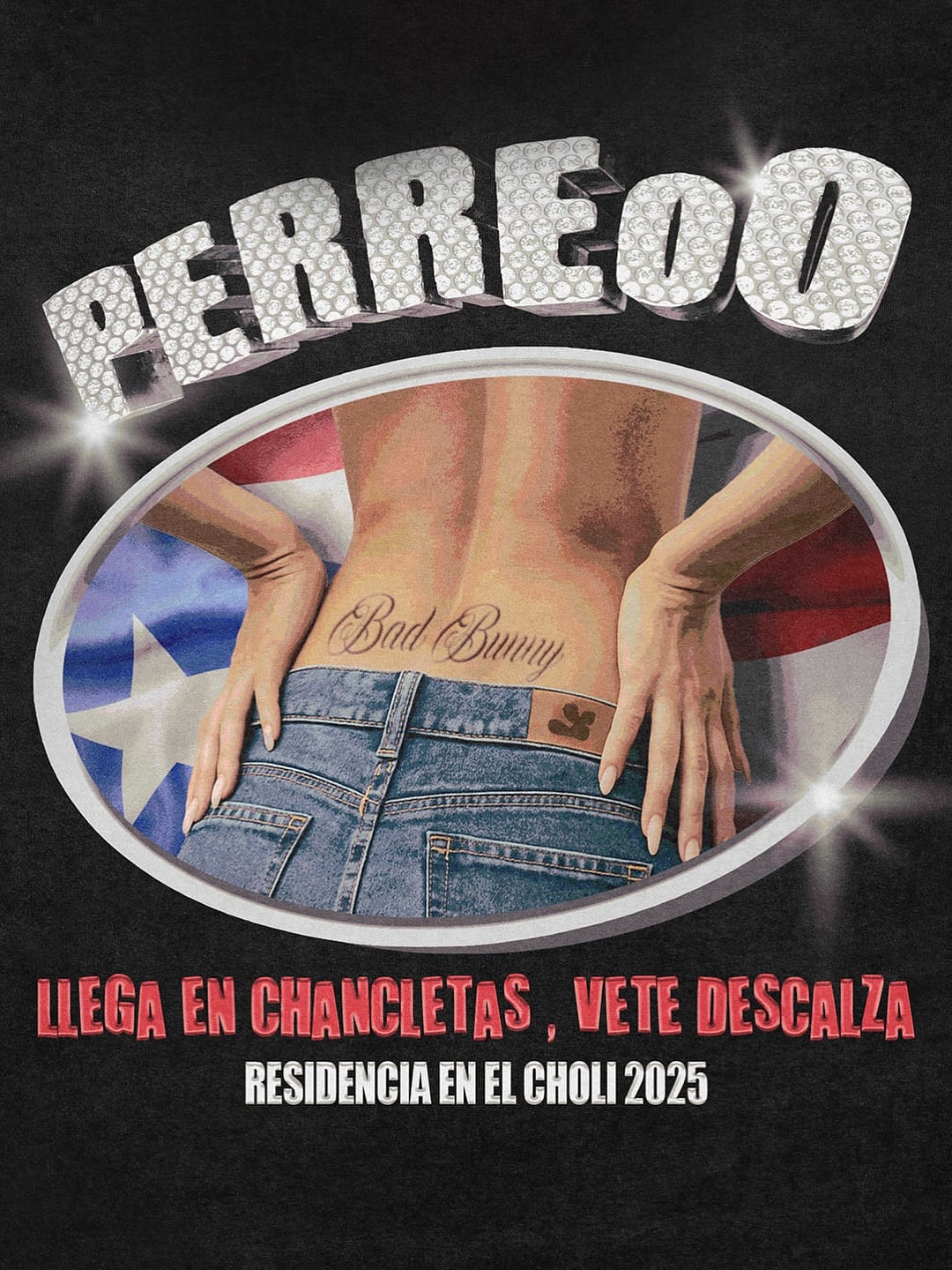
Jota Studios' t-shirt design "PERREoO" for Bad Bunny. | Art via Jota Studios' Instagram. | Impulsiva Stories
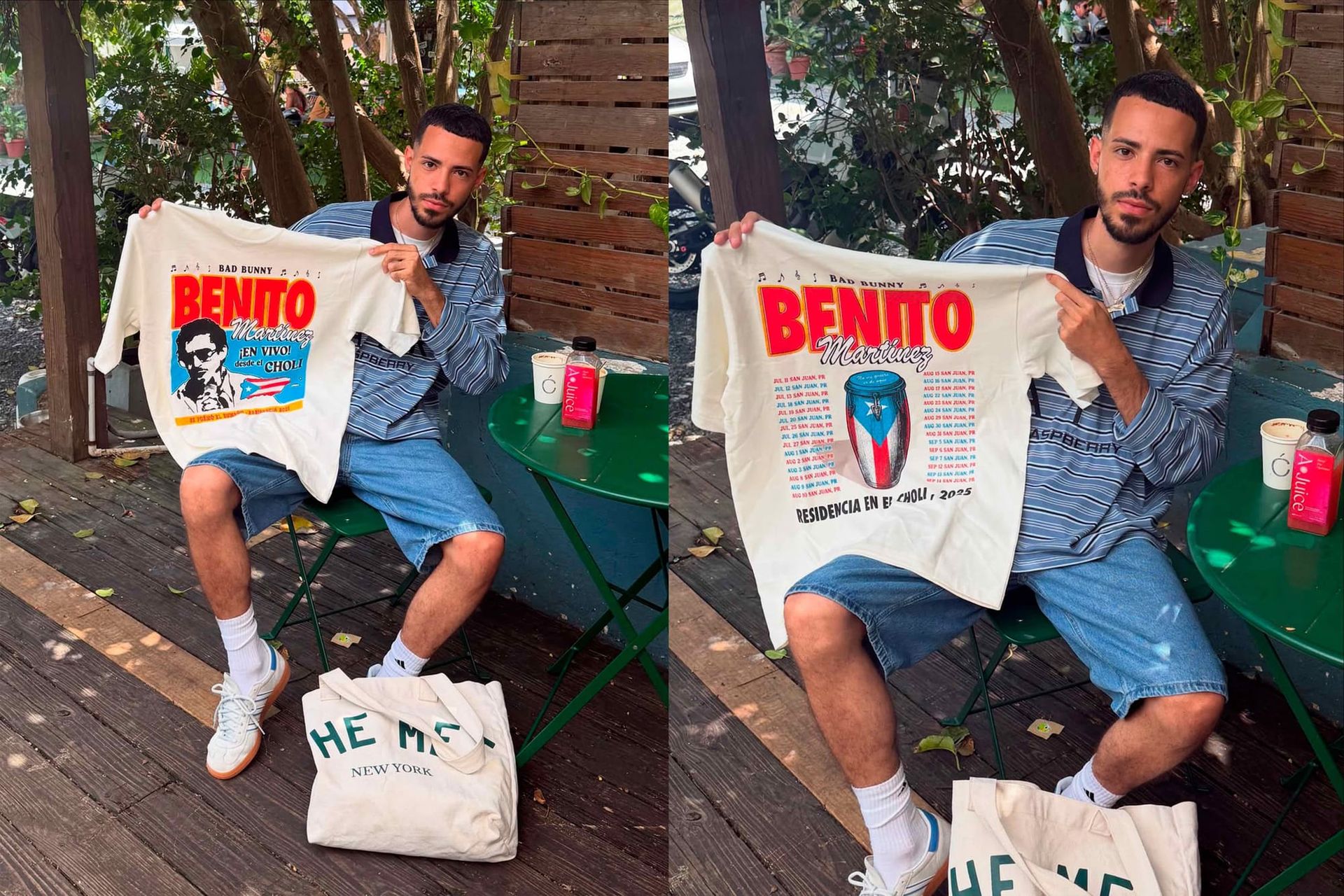
His other design is very different from this one. It has a bright color palette with red, light blue, white, and yellow. All referencing the Puerto Rican flag and heavily influenced by the typography of salsa albums. It says Bad Bunny in small letters and in bigger letters “Benito Martínez ¡en vivo! desde el Choli” with the artist’s image singing salsa from his “BAILE INoLVIDABLE” music video.
In his process video explaining his creative decisions, Jota Studios said he chose writing “Benito Martínez” in big letters instead of Bad Bunny because it was a direct reference to salsa singers. It was a reference to Héctor Lavoe, Willie Colón, and Rubén Blades. He wanted to keep that authentic salsa feeling.
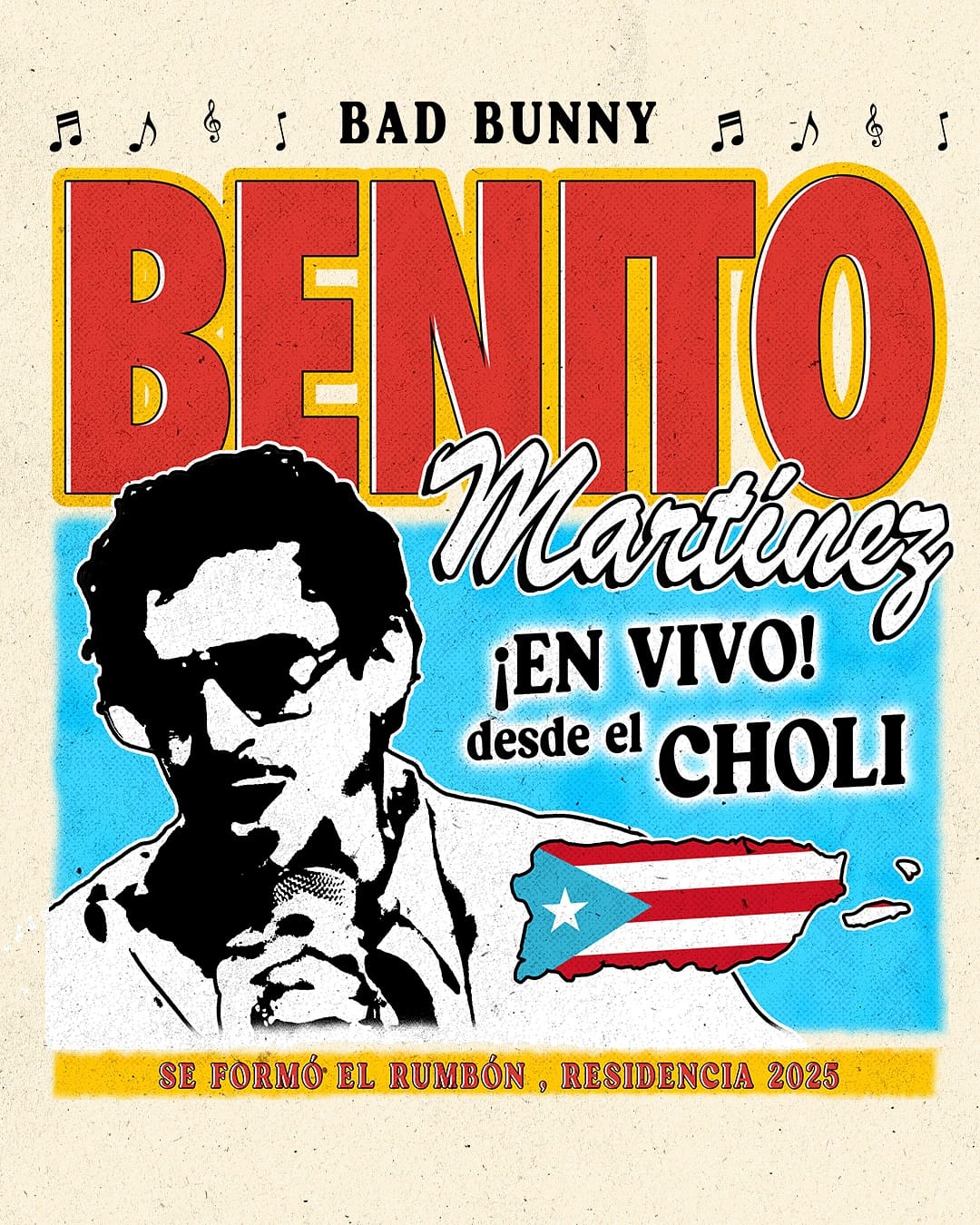
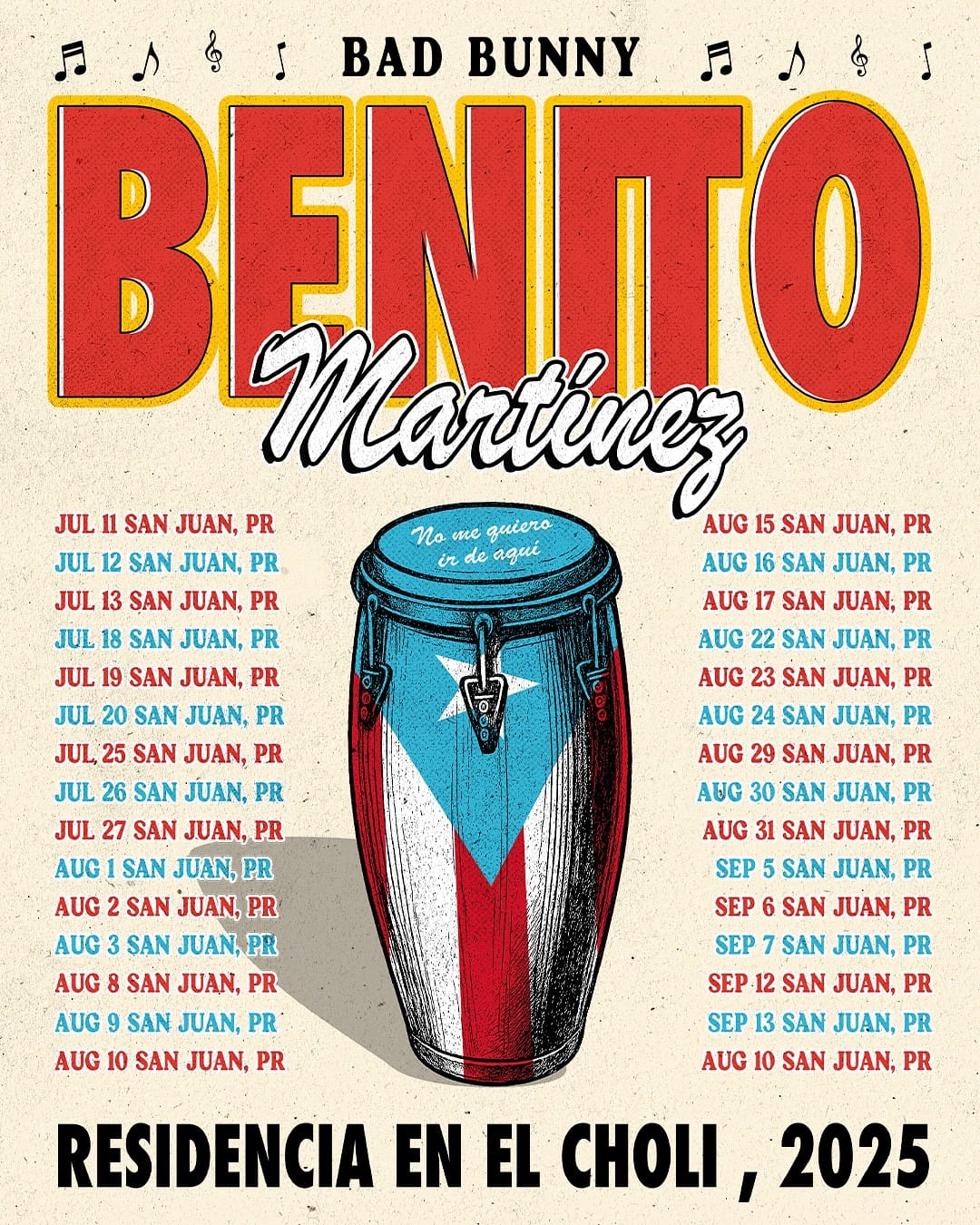
Jota Studios' t-shirt design "Benito Martínez" for Bad Bunny. | Art via Jota Studios' Instagram. | Impulsiva Stories
And on the back, he placed the long list of dates of the Residencia to make it even more clear that Bad Bunny was staying in Puerto Rico. That the Residencia was completely about Puerto Rico. About celebrating the Boricua island and its very rich culture.
“Dile no a la piratería” as an Animated Experience
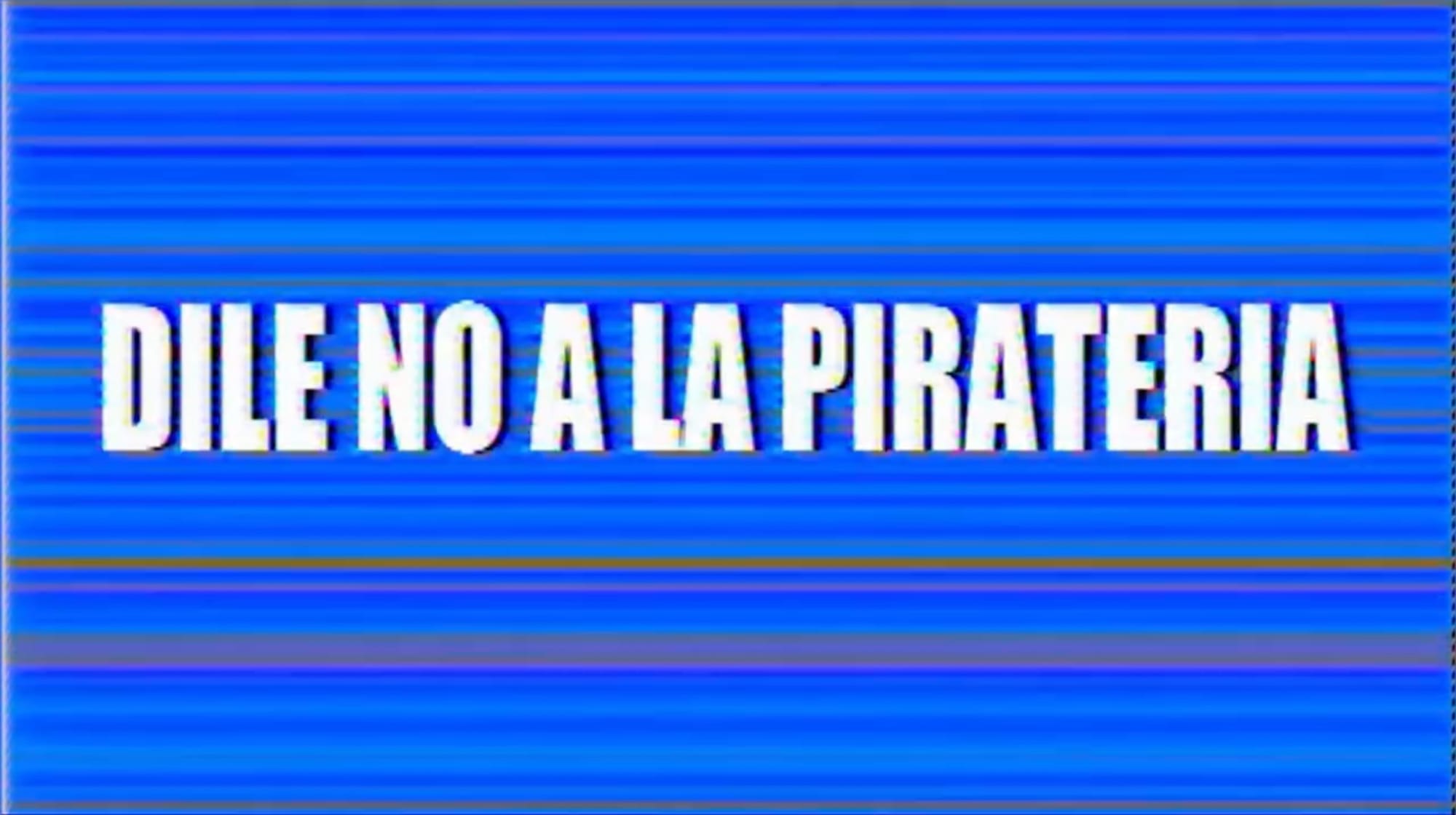
But if you think this is one of Jota Studios’ most mind-blowing masterpieces, wait to hear about his astounding project “Dile no a la piratería.” Obviously, it’s about Puerto Rico and it was created solely for the contemporary art gallery Embajada in San Juan. During the Residencia, they created the exhibition “Museo del Reguetón.”
It brought together “a group of over 30 contemporary artists who reflect on the musical genre through multimedia works.” Jota Studios was invited to the exhibition and he did an installation that was an exclusive masterpiece to be experienced in person. He went deep into studying CD piracy in Puerto Rico during the 2000’s and how this influenced some of the island’s most iconic rappers and reggaetoneros.
0:00
/0:11
Jota Studios' "Dile no a la piratería" art. | Art via Jota Studios' website. | Impulsiva Stories
“For this of Dile no a la piratería, I’m studying the characters that were really big in the 2000’s. I watch podcasts, for example, of Luny Tunes, who is one of the most important reggaeton producers,” Jota Studios said. “I listen to their stories to be able to create my own story and for it to be as close to reality as possible.”
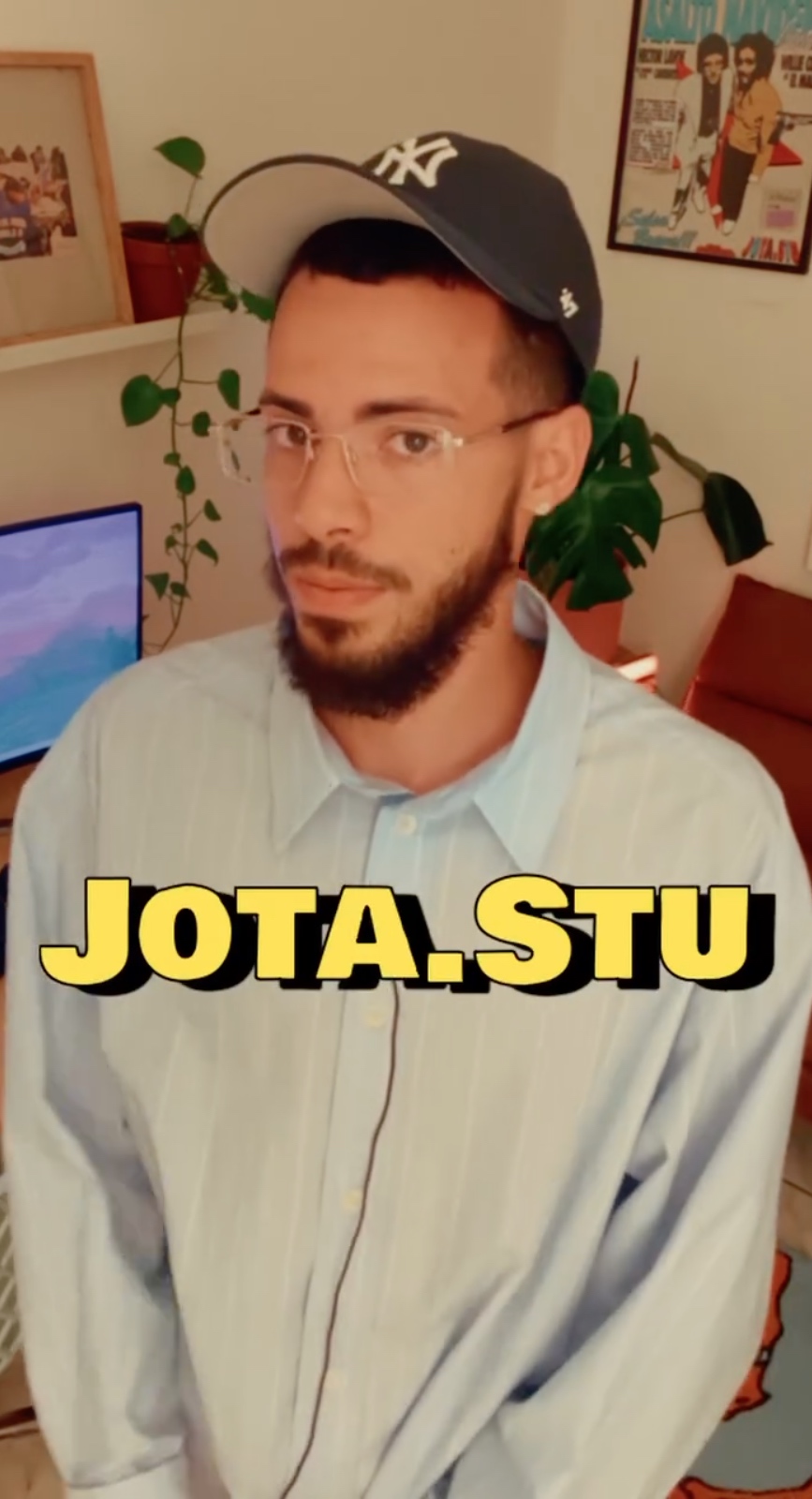
Listen to Jota Studios
0:00
/32.693333
By nourishing his work with this in-depth research, it was easier for Jota Studios to transmit his message. He wanted the audience to know about the piratería and how it was a common practice in Puerto Rico in the early 2000’s. The animation he created is about the piracy of the CD’s and it’s sale in a pulguero – or flea market – for other people to consume.
It was an extremely illegal practice that was quite strong in that time. Jota Studios was very interested in the irony behind it. The piratería helped artists like Daddy Yankee, Don Omar, Tego Calderón, Luny Tunes, and the compilation album “Los Benjamins: Más Flow,” become big musically.
“Before, the labels sold you the albums for 12 pesos [$12]. So, the pirateros sold them at 5 pesos. They’d launch it on the Internet and maybe, they [the artists] were affected economically, but in many cases, the albums se disparaban,” Jota Studios said. “They benefitted a lot from the practice of piratería. Artists like Daddy Yankee, for example, had a full album pirated, but that album exploded.”
That idea just created more curiosity in Jota Studios’ mind. He just wondered if maybe the access to the general public that the piratería granted, made the music reach other audiences.
This exploration in his project is an experience for the audience. He takes you through the concept of a virtual pulguero and the Internet in those times.
“[It’s for] the people who maybe never had the experience of stepping in a pulguero to buy pirated albums. In some way, I can give them that experience through us by taking them virtually,” Jota Studios said.
Since this was an exclusive installation piece for Embajada last year, Jota Studios wanted to make something about it this year. He has not posted the animation video on his Instagram because he wanted people to go to the exhibit and watch it in person. But he’s now working on a campaign – or collection – of “pirated t-shirts” that he’ll soon launch.
He wanted to study this musical and social phenomenon to masterfully transform it into art because of his love for music. Because of the strong musical influence in his artistic practice.
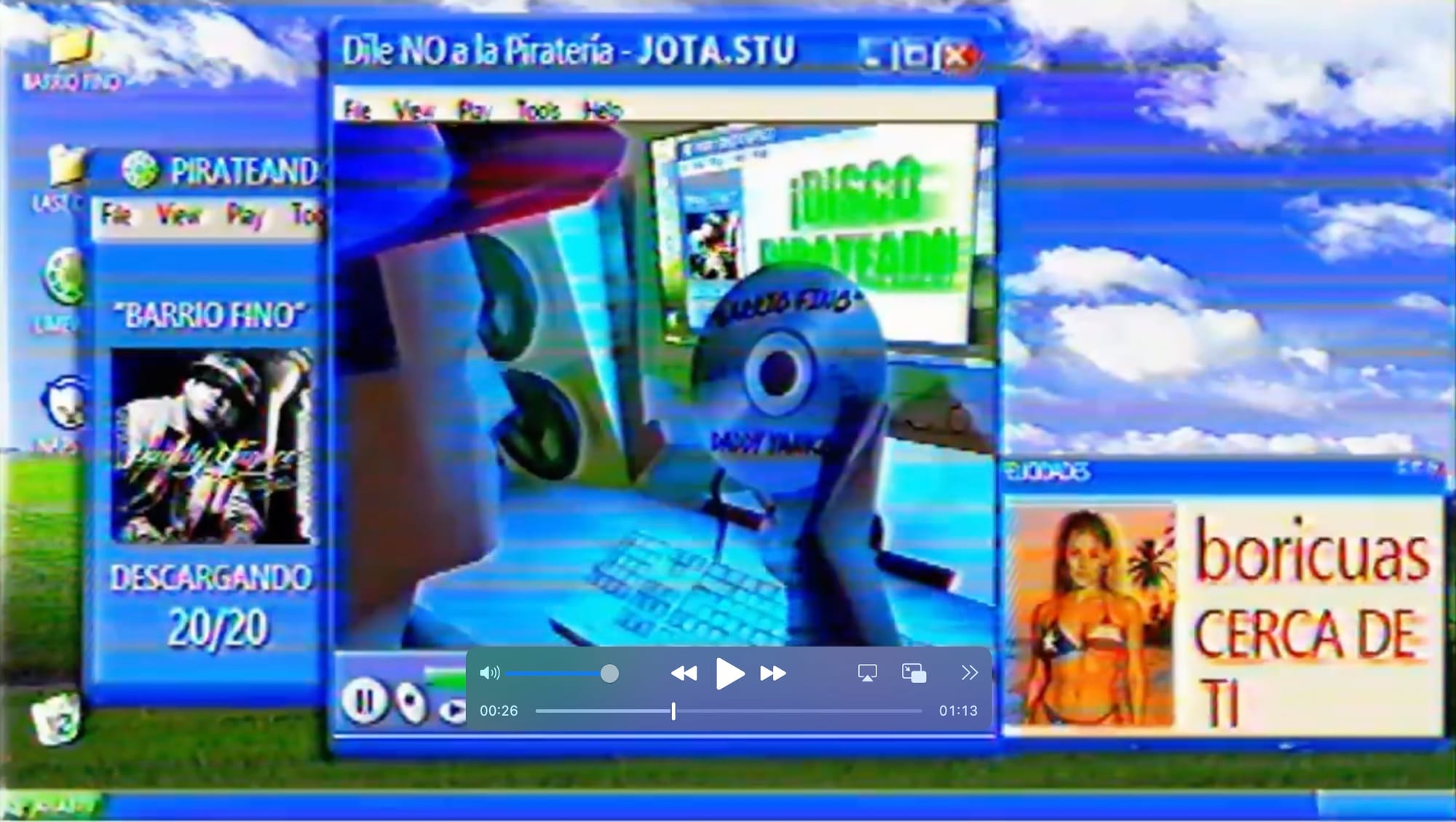
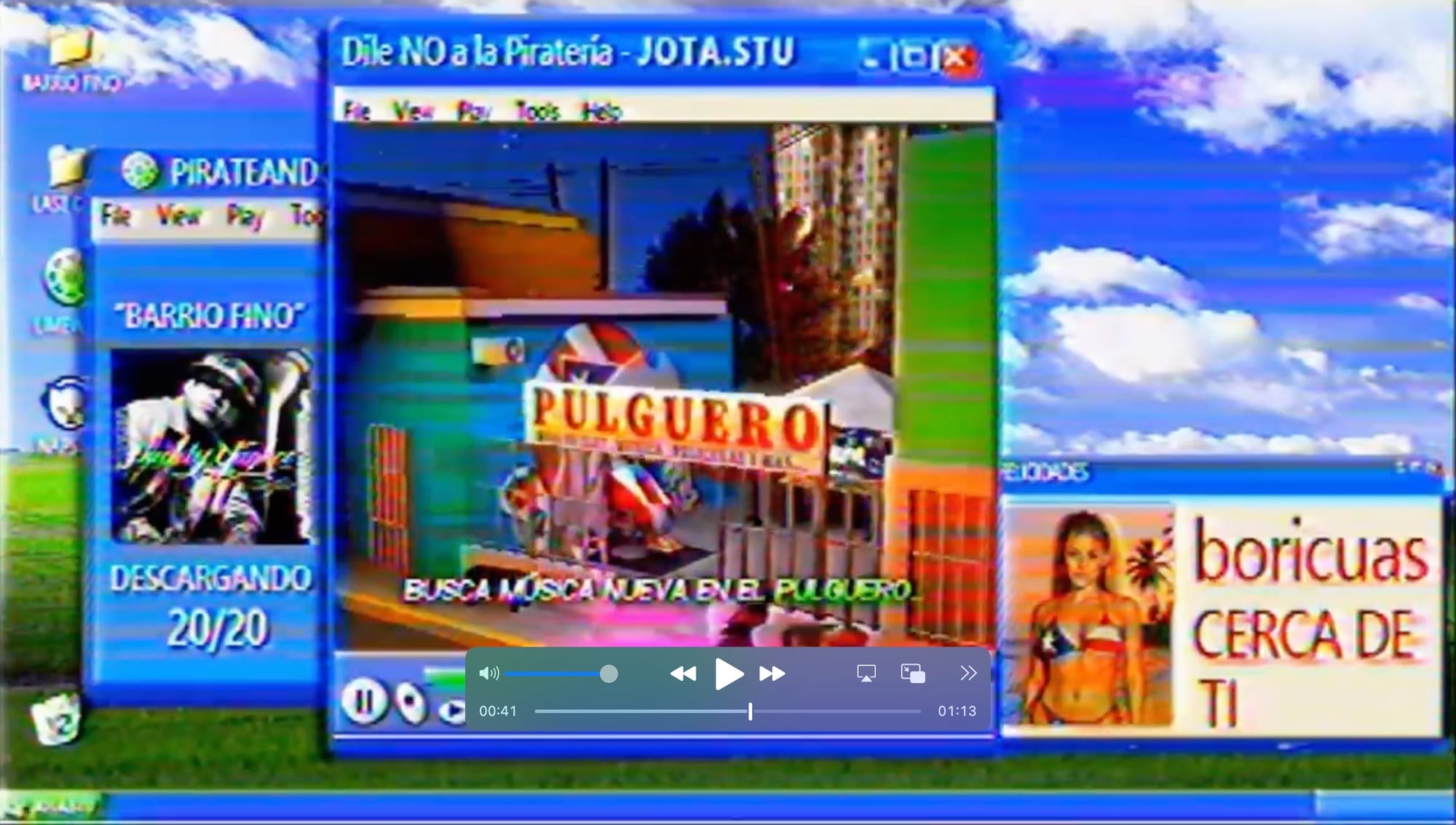
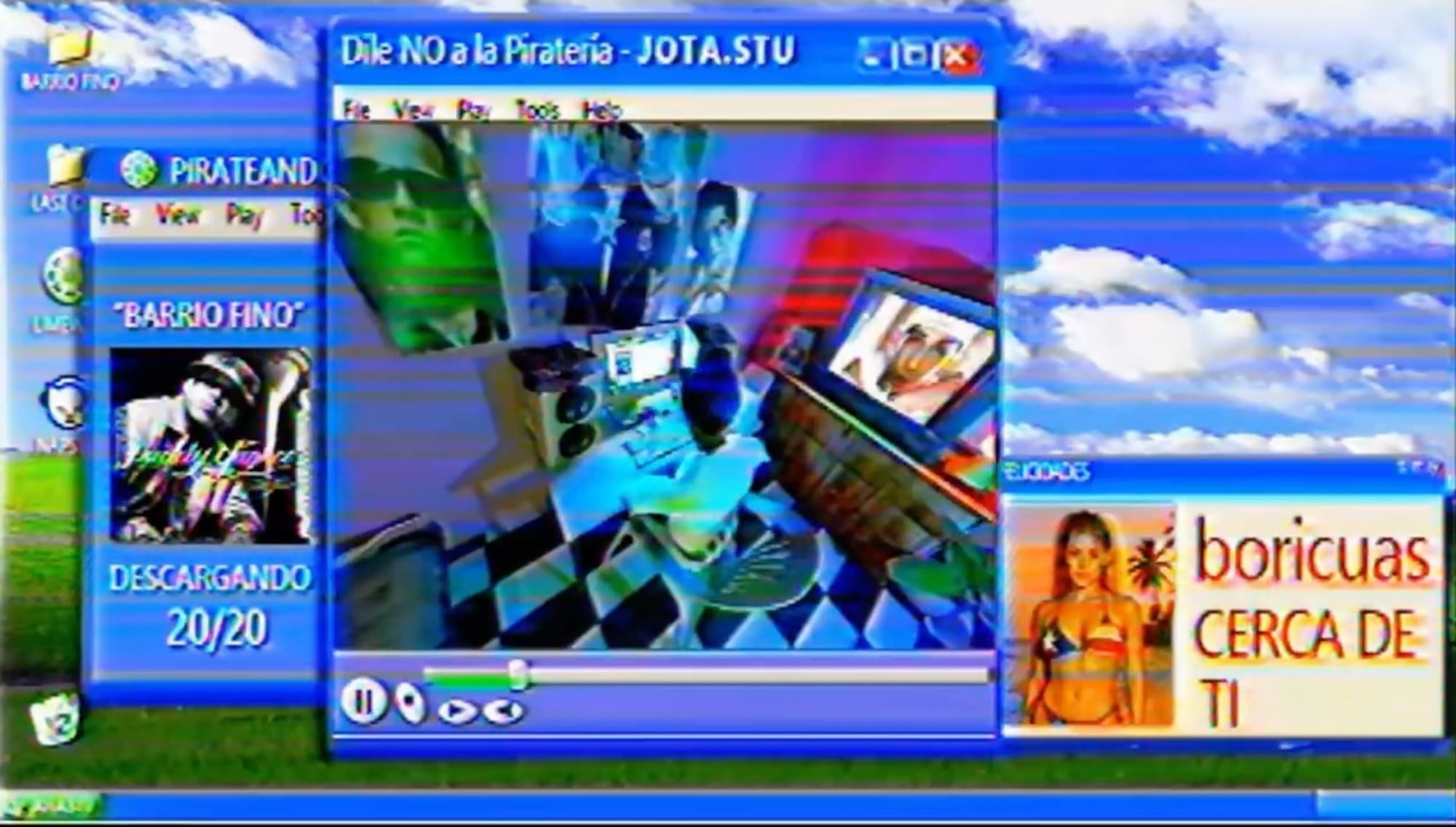
Scenes from Jota Studios' "Dile no a la piratería" animation video. | Art via Embajada's Instagram. | Impulsiva Stories
“I think reggaeton right now is so global, that it’s great to look back and look at those who were the pioneers. Those who really wanted that this [thing] of reggaeton to be like it is right now,” Jota Studios said. “It’s more like paying tribute to those who came before us.”
Listen to Jota Studios
0:00
/34.349333
That’s why when you watch his animation, Jota Studios immerses you in this experiential world where you move through different scenes.
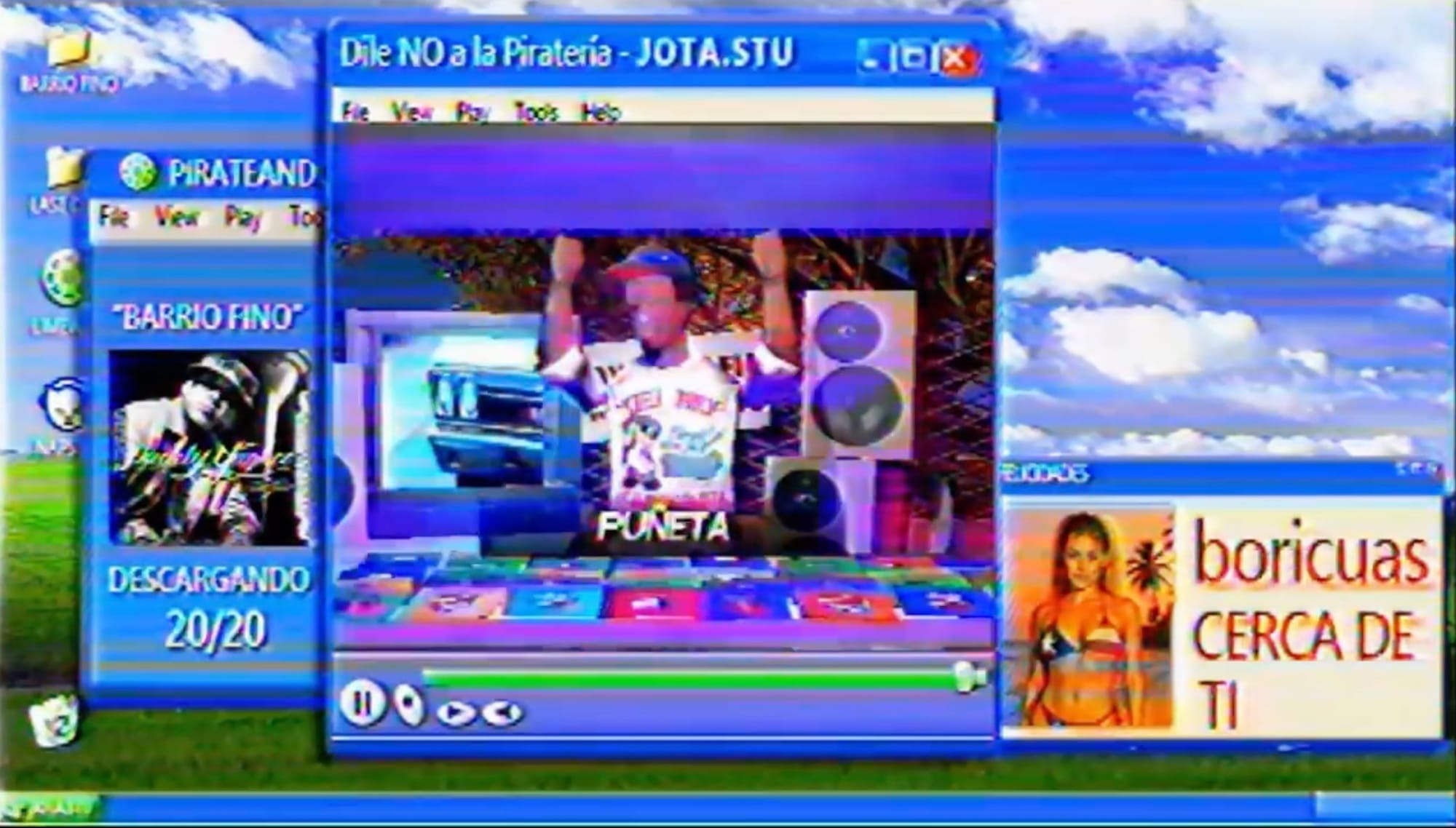
You first see a young man on his computer listening to Yomo’s song “Déjale Caer To El Peso” featuring Héctor El Father. He’s very focused pirateando Daddy Yankee’s “Barrio Fino” album and once it’s ready, Jota Studios transitions to a scene of perreo with Daddy Yankee’s song “Cójela Que Va Sin Jockey,” which was produced by Luny Tunes.
Then, a new scene comes through and you’re at a pulguero with Tego Calderón’s song “Métele Sazón,” which was also produced by Luny Tunes. And then, the police arrive because of the illegal piratería. Jota Studios makes sure you have a sensorial experience throughout the animation. It really takes you into another world and speaks about the piratería without any use of words.
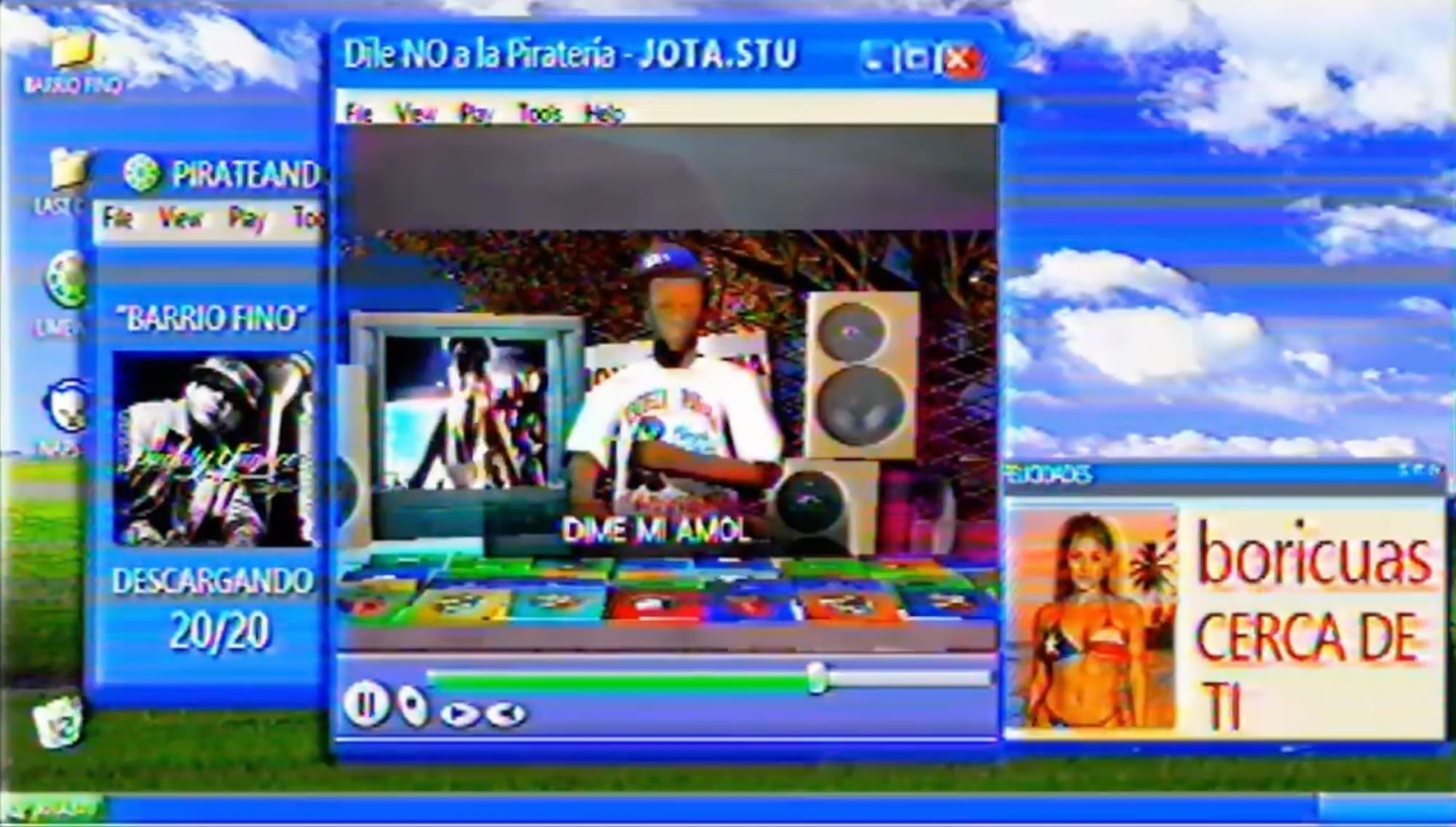
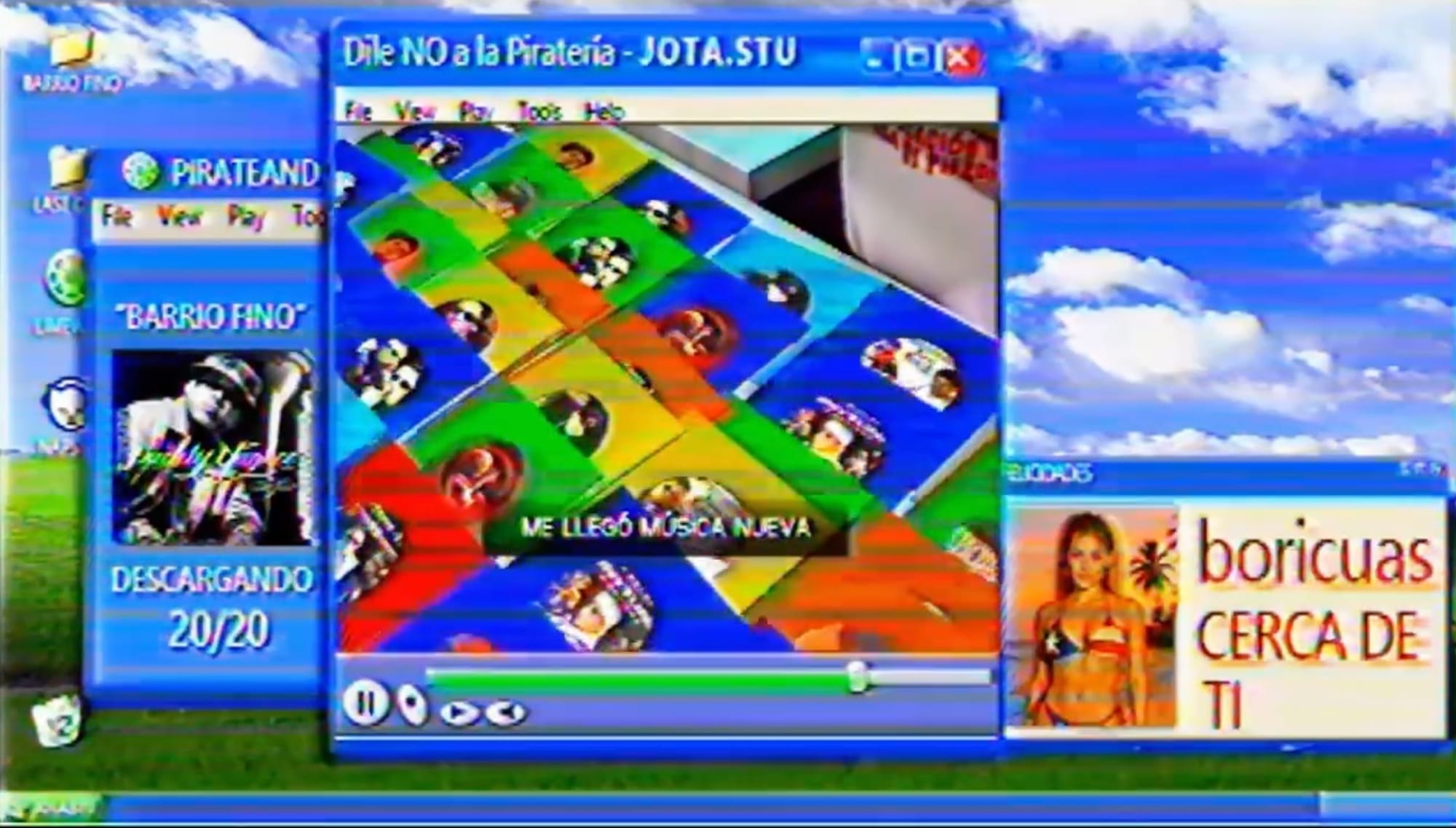
"Dime mi amol, me llegó música nueva" as an offer from Jota Studios' "Dile no a la piratería" animation video. | Art via Embajada's Instagram. | Impulsiva Stories
Since this animation has not been made public by Jota Studios’ Instagram, you can watch it here. I’m not going to spoil the surprise for you without his permission, but it’s one more of his marvelous masterpieces that speaks about a vivid Puerto Rican identity.
“I think it’s pride and in a certain way, a responsibility of telling the stories from Puerto Rico to other countries. In that sense, a patriotic pride and being able to tell the stories de aquí pa que el mundo entero las vea,” Jota Studios said proudly.
It is simply part of his art that designs a nostalgic Puerto Rico. An art that also has a very strong connection with music, whether it’s the salsa from the past or the reggaeton from the present. It’s art that takes you on a sensorial journey through a very vibrant maximalist color palette reminiscent of Puerto Rico’s characteristic warmth.
It’s an art form that’s fun and that Jota Studios described as “Puerto Rico: the videogame.” It’s an art form that seeks to keep alive Boricua culture and traditions. And they’re graphic design and animations that Jota Studios feels really grateful for.
“I’m thankful because sometimes I don’t know why my art resonates so much with people. Sometimes I try to identify why my art moves so well and I don’t have a specific answer,” Jota Studios said. “So, the last thing I have left to feel is gratitude because people like what I do and that fills me with pride.”
To learn more about Jota Studios’ musical Puerto Rican graphic design and animations, you can follow him on Instagram at @jota.stu.
Written by

Subscribe to my newsletter
Subscribe to my newsletter to get the latest updates and news